Text used – Romans 14:1-12
- Last Monday, we marked the 22nd anniversary of the horrific terrorist attacks on the World Trade Center and the Pentagon on Sept. 11, 2001.
- Boys were asking Peter and I about it this week: “Mom, where were you when the planes flew into the towers?” → And it was the first year that I really felt like we could at least start having a more in-depth conversation with them about that day.
- Part of that conversation = explaining that there are going to be events in their lives that will be so profound that they will remember exactly where they were and what they were doing when they heard about them
- One my parents always talked about: assassination of President Kennedy and Martin Luther King, Jr.
- Another in my life: news of the death of Princess Diana
- Part of that conversation = explaining that there are going to be events in their lives that will be so profound that they will remember exactly where they were and what they were doing when they heard about them
- Around the anniversary of 9/11 every year, I feel like we hear a lot of news recaps and opinion and reflection pieces about how Americans came together following the tragedies of that day.
- Study put out by the Pew Research Center in 2021: The enduring power of the Sept. 11 attacks is clear: An overwhelming share of Americans who are old enough to recall the day remember where they were and what they were doing when they heard the news. Yet an ever-growing number of Americans have no personal memory of that day, either because they were too young or not yet born. A review of U.S. public opinion in the two decades since 9/11 reveals how a badly shaken nation came together, briefly, in a spirit of sadness and patriotism … It is difficult to think of an event that so profoundly transformed U.S. public opinion across so many dimensions as the 9/11 attacks. While Americans had a shared sense of anguish after Sept. 11, the months that followed also were marked by rare spirit of public unity. Moreover, the public largely set aside political differences and rallied in support of the nation’s major institutions, as well as its political leadership. In October 2001, 60% of adults expressed trust in the federal government – a level not reached in the previous three decades, nor approached in the two decades since then. … Americans also turned to religion and faith in large numbers. In the days and weeks after 9/11, most Americans said they were praying more often. In November 2001, 78% said religion’s influence in American life was increasing, more than double the share who said that eight months earlier and – like public trust in the federal government – the highest level in four decades. Public esteem rose even for some institutions that usually are not that popular with Americans. For example, in November 2001, news organizations received record-high ratings for professionalism. Around seven-in-ten adults (69%) said they “stand up for America,” while 60% said they protected democracy.[1]
- Possibly the most telling statistic/trend that came out of that particular Pew Research study: Yet in many ways, the “9/11 effect” on public opinion was short-lived. Public trust in government, as well as confidence in other institutions, declined throughout the 2000s.[2] → Here we find ourselves just 22 years – barely over 2 decades – after such a horrific and life-altering event as 9/11, and as a nation, we seem to be falling further and further apart. And this falling apart isn’t a new phenomenon. We’ve been falling apart since just a few short years after that terrible tragedy brought us together.
- Study put out by the Pew Research Center in 2021: The enduring power of the Sept. 11 attacks is clear: An overwhelming share of Americans who are old enough to recall the day remember where they were and what they were doing when they heard the news. Yet an ever-growing number of Americans have no personal memory of that day, either because they were too young or not yet born. A review of U.S. public opinion in the two decades since 9/11 reveals how a badly shaken nation came together, briefly, in a spirit of sadness and patriotism … It is difficult to think of an event that so profoundly transformed U.S. public opinion across so many dimensions as the 9/11 attacks. While Americans had a shared sense of anguish after Sept. 11, the months that followed also were marked by rare spirit of public unity. Moreover, the public largely set aside political differences and rallied in support of the nation’s major institutions, as well as its political leadership. In October 2001, 60% of adults expressed trust in the federal government – a level not reached in the previous three decades, nor approached in the two decades since then. … Americans also turned to religion and faith in large numbers. In the days and weeks after 9/11, most Americans said they were praying more often. In November 2001, 78% said religion’s influence in American life was increasing, more than double the share who said that eight months earlier and – like public trust in the federal government – the highest level in four decades. Public esteem rose even for some institutions that usually are not that popular with Americans. For example, in November 2001, news organizations received record-high ratings for professionalism. Around seven-in-ten adults (69%) said they “stand up for America,” while 60% said they protected democracy.[1]
- Boys were asking Peter and I about it this week: “Mom, where were you when the planes flew into the towers?” → And it was the first year that I really felt like we could at least start having a more in-depth conversation with them about that day.
- Today’s Scripture reading make it clear that life within the early Church wasn’t so different
- Jesus spent a few years teaching, preaching, healing, and completely reorienting people’s entire lives
- Around 30 C.E. → Jesus is crucified
- Roughly 30 yrs. later we find Paul writing letters to groups of Christians near and far – Christians he knew and Christians he’d never met (as is the case with the Roman church) – trying to encourage them to continue on – to hang in there together! – instead of falling apart
- Sometimes Paul’s writings addressed particular issues that had arisen in particular churches
- Other times (as is the case with Romans), Paul’s writings were more general directive on how to live as Christians and how to live together as Christians
- Love the intro that one scholar wrote to his interpretation of this particular passage: Hospitality is never easy when suspicion rules the day. Why would anyone want to visit a community—never mind join them!—if they are known for “friendly fire”? If members of the church are targeting one another with verbal attacks and slanderous assaults, then we have become the very thing Christ died to overcome. … How do we live with one another—inhabit the same spaces and share time together—when we treasure opposing rhythms and gather around customary inclinations? Paul continues in this eminently practical section of his magnum opus to address issues related to the nitty-gritty of everyday life together in communion.[3] → “The nitty-gritty of everyday life together in communion” … Paul could be delivering these same words to the Church today, and they would be just as crucial, just as relevant (as much as I hate that word), just as applicable.
- So let’s dive into today’s passage.
- Paul approaches overarching issue of differences in opinion coinciding in faith through one particular issue: food → And while this may seem like a trivial way to approach the issue of faith, I think it’s actually kind of genius. Food is not only an essential part of every single person’s day, it’s also an essential yet wildly differing expression of different cultures.
- Current streaming obsession = The Ultimate Braai Master[4] → South African outdoor cooking competition where teams cook everything from things familiar to us in America (chicken and tuna) to proteins wholly foreign to us (warthog and springbok)
- Bread is a beautiful example of the similarities and differences of cultures all wrapped up in one simple food
- Risen or unrisen?
- If it’s risen, is it a short rise or a long rise?
- Crunchy crust or soft and smooth?
- Shape?
- Flour?
- Preparation techniques?
- Other special ingredients?
- There are as many ways to make bread as there are cultures around the world … and yet, they all make bread in some form.
- Risen or unrisen?
- So, really, it makes sense that Paul starts off his conversation about differences and similarities in faith with food. – text: Welcome the person who is weak in faith—but not in order to argue about differences of opinion. One person believes in eating everything, while the weak person eats only vegetables. Those who eat must not look down on the ones who don’t, and the ones who don’t eat must not judge the ones who do, because God has accepted them.[5]
- Key word in this opening passage comes at the end: Gr. “accepted” (“God has accepted them”) = word of welcoming and receiving someone in – into your society, into your home, into the circle of your life → There’s also an element of togetherness in this word – a connotation of partaking with So Paul is pointing out that no matter how people are honoring God with the food that they’re eating, God is with them. And if God is with them, why should they quarrel among one another about that food?
- Just for good measure, Paul comes at the same issue from another angle, too. – text: One person considers some days to be more sacred than others, while another person considers all days to be the same. Each person must have their own convictions. Someone who thinks that a day is sacred, thinks that way for the Lord. Those who eat, eat for the Lord, because they thank God. And those who don’t eat, don’t eat for the Lord, and they thank the Lord too.[6] → It’s all about how we observe sacred moments and days.
- Example of this today = way Catholic and Episcopal churches observe holy days for various saints/prominent religious figures → Do we say, “Man, those Episcopals can’t be real Christians because they’re honoring Hildegard of Bingen today”? Of course not! Are the Episcopals looking at us saying, “Man, those Presbyterians can’t be real Christians because they aren’t honoring Hildegard of Bingen today”? Of course not! We all find and follow different paths, but those paths lead us to reverence and worship of the same God who is God of us all.
- And this is Paul’s ultimate point. – text: We don’t live for ourselves and we don’t die for ourselves. If we live, we live for the Lord, and if we die, we die for the Lord. Therefore, whether we live or die, we belong to God.[7] → Paul’s way of saying, “It’s not about you!” Right?
- Emphasis of this point comes in one small word that appears all over throughout Scripture but takes on particular significance here and in one other place = word that conveys being
- Earlier in Gr. translation of First Testament = 1 of 2 words that make up the holiest name of God when God gives Moses God’s own name at the burning bush[8] → “I AM that I AM” = made up of Gr. for “I” and this word
- Here: word is translated as “belong” (“we belong to God”)
- Connotations of being and belonging
- Connotations of being present with and staying with
- Connotations of existing and happening
- Connotations of meaning and possibility
- With this small, seemingly-simple word, we are assured that our who being – all that we are, all that we do, all that we say, all that we hope for, all that we fear, all that we pray – is with God. “We don’t live for ourselves and we don’t die for ourselves. If we live, we live for the Lord, and if we die, we die for the Lord. Therefore, whether we live or die, we belong to God.”
- Emphasis of this point comes in one small word that appears all over throughout Scripture but takes on particular significance here and in one other place = word that conveys being
- The universality of this statement prompts Paul’s final words in this passage: But why do you judge your brother or sister? Or why do you look down on your brother or sister? We all will stand in front of the judgment seat of God. Because it is written, As I live, says the Lord, every knee will bow to me, and every tongue will give praise to God. So then, each of us will give an account of ourselves to God.[9]
- Scholar highlights the importance of this point: Paul is not suggesting that we should stop advocating for our respective views. Paul clearly values and regularly engages in theological argument. Paul’s concern and passion here is the spirit of Christians who are arguing, not the rectitude of their position. The radicality of Paul’s passion here is the radicality of grace, the radicality of life lived beyond judgment, beyond justice – life that loves real and enduring enemies. Our spirit for and toward those with whom we bitterly disagree is Paul’s focus.[10]
- Paul approaches overarching issue of differences in opinion coinciding in faith through one particular issue: food → And while this may seem like a trivial way to approach the issue of faith, I think it’s actually kind of genius. Food is not only an essential part of every single person’s day, it’s also an essential yet wildly differing expression of different cultures.
- Once again, it’s not about us. Faith is not about us. It’s about God. Enacting our faith is not about us. It’s about God. Embodying our faith is not about us. It’s about God. And what God is calling us to do in this world. We aren’t called to mission for our own sake but for the sake of our siblings who are in need of care and compassion. We aren’t called to share the good news of the gospel for our own sake but for the sake of God’s love and grace.
- Important distinction: none of the actions/activities that Paul is using as examples are ways that people use their faith to harm/oppress/exclude another → Jesus opened himself up to all people, especially those relegated to the margins by the rest of society but even those with whom he disagreed most vehemently and most often – the Pharisees – when they were willing to open their own minds and hearts to the freedom and openness of God’s grace.
- Put bluntly by one of my very favorite quotes from contemporary author and theologian Anne Lamott: You can safely assume you’ve created God in your own image when it turns out that God hates all the same people you do.
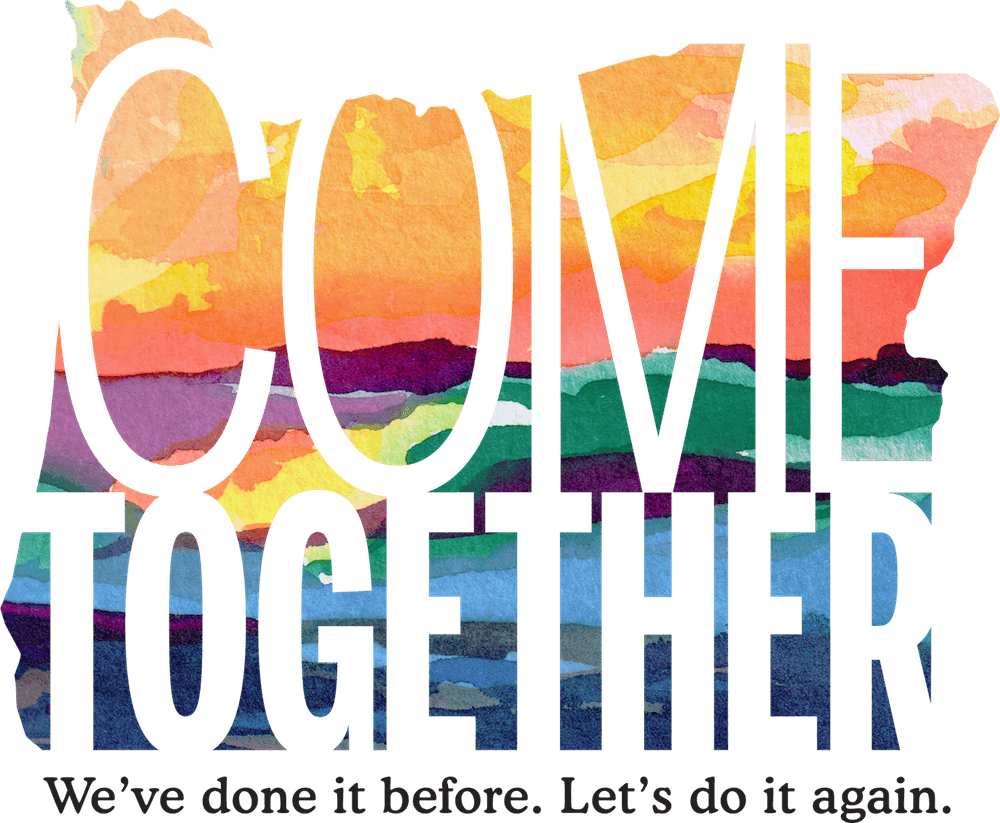
- Love the way that scholar concluded his discussion of this passage and Paul’s perspective on Christian disagreement: First and last, we argue for the right and struggle for the good, not for the sake of ourselves or our own opinions or identity – or even for the sake of the church, justice, or the good – but because we are moved by love and concern for every particular other, which is to say, because in life and in death, we belong to God.[11] → If we truly believe that we all belong to God, then isn’t it time – isn’t it past time – to come together? Thanks be to God. Amen.
- Important distinction: none of the actions/activities that Paul is using as examples are ways that people use their faith to harm/oppress/exclude another → Jesus opened himself up to all people, especially those relegated to the margins by the rest of society but even those with whom he disagreed most vehemently and most often – the Pharisees – when they were willing to open their own minds and hearts to the freedom and openness of God’s grace.
[1] https://www.pewresearch.org/politics/2021/09/02/two-decades-later-the-enduring-legacy-of-9-11/.
[2] Ibid.
[3] David McCabe. “Commentary on Romans 14:1-12” from Working Preacher, https://www.workingpreacher.org/commentaries/revised-common-lectionary/ordinary-24/commentary-on-romans-141-12-6.
[4] https://ultimatebraaimaster.co.za/.
[5] Rom 14:1-3.
[6] Rom 14:5-6.
[7] Rom 14:7-8.
[8] Ex 3:13-15.
[9] Rom 14:10-12.
[10] William Greenway. “Proper 19 (Sunday between September 11 and September 17 inclusive) – Romans 14:1-12, Theological Perspective” in Feasting on the Word: Preaching the Revised Common Lectionary – Year A, vol. 4. (Louisville: Westminster John Knox Press, 2011), 62, 64, 66.
[11] Greenway, 66.
 Fearfully and Wonderfully Made