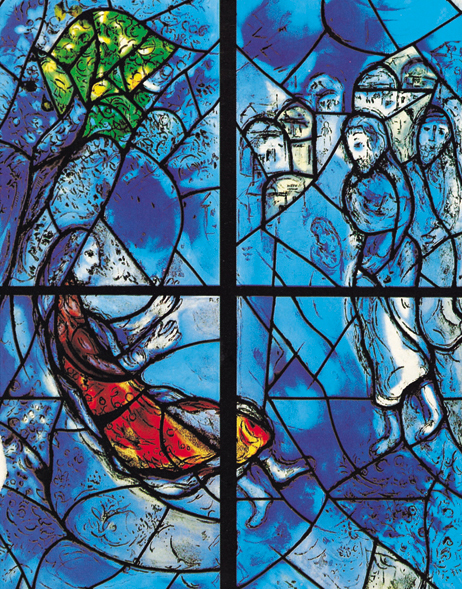
Sunday’s sermon: It Takes a Woman

Text used – Judges 4:1-10

  • September 1853. A Congregational church in South Butler, New York. Antoinette Louisa Brown. The significance? Brown was the first woman ordained to ministry in the United States. She was ordained to her position at the Congregational church in South Butler in Sept. 1853.[1]
    • Pains me to say it would take the Presbyterian Church (USA) more than 100 yrs. to catch up:[2]
      • Denomination voted to begin ordaining women in 1955
      • Rev. Margaret Towner → 1st woman ordained in the PC(USA) on Oct. 24, 1956
        • Ordained by Syracuse-Cayuga Presbytery in New York
        • Served congregations in Pennsylvania, Michigan, Indiana, and Wisconsin
        • And while that sounds all well and good, let me say this about Margaret Towner’s early ministry. Despite being ordained as a Minister of Word and Sacrament … when she returned to that Pennsylvania congregation following her ordination, she was never asked to lead worship or preach in that church. And, despite going on to serve as everything from a Christian educator to an associate pastor to a solo/head pastor, Towner wasn’t paid equally with her male peers until her very last pastorate where she served as one of three co-pastors in a six-congregation parish in Waukesha County, Wisconsin.
        • Towner also went on to serve the PC(USA) as a vice-moderator of the 193rd General Assembly (1981-1982)
        • Just a side note: Margaret Towner is still alive
          • 98 yrs. old
          • Retired and living in Florida
    • Other denominations
      • First woman ordained in the Episcopal Church: Jaqueline Means – Jan. 1, 1977
      • First woman granted full clergy membership in the United Methodist Church: Maude Jensen – 1956
      • First woman ordained in the Lutheran church: Elizabeth Platz – Nov. 1970
    • And yet still today, friends, there remains vicious controversy over women standing exactly where I’m standing and speaking exactly as I am speaking today.
      • Meme that cycles its way through female clergy circles (conversation style):
        • Him: What do you do?
          Me: Oh, I’m a pastor.
          Him: Well, I don’t believe in lady pastors.
          Me: Dude, I’m literally standing right in front of you.
        • And that’s the tamest version. As I was poking around and looking for sermon fodder for this morning, I found a picture online with the caption, “The perfect lipstick for women preachers.” Friends … it was a picture of a tube of superglue.
      • This attitude that women can’t be ministers is, of course, attributed to none other than Paul (love/hate relationship with Paul)
        • Multiple comments against women learning, speaking, and preaching
        • And yet we also know from the Bible – particularly from the book of Acts – that many of Paul’s contemporaries were women: Lydia, Phoebe, and the women of Rome, just to name a few.
        • Also ignores the rich tapestry of important and influential women passed down through Jewish history → touched on a number of those women a few years ago during our summer series on Women of the Bible
  • One of the women that we didn’t actually talk about during that summer series is the focus of today’s Scripture reading: Deborah, the judge.
    • Let’s talk about the book of Jdgs for a minute
      • Not a book that we encounter much at all through the Revised Common Lectionary → In fact, this is the only passage from the entire book of Judges – all 21 chapters! – that makes its way into the whole 3-yr. RCL rotation.
      • Scholar’s description of Jdgs on the whole: The book of Judges is one of the most exciting, colorful, and disturbing books of the Bible. It contains stories of political intrigue and assassination, lies and deception, rape and murder, courage and fear, great faith and idolatry, power and greed, sex and suicide, love and death, military victories and civil war. The book portrays a major transition in the biblical story of Israel. Before the book of Judges, Israel was under the leadership of Moses in the wilderness and then Joshua in the initial conquest of the land of Canaan. After the book of Judges, Israel was ruled by kings … The turbulent transition between Moses and Joshua, on the one hand, and the kings of Israel, on the other hand, is portrayed in the book of Judges.[3]
        • Let me be totally clear: Judges is not an easy book to read. There are a lot of difficult passages in Judges – very violent, bloody, the-spoils-go-to-the-conqueror passages in Judges. Many of what literary-feminist scholar Phyllis Trible calls the “texts of terror” can be found in Judges – texts that detail horrific stories and tie them to the name of God. And there is serious struggle in that. Very serious struggle.
          • Reality: even today, thousands of years later, people are still perpetrating horrific acts and justifying blatant hate using God’s name → So have we really come so far? Or is it possible for us to learn a lesson about God and humanity even through the brutality and sadness and intensity of these stories?
        • Cadence/rhythm to the book of Jdgs: Israel disobeys God → God sends an enemy → Israel cries out in distress to God → God sends a judge/deliverer to bring the people back → people follow God faithfully … for a time → And then the cycle begins again.
          • “Judges” in Heb. = more than just arbiters of justice and legal matters → “judge” synonymous with “ruler” → So the judges whose tales are chronicled throughout the book of Judges were leaders, decision makers, and warriors as well as those charged with maintaining religious life and practice among the people. Suffice to say judges were incredibly important people.
    • Deborah = even more than “just” a judge
      • Text today tells us she’s a military leader
      • Context (within the rest of the book of Jdgs and the rest of Scripture) tells us she’s the only female judge AND the only judge also called a prophet
      • Interesting Heb. transl. tidbit from today’s text – v. 4: Now Deborah, a prophet, the wife of Lappidoth, was a leader of Israel at that time. → Heb. “wife of Lappidoth” could also be transl. “woman of fire”[4]
        • Especially interesting when paired with the fact that her assistant’s name is Barak = transl. to “lightning”
        • I mean, come on! With Fire and Lightning leading the charge, how could the Israelites being anything but victorious?! It sounds like something straight out of the Marvel Comic Universe, doesn’t it?
    • And ultimately, victorious is what they are.
      • Today’s Scripture = beginning of Deborah’s story
      • Ending = the rest of ch. 4
        • Deborah and Barak and the rest of the Israelite army indeed march on General Sisera and his forces → Sisera and his army panic and flee → Barak and his army slay Sisera’s entire army except Sisera himself → Sisera takes refuge with an ally → Jael, wife of his ally, dispatches Sisera in his sleep using a tent stake and a hammer
          • Brings about Deborah’s prophecy that we read today: Barak replied to her, “If you’ll go with me, I’ll go; but if not, I won’t go.” Deborah answered, “I’ll definitely go with you. However, the path you’re taking won’t bring honor to you, because the Lordwill hand over Sisera to a woman.”[5]
      • Culminates in ch. 5 → Deborah’s victory song praising God
        • Last sentence of ch. 5: And the land was peaceful for forty years.[6]
  • Crucial question asked by one scholar: Neither Barak nor the narrator report being surprised that the prophetess, judge, and military leader Deborah is a woman. Are we?[7]
    • Brings us back around the to the issue of women in places of power and leadership
      • Corporate world = glass ceiling
      • Church world = stained glass ceiling
      • Article from the Society of Human Resource Management published online just at the beginning of this year (Jan. 26, 2023): This month, for the first time in the Fortune 500 list’s 68-year history, more than 10% of Fortune 500 companies are led by women. The Jan. 1, 2023 start dates of five new Fortune 500 chief executives brought the number of female CEOs up to 53, pushing the tally over the long-awaited threshold.[8]
        • Gender wage gap in 2023 = $.17 meaning women still earn just $.83 for every $1 men earn[9]
      • Plenty of other ways we dismiss, downplay, and denigrate the work/contributions of others
        • Wage gaps based on race are significantly higher, especially pay gaps that factor in both gender AND race
        • Wage gaps based on ethnicity: experiment about giving employers identical resumes but changing the names at the top → one name is “ethnic sounding” name (something Somalian or Hispanic or identified with any other cultural group) vs. other name is more “white” (e.g. – Sam Pope)[10]
        • Wage gap based on sexual orientation and gender identity[11]
      • All of which speaks to the reality, friends, that as a society, we still think there are some types of people who inherently “can” and a whole lot of people who inherently “can’t.”
        • Scholar speaking of today’s Scripture reading addresses this: The judges stories and the portraits of women begin as healthy, strong, and faithful. The first women we encounter all have names. But increasingly, as Israel and the judges begin their decline, the fate of women will decline as well. The many women characters become nameless. Women gradually lose their independent power and become objects and victims, first inadvertently and willingly, but then more intentionally and unwillingly. … In the ancient world as well as our own, the health and well-being of women provide and important barometer to measure the core health and values of a society or community.[12] → And that, friends, might be the greatest lesson we can learn from our Scripture reading this morning. In today’s passage, we see God working through a strong, powerful, capable, independent, fiery woman – someone who would probably have been discounted … shushed … maybe even punished had she tried to take any type of leadership position later on. But God worked through her in ways that changed the course of Israel’s history … in ways that were both undeniable and compelling.
          • Conclude with today’s question: Who do we dismiss as people who can’t do God’s work today? Amen.

[1] https://www.britannica.com/biography/Antoinette-Brown-Blackwell.

[2] https://en.wikipedia.org/wiki/Margaret_Towner.

[3] Dennis T. Olson, “The Book of Judges: Introduction, Commentary, and Reflections” in The New Interpreter’s Bible Commentary series, vol. 2. (Nashville: Abingdon Press, 1998), 723.

[4] Lisa Wolfe. “Commentary on Judges 4:1-7” from Working Preacher, https://www.workingpreacher.org/commentaries/revised-common-lectionary/ordinary-33/commentary-on-judges-41-7-6.

[5] Jdgs 4:8-9a.

[6] Jdgs 5:31c.

[7] Wolfe.

[8] Emma Hinchliffe. “Women Run More Than 10% of Fortune 500 Companies for the First Time,” https://www.shrm.org/executive/resources/pages/women-fortune-500-2023.aspx.

[9] https://www.payscale.com/research-and-insights/gender-pay-gap/.

[10] https://www.nber.org/digest/sep03/employers-replies-racial-names.

[11] https://www.hrc.org/resources/the-wage-gap-among-lgbtq-workers-in-the-united-states.

[12] Olson, 782-783.

Sunday’s sermon: Righteous ? Distraction

Text used – Amos 5:18-24

  • The Pharisees asked Jesus when God’s kingdom was coming. He replied, “God’s kingdom isn’t coming with signs that are easily noticed.  Nor will people say, ‘Look, here it is!’ or ‘There it is!’ Don’t you see? God’s kingdom is already among you.” Then Jesus said to the disciples, “The time will come when you will long to see one of the days of the Human One, and you won’t see it.  People will say to you, ‘Look there!’ or ‘Look here!’ Don’t leave or go chasing after them.  The Human One will appear on his day in the same way that a flash of lightning lights up the sky from one end to the other.  However, first he must suffer many things and be rejected by this generation.[1]This passage comes from Luke 17:20-25. Jesus predicting the return of the Human One (or “Son of Man” in many other translations).
    • “Human One/Son of Man” = trad Heb. phrase referring to Messiah
    • Mk 13 = another ch. heavily devoted to predicting the 2nd coming
    • Jesus always accompanied these predictions of the Messiah’s return with a warning that none – not even Jesus himself! – would know the day or time of that return,
      • End of Mk 13: (Jesus) “But nobody knows when that day or hour will come, not the angels in heaven and not the Son. Only the Father knows. Watch out! Stay alert! You don’t know when the time is coming. … What I say to you, I say to all: Stay alert!”[2]
      • Hear the same warning in our Scripture reading this morning (in no uncertain terms!): Doom to those who desire the day of the Lord! Why do you want the day of the Lord? It is darkness, not light; as if someone fled from a lion, and was met by a bear; or sought refuge in a house, rested a hand against the wall, and was bitten by a snake. Isn’t the day of the Lord darkness, not light; all dark with no brightness in it?[3]
    • And yet despite all of these warnings, a whole lot of people have focused pretty heavily on trying to know and predict just that: the day and time of Jesus’ Second Coming.
      • Both past and future predictions (just from Wikipedia)[4]
        • [read first and last]
        • [congregational involvement – any # btwn 2 and 51]
        • And as entertaining as it may be to read through some of these, they’re what I would call righteous (?) distractions – distractions because when the focus is so unilaterally trained on trying to figure out when Christ is coming back, it pulls people away from the other things that God calls us to: compassion, service, love, even prayer. And righteous (?) because, while it may seem like a righteous pursuit, the Bible definitely has some other things to say about that.
  • Enter today’s Scripture reading from the prophet Amos.
    • Amos = one of those 12 minor prophet books all sort of smooshed together at the end of the First Testament
      • Find it btwn Joel and Obadiah
      • Scholar: There is almost unanimous agreement that the book of Amos is the earliest of the prophetic books. As such, it marks the beginning of a unique tradition in the history of religion: prophecies of the approaching end of the existence of God’s people based upon God’s judgment of them for failing to live according to the divine standards.[5]
      • Very beginning of Amos gives us some historical context: These are the words of Amos, one of the shepherds of Tekoa. He perceived these things concerning Israel two years before the earthquake, in the days of Judah’s King Uzziah and in the days of Israel’s King Jeroboam, Joash’s son.[6]
        • Follow me on the history of this one for a minute: places Amos in generation that experienced the division of the northern Kingdom of Israel and the southern Kingdom of Judah
          • Kingdom of Israel was one united nation under kings David, Solomon, and Solomon’s son, Rehoboam
          • Jeroboam led rebellion against Rehoboam
          • Israel split into northern kingdom (Israel) and southern kingdom (Judah) with Jeroboam ruling Judah and Rehoboam ruling Israel[7]
          • King Uzziah succeeded King Rehoboam in Israel → Voila! Amos’s timeline.
    • Most of Amos = lots of doom and gloom for pretty much everyone
      • Beginning of the book = admonitions for nations/peoples surrounding Israel at the time [read some section headings][8]
      • Lead up into ch. 3 and beyond → Amos’ focus lands squarely on the people of Israel [read more section headings][9]
        • Section heading for today = “A statement of divine disgust”
    • And the gist of God’s disgust as expressed through Amos is that the people have become distracted! They’ve succumbed to righteous (?) distractions.
      • Earlier (beginning of Amos 5): The Lord proclaims to the house of Israel: Seek me and live. But don’t seek Bethel, don’t enter into Gilgal, or cross over to Beer-sheba; for Gilgal will go into exile, and Bethel will come to nothing. Seek the Lord and live, or else God might rush like a fire against the house of Joseph. The fire will burn up Bethel, with no one to put it out.[10]
        • Bethel, Gilgal, Beer-sheba = not sites associated with other religions → all pilgrimage sites for the ancient Israelites → Now, I know we aren’t quite into today’s reading yet, but this is really important. These were Israelite pilgrimage sites – sites that were supposed to be considered holy, sites that people were supposed to make sacred journeys to for various religious feast days throughout the year.
          • Beer-sheba = place where Isaac settled → God appeared to Isaac in a dream there, so Isaac built a shrine for God at Beer-sheba[11]
          • Bethel = place that Jacob rested after fleeing when he stole Esau’s blessing from Isaac → place where Jacob dreamed about the ladder going up to heaven[12]
          • Gilgal = integral part of the Exodus story → Israelites escaped slavery in Egypt, finally finished wandering in the wilderness for 40 yrs. with Moses, then crossed the Jordan with Joshua and camped at Gilgal[13]
          • These have been holy sites for the people of Israel for generations … for centuries, even. And yet through Amos, God is saying, “No. They’ve become distractions for you.”
    • We hear this sentiment echoed in today’s text: I hate, I reject your festivals; I don’t enjoy your joyous assemblies. If you bring me your entirely burned offerings and gifts of food – I won’t be pleased; I won’t even look at your offerings of well-fed animals. Take away the noise of your songs; I won’t listen to the melody of your harps.[14] → This has to be confounding for the people who heard Amos’ message because all those things that he’s talking about – the festivals, the assemblies, the offerings, the harps – they’re all things set out by God as means of worship way back in the time of Moses (in the books of Exodus, Leviticus, Numbers, and Deuteronomy). And yet here is God saying, “Nope. Those aren’t important. You’ve lost sight of what’s really important … what is truly righteous.”
      • Main issue: Israelites during that time had turned worship into a social event → all of these festivals, assemblies, etc. were all about the gathering aspect for the feasts and celebrations … but less and less about how God was calling them to do and be in this world
  • So how do we start thinking about and interacting with this text?
    • Prominent theology and author (and, btw, Presbyterian) MaryAnn McKibben Dana highlights the discomfort we find in this text: Amos focuses his ire on the people’s festivals, assemblies, and offerings to God. Few things are more personal. How we worship, how we engage with one another, and what we give to God all speak volumes about who we are. It stings to be told that these are not right or good enough, so it is no wonder that we have learned to tune out the likes of Amos.[15]
      • So what would God’s words through Amos sound like if they were spoken to us today? What are the things that within the life of the church that we find distracting?
        • Secret: just because it happens within the walls of the church building (or even within the walls of this sanctuary) OR just because someone stamps God’s name on it or declares their words/actions “in the name of Jesus” doesn’t make any of it authentically faithful
          • Age-old joke in the church has to do with congregations coming to blows with one another over the color of the carpet … And we laugh … but it’s out there for a reason. It’s out there because it’s happened. More than once. WAY more than once. Do we really think God cares one iota about the color of the carpet? Or whether a particular congregation’s name legally begins with “The” or not? Or what bowl the peas are served in during the yearly dinner?
          • Goes deeper than just internal actions → meme going around: “The Bible is clear” is a term often used to force beliefs and morality on people who don’t follow the Bible. But the Bible IS clear, for those who follow it: Love your neighbor, welcome the stranger, serve the least, feed the hungry, forgive debts, choose the other, be a peacemaker. → Basically, friends, this is a commentary on the rampant proof-texting that is flying around in the Church today – the practice of pulling one single verse out of the Bible to prove whatever point you’re making while ignoring things like context (both context within the Scripture itself like what verses are around the particular verse in question as well as the context in which these ancient words were written) and ignoring God’s overarching message of love and compassion and mercy that’s woven throughout the entirety of Scripture.
            • Amos hammers this home with that last verse: But let justice roll down like waters, and righteousness like an ever-flowing stream.[16]
            • Scholar drives home the heart of this: Amos is not telling us that God despises worship. Amos is telling us that worshiping, respecting, and honoring God are not just about performing ritual. Ritual without action in the world is meaningless. Ritual without meaning behind it – or perhaps without the heart behind it – is pointless. The church cannot claim its calling my worship alone. God commands that we practice justice and that we help usher in the kingdom of God with our own hands in prayer and in deed.[17]
    • Prolific Christian theologian, scholar, teacher, and UCC pastor Walter Brueggemann: The prophetic tasks of the church are to tell the truth in a society that lives in illusion, grieve in a society that practices denial, and express hope in a society that lives in despair. → Friends, Amos makes it clear because God made it clear to him: faith must be paired with actions, not that lift up ourselves and those like us, but those who are in deepest need – those who have been left out, those who have been tossed out, those who have nothing left, those who had nothing to begin with. Our call is Christians is not just to reach down into the fray whenever it’s most comfortable for us but to get down in that fray with those who need us because that is where Jesus spent his time. Everything else? Just a distraction … righteous … or otherwise. Amen.

[1] Lk 17:20-25.

[2] Mk 13:32-33, 37.

[3] Amos 5:18-20.

[4] https://en.wikipedia.org/wiki/Predictions_and_claims_for_the_Second_Coming.

[5] Donald E. Gowan. “The Book of Amos: Introduction, Commentary, and Reflections” in The New Interpreter’s Bible Commentary series, vol. 7. (Nashville: Abingdon Press, 1996), 339.

[6] Amos 1:1.

[7] https://en.wikipedia.org/wiki/Kings_of_Israel_and_Judah.

[8] Amos 1:2-2:5.

[9] Amos 2:6 – the rest of the book.

[10] Amos 5:4-6.

[11] Gen 26:23-33.

[12] Gen 28:10-22.

[13] Josh 4:19-5:12.

[14] Amos 5:21-23.

[15] MaryAnn McKibben Dana. “Proper 27 (Sunday between November 6 and November 12 inclusive) – Amos 5:18-24, Pastoral Perspective” in Feasting on the Word: Preaching the Revised Common Lectionary – Year A, vol. 4. (Louisville: Westminster John Knox Press, 2011), 268.

[16] Amos 5:24.

[17] Noelle M. York-Simmons. “Proper 27 (Sunday between November 6 and November 12 inclusive) – Amos 5:18-24, Homiletical Perspective” in Feasting on the Word: Preaching the Revised Common Lectionary – Year A, vol. 4. (Louisville: Westminster John Knox Press, 2011), 269.

Sunday’s sermon: The Real Heavy Lifting

Text used – Matthew 23:1-12

  • Sometimes, when we read Scripture, we find ourselves in the midst of passages that challenge us.
    • Challenge the way we think
    • Challenge the way we believe
    • Challenge us in that they challenge the status quo of the world around us
    • Challenge us in that they point out flaws and failings we’d rather turn a blind eye to – flaws and failings in ourselves and in our society that we’ve done a perfectly good job ignoring and glossing over up to this point, thank you very much.
    • But as the incredibly profound and undeniably prophetic Rachel Held Evans wrote in her book Inspired: Slaying Giants, Walking on Water, and Loving the Bible Again[1], the Bible we read and study and memorize and love is a Bible that rarely behaves. And yet as those who claim and covet the sacredness of this book, we are called not only to read it for the sake of reading it but also to wrestle with it in the same way that Jacob wrestled with God – a way that cannot help but leave us changed.
  • Today’s passage = just such a wrestling, calling-out, leave-you-changed sort of passage
    • May seem easy to read and explain away on the surface – “That’s just the scribes and the Pharisees that Jesus is condemning here. He was always butting heads with them because they were just wrong. But that’s literally ancient history – ancient Jewish history. It’s not today.” → And yet, when has God ever called us to a shallow, surface faith? Throughout the history of Scripture and the history of the Church, when has God ever called people to the comfortable message or the easy understanding?
    • So before we dive into today’s text, let’s talk a little bit about where we find it situated in Matthew’s gospel.
      • Scholar digs into this for us: With its harsh and sustained polemic, Matthew 23 may strike congregations as a bit of a shock. But Matthew has prepared its audience for this speech by escalating the conflict between Jesus and various authorities. … Things really intensify when Jesus enters Jerusalem and creates a disturbance in the temple. At that point the chief priests and the scribes express consternation (21:14-15). On the next day the chief priests and elders challenge Jesus’ authority directly (21:23). … Jesus then tells two parables, the Two Sons (21:28-32) and the Tenants (21:33-41), which the chief priests and the Pharisees take as an attack upon themselves (21:45). … This series of controversies pits Jesus against the chief priests, the scribes, the elders, the Pharisees, the Pharisees’ disciples, the Herodians, and the Sadducees, sometimes in teams. … Jesus’ criticisms throughout chapter 23 constitute a final response to the pressure he’s been receiving throughout his stay in Jerusalem.[2]
      • Also important to remember that the intended audience for Mt’s gospel is the wider Jewish community → Matthew wrote specifically for the Jews, so of course, the example that he gives them is one that they would culturally understand – an example of those in positions of leadership and power failing to walk the walk, as we would say today.
        • Scholar: Passages like this persuade scholars that Matthew was written for a community alienated from and competing with the synagogue. … Matthew, including in this passage, shows profound respect for the authority of the Hebrew Scriptures and the riches of the Jewish tradition. … Matthew also recognizes that the vanity, hypocrisy, and arrogance that trouble Jesus are a universal human characteristic, not something specific to the Jewish leaders. The point of this passage concerns the true nature of discipleship, rather than a condemnation of a particular people or religion.[3]So make no mistake, friends. While the surface reading of this is a condemnation of the Jewish authorities surrounding Jesus at the time, it goes both deeper and wider than that.
  • You see, friends, at it’s core, this is a passage about authenticity – about genuine witness and genuine
    • Jesus begins passage by highlighting the Pharisees’ authority – text: “The legal experts and the Pharisees sit on Moses’ seat. Therefore, you must take care to do everything they say.”[4]
      • Phrase “Moses’ seat” = referencing the teaching and administrative authority of the synagogue leadership, scribes and Pharisees → the custodians of the tradition, literally and figuratively caretakes of the Scriptures through both their handling of the holy scrolls and their interpretation/teachings
    • So Jesus gives them this little nod of recognition before turning the tables. – text goes on: “You must take care to do everything they say. But don’t do what they do. For they tie together heavy packs that are impossible to carry. They put them on the shoulders of others, but are unwilling to lift a finger to move them.”[5] → This part of the passage speaks to those ways that the authorities were using their interpretive influence to set the bar too high for those around them, especially when it’s a bar they themselves don’t even attempt to reach.
      • Lots of Christian voices out there trying to tell people who doesn’t belong in the family of God – who doesn’t get to call God “Father” (or “Mother” or “parent”) … who doesn’t get to call Christ “teacher” à But Jesus is pretty clear in this passage that the only ones failing are the ones drawing the lines … the ones pushing people out, not the ones making genuine attempts at faith – at living together as siblings in Christ.
      • Reminds me of the way various groups of Christians insist that any lack of health – physical or mental – is a failing of prayer
        • Stories that make the news every so often of children who die of completely treatable conditions because whatever religious group their family belongs to refuses medical intervention in favor of prayer
          • E.g. – refusal to treat Type 1 diabetes because they’ve been led to believe they can just “pray it away”
        • Story of our friend from a number of years ago (*Ruth – name changed)
          • Struggled with mental health, mainly anxiety and depression
          • Told by the Christian community around her that she simply wasn’t praying hard enough … often enough … well enough → Which, as a strongly committed Christian, only made her more anxious and depressed because she felt like, with everything else she was struggling with, she was also failing in her faith.
          • Finally sought medical help for her mental health → And her life improved dramatically with the help of medications for anti-anxiety and anti-depressants.
      • Now, I’m not saying that medical help is always the answer. I know and dearly love others who have sought and tried basically every medical intervention out there for their own mental health struggles, and none of them have worked. But let me be clear, friends: the state of your prayer life – whatever that may be – does not affect your body’s ability to balance brain chemicals or heal. If you need medical intervention for your health in any way – physical, mental, emotional, whatever – it does not say anything negative about your faith. Period.
        • Effect prayer does have on the brain (according to studies done by Dr. Andrew Newberg and detailed in his book How God Changes Our Brain: Breakthrough Findings from a Leading Neuroscientist[6]): Engaging in 12 minutes of personal reflection and prayer each day makes a profound impact on our brain. It strengthens a unique neural circuit that specifically enhances our social awareness and empathy and helps us love our neighbor by developing a heightened sense of compassion and subduing negative emotions.[7]
  • This actually leads us into the second point about authenticity that Jesus makes with this passage today. It’s a point about the dangers of hypocrisy – about saying one thing and yet doing another.
    • One of the biggest dangers (even sins) of hypocrisy is the way it denigrates and minimalizes the contributions of others by lifting up a false ideal → And we see this in our text. All the things that Jesus lifts up in those middle verses are about appearing to be the most fervent, the most religious, and therefore making everyone else feel “less than.” – text: Don’t do what they do.For they tie together heavy packs that are impossible to carry. They put them on the shoulders of others, but are unwilling to lift a finger to move them. Everything they do, they do to be noticed by others. They make extra-wide prayer bands for their arms and long tassels for their clothes. They love to sit in places of honor at banquets and in the synagogues. They love to be greeted with honor in the markets and to be addressed as ‘Rabbi.’ But you shouldn’t be called Rabbi, because you have one teacher, and all of you are brothers and sisters. Don’t call anybody on earth your father, because you have one Father, who is heavenly. Don’t be called teacher, because Christ is your one teacher.[8] → Now, is Jesus realistically saying we shouldn’t call another soul “Father” or another soul “teacher”? No. Jesus is saying that with our words and our actions, we should not be elevating anything or anyone above God and Jesus. And finally, we should not be lifting ourselves up above others either.
      • Last portion of text: But the one who is greatest among you will be your servant. All who lift themselves up will be brought low. But all who make themselves low will be lifted up.[9] → That’s the real heavy lifting, friends – lifting others up above ourselves. Frankly, it’s not hard to try to elevate ourselves, right? Even if we aren’t people who like to brag about our accomplishments, we polish up our social media feeds with filters and carefully-staged photos of lives that make everything look happy and beautiful and perfect. #BestLife, right? But how often do we lift up those around us in the same way? How often do we highlight the accomplishments of others? How often do we shine a spotlight – be it on social media or in the intimacy of our own homes – on the good being done and said and lived by those around us?
        • Nationally, we are beyond failing at this → As a nation, we are spending so much time posturing and preening for those around us – those on the other side of the political aisle, those in the next tax bracket, those with the bigger house … the nicer car … the better whatever … As a nation, we’ve spent so much time and effort lifting ourselves up that we have neglected and abandoned and abused those who need us the most. “All who lift themselves up will be brought low. But all who make themselves low will be lifted up.”
          • Speech from Remember the Titans: “Anybody know what this place is? This is Gettysburg. This is where they fought the Battle of Gettysburg. Fifty thousand men died right here on this field, fightin’ the same fight that we’re still fightin’ amongst ourselves today. This green field right here was painted red, bubblin’ with the blood of young boys, smoke and hot lead pourin’ right through their bodies. Listen to their souls, men: ‘I killed my brother with malice in my heart. Hatred destroyed my family.’ You listen. And you take a lesson from the dead. If we don’t come together, right now, on this hallowed ground, we too will be destroyed — just like they were. I don’t care if you like each other or not. But you will respect each other. And maybe — I don’t know — maybe we’ll learn to play this game like men.”


          • Scholar: Equality before God insists not only that the proud humble themselves but that the marginalized take their place among God’s children. Not everyone has the same gifts or fulfills the same role in the community, but all are children of the same God and students of the same teacher. Everyone has a role to play and gifts to contribute in God’s kingdom.[10] → That is the real heavy lifting, friends: lifting up the contributions of others as good, as worthy, as faithful, as pleasing to God … especially when their gifts don’t look like yours. Amen.

[1] Rachel Held Evans. Inspired: Slaying Giants, Walking on Water, and Loving the Bible Again. (Nashville: Thomas Nelson), 2018.

[2] Greg Carey. “Commentary on Matthew 23:1-12” from Working Preacher, https://www.workingpreacher.org/commentaries/revised-common-lectionary/ordinary-31/commentary-on-matthew-231-12-6.

[3] Tim Beach-Verhey. “Proper 26 (Sunday between October 20 and November 5 inclusive) – Matthew 23:1-12, Theological Perspective” in Feasting on the Word: Preaching the Revised Common Lectionary – Year A, vol. 4. (Louisville: Westminster John Knox Press, 2011), 260.

[4] Mt 23:2-3a.

[5] Mt 23:3-4.

[6] Andrew Newberg. How God Changes Your Brain: Breakthrough Findings from a Leading Neuroscientist. (New York: Ballantine Books), 2010.

[7] https://www.westmont.edu/how-faith-and-prayer-benefit-brain#:~:text=First%2C%20engaging%20in%2012%20minutes,compassion%20and%20subduing%20negative%20emotions.

[8] Mt 23:3b-10.

[9] Mt 23:11-12.

[10] Beach-Verhey, 264.