Earth Day service

Earth Day 2016

Earth Day was Friday, April 22, 2016. And so this past Sunday, we celebrated and honored this beautiful world that God has created in our worship. So this week, I’m posting our worship instead of my sermon. Come and worship with us!

GATHERING IN GOD’S WORD

Letting God In
During this time, we invite you to prepare your heart and your mind for worship. We want you to be able to use this quiet time to settle your thoughts, set aside any distractions that may be troubling you, and focus your whole self on God. Open your heart, your mind, and your spirit, and let God into your life.

Centering Prayer: Creating God, we are earth of your Earth.
As you breathe in, pray, “Creating God.”
As you breathe out, pray, “We are earth of your Earth.”


* Gathering Hymn #467 (PH) – How Great Thou Art (verses 1-2)

* Opening Praise
One: God’s creation, spinning silently through space:
Many: We celebrate your beauty and grace, your special place in the universe.
One: God’s creation, gleaming green and blue:
Many: We rejoice in your ocean currents as they dance and swirl with hope.
One: God’s creation, pulsing with life:
Many: We join in praise with all creation as they sing their songs to God.
One: God’s creation, our precious, fragile home:
ALL: We celebrate with all your children God’s presence in our planet home.

* Opening Hymn #31 (NCH) – All Things Bright and Beautiful

Before the service, I passed out fresh bay leaves to everyone. Very often, when we worship, we use our eyes and our ears, but we don’t get to use our other senses. I wanted people to be able to feel and smell something living and green and earthy as we worshiped.

* Joining in Prayer

                Still-creating God, we remember planet Earth with wonder. We remember our excitement when we first recognized the mystery of this living green blue planet, a fragile speck of stardust made into a magnificent home. We remember and rejoice. We thank you for the privilege of seeing Earth anew each and every day. Teach us to empathize with the Earth. Make us sensitive to the cries of creation – cries for justice from the land, the seas, and the skies. Living God, teach us to care. We confess that we have become alienated from the Earth. We view too much as disposable. We view your beautiful creation as a source of endless resources. We have polluted Earth’s waters, turned our greed into global warming, and helped cause arctic regions melt. In focusing so intently on progress, we have forgotten about the importance of preservation. Forgive us. Renew us. And help us to heal your world. In Jesus’ name we pray. Amen.

* God’s Promise of Grace: Friends, hear the Good News. In Christ – the living and risen Christ – we are forgiven. We are given grace upon grace, love upon love, and a peace that passes all understanding. Alleluia! Amen. Let us share the peace of Christ with each other.

Passing of the Peace

* Song of Peace: Let There Be Peace on Earth

HEARING GOD’S WORD

Old Testament reading – Genesis 1:1-2:4a

Friends, how many times have we heard these words? Heard this account of how God created the heavens and the earth? Maybe this is the first time … or maybe we’ve heard them so many times we don’t even hear them anymore. This morning, I want to share a different version of this amazing story of creation with you. It’s a poem that was written by James Weldon Johnson, a man who wore many hats including diplomat, educator, lawyer, poet, and early civil rights activist. He lived in the late 19th and early 20th centuries, and he wrote this sermon-poem based on the creation stories in Genesis.

The Creation” by James Weldon Johnson

Hymn #469 (PH) – Morning Has Broken

Psalm reading – Psalm 104:1-13, 31-35

Today, we celebrate and honor the beauty of this earth. We find peace and comfort, joy and inspiration and awe in the world around us, especially a time of year like this when everything seems to be waking up, coming back to life. But as we experience all the wonder that this world has to offer, we also have to acknowledge what we have done to this beautiful Earth. The polar ice caps are melting. Acres of rainforest are being destroyed every minute. The sea level is rising, and the earth is growing warmer by the day. None of this is happening because of the way God created the world. It’s happening because of us. Because of what we are doing to this planet. Because of our abuse, neglect, and misuse. I want to share a story with you – a story about God, and about humanity, and about our true role on this earth.

Old Turtle by Douglas Wood

Hymn #32 (NCH) – God of the Sparrow

New Testament reading – John 1:1-14

This is a crazy world we live in. It’s a world of beauty and strength, a world of ups and downs, a world of joy and intricacy and complexity and challenge. And it is a world of faith. A lot of the time, when we talk about faith, we talk about the doctrine of it: God and Jesus and the Holy Spirit, the miracles and the teaching of Jesus and what they mean, the resurrection and the life everlasting. I think we often forget that creation is part of our faith. John tells us the Word was the light and all things came into being through the light. Creation is, indeed, at the heart of our faith, and a part of our faith must be nurturing and caring for and being faithful, responsible stewards of that creation. And so, let us affirm our faith together.

Affirmation of Faith (from Seasons of Creation)
Women:       We believe that God creates all things,
renews all things and celebrates all things.

Men:              We believe Earth is a sanctuary,
a sacred planet filled with God’s presence,
a home for us to share with our kin.

Women:       We believe that God became flesh and blood,
became a piece of Earth,
a human being called Jesus Christ,
who lived and breathed and spoke among us,
suffered and died on a cross,
for all human beings and for all creation.

Men:              We believe that the risen Jesus
is the Christ at the core of creation,
reconciling all things to God,
renewing all creation and filling the cosmos.

Women:       We believe the Spirit renews life in creation,
groans in empathy with a suffering creation,
and waits with us for the rebirth of creation.

ALL:               We believe that with Christ, we will rise,
and with Christ, we will celebrate a new creation.

Hymn #8 (NCH) – Praise to the Living God
(Couldn’t find an online version of this hymn)

Prayers of the People
Sharing our lives in prayer
Silent Prayer
Pastoral Prayer
Lord’s Prayer: Our Father who art in heaven, hallowed be thy name. Thy kingdom come, thy will be done on earth as it is in heaven. Give us this day our daily bread, and forgive us our sins as we forgive those who sin against us. And lead us not into temptation, but deliver us from evil. For thine is the kingdom, and the power, and the glory forever. Amen.

RESPONDING TO GOD’S WORD

Offering

* Hymn of Response #777 (NCH)

* Prayer of Dedication

Announcements

* Hymn – May There Always Be Sunshine (insert)
This is a folk song from Russia. I have a copy of it on a playlist that my 3-yr-old boys like to listen to. One of the really cool things about this song is that you can use whatever words you want for the verses, so I wrote an Earth Day version that we sang:

May there always be sunshine.
May there always be blue skies.
May there always be mama.
May there always be me.

May there always be rivers.
May there always be trees.
May there always be rainbows.
May there always be peace.

May there always be rainforests.
May there always be clouds.
May there always be flowers.
May there always be hope.

May there always be oceans.
May there always be rain.
May there always be prairies.
May there always be faith.

May there always be wetlands.
May there always be deserts.
May there always be creatures.
May there always be the world.

May there always be sunshine.
May there always be blue skies.
May there always be papa.
May there always be me.

BEING SENT OUT IN GOD’S WORD

Finally, in each bulletin was a 1/4 sheet of paper with a blessing printed on it. But this blessing wasn’t just printed on regular paper. It was printed on seed paper. I invited everyone in the congregation to rise in body or spirit and read the blessing with me so that we could send each other out with words of love and peace and life. And I also invited them to plant the blessing when they got home so that it could grow and be a continuous reminder of God’s beauty and blessing in their lives.

Earth Day blessing

* Charge & Benediction

* Sending Hymn – This Is God’s Sacred World (insert)


* indicates please rise in body or spirit as you are able



Sunday’s sermon: Rock the Boat

Rock the Boat

Texts used – Psalm 30 and John 21:1-14 (in sermon text)

  • It was all over now. It had been a crazy-amazing last few years full of miracles and lessons, healings and strange predictions, parables and sticking it to the Pharisees. They had been welcomed and rejected. They had been laughed at and cheered. They had criss-crossed the country side with him, stopping to rest and getting food when and where they could. But always teaching. And even as intense as those last few years had been, the last few weeks had been the craziest part of the whole thing. That perplexing and intimate Passover meal in the upper room. The betrayal. The arrest. The trial and torture. The death. And most inexplicably of all … the resurrection. Jesus had been dead for three whole days, and yet, when the women showed up at the tomb to perform the customary burial rites, all they found were an empty tomb and cast of grave clothes. Oh, yeah … and Jesus, alive and well again. Not just some specter made of vapor and imagination. Jesus. Real. Alive. Whole.
    • Showed up here and there a couple of times after the resurrection – had this knack of popping up in rooms whose doors were all locked
      • Brought words of peace
      • Brought encouragement in faith
  • But it was all over now. Jesus couldn’t just keep randomly popping up like that, could he? It was time for the disciples to rejoin “the real world” … which is where we find them in today’s Scripture reading.
    • READ John 21:1-14
    • Seven disciples involved: Simon Peter, Thomas (the Twin … the Doubter … take your pick), Nathanael, James and John (Zebedee’s sons), and two other, unnamed disciples
    • Text: Simon Peter told them, “I’m going fishing.” They said, “We’ll go with you.”[1]
      • Seems normal
      • Seems plausible
      • Seems almost blasé
      • On the outside, it appears like a perfectly natural decision … but there’s a little more to this decision than meets the eye. → weight of this decision is found in placing this short story within the broader context of the gospel
        • Passage that we read last week: That evening, while the disciples were behind closed doors because they were afraid of the Jewish authorities, Jesus came and stood among them.[2] – also mentions later on in the passage that the disciples were again gathered with the doors shut  speaks to a real fear that the disciples had
          • Fear of the authorities
          • Fear of the crowds
          • Fear that someone would recognize them as one of his disciples  recognition might snowball into those disciples meeting the same terrible fate that Jesus had endured only days before
    • And yet Peter and those other seven disciples had finally decided that it was time to step out. It was time to leave those dark, stuffy rooms with locked doors and shuttered windows. It was time to move on. So they decided to go fishing.
      • Attempt at returning to “life as usual” after their time with Jesus
      • Trying to go back to the way things were
        • Scholar: Many of these men had left their families, jobs, and hometowns to follow Jesus – who was dead and miraculously raised but, for all they knew, permanently gone. Jesus was the compass in their lives. Now they had no direction. … They took comfort in familiar routines. They went back to what they knew: fishing.[3]
          • REMEMBER: at least three of the disciples – Simon Peter, James, and John – were known fishermen before they chose to follow Jesus
  • But even this seemingly-normal endeavor doesn’t go as planned.
    • Having no luck fishing: They set out in a boat, but throughout the night, they caught nothing.[4]  Now, we can imagine what a difficult and frustrating night that must have been for the disciples. It was the first time they’d ventured out to do something since Jesus’ death. It was their first attempt at moving on – at continuing to live after their extraordinary teacher had been taken from them. But time after time, all night long, their nets came up empty. An entire long, dark night of nothing.
    • And then, the dawn. Surprise, surprise … the risen Christ appears in their midst and interrupts them again: Early in the morning, Jesus stood on the shore, but the disciples didn’t realize it was Jesus. Jesus called to them, “Children, have you caught anything to eat?” They answered him, “No.” He said, “Cast your net on the right side of the boat and you will find some.” So they did, and there were so many fish that they couldn’t haul in the net.[5]
      • In the darkness, in the night, on their own = coming up empty
      • In the light, in the dawn, with Christ = overflowing abundance
      • Scholar: [This passage] awakens memories of the darkness – the darkness of our hunger, the darkness of our failure to recognize Christ, the darkness of our denial – but at the same time it reminds us that none of this darkness has overcome the light.[6]
    • Brings us to probably the greatest reaction in all of Scripture: Then the disciple whom Jesus loved said to Peter, “It’s the Lord!” When Simon Peter heard it was the Lord, he wrapped his coat around himself (for he was naked) and jumped into the water.[7]  Peter was the rash and impetuous disciples. He acted before he thought. He was bold and passionate, which got him into trouble plenty of times.
      • Climbed out of the boat when he saw Jesus walking on water – walked a short way before he began to doubt and sink[8]
      • Reprimanded Jesus when he began talking about having to suffer and die: “God forbid, Lord! This won’t happen to you!”  elicits Jesus’ harsh response: “Get behind me Satan! You are a stone that could make me stumble, for you are not thinking God’s thoughts but human thoughts.”[9]
      • Cut off the ear of the high priest’s servant in the Garden of Gethsemane when they come to arrest Jesus[10]
      • And when John, the beloved disciple, points out that it is Jesus on the shore, Peter couldn’t wait. He couldn’t hold back. He forgot about all the reasons they had come out in the boat in the first place – to try to move on, to try to do something “normal” for a change, to try to make a living – and he jumped into the water and swam to shore as fast as he could.
        • Scholar: There is a time for decorum, and there is a time for the raw sort of desperation that is on display in Peter’s swim. … Peter was not thinking practically; he was hardly thinking at all. If given the chance, he would do it again a million times over.[11]
  • All of this makes for a crazy scene: disciples out in a boat all night catching nothing, Jesus calling to them to try something as simple as casting their net on the other side of the boat, the disciples hauling in a catch so massive they couldn’t even pull the nets up, Peter jumping into the water and swimming full speed ahead for the shore (can’t you just see him dog paddling as fast as he could toward Jesus?), and Jesus meeting them all there – in the midst of all the ordinariness and all the insanity – with breakfast on the beach. Because of all of this, I think this is the realest story in the gospels.
    • Disciples had tried to go back to something familiar, something normal after their experience with Jesus BUT Jesus meets them in the midst of that normal and shakes everything up again  So often, we have these incredible encounters with God in the world. Maybe it’s witnessing the jaw-dropping beauty of the world – a sunset, a glass-calm lake in the early morning, majestic mountains, a night sky so full of stars you feel like you can’t even see them all. Maybe it’s experiencing some incredible kindness – someone helping you out when you needed a hand or caring for you when you were ill. Or maybe it’s an experience in prayer – a conversation that you had with God that touched you so deeply, you can’t forget it. These are those places where God interrupts our lives and reminds us, “Hey, I’m here and I’m working and I’m doing great things. And you’re a part of that.”
      • Flashes of the sacred and the inspiring and the unexpected in the midst of the mundane and the normal and the expected à that’s what makes them so special
      • Ps we read this morning testifies to those times: I exalt you, Lord, because you pulled me up; … I cried out to you for help, and you healed me. … You changed my mourning into dancing. You took off my funeral clothes and dressed me up in joy so that my whole being might sing praises to you and never stop.[12]
    • But like the disciples, we eventually slide back into our old patterns, our familiar routines. We believe that God is out there, but we begin to rely more and more upon ourselves to get through.
      • Also in the ps this morning: When I was comfortable, I said, “I will never stumble.” … But then you hid your presence. I was terrified. I cried out to you, Lord. I begged my Lord for mercy … Lord, listen and have mercy on me! Lord, be my helper![13]  speaks to just how much we need God’s presence in our lives even when we don’t think we do
        • Times when things are normal
        • Times when things are easy
        • Times when things are familiar
  • Like the disciples in the boat that morning, Christ comes to us. We are reminded that God is indeed near. And we will forever be changed. Even as they attempted to return to “life as usual” – fishing and making a living and moving on after their incredible experience – the disciples discovered that nothing would ever be the same again. Friends, Jesus doesn’t come into our lives to leave things as they are. Jesus comes to shake things up. Jesus comes to rock to boat. Jesus comes to fill our nets to overflowing. Whether we expect it or not – heck … whether we like it or not! – we cannot continue to do things as we have always done them because we have experienced the goodness of God: grace, forgiveness, love, hope. These are things for which the world is truly desperate. And we cannot simply sit idly by and keep them to ourselves.
    • Could react like Peter
      • Jump in with both feet
      • Throw our whole selves into that message
        • Live it
        • Breathe it
        • Share it
        • Let it electrify our hearts and minds
    • Could react like the other disciples
      • Pull in the incredible catch
      • Work hard to bring it to shore
      • Feel the awesome weight of that message in our hearts and our bones
    • That morning on the beach, Jesus appeared to all of them. He didn’t say, “Peter, you’re the best because you came to me immediately.” He didn’t say, “You other disciples are the best because you did the work of hauling in the net.” Both actions in this story are essential. The Church needs Peters – people to hit the ground running with enthusiasm and excitement, people who encourage and inspire and envision and lead. And the Church needs the other disciples – people who are methodical, people who are strong in spirit and dedicated to seeing the task all the way through. We’re all in this boat together, and Jesus is ready to rock it. So what are we going to do? Amen.

[1] Jn 21:3a.

[2] Jn 20:19.

[3] Louise Lawson Johnson. “John 21:1-8 – Pastoral Perspective” in Feasting on the Gospels: John, vol. 2. (Louisville, KY: Westminster John Knox Press, 2015), 336.

[4] Jn 21:3b.

[5] Jn 21:4-6.

[6] Thomas H. Troeger. “Third Sunday of Easter: John 21:1-19 – Homiletical Perspective” in Feasting on the Word: Preaching the Revised Common Lectionary – Year C, vol. 2. (Louisville, KY: Westminster John Knox Press, 2009), 425.

[7] Jn 21:7.

[8] Mt 14:22-33.

[9] Mt 16:21-23.

[10] Jn 18:10.

[11] S. Brian Erickson. “John 21:1-8 – Homiletical Perspective” in Feasting on the Gospels: John, vol. 2. (Louisville, KY: Westminster John Knox Press, 2015), 337.

[12] Ps 30:1, 2, 11-12.

[13] Ps 30:6, 7b-8, 10.

Sunday’s sermon: Seeing is Believing?

vision 2

Texts used – John 20:19-31 and Revelation 1:4-8

  • Let me tell you a story this morning.
    • Folk tale from India – “The Blind Men and the Elephant”[1]:Long ago six old men lived in a village in India. Each was born blind. The other villagers loved the old men and kept them away from harm. Since the blind men could not see the world for themselves, they had to imagine many of its wonders. They listened carefully to the stories told by travelers to learn what they could about life outside the village.

      The men were curious about many of the stories they heard, but they were most curious about elephants. They were told that elephants could trample forests, carry huge burdens, and frighten young and old with their loud trumpet calls. But they also knew that the Rajah’s daughter rode an elephant when she traveled in her father’s kingdom. Would the Rajah let his daughter get near such a dangerous creature?

      The old men argued day and night about elephants. “An elephant must be a powerful giant,” claimed the first blind man. He had heard stories about elephants being used to clear forests and build roads.

      “No, you must be wrong,” argued the second blind man. “An elephant must be graceful and gentle if a princess is to ride on its back.”

      “You’re wrong! I have heard that an elephant can pierce a man’s heart with its terrible horn,” said the third blind man.

      “Please,” said the fourth blind man. “You are all mistaken. An elephant is nothing more than a large sort of cow. You know how people exaggerate.”

      “I am sure that an elephant is something magical,” said the fifth blind man. “That would explain why the Rajah’s daughter can travel safely throughout the kingdom.”

      “I don’t believe elephants exist at all,” declared the sixth blind man. “I think we are the victims of a cruel joke.”

      Finally, the villagers grew tired of all the arguments, and they arranged for the curious men to visit the palace of the Rajah to learn the truth about elephants. A young boy from their village was selected to guide the blind men on their journey. The smallest man put his hand on the boy’s shoulder. The second blind man put his hand on his friend’s shoulder, and so on until all six men were ready to walk safely behind the boy who would lead them to the Rajah’s magnificent palace.

      When the blind men reached the palace, they were greeted by an old friend from their village who worked as a gardener on the palace grounds. Their friend led them to the courtyard. There stood an elephant. The blind men stepped forward to touch the creature that was the subject of so many arguments.

      The first blind man reached out and touched the side of the huge animal. “An elephant is smooth and solid like a wall!” he declared. “It must be very powerful.”

      The second blind man put his hand on the elephant’s limber trunk. “An elephant is like a giant snake,” he announced.

      The third blind man felt the elephant’s pointed tusk. “I was right,” he decided. “This creature is as sharp and deadly as a spear.”

      The fourth blind man touched one of the elephant’s four legs. “What we have here,” he said, “is an extremely large cow.”

      The fifth blind man felt the elephant’s giant ear. “I believe an elephant is like a huge fan or maybe a magic carpet that can fly over mountains and treetops,” he said.

      The sixth blind man gave a tug on the elephant’s coarse tail. “Why, this is nothing more than a piece of old rope. Dangerous, indeed,” he scoffed.

      The gardener led his friends to the shade of a tree. “Sit here and rest for the long journey home,” he said. “I will bring you some water to drink.”

      While they waited, the six blind men talked about the elephant.

      “An elephant is like a wall,” said the first blind man. “Surely we can finally agree on that.”

      “A wall? An elephant is a giant snake!” answered the second blind man.

      “It’s a spear, I tell you,” insisted the third blind man.

      “I’m certain it’s a giant cow,” said the fourth blind man.

      “Magic carpet. There’s no doubt,” said the fifth blind man.

      “Don’t you see?” pleaded the sixth blind man. “Someone used a rope to trick us.”

      Their argument continued and their shouts grew louder and louder.

      “Wall!” “Snake!” “Spear!” “Cow!” “Carpet!” “Rope!”

      “Stop shouting!” called a very angry voice.

      It was the Rajah, awakened from his nap by the noisy argument.

      “How can each of you be so certain you are right?” asked the ruler.

      The six blind men considered the question. And then, knowing the Rajah to be a very wise man, they decided to say nothing at all.

      “The elephant is a very large animal,” said the Rajah kindly. “Each man touched only one part. Perhaps if you put the parts together, you will see the truth. Now, let me finish my nap in peace.”

      When their friend returned to the garden with the cool water, the six men rested quietly in the shade, thinking about the Rajah’s advice.

      “He is right,” said the first blind man. “To learn the truth, we must put all the parts together. Let’s discuss this on the journey home.”

      The first blind man put his hand on the shoulder of the young boy who would guide them home. The second blind man put a hand on his friend’s shoulder, and so on until all six men were ready to travel together.

    • Very often, we put so much stock in what we can see – what we can concretely sense, very often with our eyes but also what we can hear and touch and even smell. But no matter how keen we think our senses are, there are times when they don’t provide us with the whole picture. Like the men in this folk tale, we may be convinced that our experience has given us the right answer, but we may be lacking in some key element of understanding.
      • Scripture readings this morning = idea of seeing vs. idea of vision
        • Seeing = sensory input + all the filters we have to go with it
          • Personal experience
          • Biases
          • Cultural context (family, societal, educational, economical, etc.)
        • Vision = larger picture
          • Requires understanding
          • Requires insights/input of others
          • Requires openness/willingness to expand our ideas and preconceived notions
  • Gospel story about Thomas = story of proof vs. belief, story of seeing vs. vision
    • Always called story of “Doubting Thomas” because by demanding his own proof of the risen Christ, Thomas gives voice to his own doubts: Thomas, the one called Didymus, one of the Twelve, wasn’t with the disciples when Jesus came. The other disciples told him, “We’ve seen the Lord!” But he replied, “Unless I see the nail marks in his hands, put my finger in the wounds left by the nails, and put my hand in his side, I won’t believe.”[2]
      • Exactly this demand that earns Thomas such a bad rap → labeled no longer “Thomas the Twin” (meaning of ‘Didymus’) but Doubting Thomas
      • But I feel the need to point out here that Thomas wasn’t the only one who didn’t see/believe in the risen Christ right away.
        • Luke’s account of the empty tomb[3] → At first, Peter didn’t see or believe.
        • John’s account of the empty tomb[4] → At first, Mary didn’t see or believe.
        • 1st resurrection appearance in Luke = two disciples on Road to Emmaus have an entire day-long conversation with risen Christ and sit down to a meal with him before recognizing Jesus[5] → At first, they didn’t see or believe.
        • Even other disciples in today’s text: Jesus came and stood among them. He said, “Peace be with you.” After he said this, he showed them his hands and his side. When the disciples saw the Lord, they were filled with joy.[6]
        • So Thomas’ request for visual confirmation wasn’t actually all that out of the ordinary. Thomas was just looking for that sensory input, that concrete evidence. Thomas wanted to see.
    • But Jesus’ expectation wasn’t about simply seeing. Jesus wanted his disciples to go further. He wanted them to see past all of their preconceived expectations, all of their presumptions, all of their biases, and all of their limitations to the amazing things that God could do. Jesus wanted his disciples to have vision.
      • Definition of vision: a vivid, imaginative conception or anticipation; the act or power of anticipating that which will or may come to be
      • Samuel S. Wise, rabbi from Hungary who emigrated to America in late 1800s: “Vision looks inward and becomes duty. Vision looks outward and becomes aspiration. Vision looks upward and becomes faith.” → Turn that imaginative anticipation inward, and we uncover our expectations for ourselves: duty. How can we make ourselves better? Turn that imaginative anticipation outward, and we uncover our expectations for the world around us: aspirations. How can we make the world around us better? But turn that imaginative aspiration upward, and we begin to catch a glimpse of God’s expectations. And to follow – to dive in and explore those expectations and what they mean for us and the world around us – requires faith. – as we said with vision:
        • Requires understanding
        • Requires insights/input of others
        • Requires openness/willingness to expand our ideas and preconceived notions
  • Vision = critical element in the life of the church
    • It takes imaginative anticipation to worship!
      • Read these ancient, ancient words and continue to find meaning and inspiration and an important message in them → have to see beyond just the black and white words on the page
      • Prayer → Taking all of those complex and complicated pieces of our lives – our joys and our concerns for ourselves, for the people we know and love, and for the world – and placing them in God’s hands requires vision.
        • Jesus’ words to Thomas: “Happy are those who don’t see and yet believe.”[7]
      • Even our concept of God requires vision! → we say that …
        • We have only one God … yet we speak of the three persons of God: Father (God)/Son/Holy Spirit
        • Our God came to earth, lived among us, died, and rose again after three days
        • We celebrate and participate in the love of God by eating bread (which we call “body”) and drinking wine/juice (which we call “blood”)
        • We speak again and again about this thing called “grace” – about God (who we cannot see or hear or touch or prove) forgiving our sins because of grace
        • And the list could go on and on. There are elements of our faith that are strange, that are mysterious. There are elements of our concept of God that are difficult to understand and oftentimes even more difficult to explain … and yet we believe. We come together to worship this incredible, baffling God. It takes going beyond what we can concretely sense with our eyes and our ears and our hands to believe. It takes vision.
          • Passage from Rev = example of just how earth-shaking, just how disrupting, just how presumption-shattering, just how revealing vision can be
            • Entire book of revelation = genre of apocalyptic literature – characterized by …
              • Symbolic language
              • Vivid imagery
              • Thick with metaphor
              • Just the kind of vivid, imaginative conception or anticipation that faith requires!
            • Text: Grace and peace to you from the one who is and was and is coming, and from the seven spirits that are before God’s throne … “I am the Alpha and the Omega,” says the Lord God, “the one who is and was and is coming, the Almighty.”[8] → Just this description requires vision. It requires imaginative anticipation to even begin to wrap your mind around a God who was and is and is to come.
  • Key element of vision = it challenges (concepts, beliefs, prejudices, fears) → And the challenge of vision is where the rubber meets the road, friends. Because our faith also require vision to be enacted not just within these walls but outside these walls. How do we take that challenge and the inspiration that comes from being challenged and let it open our eyes – and, more importantly, our hearts – to the world around us?
    • Open ourselves up to the “thin places”
      • Phrase coined by George McLeod, founder of Iona Community, ecumenical Christian community located in the Scottish isles whose purpose is to work for peace and social justice, to rebuild community, and to renew worship[9]
      • “thin place”: those places that God seems to haunt, where the veil seems more fragile than usual, places to which people have always been drawn to pray, listen, watch, or just to be. A “thin place” is a place to which you feel drawn back, a place in which you feel enriched, enlarged or accompanied.[10] → It takes vision – it takes imaginative anticipation – to be able to find those places in our lives and in our world.
        • Places of renewal
        • Places of contemplation
        • Places of being touched by God
      • But it also takes vision to see those places of greatest need in the world – the places where God says, “I have brought you here for this purpose. Help. Feed. Clothe. House. Comfort. Encourage. Be my hands, my feet, and my love. Whenever you do it for the least of these, my brothers and sisters, you do it for me.”
        • Sometimes these places are more obvious – see when someone doesn’t have a home or doesn’t have a decent coat/gloves/shoes in the winter, see when someone comes to women’s shelter/Dorothy Day House/food shelf for help → But even these encounters require vision to see beyond the need to the person behind it.
        • Sometimes places of need are invisible
          • Blog post from Young Clergy Women’s Project – Austin Crenshaw Shelley (Assoc. Pastor for Christian Ed at Presbyterian Church of Chestnut Hill in Philadelphia): Debilitating hurt emerges in many forms. Job loss hurts. Depression hurts. Grief hurts. Severed relationships hurt. Loss of ability hurts. Loneliness hurts – and this list represents just a slim cross-section of the hurts we might otherwise ignore because they are seldom on display.[11] → Those “invisible hurts” are just as much a part of who we are – as individuals, as a society, and as the church. They are just as much a part of how we function and just as much a part of our interactions with the world as the language that we speak, the way that we dress, the hand gestures we use – all of those things that we can see with our eyes. But it takes vision – it takes an openness and a willingness to be led and challenged by God. It takes that imaginative anticipating to not only see those places of need in the world but to have the courage to step up and help. Because it’s guaranteed to change the world around you … but it’s also guaranteed to change you.
            • Helen Keller quote: “It is a terrible thing to see and have no vision.” → It is a terrible thing to believe … and have no vision. It is a terrible thing to have faith … and have no vision. It is a terrible thing to be the church … and have no vision. Amen.

[1] “The Blind Men and the Elephant” from The Peace Corps website. http://www.peacecorps.gov/wws/stories/blind-men-and-elephant/. Accessed Apr. 4, 2016.

[2] Jn 20:24-25.

[3] Lk 24:9-12.

[4] Jn 20:14-16.

[5] Lk 24:30-31a.

[6] Jn 20:19b-20 (emphasis added).

[7] Jn 20:29b.

[8] Rev 1:4, 8.

[9] from “Our Working Principles” on the Iona Community website: https://iona.org.uk/about-us/operating-priciples/. Accessed Apr. 10, 2016.

[10] Tim Marks. “Being in a Thin Place” on The Leadership Institute: Advancing Christian Leadership website. http://www.tli.org.uk/being-in-a-thin-place. Accessed Apr. 10, 2016.

[11] Austin Crenshaw Shelley. “When the Hurts Don’t Show” from Fidelia’s Sisters online magazine, publication of The Young Clergy Women’s Project. http://youngclergywomen.org/when-the-hurts-dont-show/. Written Mar. 24, 2016, accessed Apr. 4, 2016.

April 2016 Newsletter Piece

Holy Week is barely behind us – a week that began with the celebration of Palm Sunday and continued through the intimacy of the Last Supper on Maundy Thursday and the solemnity of Good Friday into the joy of Easter morning.

I find it incredibly interesting how the world around us has coincided with this liturgical progression this year. Palm Sunday was sunny, beautiful, warm (well … warm by March-in-Minnesota standards, anyway). By Maundy Thurs., we had all been driven to the intimacy of the indoors by colder temperatures and a blanket of snowfall. Good Friday was chilly, wet, overcast. It was a darker sort of day, both inside the church and out.

And then, by Easter evening, we had this:

sunset


Light.

Beauty.

Glory.

And in that moment, when Peter and I were standing in our backyard marveling at the sunset with the boys in our arms, I kept having this hymn running through my head.

For the beauty of the earth,
For the splendor of the skies,
For the love which from our birth
Over and around us lies,
God of all, to you we raise
This our hymn of grateful praise.

Folliott Sandford Pierpoint (1835-1917), an English poet, was inspired to write these words by the beauty of a spring day in his native town of Bath, England.[i] He originally penned the words to this hymn intending for them to be used during communion – a way to infuse joy into a part of the service that was usually very solemn.

Just as Pierpoint intended to infuse the solemn and sacred ritual of the Lord’s Supper with an element of joy, so the joy and the miracle of Easter infuse our lives and hearts with joy, even in the midst of the solemn, the troublesome, the worn-out, and the mundane. In the miracle of Easter – in the elation of the unexpectedly empty tomb and the declaration of the Good News: HE IS RISEN! – we find a Light that cannot be extinguished. We find a Light more awe-inspiring even than the most stunning sunset the world has ever seen. We find a Light warmer and more life-giving that the brightest rays of sunshine. Into the solemnity of our days and worries and responsibilities, God injects the Light of Hope – hope in a life everlasting, hope in a Savior who came and died and rose again for our sake, hope in a future that is unknowable in the particulars but sure in grace.

“Our Lord Jesus Christ himself and God our Father loved us and through grace gave us eternal comfort and a good hope. May he encourage your hearts and give you strength in everything you do or say.” ~ 2 Thessalonians 2:16-17

Alleluia! Amen.

[i] The New Century Hymnal Companion: A Guide to the Hymns. (Cleveland, OH: The Pilgrim Press, 1998), 225.

Easter sermon: Shiny and New

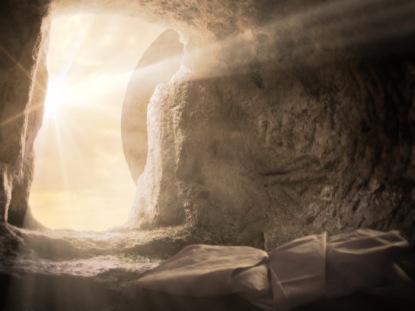
empty tomb grave clothes

Texts used – Isaiah 65:17-25 and Luke 24:1-12

  • We love new things, don’t we?
    • New phone, computer, or tablet
      • Figuring out all the different features
      • Finding favorite new programs/apps
      • Comparing it with your previous device
        • Faster
        • Sleeker
        • (hopefully) easier to use
    • New car
      • Researching best option for yourself
        • Mileage?
        • Passenger capacity?
        • Fuel economy?
        • Options – leather seats, sun roof, towing capability, etc.
      • Driving that new car for the first time (either brand new or new to you … doesn’t matter) → never prouder than driving my 1st car (total junker!)
      • Learning about all the different features
        • Where’s my windshield wiper switch?
        • How do I change the clock?
        • Pre-setting the radio buttons
        • Etc.
    • New pair of shoes
      • Showing off the way they look
      • Getting used to the way they feel
      • Keeping them clean and shiny
    • Today, we celebrate the resurrection of Jesus Christ. The stone is rolled away. The tomb is empty. Christ is Risen! Hallelujah! – task today: find the “shiny and new” in this ancient story, in these words that we have heard so many times before
  • “Resurrection” = literally: rising again = new life – text: Suddenly, two men were standing beside them in gleaming bright clothes. The women were frightened and bowed their faces toward the ground, but the men said to them, “Why do you look for the living among the dead? He isn’t here, but has been raised.”[1]
    • “He isn’t here, but has been raised.” What?! Pretty incredible new thing right there! Resurrection. – only been done by Jesus up to this point
      • Lazarus
      • Little girl
      • And Jesus had to be present for those. He had to play an active part – calling Lazarus out of his tomb, taking the little girls hands and instructing her to get up. And Jesus couldn’t stand there and call himself out of the grave.
      • Introduces a whole new world
        • World in which death no longer has the final say
        • World in which God’s love and grace are stronger than anything that try to keep us in the dark
        • World in which a risen Savior reaches down to raise us up with God
          • Paul in Romans: I’m convinced that nothing can separate us from God’s love in Christ Jesus our Lord: not death or life, not angels or rulers, not present things or future things, not powers or height or depth, or any other thing that is created.[2]
  • In the face of this awareness, we need to hear our Old Testament passage in a new light.
    • Call to action
    • Call to discipleship
    • Call to do and to dare for the sake of our radical and resurrected God
    • Text: Look! I’m creating a new heaven and a new earth: past events won’t be remembered; they won’t come to mind. Be glad and rejoice forever in what I’m creating, because I’m creating Jerusalem as a joy and her people as a source of gladness.[3]
      • Acknowledge: We often read it as pertaining to Jesus’ resurrection – that new and crazy-amazing thing that God did by raising Jesus from the dead and enfolding us in pure, irrevocable, undeniable, undeserved, and unconditional grace. And that’s definitely true. In that glorious act of resurrection, God did indeed do a new thing. God did indeed create a new heaven and a new earth – wiping away all those past events that kept us at arm’s length and enfolding us in glad rejoicing forevermore. Alleluia!
    • BUT … I want you to notice something in this text. Did God say, “I have created a new heaven and a new earth?” Like it was something that God had already done? Did God say, “I will create a new heaven and a new earth?” Like it’s a one-time-only future event that requires a save-the-date and an RSVP? No. God said, “I am creating a new heaven and a new earth.” Am. Creating. This is a continuing action – something that God has done and is doing and will do – this new and crazy-amazing thing just keeps coming. And friends, this is where we come in.
      • Often speak of being “the hands and feet of God” in church (pertaining to mission works) – This … is that!
        • Paul in 2nd letter to Corinthians: So then, if anyone is in Christ, that person is part of the new creation. The old things have gone away, and look, new things have arrived![4]
    • Is passage speaks of what that new heaven and new earth will be like: No one will ever hear the sound of weeping or crying again. No more will babies live only a few days, or the old fail to live out their days … They won’t build for others to live in, nor plant for others to eat. … They won’t labor in vain, nor bear children to a world of horrors[5] → Friends, this new heaven and new earth is a place of justice and equality. It is a place where those who have more than enough share with those who have need. It’s a place where an honest day’s work earns an honest wage (those who build houses live in them, those who work in the fields reap the benefits). It’s a place where no more children will be born “to a world of horrors” – the horrors of war, starvation, human trafficking, abuse, neglect, preventable diseases, and so much more.
  • New thing is not always an easy or comfortable thing – messengers in gospel reading (to the women): “Why do you look for the living among the dead?” = “Why are you looking in the ‘ordinary’ place for one who has always been extraordinary?” → Like the women, we still have a tendency to look for Jesus in all the ordinary places … the familiar places … the expected places. We often forget or neglect to look for Jesus in the difficult and uncomfortable places:
    • Poor and underprivileged places
    • Desperate and demoralized places
    • Oppressed and violent places
    • Hopeless and fearful places
    • Ailing and afflicted places
    • All of those places that we hesitate to go … all of those places that we would rather ignore, gloss over, forget about. But we forget just how truly radical Jesus was – how he broke barriers, toppled traditions, and upended presumptions; how he spent all his time with exactly the people he was “supposed to” avoid – the sinners, the foreigners, the outcasts, the women. That is the Jesus who was raised from the dead. That is our Resurrected Savior. And that is where Jesus is, even today. That is where Jesus continues to be in all his grace-filled, love-filled, resurrected glory: with the sinners, the foreigners, the outcasts, the women … with those whom society continues to forget, to neglect, to push to the side and hide away.
      • With refugees and immigrants
      • With single parents struggling to make ends meet
      • With the homeless men/women on the street
      • With those battling illness (physical and mental)
      • E.g. – annual papal foot washing ritual on Maundy Thurs.
        • Tradition = deacons who had helped the pope serve Maundy Thurs. mass → always 12 Catholic men in good standing with the church
        • Pope Francis – allowed “wider representation of the People of God to take place in this ceremony”[6]
          • 2013 = feet of young men and women detainees at juvenile detention center
          • 2014 = people at home for elderly and disabled
          • Last year = 12 prisoners (men and women)
          • This year = 12 Muslim, Hindu, and Christian refugees (men and women)
          • Doesn’t just superficially swipe at them with a damp cloth – pours water over them, pats them dry, then leans down to kiss the feet he has washed
  • I want to share a poem with you this morning.
    • Written by Ann Weems = “Presbyterian poet laureate”
    • Died at age 81 on Mar. 17, 2016
    • Wrote powerful poems for life, for liturgy, for faith
    • In Search of New Resurrections” in Kneeling in Jerusalem[7] → “Where change is possible / new resurrections loom!” We are where change is possible! We are the hands and feet and love of God in this world. We are disciples, sent out just as directly and as urgently as those women were sent that morning, to search among the unexpected for the Risen Savior.
      • Scholar (pastor at First Pres in Charlotte, NC): Once you walk up to the tomb and see it empty with the stone rolled back, the role of a follower of Jesus takes on more significance and urgency. No longer is it time to stand idly by, to observe, to wait, to accept the world the way it is. The knowledge of resurrection impels those who believe to walk the pathway of discipleship. To work. To risk. To challenge. To take up the cross … We are threatened by the resurrection. The old life may not be gone just yet, but it will be. Our new life has begun.[8] → Friends, the tomb is indeed empty. Christ is Risen, and it is a whole new world – a world in which our Resurrecting and Resurrected God continues to create new works for justice and peace every minute of every day … through us. Our new life has indeed begun. Alleluia! Amen.

[1] Lk 24:4b-6a.

[2] Rom 8:38-39.

[3] Is 65:17-18.

[4] 2 Cor 5:17.

[5] Is 65:19b-20a, 22a, 23a.

[6] “Holy Thursday Mandatum,” from the January 2016 newsletter of the Committee on Divine Worship, United States Conference of Catholic Bishops. http://www.usccb.org/prayer-and-worship/liturgical-year/triduum/holy-thursday-mandatum.cfm. Accessed Mar. 27, 2016.

[7] Ann Weems. “In Search of New Resurrections” in Kneeling in Jerusalem: Poetry for Lent and Easter. (Louisville, KY: Westminster John Knox Press, 1993), 99-101.

[8] Pendleton B. Peery. “Luke 24:1-12 – Theological Perspective” in Feasting on the Gospels – Luke, vol. 2. (Louisville, KY: Westminster John Knox Press, 2014), 348.

Sunday’s sermon: Set in Stones

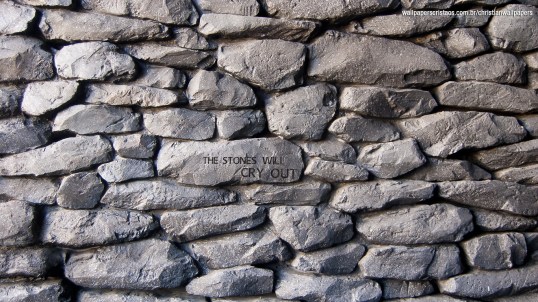
stones will cry out

Texts used – Psalm 118:1-2, 19-29 and Luke 19:28-40

  • Friends, it is that dramatic, mystical time of year when anything can happen … when dreams come true … when anticipating hangs in the air as thick as those snowflakes that were coming down on Friday afternoon. I am talking about none other than … March Madness!
    • College basketball championship games – single-elimination tournament that started Thursday with 64 teams and will be whittled down to just 1 champion on Apr. 4
      • 5 weeks = magical → turn even completely unknowledgeable amateurs (like myself) into devout fans
        • Admittedly only time of year when I care at all about any college sports
    • Now, if you’re completely unfamiliar with this yearly ritual, there are two essential things you need to know about March Madness.
      • 1st = brackets: way people attempt to predict outcomes of every game played from Day 1
        • Multiple platforms host brackets (ESPN, etc.)
        • Go in with various groups (mine: Young Clergy Women’s Project)
        • Some include buy-in pools → pay $X to participate and bracket with most successful/correct predictions wins the pot
        • Add a bit of a personal connection, especially if you have no association with any of the colleges in the tournament
      • 2nd = Cinderella stories: those long-shot teams that suddenly, magically find themselves beating teams with better rankings, bigger budgets, stronger players → This is, quite simply, that ancient pull to route for the underdog.
        • Usually one or two upset games like this in the tournament
    • But this year has been an entirely different story. Within the first few days of the tournament, there has been upset after upset after upset. All of these little schools that no one’s ever heard of beating big schools that always find themselves deeper in the tournament than just that first round! It’s been Cinderella story after Cinderella story.
      • After the 2nd day, only 10% of brackets hosted by ESPN were still perfect … And no, my brackets are not part of that 10%. J
      • Cinderella stories like this turn tournament on its head → take conventional expectations and make topsy turvy
  • So today is Palm Sunday – a day when we celebrate Jesus’ triumphal entry into Jerusalem with the crowds. We wave our palms. We shout our “Hosannas.” We want to focus on the joyful, the redemption, the end of the story – an empty tomb and neatly folded graveclothes and a risen Savior. But between the celebration of today and the elation of Easter Sunday, we must walk through the rest of Jesus’ story this week – the Last Supper, the Garden of Gethsemane, the betrayal and arrest, the beating, the crucifixion, the death.
    • What we know that those crowds didn’t know – how topsy turvy Jesus’ story truly would be
      • Triumph … in trial
      • Profit … in pain
      • Deliverance … in death
    • This is not exactly the mighty, conquering, Roman-regime-toppling Messiah that the Jewish crowds wanted Jesus to be. That was their expectation of what the Messiah would come to do – free them physically from those who oppressed them. But in just a few short days, Jesus would turn their entire idea of Messiah completely on its head.
      • Story so odd
      • Story so unpredictable
      • Story so out of the blue
      • Story cannot be told in usual voices of ancient storytellers but instead in the stones
  • FIRST STORY FROM THE STONES: Ps 118
    • Certainly tells a bit of the story: The one who enters in the Lord’s name is blessed; we bless all of you from the Lord’s house. … So lead the festival offering with ropes all the way to the horns of the altar.[1] → sounds like Jesus’ entry into Jerusalem, right?
      • This is certainly where some of the crowd’s cries came from: “We bless all of you from the Lord’s house” = crowd’s “Blessings on the king who comes in the name of the Lord!”
    • Begins with joy and with praise: Give thanks to the Lord because he is good, because his faithful love lasts forever. Let Israel say it: “God’s faithful love lasts forever!”[2]
      • Heb. “faithful” = powerful word → This word encompasses exceptional devotion and loyalty.
        • Sense of binding obligation to the community (family, friends, etc.)
        • Sense of grace … And beyond even that, evidence of that grace – something palpable, something quantifiable and measurable, something that will remain as a concrete reminder of that grace. Our psalm calls Israel to bear witness that this is the kind of love that God has for us – that it is this kind of love that will surely last forever.
    • Key verse: The stone rejected by the builders is now the main foundation stone![3] – rest of our reading today builds on that foundation stone
      • Text: This has happened because of the Lord; it is astounding in our sight! This is the day the Lord acted; we will rejoice and celebrate in it!
        • Often read as celebrating in the elevation of the stone – from refuse and rubble to cornerstone
          • Purpose of a cornerstone: first stone set in the construction of a masonry foundation – important since all other stones will be set in reference to this stone → So this one stone ends up determining the position of the entire
        • That’s something to celebrate, right? In the face of the rejection that he will face this week, we hold onto this prediction that Jesus will be elevated to that position of greatest importance. But what if that’s not it? But what if we’re actually being directed to rejoice and celebrate in the rejection? To be astounded not by the lifting up but the tossing out? “This has happened because of the Lord … This is the day the Lord acted.”
          • Topsy turvy story → takes our typical response to rejection and turns it on its head
    • Ends with same declaration of joy and praise that open the psalm: Give thanks to the Lord because he is good, because his faithful love lasts forever.[4] → even in the face of that topsy turvy rejection … God’s everlasting, faithful love
  • SECOND STORY FROM THE STONES: Luke’s gospel
    • Most of today’s passage = familiar story of Jesus’ triumphal entry into Jerusalem
      • Includes adoring crowds waving palms branches and tossing their coats on the road, an ancient sign of praise and reverence that was used for mighty kings in Israel’s history
      • Includes familiar cries: “Hosanna! Blessings on the king who comes in the name of the Lord! Peace in heaven and glory in the highest heavens!” → cries that sound happy and joyful and innocent … but are far from it
        • “Hosanna” = Greek mash-up of 2 Hebrew words, hoshiah and na, which mean “Save now” → words actually come from the psalm we read today, too
          • Ps: Lord, please save us! Lord, please let us succeed![5] → “Lord, please save us!” is exactly that phrase: Yahweh, hoshiah na. So these are not simply cries of adoration but cries for salvation and deliverance. These are cries that betray just how the crowd feels about the Romans … which was a dangerous thing to do.
    • Precipitates the Pharisees’ reply → Now, I know that the Pharisees get a bad rap throughout Scripture, and much of that is well-deserved. But in this case, the Pharisees aren’t trying to be combative or obstinate or obstructionist. They’re trying to keep the peace. They’re trying to keep the crowds safe.
      • Roman soldiers certainly nearby hearing these cries of “Save us!” and “Here comes the king!” (not directed at the Roman emperor, who was the only politically acceptable recipient of such a phrase) → dangerous and subversive cries
        • Could have gotten them all in trouble
        • Could have started a riot
        • Could have ended in retaliatory actions – harsher restrictions on the Jews to “keep them in line”
        • So the Pharisees’ response – “Teacher, scold your disciples! Tell them to stop!” – is one that comes not from a place of opposition or antagonism but a place of fear.
    • Jesus’ quirky, topsy turvy response: “I tell you, if they were silent, the stones would shout.”[6]
      • One of the coolest verses in the Bible because of the Greek behind it → One tiny, little, seemingly-insignificant word in this phrase can make all the difference. It’s a word that can be translated as both “if” and “when,” and if you alter the translation with that subtle nuance, it makes quite a difference: “I tell you, when they are silent, the stones will shout.”
        • Jesus foreshadowing what is to come – the abandonment, the crowds turning on him, the same voices soon shifting from cries of “Save us!” to cries of “Crucify him!”
      • And yet, even in the face of that rejection, the stones will tell the story. The stones will shout “Hosanna!” The stones will testify to God’s salvation. “I tell you, when they are silent, the stones will shout.”
    • Even more interesting twist – what stones were often used for in those times = instruments of death in judgment
      • Carried out by numerous cultures throughout history
      • Still practiced in some parts of Middle East, Africa, and Asia today
      • Know it was practiced in Jesus’ time – scene from gospel of John: The legal experts and Pharisees brought a woman caught in adultery. Placing her in the center of the group, they said to Jesus, “Teacher, this woman was caught in the act of committing adultery. In the Law, Moses commanded us to stone women like this. What do you say?” … He stood up and replied, “Whoever hasn’t sinned should throw the first stone.”[7]
      • And yet, it is these instruments of death that will declare the name of the one who brings everlasting life! Again, the conventional expectation is turned on its head.
  • One final stone that we cannot neglect to mention as we look to the week ahead: stone that will be rolled in front of Jesus’ tomb
    • Another stone that is supposed to signify the permanence and unbreakable bonds of death
      • Stone that was meant more to keep others out than to keep the dead in – Pharisees’ request of Pilate from Matthew: “Order the grave to be sealed until the third day. Otherwise, his disciples may come and steal the body and tell the people, ‘He’s been raised from the dead.’ This last deception will be worse than the first.” Pilate replied, “You have soldiers for guard duty. Go and make it as secure as you know how.” Then they went and secured the tomb by sealing the stone and posting the guard.[8]
      • Power of this stone = demonstrated during our Good Friday service with the strepitus, loud noise at the end of the service to signify the sealing of the tomb
    • And yet even this immense stone will not have the final say. Jesus takes the darkness of death – the death in the stones, his own impending death, and even the death that awaits us all – and shatters it.
      • Words of our psalm this morning: He has shined a light on us! … Give thanks to the Lord because he is good, because his faithful love lasts forever.[9]
  • And so with the crowds, we shout, “Hosanna! Save us!” And we prepare to walk through Holy Week with Jesus, knowing that even when all are silent – the disciples, the crowds, even ourselves – when all are silent, the world will still hear the stones cry out: “Blessed is the one who comes in the name of the Lord!” Amen.

[1] Ps 118:26, 27b.

[2] Ps 118:1-2.

[3] Ps 118:22.

[4] Ps 118:1 and 29.

[5] Ps 118:25.

[6] Lk 19:40.

[7] Jn 8:3-5, 7.

[8] Mt 27:64-66.

[9] Ps 118:27a, 29.

Sunday’s sermon: Preciousness in Brokenness

mosaic

Text used – Luke 7:36-50

  • Introduce Broken for You by Stephanie Kallos → In this eccentric, transformative, and powerful story, we meet two central characters: Margaret, a quirky septuagenarian living alone in her mansion in Seattle, WA surrounded only by a mass of antiques; and Wanda, a recently-heartbroken young woman and budding artist who is on a journey not only of miles but of the heart. As these two women develop an odd yet stirring friendship, they end up helping each other find more parts of themselves than either woman ever knew was lost. But in order to experience this life-changing relationship to the fullest, both women have to recognize one thing: they are broken.
    • Brokenness takes on interesting character all on its own – Wanda is a mosaic artist
      • Takes broken pieces – cracked and chipped and discarded bits of hundreds of lives – and makes them into something beautiful again → [READ SECTION]: “It’s my wedding china,” Margaret continued. … She began turning the plate over in her hands. “It’s very … ornate.” “It’s gaudy. Self-centered. Desperate. Preening. I’ve never liked it.” Margaret’s hands were gaining courage now; one of them left the plate and fell limply to her side. It’s just a plate, after all, she thought, at the same time knowing full well that it was much, much more than a plate. … With that, she let go. For a while, it was as if gravity ceased to exist, and the plate made its way to the hardwood floor with the dreamy languor of a snowflake. A great deal of time seemed to go by, and as Margaret watched the slow, unreal descent of the plate, she thought, I could still catch it if I wanted to, change history, interrupt this tragedy. It’s not too late. … The plate arrived. The sound it made was not nearly as loud as Margaret had anticipated, nor did it shatter dramatically as she had secretly hoped. Actually, the damage was probably not irreparable. But Margaret was in charge of this plate’s future, for the time being anyway, and she did not want to see it repaired. … Without knowing exactly why, Margaret giggled abruptly, and then, just as abruptly, stopped. “Crash,” she said. Wanda looked up from the ruined plate. “Margaret?” she said, putting a hand on her shoulder. She didn’t seem to realize that she had begun to weep. “Margaret?” Wanda repeated. “Are you – ?” “It’s all right, dear. Really. It’s what I want to do.” … As Wanda watched her haul the first armload of dishes outside and heard the clamor that followed a few seconds after her exit … she suddenly knew that she had found a home with someone who was as deeply aggrieved and crazy as she was. It was tremendously comforting.[1]:
        • Reminds me of both the woman in song we’ve been listening to and the woman in our Gospel story
          • Both have been chipped away at
          • Both have been broken
          • Both have been discarded
            • By society, and eventually …
            • By themselves
            • And yet, just like those shattered plates and saucers and bowls that became such beautiful mosaics, the end for these women was not in the brokenness.
  • Gospel story = probably one of the most powerful stories in all of Scripture
    • Main characters in this tale
      • Jesus
      • Simon, the Pharisee
      • Woman with the alabaster jar/vase – woman who’s gotten quite a bad rap throughout the centuries
        • Luke’s description – “woman from the city, a sinner” → has been characterized as a prostitute, often presumed to then be Mary Magdalene
          • No indication that this woman is Mary Magdalene
          • No indication that this woman’s sin has anything to do with sexuality → only sure thing is that her sin (whatever it was) carried a heavy social stigma – those in the room knew simply by the sight of her that she was a sinner
            • Something about her – her demeanor, the way she carried/presented herself, perhaps her bowed head and downcast eyes … something about her conveyed her brokenness in all its pain and shame and separation
            • Hear this recognition in Simon’s reaction to her presence: When the Pharisee who had invited Jesus [i.e. – Simon] saw what was happening, he said to himself, “If this man were a prophet, he would know what kind of woman is touching him. He would know that she is a sinner.”[2]
              • Implication = that she is someone who doesn’t deserve to be in the presence of “decent people”
        • She reminds me so much of the woman in our song. → [PLAY SONG[3]]
  • Now, over the past few Sundays throughout Lent, we’ve talked a lot about this song – about the resignation and the brokenness we hear in it. We talked about what it means to be running on empty, about how we are never too far from the love of God, and about how, even when we don’t feel like we can go another step, God meets us wherever we’re at.
    • Said at the beginning of this sermon series that this song “sounded like Lent” the first time I heard it – sounded like the introspective and repentant nature of Lent → naming and claiming those less-than-impeccable parts of ourselves
      • Our mistakes
      • Our flaws
      • Our prejudices
      • Our reluctances
    • Heard the message of God’s love for us and message of God’s willingness to reach out to us even when we ourselves don’t feel like we can reach out to God
    • Most powerful message today = same message that Jesus has for the woman with the alabaster jar → It is not righteousness or perfection or outward appearances that make us precious in God’s eyes.
      • Gospel story – Simon appeared to be “in the right,” to “have it all together” → Simon was a Pharisee – a well-respected, well-to-do character in the community. At this point in Luke’s gospel, the Pharisees haven’t quite turned against Jesus yet. They’re still trying to figure out this teacher/preacher man who’s suddenly getting all the attention. So it was surely both a fact-finding mission and a matter of pride for Simon that Jesus had come to his home for a meal. And yet Jesus conversation is quite revealing.
        • Reveals Simon’s own failings
          • First, Jesus’ short parable about a debt forgiven and the gratitude emanating from that forgiveness: “Which of them will love [the lender] more?” Simon replied, “I suppose the one who had the largest debt canceled.” Jesus replied, “You have judged correctly.”[4]
          • Opens Simon’s eyes to fact that he wasn’t quite as unblemished as he would have like to think – key = hospitality → Jesus describes in no uncertain terms the welcome – or lack thereof – that he received when he entered Simon’s home.
            • Middle Eastern culture places very high significance on hospitality and yet …
              • Jesus NOT offered a chance to wash the road dust off his feet – no water, not even a towel to wipe them off
              • Jesus NOT given a kiss of welcome (commonplace in that culture)
              • Jesus NOT given any oil to anoint his head (also commonplace in culture)
            • Simon, the ultra-correct, ultra-respectable Pharisee should have known to observe these cultural patterns, and yet, for whatever reason, he neglected them. But this woman – this debased and yet deeply devoted woman did all of these things for Jesus. She washed his feet with her tears of repentance and adoration. She dried his feet with the very hair on her head. And she anointed not his head but his feet – his feet! – with an entire vase full of precious oil.
              • Feet = much lowlier part of the body – not usually anointed → That was how much she loved and revered Jesus. Even his feet – his lowly, dirty, road-worn feet – deserved to be anointed.
      • Jesus: “This is why I tell you that her many sins have been forgiven; so she has shown great love. The one who is forgiven little loves little.” Then Jesus said to her, “Your sins are forgiven. … Your faith has saved you. Go in peace.”
  • It is repentance … a turning and returning to God with remorse and our own declarations of love and devotion on our lips and in our hearts.
    • Hear again the words from Ps 51 we read during our Ash Wed. service to begin this season of repentance: The sacrifice acceptable to God is a broken spirit; a broken and contrite heart, O God, you will not despise.[5]
    • Sounds like end of song → speaking of herself (the girl that I knew):

And then she’ll get stuck and be scared
Of the life that’s inside her
Growing stronger each day
‘Til it finally reminds her
To fight just a little
To bring back the fire in her eyes
That’s been gone … but it used to be mine.

  • Even in the midst of pain and bone-weariness … redemption, renewal, peace
    • Scholar: Forgiveness can open the possibility that one is worth something. In fact, that one is worth quite a lot. This is freedom. Jesus reminds us that this freedom is the gift of a loving God. A heart that is bound by sin and shame withers and dies, but the love of a forgiving God lifts it to heights beyond our greatest dreams and causes it to sing in gratitude.[6]
    • Doesn’t erase our sins
    • Doesn’t make it like they never happened in the first place
    • Jesus didn’t say, “Your sins are forgotten.” He said, “Your sins are forgiven.”
      • Song ends with the familiar chorus: She’s messy but she’s kind … She is lonely most of the time … She is all of this mixed up and baked in a beautiful pie … She is gone but she used to be mine. → We will always carry the reminders of the things that we’ve done and said and the choices we’ve made that we wish we could take back. But when we turn to God – no matter how drained, how lost, how jaded, or how broken we feel … When we turn to God once again with a repentant and contrite heart, God will call us not broken and hopeless but forgiven … precious … beloved. Amen.

[1] Stephanie Kallos. Broken for You. (New York, NY: Grove Press, 2004), 131-133.

[2] Lk 7:39 (emphasis added).

[3] “She Used to Be Mine,” written and performed by Sara Bareilles. From What’s Inside: Songs from Waitress, Epic Records, released Sept. 25, 2015.

[4] Lk 7:42b-43.

[5] Ps 51:17 (NRSV).

[6] M. Jan Holton. “Proper 6 (Sunday between June 12 and June 18 inclusive) – Luke 7:36-8:3, Pastoral Perspective” in Feasting on the Word: Preaching the Revised Common Lectionary – Year C, vol. 3. (Louisville, KY: Westminster John Knox Press, 2010), 144.

Sunday’s sermon: Where We’re At

God meets us

Text used – 2 Corinthians 5:16-21

  • [PLAY SONG] → For a few weeks now, we’ve been listening to this song – “She Used to Be Mine” by Sara Bareilles[1] – and hearing messages of Lent through its
    • Talked about what it feels like to be running on empty → how God can relate to that feeling through Jesus’ own, very human struggles
    • Talked about sometimes feeling like we are too far gone – beyond God’s grasp → how God’s love and grace extend to us no matter how far away we think we are
    • This week: focus a little on one particular stanza – 3rd stanza:

It’s not what I asked for
Sometimes life just slips in through a back door
And carves out a person
And makes you believe it’s all true
And now I’ve got you
And you’re not what I asked for
If I’m honest I know I would give it all back
For a chance to start over
And rewrite an ending or two
For the girl that I knew

  • I don’t know about you, but I hear such resignation in this stanza. There seems to be such a feeling of submission to the circumstances of life – both in the lyrics themselves and the way in which they’re sung, particularly those two lines in the middle: “And now I’ve got you, And you’re not what I asked for.”
    • Feel her lack of motivation and inspiration
    • “This is where my life has ended up. So be it.”
    • So lackluster, so flat, so subdued
    • Needs someone or something to come in and intervene
      • Shake her up
      • Wake her up
      • Bring some spark and some joy and some purpose
  • Sometimes get into cycles like this with our faith
    • So familiar with a passage in Scripture that we stop hearing it → usually ends up happening with some of the most powerful and impactful passages
    • Times when we’ve gone through the motions so many times – this ritual practice, that traditional saying – that we become immune to the majesty and the mystery that inspired those motions in the first place
      • E.g. – “sursum corda”[2] → Did you know that our common liturgy – a piece of the worship that we repeat at least once a month without fail – is in fact an ancient formula that has been used by Christians in worship since the early 3rd century?
        • Echoes even more ancient words of Scripture throughout the Old Testament
        • Serves as a summons to heaven – calls the faithful not only to prayerful concentration but to heavenly-mindedness and drives home need for sincerity in prayer
        • Literally being called into God’s presence
        • Friends, we will say these very words once again today. Soon, we will all raise our voices together, inviting each other to heavenly contemplation and into the very presence of God. This bit of liturgy is called the “sursum corda.”

God be with you.
And also with you.
Lift up your hearts.
We lift them up to God.
Let us give thanks to God Most High.
It is right to give our thanks and praise.

  • How many times have you repeated these words? And how often have you taken these words for granted – simply resigned to thinking they are what they are, immune to the majesty and the mystery that inspired those sacred words in the first place? Going through the motions …
  • As I said, last week: talked about feeling too far gone – being in a place too dark, too painful, too challenging, too messed up, too fear-filled, too doubtful, too weak, too wrong for God to find us … And then we were reminded through the words of the prophet Isaiah that such a place does not exist – that God can always get to us: Seek the LORD when he can still be found; call him while he is yet near. Let the wicked abandon their ways and the sinful their schemes. Let them return to the LORD so that he may have mercy on them, to our God, because he is generous with forgiveness.[3] → This week, I want to build on that idea. You see, not only is there no place that God can’t reach, there’s also no place that God won’t go to find us.
    • Popular phrase in practical theology, pastoral care, and other Christian writings = God meets us where we’re at → conveys God’s willingness and ability to slog through whatever is surrounding us in order to walk our path alongside us
      • Not drag us back to “the right way”
      • Not force us to slog through everything alone – watching us desperately and arduously work our way back to God’s side while God waits safely and serenely in the clear
      • God meets us where we’re at
      • Think of it this way … inversion goggles experiment[4]
        • 1950
        • Professor Theodor Erismann and Ivo Kohler (student and assistant)
        • Erismann hand-made goggles with special mirrors that flipped wearer’s vision upside-down
        • Kohler (being the lowly student and guinea pig) wore goggles
          • First 3 days – disastrous → needed a cane to keep from falling over while walking, constantly running into things, missed grabbing things held directly in front of him, dumping cups of tea when he realized the water was flowing upside down … You get the picture!
          • Odd thing: over the period of a week, Kohler’s brain started to adapt to even that drastically altered state → after 10 days was functioning perfectly normally again even while wearing the inversion goggles
            • State of his reality had been altered – up ⟷ down and vice versa … So much so that when Kohler finally removed the goggles at the end of the experiment, it took him another week or so just to adjust back again. Without the goggles, his world looked upside-down!
          • There are plenty of times throughout life when we feel like things are upside-down at best, and instead of waiting for our realities to readjust on their own, God steps right in in the midst of our disorientation and frustration and panic and whatever else and says, “I’m here.”
    • Hear this in Scripture this morning
      • Elements of disorientation: So then, from this point on we won’t recognize people by human standards. Even though we used to know Christ by human standards, that isn’t how we know him now. So then, if anyone is in Christ, that person is part of the new creation. The old things have gone away, and look, new things have arrived![5] → Not recognizing people by human standards? New creation? Some new thing that’s arrived? We can imagine how disorienting and confusing this might have been for early Christians … indeed, now disorienting and confusing it can still be for us! What is this new thing? What does it mean for my life? What do I have to do? Where do I have to go? And yet …
      • Text (following): All of these new things are from God, who reconciled us to himself through Christ and who gave us the ministry of reconciliation. In other words, God was reconciling the world to himself through Christ, by not counting people’s sins against them.[6] → Did you catch that? “All of these new things are from God, who reconciled us to himself through Christ.” God does that. Not us. None of the action in these verses is on our part. God willingly intervenes – shakes us up, wakes us up, bring us that spark, that joy, that purpose.
        • Could be actively struggling — OR —
        • Could be in a state of dispiritedness like the woman in the song: “If I’m honest I know I would give it all back, For a chance to start over, And rewrite an ending or two, For the girl that I knew” → God’s response: So then, if anyone is in Christ, that person is part of the new creation. The old things have gone away, and look, new things have arrived! … God caused the one who didn’t know sin to be sin for our sake so that through him we could become the righteousness of God.[7]
          • Also part of our communion liturgy: No matter who you are … no matter where you come from this morning … no matter what you bring with you, you are welcome here at this table and in this community. Amen.

[1] “She Used to Be Mine,” written and performed by Sara Bareilles. From What’s Inside: Songs from Waitress, Epic Records, released Sept. 25, 2015.

[2] Dr. Jack Kinneer. “Roots of Reformed Worship, No. 6” from the Echo Hills Christian Study Center (Indian Head, PA), 1998. https://centralpresworship.files.wordpress.com/2012/02/roots-of-reformed-worship-6-calvin-and-sursum-corda.pdf, accessed Mar. 5, 2016.

[3] Is 55:6-7.

[4] Marc Abrahams. “Experiments show we quickly adjust to seeing everything upside-down” from The Guardian, http://www.theguardian.com/education/2012/nov/12/improbable-research-seeing-upside-down. Posted Monday 12 November 2012, accessed Mar. 5, 2016.

[5] 2 Cor 5:16-17.

[6] 2 Cor 5:18-19a.

[7] 2 Cor 5:17, 21.

Sunday’s sermon: Never Too Far Gone

never too far

Text used – Isaiah 55:1-9

  • Believe it or not, we find ourselves at the 3rd Sunday in Lent already. You may remember from a few weeks ago that our Lenten series this year follows a popular song – “She Used to Be Mine” by Sara Bareilles.[1] When we started our Lenten sermon journey together, we talked about a common theme – in the song, in our lives, in the world around us: running on empty.
    • Hear it in the song
    • See it in our own over-busy, over-scheduled days
    • Feel it in our over-stressed, over-burdened lives
    • This is one of the main intentions behind our table of obstacles. No matter what it is that pulls your attention away from God, the further we get from that crucial spiritual connection, the emptier we often feel. Sometimes, we find ourselves so removed from our relationship with God that we end up feeling like we’ve gone too far – like somehow, there isn’t a way back.
      • Too doubtful
      • Too difficult
      • Too dark
    • And even though I find Lent to be a powerful time … a time of self-reflection, a time of really looking at ourselves in entirely and truth, a time of examining who we are – the good, the bad, and the ugly … Even though I find Lent to be a powerful time exactly because of this self-examination, it can also be a challenging time … exactly because of this self-examination.
      • Spiritual practice of examen[2]
        • Technique devised by St. Ignatius of Loyola[3] (Spanish knight turned hermit, priest, and theologian from the 1500s who founded the Jesuit order[4] – those who are often working on the “front lines” of the Catholic Church for justice such as Jorge Mario Bergoglio … better known as Pope Francis)
        • Examen = introduced by Ignatius in Spiritual Exercises[5]
          • Premise: a technique of prayerful reflection on the events of the day in order to detect God’s presence and discern [God’s] direction for us
          • Many versions that have been adapted throughout the centuries – basic idea: 1. Become aware of God’s presence. 2. Review the day with gratitude. 3. Pay attention to your emotions. 4. Choose one feature of the day and pray from it. 5. Look toward tomorrow. → Think of it as sort of a daily inventory of yourself and your spiritual life and your connection with God. “Where did I see God today? Where did I need God today? Where might I have overlooked God today?”
  • Intentional times of self-examination like this can help us to learn a lot about ourselves and a lot about God. But it’s also a double-edged sword. You see, when we look into the depths of our being, we very often find things that we don’t like.
    • Elements of ourselves that we would rather keep hidden – parts of who we are and what we do and how we go about being in the world that we feel we need to work on
      • Hear quite a bit of that in our song – [PLAY SONG]: “She’s imperfect … but she tries. She is good … but she lies. She is hard on herself. She is broken and won’t ask for help. She is messy … but she’s kind. She is lonely most of the time.” → Naming with brutal honesty all of those things about herself that she wishes were different … transformed … better. All of those things which we sometimes feel can pull us further and further away from God. Everybody has a list like this. Think about it for a minute.
      • That’s what self-examination is for.
        • Not just about building ourselves up – about finding those things that we love about ourselves
        • Also about finding our growing edges – places for improvement within ourselves
          • Hearts
          • Souls
          • Lives
    • Danger of self-examination in the dark – getting caught up in all of those growing edges … getting overwhelmed by our shortcomings and weaknesses … dwelling on all the mistakes we’ve made → Everyone has those moments: times when you find yourself wide awake in the middle of the night rehashing your mistakes over and over in your mind, going over past words and actions and decisions that we wish like heck we could change. I don’t think it’s a coincidence that most of the times, those moments come to us in literal darkness – in the deepest, darkest part of the night. Because it is in that darkness – darkness of the world around us as well as the world inside of us – that we sometimes feel we are beyond God’s reach.
      • What St. John of the Cross called “the dark night of the soul” – that experience of feeling beyond God’s reach, feeling too far gone from the presence of God
  • And yet, in the face of those feelings of emptiness, of struggle, of pain, of desolation, of fear … In the face of all those thoughts and concerns that we think make us unreachable, we hear the words from the prophet Isaiah: All of you who are thirsty, come to the water! Whoever has no money, come, buy food and eat! Without money, at no cost, buy wine and milk! … Listen and come to me; listen, and you will live.[6]
    • Reassurance of the abundance of God’s mercy
      • Unearned
      • Unrestrained
      • Unconditional
      • It doesn’t say, “You who are thirsty … and perfect.” It doesn’t say, “You who are thirsty … and totally put together.” It doesn’t say, “You who are thirsty … and unbroken.” It just says, “You.” God’s compassion and forgiveness are not reserved only for those who seem to be “right” in whatever form that takes – right job, right family, right prayers, right life.
        • Picture that often pops up on Facebook:
          imperfect disciples
  • But what’s the one thing all those people had in common? They said “yes” to God. → may have taken some time (Jonah), may have endured some ridicule (Noah, Martha), may have had to swallow their pride (David, Sarah), certainly had to take a leap of faith (all!) … But they still said “yes” with their words and, more importantly, with their actions! → scripture: Seek the LORD when [the Lord] can still be found; call [God] while [God] is yet near. Let the wicked abandon their ways and the sinful their schemes. Let them return to the LORD so that [God] may have mercy on them, to our God, because [the Lord] is generous with forgiveness.[7]
    • Takes some effort on our part (Seek the Lord … call on [God], etc.)
    • BUT reinforces the promise (Let them return to the LORD so that [God] may have mercy on them, to our God, because [the Lord] is generous with forgiveness) → The Lord is generous with forgiveness. Generous! “Liberal with giving or sharing … abundant … prolific.” Friends, this is our God, a God for whom we are never out of reach, never too far gone.
      • Jesus told them this parable: “Suppose someone among you had one hundred sheep and lost one of them. Wouldn’t he leave the other ninety-nine in the pasture and search for the lost one until he finds it? And when he finds it, he is thrilled and places it on his shoulders. When he arrives home, he calls together his friends and neighbors, saying to them, ‘Celebrate with me because I’ve found my lost sheep.’ In the same way, I tell you, there will be more joy in heaven over one sinner who changes both heart and life than over ninety-nine righteous people who have no need to change their hearts and lives.”[8]

[1] “She Used to Be Mine,” written and performed by Sara Bareilles. From What’s Inside: Songs from Waitress, Epic Records, released Sept. 25, 2015.

[2] “The Daily Examen” from Ignaitan Spirituality, http://www.ignatianspirituality.com/ignatian-prayer/the-examen, accessed Feb. 28, 2016.

[3] “Ignatius of Loyola” from https://en.wikipedia.org/wiki/Ignatius_of_Loyola, last edited Feb. 25, 2016, accessed Feb. 28, 2016.

[4] “Society of Jesus” from https://en.wikipedia.org/wiki/Society_of_Jesus, last edited Feb. 26, 2016, accessed Feb. 28, 2016.

[5] Spiritual Exercises of Ignatius of Loyola, published in 1548.

[6] Is 55:1, 3a,

[7] Is 55:6-7.

[8] Lk 15:3-7.

Sunday’s sermon: Running on Empty

Empty

Text used – Luke 4:1-13

  • Lent. It began just a few days ago with the observance of Ash Wednesday and stretches for 40 days plus Holy Week beginning on Palm Sunday – 47 days total. It is a season of repentance. A season of fasting and sacrifice. A season of prayer and reflection. It is a season born out of our Scripture reading this morning, modeled on the 40 days that Jesus spent in the wilderness.
    • Always found this to be one of those really interesting stories in the Bible → prior to today’s reading: Jesus has just experienced the “up” of God declaring “This is my Son, whom I dearly love; I find happiness in him”[1] – time of …
      • Public identification
      • Acceptance
      • Glory
      • And then, with the baptismal waters of the Jordan River still dripping from his hair and God’s words of love still ringing in his ears, Jesus followed the Holy Spirit out into the wilderness. → abrupt journey of stark contrasts
        • Moved from being thronged by crowds to being completely alone
        • Moved from refreshing waters to arid desert
        • Moved from rush of validation to 40 days and 40 nights of depravation and temptation – text: There he was tempted for forty days by the devil. He ate nothing during those days and afterward Jesus was starving.[2]
          • Important to note: not charicature we’ve come to associate with “devil” today (fire-loving guy the color of a fire engine with horns and a pitchfork who’s in charge of the underworld) → 2 words often used for idea The Opposition in Scripture, both have similar meanings
            • Accuser
            • Slanderer
            • Adversary
            • More about what the devil does than what the devil looks like → image from boys’ story Bible – cloaked and hooded figure (face isn’t visible)
  • Now, one of the things that I find most interesting about this passage is the fluidity of time. Yes, we are told that overall, Jesus spent 40 days in the wilderness, but beyond that, time takes on this nebulous quality. Whenever you see this passage portrayed in movies or other visual representations, it feels like Jesus and the devil move from one temptation to the next in quick succession, but our text says nothing about how much time elapsed with each temptation.
    • Can imagine the devil drawing out those descriptions, making the food … the power … the security look and feel as desirable as possible
    • On the other hand: Can imagine Jesus wrestling long and hard with the answers that he knew were right in his heart and his mind (those answers that he ultimately gave) vs. answers of self-preservation that came from human gut-instinct → Food! Power! Security!
      • Jesus had been wandering around out in the desert for weeks. He was probably tired. He was probably lonely. He was probably sore. He was certainly hungry. Even though he was the Son of God – God indeed in human form – Jesus was still human. While he was out there in the wilderness dealing with everything that he was facing – the fasting, the weather, the terrain, the devil, the temptations – we can only assume that there were times when even Jesus was running on empty.
        • Imagine the more human side of Jesus
        • Supported by all those times in Scripture when Jesus loses control
          • Passage referred to as “cleansing the Temple” → Jesus throwing out merchants and money changers[3]
          • Jesus weeping over death of his friend Lazarus[4]
          • Jesus’ struggle in the Garden of Gethsemane just before his arrest[5]
          • All times when pull of Jesus humanity overcame the calm teacher, the composed leader, the peaceful Savior → indicators of running on empty
  • A few months ago, I heard a song, and when I heard it, I immediately thought, “This is a song for Lent.” It’s a song about struggle. It’s a song about regret. It’s a song about being lost … and a little bit about being found.
    • Words are in your bulletin
    • Listen to song – “She Used to Be Mine” by Sara Bareilles[6]
    • Now, we’re going to be talking about some of the messages and themes running through this song throughout Lent because there’s a lot in it. But in the beginning, this song speaks of running on empty. You can hear the ache. You can hear the weariness. You can hear the desire – desire for what used to be, desire to be better, desire for everything to be okay.
      • Can imagine those desires being something Jesus identified with during his time in the desert, especially since he went straight from glory of baptism to harshness of time in the desert
  • Ya’ll, God knows there are times that we find ourselves running on empty – times when we feel life carving things out (carving bits of ourselves away) despite our best efforts … times when we feel like all we’ve done is pour out and pour out and pour out without being refilled … times when we feel like our flaws and our mistakes and our missed opportunities are all that are visible – like those parts of us are the only ones that matter.
    • Can feel like this in …
      • Church life
      • Work life
      • Home life
      • Life inside of ourselves – that story we tell ourselves before we go to sleep at night
    • And yes, Lent is a time when we reflect on ourselves and our lives, a time when we deliberately turn back to God and seek forgiveness … seek clarity … seek wholeness. Part of that reflection and that seeking is laying our whole lives and our whole spirit’s bare before God and saying, “This is me with all my screw-ups and all my successes, all my weaknesses and all my wonderfulness, all my problems and all my potential.” And that, my friends, is hard. It is a hard thing to do, especially if you’re in a place where you’re more empty than full. But if that’s where you are today, I want you to know it’s okay. God knows what it’s like to be running on empty – to need, to want, to be weary and hungry and depleted. God has been there, too.
      • Beauty of this strange story of Jesus’ wilderness encounters = Jesus was never alone
        • Remember, Jesus followed Holy Spirit out into the desert → And I don’t believe the Holy Spirit ever left him … just as God’s Spirit never leaves us.
          • Wandered with him
          • Struggled alongside him
          • Sustained him when he needed it
          • Wanders with us
          • Struggles alongside us
          • Sustains us when we need it
        • Also, in the face of strongest, most appealing temptations, Jesus clung to Word of God
          • Tempted by food[7] → quoted Deuteronomy[8]
          • Tempted by prestige[9] → quoted Deuteronomy[10]
          • Tempted by security[11] → quoted Deuteronomy[12]
          • The Word of God was with Jesus for support and for strength, to give him the boost that he needed and to begin to fill him up when he was at his emptiest. [hold up Bible] Friends, that Word is still here. It still supports. It still strengthens. It can still fill our hearts and minds and souls when we feel like we’re running on empty.
  • So as we journey through Lent together, whether our spiritual tanks are full or empty or somewhere in between, let us remember the advice from our Ash Wednesday reading: “With Lent, we are granted 40 days to honestly search our hearts. We are granted time to ponder where our souls reside. We don’t need to be pressured to arrive too quickly at conclusions. … We are granted time to be still and just know what God already knows about us.”[13] Thanks be to God. Amen.

[1] Mt 3:17.

[2] Lk 4:2

[3] Mt 21:12-17; Jn 2:13-17.

[4] Jn 11:33-35.

[5] Mt 26:36-46.

[6] “She Used to Be Mine,” written and performed by Sara Bareilles. From What’s Inside: Songs from Waitress, Epic Records, released Sept. 25, 2015.

[7] Lk 4:3.

[8] Deut 8:3.

[9] Lk 4:6-7.

[10] Deut 6:13.

[11] Lk 4:9-11.

[12] Deut 6:16.

[13] Mark Fredericksen. “Day One – Ash Wednesday” in Lenten Meditations: A Forty-Seven Day Devotional Journey, 2012 Edition. (Arlington, TX: KLG Press), 5-7.