Ash Wednesday – What gets in our way?

Throughout the month of January, I’ve asked my parishioners one question: What gets in the way of your relationship with God? There were small slips of paper in the bulletin every Sunday.
What gets in the way

I asked people to write down their responses on those slips of paper and return them to me. All of this way done anonymously. As Ash Wednesday approached, I shuffled all the responses into six general obstacles:

SELFISHNESS

FEAR

COMPLACENCY

BUSYNESS

CONTROL

MEDIA

Then I set up a table in each sanctuary. The table is full of objects that represent those obstacles – a clock for busyness, a mirror for selfishness, a chain for control, a computer screen for media, a pair of sweatpants and a remote control for complacency, and framed blackness for fear. There are also seven candles on the table. We’re doing sort of a backwards Advent. Each Sunday, we’ll have a short reading and a prayer. Then we’ll extinguish one of the candles, removing the fuel and energy from those things that get in the way of our relationship with God.

2016 Ash Wed. O collage
Lenten obstacles table – Presbyterian Church of Oronoco

2016 Ash Wed. Z collage
Lenten obstacles table – First Congregational UCC, Zumbrota

And so we gathered for our Ash Wednesday service last night – to repent and to acknowledge those times and places and habits and realities in our lives that need to be redeemed. We highlighted each of the obstacles, naming our complicity in their presence in our lives and our continued struggle with these things that get in the way of our relationships with God.

SELFISHNESS – “Don’t do anything for selfish purposes, but with humility think of others as better than yourselves. Instead of each person watching out for their own good, watch out for what is better for others. Adopt the attitude that was in Christ Jesus: Though he was in the form of God, he did not consider being equal with God something to exploit. But he emptied himself by taking the form of a slave and by becoming like human beings. When he found himself in the form of a human, he humbled himself by becoming obedient to the point of death, even death on a cross.” ~ Phil 2:3-8
          It’s mine! My decision … my choice … my life … my time … MY WAY. We often become so concerned with ourselves – what’s going on in our careers, our families, and our lives – that we forget to look at the world around us. We’re so concerned with getting wherever we’re trying to go that we shout at the other drivers around us. We’re so concerned with getting what we think we deserve that we neglect those who are truly in need. We’re so concerned with making sure that our own voices and opinions are heard that we often talk over the still, small voice of the Living God in our midst. We come together tonight to remember that our time, our lives, our strength is in God. Alone, we are the ash and dust from which we come. “Remember that you are dust, and to dust you shall return.” * God of all things, remove us from ourselves. Make your desires our desires. Make your Way our way. May our lives reflect not our own selfish ambitions but your own eternal hope. Amen.

FEAR – “You yourself have kept track of my misery. Put my tears into your bottle— aren’t they on your scroll already? Then my enemies will retreat when I cry out. I know this because God is mine. God: whose word I praise. The LORD: whose word I praise. I trust in God; I won’t be afraid. What can anyone do to me? I will fulfill my promises to you, God. I will present thanksgiving offerings to you because you have saved my life from death, saved my feet from stumbling so that I can walk before God in the light of life.” ~ Ps 56:8-13
          We cannot deny that there is darkness in our world. And there are many things to fear in the darkness – uncertainty, illness, grief, anxiety, isolation, hatred, and pain. And so much more. We know about all those things that lurk just outside our vision, waiting for us to feel safe and secure … waiting until just the right moment, our most vulnerable moment, to pounce and devour whatever strength and confidence and peace we have. Yes, fear is a natural part of the world. It is a defense mechanism that has allowed us to survive in the face of challenging and dangerous circumstances for millennia. The problem comes when we allow our fears to paralyze us … when we allow our fears to consume our whole selves, stopping us in our tracks and cutting us off from everything – our friends, our lives, and our faith. In the face of our greatest, most overwhelming fears, we must remember that our God is greater. * Strong and faithful God, be our light in the midst of whatever darkness scares us the most. Be our strength in the face of whatever weakness threatens to paralyze us in fear. You are stronger. You are greater. You indeed are our light and our salvation. Of whom should we be afraid? Amen.

COMPLACENCY/HABITS – “Everybody who hears these words of mine and puts them into practice is like a wise builder who built a house on bedrock. The rain fell, the floods came, and the wind blew and beat against that house. It didn’t fall because it was firmly set on bedrock. But everybody who hears these words of mine and doesn’t put them into practice will be like a fool who built a house on sand. The rain fell, the floods came, and the wind blew and beat against that house. It fell and was completely destroyed.” ~ Matt 7:24-27
          This is my rut. This is the path that I travel, and I know it so well. It’s familiar. It’s comfortable. It’s easy. I know where the path goes uphill and down. I know where the potholes and pitfalls are. I know where it gets messy and where it gets confusing and where it veers off in a completely different direction. We don’t like change because it’s challenging. It’s scary. It’s strange. And so we fall into old, familiar habits. We do what we’ve always done because it’s what we’ve always known. We settle into our complacency like a well-worn pair of sweatpants, satisfied to do just enough … to get by. But how many times has God called people to be safe and complacent? Was Moses’ call to lead the people out of Egypt anywhere near his comfort zone? Did Peter and the other disciples live lives of familiarity and habitualness? Imagine what Paul’s ministry might have looked like had he stuck only to the territory that he knew. God created us in God’s own image – the image of One who is wildly creative, the One who is always doing something new, something inventive and invasive, the One who bursts through, not the one who lays back. * Inspire us, Holy One. Stir us up. Shake us up. Move in our hearts and in our souls in a way that inspires us to shake off our complacency, abandon our fruitless habits, and follow you anew. Amen.

BUSYNESS – “There’s a season for everything and a time for every matter under the heavens: a time for giving birth and a time for dying, a time for planting and a time for uprooting what was planted, a time for killing and a time for healing, a time for tearing down and a time for building up, a time for crying and a time for laughing, a time for mourning and a time for dancing, a time for throwing stones and a time for gathering stones, a time for embracing and a time for avoiding embraces, a time for searching and a time for losing, a time for keeping and a time for throwing away, a time for tearing and a time for repairing, a time for keeping silent and a time for speaking, a time for loving and a time for hating, a time for war and a time for peace.” ~ Ecc 3:1-8
          It’s all about priorities. There are only so many hours in the day – nothing we can do about it, no way for us to change it. And the way that we use those 24 hours is telling. How do we fill up those minutes and hours? But we have so many activities pulling us in so many different directions. There’s always something we need to be doing, somewhere we’re supposed to be. We’re supposed to do it all – keep things running smoothly at home, go above and beyond at work, be involved in the community, and everything else. For some reason, we place our worth in the number of things that we get done – the number of accomplishments under our belt and the number of hours we spent running, the number of hours we spend away from home. As this familiar passage of Scripture says, there is a time for everything … but we have to make that time. We have to make the choice – make the effort. We have to set aside time for important things like family and self-care … and God. * Be with us in our decisions, Everlasting God. You have all the time in the world for us. Remind us to make time for you in our day-to-day lives. Help us to slow down. Help us to stop. Help us to breathe. Amen.

CONTROL – “Truly the eye of the Lord is on those who fear him, on those who hope in his steadfast love, to deliver their soul from death, and to keep them alive in famine. Our soul waits for the Lord; he is our help and shield. Our heart is glad in him, because we trust in his holy name. Let your steadfast love, O Lord, be upon us, even as we hope in you.” ~ Ps 33:18-22.
          We’ve got this, right? Things are a little stressful, but we’re in control. We’ve got this. Things are a little crazy, but we can handle it. We’ve got this. The society we live in praises our ability to hold it all together, to be cool under pressure, to be able to juggle work and a personal interests and relationships and outside interests and hobbies. Sometimes we’re really good at that juggling act. Sometimes all we can do is duck as the balls come tumbling down around us and hope one of them doesn’t hit us in the head. The biggest problem with juggling: focus. When our energy is so exclusively focused on keeping things running our way, how can we possibly have anything left to give to God? While we should be using our energy first and foremost to the One who gave us life to begin with, more often than not, God is lucky to get a quick “thank you” as an afterthought. * Almighty God, remind us that the power is yours. The plan is yours. Help us to relinquish our illusion of control and teach us to pray again and again, “Thy will be done.” Amen.

MEDIA – “Nobody should deceive you with stupid ideas. God’s anger comes down on those who are disobedient because of this kind of thing. So you shouldn’t have anything to do with them. You were once darkness, but now you are light in the Lord, so live your life as children of light. Light produces fruit that consists of every sort of goodness, justice, and truth. Therefore, test everything to see what’s pleasing to the Lord, and don’t participate in the unfruitful actions of darkness. Instead, you should reveal the truth about them. It’s embarrassing to even talk about what certain persons do in secret. But everything exposed to the light is revealed by the light.” ~ Eph 5:6-13
          The headlines are inescapable. This celebrity is marrying that one. This candidate insulted that one.  This athlete did the right thing … or the wrong thing … or the childish thing … or the crazy thing. They’re bold. They’re eye-catching. They’re sensational. It doesn’t matter whether the news is good or bad or somewhere in between. It’s all about selling. The more outrageous the story, the more inflammatory the soundbite, the more scandalous and salacious, the better. Somehow, as a society, we have shifted away from news for the sake of information and instead seek out whatever production will entertain us the most, no matter how accurate or inaccurate the “report” may be. And our eyes are so pulled from one crazy “news” story to the next that they are pulled further and further away from God. When the stories of the world – be they good or bad – are presented in this way, they encourage separation among us. Stories like these make it easy to criticize THEM because THEY do things differently, strangely, wrong wrong WRONG. “This must be so because if they were “normal” like me, they wouldn’t be in the news to begin with.” But when we begin to think and believe this, we mar the beauty of God’s creation with ugly divisions. * Temper our hearing, our seeing, and our acceptance of the words in the world around us, Gracious God. Help us to see through the illusion of entertainment to find the story that matters most – the human story, the truth about your beloved children, wherever they may be. Embolden us to speak your words of truth, love, and grace loud enough to drown out competing voices of exaggeration and sensationalism. Amen.

After naming and claiming all of these, after calls to prayer and repentance from Isaiah 58:1-12; Matthew 6:1-6, 16-21; and Joel 2:1-2, 12-17, we participated in the imposition of ashes. As I told my parishioners last night, it is such a humbling and honoring experience to do that for people.

dust

When you think about it, this is an odd thing to say to someone – to remind them of their own mortality and the fleeting nature of life. And yet it is such a powerful moment. The responses I got varied from “Amen” to “Thank you” to a simple smile or a somber nod. The best was the 6-yr-old who grimaced as I drew the sign of the cross on his forehead. But as Nadia Bolz-Weber said, “If our lives were a long piece of fabric with our baptism on one end and our funeral on another, and we don’t know the distance between the two, then Ash Wednesday is a time when that fabric is pinched in the middle and the ends are held up so that our baptism in the past and our funeral in the future meet. The water and words from our baptism plus the earth and words from our funerals have come from the past and future to meet us in the present. And in that meeting we are reminded of the promises of God: That we are God’s, that there is no sin, no darkness, and yes, no grave that God will not come to find us in and love us back to life. That where two or more are gathered, Christ is with us. These promises outlast our earthly bodies and the limits of time.”

And so we came together – to repent, to remember, and also to rejoice in God’s promises that outlast even the dust. We affirmed our faith. We sang hymns. And we extinguished our first candle with the following reading from Mark Fredericksen’s book Lenten Meditations: A Forty-Seven Day Devotional Journal.

Create in Me Pure Heart[1]
Ash Wednesday, Feb. 10, 2016

Psalm 51:1-17

            Sometimes, it’s easy to gloss over scripture and make unexamined assumptions. For instance, without reflection, one can assume that a willing spirit, or a pure heart, is already ours. Lenten liturgies that use these verses often communicate a subtle presumption of our holiness or purity. A prayer, a cross made on the forehead with ash and we’re good to go. But do we really pause long enough to check if we feel the pure heart? The steadfast spirit? God’s presence and the Holy Spirit? Joy in our salvation? …

            [There] is, perhaps, too quick a jump to the Easter good news. There is a wisdom to The Church holding onto the forty days of Lent prior to Easter. It is forty full days to explore deeply within ourselves some questions we might not really want to explore, except privately with our God.

            Consider these questions as you travel through Lent: do I really want a pure heart? Is my spirit willing or steadfast? We may not be ready on these first days of Lent to say “yes.” Sure “yes” is the right answer, but is it MY answer right now? If not, why not? Perhaps our very first step should be to pray for a willing spirit or pure heart. Truthfully, taking on either one can directly change your whole existence and life habit. We should never be in a rush to get some place spiritually just because others are already there, or want us to be there with them!

            With Lent, we are granted 40 days to honestly search our hearts. We are granted time to ponder where our souls reside. We don’t need to be pressured to arrive too quickly at conclusions. These conclusions need to be more gently grown or fermented or aged. We are granted time to be still and just know what God already knows about us. We can take in that knowledge and use it creatively and constructively for God.

Extinguish one candle.

Prayer: God, you are holy and faithful. You are glory and light. You are joy and peace, hope and above all, you are love. We are created in your image, gracious Lord, but even though we try to follow, we can’t. We come to you with broken hearts and tarnished dreams, tired souls and disordered lives. Love us in the midst of our brokenness. Love us through our frustration and misunderstanding and hesitation to the grace and compassion waiting for us on the other side. As Jesus taught us, “Forgive us our sins and we forgive those who sin against us.” Amen.

[1] Mark Fredericksen. “Day One – Ash Wednesday” in Lenten Meditations: A Forty-Seven Day Devotional Journey, 2012 Edition. (Arlington, TX: KLG Press), 5-7.

And then we went out with a blessing and sharing the peace of Jesus Christ with one another.
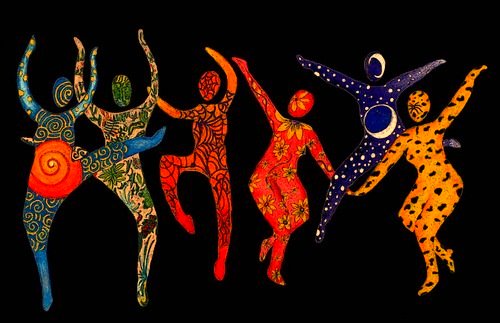
Sunday’s sermon: Being Dancing People

dancing

Texts used – Psalm 30 and 1 Thessalonians 3:7-4:1 (read within text)

  • For thousands and thousands of years, people have used movement to express themselves. – movement = dance in some form or another
    • Present in every culture around the world
    • Part of ceremonies, rituals, celebrations, entertainment → Throughout the centuries, people have danced for healing, for prayer, for show, and even as a challenge.
    • Dance tells stories. Dance expresses emotions and ideas, theologies and beliefs. Dance can run the gamut from strong, powerful and forceful to gentle, delicate and serene.
    • Dance can be anything from …
      • Classical ballet to modern hip hop
      • Huge, theatrical Bollywood numbers to solo contemporary
      • Flashy tap to exuberant swing
      • Choreographed Broadway numbers to a country bar room two-step
      • Extemporaneous riffing of break dancers to ancient steps of Native American dances handed down through the centuries from one generation to the next
      • Boys’ book: Elephants Cannot Dance![1]

Elephants Cannot Dance

  • Piggie is learning to dance → wants to teach her best friend, Gerald → Gerald = elephant → Despite Gerald’s warnings that “elephants cannot dance” Piggie tries so hard to teach Gerald the moves she has learned, but Gerald just can’t get it → Gerald quits in spastic explosion of frustration (flailing, grunting, stomping, grimacing, etc.) → as Piggie is comforting her friend, others approach wanting to learn to dance → Piggie tries to send them away because she’s busy comforting her best friend → But as it turns out, they do not want to learn the conventional steps from Piggie. They want to learn “The Elephant”!
    • SPOILER ALERT: Gerald teaches them all how to flail and grunt and stamp and grimace – teaches them to dance in his very own way

Elephant dance

    • Moral of the story: Dance can be anything
    • And yet despite the universality of dance, there have been many times throughout history when people in power – especially church power – tried to repress dance … to convince others it was shameful, wrong, and sinful. Or that it was a frivolous waste of time – not important, not productive, not beneficial to society.
  • Friends, sometimes it feels as though the world we’re living in is solely about the negative.
    • News reports sensationalize the bad while often forgetting to highlight the good
    • Confronted daily (if not hourly) with images and stories and warnings about all the terrible things in the world
    • Constantly reminded by culture of the ways that we are flawed
      • Salary isn’t high enough
      • Appearance isn’t perfect enough
      • Family isn’t ideal enough
      • Something about me doesn’t fit into this impossibly perfect box that has been created.
    • Can lead to a worldview of defeatism and dread
    • Can lead us to become pessimistic and critical and judgmental → comparing ourselves to the people around us and turning a spotlight on their mistakes in order to distract attention from our own
    • Can sometimes get lost in all the negativity
    • Can sometimes get bogged down in all the “have to”s and “should do”s that society has created for us → forget that God created us to be something different, something more
      • Created to be special
      • Created to be treasured
      • Created to be testament to God
        • Do God’s powerful work in this world
        • Be God’s amazing love
    • Hear this tension in our psalm[2] this morning:
      • Down side – speaking of “my enemies [celebrating] over me,” about “crying out for [God’s] help,” about weeping and the grave and mourning
      • But in the midst of all that: I exalt you Lord, because you pulled me up … You who are faithful to the LORD, sing praises to him; give thanks to his holy name! … Because it pleased you, LORD, you made me a strong mountain.[3]
      • One of the things that I love about this psalm is that it doesn’t separate those low points and those high points into different sections. It doesn’t just speak of the bad, then switch to extoling the good. It’s a bit of a rollercoaster ride! Up … down … up … down.
        • g.: () You who are faithful to the LORD, sing praises to him; give thanks to his holy name! () His anger lasts for only a second, () but his favor lasts a lifetime. () Weeping may stay all night, () but by morning, joy! … Because it pleased you, LORD, you made me a strong mountain. () But then you hid your presence. I was terrified.[4]
        • I gotta say … it feels a little truer to life, doesn’t it? Up … down … up … down.
  • But the point and the power in this psalm is how it ends: You changed my mourning into dancing. You took off my funeral clothes and dressed me up in joy so that my whole being might sing praises to you and never stop. LORD, my God, I will give thanks to you forever.[5]
    • Reminds us that even in the midst of all the muck and yuck and mess and struggle that we find in those down places, God made us to be dancing people
    • Sometimes we can see this for ourselves. We are a solo act – dancing with the joyful abandon of King David before God despite all the crazy looks that we’re getting from everyone else around us. We are God’s embodiment of praise and joy and thanksgiving and light. But sometimes, we need others to draw us into the dance.
      • Hear prayer from 1 Thess 3:7-4:1
      • Have you ever been to a Native American Powwow? → powwow = powerful e.g. of this
        • Hold one at UWEC every year – Honoring Education Powwow → description from UWEC: The powwow is a celebration of culture that bridges the customs and stories of the past with the energy and vitality of 21st-century Native American people from the UW-Eau Claire campus and the community. Music, song, dance, food and storytelling will bring together indigenous people as well as the greater community in a day of socializing and visiting with family and friends.[6]
      • Powwows are incredible because you get to witness history and culture and storytelling in one of its most extravagant forms: dance.
        • People dancing individually
        • People dancing in small groups
        • People dancing in large groups
        • People supporting the dancers with their voices and their drumming
        • But what’s even more powerful is that often, there are a few times when those who are watching are invited to join the dance. Despite all the downs – all the ugliness and repression and suffering and humiliation – in the history between white people and the Native peoples, still we are invited to join the dance … to travel that sacred circle together in steps as old as time with the heartbeat-drumbeat of the world and the intense cry of the singer filling your ears and your soul. It is a powerful moment.
  • Today, we come together for our annual meeting. It may not always be the most exciting part of church. It may not be our highest high (though it’s also hopefully not a low for you either). We come together to remember the year that we’ve had and to look to the year before us. We come together to lift up new people to do particular works of this church – to fulfill crucial roles of governing and caring in our midst. As Christians, this is part of our dance together. This is part of the way we remind each other of who and how and where God is among us, and it’s part of the way that we are inspired again to do God’s work in this world.
    • May love indeed cause our hearts to be strengthened before our God when our Lord Jesus comes with all his people. … So then, brothers and sisters, let us be encouraged in the Lord Jesus to keep living and worshipping and meeting and dancing in the way we already are and even do better to please God.[7]

[1] Mo Willems. Elephants Cannot Dance! (New York, NY: Hyperion Books for Children), 2009.

[2] Ps 30, various verses.

[3] Ps 30:1, 4, 7.

[4] Ps 30:4-5, 7.

[5] Ps 30:11-12.

[6] Denise Olson. “Honoring Education Powwow Set for Nov. 7” on the University of Wisconsin – Eau Claire news website, http://www.uwec.edu/news/stories/honoring-education-powwow-set-for-nov-7_74223. Written Nov. 2, 2015, accessed Jan. 31, 2016.

[7] based on 1 Thess 3:13-4:1.

February 2016 newsletter piece

Ash Wednesday 2

When I was growing up, I knew that Ash Wednesday was a real thing … sort of. I remember my pastor mentioning it during church … vaguely. I’m pretty sure it was one of those services that was held in the middle of the day, and since I was in school, I didn’t worry about it much. I don’t remember anyone ever explaining much about Ash Wednesday to me. And as far as I was concerned, putting ashes on your forehead was strictly a “Catholic thing.” I didn’t know any Protestants who did that.

Then I went to the Ash Wednesday service at the church I attended in college. It was a mainline Presbyterian church in Eau Claire, WI, and I’d made a really wonderful connection with the pastor there – a connection I maintain and cherish to this day. Pastor Eric was the first Protestant I’d ever known who put an emphasis and a weight on observing Ash Wednesday, and he was certainly the first Protestant I’d ever known to smear ashes on my forehead and repeat those sobering and eternal words derived from Scripture – from God’s words to Adam and Eve upon their expulsion from the Garden of Eden: “Remember that you are dust, and to dust you shall return.”[1]

It still gives me goosebumps.

Ashes have long been a symbol of grieving and repentance. Job declares to God, “Therefore, I relent and find comfort in dust and ashes.”[2] Likewise, Daniel speaks of his own repentance, saying, “I then turned my face to my Lord God, asking for an answer with prayer and pleading, and with fasting, mourning clothes, and ashes.”[3] Many of the prophets, including Jeremiah, call upon the people of Israel to repent in sackcloth and ashes[4], and the Ninevites, after finally hearing Jonah’s call to turn from their wicked ways and return to God, do indeed repent in exactly this manner: “When word of it reached the king of Nineveh, he got up from his throne, stripped himself of his robe, covered himself with mourning clothes, and sat in ashes.”[5] Even Jesus speaks of this practice: “If the miracles done among you had been done in Tyre and Sidon, they would have changed their hearts and lives long ago. They would have sat around in funeral clothes and ashes.”[6]

And there is special significance in the ashes we use. They come from the palm branches that we used during last year’s Palm Sunday service. There is a sacred poetry in this. In that small, ceramic bowl, we hold both the joy and celebration of Palm Sunday and the solemnity and contrition of Ash Wednesday just as in our own lives, we are constantly holding both joys and sorrows, celebration and pains, successes and failures. These are all the elements that make up our lives – all the different aspects of who we are … body, mind, and soul. When we come to God in repentance, we come bringing out whole selves – the smooth parts and the rough edges, the parts we’re proud of and the parts we try to hide. All the pretty, all the ugly, and everything in between.

That is what’s mixed up in that little, ceramic bowl.

That is what we bear upon our foreheads on Ash Wednesday.

That is why we come before God to worship and pray, to repent … and to be transformed.

All evening long I wore the ash,
     that holy ash,
and when others saw the smudge,
     I wondered if they were inclined
to wipe it clean
     or to lean closer
in the hope of hearing
   some soft Hosanna!
burning still
   in ash
or heart …
~from “Ashes” by Ann Weems~

Pastor Lisa sign


[1] Genesis 3:19.

[2] Job 42:6.

[3] Daniel 9:3.

[4] Jeremiah 6:26.

[5] Jonah 3:6.

[6] Matthew 11:21; Luke 10:13.

Sunday’s sermon: In the Word

Word of God

Texts used – Nehemiah 8:1-3, 5-6, 8-10 and Psalm 19

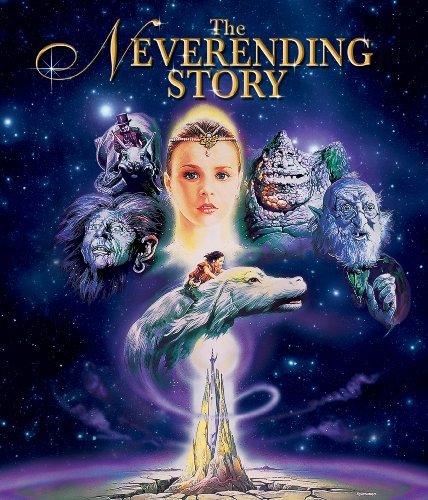
  • One of my favorite movies as a kid was The Neverending Story.
    • Movie from 1984[1] based on a book written in 1979[2]
    • Basic storyline: Bastian is running from a bunch of bullies intent on dumping him in a garbage can when he ducks into an old bookshop to hide → encounters bookseller who inadvertently introduces Bastian to a special book: The Neverending Story → Bastian (avid reader of all things fantasy) = intrigued → despite bookseller’s warnings, Bastian steals book (leaving a note saying he’ll return it) and takes it up to the attic at school to read → As he reads what seems like a simple, innocent book, Bastian realizes that this book is unlike any he’s ever read before. He realizes that the story is alive – that as he continues to read, he is slowly but surely becoming a part of the story.
      • Begins with little intrusions into the storyline here and there
      • Ends with Bastian as much a participant in the story as the characters written on the page

Neverending Story

  • Now, as a kid who loved to read, this idea captivated me! I was forever wishing that I could become a part of the books that I read – forever wishing to walk the roads the characters were walking, to hear them speak and to play my own part in their epic tales. → power of great stories
    • Move us
    • Encourage us
    • Engage us
    • Draw us in
    • Make us feel something
    • Make us desire to do and be something different
    • Bring something new to our lives
      • New ideas
      • New challenges
      • New passions
      • New experiences
      • [HOLD UP COPY OF THE BIBLE] → Friends, let me share with you just such a story.
        • Long story
        • Epic story
        • Story that lives and moves, grows and challenges us, inspires us and gets inside us
  • Start with story that we hear in our OT reading
    • First, BACKGROUND: today’s story follows on the heels of some very bad times and then a better time
      • Very bad time = Babylonian exile
        • Time that we’ve talked about before → conquering Babylonian army whisked all the best and brightest is Israel off to live in Babylon for a few generations → added bonus: before victorious Babylonian army left Jerusalem, destroyed it including the Temple – the Israelites beloved center of religious life, the dwelling place of the Most High God → Definitely a low point in the history of the people of Israel.
      • Better time just prior to today’s part of the story = Israelites freed after the Persian army defeated Babylon → return to Jerusalem
        • Returning home after generations away = certainly a big plus
        • But in addition to that, leading up to today’s text, the people of Israel have decided to rebuild. Just following the completion of the new city walls, we find the Israelites celebrating and rejoicing in our Scripture reading this morning … and how do they do that? – text: Standing above all of the people, Ezra the scribe opened the scroll in the sight of all of the people. And as he opened it, all of the people stood up. Then Ezra blessed the LORD, the great God, and all of the people answered, “Amen! Amen!” while raising their hands. Then they bowed down and worshipped the LORD with their faces to the ground.[3]
    • In celebration … they turned to the Word. In rejoicing … they turned to the Word. In thanksgiving … they turned to the Word. In remembrance of what had been lost and in honor of what they had once again found … they turned to the Word.
  • Important and interesting point: We have to understand that this isn’t necessarily the Word as we think of it today. Very often, when you ask which Scripture passages hold people up … which Scripture passages inspire their faith … which Scripture passages bolster them and strengthen them and bring light to their dark places, most people will respond with a passage from the New Testament or from Psalms.
    • Something stirring from Paul: Now faith, hope, and love remain – these three things – and the greatest of these is love.[4]
    • Something powerful from Jesus: Come to me, all you who are struggling hard and carrying heavy loads, and I will give you rest.[5]
    • Something that stands the test of time: The Lord is my shepherd; I shall not want.[6]
    • But those aren’t the Scripture passages that got the Israelites raising their hands in praise and adoration and bowing down to worship God with their faces to the ground. Most of those texts weren’t even written yet! What is it that Ezra reads for the people that they find so incredibly stirring and worship-enducing? – text: They asked Ezra the scribe to bring out the Instruction scroll from Moses, according to which the LORD had instructed Israel.[7] → “They asked Ezra … to bring out the Instruction scroll from Moses.” Did you hear that? The Instruction This is the book of the Law – some unknown portion of what we call the Pentateuch … the first 5 books of our Bible: Genesis, Exodus, Leviticus, Numbers, and Deuteronomy.
      • Lots of genealogies (“so-and-so begat so-and-so begat so-and-so begat so-and-so”)
      • Lots of very detailed instructions
        • How exactly to build various things (including precise measurements)
        • How exactly to offer various sacrifices (which animals and crops to burn and when and in what combinations and quantities)
        • Counts of how much wealth people had amassed (number of cattle, male and female slaves, etc.)
        • Not exactly the text that we find to be the most spiritually stirring reading today.
          • First time I tried to read through the Bible = 4th grade → stopped somewhere in Leviticus (bogged down by all of that)
      • But amidst all of that technical writing (as we could call it today), also find lots of story/narrative
        • Stories of creation
        • Stories of “founding fathers” of the Hebrew faith: Abraham, Isaac, Jacob/Israel
        • Stories of people’s epic history – migration to Egypt due to famine, eventual enslavement in Egypt, Moses and Pharaoh and God and the plagues, the first Passover, the escape from Egypt through the Red Sea, and the subsequent 40 years wandering in the desert before they finally reached the promised land … and so on.
        • Gives Israelites a chance to relive that powerful history – ancient though it may have been even at that time – and experience God’s interactions with them all over again
    • Hearing this Word of God – whichever portion it might have been – had the Israelites worshipping with their whole selves, declaring their faith with their entire beings – their bodies, their voices, and their very souls. → not hard to imagine the words of our psalm for this morning being uttered by those Israelites: The LORD’s Instruction is perfect, reviving one’s very being. The LORD’s laws are faithful, making naive people wise. The LORD’s regulations are right, gladdening the heart. The LORD’s commands are pure, giving light to the eyes. … No doubt about it: your servant is enlightened by [God’s judgments]; there is great reward in keeping them.[8]
      • Can hear the people letting Word of God move them
      • Can hear the people letting Word of God draw them back to God
      • Can hear the people letting Word of God enliven them and push them and ground them in their identity as the people of God once more → being changed by the ongoing story of God even as they were participating in that self-same story just like Bastian in The Neverending Story
  • Friends, as Christians, this is the epic story that we inherit. This is the Word of God in which we live and move and have our being. It is the tether that anchors us to the God of creation and salvation, the God of action and compassion, the God of ancient times and the God of the present and the God of whatever is yet to be.
    • Play clip from “Echo the Story” curriculum[9]: “The Bible is an epic that reaches beyond its pages and can enter our lives right now. … May we find ourselves in this amazing story.”
    • Now, while it’s certainly true that we’re not adding books to the Bible anymore, it’s also true that through our interactions with God in Scripture – whenever we open this book, whenever we read these words aloud or to ourselves, whenever we share the good news that is declared within these pages, whenever we dig deeper into this crazy text that molds and shapes and guides our lives – through all these different interactions with God in Scripture, we continue to add depth to the text for us and for the people around us.
      • Layers of meaning
      • Stories of our own winding around and through these ancient stories
        • Story that never changes AND YET
        • Story whose meaning is ever evolving and speaking to different people in different parts of the world in a wide variety of ways
          • E.g. – illustration from Dr. Eric Barreto (Baptist minister and NT professor at Luther Seminary, focus of study = function of race and ethnicity in NT/faith/theology) from presbytery meeting yesterday → parable of the landowner[10]
            • Landowner goes out early in the morning to hire laborers for the day → continues to hire more and more shifts throughout the day → at the end of the day, landowner pays all workers for a day’s wage – those who had worked since sun-up as well as those who’d only been in the field for an hour
            • Barreto’s point: exact same words heard very differently in white context vs. immigrant/migrant worker context
              • White context: see injustice in inequality of pay → lesson = about God’s justice being greater than our own
              • Migrant context → lesson about equality and God providing what was needed for the day (1 day’s wage = food for the family today)
            • Exact same story heard in two very different ways
      • In the Word, we find meaning and purpose. In the Word, we find challenges – challenges to our habits, to our culturally-engrained beliefs, to our ways of thinking, and to the brokenness all around us. In the Word, we find guidance and inspiration. In the Word, we find solace and reconciliation. In the Word, we find stories and poems, laws and letters, revelations and prophecies. In the Word, we find a world of dichotomies: love and pain, peace and war, justice and injustice, darkness and light, brokenness and way to wholeness. In the Word, we find a God who desperately loves us and a Savior who planted himself right in the midst of all our craziness and frailty and mess in order to bring us back to God. In the Word, in this eternal story, we find our own stories. This book is alive, friends. At least, it can be … if you let it. Amen.


CHARGE: There’s a line from our psalm this morning that you might have missed, but it’s a great line to end our service with today because it brings us full circle. So as you go from this place this morning, go with these familiar words in your minds and on your hearts: Let the words of [our mouths] and the meditations of [our hearts] be pleasing to you, LORD, [our] rock and [our] redeemer.

BENEDICTION: And may the love of God surround you. May the peace of Jesus Christ abound in you and through you. And may the power of the Holy Spirit astound you. Amen.


[1] The Neverending Story, directed by Wolfgang Peterson, distributed in the U.S. by Warner Bros. Pictures, July 20, 1984.

[2] Michael Ende. The Neverending Story. (Germany: Thienemann Verlag), 1979.

[3] Neh 8:5-6.

[4] 1 Cor 13:13.

[5] Mt 11:28.

[6] Ps 23:1 (KJV).

[7] Neh 8:1b.

[8] Ps 19:7-8, 11.

[9] “Echo the Story” curriculum from SparkHouse, © 2014, video from https://www.youtube.com/watch?v=Ug8VAR6Ch2Y.

[10] Mt 20:1-16.

Sunday’s sermon: Above and Beyond

above and beyond

Texts used – Psalm 36:5-10 (read within sermon text) and John 2:1-11

  • Customer service is probably one of the most thankless jobs on the planet.
    • Listen to people’s complaints all day
    • Deal with unsolicited feedback: “Why don’t you [meaning the store, of course, not actually the individual] just label your products better?” and so on.
    • Take abuse about things that have nothing to do with you or your position within the corporation
      • Story from Career Services at UWEC
    • Have you ever looked at the people working behind the customer service counter at any of those big box stories – Target, WalMart, Costco, Best Buy, etc.? Do they look … happy? Do they look … excited to be at work? Hmm … not usually.
    • And yet, let me tell you Luka’s story[1]: Longtime Lego fan Luka spent all of his Christmas money on a Ninjago (Lego ninja) named Jay XZ. Against his dad’s advisement, he brought his Ninjago on a shopping trip … and lost it. Luke wrote a letter to Lego explaining his loss and assuring the Lego staff that he would take extra-special care of his action figure if they sent him another one.
      • Luke’s letter: My name is Luka and I am seven years old. With all my money I got for Christmas I bought the Ninjago kit of the Ultrasonic Raider. The number is 9449. It is really good. My Daddy just took me to Sainsbury’s and told me to leave the people at home but I took them and I lost Jay ZX at the shop as it fell out of my coat. I am really upset I have lost him. Daddy said to send you a email to see if you will send me another one. I promise I won’t take him to the shop again if you can. – Luka
      • Customer service rep who opened the email could’ve …
        • Ignored it
        • Sent a simple response: Sorry you lost your toy, but this is a business. Better luck next Christmas.
        • Gone all didactic trying to teach this little boy a lesson about the importance of money and caring for your things and loss in a simple email
      • But instead … The response he received from Lego customer support representative Richard was nothing short of amazing. Richard told Luke that he had talked to Sensei Wu (a Ninjago character), writing: He told me to tell you, “Luka, your father seems like a very wise man. You must always protect your Ninjago minifigures like the dragons protect the Weapons of Spinjitzu!” Sensei Wu also told me it was okay if I sent you a new Jay and told me it would be okay if I included something extra for you because anyone that saves their Christmas money to buy the Ultrasonic Raider must be a really big Ninjago fan. So, I hope you enjoy your Jay minifigure with all his weapons. You will actually have the only Jay minifigure that combines 3 different Jays into one! I am also going to send you a bad guy for him to fight! Just remember, what Sensei Wu said: keep your minifigures protected like the Weapons of Spinjitzu! And of course, always listen to your dad.
        • Talk about going above and beyond.
  • Now, I’ve always thought today’s gospel story was an odd one, partly because it feels like it puts Jesus in a customer service role – one that, frankly, he doesn’t seem all that thrilled about. – text: On the third day there was a wedding in Cana of Galilee. Jesus’ mother was there, and Jesus and his disciples were also invited to the celebration. When the wine ran out, Jesus’ mother said to him, “They don’t have any wine.” Jesus replied, “Woman, what does that have to do with me? My time hasn’t come yet.”[2] → such an odd introduction to an odd Gospel story
    • Response we get from Jesus = far from the response that we have come to expect → However it is we read Jesus’ response – impatient? reluctant? elusive? – it’s not what we expect. – come to expect …
      • The receptiveness of the one who said, “Let the children come to me.”
      • The compassion of the one who wept at Lazarus’ tomb
      • The miraculous authority of the one who healed lepers, drove out demons, and raised people from the dead
      • The passionate audacity of the one who goes toe-to-toe with the Pharisees again and again and again
      • The patient but persistent teacher who uses everything from a wayward son to a simple lamp to a flock of sheep and goats to reveal the Kingdom of God
      • But what we have to remember is that, while we are privy to all of that story – our amalgamated picture of Jesus that we have constructed with the rest of the gospels and with the whole rest of Scripture and with what little history itself can tell us – while we are privy to all of that, in our gospel lesson this morning, Jesus’ story is just beginning. None of that has happened yet. And so instead of the magnanimous response we have come to expect, we get Jesus’ actual response: “Woman, what does that have to do with me? My time hasn’t come yet.”
        • “woman” in Gr. = not intended in way we generally hear it
          • By no means disrespectful, course, or rude
          • More of a general term (any adult female) → resources I looked at this week even suggested omitting it from translation because there really is no English equivalent
        • “What does that have to do with me? My time hasn’t come yet.” → Is this reluctance we hear? Is this Jesus opting not to act?
          • Uncomfortable – sits funny with us
          • Commentator hits the nail on the head: This is the scandal of divine reluctance. Why does God the incarnate one hold out?[3]
  • And yet, in the face of this divine reluctance, we hear not the voice of one of the disciples or the disembodied voice of God or some Holy-Spirit-dove calling Jesus to action. Instead, we hear the voice of Mary, Jesus’ mother: “Do whatever he tells you.” → hear …
    • Divine confidence … in the voice of a woman
    • Divine compassion … in a mother’s love
    • Divine faith … in an unseen, as-yet-untested power
    • This is Mary going above and beyond. Remember just a few short weeks ago when we were reading those old, familiar words of the Christmas story?
      • So [the shepherds] went with haste and found Mary and Joseph, and the child lying in the manger. When they saw this, they made known what had been told them about this child; and all who heard it were amazed at what the shepherds told them. But Mary treasured all these words and pondered them in her heart.[4]
      • Another translation: Mary committed these things to memory and considered them carefully.[5]
      • Mary has been turning over all those things that she knows about this miraculous son of her – all that she’s been told, all that she’s seen, all that she knows simply because she is his mother and mothers know … She’s been pondering all these things, considering them carefully for all this time. All for this moment. Maybe that one small phrase – “Do whatever he tells you” – was exactly what Jesus needed to hear: that confidence, that compassion, that faith. “Do whatever he tells you.”
  • However Mary said those words … however Jesus heard them … it must have been enough because Jesus was convinced. From that moment of temporary divine reluctance came an act of truly extravagant generosity – text: Nearby were six stone water jars used for the Jewish cleansing ritual, each able to hold about twenty or thirty gallons. Jesus said to the servants, “Fill the jars with water,” and they filled them to the brim. Then he told them, “Now draw some from them and take it to the headwaiter,” and they did. The headwaiter tasted the water that had become wine. The headwaiter tasted the water that had become wine. He didn’t know where it came from, though the servants who had drawn the water knew. The headwaiter called the groom and said, “Everyone serves the good wine first. They bring out the second-rate wine only when the guests are drinking freely. You kept the good wine until now.”[6]
    • First of all, the sheer quantity of this is sort of staggering. While Biblical scholars disagree over exactly how much these stone jars could actually hold, most agree that, all told, we’re talking about 120-200 gallons of water here. That is a lot of water!
    • Quality is above and beyond as well: This was not some watery illusion that Jesus created. The headwaiter tasted the new wine and was so impressed, he approached the groom – the one in charge of the whole wedding operation, the one responsible for making sure things ran smoothly – and commented on how the best wine … the best wine! … had been saved for last.
      • Testament to Jesus’ power and ability
      • Testament to Jesus’ willingness to go above and beyond à Jesus could’ve just said again to Mary, “My time hasn’t come yet” and turned his back. Jesus could have said to his disciples, “Well, that’s that. Let’s call it a night!” and left. Jesus could have turned just a small quantity of water into wine or he could have turned the water into subpar wine. But Jesus took those gallons upon gallons of water and turned them into the best wine.
        • Truly going above and beyond – like the customer service rep that sent little Luka the Lego replacement → sent not just the figure that Luke lost but also extra accessories to go with the figure plus “a bad guy for him to fight!”
    • Importance of this odd little story from John:
      • First, this is the very first time Jesus reveals his own divine nature in the gospel of John.
        • First of seven miracles (referred to as “signs”) in gospel of John – signs that point to Jesus as the long-awaited Messiah → text this morning: This was the first miraculous sign that Jesus did in Cana of Galilee. He revealed his glory, and his disciples believed in him.[7]
      • Also illustrates God’s incredible abundance
        • Abundant love
        • Abundant compassion
        • Abundant grace
        • Words of our psalm this morning: But your loyal love, LORD, extends to the skies; your faithfulness reaches the clouds. Your righteousness is like the strongest mountains; your justice is like the deepest sea. LORD, you save both humans and animals. Your faithful love is priceless, God! Humanity finds refuge in the shadow of your wings. They feast on the bounty of your house; you let them drink from your river of pure joy. Within you is the spring of life. In your light, we see light. Extend your faithful love to those who know you; extend your righteousness to those whose heart is right.[8]
          • Words of unflinching devotion
          • Words of unqualified thanksgiving
          • Words of extravagant praise for God who looks after and cares for us
          • Words of “above and beyond” from us in response to God’s own “above and beyond” for us
  • But this acknowledgment of God’s abundance also reveals the challenge of this story. → challenge of hearing story of abundance and goodness in time of scarcity and struggle: How do we hear these words when we’re feeling tapped out? Alone? Overwhelmed? What do we do with words of fullness when we’re running on empty?
    • Scholar brings this contrast to light: It is passages like this one about divine extravagance that make God’s absence in the face of poverty, suffering, and evil stand out. How do we reconcile a story of potent generosity with a world of tremendous need?[9]
      • Good question
      • Question with no easy answer
    • More than familiar with those times of need (body, mind, soul) … those times of longing … those times of pain … moments when “Help, God!” “Please, God!” and “Why, God?” are more likely to come from our lips than words of praise → How do we hold both those times and our knowledge of God’s abundant, all sufficient grace together? By holding them … together. By working in community. By sharing in community. By loving in community. By being God’s abundance for each other when we see each other struggling.
      • Not just talking about “each other” within these walls – “each other” in our communities, “each other” in our work places, “each other” in our families, “each other” in the human race → Out of extravagant abundance, God gave us each other to be the water in the parched places, to be a soft place to land, to be a source of strength and hope and shelter, to be the good wine when everything else has run out, to be that “above and beyond” in times of need. Amen.

[1] “A Lego Service Rep Saves the Day” from “10 Stories of Unforgettable Customer Service,” http://www.helpscout.net/10-customer-service-stories/, accessed Jan. 14, 2016.

[2] Jn 2:1-4.

[3] Carol Lakey Hess. “Second Sunday after Epiphany – John 2:1-11, Theological Perspective” in Feasting on the Word: Preaching the Revised Common Lectionary – Year C, vol. 1. (Louisville, KY: Westminster John Knox Press, 2009), 260.

[4] Lk 2:16-19 (NRSV) (emphasis added).

[5] Lk 2:19 (CEB).

[6] Jn 2:9-10.

[7] Jn 2:11 (emphasis added).

[8] Ps 36:5-10.

[9] Hess, 261.

Sunday’s sermon: What’s in a Vow?

baptism

Texts used – Isaiah 43:1-7; Luke 3:15-17, 21-22

  • “Bless by your Holy Spirit, gracious God, this water. By your Holy Spirit save those who confess the name of Jesus Christ that sin may have no power over them. Create new life in the one baptized this day that s/he may rise in Christ. Glory to you, eternal God, the one who was, and is, and shall always be, world without end. Amen. Child of God, I baptize you in the name of the Father, and of the Son, and of the Holy Spirit. Amen.” And so we bless the water, we bless the child, and we baptize.
    • What is baptism?
      • UCC: The sacrament of baptism is an outward and visible sign of the grace of God. Through baptism a person is joined with the universal church, the body of Christ. In baptism, God works in us the power of forgiveness, the renewal of the spirit, and the knowledge of the call to be God’s people always. Baptism with water and the Holy Spirit is the sign and seal of our common discipleship. Since baptism is God’s gift, the Holy Spirit is called to be upon the water and those being baptized. The act of baptism also marks the beginning of new life of discipleship with Christ, the human response to that gift.[1]
      • PC(USA): In Jesus Christ, God calls people to faith and to membership in the Church, the body of Christ. Baptism is the visible sign of that call and claim on a human life and of entrance into the membership of the church. The baptism of children witnesses to the truth that God’s love claims people before they are able to respond in faith. The baptism of those who enter the covenant of membership upon their own profession of faith in Jesus Christ as Lord and Savior witnesses to the truth that God’s gift of grace calls forth a response of faithfulness. Thus, the triune God, incarnate in the life, death, and resurrection of Jesus Christ, gives to the Church not only its mission but also its understanding of membership.[2]
    • Today, in the life of the church, we celebrate the Baptism of Jesus by John in the Jordan River. So I wanted to take a look at the vows that we ask parents to make, and the vows that we make as a congregation, when we baptize anyone in this congregation. What are we asking? What does it mean? What does it say about our faith and our life as a congregation?
      • Realize that we’re working with 2 different denominations here, but when you compare the questions side-by-side, they’re basically asking the same 6 questions
  • QUES #1 sounds obvious: Do you desire to have your child baptized? [UCC: into the faith and family of Jesus Christ?]
    • Layered within this question is a proposal: picture any of those wedding proposal videos that you see where there’s that tense moment before the person being proposed to says “yes” → baptism = God’s proposal – an extension of God’s promises of love and grace, leaves God waiting for our reply
      • God’s proposal to us: I do love you. I have loved you. I will love you. Will you join me in that love?
      • Emphasis = not mandatory → Friends, love simply isn’t love if it’s forced. Love … devotion … admiration … These things must be given freely in order for them to be true.
        • Gary Chapman (author of popular The Five Love Languages[3]): Love is always freely given. Love cannot be demanded. We can request things of each other, but we must never demand anything. Requests give direction to love, but demands stop the flow of love.
        • Hear God’s love for us in Is: But now, says the LORD – the one who created you, Jacob, the one who formed you, Israel: Don’t fear, for I have redeemed you; I have called you by name; you are mine. … Because you are precious in my eyes, you are honored, and I love you.[4]
          • Tender
          • Devoted
          • Hear that God truly cherishes us
    • But how are we to respond? Baptism is our answer. We respond by choosing to return that love as a member of God’s own family.
      • Anonymous quote: Family isn’t always blood. It’s the people in your life who want you in theirs; the ones who accept you for who you are. The ones who would do anything to see you smile and who love you no matter what. → Friends, this speaks to God’s love for us, too. God wants to be a part of our lives. God accepts us and loves us no matter what. But we have to make that choice to say, “Yes” to God. And when we choose baptism – when we declare our intentions to deliberately enter into that family of faith (either for ourselves or for our children) – we are choosing to say, “Yes” to God, to reciprocate that incredible love.
  • QUES #2 → denying evil
    • UCC: Will you encourage this child to renounce the powers of evil and to receive the freedom of new life in Christ?
    • Pres: Trusting in the gracious mercy of God, do you turn from the ways of sin and renounce evil and its power in the world?
    • Important because recognizes that there is darkness → vow to embrace/be the light
      • In light of recent blockbuster – Star Wars: The Force Awakens → The Force = both darkness and light, both hatred and love, both malice and forgiveness, both suffering and peace
        • Yoda: Fear is the path to the dark side. Fear leads to anger. Anger leads to hate. Hate leads to suffering.
      • We all know that these things are a part of our world, a part of our lives, and a part of our days. And each and every day, we are presented with choices between this darkness and the light. Some are serious choices. Some are less weighty but are no less important. In baptism, we acknowledge the presence of that darkness while consciously choosing to live in the light.
        • Is – we will not be alone in that choice: When you pass through the waters, I will be with you; when through the rivers, they won’t sweep over you. When you walk through the fire, you won’t be scorched and flame won’t burn you. … Don’t fear, I am with you.[5] → Do not fear, I am with you. Ease your anger. Release your hate. We are embraced by grace upon grace.
  • QUES #3 → teach/instruct/disciple
    • UCC: Will you teach this child the s/he may be led to profess Jesus Christ as Lord and Savior?
    • Pres: Relying on God’s grace, do you promise to live the Christian faith, and to teach that faith to your child?
    • Baptism is a step of faith.
      • Step to embracing life of faith
      • Step to embracing family of faith
      • First step in life-long journey of faith → journey that involves learning, growing, discipling
        • Being guided and instructed by those who have come before
      • Perfect e.g. of this = new confirmation class
        • Students already have an experience of faith
          • Families and churches
          • Worship, prayer, Sunday school
        • But the point of confirmation is to help them to learn and grow in their own faith. → people who do that
          • Pastor
          • Parents
          • Mentors (yes … this is an advertisement! Still need mentors)
    • Even Jesus had a mentor of sorts: John the Baptist
      • Someone close to Jesus
      • Man of faith – descry. from Mt: In those days John the Baptist appeared in the desert of Judea announcing, “Change your hearts and lives! Here comes the kingdom of heaven!” He was the one of whom Isaiah the prophet spoke when he said: The voice of one shouting in the wilderness, “Prepare the way for the Lord; make his paths straight.” John wore clothes made of camel’s hair, with a leather belt around his waist. He ate locusts and wild honey. People from Jerusalem, throughout Judea, and all around the Jordan River came to him. As they confessed their sins, he baptized them in the Jordan River.[6]
      • Participated in Jesus’ faith – baptized Jesus in the Jordan
      • Declared his faith in who Jesus was/power of God – today’s text: John replied to them all, “I baptize you with water, but the one who is more powerful than we is coming. I’m not worthy to loosen the strap of his sandals. He will baptize you with the Holy Spirit and fire.”[7]
      • As we are going through our own journeys of faith, we all need people to lead us, to teach us, to strengthen us, and to believe in us. We need those people, and we need to be those people, and so that role is a part of our baptism.
  • Along similar lines: QUES #4 → profess/affirm personal faith
    • UCC: Do you promise, by the grace of God, to be Christ’s disciple(s), to follow in the way of our Savior, to resist oppression and evil, to show love and justice, and to witness to the world and word of Jesus Christ as best you are able?
    • Pres: Do you turn to Jesus Christ and accept him as your Lord and Savior, trusting in his grace and love? And will you be Christ’s faithful disciple, obeying his Word and showing his love?
    • Sort of self-explanatory → in order to grow in faith and in order to raise someone else in faith, that faith must be present
      • Call to declare faith in ps for today: You, divine beings! Give to the Lord – give to the Lord glory and power! Give to the Lord the glory due [God’s] name! Bow down to the Lord in holy splendor![8]
  • QUES #5 → participate in body of Christ
    • UCC: Do you promise, according to the grace given you, to grow with this child in the Christian faith, to help this child to be a faithful member of the church of Jesus Christ, by celebrating Christ’s presence, by furthering Christ’s mission in all the world, and by offering the nurture of the Christian church so that s/he may affirm his/her baptism?
    • Pres: Will you be a faithful member of this congregation, share in its worship and ministry through your prayers and gifts, your study and service, and so fulfill your calling to be a disciples of Jesus Christ?
    • Two sides of faith – personal vs. corporate
      • Just talked about personal faith
      • Corporate faith = just as important
        • Ps (ancient worship songs from Israel) = some personal, but many corporate
        • Theme throughout Paul’s letters (Corinthians, Ephesians, Romans, etc.): importance of variety of gifts from God, importance of embracing and utilizing those gifts in community
      • Talk about it here all the time: see God in each other, be God for each other
        • Jesus in Mt: Let your light shine before people, so they can see the good things you do and praise [God] who is in heaven.[9]
        • Other – C.S. Lewis: Don’t shine so others can see you. Shine so that, through you, others can see [God].
  • Reciprocation of that vow = QUES #6 (congregation) → congr. support
    • UCC: Jesus calls us to make disciples of all nations and to offer them the gift of grace in baptism. Do you, who witness and celebrate this sacrament, promise your love, support, and care to the one about to be baptized, as s/he lives and grows in Christ?
    • Pres: Do you, as members of the church of Jesus Christ, promise to guide and nurture this child by word and deed, with love and prayer, encouraging him/her to know and follow Christ and to be a faithful member of this church?
    • This is one of my favorite things about the UCC/PC(USA) tradition: There can be sponsors for you and/or your child – traditional “godparents,” as it were. But in the tradition of our church, the entire congregation pledges to play that role: to guide, to teach, to nurture, to encourage, to love.
      • Continue to care for one another
      • Continue to pray for one another
      • Continue to lift each other up
      • Such a crucial and beautiful part of the identity of this congregation
  • And so we come together to remember and reaffirm our baptism – to say “yes” again to the love of God; to choose the light in the face of the darkness; to affirm our own faith and our support of our brothers and sisters in faith; to recommit to participating in the body of Christ, here and around the world; and to again choose to be disciples – teaching and leading and learning with each other. I’m going to ask you to come forward, to dip your fingers in the waters of the font, and, if you choose, to receive a blessing.


  • Post-remembrance blessing[11]:

May your life be a river.
May you flow with the purpose|
of the One who created
and called you,
who directs your course
and turns you ever
toward home.

May your way shimmer
with the light of Christ
who goes with you
who bears you up
who calls you by name.

May you move
with the grace of the Spirit
who brooded over
the face of the waters
at the beginning
and who will gather you in
at the end.

[1] “About Baptism,” http://www.ucc.org/worship_baptism, accessed Jan. 7, 2016.

[2] Constitution of the PC(USA), Part II: The Book of Order, 2013-2015, G-1.0301. (Louisville, KY: The Office of the General Assembly), 2013.

[3] Gary Chapman. The Five Love Languages. (Chicago, IL: Northfield Publishing), 1995.

[4] Is 43:1, 4a.

[5] Is 43:2, 5a.

[6] Mt 3:1-6.

[7] Lk 3:16.

[8] Ps 29:1-2.

[9] Mt 5:16.

[10] https://www.amazon.com/gp/product/B005ZJMVSK?ie=UTF8&*Version*=1&*entries*=0.

[11] Jan Richardson. “Blessing” posted on The Painted Prayerbook, http://paintedprayerbook.com, posted under “The River of John,” July 8, 2012, accessed via http://re-worship.blogspot.ca, Jan. 9, 2016.

Sunday’s sermon: An Unexpected Light in the Darkness

Star of Bethlehem

Texts used – Psalm 72:1-7, 10-14; Ephesians 3:1-12

  • Close your eyes and imagine the night with me. A cool breeze blows across the desert, carrying with it grains of sand from a thousand different places all at once. The night is dark, but the moon shines bright, and the sky is dotted with countless stars. You and your companions have spent your whole lives learning about those pin-pricks of light. You know their names and stories and meanings. You have studied their language and know how to interpret the way they whisper the mysteries of the universe. You understand which heavenly movements signify shifts in politics and kingdoms, which ones speak of love and loss, which ones predict disasters and evils and joys to come. Night after night, year after year, you rouse when the rest of the world is asleep and come out here to study and follow and listen to the voices of these stars. You’ve been out here so often, you can actually anticipate the steps of their heavenly dance. You know where the stars will be and when. But that night … that night was different.
    • Appearance of a new star – wholly unexpected light
      • Star that hadn’t been there before
      • Star that was brighter than all the rest
      • Star that spoke of movement and purpose, of a baby and a king
    • You may not have been expecting it, but you know what this star means. A child has been born – newborn royalty that, according to the stars, will change everything. So you and your companions gather up your things, pack up your camels, secure your precious gifts, and set off.
  • Today – celebrate the Epiphany
    • Day to honor the coming of the Magi to the manger-side
    • Significant because traditionally thought of as first time the Messiah is revealed to and recognized/worshiped by Gentiles
      • Outsiders
      • Ones who don’t understand, don’t belong (Jewish way of thinking at the time)
      • Wasn’t a pleasant word – whole different word in both Heb. and Gr. → often both get translated as “nation/s” but very “us/them” mentality
        • See this in our text: Let all the kings bow down before him; let all the nations serve him.[1] → “nations” is not word used exclusively for Israel but is instead word for “the other” – word encompasses all nations/peoples other than Israel
      • And yet here are these outsiders, these foreigners, these Magi from the east coming to kneel in the presence of the Christ-Child in holy admiration before nearly anyone else. Just like the star that they followed to find the Christ-Child, these Magi were an unexpected light in the darkness.
    • Headlines, breaking news stories, and goings-ons around this country and around the world can make it feel like we’re all wandering around in darkness
      • Bumping into each other
      • Bumping into the growing edges around us – places where our expectations and the reality of life grate against each other instead of fitting as nicely as we’d like
    • Blessing and joy in the midst of all that: people that bring God’s unexpected light into our lives and into our world
      • Key word = UNEXPECTED → Maybe it is the girl or boy next door. Maybe it is the sweet, little grandma that lives down the road or the retired pastor or exactly the person you’d expect to bring God’s light. But maybe it’s not. Maybe it’s the challenging person. Maybe it’s the down-and-out person. Maybe it’s the addicted person or the odd person or the ignored person. Maybe the person to bring that encouraging light of God is the last person you would expect.
        • Light of the Star of Bethlehem = unexpected light
        • Light of the Magi at the cradle-side of the Christ-Child = unexpected light
        • Friends, God still speaks today through unexpected lights.
  • Now, here’s the thing about light: it shines indiscriminately, lighting up whatever it happens to fall on! It doesn’t pick and choose what gets lit up and what doesn’t. It just shines. → sometimes reveals things that are unexpected
    • Boys have a book
      • 2 cars out together at night
      • Keep encountering scary-looking things
        • Fire-breathing monster?
        • Monster with 2 heads?
        • Monster with enormous teeth?
      • All “monsters” revealed to be precariously-stacked items when the light hits them → not what they were expected to be
    • God’s light works the same way
      • Shines indiscriminately – God doesn’t pick and choose who gets light and who doesn’t
      • Reveals the unexpected in people, situations, and communities
      • Paul = perfect e.g. of this
        • Roman citizen by birth
        • Educated as a Pharisee
        • Spent the early part of his life zealously persecuting and condemning Jesus’ followers to death, even taking an active part in the martyrdom of Stephen[2]
        • And yet this is the man that became one of the greatest apostles as far as miles traveled and letters written are concerned (at least in terms of what we have today). Paul was an unexpected light.
          • Says so himself in today’s Scripture: God gave [God’s] grace to me, the least of all God’s people, to preach the good news about the immeasurable riches of Christ to the Gentiles.[3]
  • NT passage this morning also reveals just how unexpected God’s plan for salvation was
    • Paul keeps speaking of God’s “secret/hidden plan” → not talking about some secret knowledge that must be attained like some early branch-offs of Christianity claimed (sorry … no secret “heaven only for the special” card here, folks)
      • Gr. translated over and over again as “secret plan” = mystery = the unexplainable, the ungraspable, something that’s difficult to figure out and to understand → The great mystery of our faith – that element that we have trouble wrapping our minds around – is that God came down to live among us as a human being, died a horrible and completely undeserved death for our sakes, remained dead and buried in a tomb for three whole days, then rose from the dead and, in doing so, extended to us a grace that covers us unquestioningly, unarguably, and unconditionally.
        • Grace doesn’t just cover those who are “good”
        • Grace doesn’t just cover those who are “worthy”
        • Grace doesn’t just cover those who are already “stable” (in faith, in relationships, in life, in anything)
        • Grace covers everyone. Period. Like the light of God that shines, grace is indiscriminate in where it lands and who it touches. Grace doesn’t just choose the mighty, the settled, the well-off, the perfect. Grace chooses everyone.
          • Words from communion liturgy: No matter who you are … no matter where you come from this morning … no matter what you bring with you … you are welcome here, at this table and in this community. → That is grace. No matter who. No matter what.
          • Scripture tie-ins
            • OT: [God] delivers the needy who cry out, the poor, and those who have no helper. 13 [God] has compassion on the weak and the needy; [God] saves the lives of those who are in need. 14 [God] redeems their lives from oppression and violence; their blood is precious in [God’s] eyes.[4]
            • NT states it radically – Paul: This plan is that the Gentiles would be coheirs and parts of the same body, and that they would share with the Jews in the promises of God in Christ Jesus through the gospel.[5] → Remember what I said earlier about Gentiles, how they were treated as “the other” by the nation of Israel to the point of having a different word for them? Despite that prominent attitude, one Paul most certainly would have been steeped in thanks to his Pharisee up-bringing, Paul is boldly saying that these “others” are a part of the same body … coheirs even in the work and promises of God. Paul is calling the Gentiles an unexpected light.
  • Story of one such unexpected light[6]She was …
    • Born in New York City in 1897 just before the turn of the last century – 3rd of 5 children
    • Bright student → accepted at University of Illinois (quite an accomplishment for a woman in the mid-1910s
      • Studied for just under 2 yrs – dropped out of college
    • Moved back to NYC, more specifically, Greenwich Village → became radically involved with “literary and liberal crowd”
      • Became a journalist for socialist and progressive publications, interviewing people like Leon Trotsky
      • Became a social and political activist
        • Arrested a number of times for involvements in protests → one time: protesting for women’s right to vote in front of the White House
          • Led to hunger strike in jail
    • Had a number of failed relationships, one of which ended up with her pregnant and being bullied into an abortion by the father of her child
      • Illegal and therefore difficult to obtain in the early 1920s
      • Also very dangerous – death rates as high as 30%[7]
    • When she later married and had a daughter, she and her husband went to have the child baptized in a Catholic Church. The year was 1926. This encounter with God and with the church started her on a personal spiritual journey that would lead to her convert to Catholicism in 1927.
    • Began publishing The Catholic Worker with Peter Maurin in 1933 → simple newspaper quickly morphed into the Catholic Worker Movement – still alive and well today
      • Goal: to “live in accordance with the justice and charity of Jesus Christ”[8]
      • 220+ Catholic Worker communities across the country
        • Each has its own individual aim
        • All have something to do with caring for those pushed to the margins of society – food, clothes, shelter, etc.
        • We have one such house right in our backyard, right down in Rochester. [In fact, this congregation regularly participates in this house’s mission within the community.]
    • Friends, Dorothy Day was an unexpected light.
      • Woman, a radical, and a self-proclaimed anarchist in a time when none was very well received
        • Women thought of as inferior
        • Radicals often scorned by the rest of society
        • Anarchists were regarded warily – suspicion and caution
      • Yet the development of her faith combined with her strong belief in peace and mercy and justice led her to be a light for so many in a place of desperate need.
        • Recently called one of “four great Americans” by Pope Francis along with Abraham Lincoln, Martin Luther King, Jr., and Thomas Merton
  • Friends, who are those sources of unexpected light today? Immigrants? Refugees? Those who have been labeled the “dones” and the “nones” – those who, for any number of reasons, refuse to have anything to do with organized religion but work tirelessly for justice, for peace, for mercy for their fellow human beings not because they have to or because they feel obligated to because the desire to do so burns in their hearts? In our New Testament reading this morning, Paul says, “God’s purpose is now to show the rulers and powers in the heavens the many different varieties of [God’s own] wisdom through the church.”[9] Do we seek out that variety? Do we look for the light in unexpected places? And do we have the courage and the determination and the resilience to be that unexpected light in the darkness for a world so desperately in need? Amen.


CHARGE: Friends, I want to share a quote with you this morning from author Madeleine L’Engle. She said, “We do not draw people to Christ by loudly discrediting what they believe, by telling them how wrong they are and how right we are, but by showing them a light that is so lovely that they want with all their hearts to know the source of it.” As you go from this place this morning, look for the Light. Cherish the Light. And be the Light.

light

BENEDICTION: And go with the love of God, the peace of Jesus Christ, and the companionship of the Holy Spirit. Amen. 

[1] Ps 72:11.

[2] Acts 7:58-60; 22:20.

[3] Eph 3:8 (emphasis added).

[4] Ps 72:12-14.

[5] Eph 3:6.

[6] Biographical information from http://www.biography.com/people/dorothy-day-9268575, accessed Jan. 2-3, 2016.

[7] https://en.wikipedia.org/wiki/History_of_abortion, accessed Jan. 3, 2016.

[8] https://en.wikipedia.org/wiki/Catholic_Worker_Movement#cite_note-2, accessed Jan. 3, 2016.

[9] Eph 3:10.

January 2016 newsletter piece

fresh-dirty snow

As I sit down to write this month’s newsletter article – the first article for 2016 – we are in the throes of our first blizzard of the winter.

Even though it made driving home from my office a bit of a challenge this evening, the snow that has been falling all afternoon is a beautiful sight.

It’s clean.

It’s pure.

It’s unblemished … at least for now.

And because it’s the first real, substantial snowfall that we’ve had this winter, there’s something magical, something refreshing, something nostalgic about it. Seeing it falling so softly outside the window makes us pause in the midst of whatever we’re doing and just watch it for a while. It makes us yearn for a cup of something warm in our hands – coffee, tea, hot chocolate. It makes us want to snuggle into our baggiest sweaters and most stretched-out wool socks, curl up on a couch, and just be warm and content.

*insert contented sigh here*

As I watch the flakes fly and the world outside grow steadily whiter, I find snow to be an interesting metaphor for our faith and the way we live our lives.

Think about this: We are on the cusp of a new year: 2016! The year ahead of us lies bright and new and full of possibilities just like an open field after a fresh snowfall. The only question we have is how we will leave our mark on the blank canvas in front of us.

There are times when our faith can feel like that. It can feel fresh. It can feel clean and new. It can feel like all the potential in the world lies before us. All we need to do is follow God into the future: boldly, confidently, reassured in the goodness of God and the strength of our faith.

But all too soon, the pristine blanket out white outside the window will become less perfect. There will be footprints. There will be what we aptly called “snirt” at our house – that unpleasant mixture of snow and dirt. There might even be dog pee. Before long, we will be wishing for the end of the snow and longing for warmer days and cleaner roads, complaining about the struggle and the cold that the snow brings.

Basically, it doesn’t take long for the magic of that first snowfall to wear off.

And it can feel like this with our lives and our faith sometimes, too. The polish wears off. The sparkle dulls. And we are left with the reality – that we live in a broken world … that we and the people we work with and the people we love are less-than-perfect … that even people with the strongest faith have struggles, questions and doubts.

So what do we do when that happens? What do we do when things around us look ugly instead of inviting? When the magic wears off and all that’s left is the work to be done?

Don’t you know? Haven’t you heard? The LORD is the everlasting God, the creator of the ends of the earth. [God] doesn’t grow tired or weary. [God’] understanding is beyond human reach, giving power to the tired and reviving the exhausted. Youths will become tired and weary, young men will certainly stumble; but those who hope in the LORD will renew their strength; they will fly up on wings like eagles; they will run and not be tired; they will walk and not be weary.
~ Isaiah 40:28-31

Whatever lies ahead of us … whatever is coming to replace the magic with the mundane … whatever will make us weary and worn, God will be there when it comes. God will walk with us. God will guide us. God will even carry us when the need arises … and we know that it will.

As we venture into the new year ahead, may we go holding that magic of a fresh snowfall in our hearts and the determination to overcome whatever comes our way with God at our sides.

Pastor Lisa sign

Sunday’s sermon: Prepare the Way: Naming

Advent joy

Texts used – Isaiah 12:2-6 and Matthew 1:18-25

  • In 1990, an unknown, underpaid, underappreciated young woman named Joanne envisioned a story. It took her six more years to get that story written and published for a relatively small market in London. And in the envisioning of this story, Jo created one of the greatest literary villains of all time, a villain so evil, so nefarious, so fearsome that more often than not, he doesn’t even need a name: He Who Must Not Be Named – Lord Voldemort himself.
    Voldemort

    • Many characters throughout Joanne’s – a.k.a. J.K. Rowling’s – beloved and sensationally successful Harry Potter series are so afraid of this evil character that they cannot even bring themselves to say his name hearing the name Voldemort causes people to:
      • Shiver
      • Jump
      • Let out a little, involuntary shriek of terror
      • All sorts of alternatives
        • “He Who Must Not Be Named”
        • “You Know Who”
        • Even his miscreant followers can’t bring themselves to say it: “The Dark Lord”
    • As the story develops through 7 books and over 4000 pages, it becomes a badge of courage and defiance for characters to be able to say the name “Voldemort.” → Rowling’s blockbuster illustrates just how much meaning and history and power and allegiance can be wrapped up in a name
  • Recap of Advent sermon series
    • Series = looking at different aspects of how we prepare ourselves for a new presence in our lives
      • First week: finding hope as we prepare ourselves by learning
      • Second week: finding peace as we prepare ourselves by nesting
      • Last week: finding love as we prepare ourselves by breathing
      • This week – wrap up: finding joy as we prepare ourselves by naming
        • Joy from the reassurance of being named and claimed by God – Creator, Redeemer, Sustainer of the universe
        • Joy from the power of the name that we claim: Christian
  • Naming = such an important part of our lives names that we bear carry so much of our identity – who we are, the rolls we play, etc.
    • Expectant parents spend hours pouring over books of baby names, meanings of names, lists of most popular names, and so on
      • Creative vs. traditional?
      • Family name vs. something new?
      • Spelling?
      • Middle name?
      • How does it all sound together?
      • Extends to four-footed, furry, feathered, or otherwise non-human family additions as well spent almost a week trying out names when we adopted Jessi before we finally settled on the “right” one
    • But that’s certainly not the only time when a new arrival requires thinking about names and how they affect our relationships.
      • Blending families creates naming quandaries
        • Getting married – How do you address in-laws? By name (Greg, Eileen)? Call them “Mom” and “Dad”?
        • Combining two families – What do you call your stepmom? Stepdad? Step-grandparents?
      • Expanding families creates naming quandaries
        • Becoming grandparents for the first time – What are you called?
          • Grandma? Nana? Nonna? Oma? Grandmama?
          • Grandpa? Bampa? Papa? Opa? Granddad?
        • What do you call great-grandparents?
          • It’s really important to me that my boys know who my grandma is. She’s the only great-grandparent that they’re ever going to have the opportunity to experience, and she was an incredibly important part of my life growing up. But trying to get a 2-yr-old to say “great grandma”? Nope. No way. To formal, and way too much of a mouthful!
    • NT passage = illustration of just how important naming can be
      • God declaring to Joseph that Mary’s baby would be named “Jesus”
        • “Jesus” in Heb. = Yeshua – means “God saves” (combination of “Yahweh”/God and “yasha”/to save)
        • Text: [Mary] will give birth to a son, and you will call him Jesus, because the child she carries will save his people from their sins.[1]
      • Cites another passage from Is[2] (naming this unborn baby with the God of the ages): Now all this took place so that what the Lord has spoken through the prophet would be fulfilled: Look! A virgin will become pregnant and give birth to a son, and they will call him, Emmanuel. (Emmanuel means “God with us.”)[3]
      • Certainly not the only time in Scripture when God gave a name
        • Angel appears to Zechariah and tells him that he and Elizabeth should name the baby John so insistent that after asking a simple question (“Are you sure, crazy angel? Me and my wife are really old.”), Zechariah is struck mute until he writes child’s name down for all to see after John’s birth[4]
        • God gives Abram and Jacob new names to reflect change in their relationship with God
          • Abram (noble father) Abraham (father of many)[5]
          • Sarai (princess)  Sarah (mother of nations)[6]
          • Jacob (supplanter)  Israel (triumphant with God)[7]
        • Later passage from Is often quoted at baptisms, naming/dedication services, etc. – Scripture: But now, says the LORD – the one who created you, Jacob, the one who formed you, Israel: Don’t fear, for I have redeemed you. I have called you by name; you are mine.[8]  God has indeed called each and every one of us by name as surely as God called all those “big names” before us: Abraham and Sarah, Jacob, John, and even Jesus.
  • There is so much meaning, so much love and personality and significance involved in naming. – hear all that love and devotion in OT reading
    • Hear Is’ call to people to declare God’s goodness and to voice their praise to God:
      • Speaking of God’s goodness: God is indeed my salvation; I will trust and won’t be afraid. The LORD is my strength and my shield; [God] has become my salvation.[9]
      • Praising God’s name: You will draw water with joy from the springs of salvation. And you will say on that day: “Thank the LORD; call on God’s name; proclaim God’s deeds among the peoples; declare that God’s name is exalted.[10]  Notice that while Isaiah holds up the importance of that individual act of thanking God and calling on God’s name – both of which can be very personal and intimate experiences with God – Isaiah links that personal praise and thanksgiving to public action: to witness, to an outward and public declaration of who God is to us.
        • Heb. “proclaim” (“proclaim God’s deeds among the peoples) = full of meaning about different ways that we can do that – connotations of knowing, experiencing, caring about, understanding  The point is that there are all sorts of different ways to enact our faith – to put hands and feet and a smile and a loving heart on the name that we bear: Christian.
          • Live God’s gospel of love for our neighbors
          • Embody God’s welcome to those shunted to the outside
          • All the while remaining grounded in who we are and whose we are – Heb. “declare” (“declare that God’s name is exalted”) = remember à As we are sharing our faith – as we are naming and claiming who God is to us in the midst of all the ups and downs and sideways movements of our lives – we also need to remember who God is.
            • Number of resources for praying the names of God – idea: each name (Yahweh, Elohim, Adonai, El Shaddai, Emmanuel) sheds light on an aspect of God’s character (God is everlasting, powerful, magnificent, source of our blessing … God is with us)  It’s an interesting study to undertake, especially during seasons of preparation (Advent, Lent) because as we prepare to declare the greatest elements of our faith – that God came down to live among us and then died to save us – it reminds us who we are by reminding us whose we are.
  • But proclaiming and remembering and reveling in the name of God is only part of bearing this name, Christian. As with any other name, taking on the name “Christian” carries a lot of baggage with it.
    • Lots of people’s names come with a story
      • Lisa vs. Lydia
      • David = David Gerald because Grandpa was Gerald David
      • Tasha’s name origins
    • There is a significance. There is a history. There is a life and a story and all sorts of hopes and expectations and heartbreaks and wonders and questions wrapped up in our names. And carrying the name “Christian” is no different. With this name, we bear a legacy and a hope.
      • Legacy = not always a good one  There have been a lot of things done in the name of God that are appalling and violent and, frankly, evil. The Crusades in which Europeans fought to “take back” the Holy Land from those for whom it was their ancestral home … the decimation of a culture and a way of life for hundreds of thousands if not millions of Native Peoples in this country in the name of “civilizing” them and forcing our religion and our way of life on them … the justification of slavery … the justification of the Holocaust … the justification of apartheid oppression and abuse in South Africa … the hate speech used by Fred Phelps and the Westboro Baptist Church as they protested and cheered at the funerals of fallen soldiers. The list could go on. When we do as Isaiah commands – when we “proclaim Gods deeds among the peoples, declare that God’s name is exalted,” when we “sing to the LORD, who has done glorious things [and] proclaim this throughout the earth” – we have to do so remembering all that has come before us.
      • Hope = But we also have to remember that that is not all there is to the story and that is certainly not the end of the story.
        • Also those who have done great good
          • Dietrich Bonhoeffer – German Lutheran pastor and theologian, anti-Nazi dissident who helped establish the Confessing Church in Germany which decried everything the Nazis were doing and saying  executed by Nazis in a concentration camp
          • Desmond Tutu – Anglican bishop from South Africa who has been a powerful voice speaking out for those who are oppressed
            • Voice for justice
            • Voice for equality
            • Voice for peace
          • Pope Francis – continues to work tirelessly and compassionately within the long-established hierarchy of the Catholic Church to bring about care for those who have been alienated and outcast for so long
            • Those living in poverty
            • Those who have been victims of clergy abuse
            • Those who have been shoved aside by society as well as the church
  • Friends, despite everything that is wrapped up in this crazy name that we choose to bear – the name of a baby born in a feeding trough, the name of a simple carpenter-turned-teacher, the name of the One who came to bring us God’s eternal grace … Despite everything that is wrapped up in choosing to bear the name “Christian,” at its core, this is a name of joy.
    • Joy in God’s love for all
    • Joy in Christ’s gift for all
    • Joy in Holy Spirit’s presence with all
    • So do not fear, for God has redeemed you. God has called you by name – by each distinct, precious, glorious name – and says to you, “You are mine.” Alleluia! Amen.

[1] Mt 1:21.

[2] Is 7:14.

[3] Mt 1:22-23.

[4] Lk 1:13-20, 57-64.

[5] Gen 17:5.

[6] Gen 17:15.

[7] Gen 35:10.

[8] Is 43:1.

[9] Is 12:2.

[10] Is 12:4.

Sunday’s sermon: Prepare the Way: Breathing

Advent love

Texts used – Micah 5:2-5a and Luke 1:46-55

  • Recap sermon series
    • Advent = time of preparation, getting ready for the coming of the Christ-child into our lives again, for the miraculous birth of God
    • Series = looking at different aspects of how we prepare ourselves for a new presence in our lives
      • Lots of different forms
        • New child (birth, adoption, fostering)
        • Extended house guest (relative, friend, exchange student, etc. moving in for a long period of time)
        • Aging parent/grandparent moving in
      • First week: finding hope as we prepare ourselves by learning
      • Last week: finding peace as we prepare ourselves by nesting
      • This week: finding love as we prepare ourselves by breathing
  • Now, you may be saying to yourself, “What does breathing have to do with preparing?” – fair question
    • Often find preparations stressful
      • Deadlines battle with ever-lengthening to-do lists
      • Mounting list of expenses
        • Financial expenses, certainly
        • Emotional investment
        • Physical toll that preparations take
        • Mental frenzied-ness of trying to do so many things at one time
          • Perfect e.g. – preparation for holidays: How many of you have a shopping list to complete, home to decorate, cookies to bake, Christmas letters to send, family visits to coordinate, and holiday parties to attend? Or some configuration of those things?
    • When we’re in the throes of preparation – whether it’s preparation for the holiday or preparation for that new addition to our lives – we often forget to stop. To reflect. To appreciate. To breathe.
      • Purpose of our centering time at the beginning of the service → suggested centering prayer is always synchronized with your breathing: “As you breathe in, pray, ‘Center me in love.’ As you breathe out, pray, ‘Ever-Present God.’”
        • Lots of different traditions and religions around the world focus on breathing for calming, prayerful, meditative purposes – just a few e.g.s
          • Yoga
          • Tai chi
          • Buddhist meditative use of “om”
          • Concept of “chi” in Taoism
      • And when we have calmed all the chaos – around us and within us – we have to opportunity to remember that our actions of preparation stem from our love – our desire to make things good and right and comfortable for the one/s we love and to remember to let our love be the centerpiece of our preparations.
  • Story we find ourselves walking through and preparing for this time of year – Christmas story = incredible story of love
    • Most-quoted Scripture passage: For God so loved the world that he gave his only Son, so that everyone who believes in him will not perish but will have eternal life.[1] → Christmas celebrates the giving of that first, most precious, most extravagant gift: God’s only Son, grace upon grace, hope upon hope, love upon love.
      • Hear echoes of magnitude of this story in OT text today: As for you, Bethlehem of Ephrathah, though you are the least significant of Judah’s forces, one who is to be a ruler in Israel on my behalf will come out from you. His origin is from remote times, from ancient days. Therefore, he will give them up until the time when she who is in labor gives birth. The rest of his kin will return to the people of Israel. He will stand and shepherd his flock in the strength of the LORD, in the majesty of the name of the LORD his God. They will dwell secure, because he will surely become great throughout the earth; he will become one of peace.[2]
        • Not a simple beginning
        • Not a simple story
        • Not a simple “Once upon a time”
        • Hear …
          • Redemption: As for you, Bethlehem of Ephrathah, though you are the least significant of Judah’s forces, one who is to be a ruler in Israel on my behalf will come out from you.[3]
          • Grandeur: He will stand and shepherd his flock in the strength of the LORD, in the majesty of the name of the LORD his God.[4]
          • Security: They will dwell secure, because he will surely become great throughout the earth; he will become one of peace.[5]
          • All of these stem from God’s love for us.
  • But we have to remember that the Christmas story where we pick it up this time of year begins as a very different story – with a young girl, an angel, a ludicrous proclamation, and a daunting acceptance.
    • Something we don’t often think about = Mary’s age
      • Jewish tradition at the time: betroth girls around ages 11/12, married a year or two after that
        • Nothing to suggest that Mary was an exception to that rule → puts Mary in her early teens when she was visited by Angel Gabriel and told that she was pregnant and that the baby she was carrying was to be God’s own Son
        • Think about stages of development for a minute. At that age – what we now call early adolescence – children are just beginning to discover who they are, to define themselves apart from their parents (likes/dislikes, ideologies, morals and values, etc.). They are just starting to develop the ability to think abstractly, to solve complex problems. The world around them is still very black and white, right or wrong, yes or no. There’s not a huge grasp on “grey areas” yet. And yet it was at this tender, vulnerable, challenging stage that Mary was approached by the Most High God and told that she would bear the Savior of the world. Friends, if ever anyone needed to pause, to reflect, to breathe, it was Mary.
    • And yet even amid the plaintiveness, the hesitation, the worry, the trembling, Mary declares God’s goodness, God’s grace, God’s love. → see this in today’s text – as our Advent reading said, Mary’s declaration of love, of devotion, of adoration for the overwhelming blessing bestowed upon her
      • Text: With all my heart I glorify the Lord! In the depths of who I am I rejoice in God my savior. … Holy is his name. He shows mercy to everyone, from one generation to the next, who honors him as God.[6] → Even through the apprehension, through the uncertainty, through the fear, Mary was able to let God’s love shine.
        • Shine in her
        • Shine through her
  • Friends, we find ourselves at a stark and startling point in our nation’s history. Every time we turn on the news, check social media, read the latest blogs, or pick up a paper, we hear words of darkness and hatred and exclusion spilling forth from those who hope to gain our highest seat of public office: the presidency. The fear and the latent anger and the destructive intention that these words have stirred up in this country are frightening.
    • Just this past week: Muslim 6th girl beaten up by 3 boys at a middle school in New York City – called her ISIS, tried to tear off her hijab, her religious headscarf[7] → underlying racism and prejudice has not only bubbled to the surface, it has boiled over and continues to do so, painfully scalding with all those who come in contact with it
    • Other e.g.s
      • Mosques around the country being vandalized, fire-bombed, burned
      • Innocent men, women, children around the country are being harassed, threatened, and beaten simply because of the color of their skin, the sound of their accent, their religion → exact same criteria that cause people to cry “Persecution!” when carried out against Christians around the world, but because it’s on our soil and it’s not us, it’s okay? No.
        • I realize that this is political, that some of you may not agree with me, that some of you may even be upset that I’m mentioning anything like this from the pulpit. I am a pastor, and I am more than willing to sit and listen and talk and pray with anyone who walks through the doors or calls me on the phone, regardless of whether I agree with them or not. But I am also a person, and I cannot sit idly by watching such hatred and injustice and intolerance be stirred up and still faithfully proclaim the gospel without saying something.
          • Stephanie’s blog post: The gospel is political. … The way this gospel works, the way discipleship works, can’t be contained in box that we open for an hour on Sunday morning, but lock up for the rest of the week. This whole thing we call following Jesus demands that we order our lives around his call to righteousness, reconciliation, peace, and justice.  We cannot answer that call without it touching every bit of our lives which means the church … has got to talk about being faithful to this call in the public sphere.[8]
    • If ever a country needed to pause, to reflect, to breathe, friends, it is us. We who claim the name Christian know that the story of our faith is a story of ultimate love. Ours is a story of ultimate sacrifice for the good of those in desperate need. Ours is a story of grace – that beautifully free gift given out of mercy and forgiveness and compassion.
      • Take our cues from Mary
        • Mary was apprehensive
        • Mary was uncertain
        • Mary was afraid
        • With everything going on in the world – wars and suicide bombings, terrorist attacks and mass shootings – we cannot help but feel these things, too: apprehensive, uncertain, and afraid. But in this time of preparation for the birth of the Savior, let us pause. Let us reflect. Let us breathe. Let us re-center ourselves in and remind ourselves of the love of God that started it all. And let that love rule first and foremost in your hearts and in your lives. Amen.

[1] Jn 3:16.

[2] Mic 5:2-5a.

[3] Mic 5:2.

[4] Mic 5:4.

[5] Mic 5:4b-5a.

[6] Lk 1:46-47, 49-50.

[7] “Muslim sixth grader attacked by students who attempted to remove her hijab” from Arab American News. http://www.arabamericannews.com/news/news/id_11497/Muslim-sixth-grader-attacked-by-students-who-attempted-to-remove-her-hijab.html. Posted Dec. 7, 2015, accessed Dec. 13, 2015.

[8] Rev. Stephanie Anthony. “The gospel is political” on For Some Reason: Wondering what it’s all about, http://revstephanieanthony.com/2015/12/11/the-gospel-is-political/. Posted Dec. 11, 2015, accessed Dec. 13, 2015.