Sunday’s sermon: Unshakable Love

Prodigal son - mother
artwork by Charlie Mackesy

Texts for this sermon – Exodus 2:1-10 and Luke 15:11-32 (KJV)

  • Up to this point in our Prodigal son Lenten series, we’ve spent time with a couple of the obvious characters – the father and the older brother. We’ve fleshed out their stories a little and tried to understand the intricacies of this story from their perspectives, but we’ve had the text to help guide our journey and speak to the mindset of these characters. But this week and next week, we’re venturing off the beaten path. We’re going to explore some of the silent characters in the story – the voices we don’t hear, the missing pieces to the puzzle. → this week: the mother
    • Perspective that’s going to require us to use our imaginations
      • Who was this woman?
      • How did she experience this saga?
      • What can our guesses and imaginings about part she played teach us about our lives of faith?
    • Part of challenge of imagining this unnamed woman’s role – everyone has a different experience of “mother” → Those who fulfill that “mother” role are different for everyone. Think for a minute of all the mother figures you’ve had in your life – all the women who’ve taught you, helped you, shaped you, strengthened you, and above all else, loved you. These are the “mothers” we’re talking about today – literal and figurative mothers, anyone who’s ever fulfilled the role of “mother” in any of the ways that matter: mothers in name and body and deed and heart.
  • OT story = perfection illustration of fact that mothers come in all shapes, sizes and iterations
    • Context within rest of the Exodus story: new Pharaoh comes to power in Egypt = greatly alarmed by vast population of Hebrew slaves (“What if they rise up against us?! What if there is a war and they join with our enemies?! What if they decide to just up and leave us worker-less?!”) → Pharaoh decides to quell population by directing all Hebrew midwives to kill newborn baby boys → midwives disobey, so Pharaoh gives command to all the people of Egypt: Drown the baby boys in the Nile![1]
    • 2 obvious mother figures: Moses’ birth mother and adoptive mother (Pharaoh’s daughter)
      • Mothering from Moses’ birth mother = protection – text: The woman became pregnant and had a son. She saw there was something special about him and hid him. She hid him for three months. When she couldn’t hide him any longer she got a little basket-boat made of papyrus, waterproofed it with tar and pitch, and placed the child in it. Then she set it afloat in the reeds at the edge of the Nile.[2]
        • Do you realize how dangerous this woman’s actions are? Can you grasp how subversive and seditious and rebellious she is being? The Pharaoh was regarded as a god by the Egyptians. Pharaoh’s word was law … PERIOD. No questions. No objections. Certainly no disobedience, especially for slaves like her. And yet she defied Pharaoh’s order to save the life of her son.
      • Mothering from Pharaoh’s daughter = deliverance: [Pharaoh’s daughter] saw the basket-boat floating in the reeds and sent her maid to get it. She opened it and saw the child – a baby crying! Her heart went out to him. She said, “This must be one of the Hebrew babies.”[3] → adopts Moses as her own son
        • Again, there is defiance and disobedience in this mothering. Pharaoh’s daughter herself recognizes that Moses must be a Hebrew baby – one of those whom her father had sentenced to death. But instead of carrying out Pharaoh’s atrocious decree, she brings this condemned one into her home – into Pharaoh’s own palace and family line – to raise as her own.
      • Less obvious mother figure = Moses’ sister – text: The baby’s older sister found herself a vantage point a little way off and watched to see what would happen to him. … Then his sister was before [Pharaoh’s daughter]: “Do you want me to go and get a nursing mother from the Hebrews so she can nurse the baby for you?” Pharaoh’s daughter said, “Yes. Go.” The girl went and called the child’s mother.[4] → This precocious big sister watches out for Moses, both literally as she follows his river journey in the basket and figuratively as she finds his own mother to nurse and nurture him for Pharaoh’s daughter once he’s been pulled from the river.
      • And because we cannot help but be affected by the mothers and mother figures in our own lives, why on earth would we neglect someone who must have had an influence in the life of the prodigal son just because she isn’t given a speaking part in this story.
  • You know, people often joke about things “only a mother could love” – a face, a voice, and so on. More often than not, these are self-deprecating jokes at best – ways for us to make fun of ourselves and our own perceived imperfections. But behind these jokes are both the recognition that there are things about us that are sometimes difficult to love and the age-old knowledge that our mothers – adoptive mothers, birth mothers, mother figures of all sorts – love us even in the face of those foibles. → journey of the prodigal son = life path only a mother could love
    • Talked about father’s love and generosity of spirit a few weeks ago → build on that for unvoiced mother: As the father grieved his son’s departure, we can guess the mother did, too. As the father worried and prayed each and every day for the younger son’s safe return, we can guess the mother did, too. As the father ardently celebrated the younger son’s homecoming, we can guess the mother did, too.
      • Scholar: We get the sense that the spurned parent was in fact keeping vigil, praying for the day his boy would return. … The father remained hopeful that the seeds he had once sown in love night yet be harvested in the return of his child.[5] = words that could certainly be reflected in the mother, too → The prodigal son left his whole He left his father, yes. He left his brother, yes. And he left his mother. She was a spurned parent, too. She sowed her own seeds of love in the life of that son who turned away.
        • Unconditional kind of love – love that spans …
          • All our idiosyncrasies
          • All our temper flares and frustrations and accusations
          • All our mistakes
        • Unshakable kind of love – love that follows us …
          • No matter how far away we are
          • No matter how many barriers we try to build
          • No matter where we try to hide
        • Love poignantly and powerful given voice in blog post:

You won’t remember the way I stood in the bathroom late that night in labor with you, fearfully and excitedly gazing up at the moon, knowing I was going to bring you into the world soon and whispering to you, “We can do this.”

You won’t remember the way you looked at me right after you were born, or the way I pulled you up next to my heart and marveled “Hi, baby” in your ear.

You won’t remember the way you healed my broken spirit. The way you completed my heart. I was weak before I had you, and you made me whole again.

You won’t remember the way I proudly watched you everywhere we went, you were always the most beautiful boy in the room to me.

You won’t remember the way you made me laugh with all of the silly things you did. I saw how kind your heart was.

You won’t remember the way I would brush the hair off of your forehead and the way you’d look up at me. Without any words, our souls could touch and say everything to each other that words couldn’t.

You won’t remember the tickle fests we had, and how I always cheated so I could hold you close and cover your salty little face in kisses.

You won’t remember all the times I went to bed at night and felt such fear being your mother: Am I doing okay? Have I messed up too many times already? Can I be the kind of mother he needs?

You won’t remember the way my heart broke and grew a little bigger each time you passed a milestone, watching the sand fall through the hourglass while feeling overjoyed witnessing you expand and grow.

You won’t remember the way I would hold your little feet in my hands, imagining how much bigger than my own feet they will one day grow, and how I will have to let you go.

You won’t remember, but I will… and I’ll hold these memories in my heart for the both of us.[6]

  • Friends, this is the kind of love freely given to us by God. Unconditional love that covers us. Unshakable love that follows us. Love that is immovable in the midst of all our ups and downs. Love that revels in the ordinary, everyday moments for the precious moments of intimacy that they are.
    • Scholar: As the story [of the prodigal son] unfolds, it is clear that … in the end, this parable points to the great embrace and deep expansive love, compassion, and justice of God, deeper, wider, and higher than our imagining.[7]
    • Scripture = clear that we’ve been taken into God’s heart, scooped up as beloved children – Gal: You can tell for sure that you are fully adopted as [God’s] own children because God sent the Spirit of [God’s] own Son into our lives crying out, “[Abba!] Father!” Doesn’t that privilege of intimate conversation with God make it plain that you are not a slave, but a child?[8] → comes with the kind of love we see in today’s passages
      • Protective love
      • Nurturing love
      • Saving love
      • Unconditional love
      • Unshakable love
  • But how does this inform or inspire our faith? Well, think about the mother figures in your life this morning. Think about all of the things that they’ve done with you and for you, all the love they’ve given away not because you asked them for it or because you earned it but simply because it is the most precious and exceptional thing that they can give you. As mothers give that love away, they do so with the hope that the ones they’re loving will someday find someone else to love, too.
    • We find a home and hope in God’s unconditional and inescapable love
    • BUT we also are called to give that home and that hope of unconditional and inescapable love to others
      • Jesus’ command to Peter in Jn: This is my command: Love one another the way I loved you. This is the very best way to love.[9] → extends beyond our own families and friends, our own loved ones – even extends to those we find it difficult to love
        • Scholar: Sharing in God’s grace requires that we join in the celebration when others are recipients of that grace also. … Each person is of such value to God that none is excluded from God’s grace. Neither should we withhold our forgiveness.[10]
          • Grace so expansive, it cannot be held back
          • Forgiveness so expansive, it cannot be hoarded
          • Love so expansive, it cannot help but be shared
          • That is our charge. That is our challenge. That is our call – to take that unshakable love that we find in God and share it with the people in this world who need it most.
            • Not bestowing it on them on God’s behalf – it’s a love always accessible to every single person in this world
            • Open their eyes to this love – help them to see/recognize love that already exists for them, already follows them, already covers them … Amen.

[1] Ex 1.

[2] Ex 2:2-3 (The Message).

[3] Ex 2:5-6 (The Message).

[4] Ex 2:7-8 (The Message).

[5] Daniel G. Deffenbaugh. “Fourth Sunday in Lent: Luke 15:1-3, 11b-32 – Theological Perspective” in Feasting on the Word: Preaching the Revised Common Lectionary – Year C, vol. 2. (Louisville, KY: Westminster John Knox Press, 2009), 118.

[6] Jessica Dimas. “You Won’t Remember, But I Will” posted to The Huffington Post, http://www.huffingtonpost.com/jessica-dimas/you-wont-remember-but-i-w_b_6357936.html. Posted 23 Dec. 2014, edited 22 Feb. 2015. Accessed 5 Mar. 2015.

[7] Michael B. Curry. “Fourth Sunday in Lent: Luke 15:1-3, 11b-32 – Homiletical Perspective” in Feasting on the Word: Preaching the Revised Common Lectionary – Year C, vol. 2. (Louisville, KY: Westminster John Knox Press, 2009), 121.

[8] Gal 4:6-7a (The Message).

[9] Jn 15:12-13a (The Message).

[10] R. Alan Culpepper. “The Gospel of Luke: Introduction, Commentary, and Reflections” in The New Interpreter’s Bible Commentary series, vol. 9. (Nashville, TN: Abingdon Press, 1995), 305.

Sunday’s sermon: All’s Fair?

Prodigal son - older brother

Texts for this sermon:
Philippians 2:1-10 and Luke 15:11-32 (Common English Bible)

This sermon is the 2nd in our Lenten series on Jesus’ parable of the Prodigal Son. Last week, we read the story from the New Revised Standard Version of the Bible and explored the role of the father. This week, our text came from the Common English Bible and explores the role of the older brother.

  • The media have been calling it “DanceGate.” Have you heard of it?
    • Valentine’s Day weekend – MSHSL held class AAA dance team state competition
    • Competition marred by controversy → previous complaints filed against the Faribault team with the MSHSL that part of team’s routine had been stolen from another out-of-state team
      • Now by time of the competition that weekend, MSHSL officials had already reviewed the accusations and found that routine was above board. But when it was announced that the previously-accused Faribault team had actually won the championship, the other teams were not very happy about it. → other 5 top teams refused to participate in medals ceremony
        • Refused to come up and accept their own medals
        • Even went so far as to collectively turn their backs on Faribault team when they received their medals
      • Now, I’ve seen the videos. I’m no dance expert by any stretch of the imagination, but to my amateur eyes, a short portion of Faribault’s routine does look very similar to the out-of-state team’s routine. The costumes and make-up look very similar. The music is the same. But in the midst of the controversy that has blown up around this, I think the issue is not what the Faribault team did or didn’t do but instead the response of the other teams. To me, this unsportsmanlike display seems to take the classic childish phrase “It’s not fair” to the extreme.
        • “It’s not fair” response from the other dancers, some of whom gathered outside Faribault’s changing area afterward to shout taunts and insults at them
        • “It’s not fair” response from the coaches that also participated in collective snubbing
        • “It’s not fair” response from the parents that encouraged this behavior in their children
  • And “it’s not fair” is the response that we heard this morning from the older brother in Jesus’ story of the prodigal son, too. This brother finds all kinds of things about his brother’s actions unfair.
    • The actual work to be done – older brother: It’s not fair!
      • Know older brother has been working – text: Now his older son was in the field. Coming in from the field, he approached the house and heard music and dancing.[1] → According to cultural norms of the time, we can guess that he hasn’t just been strolling around out in the field twiddling his thumbs and acting the part of the indifferent overseer. He was out in the fields that day because he was working, and anyone who’s ever worked on a farm knows there’s only one kind of work: hard work.
        • Imagine the son toiling away out in the fields
          • Sore back
          • Sore hands and feet
          • Sweat pouring from his brow
          • And this image is certainly a far cry from the lavish life that he thought his brother had been leading. Why should this frivolous younger brother get to have his cake and eat it too while the older brother was stuck working so dang hard? It really wasn’t fair.
    • Older brother = also angry about perceived imbalance of each brother’s devotion/dedication
      • In his eyes, it’s plain that the younger brother’s devotion lies anywhere but with the father who loved and raise them. And remember what a slight this is to the father, the patriarch. → last week: younger son’s demand that father give him his portion of the inheritance early = treated father like he was already dead (major insult)
        • Older brother’s response: How devoted could this egotistical younger brother be to their father if he’s willing to treat him like he’s already dead?
        • Find an interesting nuance in language of older son’s complaint that his brother “[gobbled] up [their father’s] estate” – Gr. “estate” = livelihood, everyday life itself → I have to wonder if the older brother was upset about more than just material wealth here. He was the one who stayed behind and witnessed the stress and strain and sorrow that his father experienced when his younger brother took off. He alone had stayed with their father. He alone had continuously fulfilled his cultural and familial duties as a son. And yet this brother who had insolently turned his back and walked away was being welcomed home like a king? It really wasn’t fair.
    • And this indignation bleeds over into the next – older brother’s dismay over the dividing of the inheritance in the first place and how it was spent → Here, I think we encounter a little of the older brother’s frustration not with his younger brother but with his father. He was so generous when the younger brother asked. He was so generous when he let the younger brother leave. And now he was being so infuriatingly generous with the younger brother’s return!
      • This is the essence of the first half of his complaint – text: Look, I’ve served you all these years, and I never disobeyed your instruction. Yet you’ve never given me as much as a young goat so I could celebrate with my friends.[2]
        • Typical oldest-child complaint – “guinea pig child”: All the rules were made for me to follow and for my younger sibling to break
    • Following thread of typical birth order psychology, find older brother’s final complaint: his younger brother’s complete irresponsibility
      • Again, see weight of this in Gr. – older brother to father: I’ve served you all these years, and I never disobeyed your instruction.
        • “disobeyed” = neglected, passed by – implies that the older brother has not only not disobeyed the father’s commands but that he hasn’t even left a command undone → No “selective hearing” for this guy. While his younger brother followed his every whim, the older brother followed his father’s every command. It really wasn’t fair.
  • As people of faith, this perspective of the older brother in the story can be troublesome for us. We’ve been taught that we’re supposed to be generous and gracious and forgiving like the father, not frustrated and demanding and disparaged like the older brother. We’re uncomfortable with his angry outburst.
    • And yet, in the back of our minds, we know that sometimes we feel a heck of a lot more like the older brother than anyone else in this story.
      • Feel slighted
      • Feel frustrated
      • Feel self-righteous
      • Feel like other people have had nothing but blessings heaped on them while we’ve had nothing but responsibilities heaped on us
    • Talked last week about the radical grace of the father in the story – extravagant generosity, unconditional love, and powerful forgiveness all rolled up into one → Sometimes that kind of radical grace astounds us, and sometimes – when we’re road-weary, field-weary, life-weary … when we’ve been working so hard we can barely see straight – sometimes that radical grace is hard to swallow. And just as the older brother succumbed to his frustrations, our own frustrations can sometimes overwhelm us, leaving us feeling angry and negative and dejected.
      • Purpose of older son’s perspective in the story = not to make us feel bad in times like these but to instead put a name and a voice with the way that God knew people would sometimes feel
        • Older brother’s role acknowledges our own challenges
        • Older brother’s role acknowledges our own frustrations
        • Through older brother, God saying, “Yes, this is going to happen.”
          • Times when we struggle
          • Times when our focus turns too far inward
          • Our own “it’s not fair” moments in life and in faith
    • But what is the father’s reaction to the older son? Does he get mad and shout or turn him away from the party or laugh off his complaints or scorn his righteous indignation? No.
      • Text: Then his father said, “Son, you are always with me, and everything I have is yours. But we had to celebrate and be glad because this brother of yours was dead and is alive. He was lost and is found.”[3]
        • First, reassures that there is plenty of grace – plenty of generosity, love and forgiveness – to go around: Everything I have is yours.
        • Also reiterates just how life-saving younger son’s return was – puts things in perspective for the older son → While the older son is stuck in a place of worrying more about what’s “fair” than about what’s gracious, the father gently reminds him that grace was made for just such a time as this – a time when fairness falls short, a time when what’s truly “fair” is also truly callous, truly harmful, truly heartbreaking. He had already lost his younger son once. He wasn’t about to thrust him into lostness all over again.
        • Scholar’s words from last week still apply: Grace lies at the heart of this parable – scandalous grace, grace that defies all earthy rules and conventions.[4]
    • This is also why we read the passage from Philippians this morning. → guidelines for following God’s powerful example of grace – text: If you’ve gotten anything at all out of following Christ, if his love has made any difference in your life, if being in a community of the Spirit means anything to you, if you have a heart, if you care – then do me a favor: Agree with each other, love each other, be deep-spirited friends. Don’t push your way to the front; don’t sweet-talk your way to the top. Put yourself aside, and help others get ahead. Don’t be obsessed with getting your own advantage. Forget yourselves long enough to lend a helping hand.[5]
      • Gives us the ultimate e.g. of enacted grace = Christ: Having become human, he stayed human. It was an incredibly humbling process. He didn’t claim special privileges. Instead, he lived a selfless, obedient life and then died a selfless, obedient death –and the worst kind of death at that: a crucifixion.[6] → Can we be perfectly grace-filled and selfless like Christ all the time? No. We’re going to make mistakes. We’re going to have bad days and bad tempers. But that doesn’t make us bad people or bad Christians. It just makes us human. The call that we hear – from Paul’s message to the Philippians and from the perspective of the older son in the parable – is that we cannot let those challenging moments be the end of our story.
        • Interesting to note Jesus ends parable with father’s words (“this brother of yours was dead and is alive. He was lost and is found.”) → emphasizes supremacy and finality of grace – literally gives grace the last word – but also leaves door open on the end of the older son’s story
          • Leaves the door open for forgiveness
          • Leaves the door open for reconciliation
          • Leaves the door open for grace
          • Amen.

[1] Lk 15:25 (CEB).

[2] Lk 15:29 (CEB).

[3] Lk 15:31-32 (CEB).

[4] Deffenbaugh, 118.

[5] Phil 2:1-4 (The Message).

[6] Phil 2:8 (The Message).

Mar. newsletter piece

When I was a little girl – probably 3 or 4 years old – we lived in a trailer on my grandma’s farm yard. The yard was a mile away from the highway down a gravel road, and my mom used to like to go for walks down that road.

One beautiful summer afternoon, Mom decided to go for one of her walks. I was supposed to stay on the yard with my dad, who was out in his shop working on some sort of farm thing or another. (I was a little kid … all I knew was that it was enormous and had wheels.) But the day was so beautiful, and the road didn’t look that long. I decided I wanted to take my doll in her buggy down the road to walk with Mom. So I started walking.

It didn’t take that long to catch up with Mom because she was already on her way back, and from what I remember, it was fun walking and pushing my doll buggy as it bumped along the gravel. It was fun … until we got back to the yard and I realized just how worried and scared my dad was. One minute, I had been there. The next minute, I was gone. Only now that I am a parent am I truly able to appreciate what I must have put him through that day.

And the father said, … “This son of mine was dead and is alive again; he was lost and is found!” And they began to celebrate. (Luke 15:24)

At its heart, the story of the prodigal son is a “lost and found” story. As the father so joyfully declares, the younger son was lost and is found. The son himself loses sight of the importance of family and finds it again. The older brother gets lost in his indignation and resentment; it is up to us to draw our own conclusions as to whether he finds a way out.

Every way we look at this story, there are elements of being lost and being found.

But what does that mean? What does it mean to be lost? What does it mean to be found? How do we know when we’re lost or when we’re found?

Well, that’s a bit of a trick question. Yes, Jesus’ parable is often interpreted to convey the idea that when we come before God and repent of our sins, our names move from the “lost” column to the “found” column in the Giant Book of the World. But I’m challenging that interpretation because in order to it to be true, it would have to mean that we are lost from God in the first place – that something about what we’ve said or done has put us in a place that is out of God’s reach, and only by our own effort and volition can we scrabble our way back to a “findable” place.

But anyone who’s ever felt lost knows how truly impossible that can be. When you’re in that place of loss – whether you’ve lost your hope, your trust, your sense of self, your comfort, or anything else that normally keeps you grounded – you don’t feel like you have the strength to even lift your eyes. You don’t feel like you have the spiritual coordination to even begin to drag yourself to some arbitrary “findable” place.

In truth, we are never actually lost to God because we are never out of God’s reach. Paul said as much to the Christians in Rome:

I’m absolutely convinced that nothing – nothing living or dead, angelic or demonic, today or tomorrow, high or low, thinkable or unthinkable – absolutely nothing can get between us and God’s love because of the way that Jesus [the Christ] has embraced us. (Romans 8:38-39)

You see, that’s what grace is all about. Grace is about God reaching down to us even when we feel like we’re in the most unreachable place imaginable because no matter how unreachable we feel, we are never truly out of God’s reach.

That being said, the story of the prodigal son is still a “lost and found” story because it reminds us of some of the things we may have lost or lost sight of; things that we may be desperate to find again.

We find grace.

We find compassion.

We find generosity.

We find God.

Pastor Lisa sign

Sunday’s sermon: Love Follows Us

Prodigal son - father

artwork by Charles Mackesy

Texts used: Psalm 81 and Luke 15:11-32 (embedded in text)

  • For forty years, the Israelites journeyed through the wilderness in search of the promised land. For forty days, the ark journeyed across the waters until Noah and his family were once again able to step out onto dry land. For forty days, Jesus journeyed alone in the desert before facing down Satan’s temptations. And for these next forty days, we journey together through another Lenten season. As we go this way together this year, we’re going to do so through the lens of another familiar journey story: the story of the prodigal son.
    • Quintessential story for Lent
      • Prodigal son = story of the journey that one young man takes away from home and, eventually, back again
      • Lent = time focused on ways we turn away from God and, eventually, turn back again
    • But there’s so much more to the story of the prodigal son than just the journey of its namesake character. So much, in fact, that we’re going to spend all of Lent exploring this epic tale.
      • Read every Sun. from a number of different versions of Scripture
        • Hear different nuances
        • Hear different translation choices/challenges
      • Encounter the story from a number of different perspectives – some expected and some that might be pretty unexpected → reading and living between the lines of one of Jesus’ most widely-known stories, exploring 2 questions:
        • What is Scripture saying?
        • What isn’t Scripture saying?
      • And so we begin this morning with our first reading of Jesus’ story of the prodigal son from the New Revised Standard Version (the same as your pew Bible’s this morning).
  • READ LK 15:11-32 (NRSV)
  • Okay, so a little over a week ago, I took the boys up to the cities to meet a friend of ours at this indoor playplace. – great place!
    • Separate area for 3-&-unders – all sorts of crazy-fun things for the boys to do, all sorts of open space for them to run around safely
      • Fenced in
      • Only one entrance – gate latch too high up even for our crazy-tall monkeys!
      • But despite all those safety precautions, my eyes were on those boys the whole time.
        • Making sure they weren’t getting hurt
        • Making sure they were playing nicely
        • Making sure they didn’t need my help in some way
        • Even while I was sitting and talking to Sarah, I was watching them. No matter what they were up to, whether the boys were aware of it or not, my eyes were following them.
          • Not so different from God
          • Not so different from the father in our story today
  • So let’s explore the father’s part in this story a little bit more this morning.
    • The text itself is fairly sparse when it comes to the details surrounding the son’s departure: The younger [son] said to his father, “Father, give me the share of the property that will belong to me.” So he divided his property between them. A few days later the younger son gathered all he had and traveled to a distant country[1]
      • Scholar – important cultural context: Not only does the younger son reject the value of family solidarity, but he demands his inheritance before is father’s death, which is a gross insult to the father.[2] → Think about that for a minute. In this one request, the son is treating his father as though he were dead – the ultimate insult! But instead of acting from a place of indignation, humiliation, anger, or even exasperation, the father acts from a place of radical love and does what his son asks of him, disregarding all personal and cultural expectations.
  • With a love that strong, that all-encompassing, I can’t help but wonder how the father reacted when his son willingly turned his back and left home. Now this is where we have to begin to fill in the gaps in the text – where we have to read and feel and wonder between the lines. When it comes to this part of the story, what is our text missing? What is Scripture not saying?
    • Imagine those last moments as father and son were saying “goodbye” to one another – What kind of words were spoken? What do you say in a moment like this? → hear echoes of possible goodbyes in God’s words to Israel in psalm this morning
      • Maybe father pleaded with son
        • E.g. in ps – God to Israel: I took the world off your shoulders, freed you from a life of hard labor. You called to me in your pain; I got you out of a bad place. I answered you from where the thunder hides, I proved you at Meribah Fountain.[3]
        • Father to son: Remember that time you fell and skinned your knee? I picked you up and bandaged your wound. Remember that time your feelings got hurt? I comforted your and reminded you that you are unconditionally loved. Are you sure you still want to leave?
      • Maybe father voiced a warning
        • E.g. in ps – God to Israel: Listen, dear ones – get this straight; O Israel, don’t take this lightly. Don’t take up with strange gods, don’t worship the latest in gods. I’m God, your God, the very God who rescued you from doom in Egypt, then fed you all you could ear, filled your hungry stomachs.[4]
        • Father to son: Never forget that you have a home here. You have warmth and food and security here. You have love here. Out there … who knows?
    • Imagine anguish father felt watching his son’s every step as he walked away → hear echoes of pain over son’s the decision to leave despite everything that’s been said in psalm, too – Ps: But my people didn’t listen, Israel paid no attention; So I let go of the reins and told them, “Run! Do it your own way!”
      • Heb. in this passage – so reminiscent of the young son
        • “my people didn’t listen” = exact same words as God’s plea to “Listen, dear ones” but with “no/not” added to it → So Israel did the exact opposite of what God asked them to do … sort of like a rebellious teenager … sort of like a prodigal son.
        • “paid no attention” = Heb. phrasing implies not an inability to follow but an unwillingness to follow → The prodigal son could have stayed. He wasn’t being thrown out of his home. But he chose to turn his back on all that was familiar to him, and go.
    • Imagine the worry and fear that gripped father’s heart as prodigal son was out there all alone in the big wide world → It’s not difficult to imagine the father’s overwhelming desire to follow after his son – to watch over him, protect him, keep him from harm, and help him “make good choices” (to borrow a phrase from our friends’ parenting style).
      • Scholar: Even as [the younger son] turned his back, the father’s heart and gaze continued to extend toward the son in the distant land.[5] → This is sort of an extended version of the way my eyes followed the boys at that playplace. The father’s eyes surely followed his son until he disappeared over the horizon. His eyes probably searched that horizon day after day as his heart followed his son to that distant land – through his riches-to-rags transformation, through the famine and the pigsty and the destitution.
  • And then one day, the unthinkable happened. Just like every other day, the father continually scanned the horizon in hopes of sighting that familiar, beloved outline coming down the road … and he saw it. His son was coming home. This part of the text, the homecoming and what follows, gives us the clearest view into the father’s heart where we find sheer joy, utter relief, and overwhelming generosity.
    • Again, father places love for his son above cultural expectations of the day – scholar: The father shakes off the normal restraint of a Palestinian male and breaks with the social customs defining the roles of fathers and sons. … So moved, this father does what few men in his culture would have done. He runs after his son and welcomes him home.[6]
      • And yet – text: While he was still far off, his father saw him and was filled with compassion; he ran and put his arms around him and kissed him.[7] → cannot miss the joy in this
        • Makes me think of the ways the boys run
          • Ian’s run = enthusiastic but still just a bit cautious
          • Luke’s run = pure exuberance
          • This is a Lukey sort of a run. He reaches his son and literally throws himself at him, wrapping his arms around the young man’s neck and kissing him.
      • Relief = painfully obvious – evidence of anguish and anxiety that we were just talking about
        • Twice father goes so far as to voice his fear that his younger son would never return – text: This son of mine was dead and is alive again; he was lost and is found![8]
      • Finally, hinge on which the entire parable swings = father’s generosity
        • Material generosity, to be sure – father calls a servant to bring him best clothes (robe, ring), to kill the choicest livestock he owns, and throw a giant party
        • Even more important = generosity of spirit – love, compassion, forgiveness
          • Scholar: The parable’s model of parental love insists that no matter what the son has done he is still the father’s son. When no one else would even give the prodigal something to eat, the father runs to him and accepts him back. … The joyful celebration begins as soon as the father recognizes the son’s profile on the horizon.[9]
  • Ahh, but sometimes this radical abundance of grace can cause trouble. Remember, the prodigal son isn’t the father’s only In his brief interaction with the resentful and irate older brother, we glimpse both the father’s greatest challenge and his greatest blessing: the expansiveness of his love for all of his children.
    • Older brother doesn’t understand father’s generosity – goes so far as to be offended by it
      • Did the younger son deserve it? No.
      • Had the younger son earned it? No.
      • Was the younger son ready for it? He certainly didn’t think so.
      • But the father was generous with him anyway. Hmmm … does that sound familiar friends? That is the very definition of grace: God’s unearned favor, God’s undeserved “welcome home” FOR ALL.
        • Do we deserve it? No.
        • Have we earned it? No.
        • Are we ready for it? Sometimes we don’t think so. And sometimes we go so far as pass judgment on whether other people may or may not be ready for the gift of that grace.
        • But the truth is that God gives to us – all of us, each of us, any of us – anyway. → Jn: From [God’s] fullness we have all received grace upon grace.[10]
  • Friends, Lent is a time of repentance, a time of turning and returning to God no matter how far afield our journeys have taken us, no matter what kind of muck we’ve had to slog through or how road-weary our souls may be. I chose to focus on the father’s role in this story first because it is in his character that we find that expansive, generous, radical grace extended to us by God in the life and the sacrifice of Jesus Christ.
    • Scholar: Grace lies at the heart of this parable – scandalous grace, grace that defies all earthly rules and conventions.[11]
    • As distractions and temptations catch our eyes, God’s anguish and anxiety is as real as the father’s was for his wayward son. The father’s relief is God’s relief. The father’s joy is God’s joy. The father’s celebration is God’s celebration. Just as the father’s thoughts and prayers and love surely traveled with his younger son every moment that he was away, God’s love follows us. In all of our turnings and returnings, God not only welcomes us home but runs out to meet us with open arms and an all-encompassing love that joyfully declares, “You are found!” Amen.

[1] Lk 15:12-13 (NRSV).

[2] Leslie J. Hoppe. “Fourth Sunday in Lent: Luke 15:1-3, 11b-32 – Exegetical Perspective” in Feasting on the Word: Preaching the Revised Common Lectionary – Year C, vol. 2. (Louisville, KY: Westminster John Knox Press, 2009), 117.

[3] Ps 81:6-7 (The Message).

[4] Ps 81:8-10 (The Message).

[5] Randall K. Bush. “Fourth Sunday in Lent: Luke 15:1-3, 11b-32” in Preaching God’s Transforming Justice: A Lectionary Commentary, Year C. (Louisville, KY: Westminster John Knox Press, 2012), 151.

[6] Michael B. Curry. “Fourth Sunday in Lent: Luke 15:1-3, 11b-32 – Homiletical Perspective” in Feasting on the Word: Preaching the Revised Common Lectionary – Year C, vol. 2. (Louisville, KY: Westminster John Knox Press, 2009), 119, 121.

[7] Lk15:20 (NRSV).

[8] Lk 15:24, 32 (NRSV).

[9] Culpepper, 305.

[10] Jn 1:16 (emphasis added) (NRSV).

[11] Daniel G. Deffenbaugh. “Fourth Sunday in Lent: Luke 15:1-3, 11b-32 – Theological Perspective” in Feasting on the Word: Preaching the Revised Common Lectionary – Year C, vol. 2. (Louisville, KY: Westminster John Knox Press, 2009), 118.

Ash Wednesday – Meditation and Service Elements

Ash Wednesday banner

The following is the meditation from last night’s Ash Wednesday service as well as a short description of part of our service.

Texts used:
Psalm 51:1-16 and 2 Corinthians 5:20-6:10
*Note: Though we have been reading from The Message in recent weeks, something about the solemnity of Ash Wednesday caused me to want to revert back to the New Revised Standard Version. That’s what we read last night, and that’s what I’m posting here.*

The Bible is full of water:

  • Powerful waters like the waters that crashed down on Pharaoh’s army after the Israelites had safely crossed the Red Sea with Moses
  • Life-saving waters like the waters at Meribah that sprung from a rock and refreshed the Israelites as they wandered through the desert
  • Muddy waters of the River Jordan in which John baptized Jesus
  • Unassuming jars of water that Jesus miraculously transformed into wine at the wedding feast in Cana
  • Symbolic water
    • Proverbs – Like a cool drink of water when you’re worn out and weary is a letter from a long-lost friend.[1]
    • Amos – But let justice roll down like waters, and righteousness like an ever-flowing stream.[2]
    • 2 Samuel – We all die sometime. Water spilled on the ground can’t be gathered up again. But God does not take away life. [God] works out ways to get the exile back.[3]
  • Water acting as a draw for those who are seeking, even when they don’t know yet that they are seeking
    • Disabled man who begged for Jesus’ healing at the pool called Bethesda[4]
    • Samaritan woman who met Jesus at the well – went for a simple pitcher of water, left with more than she could have ever guessed: A woman, a Samaritan, came to draw water. Jesus said, “Would you give me a drink of water?” … The Samaritan woman, taken aback, asked, “How come you, a Jew, are asking me, a Samaritan woman, for a drink?” … Jesus answered, “If you knew the generosity of God and who I am, you would be asking me for a drink, and I would give you fresh, living water. … Everyone who drinks this water will get thirsty again and again. Anyone who drinks the water I give will never thirst – not ever. The water I give will be an artesian spring within, gushing fountains of endless life.”[5]

Friends, tonight we gather to set out on another Lenten journey – a journey through the wilderness and deserts of our own lives and spirits, a journey of self-reflection and repentance and examining our faith, a journey toward a hill and a cross and a tomb made of stone.

We mark the beginning of that journey this evening with the opposite of water – with anointing oil and a cross of ash. God’s chastising words to Adam ring in our ears: “Remember that you are dust, and to dust you shall return.”[6] Sometimes the paths we’re walking feel more like oil – like everything that is life-giving and spirit-refreshing is somehow repelled, constantly pushed away from us and kept just out of reach. Sometimes the paths we’re walking feel more like ash – like everything that is life-giving and spirit-refreshing has been burned away, leaving us only with a dark smudge of what we thought we knew. Our passage from 2 Corinthians[7] tonight spoke to this. It spoke of times when we face hardships and calamities and sleepless nights. I cannot help but think of the 21 Egyptian Christians that were killed by ISIS this past week when I read these words – men who truly suffered persecution, beatings, and imprisonment; men who paid a price many of us cannot even fathom for their faith: life itself.

In times of sorrow and pain like this, whether it is pain we ourselves are experiencing or pain that we feel on behalf of others who are suffering, we want to cry out to God. We want to ask why and how, to demand a rhyme and a reason for what we know in our hearts is truly discordant and unreasonable. We cry out to God for comfort, for reassurance, for God’s life-giving, spirit-refreshing self. We hear this cry in our psalm tonight: Have mercy on me, O God, according to your steadfast love … Do not cast me away from your presence, and do not take your holy spirit from me![8]

And what is the reply that we hear from God? “Everyone who thirsts, come to the waters … Incline your ear, and come to me; listen, so that you may live.”[9]

And so tonight we also mark the beginning of our Lenten journey with water in all its vital, restorative splendor. Because sometimes the paths we’re walking are bathed in blessings, giving us the opportunity to not only experience that life-giving, spirit-refreshing presence of God but also to be that presence for those who need it most.

We gather together this evening as people of faith – people whose faith lies in a God of love and forgiveness, a God of grace and mercy, a God of hope. We recognize that it is through the waters of baptism that we are immersed in the body of Christ, the covenant family of the Church universal, and the incredible community that we so lovingly and uniquely call OZ. Through the waters of baptism, God claims us, working in us the power of forgiveness, the renewal of the spirit, and the knowledge that we are indeed called to be God’s people always. Instead of God’s stern words to Adam, it is God’s words through Paul that resonate in our hearts: Become friends with God; [God is] already a friend with you. … In Christ, God put the wrong on him who never did anything wrong, so we could be put right with God.[10] It’s not extraordinary water. It’s not special water. It’s not magic water. It’s only and entirely the grace of God, soothing, refreshing, and pure.

So whatever path our journeys have taken up to know, we come with the words of Psalm 51 on our lips: Wash me thoroughly from my iniquity, and cleanse me from my sin. For I know my transgressions, and my sin is every before me. … Purge me with hyssop, and I shall be clean; wash me, and I shall be whiter than snow. Create in me a clean heart, O God, and put a new and right spirit within me. Restore to me the joy of your salvation, and sustain in me a willing spirit.[11] Amen.

Bringing Ourselves and Our Burdens to God

Tonight, I’m asking you to write your struggles, your burdens, your worries and fears and all those things that are holding you back in your relationship with God down on the small piece of paper that’s in your bulletin. When you’re ready, I’m going to ask you to fold your paper in half, come up to the front, and place it in the basin at the foot of the cross.

*We used a large glass bowl, sort of like a giant fishbowl. At the bottom of the bowl were 3″ fluted mason nails. People piled their folded pieces of paper on top of the nails. The paper itself was a special paper – what Amazon called “Spy Paper.” The papers remained there in the bowl at the foot of the cross until the very end of the service*

Benediction

“Purge me with hyssop, and I shall be clean; wash me, and I shall be whiter than snow. Create in me a clean heart, O God, and put a new and right spirit within me.” Friends, (**POUR WATER**) let the life-giving, spirit-refreshing waters of God’s grace wash over you. Remember the words from 2 Samuel: God does not take away life. God works out ways to get the exile back. As you leave this place this evening, I invite you to reach through the water, through the remains of those struggles and burdens that you’ve been facing, and take a nail with you as a tangible reminder of (**BENEDICTION**) the love of God, the peace of Christ, and the companionship of the Holy Spirit that goes with you always. Amen.

*As I poured the 2 prepared pitchers of water over the folded pieces of paper, they began to instantly dissolve. By the time people began reaching in to retrieve their nails, all those burdens and struggles and worries that people had written down were gone. To be totally honest, I would’ve liked the water to have been clearer. But as one of my parishioners pointed out afterward, it was powerful to have to reach through the murkiness and obscurity created by the dissolved burdens in order to grab hold of those nails. Amen and amen.*

[1] Prov 25:25.

[2] Amos 5:24 (NRSV).

[3] 2 Sam 14:14.

[4] Jn 5:1-18.

[5] Jn 4:7, 9a, 10, 13-14.

[6] Gen 3:19 (NRSV).

[7] 2 Cor 5:20b-6:10 (NRSV).

[8] Ps 51:1, 11 (NRSV).

[9] Is 55:1, 3 (NRSV).

[10] 2 Cor 5:21

[11] Ps 51:2-3, 7, 10, 12.

Thoughts on DanceGate

Maybe this seems silly, but as a pastor, a woman, a Christian, and a mom (albeit of 2 very small boys who are completely unaffected by this), I feel the need to weigh in on the recent DanceGate issue (as it has been branded by the media).

If you’re unfamiliar with what’s been going on, let me briefly catch you up. The Minnesota State High School League (MSHSL) held its high kick competition for dance teams this past weekend. The team that won first place was the Emeralds Dance Team from Faribault. This ended up being a controversial decision seeing as a number of other teams had filed accusations with MSHSL officials that Faribault had “stolen” part of their routine from another dance team in Utah. In protest, the other 5 teams that should have participated in the medals ceremony at the end of the evening refused to do so, standing together in a group with their backs to the Faribault team. Yes, even the other teams’ coaches participated in this display. It’s even been reported that members of these teams stood outside the Fairbault locker room after the medals ceremony screaming at the Faribault team. Here’s the full story according to the Minneapolis Star Tribune (as of this morning, anyway).

Seeing as I was never a dance team member, am not a parent of a dance team member, and am not affiliated or even connected to any of the teams involved, I’m not going to comment on whether or not the Faribault team’s coach did indeed steal choreography. I don’t know enough about dance team or choreography to make that kind of assessment.

However, I am a human being. I am a woman who was once a teenager with a fragile sense of self. As a pastor, part of my calling is to be present with people in the midst of their challenging times – times of disappointment, sorrow, doubt, indignation, and anger. As someone who competed in other ways in high school, I can completely understand the sense of loss and frustration that these other teams are experiencing. No one ever said it was fun to lose, especially when you’ve worked as hard as all of these young women have worked. But all the competing teams worked hard. All the competitors put their hearts and souls into their performances. All of the girls involved in this competition had their hopes set high … including the girls from the Emeralds Dance Team.

My greatest concern in the midst of all this is that somewhere along the line, we have forgotten how to treat one another. We have been blinded by such a strong desire to win – to be the best, to be raised up above everyone else – that we have forgotten to see our competitors the way God sees all of us: as beautiful creatures gifted with incredible ability, strength, and grace. This, unfortunately, is not a new attitude. In the book of 2 Samuel, we read about King David’s own public dance display: “David, ceremonially dressed in priest’s linen, danced with great abandon before God. The whole country was with him as he accompanied the Chest of God with shouts and trumpet blasts. But as the Chest of God came into the City of David, Michal, Saul’s daughter, happened to be looking out a window. When she saw King David leaping and dancing before God, her heart filled with scorn.” (2 Samuel 6:14-16, The Message) 

Even a great and mighty king like David experienced ridicule and taunts because of his dancing. David, the great king of the nation of Israel, who knew that he had been chosen and ordained by God to fulfill his role as king. Imagine how much more distressing, how much more painful, how much more damaging such ridicule can be in the heart and mind of a young woman. We have worked so hard – as friends, parents, loved ones, and a society – to build up the self-esteem of young women. We have seen time and time again just how powerfully the words and actions of others can affect young adults in those critical high school years – those years that are so formative in shaping what kind of adults our young women (and men) are going to be. And yet this attitude of “winning is everything” continues to overrun such ideals as sportsmanship, grace, and mutual encouragement. It is perpetuated by society. It is perpetuated by parents. And it is perpetuated by coaches. And, frankly, that makes me sad – sad for the girls on the Emeralds Dance Team, sad for the girls on the other teams, and sad for us as the human race.

Recently, one of the parents in one of my congregations posted a picture on Facebook. It was a sign posted outside of a gym. The sign said, “Your child’s success or lack of success in sports does not indicate what kind of person you are. But having an athlete that is coachable, respectful, a great teammate, mentally tough, resilient, and tries their best IS a direct reflection of your parenting.” As a mother of boys who will be free to participate in whatever extracurricular activities they choose, this is my hope for them. As a pastor of two small churches with young adults currently involved in a wide variety of extracurricular activities, this is my hope for them. And it is my hope that this is what all those involved in this whole DanceGate issue will come to realize. In the book of Ephesians, we find this prescription: Be gentle with one another, sensitive. Forgive one another as quickly and as thoroughly as God in Christ forgave you. Watch what God does, and then you do it, like children who learn proper behavior from their parents. Mostly what God does is love you. (Eph 4:32-5:2, The Message)

Sunday’s Sermon: The Take-Away

Texts for this sermon:

2 Kings 2:1-14 and Mark 9:2-10

  • Alright, ya’ll, I know I usually start off my sermons with a story, but our Scripture readings this morning have already presented us with two crazy, epic stories that feel like they came straight off a couple of movie sets.
    • First we have …
      • Two guys journeying together – mentor and his apprentice
      • Hear the tense movie music as they go along
        • Tension between the 2 of them – Elijah trying to get Elisha to stay behind: Stay here. God has sent me on to Bethel … Jericho … the Jordan. → Elisha continues to refuse: “Not on your life!”[1]
        • Tension from the outside, too – every time they stop, all these other prophets pulling Elisha aside in every place: Did you know that God is going to take your master away from you today? … Did you know that God is going to take your master away from you today?[2] → Did you know? Did you know? Did you know? Whisper whisper whisper.
      • Finally reach their destination – drama really begins
        • Elijah takes off his robe, rolls it up, smacks the river and parts the water so he and Elisha can cross to the other side of the Jordan
        • Then, as they’re walking and talking together, a chariot of fire swoops down out of the sky, comes down in between Elijah and Elisha, snatches Elijah up, and carries him off into the sky. … What?!
    • 2nd crazy Bible story:
      • Another mentor with a few of his followers up on a mountaintop
      • More drama
        • First, Jesus starts glowing – not just that cute pregnant-lady kind of glow … really glowing!: His appearance changed from the inside out, right before their eyes. His clothes shimmered, glistening white[3]
        • Then, all of a sudden, there’s more than just the 4 of them on the mountaintop – joined by …
          • Moses, one of the greatest fathers of faith
          • Elijah, the prophet who never actually died!
          • There they are … just chatting away with Jesus!
        • Out of nowhere, this mist – “light-radiant” cloud – engulfs them and a voice resonates from the cloud itself: This is my Son, marked by my love. Listen to him![4]
        • Then, just as suddenly as they appeared, Moses and Elijah are gone again and they’re headed back down the mountain with Jesus. What?!
    • Seriously, ya’ll … what more dramatic stories can you tell? And the drama in both of these stories stems from the same source: God interacting with the people in the stories. And, friends, God still reaches down into our lives, touching us, inspiring us, speaking to us and through us. And whenever we encounter God – just like Elijah and Elisha, just like Peter and James and John – our lives cannot remain unchanged.
      • Now, sometimes, like Elisha, we expect the encounter – remember all those whisperings from the other prophets: “Did you know that God is going to take your master away today?” – Elisha’s response every time: “Yes, I know it.”[5] → Elisha knew something was going to happen that day. He was expecting an encounter. He was expecting God to act, he just didn’t know how.
      • Sometimes, though, that encounter blindsides us – disciples experience → left “stunned by what they were seeing,” and “looking around, rubbing their eyes”[6]
  • Any encounter with God leaves life-changing take-aways
    • Like goodie bags for parties – little take-away baggies with all sorts of fun things in them (candy, stickers, little toys and trinkets) → Any and every encounter between kids – birthday parties, Halloween parties, Christmas parties, neighborhood picnics – all now carry the expectation that no child will walk away empty-handed. Elisha didn’t walk away from his encounter with God empty-handed. Peter, James and John didn’t walk away from their encounter with God empty-handed. They came away from their encounters with God with take-aways that changed their lives, and like Elisha and the disciples, our encounters with God leave us with powerful, life-changing take-aways as well.
  • First take-away: blessing
    • Subtle blessing in the gospel story → You see, today’s passage follows on the heels of Peter’s critical declaration: “You are the Christ, the Messiah!”[7] but for Peter, that was a leap of faith. He didn’t have any proof to back it up. So this encounter that we read today blesses him with divine confirmation of that testimony.
      • Blessing of reassurance
      • Blessing of affirmation
    • Flip side – Elisha asks for it explicitly: Elijah said to Elisha, “What can I do for you before I am taken away from you? Ask anything.” Elisha said, “Your life repeated in my life. I want to be a holy man just like you.”[8] → Now, I have to be honest with you. The good Minnesotan in me finds this asking uncomfortable. It’s a bit too forward, a bit too audacious, a bit too brazen
      • Pastor and contemporary Christian writer Maryann McKibben Dana points out the flaw in this kind of timidity: Too many good-intentioned Christians seem willing to make do, to go without, to give without ceasing, while refusing the balm they need.[9] → helps us understand that it’s okay to ask God for a take-away
        • Healing … guidance … strength … peace … blessing → We ask these things for other people, but how often do we feel like it’s okay to ask them for ourselves?
        • Certainly works out for Elisha – Elijah’s response: “If you’re watching when I’m taken from you, you’ll get what you’ve asked for. But only if you’re watching.” And so it happened … Elisha saw it all.[10]
        • Jesus’ encouragement: Ask, and it will be given you; search, and you will find; knock, and the door will be opened for you.[11]
  • Second take-away: new information/new outlook – a revelation → This is the disciples’ experience.
    • God’s proclamation may sound familiar to us: “This is my son, marked by my love. Listen to him.”[12] – same words that are spoken when Jesus was baptized in the Jordan, but remember, Jesus was alone at that point. None of the disciples had even joined Jesus yet when he heard God speak those words to him on the banks of the River Jordan. So this proclamation is new information for Peter, James, and John. → can’t help but learn and grow after a revelation like that
    • Hundreds of ways that we learn and grow in our own encounters with God, too
      • Learn about ourselves – who we are when it counts, what we can do and what we can endure
      • Learn about our faith – our places of comfort, our growing edges, our questions and hesitations, our sources of strength
      • Learn about God
    • But what about when it’s a lesson we don’t want to learn? We may not like it, but sometimes that experience – that revelation – involves challenge, discomfort, even pain.
      • Elisha = perfect e.g. of this – Elisha’s response to Elijah being scooped up by the chariot of fire: Elisha saw it all and shouted, “My father, my father! You – the chariot and cavalry of Israel!” When he could no longer see anything, he grabbed his robe and ripped it to pieces.[13] → hear intimacy, grief, longing in Elisha’s experience
        • Maryann McKibben Dana: What [Elisha receives] is the awareness that whatever Elijah has taught him up to now will have to be enough; he must go on alone. What he receives is grief. … Elisha will go on to do great deeds, to be sure, but for now, his mantle is one of sorrow.[14]
  • In the midst of that sorrow, in the midst of that boundary stretching, we find the development of a third take-away: a new calling.
    • Dana said it: Elisha will go on to do great deeds.
    • Text says it, too: Then [Elisha] picked up Elijah’s cloak that had fallen from him, returned to the short of the Jordan, and stood there. He took Elijah’s cloak – all that was left of Elijah! – and hit the river with it, saying, “Now where is the God of Elijah? Where is he?” When he struck the water, the river divided and Elisha walked through.[15] → kicks off Elisha’s ministry
      • 60 yrs. as God’s prophet in Israel
      • Ministry characterized by humility, love for God’s people, and faithfulness
    • Happens today, too – Here If You Need Me[16]
      • Story of Kate Braestrup
        • Husband Drew was a Maine State Trooper planning on going to seminary to be a pastor after he retired → killed in a car accident in 1996
        • As she journeyed through her grief and loss, Kate encountered God and heard her own powerful and particular call to ministry. After struggling through seminary as a newly-single mom of four children, Kate became the very first chaplain for the Maine Warden Service, a law enforcement agency dedicated to serving and protecting the public as they enjoy Maine’s incredible natural resources as well as serving and protecting those incredible natural resources from human exploitation.
        • From sorrow and pain, Kate’s take-away was a new calling to be God’s presence of prayer and compassion in other people’s places of fear, anxiety, and pain. – chaplain for anyone interacting with the wardens but also a chaplain for the wardens themselves
  • And in Kate’s story, in Elisha’s story, in the disciple’s story, in our own stories, we find the final take-away: new life … resurrection. This is the point. This is the grand plan. Friends, this is the forest and the trees.
    • Through her new calling, through her continued faith, through her interactions with God in her career and in her children, Kate Braestrup found a new life and new love.
      • Doesn’t erase or replace love she lost → honors the life she had by continuing to live anew
    • Why did Elijah and Elisha mediate God’s message to the people of Israel? To help them find new life by returning to God’s way and walking in God’s love.
    • Why did Jesus take Peter, James, and John up to the mountaintop? To give them a glimpse into God’s plan for a new life of everlasting love.
    • Why did Christ come at all? – Titus: Our Savior Jesus poured out new life so generously. God’s gift has restored our relationship with [God] and given us back our lives. And there’s more life to come – an eternity of life![17]
    • Friends, this is the word of God – the Good News, the life-giving, life-changing Word. May it be a take-away blessing for each and every one of our hearts. Amen.

[1] 2 Kgs 2:2, 4, 6.

[2] 2 Kgs 2: 3, 5.

[3] Mk 9:3.

[4] Mk 9:7.

[5] 2 Kgs 2:3, 5.

[6] Mk 9:6, 8, 9.

[7] Mk 8:29.

[8] 2 Kgs 2:9.

[9] Maryann McKibben Dana. “Last Sunday After the Epiphany (Transfiguration Sunday): 2 Kings 2:1-12 – Pastoral Perspective” in Feasting on the Word: Preaching the Revised Common Lectionary – Year B, vol. 1. (Louisville, KY: Westminster John Knox Press, 2008), 436.

[10] 2 Kgs 2:10-11a, 12.

[11] Mt 7:7 (NRSV).

[12] Mk 9:7.

[13] 2 Kgs 2:12.

[14] Dana, 438.

[15] 2 Kgs 2:12b-14.

[16] Kate Braestrup. Here If You Need Me. (New York, NY: Back Bay Books), 2007.

[17] Titus 3:6-7 (emphasis added).

Sunday’s Sermon: Voluntarily Becoming a Servant

Texts for this sermon:

Isaiah 40:25-31 and 1 Corinthians 9:19-27

Friends, why are we here today? Or any Sunday … or even any other day of the week for that matter? What keeps us coming back to this building – this historic little white church with the green shutters and the antique organ?

Really, it’s out of the way for a number of us. Some come from Red Wing, from Goodhue, from Wanamingo.

We don’t all see eye-to-eye on things – silly things as well as some of the more serious issues of the day.

And there are certainly bigger congregations around here that we could join – congregations with more butts in the pews and fewer financial concerns.

And yet we choose to keep coming back here Sunday after Sunday, Christmas after Christmas, year after year.

Why?

We come back for the community. We care about each other. We have a shared history (some maybe a bit longer history than others). We ask about one another’s families, jobs, vacations, and the hurdles that we’re facing not because we have to, but because we genuinely care. We’re invested in each other’s lives – celebrating together, mourning together, and lifting each other up when the need arises. We pray for each other, and we love each other because that’s what you do as brothers and sisters in Christ. Maybe we don’t always see eye-to-eye, but we connect with each other heart-to-heart.

And we come back because of our shared belief that we are doing powerful, important work here – God’s work in the city of Zumbrota, in southeastern Minnesota, and even in the world. That’s part of the reason we’re gathered today, isn’t it? To do the work of the church in the form of the annual meeting. We’re gathered to take action on some items that affect our lives together as the First Congregational United Church of Christ and as the OZ congregations. We’re gathered to “check-in” with each other again – to hear about how the various functioning bodies that are affiliated with this congregation (the Trustees, the Deacons, and so on) have been working to live the Good News of the Gospel throughout the past year.

Now, as we consider the work that’s been done and the work that lies ahead, it’s my hope that as we go through the familiar motions of this annual meeting we will also grasp that shining thread of hope and vitality and inspiration that we find running through Paul’s words this morning. In the New Testament passage that we read, Paul was writing to the Christians in Corinth about his ministry and about their ministry. Paul talked about the voluntary nature of his calling – about giving his heart and his time and his energy not because he had to but because he wanted to: I have voluntarily become a servant to any and all in order to reach a wider range of people.[1] And Paul made sure that the Christians in Corinth knew that the message he was bringing – the message that he was, in fact, living – was for everyone: religious, nonreligious, meticulous moralists, loose-living immoralists, the defeated, the demoralized – whoever.[2] Paul made it clear that it wasn’t his job to tell someone, “Nope, you’re not worthy of hearing the Good News.” It reminds me of a story that I loved while I was growing up. [Stone Soup] Paul knew the truth at the heart of the Stone Soup story – there’s a place for everything in the pot. Every contribution just makes the soup better.

In fact, Paul made it clear that he did whatever he had to do in order to make the Good News accessible to everyone: I’ve become just about every sort of servant there is in my attempts to lead those I meet into a God-saved life.[4] I know … I know … sounds a little exhausting, right? How often do we tell our children, our spouses, our friends, and even ourselves that we don’t have to be all things to all people? That we don’t have to please everybody? And it’s true that if you spend all your time trying to be what everyone thinks they need, you will find yourself sorely depleted before your head can even hit the pillow at night. But on the flip side, it seems like more and more, we live in a “take it or leave it” society. We deify our constitutional freedom of speech while often turning a blind eye to the consequences and the aftermath of that speech. There has to be a happy medium in there – a place in which we can live the Good News of the Gospel, God’s love and forgiveness and justice, in a way that it reaches people of all ages, races, backgrounds, and walks of life but also a place in which we find renewal in this living, not exhaustion.

I think that in our Scripture this morning, we also get a hint at that place from Paul. You see, Paul made sure to highlight two other key points. First, he reminded the Corinthian Christians that it wasn’t for his own gain, his own glory, his own authority that he was working. Paul said, “I did all this because of the Message. I didn’t just want to talk about it; I wanted to be in on it!”[5] Paul had found this incredible, life-altering faith in Jesus Christ. He had been given a first-hand experience of God’s grace and forgiveness and blessing, and it was toward the spreading of that message, that Good News that he worked so passionately. And, friends, it’s the same for us. We’re not spreading the message of how awesome we are. We don’t gather on Sunday morning to read from our own day planners or sing songs about our own greatness. We come together in this place and engage in the work of this church to spread the Good News of the Gospel, that in Jesus Christ, all sins are forgiven, all slates are wiped clean, and all are made a people loved and forgiven and freed.

And Paul’s second critical point? Yes, this work can be exhausting. It can be trying. At times, it can be challenging – physically, mentally, emotionally, and spiritually. Paul even went so far as to compare working for the Good News to the rigorous training of the gladiators! But even in the face of that struggle and strain, Paul made it clear that the blessing of the ultimate goal far outweighed the exhaustion: All good athletes train hard. They do it for a gold medal that tarnishes and fades. You’re after one that gold eternally. I don’t know about you, but I’m running hard for the finish line. I’m giving it everything I’ve got.[6] As a Hebrew scholar in his former life, Paul would have been familiar with the words from the prophet Isaiah that we read this morning: God doesn’t come and go. God lasts. [God’s] Creator of all you can see or imagine. [God] doesn’t get tired out, doesn’t pause to catch [a] breath. And [God] knows everything, inside and out. [God] energizes those who get tired, gives fresh strength to dropouts. For even young people tire and drop out, young folk in their prime stumble and fall. But those who wait upon God get fresh strength. They spread their wings and soar like eagles, they run and don’t get tired, they walk and don’t lag behind.[7]

I know that sometimes it’s hard to be part of a small congregation – rotating in and out of the same positions, always being the one to plan this fundraiser or organize that meeting. It’s easy to get bogged down in all the little details and to get discouraged by the amount of work that there is to do. But friends, we have to remember that we truly are doing God’s work. We are God’s living message of love and peace and justice, and the work that we do is important work. And as we approach this work, we need to come at it with a Stone Soup attitude – everyone has a contribution to make, and everyone has to step up, take ownership, and share a piece of themselves. Former President Jimmy Carter said, “My faith demands that I do whatever I can, wherever I am, whenever I can, for as long as I can with whatever I have to try to make a difference.”

As we look ahead as a congregation, as we discern where God is leading us in the year ahead and how to be the sort of servants that are needed right here and right now, let us ask ourselves three important questions:

  • What is our voice?
  • What is our mission?
  • What can we do today?

Amen.

[1] 1 Cor 9:19 (emphasis added).

[2] 1 Cor 9:20-22a.

[3] Heather Forest (retold by). Stone Soup. (Little Rock, AK: August House LittleFolk), 1998.

[4] 1 Cor 9:22c.

[5] 1 Cor 9:23.

[6] 1 Cor 9:25-26 (emphasis added).

[7] Is 40:28b-31.

Human Trafficking Awareness Sunday

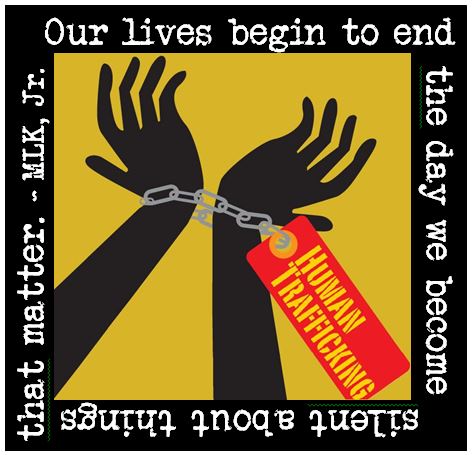
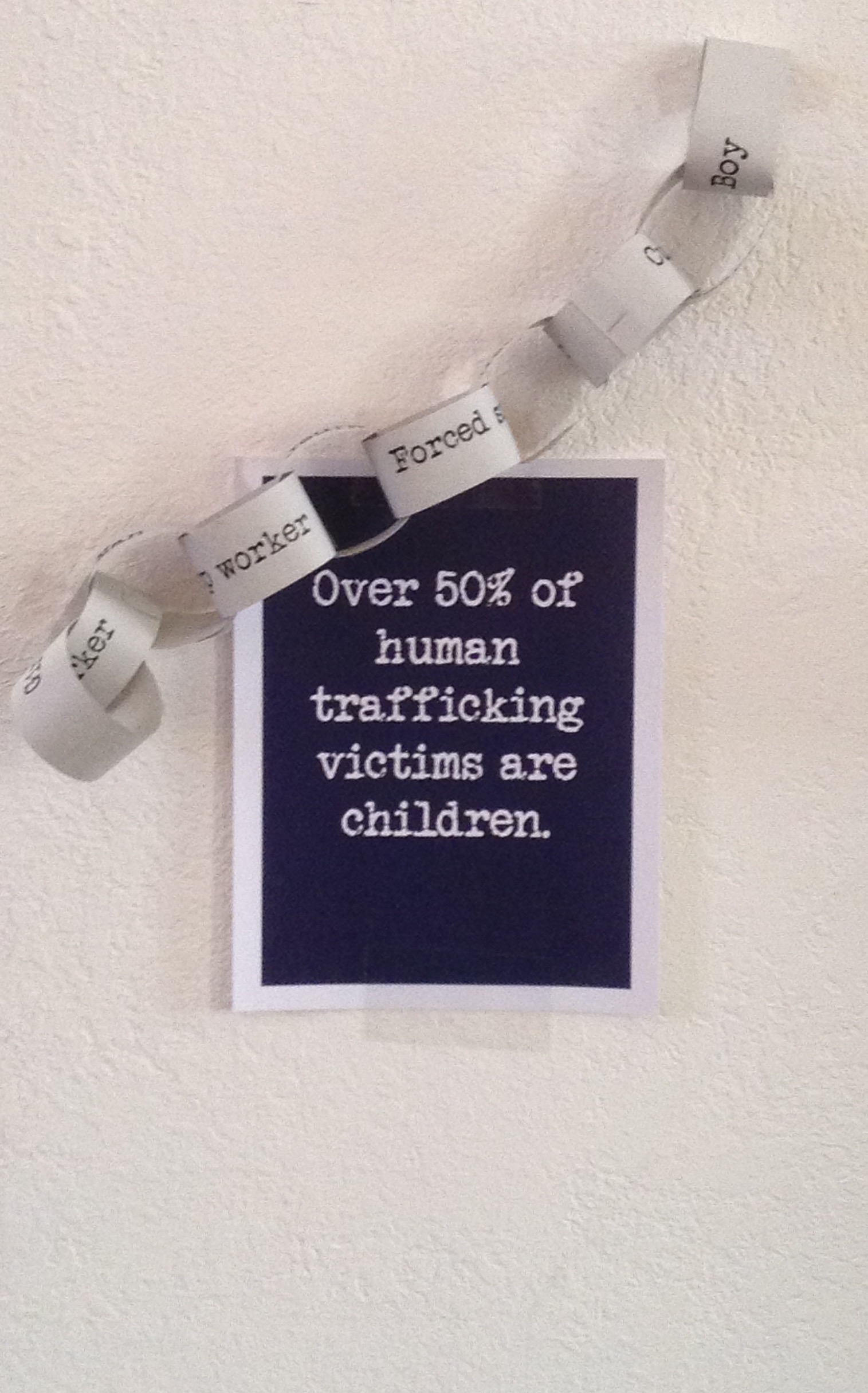
So this past Sunday was the day to celebrate the baptism of Christ. But there’s another emphasis marked on the calendar. This past Sunday, Jan. 11 was designated as Human Trafficking Awareness Sunday. And that was where our focus was yesterday. Instead of a sermon, we read some victims’ stories and use a readers’ theater piece. So today’s post is the entire outline for the service yesterday – Scriptures, hymns, prayers, and readings.

*Just a note: While the hymns we sing use inclusive language, I couldn’t find recordings/videos online that included those inclusive lyrics. So while the videos and links embedded below speak of God in terms of “He,” “Him,” “Father,” etc., this isn’t an accurate representation of the language we use in our worship services.*

Human Trafficking bulletin cover

Welcome & Announcements

GATHERING IN GOD’S WORD

Letting God In: During this time, we invite you to prepare your heart and your mind for worship. We want you to be able to use this quiet time to settle your thoughts, set aside any distractions that may be troubling you, and focus your whole self on God. Open your heart, your mind, and your spirit, and let God into your life.

Centering Prayer: Hear a just cause, Holy One.
As you breathe in, pray, “Hear a just cause.”
As you breathe out, pray, “Holy One.”

* Gathering Hymn #588 (NCH) – Let Justice Flow like Streams

* Opening Praise
One: Across the Red Sea, God delivered a people from slavery into freedom.
Many: We are called to bring the message of freedom to all who are enslaved.
One: Across the River Jordan, God brought forth a people from wilderness into homeland.
Many: We are called to help others find their home in God.
One: Out of exile, God led the people from diaspora into community.
Many: We are called to lead our communities to be places of safety and welcome.
One: Out of hopelessness, God brought forth a Messiah.
Many: We are called to share the Good News of Jesus Christ, for the sake of the world.
ALL: Let us worship and share this Good News with all.

* Opening Hymn #314 (NCH) – Community of Christ

* Joining in Prayer
Almighty God, Author of Life, we confess that we have been silent. We confess that we have closed our eyes and shut our ears. We don’t want to hear about human trafficking – about the stories of people torn from their homes, coerced out of their very lives, and sold into slavery. It’s painful. It’s shameful, and we don’t want to talk about it. But you have called us to be people of action and people of compassion, God. You have called us to seek justice, to love kindness, and to walk humbly with you. And so we ask you to open our eyes to see the vulnerable and the victims among us. Open our ears so that we may hear their stories, understand where we need to speak out and act, and recognize where our inaction and silence have caused harm. And open our hearts, Great Savior, so that we can be moved to work for justice, to do our part in our communities, in our country and in our world. In the name of Jesus, the Messiah, who went to the cross innocent, but rose triumphant, we pray. Amen.

* God’s Promise of Grace: (pouring the water into the baptismal font) Friends, the waters of God bring renewal and grace to all people, refreshing the weary soul and making all things new. Through Christ’s sacrifice on the cross, we are made a people loved and forgiven and freed. Alleluia! Amen.

HEARING GOD’S WORD

Scripture reading – Isaiah 61:1-4, 8-9

Hearing the Voices of Those Seeking Justice

Victims’ Stories
from the 2014 Trafficking in Persons Report

The names in these stories have been changed to protect people who have already been victimized beyond anything we can imagine. But the stories themselves are real. They are stories from around the globe – every continent. And these stories are just a small sampling … but they shed some light on the world of human trafficking – a light meant to open our eyes and our hearts to the plights of our brothers and sisters around the world.

Philippines/Saudi Arabia

Maria left her home for a job as a domestic worker in Saudi Arabia – the opportunity for a fair wage and a safe workplace made the sacrifice of leaving her family and her life in the Philippines seem worth it. In reality, Marie spent her time in Saudi Arabia being sold from employer to employer – 11 in all. In the last home where she worked, she was beaten severely. After her stay in the hospital, she was sent home to the Philippines. She has never been paid for her months of work.

Burma/Thailand

Trusting his recruiters, Myo believed he was leaving his home in Burma to work in a pineapple factory in Thailand. Yet, when he arrived, he was sold to a boat captain for the equivalent of approximately $430. He was held on the boat for 10 months, forced to work, and beaten regularly. On the rare occasion that the boat docked at port, the officers bribed local police to allow them to keep the fishermen on the boat rather than risking them escaping if they were allowed to set foot on shore. Myo was finally able to escape and sought refuge in a temple. He continues to struggle with deafness, having had his head and ear smashed into a block of ice on the fishing boat.

United States

When teenager Melissa ran away from home, she was quickly found by a man who promised to help, but was actually a pimp who intended to sexually exploit her. He used psychological manipulation and coercion to hold her in prostitution, and advertised her using online sales. Refusal to do what he said was met by beatings and threats. Despite her fear of being found and killed if she ran, Melissa one day managed to escape from a hotel room where he was keeping her. A patron at another hotel nearby helped her reach the police, who arrested her trafficker.

Vietnam

Needing to support their families, teenagers Dung and Chien dropped out of school and went to work as gold miners. The boys were forced to work underground around the clock, under constant surveillance, and controlled by threats. They were told they would not get paid until they had worked for six months. Racked with untreated malaria and malnourished, Dung and Chien organized an escape attempt with some of the other boys being held in the mines, only to be caught and beaten by the foreman. They were able to finally escape with the help of local villagers, who fed them as they hid from the bosses in the jungle. With the help of a local child support center, the boys are looking forward to being reunited with their families.

Mexico/United States

Flor Molina was a hard worker and a good seamstress, working two jobs in Mexico to support her three young children. When her sewing teacher told her about a sewing job in the United States, she thought it was a good opportunity. Once they arrived at the border, the woman who arranged their travel took Flor’s identification documents and clothes, “for safekeeping.” She and her teacher were taken to a sewing factory and immediately began working. Beaten and prohibited from leaving the factory, Flor began her days at 4:00 in the morning; she not only worked as a seamstress, but had to clean the factory after the other workers went home. After 40 days, she was allowed to leave to attend church, where she was able to get help. With the help of a local NGO, Flor was able to break free. Now, she is a leader in a U.S. national survivors’ caucus, and advocates for victims’ rights and supply chain transparency.

Readers’ Theater
from the PC(USA) Human Trafficking Liturgy

Liturgist: As we join together in this place of worship, others are enslaved, some to provide our comfort. Will we not look and listen?

Voice 1: I signed up to be a domestic worker in a foreign country where I could earn more in a year than I could in a lifetime in my country. But once there, my passport was taken. I had no time off. I was beaten almost daily, thrown down the stairs, and nearly choked to death. The hospital helped me escape when I tried to commit suicide.

All readers’ voices: Is it nothing to you, all you who pass by? Look and see if there is any sorrow like my sorrow.

Voice 2: I was nine when my father sold me for the equivalent of 100 U.S. dollars to a lady who told me I was going to a special place to live in a big house with pretty things. I was excited. I’d never ridden on a bus or seen a car, and I was going to the big city. But when I got there, there was only a dark, dirty place. The lady told me what she wanted me to do, and I said no. Then a man came and beat me for three days. They didn’t feed me. I was hungry, and I wanted to go home. I prayed, but the lady said my parents aren’t heard. It turns out she was right. When I contracted AIDS a few years later, I was thrown out on the street. I died at 16.

All readers’ voices: Is it nothing to you, all you who pass by? Look and see if there is any sorrow like my sorrow.

Voice 3: I was sold by my boyfriend of two years.

Voice 4: I was sold by my spouse.

Voice 5: I just went to a sleepover with a friend whose parent drugged me and sold me to be repeatedly gang raped. My parents found me before I was sold to a Texan for $300,000.

All readers’ voices: Is it nothing to you, all you who pass by? Look and see if there is any sorrow like my sorrow.

Voice 6: The soldiers came and killed my family when I was 12. They found me shaking in a corner and gave me pills they said would make me feel better. They did, but they made me crazy, too. The soldiers took me and fed me and gave me more pills. They taught me how to kill people. I didn’t like doing this, but if I didn’t, they would kill me, like they did my friend who was hacked to death by a machete right before my eyes when he refused to rape and kill his own sister.

All readers’ voices: Is it nothing to you, all you who pass by? Look and see if there is any sorrow like my sorrow.

Voice 7: I dig through the mud in riverbeds to find the ore for what you call smart phones and computers. Because I’m only 11, I can crawl through the tunnels to where the best ore can be found. The problem is, the tunnels collapse and kill people. But the soldiers with guns make us work and take what we find. Sometimes they pay us. Mostly, they let us live.

All readers’ voices: Is it nothing to you, all you who pass by? Look and see if there is any sorrow like my sorrow.

Voice 3: I was only eight years old when my family sent me to work in a brick kiln. After ten years of hard labor, I moved to another kiln, accepting an advance of $150 to meet my immediate needs. But the owner inflated my debt through fraudulent fees and forced me into servitude to pay off an insurmountable debt, and I worked for fifteen more years before local officials intervened to obtain my freedom.

All readers’ voices: Is it nothing to you, all you who pass by? Look and see if there is any sorrow like my sorrow.

Voice 1: I work 20 hours a day in Beverly Hills sewing clothes with labels that say “Made in the USA.” Sometimes I get a day off, and I can see my children.

Voice 2: I work 200 hours a week in a restaurant in Detroit in exchange for a cot I the basement. I don’t speak your language well, but I can’t talk to you if you try to engage me in friendly conversation because my boss is always watching. If I try to escape, I don’t know what will happen to me. So I don’t try.

Voice 3: I don’t go to school so I can pick cotton.

Voice 4: I’m forced to make bricks.

Voice 5: Weave rugs.

Voice 6: Work on farms.

Voice 7: Catch fish.

All readers’ voices: Don’t you see us? We’re everywhere. Don’t you care?

The following are to be said quickly by the different voices without pauses between voices:

Voice 1: We make your beds in hotels.

2: We serve your food in restaurants.

3: We sew your clothes.

4: We make your shoes.

5: We harvest your food.

6: We provide materials for your electronics.

7: We mine your diamonds,

3: your gold,

4: your silver,

5: your copper.

All readers’ voices: We’re everywhere. Don’t you see us? Don’t you care?

All readers’ voices: Is it nothing to you, all you who pass by? Look and see if there is any sorrow like my sorrow.

Silence.

Friends, I know these words are hard to hear. But things like these are not nearly as far removed from our lives as we’d like them to be. Do you enjoy shopping trips up to the Mall of America? Because that’s a prime spot for traffickers to pick up, sell, and swap victims. Rochester’s no better. These things are going on right in our backyard. But the good news is we are not helpless. There are things that we can do. In your bulletin this morning are 2 sheets. One is a human trafficking fact sheet. The other is a list of 20 ways you can help fight human trafficking.

Scripture reading – Matthew 5:1-16

Litany for Those Enslaved (based on the United Methodist Women’s Litany: An Affirmation of Faith)

One: We believe in God the Creator who hovered in love over the primal chaos and uttered creation into existence.

ALL: We believe that the magnificent signature of God can be seen in the diversity of life – every color, every race, every face.

One: We also believe in the revelatory signature of God in Jesus Christ who came to restore the image of God in every human being.

ALL: We believe that God offers peace to a broken humanity, and calls us to be God’s peacemakers, justice-seekers, and healers for a world in need.

One: We believe in Jesus the Christ who came to open our ears so that we may hear each other into community.

ALL: We believe in the Holy Spirit who leads us on into ever-new margins, as children of God.

Sing Kyrie Eleison

One: We believe in the Holy Spirit who opens our ears to the groaning of all God’s beautiful children who suffer – those who are oppressed and exploited and enslaved.

ALL: We believe in God who continually sends us out as living reminders of God’s grace, compassion, and heart for justice.

One: We believe in God’s yearning for shalom and God’s care for all God’s children across this wide, wide earth – all ages and races, all classes and creeds, all genders and sexual orientations.

ALL: We believe that God’s shalom is a call for the care of the whole, and God us calling us to be messengers of shalom.

One: For the sake of justice on earth,

ALL: For the sake of justice on earth.

Sing Kyrie Eleison

One: We believe in the life-giving streams flowing from the heart of God for the healing of our communities, the human family, and creation as a whole.

ALL: We believe in God’s vision of cosmic redemption – freedom for the captives, hope for the hopeless, compassion for those who have been victimized.

One We believe that today we can start living a shalom-filled life, and stand by God’s vision for all people.

ALL: We believe that today we can start living for the new heaven and the new earth that God envisions for us.

One: We believe that today we can start being peacemakers and justice-bringers for all God’s children, shining a light so that all may see the image of God in themselves and in the people around them.

ALL: We believe that today we can become caretakers of God’s beloved people – all God’s beloved people – because that is what God has called us to do: to love as God has loved us.

Sing Kyrie Eleison

ALL: In the name of the One who says, “Behold, I make all things new,” even Jesus the Christ. Amen.

Passing of the Peace

* Song of Peace: Let There Be Peace on Earth (back of NCH hymnal)

Prayers of the People – Around the sanctuary, you will find facts about human trafficking. Connecting these posters are chains representing the unjust captivity faced by our brothers and sisters around the world, around this country, even in our own backyards. Today, we will have an extended period of silent prayer before we move into our responsive prayer. I encourage you to move around the sanctuary, tearing off loops of the chains as your prayer for all those whose lives are and have been affected by human trafficking because prayer is truly one of the most powerful ways that we can help to break these chains of bondage and injustice.

IMG_0871

IMG_0873FullSizeRender

Responsive Prayer (also from the PCUSA Human Trafficking Liturgy)

One: God of grace, break all the chains that hold your children in bondage, whether these be political, social, economic, ethnic, cultural, religious, familial, or personal. Lord, in your mercy,
ALL: Liberate.
One: Almighty God, you have shared your power for good with us. Judge those who abuse power. Grant your wisdom to all who have authority over others that they may lead in accord with your Way of shalom for all people. Lord, in your mercy,
ALL: Empower.
One: Holy God, you have called your people to embody Christ’s ministry here on earth. Help us, your church, be vigilant for those in need of your freedom and give us the courage to act as your agents of liberation. Lord, in your mercy,
ALL: Encourage.
One: God of compassion, there are others in bondage in so many other ways – suffering illness and pain in body, mind, and spirit – so we pray for your healing for those who are also on our hearts this day. {During the silence, lift up your prayer requests either silently or aloud.} Lord, in your mercy,
ALL: Heal.
One: God of grace, hear all of our prayers – those uttered and those that remain unspoken in the silent corners of our hearts. We lift them up to you in the name of your Son, Jesus Christ, who taught us to pray, saying, Our Father who art in heaven, hallowed be thy name. Thy kingdom come, thy will be done on earth as it is in heaven. Give us this day our daily bread, and forgive us our sins as we forgive those who sin against us. And lead us not into temptation, but deliver us from evil. For thine is the kingdom, and the power, and the glory forever. Amen.”

RESPONDING TO GOD’S WORD

Offering

                * Hymn of Response #780 (NCH)
* Prayer of Dedication

* Hymn #332 (PH) – Live Into Hope

BEING SENT OUT IN GOD’S WORD

* Charge & Benediction: Friends, the prophet Micah instructs us to seek justice, to love kindness, and to walk humbly with our God. Justice … kindness … humility … grace … These are all things that God desires for each and every one of God’s children, and as God’s messengers, it is our challenge and our blessing to work for this in the world. **SO MAY THE GOD OF HOPE FILL YOU WITH ALL JOY AND PEACE IN BELIEVING, SO THAT YOU MAY ABOUND IN HOPE BY THE POWER OF THE HOLY SPIRIT. AMEN.**

* Sending Hymn #2172 (Sing the Faith) – We Are Called (refrain only)

Sunday’s Sermon: Of Rabbits, Magi, & Revelations

Texts for this sermon: Psalm 72:1-7, 10-14 and Matthew 2:1-12

Velveteen Rabbit

  • Let me introduce you to someone. [Hold up Velvie] This is Velvie – the aptly-and-very-creatively named Velveteen Rabbit that was mine when I was a kid.
    • Story of the Velveteen Rabbit = classic, beautiful story
      • Toy rabbit given to a boy for Christmas
        • Initially wasn’t played with much – spent most of his time on the shelf with the other toys → put him down because he was only made of sawdust (no mechanics, no moving parts)
        • Also meets Skin Horse, one of the oldest and wisest toys in the nursery → Skin Horse tells Velveteen Rabbit about being REAL: “What is REAL?” asked the Rabbit one day … “Does it mean having things that buzz inside you and a stick-out handle?” “Real isn’t how you are made,” said the Skin Horse. “It’s a thing that happens to you. When a child loves you for a long, long time, not just to play with, but REALLY loves you, then you become Real.”[1]
      • According to the Skin Horse, being “real” is a process, a journey. It’s a journey to be something different, something new – a journey of growth and transformation and revelation.
        • Not unlike journey of the Magi
        • Not unlike our faith
      • You see, friends, faith isn’t a destination. It’s not something that we finally reach after years of searching and working and perfecting. It’s a journey that we take with other people and with God.
  • The journey itself is an ever-changing, ever-evolving thing, and one of the greatest influences on a journey is who you’re traveling with.
    • Think about a simple car trip up to the cities.
      • Picture trip with one or two people whose company you know you’d enjoy – laughing, maybe listening to the same music/radio station, talking
      • Now picture same trip with one or two people whose company you don’t enjoy – different trip?
      • What if you were taking that trip all alone in the car? See what I mean? It’s the same stretch of highway, but those are three very different journeys simply because of the people going along for the ride.
    • Velveteen Rabbit’s journey …
      • First altered by aunt who gives him to the boy for Christmas
      • Also affected by relationship with Skin Horse
      • Drastically altered by boy’s nanny – One night, when the little boy couldn’t find the china dog he usually slept with, his nanny gaves him the Velveteen Rabbit to sleep with instead. From that moment on, the Velveteen Rabbit and the boy became inseparable.
      • Most profound impact made on his journey comes from the Boy himself: The Boy used to talk to him, … and they had splendid games together…. And when the Boy dropped off to sleep, the Rabbit would snuggle down close under his little warm chin and dream, with the Boy’s hands clasped close round him all night long. And so time went on, and the little Rabbit was very happy–so happy that he never noticed how his beautiful velveteen fur was getting shabbier and shabbier, and his tail becoming unsewn, and all the pink rubbed off his nose where the Boy had kissed him.[2] → At first, only the look and feel of the Velveteen Rabbit’s days are altered by his relationship with the Boy. But before long, the look and feel of the Velveteen Rabbit himself begins to change because of that relationship.
    • Magis’ journey = constantly changing → begins as an homage trip, becomes a sort of information-gathering mission for Herod, ends up a bit of an escape mission – each alteration in magis’ path coincides with a change in the people that were a part of their journey
      • Journey initiated by in-breaking of presence of God in their lives – glimpse of the Star of Bethlehem
      • And when all they tried to do was stop and ask for directions, they end up in a secret meeting with the King – journey slightly delayed by run-in with Herod: Pretending to be as devout as they were, [Herod] got them to tell him exactly when the birth-announcement star appeared. … “Go find this child. Leave no stone unturned. As soon as you find him, send word and I’ll join you at once in your worship.” Instructed by the king, they set off.[3]
      • Journey reached another phase when they found the Christ-child: They entered the house and saw the child in the arms of Mary, his mother. Overcome, they kneeled and worshiped him.[4] → culmination of sorts because they did what they set out to do – pay homage to the newborn king
      • But their journey wasn’t over yet.: In a dream, they were warned not to report back to Herod. So they worked out another route, left the territory without being seen, and returned to their own country.[5] → After another encounter with God, their path changed yet again.
        • Scholar: Could it be Matthew is offering a tantalizing hint about life for those who have met Christ? Nothing is ever the same. You don’t take the old road any longer. You unfold a new map, and discover an alternative path.[6] → The journey continues, but the path is never the same.
    • Think of the people you encounter each and every day.
      • The obvious people: loved ones (family, friends), co-workers
      • But there are also the less-obvious people – the people we don’t see or don’t want to see.
        • Person asking for spare change at the intersection
        • Stressed-out looking single parent in the grocery store with the screaming children
        • Person struggling with mental illness
        • That person (co-worker, family, neighbor) who just gets under your skin – makes you duck away at the mailbox/water cooler/etc.
    • Friends, these are the people we journey with. Each and every one of our encounters with people affects us in some way. We rub off on each other, whether we like it or not, whether we’re a part of each other’s lives for a moment or a lifetime.
      • Scholar explains why we travel together: It is very important to seek guidance along the way. No one of us, not even any small group of us, can know it all. There are others who are seeking, [too].[7] → You see? It’s our interactions with all the people around us – the ones we love and the ones we find it hard to love – it’s these interactions that shape and inform and challenge and stretch our faith. And it’s our interactions with them that shape and inform and challenge and stretch their faith.
  • But no matter who we’re traveling with, sometimes the encounters we have are difficult for us; they make us feel uncomfortable.
    • Discomfort in Velveteen Rabbit’s journey:
      • Boy contracts Scarlet Fever – spends a very long time in bed with his Velveteen Rabbit to keep him company
      • When he finally gets better, doctor orders nanny to discard and burn all the things he’s been playing with during his illness including the Velveteen Rabbit
      • Nanny takes all out to the trash bins to burn the next day
      • Story: That night the Boy slept in a different bedroom … And while the Boy was asleep, dreaming of the seaside, the little Rabbit lay among the old picture-books in the corner behind the fowl-house, and he felt very lonely. … He thought of those long sunlit hours in the garden–how happy they were–and a great sadness came over him. He seemed to see them all pass before him, each more beautiful than the other … He thought of the Skin Horse, so wise and gentle, and all that he had told him. Of what use was it to be loved and lose one’s beauty and become Real if it all ended like this? And a tear, a real tear, trickled down his little shabby velvet nose and fell to the ground.[8]
    • Discomfort of the Magis’ journey
      • Remember: original reason for pilgrimage = to find the newborn king of the Jews and pay him homage
      • Herod hears about this “king of the Jews” and gets scared – co-opts the Magis’ pilgrimage as a search mission for his own purposes
        • Lie he tells to the Magi: “As soon as you find him, send word and I’ll join you at once in your worship.”[9]
        • But a few verses after what we read this morning, an angel reveals Herod’s real reason for finding Jesus as a warning in another one of Joseph’s dreams: Herod is about to search for the child, to destroy him.[10]
        • And when the Magi themselves are made aware of this treachery in a different dream, they are so uncomfortable with this shift in purpose that they decide to head home via a different route – one that will take them out of Herod’s reach. But it was only when they were face-to-face with the discomfort that the Magi were able to change their path.
  • And you know what? That’s one of the hardest things about journeys and about the learning and growing that we do as we go along. More often than not, our greatest growth comes not from the happy, easy parts of the path but from those challenging and uncomfortable ones.
    • Think of it in terms of light: What’s brighter? A light shining in an already sun-lit room, or a light shining in the darkness?
      • Visible in both? Yes.
      • Dazzling in both? No. → cannot dazzle without the darkness
    • Goal of our journey of faith is not necessarily what’s at the end but what happens as part of the journey itself
      • Ps gives us God’s example for how we should journey together
        • With justice: Please stand up for the poor, help the children of the needy.[11] → requires active faith, not passive faith
          • = active verbs (stand up, help, defend, save)
        • Also encouraged to travel with compassion: [God] opens a place in [God’s] heart for the down-and-out.[12] → opening our own hearts is a scary thing, a dangerous thing
          • Could be hurt
          • Could be taken advantage of
          • Could be rejected
          • Could even be forgotten like Velveteen Rabbit
          • But if these are all chances that God is willing to take for us, how can we refuse to that these chances for other people? Other beloved children of God?
        • Scholar: Jesus does not make my life more comfortable; Jesus doesn’t help me fit in and succeed. … [With Jesus], a strange, unfamiliar road is our new path – but the road is going somewhere.[13]
      • The Velveteen Rabbit doesn’t find the end of his story soaked in tears.
        • Tear he shed grew up into a flower → from the flower stepped a fairy → transforms him into a real bunny and introduces him to a whole new life (new friends, new experiences, new way of living)
          • Couldn’t have been possible without first part of the Velveteen Rabbit’s journey – the ups as well as the downs
            • Remember words of 1st scholar I quoted earlier?: Could it be Matthew is offering a tantalizing hint about life for those who have met Christ? Nothing is ever the same. You don’t take the old road any longer. You unfold a new map, and discover an alternative path.[14] → Friends, throughout our journeys of faith, we are always changing and growing. We’re always challenging those around us and being challenged ourselves. As we journey, new people join us to travel alongside for a time while others’ paths veer away from ours and they leave us. But no matter where our journey takes us, God is always there to show us the compassion, the grace, the integrity, and the love that we seek. The journey continues, but the path is never the same. Amen.

Benediction:
17th cent. Japanese poet Matsuo Basho: “Each day is a journey, and the journey itself is home.” Friends, journey well.

[1] Margaret Williams. The Velveteen Rabbit. (New York, NY: Doubleday & Co, Inc.), 1922. From http://digital.library.upenn.edu/women/williams/rabbit/rabbit.html, accessed 31 Dec. 2014.

[2] Williams.

[3] Mt 2:7b, 8-9a.

[4] Mt 2:11a.

[5] Mt 2:12.

[6] James C. Howell. “Epiphany of the Lord – Matthew 2:1-12 – Theological Perspective” in Feasting on the Word: Preaching the Revised Common Lectionary – Year B, vol. 1. (Louisville, KY: Westminster John Knox Press, 2008), 216.

[7] William V. Arnold. “Epiphany of the Lord – Matthew 2:1-12 – Pastoral Perspective” in Feasting on the Word: Preaching the Revised Common Lectionary – Year B, vol. 1. (Louisville, KY: Westminster John Knox Press, 2008), 214.

[8] Williams.

[9] Mt 2:8.

[10] Mt 2:13.

[11] Ps 72:4.

[12] Ps 72:13.

[13] Howell, 216.

[14] Howell, 216.