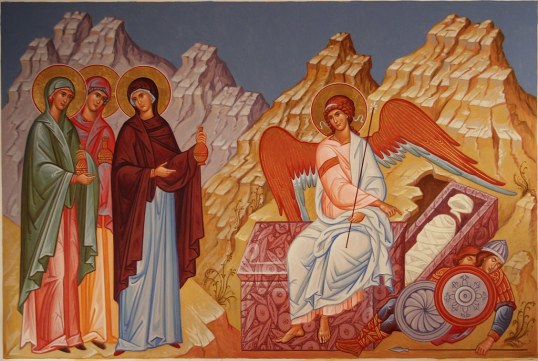
Sunday’s sermon: Pieces of the Puzzle

Where Oliver Fits

Text used – 1 Corinthians 1:10-18


  • So we have this book that we love to read at our house. It’s a fabulous children’s book called Where Oliver Fits by Cale Atkinson.[1] → story about a little puzzle piece named Oliver who’s looking for his perfect place
    • Oliver has big dreams → can’t wait to be part of the bigger picture: “something exciting, something wild, something out of this world!”
    • But poor little Oliver is having trouble finding his fit.
      • Tries a bunch of different places → gets turned away every time (and turned away pretty harshly and roughly!) → Different groups of puzzle pieces who have already found their fit together waste no time telling Oliver all the ways he doesn’t fit: “Too much blue! Not enough red! … Too round! Not enough square! … Too tall. Too short. Too pointy. Too bulky. Not right. All wrong!”
      • Finally, Oliver gets fed up! → in an attempt to find his fit sooner rather than later, Oliver tries to change himself
        • Change his shape
        • Change his color
        • Eventually alters himself so much that he’s completely hidden behind everything → Not a bit of the real Oliver is visible. He changes everything about himself to fit into a space that looks nothing like his real self. But in this altered state, he fits … sort of.
      • Over time, Oliver realizes this fit he’s forced himself into isn’t right either → It isn’t as perfect as Oliver hoped it would be because even as he himself finally fits into a space (a space … not necessarily his space), he watches all the other pieces around him continue to turn away other pieces that are just trying to fit in, jeering and ridiculing them just like they teased Oliver himself.
    • And y’all, the church in Corinth – the congregation that Paul sent this letter to – was in a pretty similar situation. Paul wrote to Corinth because the church was splintering apart, putting up walls and setting troublesome and arbitrary distinctions between one subgroup in the congregation and another.
      • Finger pointing
      • Labeling
      • Nitpicking
      • Excluding
    • So Paul sent this letter, trying to bring unity … trying to bring togetherness into a fragmented church … trying to lift up the church as a whole and remind them, not of the things that separate them, but the ultimate thing that brings them together: their faith in God through Jesus Christ.
  • Now, before we dive into our Scripture reading itself, let’s talk about Corinth as a city.
    • Large city not too far from Athens
    • Diverse city
      • Lots of commerce
      • Lots of cultures
      • Lots of religions
      • Lots of artists
    • City of extremes
      • A few exceptionally rich citizens and lots of poor citizens
      • Transitory city → lots of people who were doing everything they could to climb the socioeconomic ladder → Corinth was a middle rung on that ladder
      • Ancient historians: known as “Sin City” of the ancient world
    • Corinthian church sort of reflected this city personality – see that in Paul’s words in our text this morning: Now I encourage you, brothers and sisters, in the name of our Lord Jesus Christ: Agree with each other and don’t be divided into rival groups. … Chloe’s people gave me some information about you, that you’re fighting with each other.[2] → Leave it to Paul to not beat around the bush. He sees a problem within the Corinthian church, and he calls it out. Plain and simple. “You’re fighting with each other.” Bam.
      • Goes on to detail some of the ways that they’re putting barriers up between one another → namely who they were baptized by/who they “belong to”
        • Even gets a little bit of a dig in – text: Thank God I didn’t baptize any of you, except Crispus and Gaius, so that nobody can say that you were baptized in my name![3]
        • Just like those groups of puzzle pieces in the story à all about enforcing the parameters of whatever little clique they’ve created … all about deciding who’s “good enough” and who’s not
  • And if we’re honest with ourselves, the church today is not really all the different from that ancient Corinthian church, is it?
    • Ways we create divisions amongst ourselves
      • Denominationally
      • Progressive vs. fundamental
      • Traditional vs. contemporary
      • Size delineation (I like to call this the “Grouchy Ladybug” delineation because churches either say to themselves or say to other churches, “You’re not big enough!” Not big enough for this program or that … not big enough for this mission or that … not big enough for whatever.)
    • There are a thousand different ways we draw lines and portion out the body of Christ today, aren’t there? But just because “that’s what we do” doesn’t mean that’s what we should do.
      • Scholar gets at the heart of this: It can happen that we become so accustomed to a divided church that we simply accept the situation. We have always known a divided church, and we are not shocked or dismayed because that is the way things are. Paul will not let the Corinthians or us be satisfied with the church in its divided condition. There may be no quick solution to the problem, but there can be no casual acceptance of it.[4]
  • So let’s revisit Oliver and the rest of his story
    • That new space that Oliver had found – you know, the one where he had to change everything about himself to “fit in” – still wasn’t right. → finally comes to the realization that if he can’t be himself, whatever fit he’s found isn’t the right fit for him → sheds his disguise (to the scorn and consternation of the pieces around him) and strikes out on his own again
      • Glad to be himself again BUT also finds himself alone again → returns to his worries that he’ll never find his fit: “How can I be part of something exciting, wild or out of this world if it’s just me?”
    • BUT as he’s wandering alone, Oliver finds a few other pieces who have also been trying their darnedest to fit in – even trying to alter their appearances (just like he did!) to fit into a place, any place. → with those pieces, Oliver finds his perfect fit → “Oliver discovered that you can’t rush or force your fit. All you can do is be yourself! Your fit will find you. And it will feel … PERFECT!”
  • Friends, this is what Paul is getting at here!
    • Promotes togetherness right off the bat: Now I encourage you, brothers and sisters, in the name of our Lord Jesus Christ: Agree with each other and don’t be divided into rival groups. Instead, be restored with the same mind and the same purpose.[5]
      • Very cyclical phrasing in Gr. – “don’t be divided into rival groups” = literally “no schisms/splits” and “be restored” = literally “be mended” → So Paul is both recognizing the tears in the fabric of the Corinthians’ church life and imploring them to stitch up those tears in the name of Christ.
    • Later puts the importance of that reconciliation into theological context – text: Christ didn’t send me to baptize but to preach the good news. And Christ didn’t send me to preach the good news with clever words so that Christ’s cross won’t be emptied of its meaning. The message of the cross is foolishness to those who are being destroyed. But it is the power of God for those of us who are being saved.[6] → Paul is reminding the church in Corinth about their “ultimate why” – their purpose for being the Church in the first place. It’s not about them. It’s not about who brought them to the faith. It’s not even about who started the church in which they are now squabbling (Paul himself!). It’s about God and what God did for them through Jesus Christ.
  • It is this message – all of the love and grace and openness and acceptance and wide-armed welcome that Christ rained down from the cross – that makes the church the Church. It’s this message that opens the doors and erases the lines. It’s this message the lets us all gather together to lift up the same prayers and share the same bread and cup and join our voices in praise and thanksgiving. It’s not about keeps us apart. It’s about what unites us: Grace. Unconditional love. Jesus Christ. And a God who was willing to give it all up for us on the cross. That’s why, every time we come to the table for communion, I say what I do: “No matter who you are … no matter where you come from … no matter what you bring with you … you are welcome at this table and in this community.” God has made a place for you – just for you – and that is what matters. And for that, we welcome you and we love you. Thanks be to God. Amen.

[1] Cale Atkinson. Where Oliver Fits. (New York, NY: Tundra Books), 2017.

[2] 1 Cor 1:10a, 11.

[3] 1 Cor 1:14-15.

[4] Harry B. Adams. “Third Sunday After the Epiphany – 1 Corinthians 1:10-18, Homiletical Perspecitve” in Feasting on the Word: Preaching the Revised Common Lectionary – Year A, vol. 1. (Louisville, KY: Westminster John Knox Press, 2010), 280.

[5] 1 Cor 1:10.

[6] 1 Cor 1:17-18.

Sunday’s sermon: United in Every Time and Place

00-Communion Sunday

Text used – 1 Thessalonians 1:1-10


  • Is anyone else getting weary?
    • Getting tired of working or schooling from home
    • Getting tired of the inside of your own house
    • Getting tired of the weightiness that comes with the latest headlines and the latest recommendations and the latest statistics that come out day after day
    • Getting tired of the disconnectedness and the isolation and the uncertainty
    • Yeah, friends. Me, too. The “long haul” nature of this is overwhelming, and I think we’re all really starting to feel it on a soul-deep level.
  • And yet, friends, we get to gather together today for at least a hint of normalcy when we come around this table – the communion table, Christ’s table. Yes, we’re all coming from different places and bringing different elements, but we are still here. We are still speaking the words we have spoken over and over again – words that are ancient and saturated with history and meaning. We are still renewing our souls and our faith and our commitment to God’s work in our world. And we are still together – in relationship, in community, in hope and in love. So today, all, we’re going to celebrate. We’re going to rejoice in our togetherness. We’re going to rejoice in the community that we experience both here and afar. We’re going to rejoice in bread and wine, in crackers and juice, in bagels and tortillas and water and tea and whatever else we bring to this table not because of what we bring but because of who calls us here: Jesus the Christ, our Lord and Savior, risen and sacred and whole.
    • Book of Order (in “Theology of the Lord’s Supper”): When we gather at the Lord’s Supper the Spirit draws us into Christ’s presence and unites with the Church in every time and place. We join with all the faithful in heaven and on earth in offering thanksgiving to the triune God. We reaffirm the promises of our baptism and recommit ourselves to love and serve God, one another, and our neighbors in the world.[1] → We’re going to work our way through this description and our Scripture reading as we celebrate this morning.
  • Before we dive deeper into this description, let’s talk a little bit about our Scripture reading this morning.
    • Thessalonica as a place[2]
      • Still a city you can visit today → located in Greece on the northern tip of the Aegean Sea
      • Large commercial and cultic center within the Roman Empire = lots of people, lots of money changing hands, lots of different religions … all crashing together in one city
      • It was also a city that was staunchly loyal to the Roman Empire which meant that even though Paul visited and established his church sometime between 41-54 C.E., most of the inhabitants probably saw the new Christian’s loyalty to Jesus as weakening the city’s support for Rome. → almost certainly led to suffering and persecution for Christians in Thessalonica at the hands of neighbors, family, friends
    • 1 Thessalonians as Scripture[3]
      • Written by Paul
      • Certainly among the earliest of Paul’s letters (quite possibly the 1st “check-in” letter he wrote to one of his established churches) → probably written around 51 C.E. (just 20 yrs. after Jesus’ death/resurrection)
      • Purpose: after leaving Thessalonica, Paul worried that the congregation’s anxiety and troubles would cause them to default – to abandon faith – so Paul wrote this letter of encouragement
        • Scholar: This letter is one of the most intimate in the [New Testament], full of love, prayer, thanksgiving, and images of the Christian family. Clearly, Paul uses it to renew his relationship with them. Above all, he exhorts them to remain faithful to Christ and to the Christian community under trying circumstances. He encourages the community to continue in love for each other and in faithful labor. [4] → Sound familiar, friends? Is that circumstance ringing any bells? Is it speaking to where you feel we are today? Because it is for me. I think we can be fairly sure that Paul’s words spoke powerfully to those in Thessalonica who received them nearly 2000 years ago … but they also continue speak powerfully to us today, especially with what we are going through as a church … as a nation … as the human family today.
  • Back to Book of Order description – 1st sentence: “When we gather at the Lord’s Supper the Spirit draws us into Christ’s presence and unites with the Church in every time and place.” → That’s what we’ve been working so hard to do since we started worshiping virtually 6 weeks ago. That’s what Paul was trying to do by sending this letter and all his other letters to churches that he had established and then had to leave – unite with them in every time and place. Nurture those relationships. Continue to building that community. Encourage faith near and far.
    • Text: Brothers and sisters, you are loved by God, and we know that he has chosen you. We know this because our good news didn’t come to you just in speech but also with power and the Holy Spirit with deep conviction.[5] → Notice, friends, that it isn’t Paul’s spirit … it isn’t Paul’s effort … it isn’t Paul’s faith that is lauded and praised here. It is God’s Spirit … it is God’s effort in love and power … it is God’s faith in choosing the people of Thessalonica. Paul makes it clear from the get-go that it is through the goodness and grace and love of God that Christian community is built and nurtured and sustained.
      • Same Spirit that draws us to the table to celebrate
      • Same Spirit that rejoices when we come back to God again and again
      • Same Spirit that unites us in every time and place, making all spaces where we worship – together or apart – holy spaces
  • 2nd sentence: “We join with all the faithful in heaven and on earth in offering thanksgiving to the triune God.” → WHY we come!
    • Paul praises both the faithfulness and the evangelism of the Thessalonians: You became imitators of us and of the Lord when you accepted the message that came from the Holy Spirit with joy in spite of great suffering. As a result you became an example to all the believers in Macedonia and Achaia. The message about the Lord rang out from you, not only in Macedonia and Achaia but in every place. The news about your faithfulness to God has spread.[6] → Paul is singing the praises of the Thessalonians church! He is commending them for their faithfulness, giving his own thanks for their continued thanksgiving and praise that they’ve given to God through their worship, through their prayer, through their sharing the gospel message … even in hard times, even in lean times, even in times of suffering and fear. The gospel lived in them, and they joined their voices with all those who had declared the good news of Christ’s death and resurrection – “the message about the Lord rang out from them!”
      • Why we come to worship (even in this strange and compartmentalized way in which we come today)
      • Why we come to the table, bringing all the crazy bits of our days … the crazy bits of our hearts … the crazy bits of our own meals to this Grand Feast → to join with each other and everyone else around the world who is doing this exact thing today, to join in giving our thanks and praise to God – not alone and in isolation – but together
  • 3rd sentence: “We reaffirm the promises of our baptism and recommit ourselves to love and serve God, one another, and our neighbors in the world.”
    • Declared loud and clear at both the beginning and end of today’s reading – text: We always thank God for all of you when we mention you constantly in our prayers. This is because we remember your work that comes from faith, your effort that comes from love, and your perseverance that comes from hope in our Lord Jesus Christ in the presence of our God and Father. … People tell us about what sort of welcome we had from you and how you turned to God from idols. As a result, you are serving the living and true God.[7] → Paul is reaffirming their faith. Paul is praising their love and commitment and work for the Lord. Paul is acknowledging their hospitality and how that welcome – those actions of their hands and hearts – speaks the word of God just as clearly to one another and to their neighbors.
      • That was their call almost 2000 yrs. ago
      • This remains our call today → what we come to do every time we come to this table together
        • Reaffirm our faith
        • Recommit ourselves to God and God’s work in the world
        • Renew our bodies and our spirits for that work
        • Out of messiness … out of suffering … out of weariness … out of pain … out of frustration … out of discouragement … out of fear … out of hopelessness … out of anxiety … WE. COME. Every time. All times. Especially this time. And we don’t come to forget those things or to escape those things or to pretend for 10 minutes that those things don’t exist. We come to redeem those things – to bring them to God to be taken up in the arms of the Savior who carries them a whole lot better than we do, to be saturated in the overwhelming and abundant grace that renews us and makes us whole and frees us to live as people connected and loving once again. We come to this table of love because it was God that love us first and fiercest, and we depart from this table of love ready to share that love with the world. And there are no limits – geographical, virtual, immunological, or otherwise – to that love. Thanks be to God! Amen.


[1] “Theology of the Lord’s Supper” in The Constitution of the Presbyterian Church (USA), Part II – Book of Order, 2019-2021. (Louisville, KY: The Office of the General Assembly), W-3.0409.

[2] Abraham Smith. ”The First Letter to the Thessalonians – Introduction, Commentary, and Reflections” in The New Interpreter’s Bible Commentary series, vol. 11. (Nashville, TN: Abingdon Press, 2000), 673-685.

[3] Love L. Sechrest. “1 Thessalonians – Introduction” in The CEB Study Bible. (Nashville, TN: Common English Bible, 2013), 388-390 NT.

[4] Love, 390 NT.

[5] 1 Thess 1:4-5a.

[6] 1 Thess 1:6-8a.

[7] 1 Thess 1:2-3, 9.

Sunday’s sermon: In Between Living

in between

Text used – Acts 1:1-14


  • Most of the time, “in between” isn’t really a very fun place to be, is it?
    • Inconvenience of being in between sizes in everything from shoes to pants to dresses to any other item of clothing
    • Discomfort of being in between two people who are arguing – getting caught in the middle of someone else’s fight (a fight that often doesn’t even pertain to you at all)
    • Fear and stress that comes with being in between jobs, uncertain about what the future holds
    • Remember the exasperation of being the kid in between two others in that most-frustrating of all childhood games: Pickle in the Middle? (Or Monkey in the Middle or Keep Away, depending on where you grew up)
    • Yeah … being “in between” can be a pain. It can be stressful. It can be aggravating. It can be uncomfortable. Or it can be, well, sort of boring. That time in between books or in between tasks or in between one big event and another can feel a little … blah. It can feel like it isn’t really “real time,” like it’s just saving space between one period of “real time” and another. I think it’s pretty safe to say that “in between” isn’t usually our favorite place to be.
  • And yet “in between” is exactly where we find the disciples in our Scripture reading this morning.
    • Set up
      • Reminder that gospel of Lk and Acts were written by the same author as a set → Acts = continuation of the story from Luke (gospel sequel, if you will)
      • With that in mind, the set-up for today’s Scripture reading is actually the end of Luke.
        • Jesus has been resurrected → encountered the women at the empty tomb (the myrrhbearers, from last week’s service!)[1]
        • Road to Emmaus story → Jesus encounters two (unnamed) disciples walking on the road from Emmaus to Jerusalem → disciples don’t recognize Jesus until they stop and eat together (break bread together) → once they recognize Jesus, he disappears[2]
        • Jesus finally appears to all the disciples together[3] → eats with them → gives them some explanation (recalling words of OT prophets) and a commission: “A change of heart and life for the forgiveness of sins must be preached in [Christ’s] name to all nations, beginning in Jerusalem. You are witnesses of these things. Look, I’m sending to you what my Father promised, but you are to stay in the city until you have been furnished with heavenly power.”[4]
        • Final bit = short (4-verse) account of Jesus’ ascension → This is the part that clearly leads into our reading for this morning – a reading that’s a more fleshed out version of that same encounter.
    • A little bit of recap from Lk – text: After his suffering, [Jesus] showed them that he was alive with many convincing proofs. He appeared to them over a period of forty days, speaking to them about God’s kingdom. While they were eating together, he ordered them not to leave Jerusalem but to wait for what the Father had promised. [5]
    • But then we get the fuller account of Jesus’ ascension … and it is quite the story! – text: After Jesus said these things, as [the disciples] were watching, he was lifted up and a cloud took him out of their sight. While he was going away and as they were staring toward heaven, suddenly two men in white robes stood next to them. They said, “Galileans, why are you standing here, looking toward heaven? This Jesus, who was taken up from you into heaven, will come in the same way that you saw him to into heaven.”[6] → Okay … is it just me, or does this read just a little bit like a comedy sketch?? Jesus is just hanging out with the disciples, then suddenly a cloud comes down, whisks him up into heaven, and while the disciples are standing there, craning their necks and watching him go, a couple of strangers in white walk up and go, “Hey … whatchya lookin’ at?” I mean, it’s odd, right? It’s just … odd!
      • But then into that odd and awkward moment, messengers of God speak words of reassurance and promise: Jesus will → promise that comes with other promises attached
        • Promise of God’s steadfastness
        • Promise of God’s continued blessing
        • Promise of God’s hope
        • Think about it. Would Jesus bother coming back to a place that God had written off as a lost cause? Would Jesus bother coming back if God didn’t have confidence in the work that the disciples – all disciples throughout the ages – would do? Somehow I doubt it.
    • Taking heart in the words of these messengers, disciples return to Jerusalem – text: When they entered the city, they went to the upstairs room where they were staying. Peter, John, James, and Andrew; Philip and Thomas; Bartholomew and Matthew; James, Alphaeus’ son; Simon the zealot; and Judas, James’ son – all were united in their devotion to prayer, along with some women, including Mary the mother of Jesus, and his brothers.[7] → And this all sounds well and good. It sounds peaceful. It sounds faithful. And it is! But still … all of a sudden, once again, the disciples are unexpected and unwittingly thrown into yet another “in between” time.
      • 1st in between time = time between Jesus’ death and resurrection – a time that they didn’t even know was an “in between” time → They thought that Jesus had been killed once and for all – that his life and ministry were over forever. They were mourning. They were afraid. They were uncertain about what their futures held. But then, just three days later (three days that probably felt like years to Jesus’ followers), they encountered the resurrected Jesus and their “in between” time was over. They had a Teacher again. They had a Savior again. They had a leader and a purpose and a plan again … until today. Then just like that …
        • Savior gone again
        • Plan-less again
        • Thrust back into “in between” time → And Jesus doesn’t give them much help with this. – remember Jesus’ words from Lk: “You are to stay in the city until you have been furnished with heavenly power.” → That’s pretty vague. Actually, that’s really That’s maddeningly vague. That’s as vague as it gets!
          • In today’s reading, the disciples even try to get some clarification on this whole “in between” time – text: Those who had gathered together asked Jesus, “Lord, are you going to restore the kingdom to Israel now?”[8] → Jesus’ response is – you guessed it! – vague: Jesus replied, “It isn’t for you to know the times or seasons that the Father has set by his own authority. Rather, you will receive power when the Holy Spirit has come upon you, and you will be my witnesses in Jerusalem, in all Judea and Samaria, and to the end of the earth.”[9] → Vague vague vague vague vague.
    • So we find the disciples in this in between time. And yet what do they do? Do they complain? Do they pace and make contingency plans and start storing up provisions for whatever’s to come? No. They gather together. And they pray. They inhabit that in between time – that frustrating, nebulous time of uncertainty – with devotion and prayer.
  • And y’all, “in between” is exactly where we find ourselves this morning, too.
    • Uncertain about the path that this coronavirus will take
    • Uncertain about ways to combat and protect against this virus
    • Uncertain about how long we will be sheltering in place
    • Uncertain about when “life as usual” will resume again … or what that new “usual” will look like … or what waits for us on the other side of this global situation
    • And it’s hard. This “in between” space is hard. It’s lonely. It’s anxious. It’s so blasted uncertain. And we don’t like uncertainty. And we don’t like fear. And God knows we don’t like waiting … and yet, here we are. And yes, we could be filling the hours and days and weeks of this “in between” time with worry and complaints, with contingency plans and stockpiles of provisions. Or we could take this time and turn it over to God – it and all the difficult and overwhelming emotions that come with it. Because the good news is that God is still with us. God waits with us. God shelters us. God holds us close and gives us hope even in this in between time.
      • Tish Harrison Warren (from Liturgy of the Ordinary): Redemption is crashing into our little stretch of the universe, bit by bit, day by day, mile by coming mile. We have hope because our Lord has promised that [God] is preparing a place for us. We are waiting, but we will make it home.[10] → Indeed, friends. Like it or not, our world is currently an “in between” time world. But our faith is also an “in between” faith – a faith that hopes and trusts in a Savior who loves us and redeems us even while we wait. Alleluia. Amen.

[1] Lk 24:1-12.

[2] Lk 24:13-35.

[3] Lk 24:36-49.

[4] Lk 24:47-49.

[5] Acts 1:3-4a.

[6] Acts 1:9-11.

[7] Acts 1:13-14.

[8] Acts 1:6.

[9] Acts 1:7-8.

[10] Tish Harrison Warren. Liturgy of the Ordinary. (Downers Grove, IL: InterVarsity Press, 2016), 114.

Sunday’s worship service: Sunday of the Myrrhbearers

myrrhbearers 2

This past Sunday, we did something a little different. Instead of a regular service, we explored something from the Eastern Orthodox tradition: the Sunday of the Myrrhbearers. I spent the week putting together a video with Scripture readings, reflections, and a hymn, and thankfully, help with readings and speaking parts from clergy and other church friends around the country. Here’s the result:

The Sunday of the Myrrhbearers is a tradition that comes from the Eastern Orthodox Church and is celebrated on the second Sunday after Easter and for the entire week following that Sunday in the Divine Liturgy. All of the gospels describe a number of people who were directly involved in preparing Jesus’ crucified body for burial and/or discovering the empty tomb on Easter morning. And all of the gospels are in agreement that the majority of these people were, in fact, women. Some name these women. Some just call them “the women.” There are a couple of men among the myrrhbearers as well, namely Joseph of Arimathea and Nicodemus the Pharisee. Very often, the texts that speaks of the myrrh-bearers are read on Easter Sunday, but here’s the thing: on Easter Sunday, we are focused on the empty tomb and the good news of a risen Savior and all that that means for our lives and our world. As we should be, seeing as that’s the basis for all of Christianity as a whole! But the texts – all of the gospel crucifixion and resurrections stories – have more to say. So today, we’re going to celebrate the myrrh-bearers and what they bring to the story. We’re going to take the time to focus on an element of that text that can often get overlooked in the face of folded graveclothes and hallelujahs: those who returned … and those who went out.

1st set of readings:

Who will roll the stone away for us?

1st Reflection:

So what’s the first powerful lesson we can learn from the Myrrhbearers? When things got dark and difficult, their devotion to Christ – their faith – remained. There were 12 disciples to had followed Jesus, traveled with Jesus, learned from Jesus for years. But where were they? Judas had betrayed Jesus. Peter had denied Jesus three times, then run away. All the other disciples had fled as they hung Christ on that cross.

But the myrrhbearers stayed. They stayed in the face of the suffering and pain. They stayed in the face of humiliation and shame. They stayed in the midst of utter grief – stayed long enough to water the foot of the cross with their tears, stayed long enough to see Jesus’ broken body taken down from that cross, stayed long enough to begin the ritual preparations before the beginning of the Sabbath.

And not only did they stay, but after the Sabbath, they came back. They returned to that place of grief, of hopelessness, of trauma, thinking not of themselves and their own discomfort and agony, but of what they could still do for their beloved Teacher: give him the ritual preparations and burial that they thought he deserved.

Friends, things in our world are seldom as perfect and rosy and easy as we would like them to be. Our world is broken and flawed because humans are broken and flawed, and sometimes that makes it so incredibly hard to do what needs to be done. We are afraid. We are weary. We are wrung out in body, mind, and soul … just as those myrrhbearers surely were. But their love for Jesus led them to the next step … and the next step … and the next step.

So how do you feel God calling out for your devotion today?

2nd set of readings:

2nd Reflection:

Well, what’s the second powerful lesson we can learn from the Myrrhbearers? They took the good news of the gospel out! They proclaimed a resurrected Christ! They ministered! They didn’t let anything get in their way: fear of repercussions from the Romans who had just crucified their beloved Teacher; the disbelief of others (even some as powerful and influential as Peter); even societal expectations related to their gender and their abilities. Never forget, friends, that the very first people to preach the gospel were women.

There are a lot of things in the world that try to get in the way of us living and sharing our faith. There are a lot of things inside us that try to get in the way of living and sharing our faith. Sometimes we’re afraid. Sometimes we’re uncertain. Sometimes we’re intimidated or we think that we won’t find the right words … the perfect words … the “holy enough” words.

But the women had the words that morning – perfectly right and perfectly simple and perfectly faithful: “Christ is risen!” Sounds like a pretty good place to begin, don’t you think?

Christ is risen!


Sunday’s sermon: Life Interrupted

Women empty tomb

Text used – Mark 16:1-8

  • What a truly perfect gospel text for this topsy turvy Easter, friends. Today’s Scripture reading is a topsy turvy gospel story. It’s a topsy turvy resurrection retelling. No matter how you turn it and twist it around, no matter what angle you approach Mark’s empty tomb from, it doesn’t fit. It feels out of place. It feels raw and vulnerable. It feels abrupt and fragmented. … Sort of like the world right now, right? Truly, friends, this is the perfect Scripture for this day.
  • To start off with = historical context of when Mark’s gospel was written
    • First of the 4 gospels to be written – somewhere around 70 C.E.
      • Consequently used as a source for both Matthew and Luke which were written later
    • Time in which Mk’s gospel was written was a dark and difficult and dangerous time for Christians
      • Falls under the rule of Roman Emperor Nero à time of great persecution for Christians
        • Both Peter and Paul martyred during this period
      • Time that saw Christians meeting for church in their homes for the purpose of safety and security
    • And as I stand here in this empty sanctuary this morning surrounded not by smiling faces and a vibrant Easter memorial garden but by cords and a computer screen and streaming equipment while everyone shelters in at home – for our own safety, for our own security, and to protect those we love and those among us in society who are the most vulnerable in this time of pandemic – I cannot help but feel the fear, the uncertainty, and the isolation that those 1st century Christians must have felt deep down in my bones and my very soul. Because of the disconcerting parallels between our situation and the situation that those early Christians faced, truly, friends, this is the perfect Scripture for this day.
  • Probably the most startling element of Mk’s gospel story is actually what’s missing from this story = JESUS. → In all of the other gospels, we get an encounter with the risen Christ. We get Jesus and Mary in the garden. We get sunrise and light and a vision of hope. We get Jesus’ own words of reassurance and peace: “Don’t be afraid. Go and tell my brothers that I am going into Galilee. They will see me there.”[1] We get further interactions with the risen Christ: along the road to Emmaus, on the beach for breakfast, in the upper room, and so on. But Mark is appallingly and frustratingly silent about any such appearances.
    • Only word of good news and resurrection that we get from Mk = from the one waiting for the women in the tomb: “Don’t be alarmed! You are looking for Jesus of Nazareth, who was crucified. He has been raised. He isn’t here. Look, here’s the place where they laid him. Go, tell his disciples, especially Peter, that he is going ahead of you into Galilee. You will see him there, just as he told you.”[2] → That’s it. Two simple, understated lines. Two short sentences … that changed the entire trajectory of the world. “He has been raised. He isn’t here.”
      • Feels subdued to us
      • Feels anticlimactic
      • Leaves us wanting more – more fanfare, more pomp and circumstance, more razzle dazzle → Frankly, it feels unfinished.
  • So let’s talk about this abrupt, unsatisfying ending to Mark’s Easter story. Let’s wrestle with it a bit. Really, when we compare it to the other 3 gospels in which Jesus appears and speaks with at least one person and interacts with the disciples again and all is well and beautiful, Mark’s swift and sudden full-stop ending – “They said nothing to anyone, because they were afraid”[3] – almost feels like a non-ending … like the ultimate and most aggravating cliffhanger.
    • Quick overview of the multiple endings of Mk
      • As far as scholars can tell, that ending is the original ending → ending that shows up in the oldest (and therefore most authentic) versions we have of the Greek text
      • 2 other endings that tend to be included in Bibles with some heavy footnotes/caveats included
        • Shorter ending = single additional verse in which we get a brief statement about the women sharing the news after all and Jesus sending the disciples out to declare “the sacred and undying message of eternal salvation”[4] → agreed that this is a later addition because the writing style doesn’t match the rest of the gospel
        • Longer ending = 12 whole verses that include multiple appearances by the risen Jesus, Mary Magdalene sharing the good news, a much-truncated (single-verse) version of the road to Emmaus story (in which the resurrected Jesus travels with a few unnamed disciples), a commission to take the gospel out into the world, and even a brief ascension scene in which we see Jesus lifted up to heaven → Phew! As you can imagine, scholars aren’t really buying that much longer ending either. They believe it was probably written a good 100 yrs. after the original portion of Mark was because despite being the first gospel written, the stories and experiences in those last 12 verses actually draw on elements from the some of the other gospels. (Which is, of course, historically impossible.)
      • Difficult way to deal with an ending, to be sure → There’s a part of us that doesn’t like the ending of Mark’s gospel, from the young man’s muted pronouncement of the resurrection to the lack of a Jesus appearance to the women fleeing. It makes us cringe and shudder when we read it. It makes us squirm with discomfort. And I think that’s because it hits a little close to home. These women approach the tomb expecting one reality, having one plan … but when they get there, that plan is shattered and they’re confronted with a wholly different and frankly unbelievable reality of an empty tomb and a random stranger and a missing-but-supposedly-risen Savior. And they are terrified. And in their terror, the only reaction that we see is … silence. But really, is that a terrible thing … or is it exactly what we need?
        • Rev. Barbara Kay Lundblad (author, preaching professor, and ordained ELCA minister): Of all the Easter Gospels, Mark’s story invites us to stand where those first trembling witnesses stood. Those three women didn’t see Jesus. Neither do we. They didn’t hear Jesus call their names. Neither do we. They weren’t invited to touch his wounded hands. We haven’t touched Jesus hands either. Mary Magdalene, Mary the mother of James, and Salome are our silent sisters. The narrative is left for us, the readers, to complete.[5]
        • Rev. Serene Jones (theologian, Christian feminist, ordained Disciples of Christ minister, and president of Union Theological Seminary in New York City): God is present not only in the loud hallelujahs and glorious proclamations of a grand, churchly Easter morning … God persists as well in the midst of speechlessness, in death, in the outer regions of our own experiences and of our social lives, where life unfolds underfoot, as it were. Mark gives us a powerful account of God’s good news by giving us these traumatized, determined women as witnesses to God’s truth – it is not just pride or falsehood or arrogance or violent boasting that God redeems. It is also the nether regions of life where we are broken by violence and by love and by the sheer exhaustion of the labor it takes to go on. Here, where we expect to find him dead, the tomb does not hold him, as well. And with often unspoken force, grace abounds.[6] → Truly, friends, this is the perfect Scripture for this day. It is a gospel for an uncertain time. It is a gospel for a worry-strewn moment. It is a gospel for a life interrupted.
  • And friends, here we are. Here we are worshipping in our homes instead of together in community on this Easter morning – the most holy day in the entire church year. Here we are missing one another … missing family … missing friends … missing human interaction … missing normalcy. Here we are anxious and restless and afraid because the world we live in has been turned topsy turvy by the unexpected. Just like those women on that first Easter morning. They fled, yes. They harbored and lived into their fear for a time because that’s what they needed to do. But eventually … eventually … they emerged from that fear. They spoke. They shared their story. They shared their faith. They shared the good news of the gospel – that Christ has died and is risen! They must have … because here we are. That’s the unwritten end to their Mark narrative. What will yours be? Alleluia! Amen.

[1] Mt 28:10.

[2] Mk 16:6-7.

[3] Mk 16:8b.

[4] Mk 16:9 [shorter ending].

[5] Barbara Kay Lundblad. “Mark 16:1-8: Beyond Fear and Silence” from HuffPost, https://www.huffpost.com/entry/mark-16-1-8-beyond-fear-and-silence_b_1402710. Posted Apr. 4, 2012, accessed Apr. 10, 2020.

[6] Serene Jones. “Easter Vigil – Mark 16:1-8, Theological Perspective” in Feasting on the Word: Preaching the Revised Common Lectionary – Year B, vol. 2. (Louisville, KY: Westminster John Knox Press, 2008), 356.

Sunday’s sermon: Paved with Good Intentions

Palm Sunday 2

Text used – Mark 11:1-11


  • As I was thinking about our Scripture reading this week, the phrase “the road to hell is paved with good intentions” kept running through my head, and I wanted to dig a little deeper into that phrase.[1]
    • English proverb with obscure origins → possibly English … possibly French → variations and “first” references spanning from 1640-1855 (I told you the origins were obscure!)
    • Meanings:
      • Importance of not just meaning well but doing well – a good intention is meaningless unless it is followed by a good action.
      • Trying to do something good often having unintended consequences which make things worse
    • And here we sit with this week’s Scripture reading – the story of Jesus on the road to Jerusalem and the cross … a road that’s truly paved with good intentions but a road that leads to darkness and death, humiliation and pain nonetheless. “The importance of not just meaning well but doing well … trying to do good with unintended consequences that make it worse.” Hmmm. Let’s dive into our Scripture reading this morning.
  • Today’s reading = Mark’s account of Jesus’ triumphal entry into Jerusalem → this is The Palm Sunday text
    • Basics
      • Jesus and the disciples are finally approaching the city of Jerusalem → come to a place called Bethphage at the Mount of Olives (just a couple miles outside of Jerusalem’s walls)
      • Jesus instructs disciples to enter a village to retrieve a colt tied up (which they do) → bring it back to Jesus → toss their cloaks over its back so Jesus can sit on it → start riding this pint-sized donkey into Jerusalem
      • Crowd’s reaction is magnificent: cloaks tossed on the road for the colt to walk on → palm branches hastily cut from the surrounding trees → palm branches tossed on the ground along with the cloaks and waved in the air in celebration and triumph → people all around shouting, “Hosanna! Blessings on the one who comes in the name of the Lord! Blessings on the coming kingdom of our ancestor David! Hosanna in the highest!”[2]
      • Can imagine …
        • Throngs of people lining both sides of the road from Bethany into Jerusalem
        • People laughing and clapping
        • Children running around, playing games and laughing and reveling in the festival-like atmosphere – dodging through the crowd and zig-zagging in front of and behind the donkey
      • Procession that makes its way slowly but purposefully all the way up to the Temple → And everything about this procession is significant – what the crowd is doing, what the people are saying, and even the direction that Jesus and the disciples are coming from. There’s a layer of cultural significance here that we don’t really understand today.
        • Scholar: [Jesus] begins at the Mount of Olives, the traditional location from which people expected the final battle for Jerusalem’s liberation would begin. … When Jesus does finally enter the city, he enjoys all the trappings of a great military procession for a triumphant national hero. The people participating in the event do everything a victorious military leader would expect. In actions that would have been considered treasonous by the empire, the crowd spreads branches and cloaks before Jesus as a symbol of honor.[3] → The crowds that were surrounding Jesus were expecting a triumphant savior (“savior” with a small “s”) – one who would help them overthrow the oppression of the Roman conquerors and help the people of Israel find freedom again as a nation. For them, that’s what a Messiah was supposed to do and be! And so they greeted Jesus and ushered him into the city as a mighty conquering hero. They were excited about the freedom and deliverance that they were expecting Jesus, the Movement Leader, to bring.
          • Hear it in the crowd’s words: “Hosanna! Blessings on the one who comes in the name of the Lord! Blessings on the coming kingdom of our ancestor David! Hosanna in the highest!”
  • “The road to hell is paved with good intentions”
    • Intentions were good
    • Intentions were just
    • Intentions were to honor and celebrate this coming Messiah à just not the Messiah they were expecting
    • But still, their intentions, good though they were, were misplaced. That’s not the kind of Messiah that Jesus came to be. That’s not the kind of freedom that Jesus came to bring. That’s not the kind of deliverance that would come in the wake of this triumphal entry. And so as the week would progress … as the people would realize that Jesus wasn’t raising an army of resistance and calling for armed rebellion … as they began to hear whispers and rumors of the false accusations that the Pharisees were trying to spread about Jesus … their hopes and dreams for political and national freedom began to crumble. And as those hopes and dreams crumbled, so did their intentions.
      • Remember meanings of “the road to hell is paved with good intentions”
        • Importance of not just meaning well but doing well – a good intention is meaningless unless it is followed by a good action. → The good intentions of this crowd who today are revering and celebrating this coming Messiah will soon deteriorate into cries of, “Crucify him! Crucify him!” Their well-intended meaning long since forgotten, and their follow-up actions far from good.
        • Trying to do something good often having unintended consequences which make things worse → The good intentions of this crowd who today is gathering to adore and praise this coming Messiah will soon be turned against them and against Jesus by the Pharisees who will twist this triumphal entry into accusations of Jesus posing as a rebel king and thereby threatening the rule of the Roman Empire – unforeseeable, unintended consequences of the actions of this crowd.
  • Unforeseeable for the crowd … unforeseeable for the disciples … but not unforeseeable for Jesus → Jesus knew what was coming. Jesus knew exactly what was coming. Yes, Jesus knew. So I can’t help but wonder on Palm Sunday morning what Jesus must have been thinking.
    • Thinking about these seemingly-good intentions from the crowd
    • Thinking about all the pomp and circumstance
    • Thinking about what the disciples were doing and saying and thinking in the midst of all of this
    • Seeing through the joy and exuberance of the day
    • Seeing the darkness hovering around the edges of the bright and colorful celebration, just waiting to seep in and steal it all away
    • Seeing the hill looming behind the city and knowing exactly what that hill would hold in just a few short days
    • I imagine that for Jesus, it may have felt like living in a bubble – like everything around you is both hyper-real and completely unreal at the same time … like the world has turned upside-down, but you’re the only one to notice … like you’re holding your breath, not sure when the next breath will come, while everyone around you is gulping in great lung-fulls of air … like “normal” for everyone else will never be “normal” for you again.
  • So here we are. On Palm Sunday morning. Sheltering in place in our homes. Trying to worship together. Trying to find community in the midst of this pandemic. Trying to find light in this darkness. Trying to maintain whatever shred of “normal” we can in the chaos around us – a chaos that is more internal than anything; a chaos that, at least on the outside (in the streets, in the stores, in the “outside” world) is eerily silent. And like Jesus, we’re holding our breath. We’re waiting. We’re anxious. There is darkness around the edges, and we’re just trying to hold it together. Know that you are not alone. Know that Jesus is hunkered down there with you. Be assured in God’s familiarity with confusion and chaos (especially the kind that lives inside us), and be assured that God’s grace and peace are bigger than any fear we may be facing. Because that’s why Jesus came. That’s why Jesus rode that little donkey into Jerusalem. That’s why Jesus started this whole journey toward the cross. To bring us God’s grace and embody God’s love for us in a way that cannot be overcome by darkness and fear no matter how strong … no matter how prevalent … no matter how many of our good intentions crumble into ashes and dust. Jesus came. Jesus comes. Jesus will come again. Thanks be to God. Amen.

[1] https://grammarist.com/proverb/the-road-to-hell-is-paved-with-good-intentions/.

[2] Mk 11:9-10.

[3] Charles L. Campbell. “Sixth Sunday in Lent (Liturgy of the Palms) – Mark 11:1-11, Homiletical Perspective” in Feasting on the Word: Preaching the Revised Common Lectionary – Year B, vol. 2. (Louisville, KY: Westminster John Knox Press, 2008), 155.

Sunday’s sermon: Eyes Wide Open

boys eyes

Text used – Mark 13:1-8, 24-37


  • We’ve all heard the stories, right? Or maybe even lived the story – that one in which a young child puts glasses on for the first time and is amazed by how much he or she can see: the individual leaves on the trees, birds flying up in the sky, the words on the signs as Mom or Dad drives down the highway.
    • Hear people talk about the shock and awe of the finally experience clear vision → clarity they didn’t even know they were missing until their eyes were literally cleared
      • Sometimes that new, clearer vision is jubilant and exultant
        • Exclamations of joy
        • Smiles from ear-to-ear
        • Laughter and giggles
      • Sometimes that new, clearer vision is shocking and even overwhelming à videos of people who have spent their whole lives severely color blind trying on those special new glasses that allow them to see color for the first time – powerful videos (can’t watch them and not cry) → people (old and young)
        • Exclamations of disbelief
        • Weeping
        • Also laughter and joy
      • No matter the reaction, it cannot be denied that the clarity of vision is a life-altering thing.
  • And so it goes with our Scripture reading this morning. Today, Mark gives us two short stories of Jesus bringing sharp, unrelenting, undeniable clarity to the disciples as his odyssey toward Jerusalem and the cross and crucifixion draws to a decisive and life-changing outcome.
    • 1st portion = Jesus speaking of destruction, ruin, and dire predictions
      • Section begins with an innocent-enough observation from one of the disciples → all sitting around together on the Mount of Olives (just under 2 miles from the outskirts of Jerusalem) and admiring the beauty and splendor of the city
        • Text: One of his disciples said to him, “Teacher, look! What awesome stones and buildings!”[1]
      • Jesus’ response = grim (to say the least): “Do you see these enormous buildings? Not even one stone will be left upon another. All will be demolished.”[2]
      • Later, a few of the disciples (Peter, James, John, and Andrew) seek Jesus out looking for further clarification: the when and the how, the signs that will indicate the coming of this end → But if they were looking for reassurance and a brush-off answer, they came to the wrong place: Jesus’ answer is only full of more troubling events and distressing scenes
        • Deception from false prophets and teachers
        • Wars
        • Earthquakes
        • Famine
        • In short: suffering – text (Jesus): “These things are just the beginning of the sufferings associated with the end.”[3]
          • Spends more time in the chapter (in the part that we skipped over) going into more detail about that suffering – suffering in relationships, suffering specifically for their faith in Jesus as Christ
    • Culminates in 2nd part of the reading = Jesus describing how the Human One (Mark’s code name for the Messiah) will return “in the clouds with great power and splendor.”[4] → And underlying all of this apocalyptic speech is Jesus’ mandate to the disciples (and, by extension, to us) to stay alert. To keep awake. To be attentive and vigilant. This is why Jesus is trying to bring clarity to the disciples in the first place with all these predictions and apocalyptic prophecies: to help them be prepared for the time when Jesus will come again, to give them focus and purpose and a mission in the face of the terrible things that Jesus knows are coming just around the corner: betrayal, arrest, trial, crucifixion).
      • 2 ways that Jesus illustrates this point of clarity and preparedness
        • First, the fig tree = encouragement to be attentive to the signs and in the same way you would be attentive to the signs of the changing seasons → But to this attentiveness, Jesus adds a pretty hefty caveat: “But nobody knows when that day or hour will come, not the angels in heaven and not the Son. Only the Father knows.”[5] → Jesus is encouraging the disciples to strike a balance between watchfulness and unhealthy preoccupation, between passion and obsession. Watch for the signs, but don’t ignore the world around you. Yes, watch for the signs … but don’t make that the only thing you do because not even the Son of God knows when he himself will return.
        • Drives this point home with 2nd illustration = household with the master gone and the doorkeeper in charge – Jesus: “Therefore, stay alert! You don’t know when the head of the household will come, whether in the evening or at midnight, or when the rooster crows in the early morning or at daybreak. Don’t let him show up when you weren’t expecting and find you sleeping.”[6] → Jesus is basically warning the disciples (and, again, the rest of us by extension) to not get caught unprepared, to not get caught careless and distracted, to not get caught sleeping on the job. Because we do not know when the Messiah will return – even the Messiah himself doesn’t know that! – but when he returns, we should be ready.
  • Name the elephant in the room with these Scriptures (as with all the apocalyptic Scriptures): can sound bleak, stark, and very doom-and-gloom
    • And they can sound like that because … well, they’re apocalyptic texts. They speak of the end times. They’re supposed to shock and startle and even distress us a bit to shake us from our complacency, especially in this day and age. But especially in the midst of all that we’re facing today:
      • Pandemic
      • Supply shortages
      • Social distancing
      • Shelter in place order
      • Economic instability
      • Some of the most politically divisive times many of us can remember
      • In the face of all of this, our text can feel particularly uncomfortable. I know there are end times theories flying around the internet – theological conspiracy theories, if you will. And hear me clearly: I do not think that is what’s happening in our world right now.
    • But it’s exactly for that purpose that I want to encourage you to think of this passage not as a portent of terrible things to come but a call to action, a call to mission, a call to spend the time we have on this earth – however long that might be – working and speaking and living and loving for the message of the gospel, even (and especially!) when it feels like the world is crumbling around us … because that is exactly when the world needs to hear that reassurance of God’s love and grace the most. So stay alert. Keep the faith, yes, but also, share the faith because God knows, friends, that our neighbors, our communities, and our world are in need. Amen.

[1] Mk 13:1.

[2] Mk 13:2.

[3] Mk 13:8.

[4] Mk 13:26.

[5] Mk 13:32.

[6] Mk 13:35-36.

Sunday’s sermon: For the Sake of Generosity

two coins

Text used – Mark 12:28-44

I don’t have an audio recording of the sermon this week and probably won’t for the foreseeable future. Due to the coronavirus pandemic, our worship services will be virtually attended only until further notice. (See our Facebook page for more details.) Our virtual worship is a pared-down version of worship – opening prayer, Lenten reading (for now), Scripture, shortened sermon, prayer, and blessings. Sometimes, I’ll stream a hymn, too. So instead of an audio recording of only the sermon, I’ll be embedding the YouTube video of the whole service.

  • Since September of last year, we’ve been following the Narrative Lectionary – a pre-selected collection of Scripture readings. The reading for today has literally been set for years – since the Narrative Lectionary was created in 2010. And today, not for the first time, we find ourselves reading a pre-selected Scripture passage that speaks so powerfully and so meaningfully to what’s happening in the world today. → today’s Scripture = 3 short stories drawn together with a common thread: generosity
  • Flip things around today start with last story and work our way backward
    • 1st story we’re going to tackle = story of the widow with the 2 coins[1]
      • Basics: Jesus and his disciples are hanging out in the Temple grounds across from where the collection box sits (think a slightly more sophisticated version of the donations mailbox that we set out during Gold Rush! – locked box always available for faithful worshippers’ offerings) all the rich people are going by the collection box and ostentatiously tossing in whatever spare coins they’ve got in their money pouches (lots of money, to be sure, but nothing compared to what they’ve got stored up at home) enter the poor widow approaches the collection box and puts in two small copper coins that equal only one single penny together
      • Often talked about in sermons as a story of financial generosity – “See how generously the widow gave? I pray that you be inspired by the widow’s generosity as you consider your own giving.” (popular one on stewardship Sunday, right?)
      • But I think there’s a greater generosity underlying that financial giving at play here. Jesus makes it clear that this widow is giving despite having next to nothing to give – text (Jesus to the disciples): She from her hopeless poverty has given everything she had, even what she needed to live on.”[2]  The poor widow’s generosity of finances is a symptom of a greater generosity: generosity of trust. She lives a hard, hard life. She must. As a widow in that society and time, she has no husband to support and protect and shelter her. She must have no male relatives or sons to care for her either because she is clearly destitute. If she had another male providing for her, she would have had more to put in the collection box than just a few half-penny coins. But clearly, she has nothing. And yet she is unwavering in her trust that God will care for her. She is wholehearted in that trust. She is generous in that trust, dolling it out with great abandon, with a heart that is all in.
    • Backing up in Scripture a bit = 2nd story (a bit trickier than the story we just talked about) story of Jesus criticizing the Pharisees and the Sadducees again
      • Basics: Jesus is teaching in the Temple pointing out what he sees as some flaws in the Pharisees’ logic about the identity of the Messiah denounces the pretentious, deceitful, and conceited way the Pharisees conduct themselves – text (Jesus to the crowd): “Watch out for the legal experts. They like to walk around in long robes. They want to be greeted with honor in the markets. They long for places of honor in the synagogues and at banquets. They are the ones who cheat widows out of their homes, and to show off, they say long prayers. They will be judged most harshly.”[3]  Jesus is calling out the Pharisees because they are dishonest and disingenuous. They are false in their actions. They are false in their dealings. They are false in their prayers. In contrast, Jesus is encouraging the crowd to a generosity of truth. Unlike the Pharisees, who are stingy with the truth, Jesus is encouraging the crowds to be generous in the way they live and portray and enact the truth.
        • Be truthful in dealing with one another (unlike the Pharisees!)
          • Sharing the truth of who they are (instead of pretense and façade of the Pharisees)
          • Sharing the truth of experiences and business practices (instead of the cheating and swindling of the Pharisees)
        • Be truthful in dealings with God (unlike the Pharisees)
          • Sharing the truth of their hearts and their faith with God in ways that are genuine (instead of long-winded and showy like the Pharisees)
    • Along these lines – 1st story in the reading = Jesus’ teaching about which commandments are the greatest probably familiar because it’s in this part of Mk’s gospel that lays out the Golden Rule
      • Basics: one of the Pharisees asks Jesus which commandment is the most important Jesus’ response: “You must love the Lord your God with all your heart, with all your being, with all your mind, and with all your strength. The second is this, You will love your neighbor as yourself. No other commandment is greater than these.”[4] Pharisee actually agrees with Jesus Jesus praises the Pharisee for his wisdom
      • In this part of our passage today, Jesus is talking about a generosity of love.
        • Love for God no-holds-barred, whole-self kind of love (all your heart, all your being, all your mind, all your strength)
        • Love for one another This is that agape kind of love – love that places Other above Self, love that acts for the good rather than for the gain.
        • Between these two commandments – love God and love your neighbor as yourself – there is literally no one not covered by this generosity of love.
          • God? Covered.
          • Neighbor? Jesus has made it clear throughout his teaching that that means anybody and everybody, no restrictions.
          • Self? Yup. (“Love your neighbor as yourself” implies the importance of being generous with your love for yourself as well)
  • Jesus is speaking over and over again about all the ways in which we need to be generous – generous with each other, generous with God, generous with our trust and our truth and our faith. In all times. But especially in this time. Be generous with each other – helping each other; connecting with each other in ways that are safe but meaningful; checking in with each other by asking, “How are you?” and being generous enough with our trust and our truth to truly response and truly listen to the response. We are living in times like none of us have ever lived through before, friends, and above all, they are times that will take abundant faith, abundant hope, and abundant love. God is beyond generous in sharing these things with us. So let us be generous with one another. Amen.

[1] Mk 12:41-44.

[2] Mk 12:44.

[3] Mk 12:38-40.

[4] Mk 12:30-31.

Sunday’s sermon: Who Authorized This?!

authority

Text used – Mark 11:27-12:12


AUDIO VERSION


  • When I was in seminary, I worked in the campus library (shocker … I know!) Every summer, those of us who were student workers had the significant and generally daunting task of doing inventory.
    • Basic procedure for inventory
      • Rolling cart with a laptop on it and one of those scanning wands
      • Move slowly up and down the stacks scanning the books to make sure they were in the right place and there weren’t any anomalies (books that hadn’t been checked in before being shelved, books that were still recorded as being on reserve for a class, books that had been marked missing in our computer system, etc.)
      • Kept various stacks on the cart so our supervisor could make the required changes in the computer catalogue system
    • Every. Single. Book. In the entire library … BOTH. FLOORS. Thousands of books, DVD, resources, and so on. It literally took the entire summer. However, doing inventory was actually one of my favorite things to do! It definitely appealed to my type A tendencies – making order out of disorder. I also enjoyed it because I was able to download an audiobook onto my iPod, put in my earbuds, and listen to a book the whole time I was scanning the shelves. All in all, it wasn’t a terrible way to spend a summer.
    • Last summer working it was mostly me and a bunch of new people working (college freshman → UDTS shares a campus with the Univ. of Dubuque, which is an undergraduate institution) → made me the student worker with the most experience by far
      • Charge from the library director was that, as we were moving slowly through all the rows and scanning the books, we were also supposed to clean things up – get rid of any garbage, weird things sticking out of books, etc.
        • Fairly large section of the middle section of books on the 1st floor all had these weird colorful strips in them
          • Strips = bright and colorful → sticking up out of many of the books → These strips had been there for years, so as I was scanning that section, I decided to do what the director had asked us to do and clean up the shelves … so I pulled all the colorful little slips of paper out. And when another student came to relieve me when my shift was over, I told that student to do the same.
    • Low and behold, a few days later, the person in charge of the cataloguing for the UD library was in my supervisor’s office livid because all of the little slips were gone! As it turns out, she had placed those slips in there in preparation to weed that section of the library, and when she finally went to start that project and found all of her carefully-placed color-coded strips gone, she was not happy. → situation in which authority caused a tricky, sticky situation
      • Not checking with authority (even though I thought it was pretty clear since we’d been instructed to clean up the shelves and the slips had been there for years)
      • Misplaced assumptions about authority (both mine and the students who followed by direction to do the same)
      • Unclear communication among authority figures (neither my supervisor nor the library director knew what those slips meant either)
    • The idea of authority is a challenging on in the church, too.
      • Theology around authority can be challenging → far too often used to subjugate other peoples
        • Justification for slavery → white Europeans believed they had the God-given right to exercise authority over peoples “less civilized” than themselves
        • Doctrine of Discovery → papal bull issued by Pope Alexander VI in 1493 that “established a spiritual, political, and legal justification for colonization and seizure of land not inhabited by Christians”[1]
          • Applied all across the world: Africa, Asia, Australia, New Zealand, and the Americas
          • Also inspired Monroe Doctrine and Manifest Destiny in America in the 1800s which led to rapid and voracious westward expansion, uprooting a vast number of Native American tribes and paving the way for such atrocities as the Trail of Tears and Indian boarding schools that tried to brutalize native culture and language out of children in the name of white people’s “God-given Christian authority”
      • On a more local scale – authority in churches can be particularly spiny monsters all their own
        • Plenty of churches joke that everyone knows it’s the women’s group that’s really in charge of thing
        • Age-old threat that so many pastors have received from wealthier members that, if things don’t go their way, they’ll pull their financial support
        • Scholar: Recent surveys document that most church conflicts have less to do with doctrine and belief than with leadership and decision-making. In a word, with authority.[2]
  • And this is the same sort of sticky situation in which Jesus finds himself in our readings this morning – the quicksand of church authority.
    • Text: Jesus and his disciples entered Jerusalem again. As Jesus was walking around the temple, the chief priests, legal experts, and elders came to him. They asked, “What kind of authority do you have for doing these things? Who gave you this authority to do them?”[3] → At this point, we’re approaching the end of Mark’s gospel, so Jesus has been getting under the skin of the religious leaders for some time now. They’re not impressed with him anymore. They want to get rid of him. And here he is strolling around in the Jerusalem Temple right under their noses. But what are “these things” that they are questioning him about when they say, “What kind of authority do you have for doing these things?”
      • Chunk of Mk’s gospel that we skipped over in our readings btwn last week and this week = some crucial stories
        • 1st = Jesus’ triumphal entry into Jerusalem (which we’ll read in a few weeks on Palm Sunday) → Pharisees and chief priests witnessed Jesus entering Jerusalem like a king → “What kind of authority do you have to do this thing?”
        • 2nd = Jesus fiercely and fervently throwing the money changers and merchants out of the temple – flipping tables, throwing chairs, and roaring about them turning the temple into a “den of thieves”[4] → “What kind of authority do you have to do this thing?”
        • 3rd = teaching on prayer – text (Jesus): “Therefore I say to you, whatever you pray and ask for, believe that you will receive it, and it will be so for you. And whenever you stand up to pray, if you have something against anyone, forgive so that your Father in heaven may forgive you your wrongdoings.”[5] → “What kind of authority do you have to do this thing?”
      • Clearly, Jesus has rankled the religious authorities beyond what they can bear. All of the other times throughout his ministry, when the Pharisees and chief priests have challenged and questioned Jesus, it’s been in response to something he’s done in that moment – a challenge after a healing or a thinly-veiled question directly following one of Jesus’ teaching sessions. This time is different. This time, Jesus and his disciples are simply moving around within the Temple grounds. This time, the Pharisees and chief priests engage Jesus directly. This time, they initiate the encounter. They bring the fight to Jesus.
    • Jesus’ response = unsurprisingly hedgy and enigmatic (Mark’s Jesus, above all the other gospels, is the Jesus of riddles and mysteries): Jesus said to them, “I have a question for you. Give me an answer, then I’ll tell you what kind of authority I have to do these things.”[6] → And he proceeds to pose the question about John’s baptism. It seems like a simple question: “Was John’s baptism of heavenly or of human origin?” But it is far from simple. It is a loaded question if ever there was one.
      • Loaded because it points out the Pharisees’ own failing → aspirations and trust placed in earthly authority (their own and the authority of the oppressive Romans like King Herod) rather than in God’s heavenly authority
    • Question creates a trap for the legal experts, and they know it → close ranks, bend their heads together, whisper fiercely amongst themselves for a few moments weighing their options before copping out entirely – text: They answered Jesus, “We don’t know.” Jesus replied, “Neither will I tell you what kind of authority I have to do these things.”[7]
      • Scholar explains significance of this exchange: Neither response is politically palatable. If they point to the divine origin of John’s work, then their faithlessness, their inability to hear God’s call, becomes evident. … If they point to a human origin, the crowds will react with hostility, as they correctly perceive John’s important status in the work of God in the world.[8] → And in the face of their cowardice and faithlessness, Jesus refuses them an answer.
  • But Jesus doesn’t just leave it there. He goes on to speak to them in what is probably one of the most disturbing parables in the whole Bible.
    • Basic plot = landowner sets up a vineyard, then set off on a trip and rented it to a few tenants to farm and care for → when harvest time rolled around, landowner sent one of his servants to the tenants to collect his share of the vineyard’s produce → tenants beat the servant and send him away empty-handed → landowner sends more servants, one after the other, but the tenants beat all of them, finally killing the last one → landowner finally sends his own son, thinking (incorrectly) that the tenants will respect the son in a way they clearly didn’t respect the servants → tenants beat and kill the son and throw in him a ditch
    • Jesus’ punchline (remember, this is a parable that he’s telling to the Pharisees and chief priests, not to the disciples): “So what will the owner of the vineyard do? He will come and destroy those tenants and give the vineyard to others.”[9] → Jesus has left all pretense and subtlety behind at this point. His parable is uncomfortably pointed.
      • Scholar: To make a very strong point: that is the initial intention of Jesus’ parable about our persistent corruption as human beings and about God’s amazing patience, serious judgment, and promise of restoration. To the religious authorities Jesus is saying: “Just in case you are personally blind to the ongoing, arrogant, and even violent nature of your own institutional life and leadership, let me put things in the starkest of contexts. Here is my take regarding the depths of your personal and systematic pride and sinfulness.”[10]
      • To drive that point home, Jesus uses his strongest, most attention-grabbing device: quoting Scripture to those who are supposed to know it best – text (Jesus): Haven’t you read this scripture, The stone that the builders rejected has become the cornerstone. The Lord has done this, and it’s amazing in our eyes?”
        • Comes from Psalm 118:22-23 = hymn of joy and celebration of God’s deliverance from evil and persecution → As I said, quoting Scripture to the people that are supposed to know it best is cheeky enough, but quoting this Scripture – which speaks of God giving victory over those who hate me and taking refuge in the Lord instead of trusting in any human leader – is a particularly pointed barb. It’s Jesus’ definitive commentary on the authority that the Pharisees believe they have and the source of true authority: God alone.
    • Clearly a barb that found it’s mark – Pharisees’ response: They wanted to arrest Jesus because they knew that he had told the parable against them. But they were afraid of the crowd, so they left him and went away.[11] → And so begins their plotting in earnest – their plotting to implicate and falsely accuse, their plotting to imprison and convict, their plotting to eventually kill Jesus.
  • Challenge of reading this Scripture, especially during Lent as we look toward Good Friday and the cross and Jesus’ crucifixion = what that can say to us about authority → “Who authorized this? Who authorized this pain? Who authorized this betrayal? Who authorized this rejection and despair and unjust death? God did.” But, friends, this is where we find the good news of the gospel, because even as we await the darkness and misery of that day, we also await the light and joy of Easter morning – the empty tomb, the stone rolled, away, and the resurrected Christ. And who authorized such a world-changing, paradigm-shifting, earth-shattering thing? God did. God did … to show us how much God loves us. God did … to show us how powerful God’s grace truly is. God did … solely for the sake of our world-weary souls. God did. Thanks be to God. Amen.

[1] https://upstanderproject.org/firstlight/doctrine.

[2] Talitha Arnold. “Mark 11:27-33 – Pastoral Perspective” in Feasting on the Gospels: Mark. (Louisville, KY: Westminster John Knox Press, 2014), 350.

[3] Mk 11:27-28.

[4] Mk 11:17.

[5] Mk 11:24-25.

[6] Mk 11:29.

[7] Mk 11:33.

[8] Eric D. Barreto. “Mark 11:27-33 – Exegetical Perspective” in Feasting on the Gospels: Mark. (Louisville, KY: Westminster John Knox Press, 2014), 353.

[9] Mk 12:9.

[10] Dean K. Thompson. “Mark 12:1-12 – Homiletical Perspective” in Feasting on the Gospels: Mark. (Louisville, KY: Westminster John Knox Press, 2014), 357.

[11] Mk 12:12.

  • When I was in seminary, I worked in the campus library (shocker … I know!) Every summer, those of us who were student workers had the significant and generally daunting task of doing inventory.
    • Basic procedure for inventory
      • Rolling cart with a laptop on it and one of those scanning wands
      • Move slowly up and down the stacks scanning the books to make sure they were in the right place and there weren’t any anomalies (books that hadn’t been checked in before being shelved, books that were still recorded as being on reserve for a class, books that had been marked missing in our computer system, etc.)
      • Kept various stacks on the cart so our supervisor could make the required changes in the computer catalogue system
    • Single. Book. In the entire library … BOTH. FLOORS. Thousands of books, DVD, resources, and so on. It literally took the entire summer. However, doing inventory was actually one of my favorite things to do! It definitely appealed to my type A tendencies – making order out of disorder. I also enjoyed it because I was able to download an audiobook onto my iPod, put in my earbuds, and listen to a book the whole time I was scanning the shelves. All in all, it wasn’t a terrible way to spend a summer.
    • Last summer working it was mostly me and a bunch of new people working (college freshman à UDTS shares a campus with the Univ. of Dubuque, which is an undergraduate institution) à made me the student worker with the most experience by far
      • Charge from the library director was that, as we were moving slowly through all the rows and scanning the books, we were also supposed to clean things up – get rid of any garbage, weird things sticking out of books, etc.
        • Fairly large section of the middle section of books on the 1st floor all had these weird colorful strips in them
          • Strips = bright and colorful à sticking up out of many of the books à These strips had been there for years, so as I was scanning that section, I decided to do what the director had asked us to do and clean up the shelves … so I pulled all the colorful little slips of paper out. And when another student came to relieve me when my shift was over, I told that student to do the same.
        • Low and behold, a few days later, the person in charge of the cataloguing for the UD library was in my supervisor’s office livid because all of the little slips were gone! As it turns out, she had placed those slips in there in preparation to weed that section of the library, and when she finally went to start that project and found all of her carefully-placed color-coded strips gone, she was not happy. à situation in which authority caused a tricky, sticky situation
          • Not checking with authority (even though I thought it was pretty clear since we’d been instructed to clean up the shelves and the slips had been there for years)
          • Misplaced assumptions about authority (both mine and the students who followed by direction to do the same)
          • Unclear communication among authority figures (neither my supervisor nor the library director knew what those slips meant either)
        • The idea of authority is a challenging on in the church, too.
          • Theology around authority can be challenging à far too often used to subjugate other peoples
            • Justification for slavery à white Europeans believed they had the God-given right to exercise authority over peoples “less civilized” than themselves
            • Doctrine of Discovery à papal bull issued by Pope Alexander VI in 1493 that “established a spiritual, political, and legal justification for colonization and seizure of land not inhabited by Christians”[1]
              • Applied all across the world: Africa, Asia, Australia, New Zealand, and the Americas
              • Also inspired Monroe Doctrine and Manifest Destiny in America in the 1800s which led to rapid and voracious westward expansion, uprooting a vast number of Native American tribes and paving the way for such atrocities as the Trail of Tears and Indian boarding schools that tried to brutalize native culture and language out of children in the name of white people’s “God-given Christian authority”
            • On a more local scale – authority in churches can be particularly spiny monsters all their own
              • Plenty of churches joke that everyone knows it’s the women’s group that’s really in charge of thing
              • Age-old threat that so many pastors have received from wealthier members that, if things don’t go their way, they’ll pull their financial support
              • Scholar: Recent surveys document that most church conflicts have less to do with doctrine and belief than with leadership and decision-making. In a word, with authority.[2]
            • And this is the same sort of sticky situation in which Jesus finds himself in our readings this morning – the quicksand of church authority.
              • Text: Jesus and his disciples entered Jerusalem again. As Jesus was walking around the temple, the chief priests, legal experts, and elders came to him. They asked, “What kind of authority do you have for doing these things? Who gave you this authority to do them?”[3] à At this point, we’re approaching the end of Mark’s gospel, so Jesus has been getting under the skin of the religious leaders for some time now. They’re not impressed with him anymore. They want to get rid of him. And here he is strolling around in the Jerusalem Temple right under their noses. But what are “these things” that they are questioning him about when they say, “What kind of authority do you have for doing these things?”
                • Chunk of Mk’s gospel that we skipped over in our readings btwn last week and this week = some crucial stories
                  • 1st = Jesus’ triumphal entry into Jerusalem (which we’ll read in a few weeks on Palm Sunday) à Pharisees and chief priests witnessed Jesus entering Jerusalem like a king à “What kind of authority do you have to do this thing?”
                  • 2nd = Jesus fiercely and fervently throwing the money changers and merchants out of the temple – flipping tables, throwing chairs, and roaring about them turning the temple into a “den of thieves”[4] à “What kind of authority do you have to do this thing?”
                  • 3rd = teaching on prayer – text (Jesus): “Therefore I say to you, whatever you pray and ask for, believe that you will receive it, and it will be so for you. And whenever you stand up to pray, if you have something against anyone, forgive so that your Father in heaven may forgive you your wrongdoings.”[5] à “What kind of authority do you have to do this thing?”
                • Clearly, Jesus has rankled the religious authorities beyond what they can bear. All of the other times throughout his ministry, when the Pharisees and chief priests have challenged and questioned Jesus, it’s been in response to something he’s done in that moment – a challenge after a healing or a thinly-veiled question directly following one of Jesus’ teaching sessions. This time is different. This time, Jesus and his disciples are simply moving around within the Temple grounds. This time, the Pharisees and chief priests engage Jesus directly. This time, they initiate the encounter. They bring the fight to Jesus.
              • Jesus’ response = unsurprisingly hedgy and enigmatic (Mark’s Jesus, above all the other gospels, is the Jesus of riddles and mysteries): Jesus said to them, “I have a question for you. Give me an answer, then I’ll tell you what kind of authority I have to do these things.”[6] à And he proceeds to pose the question about John’s baptism. It seems like a simple question: “Was John’s baptism of heavenly or of human origin?” But it is far from simple. It is a loaded question if ever there was one.
                • Loaded because it points out the Pharisees’ own failing à aspirations and trust placed in earthly authority (their own and the authority of the oppressive Romans like King Herod) rather than in God’s heavenly authority
              • Question creates a trap for the legal experts, and they know it à close ranks, bend their heads together, whisper fiercely amongst themselves for a few moments weighing their options before copping out entirely – text: They answered Jesus, “We don’t know.” Jesus replied, “Neither will I tell you what kind of authority I have to do these things.”[7]
                • Scholar explains significance of this exchange: Neither response is politically palatable. If they point to the divine origin of John’s work, then their faithlessness, their inability to hear God’s call, becomes evident. … If they point to a human origin, the crowds will react with hostility, as they correctly perceive John’s important status in the work of God in the world.[8] à And in the face of their cowardice and faithlessness, Jesus refuses them an answer.
              • But Jesus doesn’t just leave it there. He goes on to speak to them in what is probably one of the most disturbing parables in the whole Bible.
                • Basic plot = landowner sets up a vineyard, then set off on a trip and rented it to a few tenants to farm and care for à when harvest time rolled around, landowner sent one of his servants to the tenants to collect his share of the vineyard’s produce à tenants beat the servant and send him away empty-handed à landowner sends more servants, one after the other, but the tenants beat all of them, finally killing the last one à landowner finally sends his own son, thinking (incorrectly) that the tenants will respect the son in a way they clearly didn’t respect the servants à tenants beat and kill the son and throw in him a ditch
                • Jesus’ punchline (remember, this is a parable that he’s telling to the Pharisees and chief priests, not to the disciples): “So what will the owner of the vineyard do? He will come and destroy those tenants and give the vineyard to others.”[9] à Jesus has left all pretense and subtlety behind at this point. His parable is uncomfortably pointed.
                  • Scholar: To make a very strong point: that is the initial intention of Jesus’ parable about our persistent corruption as human beings and about God’s amazing patience, serious judgment, and promise of restoration. To the religious authorities Jesus is saying: “Just in case you are personally blind to the ongoing, arrogant, and even violent nature of your own institutional life and leadership, let me put things in the starkest of contexts. Here is my take regarding the depths of your personal and systematic pride and sinfulness.”[10]
                  • To drive that point home, Jesus uses his strongest, most attention-grabbing device: quoting Scripture to those who are supposed to know it best – text (Jesus): Haven’t you read this scripture, The stone that the builders rejected has become the cornerstone. The Lord has done this, and it’s amazing in our eyes?”
                    • Comes from Psalm 118:22-23 = hymn of joy and celebration of God’s deliverance from evil and persecution à As I said, quoting Scripture to the people that are supposed to know it best is cheeky enough, but quoting this Scripture – which speaks of God giving victory over those who hate me and taking refuge in the Lord instead of trusting in any human leader – is a particularly pointed barb. It’s Jesus’ definitive commentary on the authority that the Pharisees believe they have and the source of true authority: God alone.
                  • Clearly a barb that found it’s mark – Pharisees’ response: They wanted to arrest Jesus because they knew that he had told the parable against them. But they were afraid of the crowd, so they left him and went away.[11] à And so begins their plotting in earnest – their plotting to implicate and falsely accuse, their plotting to imprison and convict, their plotting to eventually kill Jesus.
                • Challenge of reading this Scripture, especially during Lent as we look toward Good Friday and the cross and Jesus’ crucifixion = what that can say to us about authority à “Who authorized this? Who authorized this pain? Who authorized this betrayal? Who authorized this rejection and despair and unjust death? God did.” But, friends, this is where we find the good news of the gospel, because even as we await the darkness and misery of that day, we also await the light and joy of Easter morning – the empty tomb, the stone rolled, away, and the resurrected Christ. And who authorized such a world-changing, paradigm-shifting, earth-shattering thing? God did. God did … to show us how much God loves us. God did … to show us how powerful God’s grace truly is. God did … solely for the sake of our world-weary souls. God did. Thanks be to God. Amen.

[1] https://upstanderproject.org/firstlight/doctrine.

[2] Talitha Arnold. “Mark 11:27-33 – Pastoral Perspective” in Feasting on the Gospels: Mark. (Louisville, KY: Westminster John Knox Press, 2014), 350.

[3] Mk 11:27-28.

[4] Mk 11:17.

[5] Mk 11:24-25.

[6] Mk 11:29.

[7] Mk 11:33.

[8] Eric D. Barreto. “Mark 11:27-33 – Exegetical Perspective” in Feasting on the Gospels: Mark. (Louisville, KY: Westminster John Knox Press, 2014), 353.

[9] Mk 12:9.

[10] Dean K. Thompson. “Mark 12:1-12 – Homiletical Perspective” in Feasting on the Gospels: Mark. (Louisville, KY: Westminster John Knox Press, 2014), 357.

[11] Mk 12:12.

Sunday’s sermon: What Do You Want Me to Do For You?

what do you want

Text used – Mark 10:32-52


AUDIO VERSION


  • I was watching a movie with the boys the other day (in fact, I think it might have been last Sunday afternoon during our family down time!). We were watching a classic … well, it’s a classic for me. For the boys, it was their first time. We were watching Disney’s “Aladdin” – the animated version from 1992.
    • Scene that struck me: scene after Aladdin has found the magic lamp in the cave and discovered the Genie inside → Genie tells Aladdin he gets three wishes → Aladdin confesses that he doesn’t really know what to wish for, so he asks the Genie what he would wish for if the Genie himself had three wishes → Genie’s response = freedom – line: “It’s all part and parcel, the whole genie gig. Phenomenal cosmic powers! Itty bitty living space. But oh, to be free! Not to have to go POOF! ‘What do you need?’ POOF! ‘What do you need?’ POOF! ‘What do you need?’ To be my own master! Such a thing would be greater than all the magic and all the in all the world!”[1]

    • As I sat down to start working on the worship material and my sermon for this week, that scene kept ringing in my head, especially those last few lines: “POOF! What do you need? POOF! What do you need? POOF! What do you need?” And it struck me because we hear Jesus basically saying that again and again in our Scripture reading this morning.
      • Asks it of the disciples
      • Asks it of a blind beggar on the road
      • And it’s the quintessential question for Lent … but maybe not in the way we think.
  • Actually going to start part-way through our Scripture reading this morning – reading is 3 short sections, and we’re going to start with the 2nd section → story of James and John’s unabashed hubris
    • Text: James and John, Zebedee’s sons, came to Jesus and said, “Teacher, we want you to do for us whatever we ask.”[2] → I’m sorry. What? What?! Talk about speaking from a place of privilege! “We’ve been traveling with you for a while now, Jesus, so it’s time to cash in our chips for a big favor score.” Again, I say … what?! But it doesn’t end there.
    • Text continues: “What do you want me to do for you?” [Jesus] asked. They said, “Allow one of us to sit on your right hand and the other on your left when you enter your glory.”[3] → Ooooo … y’all! The audacity of this is a little staggering, isn’t it? Can’t you just picture James and John sidling up to Jesus when they think none of the other disciples are listening and making this request in low, conspiratorial voices?
      • Actually see that hidden in the Gr. of the text – James and John “came to Jesus” = “came up to, approached” → So we can imagine Jesus and the disciples all traveling in a gaggle together, some walking faster and some walking slower, with Jesus leading the way. And from somewhere in that gaggle, James and John speed up their pace a little bit to leave the other disciples behind and buddy up to their Teacher.
    • Jesus’ response = meant to bring a little reality to James’ and John’s fantastical aspirations – text: Jesus replied, “You don’t know what you’re asking! Can you drink the cup I drink or receive the baptism I receive?” “We can,” they answered.[4]
      • Jesus doesn’t ridicule them
      • Jesus doesn’t chastise them
      • Jesus doesn’t laugh in their faces or tell them they’re being selfish, grandeur-seeking fools
      • Jesus’ response is calm. Matter of fact. Measured. He simply tries to make it clear to James and John that Jesus’ own mission is not their mission.
      • But James and John don’t give up that easily. They’ve made their ask, and they’re sticking to it. In fact, they’re doubling down! “Sure, Jesus! No problem. We can follow where you go. We can do what you do. We’ve been doing it for the last few years now, right? How much harder can it get?”
        • Scholar: Mark paints a picture of James and John being so caught up in popularity and power that they cannot see reality. James and John are observing the popularity of Jesus and not the harsh political reality that Jesus is about to be handed over to those who hate his life and want to see it brought to a humiliating end. James and John have no earthly idea what they are asking.[5]
    • Jesus lays it out even clearer for them – text: Jesus said, “You will drink the cup I drink and receive the baptism I receive, but to sit at my right or left hand isn’t mine to give. It belongs to those for whom it has been prepared.”[6] → Notice that even in the face of James and John’s persistent and audacious presumption, Jesus remains compassionate. Jesus remains level-headed. Jesus remains a teacher and mentor through and through. Before letting them down as definitively as he can (telling them that the places of honor on his right and left aren’t his to give), he reassures them of their worth, telling them that they are indeed capable of drinking the cup that Jesus himself will drink and receiving the baptism that Jesus himself will receive (though James and John certainly don’t understand at this point that Jesus is telling them they will die the death of martyrs for their faith).
    • The other disciples, on the other hand, don’t react quite so tolerantly → somehow the other 10 disciples catch wind of the conversation that Jesus, James, and John have been having, and they are pretty upset with James and John → Jesus (ever the teacher) grabs hold of this teachable moment
      • Calls all the disciples back together
      • Points out the vanity of the Gentile rulers and how they show off their authority and power to those around them
      • Gives the disciples a pretty pointed directive – text: “But that’s not the way it will be with you. Whoever wants to be great among you will be your servant. Whoever wants to be first among you will be the slave of all, for the Human One didn’t come to be served but rather to serve and to give his life to liberate many people.”[7]
  • 3rd section of today’s text = Jesus living example of this mission of service for the disciples
    • Jesus and his disciples are continuing their journey and come to Jericho → spend an undisclosed amount of time there → on their way out, Jesus, the disciples, and “a sizeable crowd” encounter a blind beggar named Bartimaeus – text: When [Bartimaeus] heard that Jesus of Nazareth was there, he began to shout, “Jesus, Son of David, show me mercy!” Many scolded him, telling him to be quiet, but he shouted even louder, “Son of David, show me mercy!”[8] → Before we go further, I want to remind you of how disabilities and illnesses were viewed in Jesus’ time. Unless the disability was the result of some sort of accident (loss of a limb, etc.), it was seen as a punishment for sin – either your own sin or the sin of your parents. They did something wrong. They offered the wrong offering or neglected the wrong offering or you didn’t pray the right prayer or make a pilgrimage for the right festival or wash in the ritual bath at the right time, and so you were afflicted with this condition. It didn’t matter if it was permanent or not. It didn’t matter if it was congenital or not. (Actually, that probably made it worse.) So people would have seen Bartimaeus not only as a sinner but also as unclean – someone held on the fringes of their society for fear of tainting that society and all who came in contact with him.
      • Makes Bartimaeus’ tenacity all the more impressive – scholar: We ought to acknowledge that Bartimaeus demonstrates a gutsy perseverance in his response to the divine initiative in the person of Jesus. The text fairly shouts the loud persistence of this marginalized human being. He will not be silenced.[9]
    • Jesus response to that faith-filled tenacity – text: Jesus stopped and said, “Call him forward.” They called the blind man, “Be encouraged! Get up! He’s calling you.” Throwing his coat to the side, he jumped up and came to Jesus. Jesus asked him, “What do you want me to do for you?” The blind man said, “Teacher, I want to see.” Jesus said, “Go, your faith has healed you.” At once he was able to see, and he began to follow Jesus on the way.[10] → 2 important things about this text
      • FIRST, Jesus asks Bartimaeus exactly the same question that he just asked James and John when they made their absurd request: “What do you want me to do for you?”
        • Gives us a sense of equality → Bartimaeus is someone who has never encountered Jesus before. He hasn’t been following him and learning from him for the past three years. He hasn’t been part of Jesus’ inner circle. And yet here’s Jesus giving him the exact same opening that he gave his disciples. “What do you want me to do for you?” There is an equanimity to this. There’s an impartiality. It reminds us that God hears all our prayers – rich or poor, educated or uneducated, spoken or silent, ridiculous or mundane, no matter the language, no matter the context, no matter the request. God opens God’s own ears and heart to each and every one of us and says with compassion, “What do you want me to do for you?”
      • SECOND, Bartimaeus is the last person that Jesus will heal before he enters Jerusalem for the last time → Did you notice what was missing when Jesus healed Bartimaeus? We’ve read a number of other healing and teaching passages throughout Mark’s gospel this year, and in nearly every circumstance, Jesus firmly instructs the person who was healed not to tell anyone. But healing Bartimaeus is a significant turning point in Jesus’ ministry because he is already headed to Jerusalem. He is headed to betrayal. He is headed to the cross. The time for secrecy has passed. Jesus’ only instruction to Bartimaeus is, “Go, your faith has healed you.”
  • So we have these two examples of big, bold requests made of Jesus in our Scripture reading this morning
    • Jesus’ invitation for both requests is the same: “What do you want me to do for you?”
    • Jesus’ response to both requests is different
      • Grants Bartimaeus’ request for healing
      • Denies James’ and John’s request for prestige
    • It’s important to note these two things because it reminds us that God does indeed hear all our prayers openly and compassionately, but that doesn’t mean that God grants every request. And it reminds us that when our prayers are not answered in the way that would like them to be answered, it doesn’t say anything about our faith or lack thereof.
      • Nothing about our text indicates that Bartimaeus’ faith was better, smarter, smoother, flashier, or more sincere than James’ and John’s faith → And yet Bartimaeus’ request was granted while James’ and John’s was not.
  • But here’s the thing, friends. Here we are in this season of Lent. Here we are in this season of repentance and self-reflection. This season of examination – examining ourselves, examining our faith, examining our relationship with God and with one another. (Incidentally, today’s Photo Challenge word is ‘examine.’ Hmmm … I wonder why.) So while we often come to God asking as James and John and Bartimaeus all did, and while God is more than willing to hear us with love and mercy and grace, the ultimate purpose of faith is to turn Jesus’ question back around – to come to God saying, “What do you want me to do for you?”
    • Reason for that turning = first part of our Scripture reading this morning – text: Jesus and his disciples were on the road, going up to Jerusalem, with Jesus in the lead. … Taking the twelve aside again, he told them what was about to happen to him. “Look!” he said. “We’re going up to Jerusalem. The Human One will be handed over to the chief priests and the legal experts. They will condemn him to death and hand him over to the Gentiles. They will ridicule him, spit on him, torture him, and kill him. After three days, he will rise up.”[11]
      • Last time in Mk’s gospel that Jesus attempts to warn the disciples about what’s coming (last of 3 times)
        • And once again, clearly, the disciples don’t get it because directly following this crucial revelation is James’ and John’s preposterous request.
      • Beginning of our text = our ultimate reminder of exactly what Jesus did for us → the ultimate answer to the question that he asks again and again in today’s text: “What do you want me to do for you?”
        • Reminder that Jesus suffered humiliation and torture for us
        • Reminder that Jesus went to the cross and the grave for us
        • Reminder that after three days, Jesus rose from that grave to give us a stark, unrelenting, unmistakable picture of exactly how much God loves us and how much God wants to do for us
  • So let us hold up a mirror this morning: A mirror to ourselves. A mirror to our relationships. A mirror to our desires and prayer. And a mirror to Jesus’ own question. Jesus asks, “What do you want me to do for you?” Let us respond: “No, Jesus. What do you want me to do for you?” Amen.

[1] Aladdin. Walt Disney Pictures. Released Nov. 25, 1992.

[2] Mk 10:35.

[3] Mk 10:36-37.

[4] Mk 10:38-39a.

[5] William E. Crowder, Jr. “Mark 10:35-45 – Pastoral Perspective” in Feasting on the Gospels: Mark. (Louisville, KY: Westminster John Knox Press, 2014), 328.

[6] Mk 10:39b-40.

[7] Mk 10:43-45.

[8] Mk 10:47-48.

[9] Michael Lodahl. “Mark 10:46-52 – Theological Perspective” in Feasting on the Gospels: Mark. (Louisville, KY: Westminster John Knox Press, 2014), 332.

[10] Mk 10:49-52.

[11] Mk 10:32-34.