Sunday’s sermon: The Impossible Dream

The Impossible Dream

Text used – Mark 10:17-31


AUDIO VERSION


  • We’re going to start off with a song this morning, friends. The lyrics are on the cover of your bulletin. There are, of course, all sorts of versions of this iconic Broadway song, but this morning, ours will come from the unforgettable, the inimitable, the supreme … Diana Ross.
    • [PLAY “The Impossible Dream”]
    • Context for this song[1]
      • Written by Mitch Leigh and Joe Darion
      • Most popular song from the 1965 Tony Award winning Broadway musical Man of La Mancha (story of Don Quixote and a little bit the story of author Miguel de Cervantes as he waits for a hearing with the Spanish Inquisition[2])
        • (If you’re not familiar …) Don Quixote = knight with not enough to do → sees foes and battles in places where there are none (most well-known e.g. – battling a large windmill thinking it was a 4-armed giant)
        • Throughout the story, Quixote is a bit of a joke. His family thinks he’s crazy. The villagers think he’s crazy. He’s dogged by a doctor who, in trying to help him recognize his madness, basically ends up killing him. The only one who believes in Quixote is his faithful squire, Sancho Panza. And, of course, Quixote himself. Even in the face of embarrassment, even in the face of ridicule, even in the face of utter disbelief, Quixote clings to his impossible dream – his dream of being a knight.
    • In today’s Scripture reading, we encounter what seems like an impossible dream: salvation. Eternal life. Entrance into God’s Kingdom. In the face of questions and uncertainty and disbelief – both from strangers and from the disciples – Jesus is candid and thoroughly honest … but he also offers hope.
  • Begins with familiar story – story found in all 3 synoptic gospels (Matthew, Mark, and Luke) → story of the rich young man or the rich young ruler (depending on which gospel you’re reading and which translation you’re using)
    • Young man approaches Jesus and asks a question: “Good Teacher, what must I do to obtain eternal life?”[3]
    • Jesus’ first response = slight but significant scolding → Jesus asks the man why he has chosen to call Jesus ‘good’ before reminding this young man that “No one is good except the one God.”[4] This may seem like a trivial thing, like a technicality … like Jesus is nitpicking. But this small correction is important because it directs the young man’s attention away from Jesus and straight to God.
      • At this point in Jesus’ ministry he’s been healing and performing miracles all over the place → this is Jesus’ attempt to keep the focus directed not on him and his actions but the source of those actions: God
        • Scholar: Jesus in not trying to deny his own goodness; rather, he is asking the man if he knows what he is saying and why he is saying it. Jesus refuses any empty flattery (if that is what it is) and takes the opportunity to challenge his [questioner] with a deeper question, “Do you even know what it means to call someone good?”[5]
    • Without giving the young man a chance to reply, Jesus continues with a pretty general but acceptable answer to the man’s question about eternal life → basically: keep the commandments (lists a few of them)
    • Man’s reply: “Teacher,” he responded, “I’ve kept all of these things since I was a boy.”[6] → Now, we have to image that the rich young man is feeling pretty good about himself right now, right? He’s asked this famous rabbi what he needs to do to obtain eternal life, and the initial response that he’s gotten is stuff he’s already done. Check that off the list! Eternal life … in the bag! Yes!
      • Probably excited
      • Probably relieved
      • Probably proud
    • And I imagine him starting to turn and go back to his home feeling safe and secure in this reassurance that Jesus has just given him … but Jesus isn’t done with this rich young man yet. – text: Jesus looked at him carefully and loved him. He said, “You are lacking one thing. Go, sell what you own, and give the money to the poor. Then you will have treasure in heaven. And come, follow me.”[7]And the young man … is crestfallen. – text: But the man was dismayed at this statement and went away saddened, because he had many possessions.[8] → Okay, there’s so much to tackle in just these two verses.
      • First: Jesus’ moment of discernment before he speaks again (Jesus looked at him carefully and loved him.) → This is a beautiful, powerful, challenging moment, friends.
        • Gr. “looked at him carefully” = one of the words for “looked at/saw” but has underlying tone of consideration in it → This is a beautiful, powerful, challenging moment because we can just tell that Jesus is looking at more than just this man’s hair and tunic and outward appearance. Jesus is gazing into this man’s heart and soul. He is reading this rich young man from the inside out – his desires, his gifts, his failings … everything about him. And it is from that intense gaze that Jesus’ next invitation comes.
      • Jesus’ reply cuts straight through the man’s façade to the heart of his identity: “You are lacking one thing. Go, sell what you own, and give the money to the poor. Then you will have treasure in heaven. And come, follow me.”
        • It’s ironic that to this man with many possession, Jesus says, “You are lacking one thing.” He doesn’t say, “You’re missing the point.” He doesn’t say, “I have one more thing for you.” Jesus very deliberately says, “You are lacking one thing.” In that frank and searching gaze, Jesus discerned that this young man’s pride and heart and identity were wrapped up in what he owned, in his wealth and his possessions. So he piques the man’s interest with a little teaser: You are lacking one thing. In and amidst all the wealth and possessions you’ve already accumulated for yourself, you’re still lacking.
      • That one thing that the rich young man is lacking – the one thing that Jesus asks of him – is the exact opposite of where he’s truly placed his heart
        • Lacking GENEROSITY
        • Lacking SIMPLICITY
        • Lacking CHARITY
        • Lacking in that he is not lacking at all à that he doesn’t know what it is to want
        • In that frank and searching gaze, Jesus immediately figures out the one thing that will be hard for this man to do – the thing that will, in fact, be impossible for the man to do alone … as he proves with his action.
      • Man’s response = to walk away in utter disappointment – text: But the man was dismayed at this statement and went away saddened → 2 very different Gr. words
        • Gr. “man was dismayed” = shocked, appalled, gloomy, sad
        • Gr. “went away saddened” = offended, distressed, vexed, irritated
        • Clearly Jesus’ words have had an impact on the rich young man. He goes away dissatisfied (with Jesus … or with himself?) because his possessions are many, and the thought of selling them all has him utterly bereft. Or is it the thought of missing out on accepting Jesus’ invitation and following because of his inability to part with his things what has him utterly bereft?
          • Scholar: Jesus’ invitation is not a command or a judgment, not an attempt to exact justice; it is, rather, an attempt to enact gratuity. To love the man, Jesus must tell him the hard truth, that his wealth is in his way. So Jesus invites him, as an act of love, to unload his burden, to give away his wealth, to free himself from that which has come to bind him, even though he has no idea he is so bound. This is love. This is the truth – and it is hard to hear.[9]
  • Continues with this theme of hard truth to hear in the next part of our passage BUT here we find somewhere to lay our hope
    • Jesus continues with theme of difficulty of giving up wealth – text: Looking around, Jesus said to his disciples, “It will be very hard for the wealthy to enter God’s kingdom!” His words startled the disciples, so Jesus told them again, “Children, it’s difficult to enter God’s kingdom! It’s easier for a camel to squeeze through the eye of a needle than for a rich person to enter God’s kingdom.” Then they were shocked even more and said to each other, “Then who can be saved?” Jesus looked at them carefully and said, “It’s impossible with human beings, but not with God. All things are possible for God.”[10] → There is it. There’s the whole point. That’s Jesus’ mic drop moment. The disciples are shocked … amazed … overwhelmed with this truth bomb that Jesus has just dropped on them … and then Jesus looks at them. Carefully.
      • Gr. = same word used when Jesus looked carefully at the rich young man → searching, probing, soul-reading gaze
      • And then we get Jesus’ response: “Who can be saved? No one … not by themselves. That dream of salvation that you get for yourself … earn for yourself … deserve for yourself? It’s impossible. It’s an impossible dream. But with God, you can have eternal life. With God, it’s possible. Only with God.”
  • Now, this text is often preached on stewardship Sunday or in regard to church finances because, well … frankly, Jesus talks a lot about wealth and money and generosity and giving in this passage. But I don’t think that’s all that this is about. I think it’s more about whatever it is that we have our hearts and our identity wrapped up in. Whatever it is we’d find it impossible to give up. → 2 reasons that I say this is about more than just money
    • First: that searching gaze that Jesus gives the rich young man → It’s a gaze that sees into his very heart and soul, and in that gaze – in that moment of unmitigated discernment and sheer agape love – Jesus sees what it is that is holding that man back. Jesus sees where he’s spending his time, his energy, his fervor, his devotion. And he says, “That’s it. Right there. You’re so wrapped up in your wealth that God cannot get through. So you’ve got to remove that obstacle from your path.”
    • Second: Peter’s response after Jesus’ declaration that all things are possible for God – text: Peter said to him, “Look, we’ve left everything and followed you.”[11]
      • 2 ways we can read this
        • Can read it as Peter being exasperated: “Look, Jesus, we’ve literally left everything behind to follow you. What about us?”
        • Can read it as Peter being expectant: “Look at us, Jesus! We’ve done that. We’ve done everything you’ve asked. We’ve been good little followers. Does that mean we get in?”
        • Either way, Peter is pointing out that he and the disciples have no wealth holding them back. They have no possessions holding them back. But we still get the impression that they are being held back by something. By their jockeying for position with Jesus? By their tempers? By their misguided expectations for the Messiah? By their inability to see Jesus for who he truly is? Something is holding them back as well because even after giving them the same searching, discerning, soul-reading look that Jesus gave the rich young man, he tells them it is impossible for human beings to enter God’s kingdom without God. He doesn’t say, “Yup. You’re good. You’re in,” like some divine bouncer at the pearly gates. He says, “It’s impossible without God.”
    • Jesus’ response to Peter reinforces this: “I assure you that anyone who has left house, brothers, sisters, mother, father, children, or farms because of me and because of the good news will receive one hundred times as much now in this life – houses, brothers, sisters, mothers, children, and farms (with harassment) – and in the coming age, eternal life. But many who are first will be last. And many who are last will be first.”[12]
  • So in this season of Lent, let me ask you this: What is holding you back? What is getting in the way of your relationship with God? If you were to run up to Jesus just as the rich young man did and say, “Teacher, what must I do to obtain eternal life?” what would Jesus see as your impossible surrender? Amen.

[1] https://en.wikipedia.org/wiki/The_Impossible_Dream_(The_Quest).

[2] https://en.wikipedia.org/wiki/Man_of_La_Mancha.

[3] Mk 10:17.

[4] Mk 10:18.

[5] Scott Bader-Saye. “Mark 10:17-22 – Theological Perspective” in Feasting on the Gospels: Mark. (Louisville, KY: Westminster John Knox Press, 2014), 308.

[6] Mk 10:20.

[7] Mk 10:21.

[8] Mk 10:22.

[9] Bader-Saye, 310.

[10] Mk 10:23-27.

[11] Mk 10:28.

[12] Mk 10:29-31.

Sunday’s sermon: Who Am I?

Who Am I

Text used – Mark 8:27-9:8


AUDIO VERSION


  • [HOLD UP BIBLE] This is the Bible that I was given by my church when I was in 4th grade – April 17, 1994. It’s got my name engraved on the front – Lisa Joanne Pinney. It’s got a dedicate written on the inside … which I wrote myself because when I received it, I was thoroughly put out that no one had written anything inside it. (If you’re curious, my dedication to myself was, “May you use it all the days of your life.”) It’s got little marks around various passages from all the times I served as the layreader over the years. It’s got various highlighting and underlining throughout – the evidence of it being the only Bible that I used all through high school and into college.
    • Lots of parts of my identity wrapped up in this Bible
      • Identity as a child of my parents (maiden name on the cover)
      • Identity as a child of God
      • Identity as a worship participant
      • Identity as a life-long learner/Bible study-er
    • Identity that has clearly evolved over the years
      • Part of it have remained the same
      • Parts of it have grown and developed
      • Parts of it have faded away … But even for those parts, the reminders of that aspect of my identity are still there.
        • E.g. – purple Post-It inside the front cover
          • Single name on it: Elvis
          • Remnant from one of those ice breaker games with my first Bible study group that met in my dorm when I was a freshman → When I think back to the girl that started attending that Bible study and compare her to the person I am now, there are some things that are vastly different. But she’s still a part of me. And I’m sure that if every single one of you looked back at the person you were 10 years ago … 20 years ago … even 50 years ago, you would be able to find both the differences and the similarities in ways that are touching, ways that are shocking, and ways that are revealing.
    • We have a lot wrapped up in our identities, don’t we? In who we are. Of course we do. Who we are is … who we are! But identity is a funny thing. Some parts of our identity are self-claimed. We decide what our hobbies and interests are going to be. We decide where we’re going to live or what career we’re going to have. We decide who’s going to be in that circle of loved ones. But there are also elements of our identity that we don’t get to decide. We don’t get to choose our family. We don’t get to choose our physical characteristics. We don’t get to choose where we’re born or the language that we first learn to speak. Yet these things make up indelible parts of our identity, too. And our identity is something that’s fluid and changeable. We can learn a new skill. We can make new friends. We can even change our name or learn a new language or move to a completely new place and start again.
      • Today’s Scripture reading speaks to the importance and essence of identity in 3 different ways
  • Right off the bat = Jesus’ true identity outwardly acknowledged for the first time in Mk’s gospel – text: Jesus and his disciples went into the villages near Caesarea Philippi. On the way he asked his disciples, “Who do people say that I am?” They told him, “Some say John the Baptist, others Elijah, and still others one of the prophets.” He asked them, “And what about you? Who do you say that I am?” Peter answered, “You are the Christ.”[1] → Up to this point, the only ones who have recognized Jesus as who he truly is – Son of God, Anointed One, Messiah – are demons that Jesus has cast out of people. This moment halfway through Mark’s gospel account is the first time any person – let alone one of the disciples who have been traveling with him and learning from him and devoting themselves to him – has acknowledged who Jesus is.
    • Really interesting part of this section of text = Jesus’ response – text: He asked them, “And what about you? Who do you say that I am?” Peter answered, “You are the Christ.” Jesus ordered them not to tell anyone about him.[2]
      • “Messianic Secret” in Mk = common theme throughout the gospel → In Mark’s account, Jesus is always ordering others – demons, healed people, and especially the disciples – not to reveal his identity.
        • Instruction that’s rarely obeyed, especially by those who have been healed (understandable, right?)
        • Purpose of this “Messianic secret” is something scholars have spilled a lot of ink trying to decipher – CEB study Bible: It’s probably best to understand the theme of secrecy in light of Jesus’ aims. He may have avoided public recognition for his miracle-working because he didn’t want to be associated with the other, fame-seeking healers of the day. He may have resisted the political hopes many attached to the title “Christ.” His identity and mission as the Christ is a secret partly because God’s kingdom is still hidden from view. From Mark’s perspective, Jesus’ status as Christ remains a mystery to some but only until God’s kingdom arrives.[3] → So Mark’s Messianic secret is about identity. It’s about preserving the purity of Jesus’ identity – not getting him confused with the natural healers or the charlatan miracle-workers that roamed the countryside. It’s about keeping Jesus’ sacred identity as Messiah and Savior of the people separate from the political expectations that were placed on the idea of “Messiah at the time” – the Jewish understanding that the Messiah would come to help them throw off the yoke of oppression, not from their sins and the permanence of death (as Jesus did) but from the political and imperialistic oppression of the Romans. And it’s about keeping his identity tied to the will and work of God which, until Jesus is crucified and resurrected, will not come to true and full fruition.
    • So this first portion of our text is about Jesus trying to define and maintain his true identity.
  • 2nd portion = glimpse of others trying to project something else onto your identity – text: Then Jesus began to teach his disciples: “The Human One must suffer many things and be rejected by the elders, chief priests, and the legal experts, and be killed, and then, after three days, rise from the dead.” He said this plainly. But Peter took hold of Jesus and, scolding him, began to correct him. Jesus turned and looked at his disciples, then sternly corrected Peter: “Get behind me, Satan. You are not thinking God’s thoughts but human thoughts.”[4]
    • Poor Peter. In the span of a few short minutes, he goes from the high of having voiced the true identity of the Messiah to being so harshly rebuked that that same Messiah calls him Satan.
    • This part of the passage begins with Jesus trying to reveal even more about his identity → trying to clue the disciples in on just what “Messiah” or “Christ” actually is going to mean
      • Betrayal
      • Rejection
      • Suffering
      • Death
      • Resurrection
    • But this is too much for Peter to take. He’s just come into this euphoric revelation that the rabbi he’s been following is, in fact, the Messiah! And now this same rabbi is telling him that, instead of delivering the Jews from the Romans to freedom, he’s going to do the exact opposite of that? Be captured? Be killed? And be … brought back to life? No. Nope. It’s too much for Peter to wrap his head around, so he tries to pull Jesus aside to give him a little bit of a pep talk and set him straight. – text: Peter took hold of Jesus and, scolding him, began to correct him.[5]
      • Gr. = “rebuke,” “warn,” “censure,” even “punish” → This is not a soft word. Peter isn’t being gentle and cajoling with Jesus. He’s not trying to calmly and logically reason with Jesus. He’s actually scolding Jesus here. He’s trying to give Jesus an order. In fact, this is the exact same word that Jesus just used to “order” the disciples to remain silent about his identity as the Messiah. I mean … we gotta give Peter points for moxy, right? How many of you ever took aside one of your mentors, your teachers, your parents, your bosses, your team captain, or someone else in a position of authority and severely scolded them?
    • Peter’s attempt to suppress this essential element of Jesus’ identity doesn’t exactly work out well for him – Jesus turns around and rebukes him right back (yup … same Gr. word again): Jesus turned and looked at his disciples, then sternly corrected Peter: “Get behind me, Satan. You are not thinking God’s thoughts but human thoughts.”[6] → But Jesus gets at a core truth of Peter’s identity in this harsh moment: Peter is a human being following a beloved teacher and friend. He is having a human moment – a moment in which he’s not thinking about God’s kingdom or salvation or anything else divine. He’s just thinking about his friend, Jesus. He’s thinking he doesn’t want his friend to suffer pain and rejection and death. He’s thinking he doesn’t want to have to miss his friend. And I think that’s a part of the universal human identity we can all understand.
  • 3rd portion = glimpse of transformation in identity – text: Six days later Jesus took Peter, James, and John, and brought them to the top of a very high mountain where they were alone. He was transformed in front of them, and his clothes were amazingly bright, brighter than if they had been bleached white. Elijah and Moses appeared and were talking with Jesus. Peter reacted to all of this by saying to Jesus, “Rabbi, it’s good that we’re here. Let’s make three shrines—one for you, one for Moses, and one for Elijah.” He said this because he didn’t know how to respond, for the three of them were terrified. Then a cloud overshadowed them, and a voice spoke from the cloud, “This is my Son, whom I dearly love. Listen to him!” Suddenly, looking around, they no longer saw anyone with them except Jesus.[7] → This is admittedly a weird moment in the gospels, right? Jesus goes up on a mountain with a few of his disciples to pray … and while they’re up on the mountain … and Jesus starts glowing brighter than those annoying LED headlights … and Moses and Elijah show up … and clouds roll in … and then out of the clouds comes the voice of God affirming the most essential part of Jesus’ identity … and then it’s suddenly all gone again – Moses, Elijah, the clouds, the voice of God, even the glowing … and everything’s back to normal … but also, nothing will ever be “back to normal.”
    • Speaks to the changing and changeable nature of identity
      • Jesus outward appearance changing (even if just temporarily) to reflect his divine nature within
      • Jesus’ identity being outwardly affirmed by God
      • This is a moment of power and grandeur but also of holiness and blessing. It’s a little bit mystical. It’s a little bit unexplainable. It’s a little bit unbelievable. But think about the work that you have done in your life any time you’ve wanted to make a change. It could be interior work – work on your habits or your thought processes or your knowledge or your spirit. Or it could be exterior work – work on your environment or your body or your relationships. It’s work that is challenging. It’s work that takes time – that almost never produces immediate results. Very often, especially if the change is to a part of us that is rooted deep in our history or our habits, it is hard work but it is also holy work, especially if it’s work that someone else recognizes and affirms and validates from the outside looking in.
  • One element of today’s text that we skipped over = our call to identity as Christians – text: After calling the crowd together with his disciples, Jesus said to them, “All who want to come after me must say no to themselves, take up their cross, and follow me. All who want to save their lives will lose them. But all who lose their lives because of me and because of the good news will save them. Why would people gain the whole world but lose their lives? What will people give in exchange for their lives? Whoever is ashamed of me and my words in this unfaithful and sinful generation, the Human One will be ashamed of that person when he comes in the Father’s glory with the holy angels.”[8] → This is Jesus calling all who hear to a Christian identity above all else.
    • Lots of different elements and layers to our identities
      • Occupation
      • Relationships
      • Hobbies and habits
      • Personality traits (multitude of personality tests that are more than happy to help you further narrow down and define and express your identity)
      • And they all make up who we are. We are multifaceted people who live multifaceted lives. Those are the things that make us unique. Those are the things that make us special. Those are very often the elements in which we find purpose and value and mission in the world around us. But Jesus’ calling in this passage is clear: first and foremost, above all else, before all else, more important than all the rest: you are a follower of Christ.
        • Guides all the other parts of our identity
        • Informs all the other parts of our identity
        • Enlightens all the other parts of our identity
        • Enfolds all the other parts of our identity
        • And if there are other parts of our identity that clash with being a follower of Christ, we must choose. Jesus makes it quite clear that that’s not going to be an easy choice – that it’s not meant to be an easy choice. But it is our choice all the same. And so I ask you this morning: Who are you? Amen.

[1] Mk 8:27-29.

[2] Mk 8:29-30.

[3] “Secrecy” in The CEB Study Bible. (Nashville, TN: Common English Bible, 2013), 83 NT.

[4] Mk 8:31-33.

[5] Mk 8:32b.

[6] Mk 8:33.

[7] Mk 9:2-8.

[8] Mk 8:34-38.

Sunday’s sermon: Called to Hard Things

called to hard things

Text used – Mark 6:1-29


AUDIO VERSION


  • I grew up in a small town here in Minnesota. I grew up in a town that was fairly homogenously white. I grew up in a family that let me know I was loved and valued. I grew up running the halls and singing my favorite hymns in a church building that was happily and safely nestled among a dozen other Christian buildings in our town. The biggest sacrifice I had to make for my faith growing up was dragging my tired, teenage, out-too-late-the-night-before butt out of bed “early” on Sunday mornings to attend services … even earlier if it was a choir morning. A lot of my friends went to church. Some of them didn’t. But it was whatever. If you went, you went. If you didn’t, you didn’t. It wasn’t a big deal. Then, when I was in high school, I found this book on the shelves at Barnes and Noble. [HOLD UP Jesus Freaks: Martyrs by dcTalk[1]] This book tells the stories of people around the world and throughout history – from the early church all the way up to today – who have suffered for their faith.
    • Read “A Pirate from the House of Prayer”[2] → And believe me when I say this, friends, this is one of the tamer stories. Actually, it’s probably the tamest story in this book and the other book that followed.[3] These books were stark eye-openers for me. Intellectually, I knew what persecution was. I knew that it existed in the world. But that was where my knowledge ended. For me, faith was and always had been a comfort, an encouragement, a support, and a soft place to land – soft, easy, pleasant. And there’s no denying that sometimes – often, even! – that’s what our faith is for us. But our faith is also a call – a call to do and be and follow the Holy Spirit into the world. And sometimes, that call is anything but soft … easy … comfortable.
      • Scripture reading this morning take us into three places where those involved are called to hard things
  • First story finds Jesus himself called to a hard thing in what’s supposed to be a soft and easy place – his home
    • Text: Jesus left that place and came to his hometown. His disciples followed him. On the Sabbath, he began to teach in the synagogue. Many who heard him were surprised.[4] → Let’s pause for a minute to remember where Jesus has been – where “that place” is that he’s just left.
      • Today’s passage comes right on the heels of what we read last week – Jesus healing the woman who had been bleeding for 12 years and bringing Jairus’ daughter back from the dead → Those are some pretty miraculous exploits! I know he’s the Son of God and everything, but I don’t think it’s too much of a stretch to imagine that those events had Jesus feeling pretty good! Feeling So from the resurrection bed of Jairus’ daughter, Jesus heads back home and starts teaching in his home synagogue.
        • My first opportunities to teach and preach were in my home church → first time: summer after my freshman year in college and once every summer after that
          • Surrounded by people who loved me and were excited to explore this new journey with me
          • Experience that was welcoming, encouraging, uplifting, and affirming of my gifts for ministry
      • But that’s not exactly the experience that Jesus had. – text: Many who heard him were surprised. “Where did this man get all this? What’s this wisdom he’s been given? What about the powerful acts accomplished through him? Isn’t this the carpenter? Isn’t he Mary’s son and the brother of James, Joses, Judas, and Simon? Aren’t his sisters here with us?” They were repulsed by him and fell into sin.[5] → From the spiritual and emotional high of raising Jairus’ daughter from the dead … to being doubted and scorned and rejected in his own hometown. Reading this passage, I have to wonder if Jesus knew this was coming. Very often, the gospels make it clear that Jesus is aware of the outcome before it happens, but I wonder if this was one of those times. Or if this was a time when Jesus was utterly taken aback – when he expected welcome and support and instead received ridicule and disapproval.
        • Gr. “they were repulsed by him and fell into sin” = really complex word (yup … just one word for the majority of that phrase!): connotations of falling away, being led into sin, taking offense, being angered or shocked, something scandalizing → Surely, this was not the next step that Jesus wanted to take in his ministry – causing people to fall away … to be led into sin.
          • See a hint of this at the very end of this section in Jesus’ response – text: He was unable to do any miracles there, expect that he placed his hands on a few sick people and healed them. He was appalled by their disbelief.[6]
            • Gr. “appalled” = wondered, marveled at, be astonished (element of surprise and the unexpected) → Clearly Jesus didn’t expect this response.
    • No doubt that Jesus is called (Son of God, and all that) → And Jesus knew that parts of this calling would be difficult, of course. But did he expect this to be one of those times? Or was this one of those times when he was called to something and expected one response and received something wholly different.
      • Times like that in our lives and our calls: affirmed that we are called to something – a position, an action, a stance, an opportunity – and we think it’s going to be good (positive, encouraging, healthy, nurturing) and it ends up being far from those things (challenging, contentious, stressful, and draining) → That doesn’t mean we weren’t still called to do that thing. But it also reminds us that all the things to which we are called aren’t necessarily easy. It reminds us that we are indeed called to hard things, sometimes unexpectedly hard things.
  • See the flip side in our next part of our reading this morning → Jesus sending the 12 disciples out to work on their own for a bit
    • First part of the text: Then Jesus traveled through the surrounding villages teaching. He called for the Twelve and sent them off in pairs. He gave them authority over unclean spirits.[7] → So here we have the disciples being sent out by Jesus on some mission trips, right? And he’s being generous in that he’s sending them off together, he’s sending them off in pairs. But as he sends them off, Jesus makes it clear to the disciples that this mission trip will not be all fun and games and adoration and glory. Right up front, the disciples know that they are being called to a hard thing here.
      • 1st sign: they are to take nothing with them – text: He instructed them to take nothing for the journey except a walking stick – no bread, no bags, and no money in their belts. He told them to wear sandals but not to put on two shirts.[8] → Clearly, this is not going to be an easy trip. They are to take nothing with them but their faith and their companionship with each other. No security. No luxuries. Nothing to make their road more leisurely or assured. They are to rely on faith alone – their own faith and the faith of others.
      • Leads to 2nd sign: they are to depend entirely on the hospitality of others – text: He said, “Whatever house you enter, remain there until you leave that place. If a place doesn’t welcome you or listen to you, as you leave, shake the dust off your feet as a witness against them.”[9] → I don’t know about the rest of y’all, but the introvert in me is positively screaming at the thought of this! This is so far outside of “comfort zone” that I can’t even see a glimpse of the edges of that comfort zone. And yet this is what Jesus called the disciples to do.
        • Cannot help but hear ringing of calls to overseas mission in this – reminded of Luke and Andrea and their call to Nepal
          • Nepal = not going to be an easy transition
            • Different language (different alphabet!)
            • Maybe not the safest country in the world
            • Not the most luxurious country in the world
            • Predominantly Buddhist and Muslim
          • But I kept hearing the way Andrea described their call [READ ANDREA’S DESCRIPTION] → Indeed, friends, sometimes we are called to do hard things – things that we know from the get-go are going to be hard, hard, hard. Uncomfortable. Unfamiliar. Uncertain. Maybe even unsupported. But that does not mean that there is not abundant blessing and hope and transformation to be found in the midst of those hard things.
  • Last part of today’s text = example of the hardest thing of all: martyrdom → recounting of the story of the beheading of John the Baptist
    • Remember John’s call from before he was even born
      • Miraculous birth to Elizabeth and Zechariah who were old and had long since given up on having children
      • Angel Gabriel to before John was born: “Don’t be afraid, Zechariah. Your prayers have been heard. Your wife Elizabeth will give birth to your son and you must name him John. He will be a joy and a delight to you, and many people will rejoice at his birth, for he will be great in the Lord’s eyes. He must not drink wine and liquor. He will be filled with the Holy Spirit even before his birth. He will bring many Israelites back to the Lord their God. He will go forth before the Lord, equipped with the spirit and power of Elijah. He will turn the hearts of fathers back to their children, and he will turn the disobedient to righteous patterns of thinking. He will make ready a people prepared for the Lord.”[10] → mighty and lofty call
      • John certainly lived out that call – Mt: In those days John the Baptist appeared in the desert of Judean announcing, “Change your hearts and lives! Here comes the kingdom of heaven!” He was the one of whom Isaiah the prophet spoke when he said: The voice of one shouting in the wilderness, “Prepare the way for the Lord; make his paths straight.” John wore clothes of camel’s hair with a leather belt around his waist. He ate locusts and wild honey. People from Jerusalem, throughout Judea, and all around the Jordan River came to him. As they confessed their sins, he baptized them in the Jordan River.[11]
      • And yet in service to that call – in staying true and faithful and obedient to that call – John made plenty of people uncomfortable and irritated … including, unfortunately, King Herod and his wife. – today’s text: Herod himself had arranged to have John arrested and put in prison because of Herodias, the wife of Herod’s brother Philip. Herod had married her, but John told Herod, “It’s against the law for you to marry your brother’s wife!” So Herodias had it in for John.[12]
        • Herodias bides her time
        • King Herod is having a birthday party à his daughter (also confusingly named Herodias) dances and so pleases her father that he tells her she can have whatever she wants
        • Herodias (daughter) run to her mother (Herodias) and says, “What should I ask for?”
        • Herodias (mother) sees her chance: “John the Baptist’s head,” Herodias replied. Hurrying back to the ruler, she made her request: “I want you to give me John the Baptist’s head on a plate, right this minute.”[13] → And it was done. King Herod had John beheaded because John had called out truth and the abuse of power and propriety where he saw it.
  • Friends, as Christians, we are called to speak and live out God’s word in this world. Very often, that word is love and hope and compassion, but sometimes, especially when that word of love and hope and compassion is for those on the margins … those on the outside … those deemed “too different, too useless, too worthless, too lost, too Other,” God’s word makes other people uncomfortable. It is a convicting word. It is a word that brings light to dark places, places that other people would prefer stay hidden. And that is indeed a hard call to live into. It takes courage. It takes conviction. It takes a bold and undeniable leap of faith. But it cannot be denied, friends, that we are called to hard things. It is our blessing. It is our challenge. But it is our call. Amen.

[1] dcTalk and The Voice of the Martyrs. Jesus Freaks: Martyrs – Stories of Those Who Stood for Jesus, the Ultimate Jesus Freaks. (Tulsa, OK: Albury Press), 1999.

[2] dcTalk, 84-87.

[3] dcTalk and The Voice of the Martyrs. Jesus Freaks, vol. II: Stories of Revolutionaries Who Changed Their World Fearing God, Not Man. (Minneapolis, MN: Bethany House Publishers), 2002.

[4] Mk 6:1-2b.

[5] Mk 6:2b-3.

[6] Mk 6:5-6a.

[7] Mk 6:6b

[8] Mk 6:8-9.

[9] Mk 6:10-11.

[10] Lk 1:13-17.

[11] Mt 3:1-6.

[12] Mk 6:17-19a.

[13] Mk 6:24b-25.

Service for Healing and Wholeness

James healing

Text used – Mark 5:21-34

This Sunday, we held our annual meeting which, at the Presbyterian Church of Oronoco, is something that happens in the midst of our service. We do a little business, then read Scripture. We do a little more business, then share our prayers and take our offering. We do a little more business, then celebrate the Lord’s Supper together. In addition to the business and communion yesterday, we also ordained and installed two ruling elders and two deacons for a new term of service. All said, it was an incredibly full worship service! 

We’ve been following the Narrative Lectionary as a congregation since September, and the Scripture reading assigned for this Sunday was the above passage from Mark’s gospel – the story of Jesus raising Jairus’ daughter and the story of the hemorrhagic woman. They’re both stories of miraculous, life-changing healing. And as a congregation, we’ve had a lot of people dealing with a lot of things … a lot of life situations that could use some healing and prayers. So instead of a sermon in the midst of our super full service, we took a short time for healing and wholeness. 

So here’s what we did ………………………………

Reading: We began with a reading from Kate Bowler‘s Everything Happens for a Reason and Other Lies I’ve Loved (pp. 121-122, 123):

“At a time when I should have felt abandoned by God, I was not reduced to ashes. I felt like I was floating, floating on the love and prayers of all those who hummed around me like worker bees, bringing notes and flowers and warm socks and quilts embroidered with words of encouragement. They came like priests and mirrored back to me the face of Jesus.

When they sat beside me, my hand in their hands, my own suffering began to feel like it had revealed to me the suffering of others, a world of those who, like me, are stumbling in the debris of dreams they thought they were entitled to and plans they didn’t realize they had made.

That feeling stayed with me for months. In fact, I had grown so accustomed to that floating feeling that I started to panic at the prospect of losing it. So I began to ask friends, theologians, historians, pastors I knew, and nuns I liked, What am I going to do when it’s gone? And they knew exactly what I meant because they had either felt it themselves or read about it in great works of Christian theology. St. Augustine called it ‘the sweetness.’ Thomas Aquinas called it something mystical like ‘the prophetic light.’ But all said yes, it will go. The feelings will go. The sense of God’s presence will go. There will be no lasting proof that God exists. There will be no formula for how to get it back.

But they offered me this small bit of certainty, and I clung to it. When the feelings recede like the tides, they said, they will leave an imprint. I would somehow be marked by the presence of an unbidden God.

It is not proof of anything. And it is nothing to boast about. It was simply a gift. …

Joy persists somehow and I soak it in. … I think the same thoughts again and again: Life is so beautiful. Life is so hard.”

Remember, friends, that you have the power to be that for those you encounter: an imprint of God’s love, of God’s grace, of God’s compassion and hope. That is the joy of our faith. That is the responsibility of our faith. That is the blessing of our faith.

AnointingI invited all those who wanted to to come forward for an anointing.

anointing oil

As I made the sign of the cross on people’s foreheads with oil:
For healing,
for wholeness.

Then I placed my hand on people’s head:
Christ, have mercy.

Sending Out Our PrayersIn each bulletin, we included a “thinking of you” greeting card and envelope. Some had a simple message inside. Some were blank. As people were either waiting to come up for their anointing, waiting in their pews after they had been anointed, or waited in their pews while others were being anointed (for those who chose not to come forward), I encouraged people to fill out their cards for someone in their lives who needed healing – healing of body, healing of mind, healing of spirit, or healing of relationships. It could be someone in the pew next to them. It could be someone else in the congregation. It could be someone else in their lives, near or far.

While people were coming forward for the anointing or sitting in their pews filling out their cards, we played Laren Daigle‘s “You Say.”

Finally, we closed with a beautiful, beloved hymn of healing:

Wherever you find yourself in life right now – be it in need of healing and wholeness yourself or praying for the healing and wholeness of someone you love, may you find comfort and peace, reassurance and hope in the arms of a God who has known suffering, known sorrow, known pain, and through it all, known love above love. Alleluia. Amen.

Sunday’s sermon: A Seedy Kingdom Comes

pando forest

Text used – Mark 4:1-34


AUDIO VERSION


  • I want you to picture a scene with me this morning. So close your eyes, and be ready to be transported.
    • Ground beneath you: rough and uneven → gravel, dirt, covered in scrubby undergrowth → large rocks poke out of the ground here and there as the ground gently slopes away from you
    • Surrounded by tall, slender white tree trunks reaching for the sky
    • Feel a gentle breeze blow across your face → breeze sets the delicate saw-toothed leaves all around you quivering and shaking, producing a pleasant, insistent, delightfully unmistakable rustling sound → As you look around you, it looks like the whole forest is shivering – like it’s quaking.

    • This forest that you’ve been temporarily transported to this morning is no ordinary forest. It’s a place called the Pando Forest. And apart from being a vast and beautiful grove of trees, the Pando Forest is special for another reason: in terms of mass, it is the largest single organism on the planet because all the trees are, in fact, one.[1]
      • Spans 107 acres in Fishlake National Forest (central Utah)
      • All 47,000 trees are genetically identical → natural clones from one single, male aspen tree
      • All share one single root system → Quaking aspen trees can reproduce by sending out seeds, but more frequently, they reproduce by sending up little shoots from the central root system.
      • Weigh an estimated 13 million pounds
      • Trees that have been reproducing in this way for more than 80,000 years
        • Means this particular organism probably started growing sometime around the end of the last ice age
        • Oldest currently living trees = 120-150 yrs. old
      • A beautiful, giant, tranquil forest – a family of trees that spans not only acres but also millennia … all interconnected through one, central, sustaining, life-giving source. Hmmmm … what could that possibly have to do with our faith, friends? 😊 Let’s take a look at our Scripture reading this morning and see if we can figure it out.
  • Today’s passage from Mark = admittedly a fairly large chunk of text – It actually encompasses all but the last seven verses of chapter four. But as we continue to work our way through the Narrative Lectionary together, it’s interesting to take a broader look at some of these stories that we’ve studied in a closer, more chopped up manner before. Reading a large portion of text like this gives us the opportunity to look for the wider themes that Jesus keeps returning to throughout his ministry. It gives us a chance to look at the forest instead of the trees, if you will. → theme for today’s section of text = Kingdom of God and … seeds
    • First time in Mk’s gospel that Jesus really talks about the Kingdom of God
      • Brief mention in passing just after Jesus’ baptism in the Jordan – text: Jesus came into Galilee announcing God’s good news, saying, “Now is the time! Here comes God’s kingdom! Change your hearts and lives, and trust this good news!”[2]
      • But this is the first time in Mark’s gospel that Jesus really gets down to the nitty gritty and starts talking and teaching about and trying explain the nature and the significance of the Kingdom of God to the crowds and the disciples.
    • Got a lot to work with within these parables all about seeds and kingdoms, so let’s examine them a little more closely individually
  • 1st parable = parable of the sower
    • Basic breakdown
      • Jesus tells of a farmer who went out to scatter seed → seed falls in four different places
        • Path → eaten by birds
        • Rocky ground → shallow soil = no roots
        • Among the weeds → choked out by weeds = wither
        • Good soil → grow and produce anywhere from 30-100 fold
      • Later (away from the crowds) Jesus explains parable to disciples
        • Path/birds = those who hear God’s word but then Satan comes and steals the word right away
        • Rocky ground = people who hear God’s word joyfully at first but have no depth in their spirits for that word to take root → first hardship makes them lose faith
        • Among the weeds = those who hear God’s word but let the trappings and distractions and worries of this life overwhelm and ultimately swallow up their faith
        • Good soil = those who hear God’s word and embrace it → let it take root and grow in their hearts and lives
    • Now, we’re going to come back to that idea in a minute, but first have to address a challenging couple of verses in this text.: When they were alone, the people around Jesus, along with the Twelve, asked him about the parables. He said to them, “The secret of God’s kingdom has been given to you, but to those who are outside everything comes in parables. This is so that they can look and see but have no insight, and they can hear but not understand. Otherwise, they might turn their lives around and be forgiven.”[3] → It’s a bit of a thorny passage (pun intended), right? It seems like Jesus is drawing a line in the sand here. Some are in. Some are out. And that’s not only “just the way it is,” that’s actually the intention. To be honest, friends, this is one of those passages that scholars have wrestled with and tried to pick apart and parse out for centuries – from Paul in Romans to Augustine to modern-day theologians and biblical scholars. Some talk about free will. Some talk about things like predestination and divine foreknowledge. And basically, it’s still one sticky, tangled mess. So unfortunately, I’m not going to have some silver bullet answer to make the uncomfortableness of these few verses magically disappear this morning.
      • Concurrence = Jesus is loosely quoting the prophet Isaiah here → As part of his call story, Isaiah hears God say, “Whom should I send, and who will go for us?” Isaiah says, “I’m here; send me.” And God’s command is, “Go and say to this people: Listen intently, but don’t understand; look carefully, but don’t comprehend. Make the minds of this people dull. Make their ears deaf and their eyes blind, so they can’t see with their eyes or heart with their ears, or understand with their minds, and turn, and be healed.”[4]
        • Scholar: Drawing from [Isaiah], Jesus describes the human state of affairs: some have been given the mysteries of the kingdom of God and some are still in the dark. Those who are not within the kingdom of God simply cannot see and hear. Jesus is not blaming. He is not even explaining. He is stating. This is the way it works – some believe because they have been given the mysteries of the kingdom. Some do not believe.[5] → And we certainly could leave it there. It’s short and sweet. Jesus is being practical – citing the words of one of the Jews’ greatest prophets. End of story.
      • Certainly possible … but let me leave you with two interesting bits to ponder from the Greek this morning
        • First: word translated as “given” (“The secret of God’s kingdom has been given to you”[6]) has this connotation of giving up … of sacrifice → So maybe Jesus is hinting to the disciples that this Kingdom path is one that is both a gift and a sacrifice at the same time – something that will bring them abundant blessings and abundant hardship, something that may even require sacrifice in return.
        • Second: most disturbing bit in v. 12 (“Otherwise, they might turn their lives around and be forgiven”[7]) sounds like a warning – like Jesus trying to withhold forgiveness from those who don’t understand BUT Gr. “forgiven” can also mean “turn away” or “abandon” → So what if Jesus is giving them plausible deniability? They didn’t see or hear or perceive or understand before, so when they decide to turn around, they are hearing for the first time?
    • This seedy kingdom parable certain teaches us about the fragile nature of the Kingdom of God in our midst. There are lots of things around us that can inhibit the growth of that Kingdom, both inside us and in the world around us.
      • Ties in with the parable that Jesus tells right after this (the only part of our Scripture this morning that doesn’t contain a seed/plant reference) = parable of the lamp → basic idea: BE ALERT! PAY ATTENTION! Let the light of God’s Kingdom shine in you and through you so that you are reminded of its strength and presence and so others are reminded of it as well – so it can shine in the darkness of what is around us and be our beacon of hope.
  • 2nd parable = parable of the farmer – text: Then Jesus said, “This is what God’s kingdom is like. It’s as though someone scatters seed on the ground, then sleeps and wakes night and day. The seed sprouts and grows, but the farmer doesn’t know how. The earth produces crops all by itself, first the stalk, then the head, then the full head of grain. Whenever the crop is ready, the farmer goes to cut the grain because it’s harvesttime.”[8]
    • Parable = reminder to us that while we may do the tending and the watching and some of the minor nurturing and maintaining work for God’s Kingdom, the truth growth of the Kingdom comes from God alone → We are stewards in this work. We are hired hands. We can tend and water, feed and fertilize, and we can sit and watch those fields all we want, we cannot truly control the growing. We cannot control the weather. We cannot ultimately control the rate of growth or the yields that will eventually come from the harvest.
      • Story of Luke and Andrea moving to Nepal – conversation at presbytery yesterday → They are moving to a country in which only 1.4% of the population is Christian. But they are not moving there to work tirelessly day in and day out to convert the locals for the sake of their salvation. Because that work is God’s Kingdom work to do. They are going to be God’s hired hands – to work and strive and hope and live and love alongside the people in Nepal and the student volunteers they’ll be overseeing. There are going to be a ministry of presence and attentiveness and learning. Because that is our work in God’s Kingdom, friends – to share our faith the way farmers share their crops: by attending to their own growth and their own yields and giving of their abundance after the harvest has come in.
  • Final parable = mustard seed – text (Jesus): Consider a mustard seed. When scattered on the ground, it’s the smallest of all the seeds on the earth; but when its planted, it grows and becomes the largest of all vegetable plants. It produces such large branches that the birds in the sky are able to nest in its shade.”[9]
    • Parable = reminder that our faith and that the Kingdom of God are a work in progress → It is no secret, friends, that we are living through difficult times: political divisiveness; blatant hate crimes committed against all sorts of people based on race, gender, sexual orientation, and religion are higher than they’ve been in a decade; devastation caused by one natural disaster after another which point to the damage being done to our planet every minute of every day (sometimes damage that is unquestionably irreversible); gun violence and mass shootings are at an all-time high … the list goes on and on. And it’s a list that can sometimes feel so big, so overwhelming, so dark and traumatic and insurmountable that everything – EVERYTHING – pales in comparison … even God’s Kingdom and the work that God is doing among us. But then we are reminded that even the smallest scrap of life – the smallest spark, the smallest promise, the smallest seed – has the potential to grow into something big and lush and extravagant, something the provides shelter and food for all those creature who come seeking … even we creatures who sometimes don’t even know that we’re seeking. That is how big God’s Kingdom is. That is how abundant God’s Kingdom is. That is how generous God’s Kingdom is. And that is the Kingdom that is already at work – growing and nurturing and thriving in our world, even when we don’t see it or hear it or feel it. That is the good news in this text, friends. Hallelujah. Amen.


CHARGE

“If the Kingdom of God is in you, you should leave a little bit of heaven wherever you go.” – American philosopher and political activist Cornel West → So as you go from this place this morning, friends, go with those little bits of heaven, those little seeds of the kingdom. Plant them. Sprinkle them wherever you go, especially in the places in this world that need them the most. 

[1] Brigit Katz. “Pando, One of the World’s Largest Organisms, Is Dying” from Smithsonian Magazine, https://www.smithsonianmag.com/smart-news/pano-one-worlds-largest-organisms-dying-180970579/. Written Oct. 18, 2018, accessed Jan. 25, 2020.

[2] Mk 1:14-15.

[3] Mk 4:10-12.

[4] Is 6:8-10.

[5] Leanne Van Dyk. “Mark 4:10-20 – Theological Perspective” in Feasting on the Gospels: Mark. (Louisville, KY: Westminster John Knox Press, 2014), 118.

[6] Mk 4:11.

[7] Mk 4:12.

[8] Mk 4:26-28.

[9] Mk 4:31-32.

Sunday’s sermon: Tearing the Roof Off

hole in the roof

Text used – Mark 2:1-22


AUDIO VERSION


  • “Would you like green eggs and ham?” “I do not like them, Sam-I-Am. I do not like green eggs and ham.” “Would you like them here or there?” “I would not like them here or there. I would not like them anywhere. I do not like green eggs and ham. I do not like them, Sam-I-Am.” “Would you like them in a house? Would like them with a mouse?” “I do not like them in a house. I do not like them with a mouse. I do not like them here or there. I do not like them anywhere. I do not like green eggs and ham. I do not like them, Sam-I-Am.”[1] → “I do not like green eggs and ham. I do not like them, Sam-I-Am.” Probably one of the most recognizable protestations in all of literature, don’t you think? The poor main character of Doctor Seuss’ Green Eggs and Ham (who, you may have noticed, never actually gets a name himself) spends page after page trying to rebuff Sam-I-Am’s doggedly persistent attempts to get him to try green eggs and ham.
    • Sam-I-Am asks → main character refuses
    • Sam-I-Am asks in a different location → main character refuses
    • Sam-I-Am asks with a different dining partner → main character refuses
    • Sam-I-Am asks in various forms of transportation → main character still refuses
    • Sam-I-Am asks so persistently so many times that the main character is finally worn down and responds the way many of us probably would. “Fine! If I try your blasted green eggs and ham, will you finally leave me alone?!”
    • Main character finally tries this new and crazy thing – these green eggs and ham – and he finds them … delicious! → He spent all this energy trying to avoid this new and frankly slightly disturbing thing (I mean, really … green eggs … and green ham? UGH!), and yet, when he finally gives the new things a chance, his whole perspective changes.
      • “Say! I like green eggs and ham! I do! I like them, Sam-I-Am! And I would eat them in a boat. And I would eat them with a goat. And I will eat them in the rain. And in the dark. And on a train. And in a car. And in a tree. They are so good, so good, you see! So I will eat them in a box. And I will eat them with a fox. And I will eat them in a house. And I will eat them with a mouse. And I will eat them here and there. Say! I will eat them anywhere! I do so like green eggs and ham! Thank you! Thank you, Sam I Am.”[2]
    • How many parents have used these words to urge their children to try new things, I wonder. How many grandparents, teachers, daycare providers, and others who care for little kids have tried to use Seuss’ words to coax and cajole, encourage and inspire kids to step out into the unknown? To try something new? And an even better question: how many of you have used these words on yourself – to try to get yourself to try new things? Because really, let’s be honest … it’s not just kids who are hesitant to try new things, is it?
      • “New” is the theme that threads our three micro-parables from Mark’s gospel together this morning, too → Jesus has a lot to say about “the new”
  • It was a lot to read this morning, so let’s take these micro-parables one by one. → start with the story about Jesus healing the man who was paralyzed
    • Basically, at this point in Mark’s gospel, word is starting to get out about this Jesus guy and the amazing things that he’s doing … which is why, in today’s text, Jesus finds his home suddenly engulfed by this crowd.
      • In that crowd = paralyzed man and his four buddies → buddies want to help him be healed but because there are so many people packed around Jesus’ home, they can’t get their paralyzed friend anywhere near the door
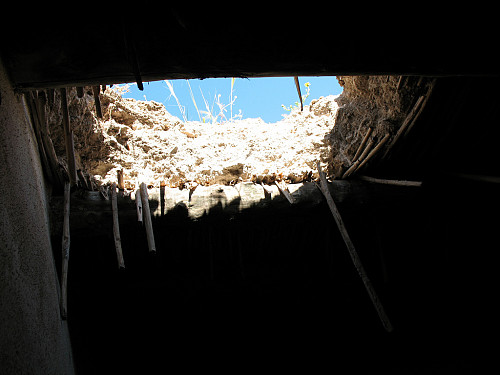
    • Friends decide to take matters into their own hands … literally! – text: They couldn’t carry him through the crowd, so they tore off part of the roof above where Jesus was. When they had made an opening, they lowered the mat on which the paralyzed man was lying.[3] → “They tore off part of the roof above where Jesus was. They tore off part of the roof.
      • Closer look: This is not one of those ambiguous Gr. words fraught with obscure meanings and multiple layers and contextual depth. – Gr. = very specific word with only one meaning (and only used in this one place in the entire Bible): “unroofed” → literally “removed the roof”
    • Change (Almost) Everything conference back in Nov. – preacher for worship was Rev. Kelly Chatman (senior pastor at Redeemer Lutheran Church and director of Redeemer’s non-profit, Redeemer Center for Life, also serves as advisor to Bishop of the Minneapolis Area Synod of the ELCA) and preached on this text: pointed out that those friends who lowered the paralyzed man down into Jesus’ presence were bold enough to alter the structure of the actual house → Y’all, these are the kinds of friends we all need, right?! This man’s friends will literally stop at nothing to get their friend the healing he needs. They didn’t just awkwardly squeeze their way through the crowd. They didn’t go knock on the back door or slip through an open window. They didn’t wait around for the crowds to disperse so they could catch Jesus at a better, more convenient time. They literally unroofed the house … Jesus’ house! They altered the physical structure of the building! As Rev. Chatman pointed out, that is not an “almost” faith. This paralyzed man’s friends unroofed Jesus’ house in order to get their friend to the one man they believed could help him … the one man they believed could help him … and that made all the difference.
      • Text: When Jesus saw their faith, he said to the paralytic, “Child, your sins are forgiven!” → also a new thing: This is not the first time Jesus has healed someone in Mark’s gospel, but it is the first time he’s connected physical healing with spiritual healing … with the forgiveness of sins.
    • Pharisees in the crowd pick up on this immediately – text: Some legal experts were sitting there, muttering among themselves, “Why does he speak this way? He’s insulting God. Only the one God can forgive sins.”[4] → We said that each of these micro-parables include the theme of newness, but they all share another element as well: the Pharisees and legal experts asking a very pointed “Why” question. → Pharisees/religious authorities knee-jerk reaction to that new = BAD
      • Reveals their discomfort
      • Reveals their suspicion
      • Reveals their flat-out resistance to anything new when it comes to their culture and their faith
    • Jesus, being Jesus, never fails to call them on it, either – text: Jesus immediately recognized what [the Pharisees] were discussing, and he said to them, “Why do you fill your minds with these questions? Which is easier – to say to a paralyzed person, ‘Your sins are forgiven,’ or to say, ‘Get up, take up your bed, and walk’? But so you will know that the Human One has authority on earth to forgive sins” – he said to the man who was paralyzed, “Get up, take your mat, and go home.” Jesus raised him up, and right away he picked up his man and walked out in front of everybody.[5] → I love Mark’s Jesus because he’s a very straightforward, no-time-wasted, no-words-minced, to-the-point version of Jesus.
      • REMINDER: all the gospels were written with different purposes and different audiences in mind → Mark’s gospel = gospel of immediacy
        • Shortest
        • Uses Gr. “immediately” more than 40 times (which is more than half the times it shows up in the entire NT)
      • So if this new thing that Jesus is doing here – this forgiveness of sins – isn’t amazing enough for the doubting, nitpicking Pharisees, he says, “Which is harder, saying your sins are forgiven or physically healing this man? Well, let me do both.” Mark’s Jesus is a bit of a “mic drop Jesus.” Boom. Done. God is amazing, and you don’t get it.
  • 2nd micro-parable of newness = Jesus calling another disciple
    • Idea of disciples is not new (Jesus has already called Simon, Andrew, James, and John) BUT this disciple is new not because of who he will be to Jesus but because of who he is. – text: [Jesus] saw Levi, Alphaeus’ son, sitting at a kiosk for collecting taxes. Jesus said to him, “Follow me.” Levi got up and followed him.
      • REMINDER: tax collectors were despised
        • Jews employed by the Roman empire (the conquerors/oppressors) à made them traitors to their people
        • Very often corrupt à took more money than the taxes actually were and pocketed some for themselves
      • And yet here Jesus is … calling one of Those People.
    • But because he’s Jesus, he doesn’t even stop there! – text: Jesus sat down to eat at Levi’s house. Many tax collectors and sinners were eating with Jesus and his disciples. Indeed, many of them had become his followers.[6] → So not only is Jesus accepting these scorned people as his followers, he’s actually going to their houses. He’s eating with them. He’s accepting their hospitality.
    • Pharisees’ “why” in this portion = straight and to the point – text: [The Pharisees] asked his disciples, “Why is he eating with sinners and tax collectors?”[7]
      • Jesus response speaks to a new idea as well – text: When Jesus heard it, he said to them, “Healthy people don’t need a doctor, but sick people do. I didn’t come to call righteous people, but sinners.” → This idea of the Human One (the Messiah, the Son of God, the Christ … all basically interchangeable titles) coming not for the righteous but for the unrighteous is huge.
        • Jewish idea of the Messiah at the time = warrior who would come and deliver them from the oppression of their conquerors once and for all → And clearly, such a rebellion would have to be made up of righteous people … not those despicable, two-faced, imperfect tax collectors and sinners. And yet that’s exactly who Jesus tells the Pharisees he came for: not the people who think they don’t need him but the people who know they do. Jesus makes it clear that these people are not just an afterthought but the reason for his coming in the first place.
  • 3rd newness micro-parable = probably the most complicated
    • Flips the established pattern and begins with the Pharisees’ “why” – text: “Why do John’s disciples and the Pharisees’ disciples fast, but yours don’t?”[8] → This is sort of a valid question. Fasting is an important part of many religious rituals around the world and across different faith, and Judaism is no exception. Fasting was supposed to be an act of spiritual submission and repentance. And here’s Jesus, this budding religious leader and teacher, and his disciples aren’t fasting? What gives?
    • Jesus’ response is a bit cryptic, especially for those of us so far removed from his 1st context → response comes in 3 parts
      • Metaphor of the bridegroom
      • Metaphor of the piece of new, unshrunk cloth on the old cloak
      • Metaphor of the new wine in old wineskins
      • Basically, Jesus is speaking about things coming in their own time and place. When the bridegroom is present for the wedding feast, that’s not the time to fast. When you try to add a piece of new, unshrunk cloth to an old cloak, the new piece will shrink and tear away from the old cloth. When you try to put new wine in old wineskins, the new wine wants to expand as it ferments but the old wineskins have long since lost their ability to expand. This is probably Jesus’ most profound statement on new because it makes space for the old.
        • Angela Dienhart Hancock (Assoc. Professor of Homiletics and Worship at Pittsburgh Theological Seminary): Notice: the little parables about the holey cloak and the seasoned wineskin do not make value judgments. They do not suggest that old things are bad and new things are good, and that the bad old things … ought to be scrapped in favor of the shiny new things.[9] → In using these illustrations, Jesus speaks to the ultimate purpose and intention of all this newness. He hasn’t come to do a new thing just for the heck of it. He hasn’t come to shake things up just because God was feeling bored with the world. Jesus has come to show the people a new way – a way that is broad and wide and open to so many more than the established religious leaders had ever imagined. Yes, he’s doing all these new things because they’re important. They have value and worth and significance. But they are not meant to entirely usurp the place of the old things – the old customs, the old practices, the old beliefs. They are meant to work with them … through them.
          • Harkens to Jesus’ words in Matthew’s gospel: Don’t even begin to think that I have come to do away with the Law and the Prophets. I haven’t come to do away with them but to fulfill them.”[10]
  • Friends, we find ourselves in this “new” time of year. There is newness all around us – a new year to remember to write on our checks and documents, new model years rolling out on car lots, new resolutions, new habits we want to adopt … you know, that whole idea of “a new year, a new you.” And anything that makes you healthier – in body, in mind, in spirit – is certainly worthwhile. Some of it might even be powerful enough to change the whole structure of your being – to tear the roof off your old habits and patterns! And of course, we cannot move forward without some “new,” right? As a culture, as a church, as individuals. But in the midst of all that newness, don’t forget to give thanks for what has been. To honor it. To make space for it. To be thankful for it. Because we cannot tear the roof of if it was never built in the first place. Amen.


CHARGE & BENEDICTION

May all that is unlived in you blossom into a future graced with love.
– Irish poet John O’Donohue


[1] Doctor Seuss. Green Eggs and Ham. (New York, NY: Random House Publishing), 1960.

[2] Seuss (emphasis added).

[3] Mk 2:4.

[4] Mk 2:6-7.

[5] Mk 2:8-12a.

[6] Mk 2:15 (emphasis added).

[7] Mk 2:16.

[8] Mk 2:18.

[9] Angela Dienhart Hancock. “Commentary on Mark 2:1-22” from Working Preacher, http://www.workingpreacher.org/preaching.aspx?commentary_id=4227. Accessed Jan. 12, 2020.

[10] Mt 5:17.

Sunday’s sermon: A Light in the Darkness

Magi - Catacombs of Priscilla

Text used – Matthew 2:1-12 (embedded within text this week)


AUDIO VERSION


  • Every good story starts with “once upon a time …”, even stories we’ve heard a hundred times before. And in that vein: Once upon a time, there was a corrupt and evil king, a group of wise astronomers, a vulnerable new family, and God. It’s a quest story. It’s a story of discovery and revelation. It’s a story of intrigue and deceit. It’s a story of God breaking in.
    • Literal definition of Epiphany: an appearance or manifestation of a divine being → That is what we celebrating: God appearing, God manifesting in human flesh – in the form of that tiny child in the manger that we sang about just 11 short days ago. That is what the magi came seeking: an unexplained, unexplainable manifestation of the divine that started in the appearance of that bright and unanticipated star in the heavens but led them to so much more.
    • So I want to dig into this story a little bit more this morning – this cast of characters and what they bring to the story, how they can bring an element of unexpectedness.
      • Particular lens through which we’re going to read our story this morning → I’ve been listening to a podcast recently called “Harry Potter and the Sacred Text.”[1]
        • Started by a ministry fellow and a research assistant at Harvard Divinity School
        • General idea (from the website): “explore a central theme through which to explore the characters and context, always grounding ourselves in the text” → So every week, they read discuss a chapter of one of the Harry Potter novels (and, of course, they’ve gone in order), and each weekly discussion revolves around a particular theme. They read the chapter with that theme in mind. They search out ways that the characters and plot developments embody that theme. They unearth allegories and metaphors that speak to that theme.
          • Really interesting way to encounter a familiar text with fresh eyes
      • Theme/lens through which we’re going to examine today’s familiar Scripture story = theme of homage
        • Definition of homage: respect or reverence paid or rendered; special honor or respect shown publicly something done or given in acknowledgment or consideration of the worth of another → most important elements of those definitions:
          • Paid/rendered (requires something of us → not free)
          • Publicly (not a secret, not something to be hidden/concealed)
          • Phrase “acknowledgment or consideration of the worth of another” (forces us to see something outside ourselves as having value and significance)
          • So with those ideas in mind – the idea that homage is paid, that it is public, that it names and claims the worth of another … with that lens firmly in place, let us hear the story. [READ TEXT]
  • Okay, so let’s explore these characters a bit.
    • First = magi → Interestingly enough, the magi are defined more by what we don’t know about them than what we do.
      • What Scripture doesn’t say
        • Where they’re from – only vague references that they’re “from the east” → could be Babylon, Persia, or Arabia
          • WHAT WE’VE PROJECTED ONTO IT: “We three kings of Orient are bearing gifts; we traverse afar …”
          • That being said, what the magi very certainly are are Gentiles. They are definitely not part of the people of Israel. They are “the other,” and yet in Matthew’s gospel (a gospel that, if you remember, was written specifically to speak to Jews), these Gentiles are the first to recognize and pay homage to this newborn King of Kings, this infant Prince of Peace.
            • Scholar: [What is particularly crucial … is that] Matthew begins and ends this text with strangers, that is, with Gentiles. … It means that Matthew’s [emergent] Christology affirms that fact that the Messiah’s coming is an arrival that has meaning for all people! The entry of the wise men into the sacred texts, places, and actions of the Jewish faith are for Matthew the sign that the Messiah has indeed arrived in the person of the child. God, in the child, has breached the boundaries of traditional faith, and the nations are now entering to witness this Messiah, and doing so with joy![2]
        • How many there were → Matthew never actually says how many magi traveled. – text: “Magi came from the east to Jerusalem.”[3] Because of the three gifts given, it’s been assumed throughout the centuries that there were three magi, but there certainly could have been more.
        • That they were kings → This one likely isn’t actually true.
          • Gr. “magi” = wise men, astrologers, magicians, possibly a Shaman caste of ancient Medes or Zoroastrian priests from modern-day India[4] → These would have been court scholars and advisors to kings, not the actual kings themselves.
      • What Scripture does say = they brought gifts – text: They entered the house and saw the child with Mary his mother. Falling to their knees, they honored him. Then they opened their treasure chests and presented him with gifts of gold, frankincense, and myrrh.[5] → interesting thing is what these gifts say, especially when we read about them through the lens of homage
        • Gold = gift for royalty, something only the wealthiest nobles would have in their possession → recognizes the Christ child as a newborn king
        • Frankincense = dried sap of the olibanum tree (native to Arabian Peninsula – Oman, Yemen, and the Horn of Africa incl. Somalia and Ethiopia)[6] and most often used as an incense during worship → recognizes the Christ child as worthy of worship and homage (yup … there’s that word again)
        • Myrrh = another resin from a plant of the same name (grown in roughly the same regions as the olibanum tree) used both as a sacred anointing oil and an oil that was used to prepare bodies for burial → hints at the sacrifice that will be required of this Christ child
    • Other major player in today’s text = King Herod → again, not a whole lot that the Bible tells us about this Herod (Herod Antipas)
      • What we do know[7]
        • Son of Herod the Great
        • Appointed by Emperor Augustus to rule over ¼ of his father’s kingdom after his father’s death → ruled over Galilee
        • Challenging family dynamics involved in this → rivalry between brothers (Herod Antipas and Herod the Great’s other sons who were also appointed regional rulers by Emperor Augustus)
          • Rivalry for territory
          • Rivalry for living up to their father’s legacy → You don’t become known as Herod the Great for no reason, so the sons had some pretty big shoes to fill in terms of building – building structures, building the country (i.e. – acquiring territory), building culture, and most importantly, building up the nation’s coffers.
        • Reign: 4 B.C.E. to 39 C.E. (almost exactly Jesus’ own lifetime)
      • Ordered the death of John the Baptist at the behest of his 2nd wife and her daughter, Salome[8]
    • What we can infer from Herod’s reaction to the magi’s visit in the text = Herod is insecure in his role and in his rule
      • Part 1 – see this in his reaction to their arrival: After Jesus was born in Bethlehem in the territory of Judea during the rule of King Herod, magi came from the east to Jerusalem. They asked, “Where is the newborn king of the Jews? We’ve seen his star in the east, and we’ve come to honor him.” When King Herod heard this, he was troubled, and everyone in Jerusalem was troubled with him.[9]
        • Scholar pinpoints Herod’s discomfort: Herod’s title was “king of the Jews.” The simple statement by the magi seems to bring another will into play: this child is “born” to be king of the Jews, and that means Herod was not.[10]
          • Gr. speaks to that discomfort, too – “troubled” = stirred up, disturbed, thrown into confusion → Remember, Herod didn’t call the magi to him. They just showed up on his doorstep. They knew the star that had appeared heralded the birth of a new king, so of course, their first destination is the home of the current king. But Herod knew nothing about this new baby king, and it turned his whole world topsy turvy.
      • Part 2 – see this in his plotting and scheming – text: He gathered all the chief priests and the legal experts and asked them where the Christ was to be born. … Then Herod secretly called for the magi and found out from them the time when the star had first appeared. He sent them to Bethlehem, saying, “Go and search carefully for the child. When you’ve found him, report to me so that I too may go and honor him.”[11] → There’s that word again – honor … homage. But the “homage” that Herod wants to pay is nowhere near the homage that the magi have in mind.
        • Magis’ homage = genuine, full-bodied, and wholehearted
        • Herod’s homage = false, menacing, manipulative
          • Get a hint of this at the end of today’s text: Because [the magi] were warned in a dream not to return to Herod, they went back to their own country by another route.[12]
          • Full impact of just how dangerous and deceitful Herod’s “homage” is in the text following today’s passage – section heading: “Murder of the Bethlehem children” (NRSV: “The Massacre of the Infants”) → Basically, Herod takes a page out of Pharaoh’s book and, in an attempt to stamp out the existence and threat of this newborn king, he orders his soldiers to kill all the male children in Bethlehem under the age of two. Unbeknownst to Herod, Jesus, Mary, and Joseph have already escaped Bethlehem for Egypt by the time this happens … but the damage is still done.
            • Scholar speaks to the heart of this reality: Matthew prepares us for a narrative to come that helps us see this Jesus in all his paradox. He is the child of promise, yet bears this promise in the midst of threat. That is not just who he is or where he is from, but where is he going.[13]
  • And this is the truth, friends. This is both the challenge and the blessing exposed by the light of this star: that the baby born, the little king heralded by its bright and brilliant presence, is indeed ono who comes to save … to bring peace … to make all things new. But the journey that lies ahead of that Christ child will not be an easy one. The magi recognized it. Herod foreshadowed it. And being on this side of the story, we know it, too. And even before the angel Gabriel visited Mary to announce the coming of this Christ child, God knew it to. God knew about the promise. And God knew about the threat. God knew who this Christ child would be and where he was from, but God also knew where he would be going. [POINT TO THE CROSS] And God came anyway. And that, friends, is truly the good news. Alleluia. Amen.


CHARGE & BENEDICTION

Scholar: The wisdom of the wise men was a wondering, wandering kind of wisdom that ended up in worship, in their offering homage to the wider and more wonderful Wisdom of God.[14] → And that is my hope and my prayer for you all as you go from this place today: that you go with a wondering, wandering kind of wisdom that ends in worship. So go with the love of God, the grace of Jesus Christ, and the companionship of the Holy Spirit. Amen.

[1] http://www.harrypottersacredtext.com.

[2] Susan Hedahl. “Epiphany of the Lord – Matthew 2:1-12, Theological Perspective” in Feasting on the Word: Preaching the Revised Common Lectionary, Year A, vol. 1. (Louisville, KY: Westminster John Knox Press, 2010), 216.

[3] Mt 2:1.

[4] “Magi” in The Interpreter’s Dictionary of the Bible, vol. 3. (Nashville, TN: Abingdon Press, 1962), 221.

[5] Mt 2:11.

[6] Douglas Main. “What Is Frankincense?” from Life Science, livescience.com/25670-what-is-frankincense.html. Posted Dec. 24, 2012, accessed Jan. 5, 2020.

[7] “Herod Antipas in the Bible and Beyond: The rule of Galilee in Jesus’ time” from Biblical Archaeology Society, https://www.biblicalarchaeology.org/daily/people-cultures-in-the-bible/people-in-the-bible/herod-antipas-in-the-bible-and-beyond/. Posted June 3, 2017, accessed Jan. 5, 2020.

[8] Mk 6:14-29.

[9] Mt 2:1-3.

[10] David Schnasa Jacobsen. “Matthew 2:1-12, Exegetical Perspective” in Feasting on the Gospel: Matthew, vol. 1. (Louisville, KY: Westminster John Knox Press, 2013), 17.

[11] Mt 2:4, 7-8.

[12] Mt 2:12.

[13] Jacobsen, 19.

[14] Andrews, 16.

Christmas Eve sermon: Doubts at the Manger

manger scene transparent

Text used – Luke 2:1-20 (NRSV)


AUDIO VERSION


One of the things that I love to do on occasion is write poetry inspired by Scripture and use that as my sermon. Special holidays, like Christmas Eve, feel like especially appropriate times for that. So that’s what I did this year! 

Someday, I would love to turn these poems into a book, so to preserve my individual creativity, I will not be posting the text of my Christmas Eve sermon. However, if you’d like to listen, please feel free.

I hope and pray you and yours had a blessed and restful Christmas celebration.

Pastor Lisa sign

Sunday’s sermon: Old Thing, New Thing, Bold Thing, True Thing

Old Testament New Testament

Text used – Luke 1:5-25, 57-80


AUDIO VERSION


  • So, I need your help this morning, y’all. You’re going to help provide the sermon illustration this morning. I have a question for you:
    • What’s a holiday tradition that you cherish? Something that was handed down from family? [ANSWERS]
    • Okay … follow-up to that (and be honest!): Have you tweaked that tradition at all? Have you made any alterations to it – slight or otherwise? [ANSWERS]
    • There are few times of year as steeped in tradition as Christmas, right? We have traditions about how we decorate – when we put up the tree, what ornaments go on, what goes on the top. We have traditions about what we eat – recipes handed down, meals that we replicate from year to year, tastes and smells that transport us immediately back to Christmases past. We have traditions about things that we do and places we go – special days and ways that we shop and wrap gifts, special light displays that we visit and revisit year after year, organizations to which we give our financial support or our time or both. But every so often, a tradition changes, right?
      • New traditions born
      • Old traditions given a bit of an update
      • Doesn’t make the original iteration of the tradition any less meaningful or important → just means that we are growing and changing and making our mark as our families and lives grow and change, too
  • Throughout the fall, we’ve been winding our way through the Old Testament, hearing some of the old stories of our faith. Some were stories we’ve heard before and were hearing again. Some were stories we’d never heard before. Today, we make the shift from Old Testament to New Testament with this story of the pronouncement and birth of John the Baptist. → story that really has a foot in both worlds – OT and NT
    • First part of the story = angel Gabriel bringing news of Elizabeth’s pregnancy and the impending birth of a new prophet
      • Gabriel to Zechariah in text: He will bring many Israelites back to the Lord their God. He will go forth before the Lord, equipped with the spirit and power of Elijah. He will turn the hearts of fathers back to their children, and he will turn the disobedient to righteous patterns of thinking. He will make ready a people prepared for the Lord.[1] — Zechariah’s response = disbelief – flat out asks Gabriel, “How can I be sure of this? My wife and I are very old.”[2] → This first part of the story sounds a lot like another out-of-the-ordinary, amazing birth story that we read back in Sept.[3]
        • Abraham and Sarah camped out under the Oaks of Mamre for the day
        • Visited by 3 strangers → tell Abraham that his wife, Sarah, is going to have a baby
        • Because of her advanced age, Sarah is so disbelieving at this that she laughs
        • 9 mos. later, Isaac is born
        • So even in the beginning of our story for today, we get a story that is old being retold and relived and rewritten by the God who started it all.
          • Scholar picks up on this repetition and its significance: From the very beginning of his Gospel, Luke reminds us of an even earlier beginning, the beginning of the story of God’s relationship with God’s people Israel. … The entire story of God’s covenant relationship with Israel, beginning with the promise to Abraham and Sarah, is coming to fulfillment in this story Luke tells – this story that begins, once again, with a promise and a birth against all odds.[4] → That’s what today’s Scripture reading is all about: God doing an old thing in a new time, a new place, a new way – a way that is bold and world-altering, a way that is true and sacred and holy.
      • Twist on the old story in today’s text = Gabriel’s response (a bit of a holy mic drop) – text: The angel replied, “I am Gabriel. I stand in God’s presence. I was sent to speak to you and to bring this good news to you. Know this: What I have spoken will come true at the proper time. But because you didn’t believe, you will remain silent, unable to speak until the day when these things happen.”[5] → Maybe it’s crazy, but I find this part of the story just a bit comical. I mean, can’t you just imagine Zechariah’s doubt and disbelief. Can’t you just imagine him saying, “Wait … what now? Is this a joke? How can I be sure of this? How can I be sure this is real? How can I be sure this isn’t a dream? How can I be sure of this?”
        • Gr. “sure” = dense word – layers of knowing (to be struck by something + realize + acknowledge + understand) → This is more than just a shallow, surface understanding. It goes layer upon layer down to a deeper understanding – from that initial, shocking revelation to the dawning of realization to acknowledgment and finally to a deep, foundational understanding. It’s the same way we process any kind of earth-shaking, life-changing news.
          • Story of finding out we were having twins: very first doctor appt/ultrasound → initial inkling = line down the center of the image on the u/s screen → doctor’s words: “Oh, it looks like you’re having twins. Did you know that already?” (How could we know that already?!?!) → understand more fully as she pointed out various images on the screen → finally processing and taking in the information as we waited for blood work following that appt → calling our parents from the lab waiting room and hearing ourselves disbelievingly say, “Ummm, Mom? Yeah, everything’s fine. But there are two of them. Yup. Two of them. Twins.” → It is this deeper, fuller, more comprehensive kind of understanding that Zechariah is asking about, and really, who can blame him, right?
        • Gabriel’s response is a bit “tit for tat” = Zechariah’s protest: “But I am old.” Gabriel’s response: “But I am Gabriel.” – goes on to enumerate not only his credentials as an angel (“I am Gabriel. I stand in God’s presence. I was sent to speak to you and to bring this good news to you.”[6]) but also add a bit of a kick at the end (in an exasperated tone, I imagine) – text: Because you didn’t believe, you will remain silent, unable to speak until the day when these things happen.[7] → And there’s the new twist on the old story. Lucky Sarah who laughed in disbelief and simply got chastised for it. Unlucky Zechariah who asks a question and gets muted for 9 months while he waits for the birth of this truly unbelievable boy.
      • One thing we can’t ignore in this first part of the story = the setting – text: One day Zechariah was serving as a priest before God because his priestly division was on duty. Following the customs of priestly service, he was chosen by lottery to go into the Lord’s sanctuary and burn incense. → So Zechariah is a priest who is in the midst of worshipping in the house of the Lord when Gabriel appears to him.
        • Scholar highlights importance of this: Here is a story of a priest who was praying fervently but who was not prepared for his prayers to be answered. He was officiating in the sanctuary itself, but he did not really expect to experience God’s presence. The scene once again challenges us, this time to trust in God expectantly and to be prepared for God’s response to our needs.[8]
    • 2nd part of the story = physical answer to those fervent prayers – birth of this long-awaited child → more old-vs.-new mash-ups
      • Big deal is made of the naming of the child
        • Tradition = name this child after his father
        • BUT both Zechariah and Elizabeth had the words of Gabriel circling in their minds: The angel said, “Don’t be afraid, Zechariah. Your prayers have been heard. Your wife Elizabeth will give birth to your son and you must name him John.”[9]
        • Reads a bit like a church basement ladies skit, doesn’t it?[10]
          • 8 days after birth = circumcision and naming ceremony (called a bris) → nosy-but-well-meaning neighbors and relatives and religious officials (Zechariah’s colleagues, remember) want to name the baby Zechariah
          • Elizabeth tells the nosy-but-well-meaning neighbors and relatives and religious officials, “His name is John.”
          • Assembled crowd can’t believe that she and Zechariah are bucking this time-honored Hebrew tradition (commence the meddling!) – text: They said to her, “None of your relatives have that name.” Then they began gesturing to his father to see what he wanted to call him.[11]
            • SIDE NOTE: Y’all, this is why so many people I know don’t reveal the names they’ve picked for this children until the ink on the birth certificate has already dried!
          • Zechariah motions for something to write on and reinforces what his wife has already said: “His name is John.”
          • Instant affirmation – text: At that moment, Zechariah was able to speak again, and he began praising God. All their neighbors were filled with awe, and everyone throughout the Judean highlands talked about what had happened. All who heard about this considered it carefully. They said, “What then will this child be?”[12]
    • 2nd half of the 2nd part of today’s story = Zechariah’s prophecy → Zechariah declaring boldly and truly both the old and constant faithfulness of God and the brilliant newness of the thing that God was about to do – text: Bless the Lord God of Israel because he has come to help and has delivered his people. He has raised up a mighty savior for us in his servant David’s house, just as he said through the mouths of his holy prophets long ago. He has brought salvation from our enemies and from the power of all those who hate us. He has shown the mercy promised to our ancestors, and remembered his holy covenant, the solemn pledge he made to our ancestor Abraham. He has granted that we would be rescued from the power of our enemies so that we could serve him without fear, in holiness and righteousness in God’s eyes, for as long as we live. You, child, will be called a prophet of the Most High, for you will go before the Lord to prepare his way. You will tell his people how to be saved through the forgiveness of their sins. Because of our God’s deep compassion, the dawn from heaven will break upon us, to give light to those who are sitting in darkness and in the shadow of death, to guide us on the path of peace.[13] → Zechariah seamlessly weaves the old and the new together, speaking simultaneously of what God has done for the people of Israel in the past and what God is about to do, all the while boldly declaring the goodness and mercifulness and steadfast love of God, a truth that rang true throughout the ages … a truth that rings true for us today … a truth that will continue to ring true throughout the ages to come.
      • Love of a God willing to enter into sacred and holy covenant relationship with a people flawed and broken and inconsistent
      • Love of a God willing to reach out to those people again and again through words, through actions, through miracles, through story after story after story
      • Love of a God willing to do the ultimate new thing based on the old love – to be born as one of us: vulnerable and needing, able to laugh and to cry and to love in a whole new way, the same old flesh and bone with a spirit wholly and holy new and bold and true
      • It is this old thing for which we wait. It is this new thing for which we wait. It is this bold thing for which we wait. It is this true thing for which we wait. And hallelujah, friends … the wait is nearly over. Amen.

[1] Lk 1:16-17.

[2] Lk 1:18.

[3] Gen 18:1-15.

[4] Elisabeth Johnson. “Commentary on Luke 1:5-13, [14-25] 57-80” from Working Preaching, http://www.workingpreacher.org/preaching.aspx?commentary_id=4222. Accessed Dec. 22, 2019.

[5] Lk 1:19-20.

[6] Lk 1:19.

[7]

[8] R. Alan Culpepper. “The Gospel of Luke: Introduction, Commentary, and Reflections” in The New Interpreter’s Bible Commentary series, vol. 9. (Nashville, TN: Abingdon Press, 1995), 49 (emphasis added).

[9] Lk 1:13.

[10] Lk 1:57-66.

[11] Lk 1:61-62.

[12] Lk 1:64-66a.

[13] Lk 1:68-79.

Sunday’s sermon: Joy That’s Bittersweet

joy bittersweet

Text used – Ezra 1:1-4; 3:1-4, 10-13


AUDIO VERSION


  • Are you all familiar with the idea of the tongue map?
    • Concept that various areas on your tongue contain different taste receptors
      • Back of the tongue = bitter
      • Sides (toward the back) = sour
      • Sides (toward the front) = salty
      • Tip/front = sweet
    • Well, I was prepared to use that as my sermon illustration this morning, so I started looking into it a little more deeply, and I discovered something: the idea of the tongue map is … a myth.[1]
      • Origin in some research done by a German scientist back in 1901 – research confirmed that there are parts of our tongues that are more sensitive to flavor in general (more taste buds concentrated around the edges of our tongues) → The problem arose in the way the scientist presented his finding. It was a vague graph that was ambiguous to read at best. The graph made it look like different parts of the tongue were responsible for different tastes as opposed to showing that different parts of the tongue are more sensitive or receptive to taste in general.
      • Taste map itself (as its been taught for decades) came from a Harvard psychology professor in 1940 who decided to reimagine that original (inaccurate) graph and drew up the taste/tongue map we know today

tongue map

      • Tongue map = concept that’s been debunked for a long time
        • Questions started with medical experiments in 1965
        • Continued by American researcher in Florida in 1993
    • I have to be honest with you: when I learned that what I thought was going to be a great sermon illustration was actually completely untrue, I was a little confused for a bit. But then I did a little more reading, and I discovered that in the last 15 years, researchers have discovered that the way our tongues and our taste buds distinguish between these different flavors – salty, sweet, bitter, sour, and the fifth flavor umami (a savory flavor that the original researchers didn’t test or name) … The way that our tongues and taste buds distinguish between these different flavors is through receptor proteins in the cells in our taste buds.[2]
      • Bitter receptor proteins = different than sweet receptor proteins = different than salty receptor proteins … and so on.
      • Receptor proteins ≠ grouped in specific areas of the tongue (as originally presented by the tongue map) but exist simultaneously side-by-side
    • So I started thinking about this information, and I realized that even though it wasn’t what I had originally been thinking about, it works even better than I had initially thought it would. You see, we find ourselves in Advent – in this time of waiting: waiting for Christmas, waiting for a star and angels and shepherds, waiting for the birth of the Messiah. And we’re waiting with sweet joy knowing that the birth of this baby will bring about salvation for all … but we also wait knowing the rest of the story, knowing how that salvation will have to come about: through the bitterness of betrayal and arrest, trial and false conviction, crucifixion and death, and ultimately resurrection.
      • Also cannot inhabit this space of holiday preparation without acknowledging that it’s not a holly jolly holiday for everyone
        • Those grieving and missing people
        • Those dealing with difficult family dynamics in this season when Hallmark pushes harmonious family togetherness
        • Those dealing with financial struggles and all the stress that presents in the face of the giving expectations of this season
        • Those battling illnesses and those watching loved ones battle illnesses
        • Those who don’t have a home to take refuge in
        • Those who are barred from being with their loved ones by distance, work commitments, prison, and other reasons
        • Words from Julie Beck a few years ago: “This year the sweetness of Christmas has been dented … light shines in the darkness but it is very still and very, very small.” → not the reality for everyone this holiday season, but it is certainly the reality for some
  • So here we are in this time of year sitting simultaneously with both the sweet and the bitter, holding them both in tension with one another, and in that space, we hear this morning’s Scripture.
    • Context:[3]
      • We’ve talked about the Babylonian captivity a number of times.
        • 597 BCE, King Nebuchadnezzar of Babylon (modern day Iraq) conquered the southern kingdom of Judah → deported all the best and brightest of the people of Israel (scholars, politicians, priests, etc.) and forced them to live in Babylon
        • Captivity ended when King Cyrus the Great of Persia (modern day Iran) conquered the Babylonian empire in 538 BCE
    • Today’s passage = the end of that captivity! → reading = 3 separate parts to the story
      • Pt. 1 = declaration of the end of captivity – text: In the first year of King Cyrus of Persia’s rule, to fulfill the Lord’s word spoken by Jeremiah, the Lord stirred up the spirit of Persia’s King Cyrus. The king issued a proclamation throughout his kingdom (it was also in writing) that stated: Persia’s King Cyrus says: The Lord, the God of heaven, has given me all the kingdoms of the earth. He has commanded me to build him a house at Jerusalem in Judah. If there are any of you who are from his people, may their God be with them! They may go up to Jerusalem in Judah and build the house of the Lord, the God of Israel – he is the God who is in Jerusalem.[4]
        • Doesn’t stop there → instructs all the Babylonian neighbors of the exiles Jews to supply them with silver and gold, goods and livestock = “spontaneous gifts for God’s house in Jerusalem”
        • I want you to stop for a minute and imagine what this must have been like for the Jews who had been exiled in Babylon for so long.
          • Imagine the initial fear they must have felt – people of Israel had been conquered so many times, and there they were in a foreign land being conquered yet again → The previous conqueror had torn them from their homeland and their families, their friends and the heart of their worship. What would this new conqueror do? Would he be better? Would he be worse? What did this Persian King Cyrus have in store for them?
          • Imagine the shock and disbelief when they heard the decree – that they were not only to return to Jerusalem but that Cyrus was going to help them “build the house of the Lord, the God of Israel” → Remember, the First Temple was destroyed in the Babylonian siege on Jerusalem. The siege itself took a few months with the Babylonian army pressing closer and closer to the heart of Jerusalem – breaching city walls, destroying homes and property, bringing the famine and disease that were inevitable with any and every siege, and killing thousands of Israelites in the process. When they finally reached the Temple, they set fire to it. According to the Talmud, the fire began just after the conclusion of Sabbath worship (Friday), and by Sunday night, the Temple was completely destroyed.[5] There would certainly have been Jews in exile who would have remembered that horrible experience. And yet here they were a generation later, not only being released from their forced captivity but being encouraged to return to Jerusalem and being provided with assistance in rebuilding the Temple.
            • Importance of the Temple = only place in which holy sacrifices could take place
      • Pt. 2 = return and the beginning of the building process
        • Text gives us a little bit of the passage of time: When the seventh month came and the Israelites were in their towns, the people gathered as one in Jerusalem.[6] → And what was one of the first things they did once they finally returned to Jerusalem? – text: [They] started to rebuild the altar of Israel’s God so that they might offer entirely burned offerings upon it as prescribed in the Instruction from Moses the man of God.[7] → Before building walls, before building any kind of sanctuary or seating, before worrying about any of the other sacred accoutrements, they built the altar so they could worship.
          • Powerful thing to imagine: brand new altar built there among any remaining rubble from the first Temple, open to the air and the elements and the sunshine and the desert wind, people gathered around it in a crowd for the sole purpose of worship
          • Not just a simple “one and done” worship – text: They celebrated the Festival of Booths, as prescribed. Every day they presented the number of entirely burned offerings required by ordinance for that day.[8]
            • Festival of Booths (a.k.a. – Festival of Tabernacles or Festival of Shelters) = harvest festival → Each family present for the celebration would construct their own booth with palm branches and an open roof as a reminder of when their ancestors wandered in the wilderness.[9] So even in the midst of the sweet joy and celebration of this new Temple, this new beginning, this return to their holy homeland, the people of Israel held the sorrow and bitterness of many forms of exile in their memories and in their worship.
      • See that in pt. 3 of the story = the people’s reaction → best illustrates both the bitter and the sweet in this Scripture reading
        • Speaks of the joy of the priests as they fulfilled their duties and the foundation of the new Temple was laid
          • Priestly garments and trumpets and cymbals
          • Text: They praised and gave thanks to the Lord, singing responsively, “He is good, his graciousness for Israel lasts forever.”[10]
        • Speaks of the enthusiastic, jubilant response of the people – text: All of the people shouted with praise to the Lord because the foundation of the Lord’s house had been laid.
        • But in the same breath, it also speaks of the people’s lament and grief for the experiences they’d had, the first Temple that they’d lost, and the pain that they’d suffered at the hands of others. – text: But many of the older priests and Levites and heads of families, who had seen the first house, wept aloud when they saw the foundation of this house, although many others shouted with joy.[11]
    • Final verse = crux of it all: No one could distinguish the sound of the joyful shout from the sound of the people’s weeping, because the people rejoiced very loudly. The sound was heard at a great distance.[12] → And there it is. The sweet, sweet joy of a new beginning inhabiting the same space … the same worship … the same breath as the bitter pang of grief and loss and pain. Joy and pain that had lived side-by-side in the hearts of those in exile for so long. Joy and pain that couldn’t help but be built into the walls and woven in the rich fabrics of the tapestries for that new Temple as it grew up on the site of the destruction and desecration of the old Temple. Joy and pain that would be incarnate in that little baby for whom we wait – a baby who would be born to save the descendants of those rebuilding that Temple, who would teach and worship himself within its walls, who would be tried and convicted within its walls as well, who would hear both the sweet joy of “Hosanna!” and the bitter pain of “Crucify!”
      • Fellow clergywoman and Ph.D. candidate Rachel Wrenn: Ultimately, this is a story of redemption, but painful redemption; of return, but a return marked with grief; of rejoicing, but of a joy that is inextricably linked to the losses that came before. It is a story of ambiguous joy—and are not our lives? For that matter, is that not the core of Advent itself?[13] [PAUSE] Amen.

[1] Steven D. Munger. “The Taste Map of the Tongue You Learned in School Is All Wrong” from The Smithsonian, https://www.smithsonianmag.com/science-nature/neat-and-tidy-map-tastes-tongue-you-learned-school-all-wrong-180963407/. Posted May 23, 2017, accessed Dec. 15, 2019.

[2] Munger, https://www.smithsonianmag.com/science-nature/neat-and-tidy-map-tastes-tongue-you-learned-school-all-wrong-180963407/.

[3] “Babylonian Captivity” from Encyclopaedia Brittanica, https://www.britannica.com/event/Babylonian-Captivity. Accessed Dec. 15, 2019.

[4] Ezra 1:1-3.

[5] “Destruction of the First Temple” from JewishHistory.org, https://www.jewishhistory.org/destruction-of-the-first-temple/?gclid=Cj0KCQiA0NfvBRCVARIsAO4930lRSEjqVMagj5C27_0z-dCGmXRtRIdOZF33j5QSS0Kyjc23hKZl7JEaAowmEALw_wcB. Accessed Dec. 15, 2019.

[6] Ezra 3:1.

[7] Ezra 3:2.

[8] Ezra 3:4.

[9] Rabbi Jack Zimmerman. “Sukkot, The Feast of Booths (known to some as the Feast of Tabernacles)” from Jewish Voice, https://www.jewishvoice.org/read/blog/sukkot-the-feast-of-booths-known-to-some-as-the-feast-of-tabernacles. Published Dec. 2, 10215, accessed Dec. 15, 2019.

[10] Ezra 3:11.

[11] Ezra 3:12.

[12] Ezra 3:13.

[13] Rachel Wrenn. “Commentary on Ezra 1:1-4; 3:1-4, 10-13” for Working Preacher, http://www.workingpreacher.org/preaching.aspx?commentary_id=4221. Accessed Dec. 15, 2019.