Sunday’s sermon: Laughing Matters

Laughing out loud

Text used – Genesis 18:1-15; 21:1-7


AUDIO VERSION


  • One night, there was a family sitting down to dinner. As they were eating, they were talking – about their day, about school and work, about the people they had talked to that day and what they had learned, about good things and not-so-good things that had happened. In the midst of this conversation, the little boy said, “Dad, are bugs good to eat?” His father was both taken aback and understandably grossed out by this odd and sudden shift in conversation. “Ugh. Son, that’s disgusting. Don’t talk about things like that over dinner.” The boy started to object, but with a look from his father, he shrugged his shoulders, and continued eating. Later, as the boy was going through his usual bedtime routine, his father (who was feeling a little guilty for curbing his son’s curiosity over dinner) asked him, “So … what was it you wanted to ask me?” The boy looked puzzled for a moment, then shrugged. “Oh, nothing,” he said breezily. “There was a bug in your soup, but now it’s gone!” [[PAUSE]] Laughter. It’s a strange and powerful thing, right?
    • Healing power of laughter[1]
      • Short-term
        • Special trigger for many systems in your body (greater intake of air; release of endorphins; stimulates heart, lungs, and muscles)
        • Through that triggering, it activates and relieves stress response in your body, first increasing and then decreasing your heart rate and blood pressure → leaves you feeling relaxed
        • Soothes tension by stimulating circulation and aiding muscle relaxation
      • Long-term
        • Improve your immune system by releasing neurotransmitters that cane help fight stress and sometimes even more serious illnesses
        • Relieve pain by triggering the body to release its own natural painkilling compounds
        • Increase personal satisfaction → “Laughter can make it easier to cope with difficult situations. It also helps you connect with other people.”
    • Laughter as a social signal
      • Research out of MIT: The social brain hypothesis is that language evolved as a way of establishing and strengthening bonds with larger numbers of individuals in a shorter a period of time. … Laughter is simply an extension of this process. Since the act of talking limits the number of individuals who can take part in a conversation, laughter is a method that individuals use to signal their participation in larger group chats. And the result of all this extra bonding is that the larger group, and hence the individuals within it, flourishes.[2]
      • Psychology Today [3]: laughter as a tool we use against suffering and despair: If we can joke about a disappointing or traumatic event, we’ll often find ourselves feeling that what’s happened to us isn’t so bad and that we’ll be able to get through it. This expectation serves two vitally important functions:
        • It diminishes or even eliminates the moment-by-moment suffering we might otherwise experience as a result of a traumatic loss, which
        • Actually makes it more likely we will make it through a trauma unmarred and flourish once again
    • Find all of these elements of laughter – healing nature of it, self-preservation nature of it, coping nature of it – in our Scripture reading this morning
  • Significant because it’s one of only two times in all of Scripture when God appears in human form (other than Jesus) → times when God is bestowing great promises of covenant and relationship
    • Other time = God wrestles with Jacob (actually going to read that story next week) and changes Jacob’s name to Israel → God bestows special blessing on Jacob/Israel
    • Today’s text = God visiting Abraham and Sarah in the form of three strangers → God’s vow to fulfill previous promise about how numerous Abraham’s descendants will be
      • Gen 12 – God to Abraham: “I will make of you a great nation and will bless you. I will make your name respected, and you will be a blessing.”[4]
      • Gen 15 – again God to Abraham: “Look up at the sky and count the stars if you think you can count them. This is how many children you will have.”[5]
      • So these are the things that God has already said to Abraham … and yet in today’s text, we hear that Abraham and Sarah are both advanced in years – far past child-bearing age – and they still have no children. And yet in comes God in the form of these three strangers with yet another promise – text: Then one of the men said, “I will definitely return to you about this time next year. Then your wife Sarah will have a son!”[6] → And Sarah’s response is … to laugh.
  • Pause for a moment to address 2 important things
    • FIRST: difficulty that preaching and hearing this text can be → Because the reality of the world that we live in is that not all those who desire to be mothers and fathers get that opportunity. Even in this medically advanced day and age, with all the medications and all the shots and all the procedures in the world, sometimes parenthood remains a maddening impossibility for some people, and that is a painful, painful thing. No amount of praying, no amount of begging or arguing or negotiating with God can change that, and that is truly a painful, painful thing. So when I read this text, having known the pain of that kind of loss myself as I know many in this room have, my heart breaks. And there are no easy words, and there is no simple balm for that kind of ache. It is an ache that Sarah surely felt. It was an ache that many people feel today. And frankly, it’s an ache that we as a society and even as the Church have dealt with poorly (or actively ignored) for far too long. So before we move on with our story this morning, I want to create space for that particular facet of this narrative. [PAUSE]
    • SECOND important thing: Sarah has gotten a bad rap for far too long simply because she laughed → disparaged and even scorned because she had the audacity to question God and laugh at God’s response
      • Need to understand that questioning and debating with God were and still are part of the Hebrew religious tradition → way to mirror the important back-and-forth nature of being in relationship with others – Sarah was simply following suit!
      • Think about the purpose of laughter – healing, restorative, stress-relieving nature that we talked about → After so many years of waiting and hoping, after so many years of disappointment and sorrow, Sarah was being told that she was going to bear a child, and all of that emotion and hope and promise bubbled up inside her and she laughed. I don’t believe that she laughed scornfully or derisively. I don’t believe she laughed at I believe she laughed with God.
        • Linguistic reason for this – text: The Lord said to Abraham, “Why did Sarah laugh and say, ‘Me give birth? At my age?’ Is anything too difficult for the Lord?[7] → Heb. “too difficult” = tricky word with a variety of translations:
          • Too hard
          • Too surprising (connotations of “in a strange way”)
          • Too wonderful … too extraordinary … to marvelous. So even God is acknowledging the complete out-there-ness of the promise that God has just reiterated, but God is making that promise – a promise of hope and a promise of life – just the same.
            • Scholar: A text such as this calls for sentences in which God appears as the subject. God makes the promised future possible. God serves as the source of hope in situations where the way into the future seems entirely blocked off. God gives shape to possibilities when all around us seems impossible. The active engagement of God in the midst of the problems of daily life opens up the future rather than closing it down.[8]
  • Hope. Life. Relationship. Things that we celebrate in worship every Sunday, but things that we get to celebrate in a special way today as we prepare to baptize Harlow. Hope. Life. Relationship.
    • From the introduction section to baptism liturgy in our Book of Common Worship: The Reformed tradition understands baptism to be a sign of God’s covenant (God’s promise). The water of baptism is linked with the waters of creation, the flood, and the exodus. Baptism thus connects us with God’s creative purpose, cleansing power, and redemptive promise from generation to generation. … In this new [promise] of grace God washes us clean and makes us holy and whole. … Baptism is at once God’s gift of grace, God’s means of grace, and God’s call to respond to that grace.[9] → A grace that covers. A grace that washes. A grace that promises. A grace that hopes. A grace that surely and wonderfully and divinely laughs. Hope. Life. Relationship. The Good News today, tomorrow, and always. Alleluia! Amen.

[1] “Stress relief from laughter? It’s no joke.” https://www.mayoclinic.org/healthy-lifestyle/stress-management/in-depth/stress-relief/art-20044456.

[2] “The Evolutionary Origin of Laughter,” https://www.technologyreview.com/s/421480/the-evolutionary-origin-of-laughter/. Posted Oct. 29, 2010, accessed Sept. 15, 2019.

[3] Alex Lickerman. “Why We Laugh: How laughter can help build resilience” from Psychology Today, https://www.psychologytoday.com/us/blog/happiness-in-world/201101/why-we-laugh. Posted Jan. 23, 2011, accessed Sept. 15, 2019.

[4] Gen 12:3.

[5] Gen 15:5.

[6] Gen 18:10a.

[7] Gen 18:13-14a.

[8] Terence E. Fretheim. “The Book of Genesis: Introduction, Commentary, and Reflections” in The New Interpreter’s Bible Commentary series, vol. 1. (Nashville, TN: Abingdon Press, 1994), 465.

[9] “Theology of Baptism” in Book of Common Worship. (Louisville, KY: Westminster John Knox Press, 2018), 403-404.

Sunday’s sermon: A Perfect Helper

community circle 2

Text used – Genesis 2:4b-25


AUDIO VERSION


  • [READ “The Creation” by James Weldon Johnson]
  • Creation … the beginning. The beginning of the world. The beginning of time and space. The beginning of light and life. The beginning of Story. “And in the beginning was the Word, and the Word was with God and the Word was God.”[1] So here we are … at the beginning.
    • Beginning of the school year → even when I’m not in school anymore (even before we had kids in school and before Peter was teaching), fall still feels like a beginning to me
    • Beginning of a new voyage through Scripture together → Narrative Lectionary
      • Explain lectionary
        • Catholic lectionary
        • Revised common lectionary
        • Narrative lectionary
      • Developed by professors at Luther Seminary in St. Paul
      • 4-yr. cycle (1 yr. for each Gospel)
      • Purpose: to follow the grand sweep of the Biblical story from Creation to the early Church within a 9-month period (Sept.-May) → focuses on the following the story of God and God’s people so that we can better grasp the overarching story of our faith and better understand where we might fit into that story ourselves
      • General phases
        • Starts with OT stories
        • Shifts into writing of prophets at Advent (the ones who heralded the birth of the Messiah)
        • Moves to Gospels after Christmas à continues throughout Lent and Easter
        • Finally transitions into writings of the Early Church after Easter
      • Cycle through the same phases but with different Scriptures when the lectionary year starts over again in Sept.
  • And so here we are at the beginning of the Bible as well – the Creation Story, Take 2. Wait … Take 2?
    • Basics of the Biblical Historical Documentary Hypothesis
      • Long-passed-down tradition states first 5 books of the Bible were written by Moses → scholars began questioning this belief as early as the late 16th and early 17th
        • Scholar: By the early eighteenth century, evidence for the use of sources was becoming more and more apparent. Repetitions, parallel versions of the same event, and notable differences in language and point of view seemed to render this conclusion inevitable.[2]
      • A few centuries of discussion and debate later = Documentary Hypothesis → proposed and expanded upon by a number of different scholars in the late 19th and early 20th
      • Basic idea = 4 different sources that make up the whole of the first 5 books of the Bible
        • J source
        • E source
        • D source
        • P source
    • REMINDER: OT Scripture started off as oral history – stories and poetry and cultural mythology that was passed down from family to family, from priest to priest, from generation to generation, told and retold in worship, at the family table, around campfires and bonfires → The stories upon stories and verses upon verses that make up the Old Testament as we know and read it today started off as stories that were only told and remembered and embodied for more than a thousand years before anything was written down. So today’s version of the creation story that we find in Genesis 2 is the creation story as remembered and recorded by one particular ancient Hebrew scribe. The creation story that we read in Genesis 1 – “In the beginning when God created the heavens and the earth … and God said, ‘Let there be light’”[3] and so on and so on – that version of creation is another story.
      • Major difference:
        • Genesis 1 creation story emphasizes divine action and power and intention → human beings are merely a footnote at the end of that saga (part of Day 6 when God creates every kind of living thing: “livestock, crawling things, and wildlife”[4] … and humans in God’s own image)
        • Genesis 2 creation story emphasizes human interaction and relationship with God → humans created first, then God creates every other creature in an attempt to create the “perfect helper” for the human
  • Okay … so let’s talk about this “perfect helper” for a bit.
    • Beauty of this text and challenge of this text all wrapped up in two little words
      • CHALLENGE = history of this text
        • Used to subjugate and suppress and silence women for centuries → used to attempt to make women believe they weren’t as good, as useful, as valuable, as worthy as men because Eve was created from a part of Adam
        • Roger Nam (Assoc. Prof. of Biblical Studies at George Fox Evangelical Seminary in Oregon): This phrase has been particularly destructive in constructing gender roles in both the household and church leadership. I recognize that one part of the problem is the of the common English translation of “helper” for the Hebrew carries unwarranted baggage of weakness and inferiority, as in “Daddy’s little helper.”[5]
      • So let’s consider the actual Hebrew here – the words that make up that tricky phrase “perfect helper.” When we do, we see that the intention in the Hebrew is nowhere near this dominant, superior interpretation.
        • 2 Heb. words “helper/support” + “opposite/counterpart” → So when the text talks about God creating Eve to be a helper for Adam, the text speaks of an equal helper, a supportive counterpart, someone to be beside Adam in his work and his life and his relationship with God; someone created to be matched with Adam, not mitigated by Adam.
        • Nam highlights an important point: It is important to remember that the Bible [calls God “helper” using the exact same Hebrew word] (Psalm 54:4).[6]
    • This reveals the beauty of this “perfect helper” phrase in our text this morning because it shows us that we were literally created to be in community with one another. We were created to be in relationship with God together. We were created to seek after and encounter and experience God together. We were created to inhabit this earth and this life together.
  • It’s beautiful in and of itself, but it’s also beautiful in the context of this being the beginning of creation. God created the world. God created a human being from the literal stuff of that world – from the topsoil, from the mud and God’s own breath.
    • From “The Creation”: Then God walked around, / And God looked around / On all that He had made. / He looked at His sun, / And He looked at His moon, / And He looked at His little stars; / He looked on His world / With all its living things, / And God said, “I’m lonely still.” / Then God sat down / On the side of a hill where He could think; / By a deep, wide river He sat down; / With His head in His hands, / God thought and thought, / Till He thought, “I’ll make me a man!” / Up from the bed of the river / God scooped the clay; / And by the bank of the river / He kneeled Him down; / And there the great God Almighty / Who lit the sun and fixed it in the sky, / Who flung the stars to the most far corner of the night, / Who rounded the earth in the middle of His hand; / This Great God, / Like a mammy bending over her baby, / Kneeled down in the dust / Toiling over a lump of clay / Till He shaped it in His own image; / Then into it He blew the breath of life, / And man became a living soul. / Amen. Amen.
    • REMINDER: “breath” in Heb. can also be translated as Spirit à not just stale air that God blew into that molded chunk of mud but God’s own Spirit
      • Holy Spirit
      • Divine Spark
      • Breath of Heaven
      • Especially linked to our creation story this morning in 2 ways
        • 1) one of the names for the Holy Spirit used throughout the Scriptures is the “helper”
        • 2) Heb. word for “Spirit” is a distinctly feminine word
  • Friends, this is where our Grand Story of faith starts – together with God and together with one another.
    • Sacred togetherness = element of our faith that extends far beyond OT → Jesus was in constant togetherness with his disciples, with the crowds, with those seeking teaching and healing, with sinners, with the unclean, with people on the margins, even with the Pharisees – those who would ultimately betray and kill him. Jesus was the physical embodiment of that sacred togetherness. He was Emmanuel, God With Us.
      • Meme from the Synod FB page this week (shared from The Center for Prophetic Imagination) = quote from Clarence Jordan (early 20th New Testament scholar and farmer; author of “Cotton Patch Gospel”; founder of Koinonia Farm, a small of influential religious community in SW Georgia): The good news of the resurrection of Jesus is not that we shall die and go home to be with him, but that he has risen and comes home with us, bringing all his hungry, naked, thirsty, sick prisoner brothers with him.
    • Crucial question for us today = What are we going to do with that?
      • How are we going to remain together, especially in difficult times?
      • How are we going to look out for one another, especially in difficult times?
      • How are we going to live lives of faith and hope, forgiveness and mercy, truth and steadfast love together, especially in difficult times?
      • None of those are questions I can answer for you. They’re questions you have to ask yourself every moment of every day – questions you have to ask yourself in the throes of every encounter, every disagreement, every struggle, every frustration. They’re questions you have to answer for yourself with every word you say and every thing you do. They’re questions you have to wrestle with in the face of all the hurt … all the need … all the desperation … all the hopelessness … all the darkness … all the injustice … all the fear … all the brokenness of this world. How can you embody that sacred togetherness? How can you bring that Divine Spirit? How can you be an equal member, a supportive counterpart, an perfect helper? Amen.

[1] Jn 1:1.

[2] Joseph Blenkinsopp. “Introduction to the Pentateuch” in The New Interpreter’s Bible Commentary series, vol.  1. (Nashville, TN: Abingdon Press, 1994), 309.

[3] Gen 1:1, 3 (NRSV).

[4] Gen 1:24.

[5] Roger Nam. “Commentary on Genesis 2:4b-25” from Working Preacher, https://www.workingpreacher.org/preaching.aspx?commentary_id=2553. Posted for Sept. 13, 2015, accessed Sept. 8, 2019.

[6] Roger Nam. “Commentary on Genesis 2:4b-25” from Working Preacher, https://www.workingpreacher.org/preaching.aspx?commentary_id=2553. Posted for Sept. 13, 2015, accessed Sept. 8, 2019.

Sunday’s sermon: It Ain’t Easy

forgiveness 2

Texts used – Genesis 45:3-11, 15; Luke 6:27-38


AUDIO VERSION


  • It’s a funny word, isn’t it?
    • One of those words that sort of sounds the way it feels, right?
      • Compacted
      • Unsightly
      • Heavy
      • Dark
    • Etymology[1]
      • Dates all the way back to the 15th → probably came from Old French or possibly Old High German before that
      • Strems from words meaning to grumble and grunt
        • Sounds that we make when we’re talking about grudges with other people
        • Sounds our souls make when we’re thinking about and stewing over grudges, right?
    • A grudge sort of is the grunting, grumbling of our spirits. It’s the sound our hearts and our souls make when they continually heft the burden of a wrong that’s been done to us – when they dredge it up from the depths of our memories and haul it up into our conscious minds again and again, dragging all the pain and hurt and anger and frustration and outrage with it.
      • Terminology of a grudge = “bear a grudge”
        • Something that requires effort
        • Something to be endured and put up with
        • Something with uncomfortable weight
      • Heavy emotions require heavy lifting → So our souls grunt and grumble as we bear our grudges. They grunt and grumble because the weight of grudges are uncomfortable, right? The only reason for a grudge is because we feel we’ve been wronged, and no one likes feeling like that. No one likes reliving the way it felt to be cheated, deceived, hurt, looked down on, mistreated. No one likes remembering the malice or the injustice behind those past actions and feelings. And yet we do it, right? We hang on to those painful, uncomfortable things – cling to them, even.
    • From Psychology Today: Our grudge, and the identity that accompanies it, is an attempt to get the comfort and compassion we didn’t get in the past, the empathy for what happened to us at the hands of this “other,” the experience that our suffering matters. … The problem with grudges … is that they don’t serve the purpose that they are there to serve. They don’t make us feel better or heal our hurt. At the end of the day, we end up as proud owners of our grudges but still without the experience of comfort that we ultimately crave, that we have craved since the original wounding. … Sadly, in its effort to garner us empathy, our grudge ends up depriving us of the very empathy that we need to release it.[2] → Grudges are a bit of a catch-22, aren’t they? We hang onto grudges because they’re familiar. They’re a storyline and a narrative that we’ve visited over and over again, examining for things we could have said or done differently, alternate ways we could have reacted, things that could have led up to whatever action or encounter precipitated the grudge. It’s our attempt to try to understand what happened and to keep it from happening again. But in revisiting those difficult moments, we can become too entrenched in the pain and perceived injustice of them, letting them grow and fester in our hearts and our minds until they end up cutting us off from people, tainting and even ruining relationships.
      • Relationships with the people who have wronged us
      • Relationships with people similar to those who have wronged us
      • Even relationships with those completely unrelated to the incident
    • Grudges = unhealthy
      • Emotionally and mentally: not healthy to continue to revisit and nurse old wounds → can easily send us into a downward spiral that affects every aspect of our day
        • What Should Danny Do? By Adir and Ganit Levy[3] → When Danny makes the negative choices, his day gets worse. When he makes the positive choices, his day gets better. It’s the same with grudges. The more we let their negativity impact our thinking, the worse we feel throughout the day, and the more those negative feelings impact what we do and say.
      • Physically as well – research: Living in a chronic state of tension disables your body’s repair mechanisms, increasing inflammation and the stress hormone cortisol in the body. Forgiveness engages the parasympathetic nervous system, which helps your immune system function more efficiently and makes room for feel-good hormones like serotonin and oxytocin. … When you replay in your mind an experience you had six months ago, your body reacts as if you’re having the same experience over and over again.[4] → Ahhhh … forgiveness – the literal, hormonal antidote to all the negativity and stress and yuck stirred up by the grudges we bear.
  • Forgiveness. It’s a beautiful concept, right? The Bible talks a lot about forgiveness.
    • Other forgiveness texts
      • Paul in Eph: Put aside all bitterness, losing your temper, anger, shouting, and slander, along with every other evil. Be kind, compassionate, and forgiving to each other, in the same way God forgave you in Christ.[5]
      • God’s desire in Lev: You must not take revenge nor hold a grudge against any of your people; instead, you must love your neighbor as yourself; I am the LORD.[6]
      • Wisdom imparted in Prov: Hate stirs up conflict, but love covers all offenses. … Don’t say, “I’ll repay the evildoer!” Wait for the LORD, and he will save you.[7]
      • Jesus’ mandate before prayer in the Gospels: And whenever you stand up to pray, if you have something against anyone, forgive so that your Father in heaven may forgive you your wrongdoings.[8]
    • On the other side of things: certainly plenty of Biblical e.g.s of grudge-holders
      • Cain → grudge against Abel because Abel’s offering was preferred over his own[9]
      • Sarah → grudge against Hagar for being able to bear children[10]
      • Jacob → grudge against his brother, Esau, for being the stronger twin[11]
      • Jonah → grudge against the people of Nineveh for repenting from their evil ways and returning to God[12]
    • Today’s OT story → Of all the people in the Old Testament who are part of stories of being wronged (and, frankly, there are a lot of them!), I don’t think there’s one who has more cause to hold a grudge than Joseph.
      • Joseph … the one who’s brothers were so jealous they prepared to kill him, threw him down into a well, sold him into slavery, and told his father he’d been killed by a wild beast
      • Joseph … who, after serving well and faithfully in the house of his master, ends up being falsely accused by his master’s wife when he rebuffed her advances and gets thrown in prison
      • Joseph … who eventually ends up in a position of incredible power over all Egypt and an even greater position of power over his brothers when they come begging at Pharaoh’s palace in the midst of a great famine
      • Joseph … who forgives – today’s text: He said [to his brothers], “I’m your brother Joseph! The one you sold to Egypt. Now, don’t be upset and don’t be angry with yourselves that you sold me here. Actually, God sent me before you to save lives. … God sent me before you to make sure you’d survive and to rescue your lives in this amazing way. You didn’t send me here; it was God who made me a father to Pharaoh, master of his entire household, and ruler of the whole land of Egypt.” … He kissed his brothers and wept, embracing them. After that, his brothers were finally able to talk to him.[13]
  • “Okay,” you might be saying. “That’s great for Joseph, but those are pretty specific circumstances. My grudge has nothing to do with brothers selling me into slavery that actually ended up turning into a position of power and wealth and political influence. So what about me?” → today’s NT text = just as uncomfortably challenging when it comes to forgiveness (imperative from Jesus): But I say to you who are willing to hear: Love your enemies. Do good to those who hate you. Bless those who curse you. Pray for those who mistreat you. … If you love those who love you, why should you be commended? Even sinners love those who love them. If you do good to those who do good to you, why should you be commended? Even sinners do that. If you lend to those from whom you expect repayment, why should you be commended? Even sinners lend to sinners expecting to be paid back in full. Instead, love your enemies, do good, and lend expecting nothing in return. … Be compassionate just as your Father is compassionate.[14] → I mean, come on, Jesus. Do you really know what you’re asking us to do? I mean, really?? Love those who have hurt us, mistreated us, taken advantage of us, upset and offended us? I mean …… REALLY?!
    • SUPER-IMPORTANT PASTORAL DISCLAIMER: NOT talking about cases of abuse of any kind! → There is a huge difference between holding a grudge and preserving your safety and your physical, mental, and emotional well-being.
      • Jesus in the text: If someone slaps you on the cheek, offer the other one as well. If someone takes your coat, don’t withhold your shirt either.[15] = Jesus simultaneously engaging in and de-escalating conflict with figures of authority at the time → model for much of the pacifistic, non-violent resistance movements throughout history including Gandhi and Martin Luther King, Jr. … NOT model for engaging with an abusive person in your life
    • That being said, Jesus’ words here are hard, right? They’re challenging. They’re convicting. They’re not the words we want to hear. “Love those who hate and persecute you. Love those who have caused you pain, who have messed things up for you.”
      • Gr. “love” = (you guessed it) that agape love → selfless, do-for-others, compassion-centric kind of love … For those who have hated you, cursed you, mistreated you. Dang, Jesus. Couldn’t you have set us an easier task? Something simple? I’d take the water-to-wine challenge over this one any day!
  • But then we remember water … and wine … and we remember that today we celebrate communion … and we remember that when we gather at this table, we gather in a holy and sacred space that is not meant for accusation, not meant for excuses, not meant for castigation or indictment, not meant for grunting or grumbling or grudges. We remember that when we gather at this table, we gather in a holy and sacred space made for one thing: forgiveness.
    • Not forgiveness earned by anything we’ve said
    • Not forgiveness earned by anything we’ve done
    • Not forgiveness earned at all. Period. Full stop.
    • Forgiveness freely given – a.k.a.: grace
    • Book of Order: The Lord’s Supper is at once God’s gift of grace, God’s means of grace, and God’s call to respond to that grace. … The opportunity to eat and drink with Christ is not a right bestowed upon the worthy, but a privilege given to the undeserving who come in faith, repentance, and love. … Worshipers prepare themselves to celebrate the Lord’s supper by putting their trust in Christ, confessing their sin, and seeking reconciliation with God and one another. Even those who doubt may come to the table in order to be assured of God’s love and grace in Jesus Christ.[16] → And so we come to this table. We come with prayers on our lips and our hearts: Forgive us our sins as we forgive those who sin against us. We come with spirits weary and heaven laden with the weight of grudges we have born for too long. We come looking for release and renewal, redemption and restoration. We come desperate for forgiveness but even more desperate to be taught how to forgive. It ain’t easy, friends. But we have indeed been forgiven, and through the power of that forgiveness, we can do hard things. Even forgive. Amen.

[1] https://www.wordreference.com/definition/grudge.

[2] Nancy Colier. “Why We Hold Grudges, and How to Let Them Go” from Psychology Today online, https://www.psychologytoday.com/us/blog/inviting-monkey-tea/201503/why-we-hold-grudges-and-how-let-them-go. Posted Mar. 4, 2015, accessed Sept. 1, 2019.

[3] Adir and Ganit Levy. What Should Danny Do? (Elon Books), 2017.

[4] https://www.piedmont.org/living-better/what-does-holding-a-grudge-do-to-your-health.

[5] Eph 4:31-32.

[6] Lev 19:18.

[7] Prov 10:12; 20:22.

[8] Mk 11:25; Mt 6:14-15.

[9] Gen 4:1-16.

[10] Gen 16; 21:1-21.

[11] Gen 25:19-27:45.

[12] Jonah 4.

[13] Gen 45:4b-5, 7-8, 15.

[14] Lk 6:27-28, 32-35a, 36.

[15] Lk 6:29.

[16] “Theology of the Lord’s Supper” from The Constitution of the Presbyterian Church (U.S.A.), Part II: Book of Order 2019-2021. (Louisville, KY: The Office of the General Assembly, 2019), W-3.0409.

Sunday’s sermon: Excusing Our Excuses

excuses

Texts used – Jeremiah 1:4-10; Hebrews 4:11-16


AUDIO VERSION


  • We’re actually going to start off a little interactive this morning. Y’all are going to be each other’s sermon illustrations. Let me ask you a question: What are your favorite excuses?
    • Could be classic excuses
    • Could be excuses you’ve heard from your friends, family, etc.
    • Could be excuses you’ve used in the past or even ones you use on a regular basis
    • [PAUSE FOR ANSWERS]
  • Purpose of excuses = get ourselves out of something, right?
    • Getting ourselves out of sticky situations → excuses that try to get us out of trouble
    • Getting ourselves out of obligations → excuses that try to get us out of this event or that meeting
    • Getting ourselves out of responsibility → excuses that try to get us out of being blamed for something
    • Shift the pronunciation a bit and “excuse” the noun becomes “excuse” the verb
      • Noun definition: a reason or explanation put forward to defend or justify a fault or offense
      • Verb definition: attempt to lessen the blame attaching to (a fault or offense); release (someone) from a duty or requirement
      • Excuses excuse They pass the buck. They shift the focus. They redirect attention away from ourselves and whatever we’re doing wrong … or whatever we’re not doing … or whatever we’re trying to keep from doing.
    • And depending on which corner of the internet you’re hanging out in, excuses can either be a good thing or a bad thing.
      • Self-help/personal betterment corner: “13 Steps to Stop Making Excuses and Get Results in Your Life”[1] and “15 motivational Quotes to Stop Making Excuses”[2]
      • Comedic corner: “The 40 Lamest Excuses Ever Uttered”[3] and “14 Hilarious Homework Excuses”[4]
      • And so on, and so on.
    • Church life and faith are no strangers to excuses either.
      • Excuse away why we weren’t at church or why we couldn’t make it to this church function or that meeting
      • Excuse away why we couldn’t make time to attend to our spiritual health today
        • Couldn’t read
        • Couldn’t pray
        • Couldn’t sit quietly with God
      • Excuse away why we act one way even when we know we should act another way
      • And let me tell you something this morning, all – let me reassure you of something. When it comes to excuses and faith, we are by no means alone. We are in prominent Scriptural company. Some of the best excuse-makers ever are found in the pages of Scripture.
        • Adam and Eve → Adam: “She made me do it.” Eve: “The snake made me do it.”[5]
        • Sarah → “Me? Can’t be, God. I’m too old to have a baby!”[6]
        • Moses → “I can’t go there and say that, God. I don’t speak well.”[7]
        • Pharisees (over and over again) → “But that’s not the letter of the law. It must be wrong.”
        • Jonah → (running in the opposite direction) “NOPE! Just … NOPE!”[8]
        • King David … well, that whole Bathsheba incident (just to start with!)[9]
        • Peter → “I don’t know what you’re talking about. I don’t know that guy.”[10]
        • Rich young ruler that approaches Jesus → “Yeah, I’ve already done everything. Wait … sell my stuff? Uhhhhh … buh-bye.”[11]
        • Gideon (one of the great judges of the OT – after the Israelites reached the promised land but before they demanded a king) → “I’m the scrawniest guy in the lowliest family in the weakest of the 12 tribes. No way you can actually mean me, God.”[12]
        • Today’s passage – prophet Jeremiah → “Not me, God. I’m just a kid!”[13]
  • Let’s look at today’s passage a little more closely.
    • Context for Jeremiah
      • Jeremiah sees some of the best and some of the worst of the people[14]
        • BEST = religious reforms of King Josiah
          • Renovates and even fortifies the temple → finds a long-lost scroll of the law during renovation
          • Renews religious devotion → draws people back to prayers and practices laid out by God in the Torah
          • Time of relative harmony and unity in Judea
        • WORST: Babylonian exile → prophet to the people of Israel left behind during Babylonian exile
          • Jerusalem = a city forever changed
            • Temple was destroyed when the Babylonians sacked the city and took the best and brightest into exile
            • Walls of the city were also destroyed along with many other dwellings and prominent buildings
            • Living with Babylonian-appointed and Babylonian-born governor who ruled over Jerusalem → killed by rival for political reasons → rival flees to the Ammonites (modern day Jordan) → remaining city leaders become nervous and eventually flee to Egypt (last we hear from Jeremiah)
    • Book of Jeremiah begins with Jeremiah’s own call – text: The Lord’s word came to me: “Before I created you in the womb I knew you; before you were born I set you apart; I made you a prophet to the nations.”[15] → Pretty weighty, right? That’s certainly no small charge – no insignificant call. I think it’s safe to say anyone would feel overwhelmed by a revelation like that, right?
      • Jeremiah’s response = excuse: “Ah, Lord God,” I said, “I don’t know how to speak because I’m only a child.”[16]
      • So we’ve got God’s call, and we’ve got Jeremiah’s excuse. But hear what comes next. This is the important part! – text: The Lord responded, “Don’t say, ‘I’m only a child.’ Where I send you, you must go; what I tell you, you must say. Don’t be afraid of them, because I’m with you to rescue you,” declares the Lord. Then the Lord stretched out his hand, touched my mouth, and said to me, “I’m putting my words in your mouth. This very day I appoint you over nations and empires, to dig up and pull down, to destroy and demolish, to build and to plant.”[17] → God sidesteps Jeremiah’s excuse and says, “It’s not your words. It’s not your work. It’s not your journey. It’s my work in and through you. It’s okay. Don’t be afraid. I’ve got you.” God doesn’t berate Jeremiah for his hesitation, for his fear, for his excuse. God simply takes that excuse, acknowledges it, and releases it.
  • Heb. passage speaks to God’s power to do this, too
    • Heb. context[18]
      • One of those letters that has been attributed to Paul in the past but is probably not actually one of Paul’s
        • Writing style doesn’t match (phrasing, word choice, etc.)
        • Content doesn’t jive with much of Paul’s other writing
      • Time?
        • Definitely written before 95 C.E. (quoted by Clement of Rome in 95/96 C.E.)
        • Potentially written sometime prior to the destruction of the 2nd Temple in 70 C.E.
        • Probably written somewhere between 60-95 C.E. → roughly 30 yrs. after Jesus’ death and resurrection, after the gospel of Mark, possibly around the same time as Matthew/Luke were written, before the gospel of John
      • Audience (not much known): community of believers, probably 2nd generation (Heb. later mentions the recipients having been baptized) → most likely a group of Hellenistic (Greek) Jewish Christians possibly living in Rome
      • One thing that is clear in the content of the letter itself is Hebrews was written to a community in crisis. Many of the people have grown lax in their faithful living, and it appears that their commitment is waning. They haven’t completely fallen away, but the writer of Hebrews makes it clear that they’ve got some work to do. They’ve been making and living their excuses for too long.
    • Today’s text addresses this by addressing the potent, powerful, penetrating nature of God’s word: God’s word is living, active, and sharper than any two-edged sword. It penetrates to the point that it separates the soul from the spirit and the joints from the marrow. It’s able to judge the heart’s thoughts and intentions. No creature is hidden from it, but rather everything is naked and exposed to the eyes of the one to whom we have to give an answer.[19] → Friends, the good news and the challenging news is that God sees right through our excuses. God sees right through all those walls and barriers we try to put up. There is not an excuse on this earth that God hasn’t already heard. There is not a hurdle on this earth that God hasn’t already cleared. As we read in this passage from Hebrews, God is not only familiar with all the excuses, God is bigger than them all. But God doesn’t berate us for our excuses. God doesn’t shame us with or forsake us for those excuses that we make in our hearts and our souls. God simply acknowledges them, acknowledges the fear and worry and doubt at the root of them, and says to us, “But I am with you. And it’s okay. And it’ll continue to be okay. Because I’m not leaving you, and you have work to do.”
      • Makes me think of the classic children’s book Runaway Bunny[20]
        • Little bunny think of any and every way he can to run away and hide from his mother (become a fish, a rock on a mountain, a crocus in a garden, a sailboat, etc.) but the mother always comes up with a way to find him
        • The mother bunny doesn’t just say, “That’s silly. You’re not a rock. You’re my bunny, and you’re right here.” She doesn’t dismiss his scenario. She imagines herself in the midst of it – a fishermom who pulls her fish-bunny out of the sea, a rock climber who finds her rock-bunny on the mountain, a strong wind who blows her sailboat-bunny to wherever he needs to be. No matter what we try to do to excuse ourselves from the work and call and presence of God in our lives, God is just like that mother bunny. God smiles. God gently but undeniable inserts Godself into whatever story we have woven as our excuse, and God says, “But I love you, and I need you, so let’s go. Let’s do. Let’s be.” And friends, even when we are hesitant and frightened to hear it, that is, in fact, Good News. Alleluia. Amen.

[1] https://www.developgoodhabits.com/making-excuses/.

[2] https://www.success.com/15-motivational-quotes-to-stop-making-excuses/.

[3] https://www.rd.com/funny-stuff/lamest-excuses-ever-uttered/.

[4] https://www.edutopia.org/discussion/14-hilarious-homework-excuses.

[5] Gen 3:11-13.

[6] Gen 18:12.

[7] Ex 4:10.

[8] Jonah 1:1-3.

[9] 2 Sam 11.

[10] Lk 22:54-62.

[11] Mt 19:22.

[12] Jdg 6:15.

[13] Jer 1:6.

[14] Patrick D. Miller. “The Book of Jeremiah: Introduction, Commentary, and Reflections” in The New Interpreter’s Bible Commentary series, vol. 6. (Nashville, TN: Abingdon Press, 2001), 556-560.

[15] Jer 1:4-5.

[16] Jer 1:6.

[17] Jer 1:7-10.

[18] Fred B. Craddock. “The Letter to the Hebrews: Introduction, Commentary, and Reflections” in The New Interpreter’s Bible Commentary series, vol. 12. (Nashville, TN: Abingdon Press, 1998), 6-10.

[19] Heb 4:12-13.

[20] Margaret Wise Brown. The Runaway Bunny. (New York, NY: HarperCollins), 1942.

Sunday’s sermon: We Will Come Back Home

prodigal son

Texts used – Hosea 14:1-9; Luke 15:11-32

AUDIO VERSION


  • It’s a story as old as time, isn’t it?
    • Two people share a connection … a relationship … a love
      • Could be romantic love between two people
      • Could be love of friendship/companionship
      • Could be love between a parent and child
      • In the end, it doesn’t really matter. It’s the existence of the connection itself that matters, not the particulars.
    • Two people share a connection → for whatever reason, one person becomes distracted
      • Something promising
      • Something grander
      • Something more … just more. Again, it doesn’t really matter what the distraction is. It’s taken a thousand different forms throughout the various iterations of this story: power, prestige, wealth, flattery, fame … and on and on and on.
    • Two people share a connection → for whatever reason, one person becomes distracted → that person wanders away from that original, cherished connection in pursuit of The Other
      • Physical wandering
      • Emotional wandering
      • Even spiritual wandering
    • Two people share a connection → for whatever reason, one person becomes distracted → that person wanders away from that original, cherished connection in pursuit of The Other → sometime (either after obtaining The Other or even sometimes during the pursuit itself) the person who has wandered away realizes that the connection they initially had was better than whatever they’ve been chasing → RETURN
    • It’s a story as old as time, isn’t it? We’ve seen it played out in literature. We’ve seen it played out in popular culture. We’ve seen it played out in Scripture. I’d be willing to bet we’ve even seen it played out in our own lives or in the lives of the people we know and love. Maybe you’ve been the Wanderer. Maybe you’ve been the one waiting for the Wanderer to return. It’s a story as old as time and as universal as humanity itself. It’s a story that spans all the barriers. Some variation of it is told in every culture, in every language, in every part of the world. → 3 variations of this story just today
      • Wandering and returning of the religious devotion of the people of Israel = OT passage from Hosea
      • Wandering and returning of the Prodigal Son in Jesus’ parable = NT passage
      • Wandering and returning of P.T. Barnum in the last song of our Greatest Showman series
  • Since it’s been a few weeks, before we listen to our song this morning, let me set this up for you a bit.
    • Reminder: P.T. Barnum grew up dirt poor → always wanted to have that wealth and privilege he glimpsed when he went with his father to help tailor rich men’s suits
    • Reminder: when his circus started growing in popularity and notoriety, Barnum decided to add on to his repertoire by bringing Swedish opera star Jenny Lind to America to tour → Barnum went with her to do promotional work, leaving his family (both his nuclear family – wife and daughters – and his circus family) behind
    • Quick succession toward the end of the movie:
      • Scandal on tour with Lind
      • Barnum returns
      • Wife is angry → has moved out of their house with his daughters
      • Circus family is angry → feels as though they’ve been abandoned by him
      • Building in which the circus is housed is burned to the ground → shaky/shady investments that Barnum used to secure the building and initial funding for the circus in the first place means there’s no way he’ll ever have the money to rebuild
    • And in the face of all that loss, as he sits in a bar lamenting what was and trying to come to terms with what his life has become, Barnum finds himself surrounded by his circus family once again. And this is his apology. This is his plea. This is his song. → [PLAY “From Now On[1]”]

  • As I said, when Barnum begins singing this song in the movie, he’s sitting in a bar with the core of his circus family. But in that bar, he finds a picture of himself and his family – his beloved wife and daughters. And that picture lights a fire inside Barnum’s heart and soul. So as he’s singing – as he’s boldly and unashamedly declaring, “From now on, these eyes will not be blinded by the lights!” – he’s running down the street. He’s catching a train. He’s journeying back to his in-laws’ house to find his wife and daughters because he has realized that they are his truest, most important treasure. He is turning and returning, doing everything he can to “come back home.”
    • Probably pretty obvious why I picked Prodigal Son passage out of Lk for today, right? → Barnum is quite literally the Prodigal
      • Lured away from family by wealth and prestige and all the trappings that come with it
      • Dazzled and distracted for a time by Swedish Nightingale’s exceptional talent and the renown that it brings to Barnum himself by association just as the Prodigal Son was dazzled and distracted by all the attention and status his fleeting wealth brought him
      • Unfortunately, in the general tale of the Wanderer as well as our more specific tales of the Prodigal Son and The Greatest Showman this morning, there always comes a moment that jars the Wanderer out of that overawed, starry-eyed state – something that brings the Wanderer back to reality, that brings about the realization that what was had before was better than where he finds himself now. And this moment is almost never a pleasant moment.
        • Barnum – perfect storm: manufactured scandal splashed across the front pages + his family leaving him + the fire at his circus building
        • Prodigal Son: running out of money + famine = taking the dirtiest, lowliest job there was (feeding the pigs) and being so hungry that the pig food started looking appealing → text puts words to that moment for us: When he had used up his resources, a severe food shortage arose in that country and he began to be in need. He hired himself out to one of the citizens of that country, who sent him into his fields to feed pigs. He longed to eat his fill from what the pigs ate, but no one gave him anything. When he came to his senses, he said, “How many of my father’s hired hands have more than enough food, but I’m starving to death!”[2]
          • Startling realization
          • Harsh realization
          • One of those moments that you really feel like you’ve suddenly woken up → You know, those moments when you feel like everything leading up to where you are was a dream, and suddenly you’re awake for the first time in who-knows-how-long. You can’t believe you are where you are. You can’t believe you’re doing what you’re doing or seeing what you’re seeing or experiencing what you’re experiencing.
    • This is where our Hosea passage comes in this morning, too. Sometimes, it’s not just an individual that has wandered away and hit rock bottom but an entire people.
      • Don’t often preach from Hosea → one of those small, minor prophets buried at the back of the OT that you can easily miss if you’re flipping through
      • Hosea is an especially challenging prophet with a particularly accusatory tone – e.g.: Hear the Lord’s word, people of Israel; for the Lord has a dispute with the inhabitants of the land. There’s no faithful love or loyalty, and no knowledge of God in the land. Swearing, lying, murdering, together with stealing and adultery are common; bloody crime followed by bloody crime. … Listen, priest, I am angry with your people. You will stumble by day; and at nighttime so will your prophet, and I will destroy your mother.[3]
      • Context:
        • People of Israel were in the midst of serious economic hardship – huge gap between the few who were wealthy and everyone else – along with the cost of a long and bloody war with Assyria (which they lost) and the tribute they were required to pay to the victors → rich exploiting the poor to try to pay debts
        • Also in the midst of serious cultural and religious turmoil – people of Israel had abandoned their worship of God for the cultic religions of those around them
          • Pantheon of other gods
          • Pagan practices both in the home and in places of worship
        • Basically, things had gotten about as bad as they could get for the people of Israel. So God sent Hosea to speak harsh words of truth and rebuke. But as always, God did not stop there. – today’s passage: Return, Israel, to the Lord your God. Your sins have been your downfall! Take words with you and return to the Lord. Say to him: “Forgive all our sins and receive us graciously, that we may offer the fruit of our lips.” … I will heal their waywardness and love them freely, for my anger has turned away from them.[4]
          • Speaks of the incredible grace and forgiveness of God → a God who not only welcomes home lost and wandering loves but waits for them with anxious, baited breath, who runs to embrace returning wanderers with open arms and an open heart, who longs to heal our waywardness and love us freely … and that, friends, is good news if I’ve ever heard it.
        • Good news that Hosea continues to proclaim → goes on to speak of Israel blooming and flourishing under God’s encouragement and protection … But first, they have to make that choice. They have to choose to
  • BUT not just simple returning
    • “return” in Scripture = interesting word
      • Heb. “return” = same word as “repent” → multiple meanings: turning, going back
      • Gr. = “turning around” as well but also contains connotations of remorse and change
      • Either way, there is intentionality and purpose in this turning and returning, in this repentance. There is a self-awareness that a wrong was done – either intentionally or unintentionally – and there is a concerted effort to right that wrong, both internally and in the world.
    • Convocation speaker at Synod School a few weeks ago – Dr. Dede Johnston
      • Professor of Communication and Interim Associate Dean for Global Education at Hope College in Holland, MI
      • Theme of the week: Cultivating Civil Community
      • Spend most of the week talking about civil discourse and non-violent community and how to lean into conflict without becoming overwhelmed by it
      • During her last convocation presentation, Dr. Johnston pointed out an interesting distinction. She was talking about reconciliation, and she pointed out that there’s a subtle difference between repentance and reconciliation.
        • Repentance = see, turn (as we’ve already said)
        • Reconciliation (takes it a step further) = see, turn, ENGAGE → Seeing the mistakes made. Turning and returning to the people and places in which those mistakes were made. And then engaging in actions to mend the fences broken by those mistakes.
    • Powerful illustration → story of Corrymeela in Northern Ireland
      • Live-in community that hosts 11,000 visitors per year (similar to Iona in Scotland or Taize in France)
      • Community dedicated to the hard and painful work of reconciliation → particularly powerful and difficult work in Northern Ireland following the Protestant/Catholic violence throughout the late 20th
      • From their website: Corrymeela believes in the power of people telling their stories, of shared hospitality, of telling the truth about the present, of turning towards each other and finding strength, life and hope in each other. Ultimately, the work of Corrymeela helps groups learn how to be well together.[5]
      • Chapel = circle → service of lighting candles for loved ones who had died as a result of the Protestant/Catholic violence → mother of a son who had carried out a bombing helped to light a candle by the father of a man whose daughter had been killed in that same bombing → Seeing … turning … engaging. In those simple and yet profoundly difficult steps, we find the same steps necessary for repentance, but we also find action. We find resolve. We find a willingness and a humility. And friends, in taking those steps, we will indeed come back home … home again. Alleluia. Amen.

[1] “From Now On” written by Justin Paul, Benj Pasek, © 2017 Sony/ATV Music.

[2] Lk 15:14-17.

[3] Hos 4:1-2, 4b-5.

[4] Hos 14:1-2, 4.

[5] https://www.corrymeela.org/about.

Sunday’s sermon: The Path Less Traveled

tightrope

Texts used – Deuteronomy 6:4-9; Hebrews 10:32-11:3


AUDIO VERSION


  • Throughout this Greatest Showman sermon series, we’ve talked about the dreams that God has for us and for the Kingdom of God.
    • Talked about how incredible God’s dream is
    • Talked about how treasured we are by God, how loved we are by God → how much God wants to be in relationship with us
    • Talked about how we tend to get in our own way sometimes when it comes to saying “yes” and buying into those dreams that God has – both for the Kingdom of God and for our own lives
    • Today’s question: What if we actually do say “yes”? → Before we go any further, let’s listen to the song “Tightrope” – [PLAY “Tightrope”[1]]

  • Context for the song
    • Last week – talked about love stories and how they add a powerful element to a storyline, even if that storyline isn’t strictly a typical “love story” → talked about Phillip Carlyle and Anne Wheeler (characters)
    • This week focuses on love story between P.T. Barnum and his wife, Charity → love story that plays a central role throughout the movie from the very beginning
      • Movie actually starts with Barnum and Charity as children
        • Barnum himself grew up poor – the son of a tailor until his father died and left him with nothing
          • Movie version: looks like he was orphaned
          • Real life: left to provide for his mother and 5 sisters and brothers[2]
        • Charity was the opposite – grew up a wealthy heiress
      • The two fall in love as children → marry as adults → begin their life together far from the lavishness and luxury that Charity grew up with → And in the movie version at least, this grates on Barnum. He wants to be able to provide his beloved wife Charity with the same life that she’s used to (despite her own protestations that all she wants is to be with him), and he wants to be “good enough” in her father’s eyes.
      • Barnum becomes a great success as a circus showman → brings Swedish opera singer Jenny Lind to America and begins touring with her → leaves Charity and their two daughters at home missing him → That’s where this song comes into the movie. It’s a song sung by Charity in Barnum’s absence. All she wants is the husband she fell in love with to return.
        • Song speaks of taking a chance on their love
        • Song speaks of the exhilaration and excitement of love
          • Not easy
          • Not sure
          • Not “safe” compared to the standards she grew up with (financially or in terms of proper society and reputation and all things pompous and stuffy like that)
        • The point: they took on all that risk and adventure together
  • Hmmmm … I wonder what this could possibly have to say about our faith. It’s definitely true that throughout the historical life of the Church (that’s capital “C” Church, as in the Church universal), there have been lots of times when having faith … keeping faith … sharing faith … teaching faith … practicing faith as a Christian was risky. It could get you shunned. It could get you imprisoned. It could even get you killed.
    • Definitely true for the early church → church as it was developing in the 1st following Christ’s death, resurrection, and ascension
      • Majority of Christ’s original 12 disciples ended up martyred for their faith in some way
      • Much of the writing of the NT – by Paul, especially, but also by others – speaks to keeping and nurturing and persevering in faith despite adversity and persecution
  • Today’s passage from Hebrews = just such a passage
    • Hebrews = a bit of a nebulous book in the NT
      • One of the many letters/epistles – nebulous in both its authorship and its intended audience → not exactly sure who wrote it or who it was written to[3]
        • Long considered one of Paul’s letters, but scholars today mostly agree that it’s too different from Paul’s other writings in content, in form, and in writing style for it to actually be written by Paul BUT not consensus as to who actually did write it
        • Earliest fragment we have of this manuscript (dating from early 3rd BCE) includes a heading “To Hebrews” without really indicating who or where those general “Hebrews” might be → clear from the content of the letter itself that whatever community of “Hebrews” is receiving this letter is a community in turmoil
          • Speaks reassuringly of who Jesus was as both a human and as the Son of the Most High God
          • Speaks of completeness – the all-encompassing nature of salvation in Christ = Christ’s “once-for-all sacrifice”
          • Speaks of hope and perseverance and encouragement in faith, even in the face of difficult, painful, challenging circumstances
    • Beginning of today’s passage: But remember the earlier days, after you saw the light. You stood your ground while you were suffering from an enormous amount of pressure. Sometimes you were exposed to insults and abuse in public. Other times you became partners with those who were treated that way. You even showed sympathy toward people in prison and accepted the confiscation of your possessions with joy, since you knew that you had better and lasting possessions.[4] → Clearly the Hebrews have faced some sort of adversity in the practice and outward display of their faith, enough to cause them public humiliation, abuse, and “the confiscation of [their] possessions.”
    • Letter provides encouragement in the face of those injustices – text: But we aren’t the sort of people who timidly draw back and end up being destroyed. We’re the sort of people who have faith so that our whole beings are preserved. Faith is the reality of what we hope for, the proof of what we don’t see.[5]
  • Same encouragement that our Deut passage has provided for people of Israel for centuries
    • First verse = “the Shema”: She-ma yisrael, adonai eloheinu, adonai echad → “Israel, listen! Our God is the Lord! Only the Lord!”[6]
      • Prayer that is used as the centerpiece for both morning and evening prayers in the Jewish faith
      • Prayer that is traditionally affixed somewhere on the doorpost of a Jewish home → fulfills the rest of the Deut passage: These words that I am commanding you today must always be on your minds. … Write them on your house’s doorposts and on your city’s gates.[7]
    • Part of what was given to Moses by God on Mount Sinai when he was also given the 10 commandments
      • Given on the heels of escaping not only slavery in Egypt but also Pharaoh’s attempt to retrieve the Hebrew people (thwarted by God at the Red Sea)
      • Given in the face of pure and unimaginable uncertainty → God said, “I will take you out of Egypt and lead you to the promised land,” but God didn’t give them a map. God didn’t give them GPS coordinates. God didn’t give them photographic proof that said “promised land” actually existed. They were literally walking on faith and faith alone.
    • Makes these words even more reassuring
      • Reassurance in the power and perseverance of faith
      • Reassurance in the validity and importance of faith → It’s God saying, “These words that I’m giving you – ‘Israel, listen! Our God is the Lord! Only the Lord! Love the Lord your God with all your heart, all your being and all your strength’ – these words are so important that you should keep them with you always. Remember them. Recite them. Teach them. Even wear them on your arm and display them on your homes and on your cities. They will remind you of your faith. They will remind you of me.”
    • Song: Hand in my hand and we promised to never let go / We’re walking the tightrope / High in the sky / We can see the whole world down below / We’re walking the tightrope / Never sure, never know how far we could fall / But it’s all an adventure / That comes with a breathtaking view / Walking the tightrope / With you
  • You know, it’s those last two words – of the chorus and even of the whole song itself – that are the most crucial: With you. → reminder that even on this crazy, uncertain, adventurous ride of life and faith, we’re not walking alone
    • Walking it with greater community of faith → brothers and sisters in this room and around the world
    • Walking it with God: Hand in my hand and you promised to never let go → text: Faith is the reality of what we hope for, the proof of what we don’t see.
    • Cannot read these words or preach this message this morning without seeing the images that have filled all the news outlets in the last weeks and months, friends → images from the border
      • Families torn apart
      • People, including children of all ages, detained for days and weeks and months in cells that are horrifically overcrowded and woefully lacking in basic amenities like drinkable water and a working toilet
      • Piles and piles of rosaries confiscated from detainees for God-knows-what reason
      • Sometimes the uncomfortable, uncertain, far from “simple and planned” part of faith is speaking up in the face of injustice, and what is currently happening to those who have taken their own terrifying, life-altering leap of faith in seeking legal asylum in this country is indeed an injustice.
        • In the words of our NT reading:
          • Experiencing suffering
          • Experiencing an enormous amount of pressure
          • Experiencing insults and public abuse
          • Experiencing the confiscation of their property
    • Quote from Nelson Mandela: “Our human compassion binds us the one to the other – not in pity or patronizingly but as human beings who have learnt how to turn our common suffering into hope for the future.”
    • Text put it another way: We aren’t the sort of people who timidly draw back and end up being destroyed. We’re the sort of people who have faith so that our whole beings are preserved. → When God calls us out into uncomfortable space, what kind of people will we be? What risks are we willing to take – for our faith, for the sake of our brothers and sisters, for our God? Will we timidly draw back, or will we have faith? Amen.


[1] “Tightrope” written by Justin Paul, Benj Pasek, © 2017 Sony/ATV Music.

[2] https://www.britannica.com/biography/P-T-Barnum.

[3] Fred B. Craddock. “The Letter to the Hebrews: Introduction, Commentary, and Reflections” in The New Interpreter’s Bible Commentary series, vol. 12. (Nashville, TN: Abingdon Press, 1998), 6-8.

[4] Heb 10:32-34.

[5] Heb 10:39-11:1.

[6] Deut 6:4.

[7] Deut 6:6, 9.

Sunday’s sermon: For God So Loved the World …

love silhouette

Texts used – Matthew 10:26-33; 1 Corinthians 13:1-13


AUDIO VERSION


  • So many great stories include a thread of love woven throughout, don’t they?
    • Sometimes the whole story is about love
      • Romeo and Juliet
      • Beauty and the Beast
      • Doctor Zhivago
      • Just about anything written by Jane Austen
    • Sometimes the story is a different kind of story – not a “love story” per say – but includes within it a powerful tale of love all the same
      • The Sound of Music = not really a love story, but love plays a powerful role
      • The Hobbit trilogy (directed by Peter Jackson) = definitely not a love story as a whole but love story between an elf and a dwarf adds a heart-tugging element to such an epic quest narrative
      • Elements of love stories woven throughout the entire Marvel comic movie series (all 23 movies from the first Iron Man movie released in 2008 to Captain Marvel released just this year)
    • And while I don’t think The Greatest Showman can be categorized strictly as a love story, there is still two moving tales of love woven throughout the main storyline that add a powerful element to the main storyline.
      • Talk about one of them next week: love between Barnum and his wife, Charity
      • Today: story of Phillip Carlyle and Anne Wheeler
        • Reminder: Carlyle is the upper-crust playwright that Barnum recruited to help produce his circus show
        • Anne Wheeler = one of a pair of sibling trapeze artists
        • From the moment Phillip Carlyle sees Anne Wheeler, he is smitten. It’s one of those movie moments when everything – the filming, the sound, everything – slows down just to emphasize how important it really is.
        • Clear pretty early on that Anne has feelings for Phillip, too
        • 2 problems
          • First: Phillip is part of the upper-class elite, Anne is a lowly street performer
          • Even more egregious in the 1850s: Phillip is white, Anne is black → Being born into a place of wealth and privilege, Phillip doesn’t understand the problem throughout much of the movie. He tries to convince Anne that it doesn’t matter, that he loves her no matter what, that they can be together despite what people think. But having experienced the real world with all its prejudice and ugliness and slammed doors, Anne is much more hesitant. She pulls back. She puts up walls. She tries to convince herself she doesn’t love Phillip because she’s “not supposed to.”
            • All plays out in our next song – [PLAY “Rewrite the Stars”[1]]

  • Okay, so do you remember when we said that The Greatest Showman was loosely based on the life of P.T. Barnum and the origins of his circus empire? Well, this whole storyline between Phillip Carlyle and Anne Wheeler falls under the “loosely” part of that description.[2]
    • There was no Phillip Carlyle in real life
    • There was no Anne Wheeler in real life (though there certainly were trapeze performers)
    • Unfortunately, the expansive inclusiveness portrayed by Barnum in the movie – including hiring black performers at a time when that was taboo – is also fictional → though he expressed anti-slavery convictions, many of Barnum’s actions displayed engrained racism
  • Be that as it may, this song still expresses a critical element of our relationship with God: the back-and-forth nature of God’s love for us and our love for God.
    • Easier to hear the 2 voices in this one → I hear …
      • God = Phillip Carlyle character
        • Expressing desire, longing, and devotion
        • Expressing trust and hope in the love held and harbored
        • Expressing disregard for what the outside world might think
      • We = Anne Wheeler character
        • Hinting at love but finding excuses
        • Hinting at hope but expecting problems and adversity
        • Hinting at desire but being turned away time and again by fear and hesitation
      • Give and take of this plays out quite dramatically in the movie – whole song is done in the circus ring while Anne is practicing some of her aerial work → The rest of the performance space is dark. Only the ring is lit. And while Phillip stands in the center of the ring, Anne is continuously swinging and spinning and flying around him just out of reach … until Phillip grabs hold of a rope himself and begins to spin and fly with her.
    • Friends, how often do we spend most of our conversation with God sounding so much like Anne – coming up with one reason after another why God won’t love us … shouldn’t love us … couldn’t possibly love us? How often do we erect a wall because it feel safer to hide behind that wall than to take a chance on the incredible love that God has to offer? How often do we let the thinking of the world around us – the people around us, the culture, the trends and the norms, the pull of everything else … how often do we let that convince us that God’s love cannot truly be a part of our lives? That we cannot give ourselves over to God’s love fully and unconditionally because something about it might not work? Too often, I think. Far, far too often. We sell ourselves short. We certainly sell God short. We forget just how much God loves us and the lengths to which God has gone to show us that love. So today, let me remind you.
  • [hold up Bible] This book? This familiar book right here? This is God’s declaration of love for us. → sort of like stories that we talked about at the beginning – many of the tales in here aren’t “love stories” per say, but there is a powerful thread of love woven throughout: God’s love for us
    • God’s love expressed in creation
    • God’s love displayed in the vibrant arc and promise of a rainbow
    • God’s love enacted in a burning bush and in plagues that led to Pharoah freeing the Hebrew slaves in Egypt
    • God’s love nourishing the people as they wandered through the wilderness for a generation
    • God’s love spoken time and time again through the prophets
    • God’s love proclaimed throughout the psalms
    • God’s love embodied in a tiny, vulnerable, lovesome baby in a manger … who grew to be a man with a lesson of love on his lips, healing in his touch, and a cross at his back
      • Familiar verse that so many know so well: God so loved the world that he gave his only Son, so that everyone who believes in him won’t perish but will have eternal life.[3] → follow-up verse: God didn’t send his Son into the world to judge the world, but that the world might be saved through him.[4]
        • Gr. “love” = (not surprisingly) agape love → selfless, giving, charitable, altruistic love – love that would do anything for the other
        • Gr. “judge” = connotations of separation → So God came down into this world in the person of Jesus Christ to embody a love so powerful, so connectional, so fundamental that through that love, we would no longer be separated from God. That is how much God desires us. That is how much God longs for us to say “yes” to God. That is how much God loves us.
    • Loves us enough to bear the cross for us
    • Loves us enough to endure the grave for us
    • Loves us enough to conquer death for us → truly rewriting the stars – reweaving the fabric of the world – so that we could spend eternity with God in glory and light and love: For God so loved the world that he gave his only Son, so that everyone who believes in him won’t perish but will have eternal life.
  • Today’s Gospel reading
    • Jesus reminding the disciples of the expansiveness and totality of that love – text: Aren’t two sparrows sold for a small coin? But not one of them will fall to the ground without your Father knowing about it already. Even the hairs on your head are all counted. Don’t be afraid. You are worth more than many sparrows.[5] → Let’s talk about the role of sparrows for a minute. What’s the deal with sparrows?
      • Sparrows = most sacrificed by the poor in the temple
        • Small and insignificant = affordable, even for those who have little to nothing
        • Abundant (no shortage of sparrows and other small birds) = expendable → no big deal if a few of them disappear, right?
        • So Jesus is saying to the disciples, “You see this tiny bird? This bird that is so unimportant that you probably wouldn’t even noticing it flitting about up in the sky? This bird that is so common, even those with nothing can afford to offer it in the temple as a sacrifice? God loves even this little bird enough to know when it falls to the ground … and God loves you infinitely more than this bird.”
  • Other NT passage = “love passage” from 1 Corinthians
    • Yes, this is the “wedding passage.” It’s appropriate for weddings because it speaks of the ideal, virtuous qualities of love: patience and kindness, empathy and compassion, humility, generosity, genuineness, and steadfast. – text: Love puts up with all things, trusts in all things, hopes for all things, endures all things. Love never fails. … Now faith, hope, and love remain – these three things – and the greatest of these is love.[6] → This is that agape love, too. This is the kind of love that cherishes and sustains, that nurtures and believes, that forgives and accepts, that unbinds and frees. This is the kind of love that moves mountains. This is the kind of love that can rewrite the stars. This is how God loves us.
      • Text: Love is patient, love is kind, it isn’t jealous, it doesn’t brag, it isn’t arrogant, it isn’t rude, it doesn’t seek its own advantage, it isn’t irritable, it doesn’t keep a record of complaints, it isn’t happy with injustice, but it is happy with the truth.[7]
    • This is also the kind of love that can change us … but only if we let it. – text: If I speak in tongues of human beings and of angels but I don’t have love, I’m a clanging gong or a clashing cymbal. If I have the gift of prophecy and I know all the mysteries and everything else, and if I have such complete faith that I can move mountains but I don’t have love, I’m nothing. If I give away everything that I have and hand over my own body to feel good about what I’ve done but I don’t have love, I receive no benefit whatsoever.[8] → Nothing about this love that God has for us will ever diminish us. It will not tear us down. It will not hurt us. It will not seek to get its own way in us. God stands before us offering us a love that is only ever going to enhance our lives, enliven our hearts, and nurture our worn and weary souls.
      • Purpose for coming to the table → table = place of forgiveness and grace and mercy and love overflowing
        • Table established in love – love of Jesus for his disciples, love of God for us
        • Table prepared in love – (say it every week) prepared by the love of human hands (those who help to serve) and the love of God for us
        • Table celebrated in love – reminding ourselves just how much God loves us and honoring that love in our actions
      • Love offered to us time and time again → How will you respond? Amen.

[1] “Rewrite the Stars” written by Justin Paul, Benj Pasek, © 2017 Sony/ATV Music.

[2] http://www.historyvshollywood.com/reelfaces/greatest-showman/.

[3] Jn 3:16.

[4] Jn 3:17.

[5] Mt 10:29-31.

[6] 1 Cor 13:7-8a, 13.

[7] 1 Cor 13:4-6.

[8] 1 Cor 13:1-3 (emphasis added).

Sunday’s sermon: Fearfully and Wonderfully Made

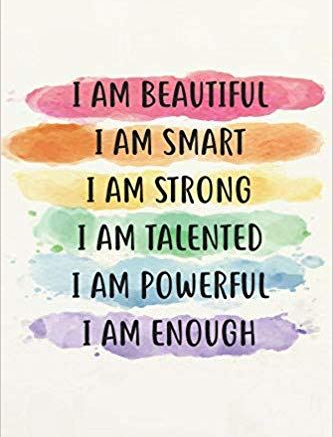
i am enough

Texts used – Psalm 139; Matthew 5:13-16


AUDIO VERSION


  • It’s anthem day, y’all!! No matter who you are or where your interests lie, it cannot be denied that anthems make the world go ‘round, am I right?
    • Anthem (definition): a rousing or uplifting song identified with a particular group, body, or cause
    • Sports anthems
    • National
    • Personal – can be anything
      • Empowering (song that gets you through the tough times): “Fight Song” – Rachel Platten (2014) or “Brave” – Sara Bareilles (2013)
      • Uplifting (song that immediately makes you smile as soon as you hear it): “Sweet Caroline” – Neil Diamond (1969)
      • Emblematic (song that speaks to who you are at your core): “Born This Way” – Lady Gaga (2011)
    • For a lot of people, today’s song from The Greatest Showman – “This Is Me”[1] – has become that iconic, emblematic song for a lot of people. Let’s listen to it. – [PLAY “This Is Me”]

  • In terms of our faith … in terms of our Scripture readings for this morning … in terms of the lyrics of this song, I feel like this says it all.
    • Psalm 139 = Scriptural anthem of sorts for a lot of people, myself included
      • Scripture that is renewing and uplifting
      • Scripture that empowers
      • Scripture that brightens the spirit
      • Scripture that is significant and speaks powerfully to and for people’s journeys of faith
      • When I was first considering a call to ministry, I contacted a former minister of mine – Pastor Jamie Swanson, the pastor I’d had until I was about 10 yrs. old. At the time, he was serving a congregation in Streator, Illinois, and when I called to talk to him about what it might mean to be called – about ministry and life as a pastor and what the heck this pull that I might have been feeling on my heart could mean – one of the first things he said to me was, “Go and read Psalm 139.” → Scripture’s had a special place in my heart and in my ministry ever since
        • Bad news for y’all = I could talk about this psalm all day … but I won’t. 🙂
    • Uniqueness and individuality upheld in this psalm:
      • Text: Lord, you have examined me. You know me.[2]
        • Personal
        • Individual
        • Distinct
        • “Lord, you have examined You know me.” → not one of those communal psalms like the one we talked about last week – much more intimate than that
        • Heb. “examined” = fairly loaded word all sorts of meanings and nuances wrapped up in this little word
          • Thoroughness = “investigated” and “tried”
          • Enthusiasm = “explored” (elements of hope and discovery and excitement)
          • Mysteriousness = connotations of being impenetrable and unascertainable
          • Friends, these are all the ways that God has looked at us: lovingly and zealously searching and testing and studying every part of who we are, becoming intimately familiar with all that we are, all that we hope for, all that we hide from and all that we try to hide … the brave parts and the bruised parts, as our song says.
    • Profound, fundamental knowing idea that God knows us better than we know ourselves = powerful element woven throughout the psalm as well
      • Text: You know when I sit down and when I stand up. Even from far away, you comprehend my plans. You study my traveling and my resting. You are thoroughly familiar with all my ways. There isn’t a word on my tongue, Lord, that you don’t already know completely. … You are the one who created my innermost parts; you knit me together while I was still in my mother’s womb. … My bones weren’t hidden from you when I was being put together in a secret place, when I was being woven together in the deep parts of the earth.[3]
      • Implied in that “knowing” is that God is also both accepting and even delighted by us … by every part of us – text: I give thanks to you that I was marvelously set apart. Your works are wonderful – I know that very well.[4]  I think that this may be one of the lines in the Bible that we have the most trouble accepting. We live in a culture driven by advertising and various “betterment” industries, all clamoring to tell us exactly what’s wrong with us – how we could be better, smarter, richer, fancier, thinner, prettier, stronger, more satisfied, more successful, more effective, more driven, more powerful … more, more, more, better, better, better … so that all we end up hearing is, “Not enough. Not enough. Not enough.” Right?
        • Become such an engrained part of our culture that when superstar singer, producer, and songwriter Alicia Keys made the decision to stop wearing makeup altogether a few years ago, it was a HUGE deal!
          • Google search autofill: type “Alicia Keys” “no makeup” is the 6th most common search
          • Still something that reporters and journalists are asking her about website article from just a month ago[5]
        • In the face of all that “not enough,” it’s hard for us to stand up and declare, “I was marvelously set apart. Your works are wonderful … including me.” Or, as your pew Bible puts it, “I praise you, God, for I am fearfully and wonderfully made.” It’s hard for us to make that kind of bold, self-confident proclamation and actually believe it, isn’t it? But that’s the thing: that’s the heart of this passage, and that’s the heart of our song – saying, “Yes, God, I have flaws and imperfections, but this is me. This is me. This is me with all my brokenness and bruises. This is me with all my scars and shame. This is me. And you made me. And you love me. And that’s beautiful … beautiful enough to convince me to love me, too.”
          • Song: I am not a stranger to the dark / Hide away, they say / ‘Cause we don’t want your broken parts / I’ve learned to be ashamed of all my scars / Run away, they say / No one’ll love you as you are / But I won’t let them break me down to dust / I know that there’s a place for us / For we are glorious … I am brave, I am bruised / I am who I’m meant to be / This is me[6] → That’s why this has become such a powerful anthem for so many people today – people who have been told by society, by the people around them, by their classmates and co-workers and everyone else that, for whatever reason, they don’t measure up … that they aren’t good enough. This songs says, “You know what? Yes, I am. I am exactly who I’m meant to be, and I am glorious.”
            • Story of Emily
  • Part of claiming that we are, indeed, fearfully and wonderfully made is also claiming that God has a purpose for us in this world enter our NT reading this morning
    • Text: You are the salt of the earth. But if salt loses its saltiness, how will it become salty again? It’s good for nothing except to be thrown away and trampled under people’s feet. You are the light of the world. A city on top of a hill can’t be hidden. Neither do people light a lamp and put it under a basket. Instead, they put it on top of a lampstand, and it shines on all who are in the house. In the same way, let your light shine before people, so they can see the good things you do and praise your Father who is in heaven.[7]
      • Recognizes that there is something special about YOU
        • Something particularly salty
        • Something particularly light
        • A special element about who you are – broken edges, bruises, scars, and all – that adds to this world in a way no one else can
          • Song: When the sharpest words wanna cut me down / I’m gonna send a flood, gonna drown them out / I am brave, I am bruised / I am who I’m meant to be / This is me / Look out ‘cause here I come / And I’m marching on to the beat I drum / I’m not scared to be seen / I make no apologies / This is me[8]
        • Special, particular way that you and only you can reflect the nature and wonder and beauty and love of God in this world
          • From When God Made You by Matthew Paul Turner: You, you, when God made YOU / God made you all shiny and new. An incredible you, a you all your own, a you unlike anyone else ever known. / An exclusive design, one God refined, / you’re a perfectly crafted one of a kind. / ‘Cause when God made you, / somehow God knew / that the world needed someone / exactly like you.[9]
          • Julia Cameron, American teacher and prolific writer: All of us contain a divine, expressive spark, a creative candle intended to light our path and that of our fellows.
  • So hear me this morning, friends. Hear me loud and clear: You are fearfully and wonderfully made. God knows you inside and out – better than you even know yourself, and God finds you marvelous. God finds you brave and bruised, broken and beautiful. No matter what, God loves you. No matter what, God delights in you. No matter what, God created you to be a bold and treasured light in this world. Thanks be to God. Amen.

[1] “This Is Me” written by Justin Paul, Benj Pasek, © 2017 Sony/ATV Music.

[2] Ps 139:1.

[3] Ps 139:2-4, 13, 15.

[4] Ps 139:14.

[5] https://www.beautycrew.com.au/alicia-keys-no-makeup-how-to-makeup-free.

[6] “This Is Me” written by Justin Paul, Benj Pasek, © 2017 Sony/ATV Music.

[7] Mt 5:13-16.

[8] “This Is Me” written by Justin Paul, Benj Pasek, © 2017 Sony/ATV Music.

[9] Matthew Paul Turner. When God Made You. (Colorado Springs, CO: WaterBrook Books, 2017), 1-2.

Sunday’s sermon: Empty Spaces

god-shaped hole

Texts used – Psalm 136; John 14:1-14, 27-31a


AUDIO VERSION


  • U.S. trash and recycling statistics
    • American = 5% of the world’s population → America = 30% of the world’s trash[1]
      • If all the world lived the way we live, we would need 2 Earths
      • In lifetime, the average American will throw away 600 times their bodyweight in trash
      • Enough trash to fill 63,000 garbage trucks daily (which would reach halfway to the moon if we stacked them end-to-end)
    • Although 75% of American waste is recyclable, we only actually recycle about 30% of it[2]
      • Over 11 million TONS (not pounds … TONS – that’s 22 Billion pounds) of recyclable clothing, shoes, and textiles make their way to the landfill every year
      • U.S. throws away $11.4 billion worth of recyclable containers and packaging every year
      • 18 billion pounds of plastic trash wind up in our oceans each year
        • Enough to cover every foot of coastline around the world with five full trash bags of plastic every year
        • Causes over 100,000 marine animal deaths every year from plastic entanglement and ingestion
    • Stuff that goes to the landfill
      • Takes roughly 50 yrs. for rubber to degrade
      • Takes 200-500 yrs. for aluminum to fully degrade
      • Take roughly 500 yrs. for plastic water bottle to degrade
      • Takes 500+ yrs. for Styrofoam to degrade
      • Take 1,000,000 yrs. for glass to degrade
    • Clearly, y’all, we have a stuff problem in this country.
      • Stuff that fills up our cupboards and closets
      • Stuff that fills up our garages and sheds
      • Never-ending stream of stuff that we can buy in the store, online, at the next garage sale, etc.
      • But what’s the purpose of all that stuff? What empty space are we trying to fill with all that stuff – that stuff that obviously means enough to us to end up in so many garbage heaps in landfill after landfill? With this idea in mind – this thought of how we try to fill empty spaces – let’s listen to our Greatest Showman song for this morning. [PLAY “Never Enough”]

  • Song = pretty clear → Only one thing will fill the void – the aching emptiness that the singer speaks of: the presence of the Beloved.
    • Song: Take my hand / Will you share this with me? / ‘Cause darling, without you / All the shine of a thousand spotlights / All the stars we steal from the night sky / Will never be enough / Never be enough / Towers of gold are still too little / These hands could hold the world / But it’ll never be enough / Never be enough / For me[3] → Some of the most coveted, most treasured, most far-flung and limitless things in the universe cannot fill the void for the singer. The coveted shine of the spotlight and all the fame and notoriety that it implies isn’t enough. Treasured towers of gold isn’t enough. Even the stars themselves plucked out of the night sky – limitless and far-flung as they are – aren’t enough. The world itself isn’t enough. Only the Beloved will fill the void.
    • Context within the movie: song sung by Swedish opera star Jenny Lind
      • After experiencing some success with his circus, Barnum decides to try to branch out – to continue the fun and fancifulness of his circus acts but also to add a more genteel, sophisticated, upper-class-approved act to his repertoire → enter Jenny Lind → Barnum entices her to travel “across the pond” and go on tour in the states → Barnum ends up all but abandoning his circus (leaving it in the hands of his partner, Phillip Carlyle) to tour the country with Ms. Lind → (without giving too much away) ends up in a bit of a romantically sticky situation because of all this touring and time away from his home and family
        • Said at the beginning of the series that this movie was loosely based on the real life of P.T. Barnum → portions of this part of the storyline are true
          • True: Barnum invited Swedish opera protégé Jenny Lind, nicknamed the “Swedish Nightingale,” to America to tour
          • True: They spent a great deal of time touring together
          • False: no romantic intimations between them during this time → Hollywood … what can I say?
    • Power of the song – both in the lyrics and in the context – is the longing that you hear in it → repetition of that simple phrase “never enough” really drives home the singular longing for that one person – a longing that creates that empty space that nothing and no one else can fill
  • Certainly could have paired today’s song with the Scripture that we read last week → story of the rich young rule who Jesus commanded to sell all his possessions – all his stuff – so he could follow Jesus
    • Definite longing in it
    • Definite empty space in it that the rich young ruler was seeking to fill
    • Definite overabundance of “stuff” in it
    • But I wanted to pair this Scripture reading from John’s gospel with this song this morning because it’s such an interesting juxtaposition that really illustrates both the empty spaces that we feel and the one thing that will fill up our aching hearts and souls to overflowing: the presence and love of God.
      • Jesus begins passage by gently admonishing the disciples
        • Reminding the disciples of God’s presence with them
        • Reminding the disciples of God’s compassion for them and desire to provide for them
        • Reminding the disciples of the abundance and, indeed, overabundance of God
        • Text: “Don’t be troubled. Trust in God. Trust also in me. My Father’s house has room to spare. If that weren’t the case, would I have told you that I’m going to prepare a place for you? When I to go prepare a place for you, I will return and take you to be with me so that where I am you will be, too. You know the way to the place I’m going.”[4] → I feel like Jesus said this in a soft, tender voice – like he was trying to comfort the disciples, to reassure them, to quiet their fears and their apprehensions.
          • Context within the scope of John’s gospel → This passage is actually part of a large chunk of the gospel – chapter 14 through chapter 17 – that doesn’t appear in any of the other gospels. Jesus and the disciples are in the upper room sharing the Passover meal together. Jesus knows that he is about to be arrested. He knows what’s coming. He has washed the disciples’ feet. He’s broken the bread and shared the wine. He has made some dire and spot-on predictions – Judas’ betrayal and Peter’s denial.
            • Other gospels leave a good chunk of that last supper blank
            • John’s gospel gives us the table conversation – what Jesus and the disciples talked about after Judas had fled to turn them in
              • Discussion that includes some familiar and favorite passages
                • “I am the vine and you are the branches”[5]
                • “No one has greater love than to give up one’s life for one’s friends”[6]
                • From graveside committal service: “You have sorrow now; but I will see you again, and you will be overjoyed. No one takes away your joy.”[7]
          • And Jesus starts that discussion – of things to come, of the love of God, of prayer and purpose, of grace and hope and joy that cannot be taken away – by gently reassuring the disciples that he is going ahead to make a place for them.
            • Reassurance that even though he will no longer be with them, that God will continue to be with them
            • Reassurance that they already have all that they need to find that place
            • Reassurance that those empty spaces inside them and among them will indeed be filled
      • And yet, what is the disciples’ immediate response to Jesus’ reassurances? – text: Thomas asked, “Lord, we don’t know where you are going. How can we know the way.” … Philip said, “Lord, show us the Father; that will be enough for us.”[8] → Even in the face of the greatest assurance they will ever receive, the disciples are grasping … panicking … desperate for something more.
        • More concrete
        • More measurable
        • More proveable
        • Jesus is trying to provide them with that ultimate “enough,” but is it enough for the disciples?
          • Jesus even goes so far as to declare peace – text: “Peace I leave with you. My peace I give you. I give to you not as the world gives. Don’t be troubled or afraid.”[9] → “My peace I give to you” … but is it enough?
  • At this same point in the other gospels – in Matthew and Mark, specifically – it mentions that Jesus and the disciples “sang a hymn and went out to the Mount of Olives.”[10] In light of this idea of God being enough, I imagine the hymn they sang may have been our psalm for today – Psalm 136.
    • Remember: original purpose/use of the psalms was as an element of Hebrew worship
      • Some personal (“I/me/my”)
      • Some communal (“we/us/our”)
    • Today’s psalm sounds like a call-and-response → each line followed by congregational response “God’s faithful love lasts forever!”
      • Various “leader” lines follow the storyline of the world and the people of Israel
        • Begins with God’s goodness
        • Extols the wonders and majesty of creation
        • Follows through Israel’s slavery in Egypt and their exodus
        • Culminates in the Promised Land and God’s protection of the people
    • After every single line – be it a declaration of God’s goodness, a reminder of the struggles of the people, or a recognition of the beauty of the world around them – there is the same faith-filled, glorious proclamation: “God’s faithful love lasts forever!” It is a statement of faith. It is a statement of hope. And it is a reminder that no matter what is facing us, God’s “enough” is always there – reaching out, holding us up, giving us strength and peace and faithful, steadfast love for the journey ahead. It is a reminder that with God, there is no “never enough.” Thanks be to God. Amen.


Charge
C.S. Lewis: The fact that our heart yearns for something earth can’t supply is proof that heaven must be our home.

  • Sure and blessed thing to fill those empty spaces in our hearts, souls, and lives = the faithful love of God, the peace of Christ, and the companionship of the Holy Spirit → our “always enough”

[1] https://utahrecycles.org/get-the-facts/.

[2] https://www.rubiconglobal.com/blog-statistics-trash-recycling/.

[3] “Never Enough” written by Justin Paul, Benj Pasek, © 2017 Sony/ATV Music

[4] Jn 14:1-4.

[5] Jn 15:5.

[6] Jn 15:13.

[7] Jn 16:22.

[8] Jn 14:5, 8.

[9] Jn 14:27.

[10] Mt 26:30; Mk 14:26.

Sunday’s sermon: Driving a Hard Bargain

bargaining

Texts used – Jonah 2:1-3:3; Matthew 19:16-30


AUDIO VERSION


  • Story of 4-H pig auction → Mary Jane’s pig
    • Explain how a 4-H animal auction works
      • 4-H kid leads animal into the bidding ring
      • Bids = $$/pound
      • 4-H kids gets the proceeds
    • Ryan → mandate from his employer to buy Mary Jane’s pig
    • Robert → playing around – upping the bid just for fun
    • I have to admit that it was rather entertaining to watch these two squaring off. Ryan would bid. The auctioneer would recognize the bid and call for any others. Robert would wait a minute or two – sometimes even waiting until the auctioneer got to “Going once!” – and then he’d chime in with a “Yup!” And Ryan would bid it up again. And with every bid and counter bid, Ryan got a little bit redder and a little bit redder and a little bit redder.
      • Everyone around us knew what was happening
      • Mary Jane, standing down in the ring with her pig, could see what was happening
      • Close-knit rural community → the auctioneer knew what was happening, too
    • Eventually, after bidding the cost of the pig up to an abundantly high price, Robert backed off and let Ryan win the auction for his employer. → by the end …
      • Had Ryan wiping the sweat off his brow and reaching for his wallet
      • Had Mary Jane sufficiently thrilled about the check she’d get
      • Had all of us nearly rolling on the floor with laughter
    • Now of course, this is an amusing example of bargaining and “upping the ante,” as it were. It was all in good-natured fun. But not all the bidding and bargaining that goes on in our lives is so good-natured, is it?
      • Anyone that’s tried to balance busy schedules (family, work, social get togethers, etc.) knows how much bidding and bargaining can be a tricky and uncomfortable part of that
      • Moving in with someone and sharing a space for the first time requires serious bidding and bargaining
        • Living in Chancellor’s my senior year of college = 4 girls, one shared kitchen … one small, shared freezer!
      • Not to mention the bidding and bargaining that happens between us and God. → cue today’s song from The Greatest Showman [PLAY “The Other Side”[1]]

  • Movie context
    • P.T. Barnum bargaining with Phillip Carlyle, playwright and member of the upper class → Barnum wants Carlyle to bring his creativity and expertise (as well as his good name and his relative celebrity) to Barnum’s circus
      • Barnum’s part = offering, enticing, seeking to open Carlyle’s eyes and enliven his soul – song: You run with me / And I can cut you free / Out of the drudgery and walls you keep in / So trade that typical for something colorful / And if it’s crazy, live a little crazy
      • Carlyle’s part = hesitant, uncertain, stubborn → convinced that the life he’s living is the only way he would ever want to live (even though it’s clear that he’s unhappy living that life) – song: Don’t you know that I’m okay with this uptown part I get to play / ‘Cause I got what I need and I don’t want to take the ride / I don’t need to see the other side
        • Driven by propriety
        • Driven by expectations (his parents’, society’s, his own)
        • Driven by fear of the unknown
        • Driven by worry of shame that might come from being associated with Barnum … with the other … with “too different”
    • The back-and-forth nature of this song is what makes it so exciting. And it’s also what makes it so unexpectedly Biblical. → long, long line of characters in Scripture who can bid and bargain with the best of them
      • OT “heavy hitters”
        • Abraham[2]
        • Moses[3]
        • Jacob (took his bargaining to the next level by actually wrestling![4])
      • Many of the psalms = bargaining (“help me, God, and I will praise you all my days” or something similar)
      • NT bargainers:
        • Mary, mother of Jesus (wedding at Cana[5])
        • Mary and Martha (bargaining with Jesus after Lazarus’ death[6])
        • Even Jesus himself in the Garden of Gethsemane (“Father, if it’s your will, take this cup of suffering away from me. However, not my will but your will must be done.”[7])
  • Today’s Scripture passages = probably some of the most notorious bidder and bargainers
    • Start with our NT Scripture this morning → So, the first time I heard this song on The Greatest Showman soundtrack, this was the Scripture reading that popped into my head because Phillip Carlyle shares so many similarities with the rich young man who encounters Jesus at the beginning.
      • Text: A man approached [Jesus] and said, “Teacher, what good thing must I do to have eternal life?” Jesus said, “Why do you ask me about what is good? There’s only one who is good. If you want to enter eternal life, keep the commandments.” The man said, “Which ones?” Then Jesus said, “Don’t commit murder. Don’t commit adultery. Don’t steal. Don’t give false testimony. Honor your father and mother, and love your neighbor as you love yourself.” Then the young man replied, “I’ve kept all these. What am I still missing?” Jesus said, “If you want to be complete, go, sell what you own, and give the money to the poor. Then you will have treasure in heaven. And come follow me.” But when the young man heard this, he went away saddened because he had many possessions.[8]
        • Hear that back-and-forth btwn. Jesus and the rich young man just like you hear it btwn. Barnum and Carlyle in the song: “What must I do?” → Jesus: “Keep the commandments.” → “Which ones?” → (Jesus lists commandments) → “Done that. What else?” → Jesus: “Sell all your stuff, give the money to the poor, and come follow me.” → (CRICKETS)
        • Challenging Scripture because we don’t actually get a concrete answer from the rich young man – text: But when the young man heard this, he went away saddened because he had many possessions. → Clearly, he didn’t like Jesus’ idea. Clearly, he wasn’t as gung-ho about following Jesus as the disciples who dropped their nets right there on the beach and followed immediately. Clearly, this was going to be a struggle for the rich young man. But Scripture doesn’t say he turned Jesus down flat. Scripture doesn’t say, “He went away saddened and never thought about Jesus again.” What if that seed that Jesus planted in the rich young man’s mind and heart actually took root? What if it only took him some time – time bargaining with himself, time bargaining with God – for him to say, “You know what, I’m going to take that chance. I’m going to do it.” What if he really did sell all his possessions, give the money to the poor, and join Jesus and the rest of the crowd following him somewhere down the road? A few towns later? What if he really did say yes … just a delayed “yes”?
      • Rich young man is not the only bargainer in our NT reading this morning – text: Then Jesus said to his disciples, “I assure you that it will be very hard for a rich person to enter the kingdom of heaven. In fact, it’s easier for a camel to squeeze through the eye of a needle than for a rich person to enter God’s kingdom.” When his disciples heard this, they were stunned. “Then who can be saved?” they asked. Jesus looked at them carefully and said, “It’s impossible for human beings. But all things are possible for God.” Then Peter replied, “Look, we’ve left everything and followed you. What will we have?” Jesus said to them, “… all who have left houses, brothers, sisters, father, mother, children, or farms because of my name will receive one hundred times more and will inherit eternal life. But many who are first will be last. And many who are last will be first.”[9] → Peter and the rest of the disciples are bargaining here, too. They’ve already done what Jesus asked the rich young man to do. They’ve given up everything for Jesus. They’ve been following. They’ve been learning. They’ve been devoted. … But they’re still bargaining.
        • Bargaining for eternal life just like that rich young man
        • Bidding for a better (the best?) place in Kingdom of Heaven
        • Can’t help clinging to their perceived needs and deep-seated desires even in the face of all that God is offering them and calling them to do
    • OT character = embodiment of this in spades → none other than Jonah
      • Jonah = prophet in about the easiest, cushiest, most positively famous time for prophets to exist in Israel → Most of the time, it was a pretty horrible job to be a prophet. You were called by God to bring words of rebuke and conviction, calls for repentance and change, and predictions of dire and unspeakable things if that repentance and change didn’t come about … not normally words that people living high and happy lives like to hear. But Jonah was a prophet in one of Israel’s most peaceful and prosperous times, so he enjoyed a life of ease and comfort and celebrity … that is, until God called him to GO. – called to take a word of conviction and repentance to Nineveh → huge city, violent city, evil city
      • Jonah = not so excited about this call → decides to bargain not with his words but his actions
        • BARGAINING MOVE #1: runs in the exact opposite direction of Nineveh (hops on a ship to Tarshish) → God’s counter: bring about a giant storm
        • BARGAINING MOVE #2: Jonah confesses to fellow sailors that he’s trying to run away from God and asks them to throw him overboard → God’s counter: Jonah swallowed by a giant fish
        • BARGANING MOVE #3: Jonah sits in the belly of that fish for three whole days before finally agreeing to go to Nineveh → God’s counter: fish spits Jonah out not just anywhere but on the shores of Nineveh (subtle, right?)
      • Enter our Scripture reading for today. – text: Jonah prayed to the Lord his God from the belly of that fish: “I called out to the Lord in my distress, and he answered me. From the belly of the underworld I cried out for help; you have heard my voice. … I will offer a sacrifice to you with a voice of thanks. That which I have promised, I will pay. Deliverance belongs to the Lord!” Then the Lord spoke to the fish, and it vomited Jonah onto the dry land. The Lord’s word came to Jonah a second time: “Get up and go to Nineveh, that great city, and declare against it the proclamation that I am commanding you.” And Jonah got up and went to Nineveh, according to the Lord’s word.[10]
  • Hear this song and these Scriptures woven together in terms of faith = hear all that bidding and bargaining that we do with God
    • Like Jonah, we hear God’s attempts to call us
      • Call us into mission
      • Call us into faith
      • Call us into deeper relationship with God
      • Call us into a life that we can’t even imagine → We’ve spent the last three weeks talking about that life.
        • Kingdom of God being the greatest show we can imagine
        • Million dreams God has for us and for this world
        • God’s call to us to COME ALIVE in the Spirit and in our faith
      • Today = little dose of reality → recognition that even when we hear those calls and even when we believe in the beauty of those dreams, we still push back … pull back … resist … try to negotiate
        • Fear
        • Uncertainty
        • Stubbornness
        • All sorts of pull on our time and our attention that often keep us from following fully
    • Song speaks to us as God speaks to us – promise and hope, goodness and wholeness: You would finally live a little, finally laugh a little / Just let me give you the freedom to dream / And it’ll wake you up and cure your aching / Take your walls and start ‘em breaking / Now that’s a deal that seems worth taking / But I guess I’ll leave that up to you ……………… Amen.

[1] “The Other Side” written by Justin Paul, Benj Pasek, © 2017 Sony/ATV Music.

[2] Gen 18:16-33.

[3] Ex 32:7-14.

[4] Gen 32:22-32.

[5] Jn 2:1-12.

[6] Jn 11:1-44.

[7] Lk 22:42.

[8] Mt 19:16-22.

[9] Mt 19:23-28a, 29-30.

[10] Jonah 2:2, 9-3:3a.