Sunday’s sermon: Living Promises Point by Point

Text used – Exodus 19:3-7; 20:1-17

  • If you stop just about any kid walking down the street and ask them if they like rules, you’ll probably get a whole lot of strange looks and the same answer every time: “NO!”
    • As adults, we know how difficult it can be to enforce those rules → It doesn’t matter if you’re enforcing rules as a parent, as a teacher, as a camp counselor, as a babysitter, as a youth sports coach, or any of the other hundreds of ways we interact with kids.
      • Communicating the rules can be a challenge, especially depending on the age of the child(ren) or other special circumstances
        • Language barriers
        • Cognitive barriers
      • Making sure kids stick to those rules is pretty much always a thankless and troublesome task
        • Dealing with pushback
          • Physical (tantrums, walking away) or verbal
          • Challenge with Julia right now = 4yo who wants to do what she wants to do and isn’t very happy when we ask her to do something else
        • Testing boundaries
        • Coming up with adequate consequences for broken rules
          • Avoiding empty threats
          • Striking the balance between learning the lesson and adequate punishment
    • Truly, it’s enough to sometimes make you want to throw your hands up and just give in. “Fine! Do whatever you want!” Of course, as adults and caregivers, that’s not an option.
      • Not an option for kids’ safety (obviously)
      • But it’s also not an option because as copious amounts of research has shown, boundaries and rules and the structure they provide are crucial for child development.
        • From CDC:
          • 3 key ingredients to building structure (website specifies “in the home” but can be applied to any situation working with kids): consistency – doing the same thing every time, predictability – expecting or knowing what is going to happen, and follow-through – enforcing consequences[1]
          • “Family rules help children understand what behaviors are okay and not okay. … It is normal for children to break rules and test limits. Consistent follow through with consequences when rules are broken help your child have a clear understanding about the importance of rules.”[2]
        • Article from S. News and World Report: Rules teach children self-discipline and help them learn how to make healthy choices. It’s doubtful that you will get children to admit that they like rules, but you might get them to acknowledge that it’s helpful to know what’s expected of them and how they can ultimately get what they want. At the end of the day, this is about teaching kids what they need to do to succeed and achieve their desired goals.[3]
    • And frankly, it doesn’t matter whether you’re 2 or 92. We don’t really like being told what we can and can’t do, do we? And yet we have our Scripture reading this morning – probably one of if not the most well-known passages in the First Testament … and it’s about rules.
  • Before we dig a little deeper into the rules, let’s talk about the first part of our passage this morning – the little intro bit from chapter 19.
    • Catching up on the action btwn the Red Sea (last week) and today
      • Moses and the Israelites have begun to journey through the wilderness to the promised land → journey is difficult → the Israelites continue to complain
        • Remember: complaining started last week when they were trapped btwn. the advancing Egyptian army and the Red Sea: “Weren’t there enough graves in Egypt that you took us away to die in the desert? What have you done to us by bringing us out of Egypt like this? Didn’t we tell you the same thing in Egypt? ‘Leave us alone! Let us work for the Egyptians!’ It would have been better for us to work for the Egyptians than to die in the desert.”[4]
        • After that: complained about lack of water → God changed the brackish water in Shur to sweet water the people could drink[5]
        • After that: complained about no food → God provided quail and manna for the people to eat[6]
        • After that: complained about lack of water (again) → God instructed Moses to strike a rock and water poured from the rock[7]
      • People of Israel also win their first battle against another nation → attacked by Amalek → as long as Moses holds up his hands over the battlefield (similar to Red Sea), the people of Israel win the battle[8]
    • Finally, Moses and the people of Israel arrive at Mount Sinai which is where our passage begins this morning.
      • God calls Moses to God’s presence up on the mountain and gives the people this beautiful promise: So now, if you faithfully obey me and stay true to my covenant, you will be my most precious possession out of all the peoples, since the whole earth belongs to me. You will be a kingdom of priests for me and a holy nation.[9] → two equally important parts to this promise
        • God’s part = “you will be my most precious possession
          • Simple
          • Straight-forward
          • Clear
          • The Hebrew here is exactly what is says. God is promising to treasure and love and protect and cherish the people. Think about that for a minute! Take that in! God, the all-powerful Creator of all the universe – of everything that moves and breathes, of everything that doesn’t move or breathe, the One who built the earth molecule by molecule and process by process and stone by molten stone … this God who is beyond our imagining and beyond the capability of our minds to comprehend … this God is saying to the people, “I will treasure I will treasure you.”
        • People’s part = both simple and more complex[10]: So now, if you faithfully obey me and stay true to my covenant.
          • Heb. “stay true” (to my covenant) = keep, preserve → It means to guard something or to protect it. There’s an activeness implied in this word. God isn’t just asking the people to simply tuck the covenant away in the back of their minds. God is asking them to actively hold it and protect it. There’s also an element of cherishing required on the part of the people here because if you’re going to truly guard and protect something, you have to care about it, right? You’re not going to put much effort or heart into protecting something that doesn’t matter to you.
          • Heb. “faithfully obey” = actually the same word (“obey”) twice – first occurrence is Infinitive Absolute which serves to emphasize the sentiment of the word → This word implies intelligently and giving attention to something because obedience and action often go hand-in-hand. It’s a word that means obey but also carries connotations of hearing, considering, and consenting. It’s really a whole thought process in one word. So God is not asking the people of Israel to enter into this covenant lightly. And God is not forcing the people into this covenant. They must consider it. They must choose to be a part of this covenant by faithfully obeying God.
  • And what does that obedience entail? That’s where the second, more familiar portion of our Scripture reading comes into play this morning. – the 10 commandments … God’s rules for living
    • In essence, these rules – these commandments – are all about how to live into right relationships. → can be sectioned into two parts
      • First part = how to live into right relationship with God
        • 1st commandment establishes without question who God is … and who God should always be to the people: I am the Lord your God who brought you out of Egypt, out of the house of slavery. You must have no other gods before me.[11]
        • 2nd commandment adds emphasis to the first by being abundantly clear about worshiping God alone: Do not make an idol for yourself—no form whatsoever—of anything in the sky above or on the earth below or in the waters under the earth. Do not bow down to them or worship them, because I, the Lord your God, am a passionate God.[12]
        • 3rd commandment speaks to the sacred and set-apart nature of God’s name: Do not use the Lord your God’s name as if it were of no significance[13]
        • 4th commandment reminds the people to set aside a particular part of the rhythm of their lives to honor God: Remember the Sabbath day and treat it as holy. Six days you may work and do all your tasks, but the seventh day is a Sabbath to the Lord your God.[14]
      • Second part[15] = how to live in right relationships with one another
        • 5th commandment: honor your parents
        • 6th commandment: do not kill
        • 7th commandment: do not commit adultery
        • 8th commandment: do not steal
        • 9th commandment: do not testify falsely against your neighbor
        • 10th commandment: do not desire to take what doesn’t belong to you
      • Scholar (describing these two parts): Like boundary lines on a football field or basketball court, the commandments outline the basic expectations of human behavior and protect the human community from running out of bounds and falling into patterns of living that will destroy it and lead the people into self-inflicted chaos. At the same time, the commandments provide encouragement for a healthy and proper love of God and neighbor. (He goes on to point out) There is an internal logic to the commandments that is both compelling and beautiful: The way we attend to God (tablet one) shapes the way we attend to our neighbor (tablet two). In other words, faithful worship of God leads to proper love of neighbor. Proper praise of God shapes our social responsibility.[16] → And friends, it’s this idea that sort of brings the promise of the 10 Commandments from the First Testament full circle into the promise we find in the life of Jesus in the New Testament.
        • Jesus to the crowds as part of the Sermon on the Mount in Matthew: Don’t even begin to think that I have come to do away with the Law and the Prophets. I haven’t come to do away with them but to fulfill them.[17] → In his life and ministry and witness, Jesus lived into those commandments, reminding us not only what it looks like to truly faithfully obey God and to stay true to that covenant but also expanding our idea of who our neighbor might be beyond all the borders that get erected between us: to outcasts and screw-ups, to those who were sick and those who were struggling, to lost causes – those deemed uncurable and unfixable and unredeemable and not worth the time or effort by the rest of the world. In the 10 commandments, God laid down point by point how we’re supposed to live into our promises with God and with one another, and Jesus came to remind us just how far and wide living into those promises can stretch our arms and our hearts. Thanks be to God. Amen.

[1] https://www.cdc.gov/parents/essentials/structure/building.html,

[2] https://www.cdc.gov/parents/essentials/structure/rules.html.

[3] Jennifer Hartstein. “The Importance of Setting Limits for Your Child” from U.S. News and World Report, https://health.usnews.com/wellness/for-parents/articles/2017-06-26/the-importance-of-setting-limits-for-your-child. Posted June 26, 2017, accessed Oct. 9, 2022.

[4] Ex 14:11-12.

[5] Ex 15:22-27.

[6] Ex 16.

[7] Ex 17:1-7.

[8] Ex 17:8-16.

[9] Ex 19:5-6a.

[10] Exegesis by Rev. Elana Keppel Levy: https://somuchbible.com/word-studies/annotated-scripture/exodus-193-7-201-17/.

[11] Ex 20:2-3.

[12] Ex 20: 4-5a.

[13] Ex 20:7a.

[14] Ex 20:8-10a.

[15] Ex 20:12-17.

[16] Craig Kocher. “Third Sunday in Lent – Exodus 20:1-17 – Pastoral Perspective” in Feasting on the Word: Preaching the Revised Common Lectionary – Year B, vol. 2. (Louisville: Westminster John Knox Press, 2008), 76.

[17] Mt 5:17.

Sunday’s sermon: Sometimes a Promise Needs Proving

Text used – Exodus 14:5-7, 10-14, 21-29

  • Is anyone here familiar with the Disney Pixar film “Onward?”[1]
    • Basic storyline:
      • Main characters = 2 elven brothers named Ian and Barley
        • Ian = 16yo and struggling with self-confidence
        • Barley = a few years older → enthusiastic and impulsive player of a magic role-playing game based on how the world used to be before technological advances made magic obsolete
      • Both boys given a gift by their mom on Ian’s 16th birthday = magical staff that was their father’s before his death when Ian was just a baby and Barley was barely old enough to remember him → staff comes with a magic spell that will bring their dad back for one single day
      • Barley, the magic role-playing officianado, is ecstatic and tries the spell, but it doesn’t work → Ian tries it and gets halfway through before his confidence falters → results in bringing half his dad back (the lower half) before the magic gem in the staff disintegrates
      • So with the clock ticking, Ian and Barley head out on a quest to find another magical gem so they can complete the spell and bring the rest of their dad back before his 24 hrs. runs out. In true Disney fashion, this quest is full of mishaps and mayhem, funny moments as well as moments that will truly touch your heart.
    • Why am I bringing up this movie this morning? → There’s a scene about halfway through the movie where Ian and Barley’s path bring them to a bottomless pit. There’s a drawbridge to cross the pit … but the release lever is on the other side of the chasm.

  • And this light and family-friendly scene just kept reminding me of our Scripture reading this week and the way that God has to continually prove God’s presence and protection and provision for the people of Israel after their escape from slavery in Egypt.
    • Catch up with where we are in the Grand Story of Faith today: after the final of God’s 10 plagues swept through Egypt and every first born – from livestock to humans – has died, Pharaoh finally agreed to let the Hebrew people go free → people gathered up all their belongings and all the members of their households and left the land of Egypt following God (pillar of cloud by day, pillar of fire by night)
    • But today’s reading finds Pharaoh changing his tune – text: When Egypt’s king was told that the people had run away, Pharaoh and his officials changed their minds about the people. They said, “What have we done, letting Israel go free from their slavery to us?”[2] → So Pharaoh amasses 600 of his most elite soldiers as well as all his chariots and captains and pursues the Israelites so that they can be recaptured and re-enslaved.
      • Find it interesting that our text says, “When Egypt’s king was told that the people had run away …” → I mean, it shouldn’t be a surprise to Pharaoh that Moses and the rest of the Israelites are leaving because he told them to go. – Ex 12 (the night after all the first-born in Egypt, including Pharaoh’s own son and heir, were struck down by the 10th plague): Pharaoh called Moses and Aaron that night and said, “Get up! Get away from my people, both you and the Israelites! Go! Worship the Lord, as you said! You can even take your flocks and herds, as you asked. Just go! And bring a blessing on me as well!”[3]
        • Maybe Pharaoh is surprised that Israelites are actually gone because he didn’t believe them strong enough or brave enough
        • Maybe Pharaoh is surprised that the Israelites are actually gone because he was speaking from a place of grief-fog → We all know how fuzzy and dysfunctional our minds can sometimes become in the fresh wake of grief.
        • Whatever the reason, I just find it interesting that apparently Pharaoh needed to be told that the Israelites were gone. Apparently he was unaware that they had left Egypt, despite the fact that the order (permission?) to do so had come from his own lips.
    • Then comes what could be the most dramatic part of the whole Exodus story – the scene at the Red Sea.
      • People of Israel = trapped btwn. the swiftly advancing Egyptian army on one side and the vastness of the Red Sea on the other → And immediately, they turn on Moses (and on God) – text: The Israelites were terrified and cried out to the Lord. They said to Moses, “Weren’t there enough graves in Egypt that you took us away to die in the desert? What have you done to us by bringing us out of Egypt like this? Didn’t we tell you the same thing in Egypt? ‘Leave us alone! Let us work for the Egyptians!’ It would have been better for us to work for the Egyptians than to die in the desert.”[4]
        • Definitely a theme throughout the life of the people of Israel: they follow God for a time → something upsets them or scares them or distresses them in some way → the shy away like horses startled by a snake → Moses plays his role of mediator with an irritated God on one hand while he reels in the spiritually scattered Israelites with the other hand → God provides for the people despite their complaints and lack of trust → eventually the people return to God
          • And folx, this is a really good and really important time to remind ourselves that the ancient people of Israel are far from alone in this cycle. We follow. We become distressed. We question and doubt and balk at where God is trying to lead us. But God remains with us, continuing to protect and provide, and eventually, we swing back into a mindset and heart-set of faith and following. It’s a story as old as time, as recent as yesterday, and as predictable as tomorrow.
            • Cycle that reminds me of the scene from “Onward” → As Ian is crossing the bottomless chams with his invisible bridge, just before the rope slips from his waist, he hollers back to Barley, “You’ve got me, right?” And Barley yells back, “Yeah, I’ve got you!” In the midst of the scary and the uncertain, the Israelites continue to shout to God, “You’ve got us, right?” and God replies, “Yeah, I’ve got you!” In the midst of the scary and the uncertain, we continue to shout to God, “You’ve got me, right?” And still, God replies, “Yeah, I’ve got you!”
      • True to God’s promise to the people, God provides: instructs Moses to take his staff in his hand, stand on the banks of the Red Sea, and raise his arms high → God parts the waters of the Red Sea so that the Israelites can cross safely to the other side → God even goes so far as to hinder the chariots of the Egyptians so the Israelites have enough time to cross → finally Moses stretches his arms out over the waters again (at God’s instruction) and the waters of the Red Sea “returned and covered the chariots and the cavalry, Pharaoh’s entire army that had followed them into the sea. Not one of them remained.”[5]
  • So we’re encountering this passage as we work our way through this year of the Narrative Lectionary – those readings chosen and ordered to help us follow the thread of God’s Grand Story of Faith from the beginning all the way through the history of the people of Israel and up through God’s saving act of grace and love in the person and work of Jesus Christ. So with that purposes, by beginning at the beginning, we’ve come across this text fairly early on in the cycle of the church year. But within the context of the Revised Common Lectionary (a different schedule of Scripture readings), this passage is always read on vastly different day: Easter Vigil – the Saturday between Christ’s crucifixion on Good Friday and the resurrection joy of Easter morning.
    • Scholar put powerful words to the significance of this: Hearing this text in the darkness of a church at the Easter Vigil is an occasion for a congregation to engage a crucial portion of Scripture in an environment that provokes fear, wonder, and mystery. … Terror is not too strong a word for the potential brutality and ruthlessness that could be meted out by the forces of Pharaoh, under whom the people and their ancestors that labored as slaves for generations. These unarmed fugitives now feel a most intense “buyer’s remorse.” Why did we ever listen to this man Moses? Better to live as slaves in Egypt than to die in the wilderness. However, slavery and death are not the only alternatives. God has another plan. In a foundational text of Israel’s very existence – the exodus – Christians find their most profound foretaste of the message movement of the Easter Vigil “on this most holy night, when our Savior Jesus Christ passed from death to life.” As the crossing of the Red Sea marked Israel’s passage from slavery in Egypt to service of the true and living God, so does Christ’s resurrection open the way for [our] journey from death to life. Radical grace is at work in this saving event.[6] → “Radical grace is at work.” Radical grace is at work. Now and then and always. Friends, radical grace is our promise from God – a promise that God holds to even when we are too afraid to step out into the unknown … even when we need more encouragement, more coaxing and cajoling, more proof than we should. God’s promise holds as that proof. God’s promise holds despite that proof. God’s promise holds. Thanks be to God. Amen.

[1] Onward, directed by Dan Scanlon, featuring Chris Pratt and Tom Holland (Walt Disney Pictures and Pixar Animation Studios, 2020), 0:58:21 to 01:02:24, https://www.disneyplus.com/video/c54728c5-8618-4dea-a4fd-398c3f41a742.

[2] Ex 14:5.

[3] Ex 12:31-32.

[4] Ex 14:10b-12.

[5] Ex 14:28.

[6] J. Michael Krech. “Easter Vigil – Exodus 14:10-31; 15:20-21 – Homiletical Perspective” in Feasting on the Word: Preaching the Revised Common Lectionary – Year C, vol. 2. (Louisville: Westminster John Knox Press, 2009), 331, 333.

Sunday’s sermon: Good Promises in Bad Times

Text used – Genesis 39:1-23

  • I recently finished listening to two really incredible books that shared a common theme.
    • One fiction, one non-fiction
    • Fiction: Woman 99 by Greer Macallister[1]
      • Story of Charlotte Smith and her sister, Phoebe
        • Phoebe is admitted to an insane asylum by their parents
        • Charlotte decides to basically bluff her way into the asylum to rescue her sister and bring her home
    • Non-fiction: The Woman They Could Not Silence: The Shocking Story of a Woman Who Dared to Fight Back by Kate Moore[2]
      • True story of Elizabeth Packard → committed to an insane asylum by her husband, Rev. Theophilus Packard (a Presbyterian minister, y’all) for thinking for herself and disagreeing with him
        • Discredited by her husband
        • Discredited by her husband’s congregation
        • Persecuted throughout the whole of her life by the doctor who was the supervisor of the asylum
        • Nevertheless spent her whole life fighting for legal rights for married women and for the rights of those in asylums
    • Both of these books took place around the same time period – the late 1800s. Both of them took place in America – one (the fiction) in California, the other (Elizabeth Packard’s story) in Illinois. Both of them explore two very powerful, very difficult themes.
      • Theme of how easy it was for women in the late 19th and early 20th centuries to be shuttered away from everything they knew – their friends, their families, their children, and all of society – by the men in their lives (husbands, fathers, brothers) just for disagreeing with them or thinking for themselves or refusing to toe whatever arbitrary line was drawn in the sand
        • No kind of trial beforehand (at least, not until Elizabeth Packard had done much of her work after her eventual release)
        • No hope of release unless those who had them committed in the first place had a sudden and miraculous change of heart
      • Theme of the rampant abuse and horrific conditions found in asylums at that time
        • Physical actions by the staff that would certainly fall under the category of torture today
        • Forced, unpaid labor
        • Meals that were devoid of any nutritional value
        • Solitary confinement for the most minor infractions
        • Medical experimentation
    • And as I listened to the accounts of the horrors of imprisonment in these asylums – both fictional (though based on many historical sources and testimonies of the time) as well as the true story – I couldn’t help but think about today’s portion of Joseph’s story. → false imprisonment
          •  
  • Generalities of Joseph’s story
    • Full arc of Joseph’s story
      • 2nd youngest of Jacob’s 12 sons
      • Interprets a dream to his brothers one day → “Basically, guys, I dreamed you were bowing down to me.”
      • Brothers grow angry, both with implications of Joseph’s and with the way their father, Jacob, favors him → last straw = beautiful cloak that Jacob gives to Joseph (gift that should have gone to the first-born)
      • Brothers decide to get rid of Joseph → toss him down a well → sell him into slavery, then tell Jacob he’s been killed
      • Joseph ends up in Egypt
        • First as a servant in Potiphar’s house (today’s story)
        • Eventually in the palace of Pharaoh → soon rises to place of unprecedented power in the land
        • Helps the land of Egypt survive a devastating famine → eventually Joseph’s brothers come to Egypt seeking food à don’t recognize Joseph
        • Through some subterfuge and cunning maneuvering, brothers prove to Joseph that they’ve learned their lesson → Joseph reveals his identity to them and the family is restored
    • Like Abram/Abraham (that we read last week), Joseph’s story takes up a good chunk of Scripture in Gen → begins in ch. 37 and continues straight through the end of Gen (ch. 50)
    • Unlike Abram (and many of the other people who receive God’s covenant promises throughout Scripture), there are no instances when God speaks directly to Joseph → None at all. Not in any moment of his story.
      • Lots of times that God communicates with Joseph through his dreams
        • Dreams that get him in trouble
        • Dreams that get him out of trouble
      • Many times throughout the text when we’re told that God was with Joseph
      • But not once do we hear God speaking to Joseph like God spoke to Noah or Abram. And yet it’s clear that God’s presence and God’s promise remained with Joseph through it all. – makes Joseph a more relatable character in God’s Grand Story of Faith à I mean, we get to walk through a lot of Joseph’s story with him – the ups as well as the downs – and a lot of those ups and downs are things we can relate to: family dynamics, power dynamics in relationships, moments when we feel like the bottom has dropped out of our lives, times when we feel like we’ve had to claw our way back. And throughout all those times, even if we find ourselves in deepest prayer, like Joseph, most people will go throughout their whole lives without hearing the voice of God. But like Joseph, that doesn’t mean that God isn’t with us.
  • So let’s dig into today’s portion of Joseph’s story a little deeper.
    • Great description from Spill the Beans: This is a humdinger of a story. It is a tale of trust and lust and enticement and exploitation with a lot of integrity and revenge thrown in. It has echoes of a tale as old as time itself, of power being abused for a moment’s pleasure, of reputation being besmirched to cover tracks of deceit and lies. And, of course, there is the theme of God’s favor (really?) resting on the one wronged.[3]
    • Particularly interesting that Joseph is simultaneously in a position of power and position of vulnerability in Potiphar’s house – position summed up well by Joseph himself: [Joseph] refused and said to his master’s wife, “With me here, my master doesn’t pay attention to anything in his household; he’s put everything he has under my supervision. No one is greater than I am in this household, and he hasn’t denied me anything except you, since you are his wife. How could I do this terrible thing and sin against God?”[4]
      • Heb. “sin” = particular word for “sin” that implies forfeiting something, losing something, missing something – also a word that carries particular connotation of bearing the blame for something → Joseph is being both very candid and very intentional here. He’s making sure that Potiphar’s wife understands just how much weight this betrayal would put on his shoulders – on his heart and his soul.
    • Despite Joseph’s reasoning and his wishes, Potiphar’s wife uses her power to again try to seduce him, and, when he refuses, to punish him → takes the truth, twists it and manipulates it → plants the blame solely on the victim → And in this part of Joseph’s story, I can’t help but draw parallels between Joseph and so many others throughout history who have found their lives irreversibly changed by those in power.
      • Women whose stories I mentioned at the beginning – women in the 1800s and early 1900s who were falsely imprisoned in insane asylums simply because they didn’t fit into society’s “womanly ideal” of the day → women who were too smart, too outspoken, too independent … women who fought back against physical and emotional abuse … women who dared to believe that they deserved the same rights as the men who held such tight-fisted power over them
      • All the people who’s stories began to surface in the face of the Me, Too movement → stories of people who had the sanctity of their bodies violated and the truth of their experiences questioned just because of their gender
        • Certainly women who were victimized by men
        • Also pertains to men who were victimized by other men, especially when sexual orientation was a factor but also those victimized at a young age by older men
        • Also pertains to men victimized by women (like Joseph) → less common but no less traumatizing and significantly less reported
      • All the people who have been victimized, oppressed, falsely imprisoned, persecuted because of their culture and their race
        • African slaves stolen from their homes and forced into slavery here in America and across the world
        • Native American children ripped from their tribes and their families and forced into boarding schools specifically designed and run to obliterate every aspect of their native culture – language, dress, spirituality, stories, identity
        • Japanese people forced into internment camps during World War II just for looking like “the enemy”
        • African Americans beat down – both emotionally and physically – by the Jim Crow laws of the early to mid-20th
        • Immigrant children torn from the arms of their families at the border – families that still, years later, have not been reunited
        • And anyone and everyone who feels like they can’t walk safely down the street as themselves today … because of the way they express their gender identity; because of the color of their skin; because of the language that they speak; because of the headscarf they wear; because of the gender of the person they love; because of the clothes they wear; because of the prayers they say; because of any other factor that people in power deem “inferior.” There are so many ways that those in power have tried to subdue those without power, and a lot of those ways are still going on today … whether we choose to see them or not.
  • Still, Joseph’s = story bookended with God’s presence
    • Beginning of today’s text: The Lord was with Joseph, and he became a successful man and served in his Egyptian master’s household. His master saw that the Lord was with him and that the Lord made everything he did successful.[5]
    • End of today’s text: While he was in jail, the Lord was with Joseph and remained loyal to him. … The jail’s commander paid no attention to anything under Joseph’s supervision, because the Lord was with him and made everything he did successful.[6]
    • This bookending drives home that point that God is an undeniable and unchanging player throughout Joseph’s story. God isn’t just there when Joseph is doing well. God doesn’t just make a fleeting appearance during Joseph’s darkest moments. God is a constant – always there with Joseph no matter what.
      • Important distinction: God was with Joseph in those difficult moments … but God didn’t cause those difficult moments → They were undeniably terrible things that happened to Joseph, and in the midst of those moments, God was there to hold Joseph up, to care for him and strengthen him. But God didn’t make the bad things happen like some cosmic test to see if Joseph was worthy of God’s presence and promises.
      • Powerful reminder that God’s promise is there with us as a constant as well → rejoicing with us in our best moment, holding us in our darkest moments
        • Promise of grace
        • Promise of compassion
        • Promise of hope
        • Most of all: promise that God is with us. No matter what. Amen.

CHARGE (from the end of the worship service):

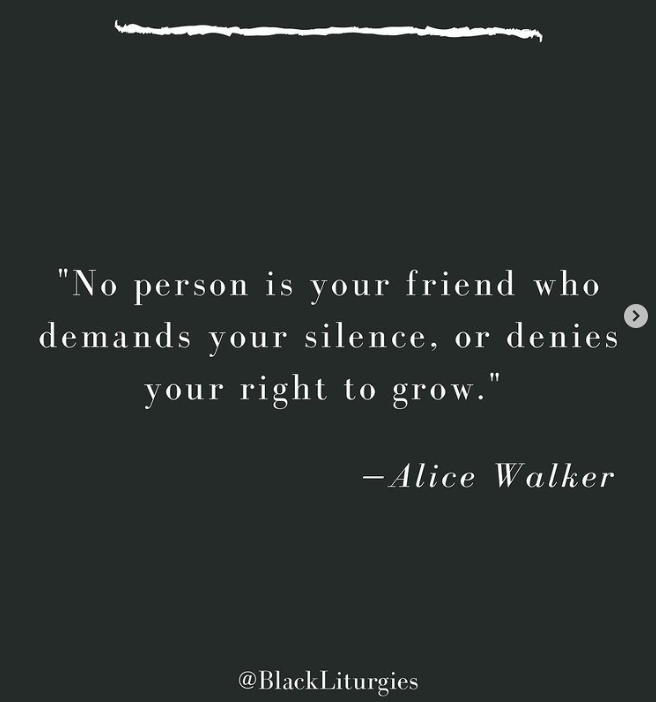
          Award-winning American novelist Alice Walker said, “No person is your friend who demands your silence, or denies your right to grow.” I came across this quote this week because it was posted by BlackLiturgies, an Instagram account that posts a lot of beautiful, powerful prayers and quotes and reflection questions about race and faith and listening to suppressed voices. With this quote, they also posted this: “You shouldn’t have to silence yourself to belong. Who will stay with you once they’ve heard the truth of you?” It’s a powerful question in and of itself when you start thinking about the people in your life, friends, but before you leave here today, let me reassure you of this: No matter what, no matter where, no matter how, God will stay with you. God already knows the truth of you, and God stays with you.


[1] Greer Macallister. Woman 99. (Naperville: Sourcebooks, Inc.), 2019.

[2] Kate Moore. The Woman They Could Not Silence: The Shocking Story of a Woman Who Dared to Fight Back. (Naperville: Sourcebooks, Inc.), 2022.

[3] “Pentecost 15, Sunday 21 September 2014 – Keep Calm and Carry On: Bible Notes” from Spill the Beans: Worship and Learning Resources for All Ages, iss. 13. (Scotland: Spill the Beans Resource Team, 2014), 23.

[4] Gen 39:8-9.

[5] Gen 39:2-3.

[6] Gen 39:20b-21a, 23.

Sunday’s sermon: God Calls … and Keeps Calling

Text used – Genesis 12:1-9

  • When I was a kid, I spent some time at Clearwater Forest – the Presbyterian camp up in Deerwood, MN.
    • First went up with a group of kids from my church and our pastor, Rev. Jamie Swanson → tent camping in the woods while the regular summer camp was going on
    • Also went as a regular camper for a few years in upper elementary school – 4th and 5th, I think
    • And one of my favorite things that we did one of those times (I don’t remember exactly which one) was orienteering.
      • Explanation for those not familiar: Orienteering (“O” for short) is a timed event across a mostly natural landscape, where participants navigate through a series of checkpoints along the way. The route from one checkpoint to the next isn’t marked: Each participant decides the best route on the run (or walk). Meets have courses of varying lengths and difficulty, from beginner to expert. An orienteer might be described as part trail runner and part map-and-compass geek. Because it requires you to find pre-placed control markers, you experience multiple geocache-esque “I found it!” moments in a single event, though a GPS is not required and not allowed. Orienteers are also like obstacle-course runners, though the obstacles are au naturale and often avoidable through savvy route choices.[1] → At camp, they paired us up, gave us rudimentary maps of the area surrounding the athletic field and a little compass, and sent us off to find the various checkpoints that had previously been laid out.
      • Don’t remember who I was paired with (though I can guess it was my friend, Stacy, because we came to camp together, and I was way too shy as a kid to voluntarily pair up with someone I didn’t know!)
      • Don’t remember how many checkpoints there were
      • Don’t remember how much time we spent on that particular activity
      • What I do remember – vividly! – is how much I enjoyed purposefully venturing through the woods: following the compass, figuring out where we should go next, and the thrill and joy of those “geocache-esque ‘I found it!’ moments whenever we managed to find one of the checkpoints.
        • (I also remember that my partner and I were some of the first kids back … just sayin’.)
  • And as I was thinking about our Scripture reading this morning – God’s call to Abram and his family to leave … to journey … to follow – I couldn’t help thinking about it as basically the opposite of orienteering.
    • God calls Abram and his family – his wife, Sarai, and his nephew, Lot – to a whole new land, a place they’ve never been before
      • No map
      • No compass (won’t be invented for a few thousand more years)
      • No pre-determined checkpoints
      • No assurance of where and when and how the end of this divinely-inspired journey would be
    • And yet how did our Scripture reading this morning begin? – text: The Lord said to Abram, “Leave your land, your family, and your father’s household for the land that I will show you.”[2] → Now, at this point, you may be asking yourself, “Who is this Abram? Why is God keyed in on him? Where did he come from?”
      • Text prior to today’s reading (end of Gen 11) gives us a brief genealogy and background for Abram
        • Descendant of Noah’s son, Shem → brings a bit of interesting but also disquieting First Testament history to bear on this story
          • Odd little story from end of Gen 9: after all the animals and people have disembarked from the ark, Noah plants a vineyard and becomes drunk on his own wine → basically passes out naked in his tent → Noah’s son, Ham, and Ham’s son, Canaan, find Noah like this → instead of remedying the situation, Ham runs to report the situation to his brothers, Shem and Japheth → brothers are obviously appalled because they toss a robe over their own shoulders and walk backward into Noah’s tent to cover him without availing their eyes of his nakedness → Noah wakes up later, learns what happened, and not only blesses Shem and Japheth but curses Canaan (not Ham … not sure why) – Noah in text: “Cursed be Canaan: the lowest servant he will be for his brothers.” He also said, “Bless the Lord, the God of Shem; Canaan will be his servant. May God give space to Japheth; he will live in Shem’s tents, and Canaan will be his servant.”[3] → So here we are, a dozen or so generations later, and God is calling Abram, the descendant of Shem, to go and take possession of the land of Canaan. It adds a whole new layer to our story this morning, doesn’t it?
  • Covenant is pretty out-in-the-open in this morning’s reading – 2nd verse (God to Abram): I will make of you a great nation and will bless you. I will make your name respected, and you will be a blessing. I will bless those who bless you, those who curse you I will curse; all the families of the earth will be blessed because of you.[4]
    • God’s promise: an abundance of greatness and blessing
      • Scholar breaks this down a bit further: God promises [Abram] three things: a place, a people, and a job. These are the basic necessities of every human. God seems here to be working with a stripped down version of the mid-twentieth century psychologist Abraham Maslow’s hierarchy of human needs, covering safety, belonging, and esteem/self-actulization.[5]
    • God’s ask: Leave everything that is familiar to you – country, family, home – and follow me
      • Not an edict that Abram actually follows → God says, “Leave everything and everyone.” Abram takes his wife, Lot, his nephew and heir, (since he and Sarai have no children … yet), and “all of their possessions, and those who became members of their household in Haran.”[6] And really, this is pretty indicative of how things will go between God and God’s people throughout all of time, right? God says, “Come.” And the people say, “But wait, God. I need this. Wait, God. I need that. God, you just need to wait while I gather up all my stuff – my physical stuff, my emotional stuff, my spiritual stuff. Just let me pack my bags … pack my truck … pack my 26-ft., 10,000-lbs-of-cargo moving van. But I promise, God … I’m coming. Really.”
        • Harkens to Jesus’ charge to the disciples when he sends them out in Lk 9: [Jesus] sent them out to proclaim God’s kingdom and to heal the sick. He told them, “Take nothing for the journey – no walking stick, no bag, no bread, no money, not even an extra shirt.”[7] → You see, it’s all about reliance on God. It’s all about whether we trust God enough to follow the call. It’s all about whether we trust God to be there for us even (and especially?) in the face of a long, arduous, and uncertain journey.
          • Call of God doesn’t come with a compass
          • Call of God doesn’t come with a map
          • Call of God doesn’t come with pre-determined checkpoints
          • Call of God doesn’t require all the stuff we think we need because the call of God comes with the guarantee that God journeys with us no matter what
      • Still, even as he wrapped his uncertainty in layers of familiarity – the familiar people and belongings that Abram chose to bring with him – Abram still set out with God. God says, “Leave everything and everyone,” and Abram pack everything and brings everyone. But still, God calls, and Abram follows.
        • Can’t help but think of the quote from Tolkien’s Lord of the Rings (Bilbo to Frodo): It’s a dangerous business, Frodo, going out your door. You step onto the road, and if you don’t keep your feet, there’s no knowing where you might be swept off to.”

        • Indeed, friends, that is part of our fear, isn’t it? When we hear God calling us to go and do, we worry that we will lose track of our feet and might end up swept off to some unknown place, some uncomfortable situation, some unanticipated situation. And yet, we have God’s promise: “I call. You follow. And I will go with you.”
  • Proof is in the text and beyond this morning → Today’s short story is just the tip of the iceberg when it comes to Abram’s story in Scripture. The ins and outs, twists and turns of Abram’s story continue for another 13 chapters throughout the book of Genesis. In fact, fully ⅓ of the whole Genesis narrative involves Abram and his continued relationship with God and with the people.
    • Far from a perfect story → Abram makes plenty of mistakes!
    • And yet, God calls, and Abram follows. Time and time again, God calls, and Abram follows.
      • Follows with his feet
      • Follows with his family
      • Follows with his heart
      • Follows with his faith
      • Today’s text: Abram took his wife Sarai, his nephew Lot, all of their possessions, and those who became members of their household in Haran; and they set out for the land of Canaan. When they arrived in Canaan, Abram traveled through the land as far as the sacred place at Shechem, at the oak of Moreh. The Canaanites lived in the land at that time. The Lord appeared to Abram and said, “I give this land to your descendants,” so Abram built an altar there to the Lord who appeared to him. From there he traveled toward the mountains east of Bethel, and pitched his tent with Bethel on the west and Ai on the east. There he built an altar to the Lord and worshipped in the Lord’s name. Then Abram set out toward the arid southern plain, making and breaking camp as he went. → Abram’s travels continue, but as they continue, he worships. As Abram continues to follow God’s call, he builds altars to God – dedicating a portion of his time, his physical effort, and the quiet devotedness of his heart to the One who called him and kept calling him. One step … one stone … one prayer at a time. Thanks be to God. Amen.

[1] https://www.rei.com/learn/expert-advice/orienteering-basics.html.

[2] Gen 12:1.

[3] Gen 9:25-27.

[4] Gen 12:2-3.

[5] Rebecca Abts Wright. “Commentary on Genesis 12:1-9” from Working Preacher, https://www.workingpreacher.org/commentaries/narrative-lectionary/call-of-abraham-2/commentary-on-genesis-121-9-4.

[6] Gen 12:5.

[7] Lk 9:2-3.

Sunday’s sermon: Spectrum of a Promise

Text used – Genesis 6:5-22; 9:8-17

  • I want you to think about light for a minute this morning.
    • All the different ways that we experience light
      • Sun (and sun’s reflected light from the moon)
      • Electric lights homes, businesses, vehicles, appliances
      • Candles or fireplaces
      • And of course, there’s the light we take in from the screens of our various devices, right?
    • All the different ways we describe light
      • List from DailyWritingTips.com[1]
    • All the different ways we use light in our day-to-day colloquialisms
      • Understanding
        • “… see the light”
        • “… a lightbulb moment”
      • Joyful, enjoyable presence of someone
        • “… they lit up a room”
        • “… light of my life”
      • Revelation
        • “… light at the end of the tunnel”
        • “… shed light on this” or “… see that in a new light”
    • Light is essential to our lives in so many different ways. And yet I find it fascinating the in the grand scheme of things, the amount of light that we can take in – the light that’s actually visible on the grand scheme of the electromagnetic spectrum – is miniscule compared to what’s out there. It’s smaller than miniscule. It’s infinitesimal. → time for a very brief, very simple science lesson[2]
      • Light = electromagnetic wave length of those waves determines frequency
        • Frequency related to the color of light that we’re seeing[3]
          • Red = longest wavelength
          • Violet = shortest wavelength
        • Frequency determines when something falls on the electromagnetic spectrum
          • Longer wavelength (lower frequency) = radio waves and microwaves
          • Shorter wavelengths (higher frequency) = xrays and gamma rays
        • Visible light falls toward lower end of this huge spectrum
          • Higher frequency than infrared light
          • Lower frequency than ultraviolet light
    • And of all the different frequencies that make up the whole of the electromagnetic spectrum, visible light – all of that amazing light that we see and that literally makes life on this planet and our daily ways of life possible – all of that light and the different ways that we experience it only makes up .0035% of the electromagnetic spectrum.[4] Not even a tenth of a percent! Not even a hundredth of a percent! There’s so much more to the electromagnetic spectrum than our eyes can perceive … but it’s still there.
  • Throughout the first part of the fall, we’re going to be journeying through some of God’s covenants – God’s promises – found in the First Testament.
    • Begin today with God’s covenant with the people through Noah in the aftermath of the flood
    • Continue with further promises God makes to the people through other figureheads
      • Some familiar
      • Some maybe less so
    • But here’s the thing. Often, when we talk about God’s covenant with the people, we talk only about the reassuring parts – the parts that make us feel good about ourselves and about God and about our relationship with God. We like reminding ourselves of the ways that we think we’re already living into God’s promises. And we’ll certainly talk about those elements of God’s covenants. But we’re also going to delve into the elements and aspects of the covenants that we don’t always see – the parts that we don’t always talk about. We’re going to tackle the full spectrum of the God’s covenants … and see where it leads us.
  • Good place to start = talking about covenant in general What exactly is a covenant? – turned to 70 Hebrew Words Every Christian Should Know by Rev. Dr. Matt Schlimm[5]
    • General = binding agreement between 2 parties
    • Heb. “covenant” appears almost 300 times throughout the Bible
      • Sometimes refers to agreements made btwn. people
      • Mostly refers to relationship btwn. God and God’s people – Schlimm: The fundamental idea here is that God and the covenant people are bound together in the closest imaginable ways.[6]
    • Heb. tradition covenant was not something to be taken lightly
      • Phrasing = “cutting a covenant”
        • Certainly harkens to sealing of God’s covenant with Abraham through circumcision
        • Also references another tradition – Schlimm: “cutting a [covenant]” meant cattle were killed and the animals’ bodies sliced in two. The halves of these carcasses would face each other. Next, those making the covenant would walk between the bleeding corpses. The idea was that those who would violate the covenant deserve to become like the corpses.[7]  There is definitely a weight to this idea of covenant that we seem to have lost in our modern culture with its constantly shifting allegiances, a culture in which we have whole cadres of lawyers whose specialty is finding ways around contractual obligations – finding ways to extricate us from the covenants we’ve made.
      • Less severe side of the Heb. tradition surrounding covenants = also often meal involved
        • Covenants btwn. people sealed by sharing meal together
        • Covenants btwn. people and God sealed by animal and/or grain sacrifice (essentially sharing meal with God)
        • Often involved the essential element of salt salt = preservative of the ancient world, so offering salt was a symbol of the lasting power of a covenant
  • So as we embark on this journey through the spectrum of God’s covenants, it’s rather appropriate that we begin with Noah.
    • Appropriate because God’s covenant with Noah is, in fact, God’s first covenant with the people
    • Appropriate because of the elements of the covenant that we don’t normally talk about namely what led up to it
    • Appropriate because it’s a covenant sealed with its own spectrum – the bow that God places in the clouds as the abiding, visual reminder of God’s own promise
  • Begin at the beginning (of our reading … which also happens to be the beginning of Noah’s story) And the beginning of this story serves as our reminder that Noah’s story is not exactly the happy, smiling, pastel-colored story often relayed in Sunday school lessons and coloring sheets.
    • Text (beginning): The Lord saw that humanity had become thoroughly evil on the earth and that every idea their minds thought up was always completely evil. The Lord regretted making human beings on the earth, and he was heartbroken.[8] lots to unpack here[9]
      • Heb. “evil” = wide-ranging word basically anything that is not what it ought to be
        • Can mean wicked, bad, harm, mischief, evil
        • Can mean broken, spoiled, destroyed
        • Can mean afflicted or miserable
        • Can mean something that displeases, punishes, or vexes
        • Covers things that are physically, socially, or morally “bad”
        • Clearly, among the people, things had gone horribly, horribly wrong in all the ways.
          • Point driven home by that description “always completely evil” = literally “all day every day”
      • Heb. “regretted” = difficult little word that carries the implication of pity and the accompanying consolation but also encompasses the less righteous ways that we console ourselves in our minds basically avenging thoughts/fantasies This is a regret tinged with sadness and pity as well as frustration and anger. There’s a desperation to this regret – to God’s regret.
      • Heb. “heartbroken” = “grieved God to God’s heart” literally “to carve,” so God’s regret was so deep that it carved at God’s heart
      • This is definitely the element of the covenant that we don’t often talk about – the intentional invisible part of the spectrum. We like to sing about the animals boarding the ark in “twosies.” We like to skip to the end of the story so we can talk about the dove and the olive branch, so we can color the picture of happy Noah and happy Mrs. Noah and all the happy animals disembarking the ark under that beautiful rainbow. But leading up to that Sunday school scene is utter brokenness.
        • Brokenness on the part of the people
          • Brokenness among one another evil and violence done to one another
          • Brokenness in their relationship with God section from the book Old Turtle: But the people forgot. They forgot that they were a message of love, and a prayer from the earth. And they began to argue … about who knew God, and who did not; about where God was, and was not; about whether God was, or was not. And often the people misused their powers, and hurt one another. Or killed one another. And they hurt the earth. Until finally even the forests began to die … and the rivers and the oceans and the plants and the animals and the earth itself … Because the people could not remember who they were, or where God was.[10]
  • And yet, even in the midst of all that brokenness and struggle and human chaos, God found a bright light in Noah. In that vast spectrum of humanity, Noah was the infinitesimal spectrum of visible righteousness – the one with whom and through whom God could renew that relationship.
    • Should be said: Noah was far from perfect Nowhere in our text today (or in any of Noah’s story that’s not part of today’s text) does it ever call Noah “perfect.” – text: But as for Noah, the Lord approved of him.[11]
      • Other translation: But Noah found favor in the sight of the Lord.[12] Heb. “favor” = grace, kindness, preciousness  Nothing in our text gives us any indication exactly what it was about Noah that caught God’s favor – that found him washed in God’s grace instead of the rising flood waters – but whatever it was delivered Noah and Noah’s family through the devastation of the flood to the promise on the other side.
        • Text: God said to Noah and to his sons with him, “I am now setting up my covenant with you, with your descendants, and with every living being with you … I will set up my covenant with you so that never again will all life be cut off by floodwaters.” … God said, “This is the symbol of the covenant that I am drawing up between me and you and every living thing with you, on behalf of every future generation. I have put my bow in the clouds; it will be the symbol of the covenant between me and the earth.”[13]
          • Interesting because it’s the only covenant in which God includes humanity and the rest of creation (“every living thing with you” and “covenant between me and the earth”)
  • So what do we take from this introduction to covenant? This story of a broken world and Noah, the story of raging floodwaters and a rainbow promise in the sky?
    • God’s love is greater
      • Greater than our brokenness and mistakes
      • Greater than the chaos of the world around us
      • Greater even than God’s own frustration We know that as humans, we make mistakes. We mess up. We hurt other people – intentionally and unintentionally. We mislead. We act in ways that cause harm, and we cause harm by failing to act in the face of blatant injustice and deep need. As one of our Prayers of Confession says, “We confess that we have sinned against you in thought, word, and deed, by what we have done, and by what we have left undone.”[14] And yet even in the midst of that brokenness – our own brokenness and the brokenness of the world around us – the brilliant spectrum of God’s promise and grace shines through: ever-present, ever-holy, forever giving, forever reminding us that God loves us. Thanks be to God. Amen.

[1] https://www.dailywritingtips.com/36-adjectives-describing-light/.

[2] https://k8schoollessons.com/what-is-light/.

[3] https://www.sciencelearn.org.nz/resources/47-colours-of-light.

[4] https://www.energy.gov/nnsa/articles/visible-light-eye-opening-research-nnsa.

[5] Matthew Richard Schlimm. 70 Hebrew Words Every Christian Should Know. (Nashville: Abingdon Press, 2018), 100-104.

[6] Schlimm, 101.

[7] Schlimm, 101.

[8] Gen 6:5-6.

[9] Exegesis by Rev. Elana Keppel Levy: https://somuchbible.com/word-studies/annotated-scripture/genesis-6/.

[10] Douglas Wood. Old Turtle. (New York: Scholastic Press), 1992.

[11] Gen 6:8.

[12] Gen 6:8 (NRSV).

[13] Gen 9:8-10a, 11a, 12-13.

[14] “Prayer of Confession” in Book of Common Worship. (Louisville: Westminster John Knox Press, 2018), 20.

Sunday’s sermon: Voyageurs National Park – Teamwork

Text used – Ephesians 4:1-16

  • It’s not often that I wish we had screens in this sanctuary, all, but today is definitely one of those days because as I’ve been thinking about this theme of teamwork this week, there are two iconic sitcom scenes that keep replaying through my head. – one more contemporary, one more classic
    • Contemporary = scene from the 90s hit show “Friends” → scene where Ross, Rachel, and Chandler are trying to move Ross’ new couch up a tight staircase

  • Side note: if you ever have a chance to watch the blooper reel for this scene, I highly recommend it → The scene alone is hilarious enough, but watching the actors cracking up while they’re trying to film it is even better!
      • Classic = scene from 1950s favorite show “I Love Lucy” → scene where Lucy and Ethel are trying to wrap chocolates for Kramer’s Kandy Kitchen

    • What I love about both of these scenes – and what got me thinking about them in terms of teamwork and our Scripture reading this morning and the life of the Church in general – is that in both scenes, the characters are actually in pretty difficult, stressful situations. Anyone who’s moved a couch knows just how hateful a task that can be, especially if there are stairs and tight corners involved! And just the idea of falling behind on an assembly line makes my blood pressure go up! But the characters in these scenes take those stressful situations and not only live through them but live through them with camaraderie and joy. And, in essence, isn’t that what we do together – here in this place, and in our relationship with God? We live through all the situations of life – the good ones and the challenging ones – with as much tenacity and joy as we can muster because we’re doing it together.
  • [READ “Voyageurs National Park”][1] → I gotta say, friends, I love that we’re wrapping up this summer series of visiting various national parks around the country by returning to Minnesota. It’s our “coming home” part of the journey … which also makes it even better that the theme that we’re wrapping up with is the theme of teamwork. And I have to say that of the 61 different themes that Lyons and Barkhauer tackle throughout this book, this is definitely the one I would have chosen for this congregation in this time and place.
    • Speaks to the essence of the identity that we claim as a congregation
      • Vision statement: We are a small church with a big mission.
      • Mission statement: We are a community of believers whose mission is to share God’s Word, show God’s Love, serve God’s World, and strive for God’s Peace.
      • Identity underlined by Paul’s words in our passage from Eph this morning – text: Conduct yourselves with all humility, gentleness, and patience. Accept each other with love, and make an effort to preserve the unity of the Spirit with the peace that ties you together. You are one body and one spirit, just as God also called you in one hope. … His purpose was to equip God’s people for the work of serving and building up the body of Christ until we all reach the unity of faith and knowledge of God’s Son. … By speaking the truth in love, let’s grow in every way into Christ, who is the head.[2]
        • Scholar: To bear one another’s burdens is to sacrifice for the other. It is to help carry one another’s burdens. Love is not an emotion; love is an act of the will. Paul is not calling for the early Christians to feel warmly toward one another, but to act accordingly to their calling. They are to do love by serving one another. The church is called to be a new community based not on the divisions inherent in the existing social order but on the new humanity in Christ. … In this new order, all members are essential, and all members are connected. Love, therefore, is neither theoretical nor abstract but is the glue of community; it is what knits the body together.[3] → This is that teamwork that Lyons was talking about among the voyageurs in the reflection: “Instead of a lonely explorer, the voyageur was part of a team, a pack of siblings in the wilderness who sang, ate, and worked together.” Truly, friends, we are in the wilderness.
          • Wilderness of figuring out what life and relationships and Church look like in this COVID-altered world
          • Wilderness of figuring out what life and relationships and Church look like in the midst of a society so assaulted and divided by the rampant hate that we see in our social media feeds, our news feeds, our headlines, and even displayed so blatantly on the street or up our neighbors’ flag poles
          • Wilderness of figuring out what life and relationships and faith look like in the aftermath of our own personal life-altering circumstances and griefs
            • Losses we’ve suffered
            • Life changes we’ve had to make (like it or not)
            • Transitions and upheavals and experiences that we go over and over in our minds long after we’ve lived through them trying to figure out if there was some other way – some better way – we could’ve handled them
            • Change and challenge have a nasty tendency to go hand-in-hand like a one-sided version of Red Rover, calling us over into the unknown.
      • But in the midst of that wilderness, we have one another – this body of Christ, this community of love and faith and grace and welcome and sacred belonging – to sing and eat and do God’s work together.
        • Sometimes that work is out there – helping the community, building up the community, reaching out to the community and the world: to share God’s Word, show God’s Love, serve God’s World, and strive for God’s Peace
        • But sometimes that work is in here with and among one another – reminding one another of the power and presence of God’s love and hope in the midst of whatever storms we’re facing. Sometimes that work is in here, reminding each other that we’re not alone.
        • Scholar: The fractious church’s need to hear grace notes and exhortations on the themes of unity and diversity is acute, as is its hunger for doxology and direction. The human community is in desperate need of communities of faith where belief and practice are congruous. [This text] lies at the heart of an expansive vision for Christian community.[4]
  • Important point to make in this discussion of teamwork and Christian community → unite ≠ uniformity
    • It’s clear in our text that Paul is not advocating for sameness within the body of Christ. He’s not calling for assimilation. Paul makes it abundantly clear that there is room for all sorts in this beautiful, mixed-up, wacky body of Christ. – text: Accept each other with love, and make an effort to preserve the unity of the Spirit with the peace that ties you together. … He gave some apostles, some prophets, some evangelists, and some pastors and teachers.[5]
      • Gr. “unity” = not a word that means homogeny but harmony, implies the mixing and uplifting and cherishing of many different contributions to one cohesive whole[6]
        • Harmony in a song = all the beautiful notes that make up a chord → lots of different notes, lots of different chords and variations on chords, but the beauty simply wouldn’t be without the variety … without the differences
        • Harmony in a dish = all the different flavors and textures that make something delicious → Think of a taco! The best tacos have the spiciness of the meat, the coolness of an avocado or sour cream or crema of some sort, the crunch of the shell or the lettuce, the smoothness of some black beans, the sweetness and sourness of a squirt of lime. A taco with one single flavor or one single texture would just be … blah! You need all those different elements to make it amazing.
        • Imagine harmony within the teams of voyageurs that made their way through the wilderness
          • Someone to act as the navigator/guide
          • A few of them hunted for various pelts as well as the food they’d need while they were out in the wilderness together
          • A few of them to clean the skins and prepare them for transport
          • Someone to cook the food that sustained them throughout their journey
          • Someone to communicate and trade with the First Nations and Native American people they encountered
          • For each endeavor into the wilderness to be successful, they needed to include a lot of individuals with many different gifts and skills. But when it came down to the work of the voyage itself, they all needed to portage and paddle the canoes together. – from Lyons’ reflection: Paddling a [twenty-six-foot-long North Canoe] alone would be difficult, if not impossible, but teaming up proves that working together makes the job easier and more rewarding. → Friends, traveling this path of faith in this day in age is difficult if not impossible alone. But when we team up as the body of Christ together, we can make the job easier and more rewarding. And as the future stretches out before this congregation, the idea of teamwork makes me wonder: What can we do together? Where is God calling us together? What amazing things does God have in store for us together? Amen.


[1] Brad Lyons and Bruce Barkhauer. America’s Holy Ground: 61 Faithful Reflections on Our National Parks. (St. Louis: Chalice Press, 2019), 216.

[2] Eph 4:2-4, 12-13a, 15-16a.

[3] G. Porter Taylor. “Proper 13 (Sunday between July 31 and August 6 inclusive) – Ephesians 4:1-16 – Theological Perspective” in Feasting on the Word: Preaching the Revised Common Lectionary – Year B, vol. 3. (Louisville: Westminster John Knox Press, 2009), 306.

[4] Richard F. Ward. “Proper 13 (Sunday between July 31 and August 6 inclusive) – Ephesians 4:1-16 – Homiletical Perspective” in Feasting on the Word: Preaching the Revised Common Lectionary – Year B, vol. 3. (Louisville: Westminster John Knox Press, 2009), 303.

[5] Eph 4:2b-3, 11.

[6] Exegesis by Rev. Elana Keppel Levy: https://somuchbible.com/word-studies/annotated-scripture/ephesians-41-16a/.

Sunday’s sermon: Sequoia National Park – Foundation

Text used – Matthew 7:24-29

  • I don’t think it’s any kind of secret that I love to cook and to bake. And I know from what y’all bring to various potlucks and food-based fundraisers that I am not alone in that in this crowd!
    • Love taking simple, basic ingredients and turning them into something that tastes amazing
      • Combine some flour and water, a little sugar, and touch of salt, maybe some yeast = bread! → But those are just the basic building blocks. There are literally thousands of different variations on that simple theme – variations that create household favorites and national culinary treasures around the world.
        • Baguettes in France
        • Ciabatta in Italy
        • Naan in India
        • Tortillas in Mexico
        • Black bread in Russia
        • Frybread in some Native Americans communities
        • The list could literally go on and on. Each type of bread, of course, contains some differing ingredients, but at they’re heart, they’re all flour, water, and salt.
    • In essence: love creating the atmosphere of gathering around food and the memories that come with it
      • Chef Guy Fieri: Cooking is all about people. Food is maybe the only universal thing that really has the power to bring everyone together. No matter what culture, everywhere around the world, people get together to eat.
      • More scientific take on it – Susan Whitborne, prof of psychology and brain sciences at Univ of Massachusetts: “Food memories are more sensory than other memories in that they involve all five senses, so when you’re that thoroughly engaged with the stimulus it has a more powerful effect. … Food memories feel so nostalgic because there’s all this context of when you were preparing or eating this food, so the food becomes almost symbolic of other meaning. A lot of our memories as children, it’s not so much the apple pie, for example, but the whole experience of being a family, being nourished, and that acquires a lot of symbolism apart from the sensory quality.”[1] → Food itself is a powerful foundation for every culture around the world – a building block on which centuries worth of customs, rituals, and traditions are built. Even centuries worth of traditions and rituals in the church.
        • One of our most treasured, most sacred rituals – indeed, one of only two sacraments that we practice in the Protestant traditions – is built on the foundation of food: the Lord’s Supper
          • Simple bread
          • Simple wine or juice
          • Modeled on a totally simple yet wholly sacred meal that Jesus shared with those whom he loved
          • Certainly variations on it from one Christian tradition to the next, even from one congregation to the next! → But for all Christians around the world, gathering around this table with some sort of bread and some sort of wine or juice is a cornerstone of how we embody our faith together. It is a significant part of the foundation that makes up who we are as followers of Christ.
  • Foundations are important
    • Create the steady, sturdy, deep-rooted base of any building … any ideology … any relationship … any single person’s identity
    • National Park that we’re going to be virtually visiting today – Sequoia National Park in central California – provides us with a unique illustration of foundations and their importance
      • READ “Sequoia National Park,” pt. 1, pp. 200-203[2]
        • Exploring around Minneahaha Falls and Minnehaha Creek with Peter and the kids last Saturday → found a tree that had tipped over into the creek so that the root system was exposed → Ian especially was fascinated by what looked to him like a huge root system. It was taller than he was and wider than even his long arms could stretch. But in comparison to these giant sequoias, that tree – which was maybe 7½ inches in diameter – was merely a twig in comparison.
          • Giant-Sequoia.com: “A mature sequoia’s roots can occupy over 1 acre of earth and contain over 90,000 cubic feet of soil.”[3]
            • Reminder: 1 acre = 43,560 sq. feet. → That’s quite the foundation, wouldn’t you say?
  • This morning’s Scripture reading makes it abundantly clear that foundations are important in our faith as well
    • Part of Jesus’ Sermon on the Mount (found only in Mt’s gospel) → Actually, this passage is Jesus’ conclusion to his Sermon on the Mount.
      • Spent time talking about blessings in unexpected circumstances (the Beatitudes[4])
      • Spent time interpreting some laws in ways the people hadn’t heard before[5]
      • Spent lots of time talking about what living out faith looks
        • Salt and light passage[6]
        • Teachings about prayer (incl. Lord’s Prayer)[7]
        • Many teachings about living for God (e.g.s – teaching about worry[8] and teaching about asking, seeking, and knocking[9])
      • And today’s passage – Jesus’ familiar teaching about the house built on the rock vs. the house built on the sand – is his way of wrapping up this massive time of teaching by telling the crowd that the foundation on which they choose to build their lives is crucial. He has just spent a great deal of time teaching them about ways to find and create that strong, solid foundation … but he can’t choose it for them. They have to make the choice where to build their houses themselves. – text: Everybody who hears these words of mine and puts them into practice is like a wise builder who built a house on bedrock. The rain fell, the floods came, and the wind blew and beat against that house. It didn’t fall because it was firmly set on bedrock. But everybody who hears these words of mine and doesn’t put them into practice will be like a fool who built a house on sand. The rain fell, the floods came, and the wind blew and beat against that house. It fell and was completely destroyed.[10]
        • Scholar: Wisely placed in the final folio of the Sermon on the Mount, this story hearkens to Socrates’ challenge: “The unexamined life is not worth living.” The text challenges us to examine the dimensions and depths of inviting the kingdom into our lives through listening and doing the whole of Jesus’ teaching.[11]
  • READ “Sequoia National Park,” pt. 2, p. 203[12]
    • Interesting thing about today’s Scripture passage = doesn’t describe the two different types of foundations much → Jesus doesn’t go into elaborate descriptions of exactly what the rock looked like or the sand looked like
      • Don’t hear about the make-up of either type of foundation
      • Don’t hear about the location
      • Don’t really hear any specifics
      • Because Jesus knew that each of our foundations would need to be different. There would be different elements – different relationships, different experiences, different elements of the world around us and the world within us (our personalities and our preferences, our likes and our dislikes, our questions and our quirks) that would have to be a part of those foundations.
        • Think of the different ingredients that go into the different types of bread → The ingredients between the different varieties of bread differ greatly as do the preparation techniques. The ingredients in both baguettes and ciabatta bread are almost identical, but the way you make those two different classics differ greatly. The ingredients in Russian black bread and classic American white bread differ greatly, but the baking process isn’t all that different. The point is, they’re all bread. They’re all delicious. They’re all nourishing.
        • Crazy illustration of this: show “Chopped” → four competing chefs get identical mystery baskets with 4 truly strange ingredients and have a very, very short amount of time to turn those strange ingredients into an actual dish for the waiting judges
          • E.g. baskets – grape leaves, sesame seeds, honeydew melon, and pickled ginger; rack of venison, red seaweed flakes, gooseberry preserves, and Fruit Loops
          • Each of the chef’s individual dishes included all sorts of supplementary ingredients, but they also all included those same four foundational basket ingredients.
        • In the same way, the foundations of our faith will include different things – different experiences, different trials and turning points, different encounters with those others who have formed our faith along the way – but there will also be point of faith that we have in common, points that form the strongest, most essential parts of the bedrock on which we build our lives.
          • God created you and loves you
          • Jesus Christ was God-With-Us, God in human flesh and blood and love and laughter and tears → came to show us God’s immeasurable love and bring us God’s immeasurable grace
          • God continues to move in and among and through us as the Holy Spirit
          • Words of Scripture guide us, inform us, challenge us, and transform us
    • Also interesting that Jesus doesn’t promise safety and comfort with that rock foundation – only stability → And while we often pair “safety and stability” together, they are not the same thing.
      • Gr. “bedrock” = actually a little less specific than that → Gr. = rock that’s connected but could be projecting like a ledge or a cliff[13] → When we think of a bedrock, I think we usually think of rock that’s safe and protected – a rock that’s not so near the edge … of anything, really. But Jesus is letting the crowd know that while a foundation in God is absolutely as stable and impenetrable as they expect a bedrock to be, it also has the definite potential to put them out there. Way out there. But no matter what, it’s strong. God our foundation is strong.
  • Finish with questions from reflection: What have been your life’s foundations? Could your foundation use some shoring up? How can you serve as a foundation for somebody important to you? Amen.

[1] Julie R. Thomson. “Psychologists Explain Why Food Memories Can Feel So Powerful: It’s not just about the dish” from HuffPost. https://www.huffpost.com/entry/power-of-food-memories_n_5908b1d7e4b02655f8413610. Posted May 10, 2017, accessed Aug. 28, 2022.

[2] Brad Lyons and Bruce Barkhauer. America’s Holy Ground: 61 Faithful Reflections on Our National Parks. (St. Louis: Chalice Press, 2019), 200-203.

[3] https://www.giant-sequoia.com/faqs/giant-sequoia-questions/.

[4] Mt 5:3-12.

[5] Mt 5:17-42.

[6] Mt 5:13-16.

[7] Mt 6:5-15.

[8] Mt 6:25-34.

[9] Mt 7:7-12.

[10] Mt 7:24-27.

[11] Richard William Harbart. “Matthew 7:21-29 – Homiletical Perspective” in Feasting on the Gospels – Matthew, vol. 1. (Louisville: Westminster John Knox Press, 2013), 179.

[12] Lyons and Barkhauer, 203.

[13] Exegesis by Rev. Elana Keppel Levy: https://somuchbible.com/word-studies/annotated-scripture/matthew-7/.

Sunday’s sermon: Isle Royale National Park – Isolation

  • A few weeks ago, I was down in Storm Lake, Iowa for Synod School.
    • Explain Synod School
      • 550 people this year from 27 states + Puerto Rico
      • 71 classes – everything from the spirituality of St. Ignatius to class on human trafficking to Latin dance
    • Been attending SS nearly every year since my boys were 1yo
      • Taught at least one class almost every year
    • This year: taught a class AND was on the SS planning committee
      • New element introduced by the committee this year: SS app (hosted by Whova) → basic event-specific social media platform
        • Share pics
        • Save your schedule
        • Send messages
        • Discussion threads → And from one of the discussion threads this year came another new element that the committee decided to introduce. – thread about surviving such a people-heavy as an introvert
          • Idea = “Introvert Recharge Tables” in the cafeteria → a place for people to have a little bit of isolated space even in the midst of a hoard of people → And as an introvert myself, I totally understood the need for something like this. I mean, remember, the word “introvert” doesn’t mean antisocial or painfully shy or any of the other negative connotations its carried over the years. Being introverted just means that you get your energy from time by yourself as opposed to extroverts who get their energy from being around other people. It’s about how your recharge your batteries … hence the tables.
    • And as I was thinking about our passage this week and our theme of isolation through the lens of the beauty and remoteness of Isle Royale National Park, that’s what I was thinking about – how we recharge our batteries, how we renew our minds and our spirits, and also how we find God and see God in the world around us.
  • So let’s begin this morning by exploring that beauty and remoteness of Isle Royale National Park.
    • Some basic facts
      • Established in 1940 by President Franklin D. Roosevelt
      • 850 sq. mi. of wilderness surrounded by the frigid waters of Lake Superior → 99% of that land is federally designated wilderness[1]
      • One of 5 nationally designated areas on Lake Superior (though the only actual national park)[2]
        • Isle Royale (MI)
        • Apostle Islands National Lakeshore (WI)
        • Grand Portage National Monument (MN)
        • Keweenaw National Historical Park (MI)
        • Pictured Rocks National Lakeshore (MI)
      • As remote as it gets: accessible only by boat or sea plane
        • Mainland headquarters = Houghton, MI
        • 2 small towns on the island itself
          • Rock Harbor (northeast end of the island)
          • Windigo (southwest end of the island)
        • 165 miles of hiking trails + 36 campsites
    • Read passage from America’s Holy Ground: 61 Faithful Reflections on Our National Parks by Brad Lyons and Bruce Barkhauer, p. 138
  • “Isolation, despite some benefits, has its limitations.” That feels like it could be the tagline for our Scripture reading this morning.
    • Today’s story = probably one of (if not the most) relatable stories we have of Jesus … at least, for me (the introvert)!
      • Comes at the very beginning of Jesus’ ministry in Mk’s gospel → only events before today’s story in Mk = Jesus exorcising a demon, Jesus calling the disciples, Jesus’ baptism by John in the Jordan River, and John’s announcement that the Messiah is coming
      • In today’s passage, Jesus and the disciples are still in the city of Capernaum (location: northern shore of the Sea of Galilee, modern day: northern Israel)
    • Text tells us Jesus, John, and James have just left the synagogue → headed to the home of Simon (aka – Peter) and Andrew → when they get there, they learn Simon’s mother-in-law is ill → Jesus goes in and heals her
    • And undoubtedly, word got out because the next part of the text that we read talks about others coming to Jesus for healing – healing from illnesses and healing from demon. In fact, that way Mark writes it, those who come seeking come almost immediately. – text: That evening, at sunset, people brought to Jesus those who were sick or demon-possessed.[3]
      • Part of that = the way Mark writes → Remember, Mark’s was the first gospel written – probably sometime between 66-74 C.E. And during that time, one of the main beliefs of the Christian church was the Jesus was coming back and coming back soon – like, within their lifetimes soon. So there was an immediacy to everything they did because they were trying to share the gospel with as many people as possible before Jesus returned. That sense of immediacy is a prominent theme throughout Mark’s gospel, a theme definitely evident in our passage this morning.
    • So after the healing coming the really relatable part. Are you ready for it? – text: Early in the morning, well before sunrise, Jesus rose and went to a deserted place where he could be alone in prayer. Simon and those with him tracked him down. When they found him, they told him, “Everyone’s looking for you!” He replied, “Let’s head in the other direction, to the nearby villages, so that I can preach there too. That’s why I’ve come.”[4] → Jesus just needs to get away for a moment. More than a moment, really. Jesus is taking the time he needs for himself – for his mind, for his body, for his spirit. He’s taking the time he needs to reconnect himself and rededicate himself to God in the way that works best for him. Y’all … Jesus was an introvert! Okay … maybe that last statement is more of an assumption than something that can be supported with scholarly-type research. But we’re definitely seeing here, not only in the words and teaching of Christ, but in the bodily machinations and human rhythms of Christ’s very being that isolation is sometimes not just a necessary thing but a holy thing.
      • Let’s explore this idea a little more by digging deeper into the Greek.
        • Before we even dig into that big that we read, let’s look at what it says before Jesus heads out in search of his own sacred isolation – text: The whole town gathered near the door.[5] → The whole town, all. The. Whole. Town. Gathered outside Jesus’ door. (Yup … the introvert inside me is doing some hardcore cringing and cowering right now!) Here, the Greek is clear. WHOLE. CITY. All the inhabitants. On the doorstep of Simon and Andrew’s house. Looking for Jesus.
          • Interesting to note: We can sort of assume that they’re looking for something from Jesus here, too. I mean, he’s been healing and casting out demons. And in this beginning phase of his ministry, that’s really all he’s done. Mark hasn’t told us about any profound or prolific teachings that Jesus has uttered yet, so all that this crowd knows about Jesus is that he can do something for them. So they’re coming to get something from They’re not coming to listen to him or learn from him – to sit like Mary will at his feet and just bask in his words. They’re coming because this Jesus guy can do something for them. I feel like there’s a transactional element to this story – maybe even a depleting element, like they’re coming to take something from Jesus. And Jesus obliges – text: He healed many who were sick with all kinds of diseases, and he threw out many demons.[6] … Just something to think about.
        • Okay … back to the Greek:[7]
          • Gr. “deserted” (describing the place that Jesus sought in the still dawn hours that morning) = place not settled or farmed, not populated → This is an untouched place. Untouched by people. Untouched by progress. Untouched by the bustle and demands of the whole town that Jesus had dealt with just the night before. Sounds a little like Isle Royale, doesn’t it?
          • Gr. involved in the phrasing that describes Simon and his companions looking for Jesus (text: Simon and those with him tracked him down. When they found him, …) = all words that make it clear that Simon and his companions had been searching for Jesus for a while, that they’d been actively and eagerly seeking him
            • Interesting: When Simon says to Jesus, “Everyone’s looking for you!” – Gr. “looking” = word that carries connotation of desire → same word used in the phrase “to seek God’s face” which is used to worship → So just as Simon and the other disciples and the rest of the city were seeking Jesus … Jesus was seeking God.
          • Jesus’ response = interesting: “Let’s head in the other direction, to nearby villages, so that I can preach there too.” → Gr. “head” = simply “go” → But it’s also a word that plays a part in the word “synagogue,” so Jesus is suggesting to the disciples that they go to the other town, not to escape the crowds of this one, but to gather with others … to share his healing and his message, to share God’s love and God’s grace with more people.
          • Another interesting little bit that pops up in the Gr. and makes me wonder: word that Mark uses to describe the city of Capernaum (“the whole town gathered near the door”) = word that implies a city with a wall BUT the word that Jesus uses when speaking to Simon and his companions (“Let’s head in the other direction, to the nearby villages”) = word for villages without walls → So essentially, Jesus is taking the disciples and the healing, hope-filled, love-embodying message of God outside the isolation of the walls into the unbounded world. … Again, just something to think about.
  • “Isolation, despite some benefits, has its limitations.” Yes, friends. In isolation, like Jesus, we can take the time to stop. To pause. To breathe. To find ourselves again. To find God again. To re-center. To re-dedicate ourselves to God. I want you to notice that our gospel reading this morning didn’t say anything about how Jesus spent his time praying.
    • Purpose of our prayer journey together this fall → finding those best practices for our own prayer lives
      • Practical side: the ways that work in our lives (because the truth of life is that we are very good at letting the busyness of life get in the way of prayer)
      • Spiritual side: different people connect to God in different ways → God created each and every one of us differently – special and unique and treasured in our own particular ways – so of course we all connection to God differently!
    • But also like Jesus, after our time of isolation and reconnection, we are called out into the world to share God’s love again and again and again. To share God’s love outside the walls – these four walls here, but more importantly, outside the walls erected by ourselves, by our culture, and by our shared history that separate us from all God’s other treasured, unique, beloved children.
      • End with the questions from Lyons and Barkhauer’s reflection: “How do you find balance between isolation and engagement? How are some people isolated by factors other than their own choices? How does cultural isolation diminish us as a community?” (p. 138) Thank be to God. Amen.

[1] https://www.nationalparks.org/explore/parks/isle-royale-national-park.

[2] https://www.nplsf.org/national-parks-of-lake-superior.

[3] Mk 1:32.

[4] Mk 1:35-38.

[5] Mk 1:33 (emphasis added).

[6] Mk 1:34.

[7] Exegesis by Rev. Elana Keppel Levy: https://somuchbible.com/word-studies/annotated-scripture/mark-129-39/.

Sunday’s sermon: Great Smoky Mountains National Park – Diversity

Text used – Genesis 11:1-9

  • I have a children’s books in my office. Okay, let’s be honest, I have a lot of children’s books in my office … but there’s a particular book that I want to tell you about this morning!
    • Written by Jennifer Grant and illustrated by Benjamin Schipper: Maybe God is Like That Too[1]
      • Story about a little boy → first 2 pages: “I live in the city, where the sidewalks and subway cars and buildings and buses are packed with people – but I’ve never seen God before. ‘Grandma, does God live in the city?’ I asked one morning at breakfast. ‘Yes, God is here,’ she says. ‘You just need to know where to look.’”
        • Grandma tells the boy about the fruits of the spirit: patience, kindness, goodness, faithfulness, gentleness, and self-control → “Wherever you see these, God is there, too.”
      • Boy proceeds to go through his day noticing the places in his city and in his life where those things are present
        • All sorts of different people
        • All sorts of different places
        • All sorts of different situations
      • Last page (as the boy is going to sleep for the night): “I don’t see God the way I see my friends or the streetlights or the river, but I see signs of God’s Spirit all around me, right here in the city. I know what God is like. Maybe I can be like that, too.”
      • Book all about noticing and giving thanks for all the many and varied ways God shows up in the world around us → the diversity of God’s presence in our lives and in our world
  • As we continue to make our way through our National Parks on our road trip summer sermon series (using Brad Lyons’ and Bruce Barkhauer’s book America’s Holy Ground: 61 Faithful Reflections on Our National Parks[2]), today we’re visiting Great Smoky Mountains National Park, and we’re visiting this park with the theme of diversity in mind.
    • Makes a lot of sense – Great Smoky Mtns (which straddles the state line between NC and TN) = most visited of all 61 National Parks[3] → This park sees the incredible diversity of 11 million visitors every year. But it’s not just the vast variety of visitors that has us reflecting on this park through the lens of diversity.
      • [READ “Great Smoky Mountains,” pp.119-121] → Truly, Great Smoky Mountains National Park seems to be one of the most perfect places in the United States to celebrate the beauty and breathtaking nature of diversity in the world around us.
        • Diversity in the natural world – plant life, animals, bugs
        • Diversity in the terrain – mountains and forests, city life butting right up to the edge of wilderness
        • Diversity of seasons – the stunning differences between summer and winter (well-known for those of us around here but on the most beautiful summer day or the most breathtaking winter morning, it’s a diversity that still makes us stop and pause and appreciate, doesn’t it?)
  • And with all this talk about the power and significance and allure of diversity that God created in the natural world around us, how can we not turn our minds to the power and significance and allure of diversity that God created within the human family? à where our Scripture reading comes into play this morning: the story of the Tower of Babel
    • Crazy little story nestled in the beginning of the First Testament btwn the stories of Noah and the flood and Abraham and the covenant
    • Main problem in the story = hinted at in the very 1st verse: All people on the earth had one language and the same words.[4]
      • Heb. here is very telling, even though it sounds basically the same in our English translation[5]
        • “one language” = “one” + “lip, edge, border” → That second word is a word used to describe a boundary, a point of separation – a way to tell the difference between this and that, between you and me, between similar and other.
        • “same words” = “one” (yup, same word) + “words” → But the Hebrew here is broader than just words like the things that we read and hear and speak. This is one of those Hebrew words that contains an abundance of meaning. It’s the Hebrew word for speech, matter, message, promise, purpose, request. It’s a word that implies a wide array of things that can be spoken. So the Hebrew here gives the impression of a people without much diversity. Not only are the people of Babel of the same language, they’re also at least in majority agreement on the larger issues of being a society together.
      • Great description of Babel from scholar: In Genesis, the story is that people were multiplying at a great rate. They were a fine and wonderful people, but they were also a scared people. They were afraid of being scattered to the farthest reaches of the known world. So they decided to build a huge city, a fortress for themselves and for their God. God say that they were one people and had only one language. God was concerned about the possibility of the people not learning anything new, since they already seemed to be a nice homogenous community. God was concerned about the hubris of the people speaking for God. So God decided to add diversity to the mix.[6] → I love this description because it makes it clear that diversity is an intentional gift from God. God created diversity. God gave humanity diversity for our own benefit and the benefit of the world. So often today, diversity gets treated as a burden or as a box that needs to be checked or as a step in a training process or as something that needs to be fought against. But the first and most important lesson that we have to take away from the story of the Tower of Babel is that diversity is a gift from God.
    • Flip side: story of the Tower of Babel = also cautionary tale – text: [The people] said, “Come, let’s build for ourselves a city and a tower with its top in the sky, and let’s make a name for ourselves so that we won’t be dispersed over all the earth.” Then the Lord came down to see the city and the tower that the humans built. And the Lord said, “There is now one people and they all have one language. This is what they have begun to do, and now all that they plan to do will be possible for them.”[7] → This is a difficult part of the story, especially when we read this translation: “This is what they have begun to do, and now all that they plan to do will be possible for them.” I mean, when we first read it, we think, “Wait a minute. Doesn’t God want people to be successful? Doesn’t God want people to be able to learn and do great things? Doesn’t God want people to be great?” And the answer is yes … to a point. Let’s dig into that a little further.
      • Another translation of this passage (from pew Bibles): Then [the people] said, “Come, let us build ourselves a city, and a tower with its top in the heavens, and let us make a name for ourselves; otherwise we shall be scattered abroad upon the face of the whole earth.” The Lord came down to see the city and the tower, which mortals had built. And the Lord said, “Look, they are one people, and they have all one language; and this is only the beginning of what they will do; nothing that they propose to do will now be impossible for them.”[8]
        • First hint at trouble = people’s declaration: “Let us make a name for ourselves.” → They are not building this tower to honor God or to bring them closer to God. They’re building it for recognition … for exhibition … for their own glory. Actually, if you read the whole passage carefully, never once do the people even mention God. Only themselves.
        • See the recognition of this in God’s response: Heb. “this is only the beginning” (or “this is what they have begun to do”) = not a pleasant phrase[9]
          • Implies something that pierces, something that opens a wound → connotations of something irreverent or profane, of breaking one’s word (a great cultural dishonor)
          • In their act of building this tower for their own glory and gain, God could see that the people were on the precipice. They were teetering on the edge of reverting back to the vanity and greed and spiritual neglect that brought them to the point of Noah and the flood only a generation or so before. And since God had already promised Noah that God would never cause a great flood to wipe out the population again, God had to change course.
      • Scholar: Babel has come to represent individualism. … Our Babel component is our First-Worldness, our materialism, our economic and military domination. Our Babel component is everything that built up the Berlin wall, the Israel/Palestine wall, the U.S./Mexico wall, the disputes between Pakistan and India, the former rifts in Ireland and Northern Ireland, the plethora of denominations that seek unity only by throwing others out. Our Babel component is the fact that most Americans can only speak one language and we expect others to learn ours. We are addicted to Babel. … But Babel is also what makes injustice thrive. Babel is what makes a distinction between rich and poor. Babel is what makes people think they can own other people. Babel is what makes people think they can condemn other people. Babel is what makes enemies. Babel is what makes wars to happen. Babel is often lived out in individual and corporate sin, because we tend not to look to God, but to ourselves for the ultimate answers. And what we end up with is confusion. None of us speak the same language anymore. We all have a Babel component.[10]
        • Late Jonathan Sacks, British Orthodox rabbi, philosopher, theologian, and author: The test of faith is whether I can make space for difference. Can I recognize God’s image in someone who is not in my image, whose language, faith, ideal, are different from mine? If I cannot, then I have made God in my image instead of allowing [God] to remake me in [God’s image]. → When our faith … no, not “faith” because “faith” implies a relationship and a trust, something personal and life-giving, something that brings wholeness. When our religiosity becomes about deciding who’s in and who’s out … when our religiosity becomes about excluding others from the love and saving grace of God instead of embodying that love and grace for all people … when our religiosity becomes about who can shout the loudest and who can sound the angriest about the growing diversity in the body of Christ – a diversity that is a gift from the God who created us all – then our religiosity has become a problem. Our religiosity has become our Babel. And it is time for God to reach down among us and shake things up.
          • Questions from our reflection this morning: In what ways do you notice and celebrate diversity in your life? How has coming up against something (or someone) different from you made your life richer? How will you help others see the beauty in the diversity of the human family?[11] Amen.

[1] Jennifer Grant. Maybe God is Like That Too. (Minneapolis: Sparkhouse Family), 2017.

[2] Brad Lyons and Bruce Barkhauer. America’s Holy Ground: 61 Faithful Reflections on Our National Parks. (St. Louis: Chalice Press), 2019.

[3] https://worldpopulationreview.com/state-rankings/national-parks-by-state.

[4] Gen 11:1.

[5] Exegesis by Rev. Elana Keppel Levy: https://somuchbible.com/word-studies/annotated-scripture/genesis-11-1-9/.

[6] Douglas M. Donley. “Day of Pentecost – Genesis 11:1-9 – Pastoral Perspective” in Feasting on the Word: Preaching the Revised Common Lectionary – Year C, vol. 3. (Louisville: Westminster John Knox Press, 2010), 2.

[7] Gen 11:4-6.

[8] Gen 11:4-6 (NRSV).

[9] Levy exegesis.

[10] Donley, 2, 4.

[11] Lyons and Barkhauer, 121.

Sunday’s sermon: Glacier National Park – Consequences

Text used – 2 Samuel 12:1-15

  • When we’re young, the word “consequences” doesn’t tend to be a positive one. Consequences usually mean what comes after a mistake we’ve made – intentional missteps as well as unintentional ones.
    • Consequence of our baseball breaking that window = us paying to replace the window out of our meager allowance
    • Consequence of falling off our bikes = skinned knees, scraped elbows, maybe even a broken bone
    • Consequences of trampolines very frequently involve broken bones!
    • Consequence of neglecting to study for a test or to do any of your homework = failing a class
    • Consequence of spending more than 90 minutes on the phone with your best friend in the middle of the day while you play through the same Free Cell game together on your computers while your mom is trying to call you and getting a busy signal the whole time = getting grounded from the phone for a week … just take my word on that one.
    • It’s just a simple fact that the actions we take and the choices we make are going to bring about other actions. They’re going to necessitate other choices – some that we want to make … and some that we don’t. They’re going to have an affect on future actions, future opportunities, future decisions, future relationships. They’re like the ripples in a pond – continuing to grow and expand and disturb the surface of the water farther and farther and farther out. And while there are times when we can do something to shape and influence the direction of those consequences, there are plenty of times when whatever they’ve set in motion swiftly becomes something we have no control over.
      • Similar to the geological consequences of the constant shifting of the earth under our feet → geological shifting that has caused some of the most beautiful places here on earth
        • Not sudden, immediate consequences → think of the centuries it took for the Colorado River to carve the Grand Canyon as a consequence of its current
        • Not consequences that can be undone → certainly can’t put the mountains back into the earth once they’ve been pushed up! That only happens in Looney Tunes cartoons.
        • Geological consequences create chain of events, chain of consequences → one event causes another causes another causes another
        • READ “Glacier National Park,” pt. 1, pp. 96-99[1]
  • This reflection on Glacier National Park brings up something really important about consequences: the truth that we can never foresee or grasp the full consequences of our decision and our actions in the moment that we make them. Sure, sometimes we can understand some of the things that may result from our decision and our actions – especially some of the most immediate consequences – but the far-reaching consequences are often beyond our perception.
    • Climate effects on Glacier National Park = perfect e.g. → The consequences of our overuse of and reliance on fossil fuels throughout the last 100 yrs. or so are certainly not something that people understood when they became such a staple in our economy and our day-to-day lives. But those consequences have come into sharp and distressing focus, especially in the last 10 yrs. or so.
      • Ripples in the pond:
        • Consequences that cannot be halted
        • Consequences that cannot be reversed
        • Consequences that we need to learn to navigate and mitigate
        • Consequences that will hopefully affect future decisions and actions → consequences that turn into lessons (if we’re humble and aware enough to learn them)
  • Scripture passage this morning = King David’s “consequences to lessons” moment → And it’s definitely not the most comfortable moment that we observe in Scripture.
    • What’s gotten David to this point[2]:
      • Saw Bathsheba from afar → captivated by her beauty
      • Learned that Bathsheba was the wife of Uriah, one of the soldiers in David’s army
      • Invited Bathsheba to the palace → got Bathsheba pregnant
      • Tried unsuccessfully to orchestrate it so that Bathsheba’s child could be passed off as Uriah’s
      • Decided instead to orchestrate Uriah’s death so that David could be free to marry Bathsheba à had Uriah sent to the area with the fiercest fighting → Uriah is killed in battle against the Ammonites
      • David indeed took Bathsheba as his wife
    • And in today’s passage, David has his eyes opened to the consequences of his actions by Nathan, one of God’s prophets.
      • God sends Nathan to David
      • Nathan tells David a story (a parable) about a rich man with many sheep who steals the one and only beloved lamb of a poor man just so the rich man could serve it to his guests as a feast → David is enraged by the injustice of this story – text: David got very angry at the man, and he said to Nathan, “As surely as the Lord lives, the one who did this is demonic! He must restore the ewe lamb seven times over because he did this and because he had no compassion.”[3]
        • Heb. = really interesting – phrase translated as “demonic” can also mean “as good as dead” → speaks to both the way David feels about this hypothetical man’s act as well as David’s judgment of the man’s character → It’s a pretty strong reaction from David! There’s no hedging or holding back here. Clearly, David is beyond angry.
      • Nathan’s revelation to David: “You are that man!”[4]
        • Goes on to detail how God anointed David king after Saul
        • How David was given power and wealth and blessings beyond measure by God
        • How David already had many wives
        • Even goes so far as to say that, if David felt he needed more, God would have provided – text: If that was too little, I would have given even more.[5]
        • Then goes on to lay out exactly what David did to obtain Bathsheba as his wife
        • Finally lays out David’s consequences from his actions
      • The realization of those consequences hits David and causes him to repent
        • Today’s text = simple declaration: “I’ve sinned against the Lord!” David said to Nathan.[6]
        • Tradition = Psalm 51 was written by David as he processed this situation
  • The consequences of David’s actions were inescapable as consequences always area. There is no getting around them. There is no avoiding them. Consequences are a part of life because every decision we make – every act and every word, even every absence of an act and every intentional silence – causes other words, other actions, other repercussions.
    • Australian author and poet Julie Gittus speaks to the power and inescapable nature of consequences: People say that it’s the big decisions that are important … that these are the type of issues worthy of prolonged consideration. But no one ever explains how it’s the little choices that send your life careening in another direction.
    • And while our Scripture story for this morning is certainly a serious example of such consequences, we also have to acknowledge that consequences aren’t always There can be good consequences, too.
      • Consequence of Nathan forcing David to confront his decisions and his sins = David repenting and returning to God → And while the actions that brought David to that point were painful and difficult and even lamentable, the actual act of returning to God is never a bad thing.
      • READ “Glacier National Park,” pt. 2, p. 99[7]
    • And friends, today is a perfect example of a good consequence – this day on which we celebrate 150 years of life and work and mission and ministry here at the Presbyterian Church of Oronoco. We are here today as consequences of the decision and acts and words and faith of 150 years of people working and worshiping here in this space.
      • Our faith = consequence of their faith
      • Our worship = consequence of their worship
      • Our lives = consequences of their lives
      • Decisions that have been made throughout the life of this congregation that have brought us to where we are today. I know they weren’t all easy decisions. I know they weren’t all unanimous decisions. I know that sometimes the consequences of those decisions have included hurt feelings and misunderstandings – even to the point of causing some to choose to leave. But all of those decisions have shaped and influenced a rich, strong, blessed history here at the Presbyterian Church of Oronoco.
    • Also have to consider the consequences in our own lives that have brought us to this place → the ways that our own ripples have intersected with the ripples of this congregation to create a pattern that is entirely unique → ripples that are creating something new even as we speak
  • So as we move forward into our lives … into our worship … into the future as a congregation – into our next 150 years together – I want to pose for you the questions at the end of our Glacier National Park reflection today, questions that address both the challenge and the blessing in consequences: What unexpected consequence has brought you the most harm? Which brought you the most good? Is there a decision to be made in your life that could make a bigger impact than you expect? Thanks be to God. Amen.

[1] Brad Lyons and Bruce Barkhauer. America’s Holy Ground: 61 Faithful Reflections on Our National Parks. (St. Louis: Chalice Press, 2019), 96-99.

[2] 2 Sam 11.

[3] 2 Sam 12:5-6.

[4] 2 Sam 12:7a.

[5] 2 Sam 12:8c.

[6] 2 Sam 12:13a.

[7] Lyons and Barkhauer, 99.