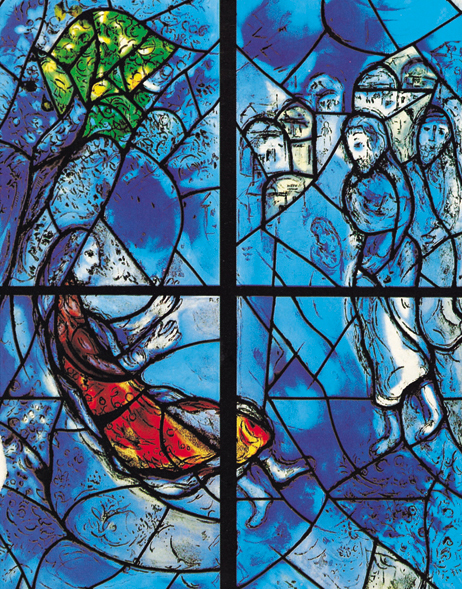
Sunday’s sermon: Descending to Share the Story – “Created Anew 6”

Text used – Mark 9:2-9

  • For the last 6 weeks, we’ve been talking about creativity and creation.
    • Began with God’s initial creation in Gen
    • Talked about our involvement with God’s creativity as individuals and when all our gifts come together as the body of Christ
    • Talked about the need for rest in the midst of creativity and how, even when we are exhausted, God’s creative actions continue
    • Talked about how powerful it is to both recognize and create the extraordinary in the ordinary as God created the extraordinariness of the Incarnation in the ordinary humanity of Jesus Christ
    • Culminates today in what I would call one of the most bizarre stories in the New Testament: the Transfiguration
      • Rasche’s description: In an act of ultimate creativity, Jesus’ identity as the Son of God is revealed to us. How do we descend from the mountaintop to share such an experience?[1]
  • Before we tackle the creativity aspect in this whole business, let’s talk a little bit about odd and extraordinary Gospel account this morning.
    • Story of the Transfiguration shows up in what we call the Synoptic Gospels – Matthew, Mark and Luke
      • “Synoptic” refers to the similarities btwn these 3 Gospels
        • Mark = written first (probably around 70 C.E., 35-40 yrs. after Jesus’ death and resurrection)
        • Matthew and Luke
          • Both used Mk as a source → similar structure, wording, and content to Mk and to one another
          • Probably written 15-20 yrs. after Mk (sometime around the late 80s or early 90s C.E.)
      • Contrast with gospel of Jn
        • Probably written around late 90s or early 100s C.E.
        • Some overlapping stories but more different than not
        • Perspective and theology of Jn much more developed
          • Synoptic gospels → mostly about the actions and teachings of Jesus’ life with little theological interpretation or projection about what those actions and teachings would mean for Christianity
          • Jn’s gospel → much more developed language and extrapolations about the theological meaning of the person and work of Jesus
    • Transfiguration story in Synoptic gospels
      • Mt 17[2]
      • Lk 9[3]
      • And today’s passage from Mk 9
      • And while each of these gospels accounts of the Transfiguration include their own little details and nuances, they each tell essentially the same story.
        • Jesus takes 3 disciples – Peter, James, and John – up to the top of a mountain
        • Jesus transforms before the disciples’ very eyes → love the various descriptions of this transformation
          • Mt: [Jesus’] face shone like the sun, and his clothes became as white as light.[4]
          • Lk: As [Jesus] was praying, the appearance of his face changed and his clothes flashed white like lightning.[5]
          • Today’s passage: [Jesus] was transformed in front of them, and his clothes were amazingly bright, brighter than if they had been bleached white.[6]
          • Gr. in all these instances = wide variety of words reflecting that idea of brightness, dazzling whiteness
            • One word that all 3 accounts share: leukos = bright, shining, gleaming, white
        • Along with this brilliant transformation comes a holy entourage → Jesus is joined by Elijah and Moses
        • Miraculous, dazzling transformation leaves disciples understandably dumbfounded → Peter offers to build three dwellings/shrines/tabernacles for Jesus, Elijah, and Moses
          • Lk’s version = gives Peter the benefit of the doubt: attributes his peculiar suggestion to his tiredness, saying Peter was barely awake when he spoke
          • Mt just lays Peter’s suggestion out there with no explanation about why he made it
          • Today’s passage attributes Peter’s words to fear: Peter reacted to all of this by saying to Jesus, “Rabbi, it’s good that we’re here. Let’s make three shrines – one for you, one for Moses, and one for Elijah.” He said this because he didn’t know how to respond, for the three of them (indicating himself and the other two disciples) were terrified.[7]
          • Now, poor Peter has been teased quite about bit throughout the centuries for his reaction in this moment. But we have to ask ourselves honestly … if we were in Peter’s situation, how sensibly would we respond?
        • Directly following Peter’s suggestion – before anyone even has a chance to address it – a cloud overshadows them all, and God speaks out of the cloud: “This is my Son, whom I dearly love. Listen to him!”[8]
        • Cloud dissipates → Elijah and Moses are gone again → Jesus and the disciples descend the mountain again
          • Both Mt and Mk conclude their tellings of this odd story with Jesus’ admonition to the disciples not to share their story with anyone “until after the Human One had risen from the dead.”[9]
  • Particularly love one scholar’s description of why the Transfiguration is such a powerful story: The boundary zones between the human and the divine are both disorienting and revelatory. Between heaven and earth, the everyday cues and perspectives that tell us who we are and how the world works no longer operate, but we may glimpse a new view of reality that transforms our understanding and refashions our world. The transfiguration of Jesus confuses and terrifies his disciples, but the heavenly voice that speaks from a cloud confirms that Jesus is not only the Christ, as Peter has [previously confessed], but God’s own Beloved Son and affirms that his word of the cross is true. Everything in this episode – Jesus’ transformation, the appearance of Elijah and Moses, Peter’s babbling attempt to be useful – leads up to the moment when God speaks from the cloud that suddenly overshadows them, naming Jesus and commanding the disciples to “Listen to him!”[10] → I love that this particular scholar describes that mountaintop of the Transfiguration as a “thin place” – one of those places in geography and in time where the space between heaven and earth grows thin and it becomes easier to encounter to Sacred … to meet God.
    • Places and moments of bursting creativity are often described as thin places by many of those doing the creating → places and moments where, in the midst of the frenzy and brilliance and outpouring of their creative medium – be it painting, writing, singing, dancing, sculpting, crafting, woodworking, or whatever else … places and moments in the midst of creating when they are wholly overwhelmed by the creation itself … places and moments when the realization hits: there is more at work here than just me … there is more at work here that his bigger, greater, deeper and wider, holier than me
      • Moments are often also described as “mountaintop experiences” → And while those mountaintop experience can give us incredibly inspiration and drive – while they can renew and reinvigorate us in ways we struggle to put into words – they are also not moments we can live in all the time.
        • Rasche beautifully addresses why we can’t live forever in those moments … on those mountaintops: Mountaintop experiences are also places of creation and relationship. It is the place for mere humans to experience just a part of God’s fullness of presence. It was at the top of Mount Sinai that God came to Moses with the guidance of right relationship with God and with one another. It was at the top of a mount where Elijah went to mourn and lament, but heard the still, small voice of God in the whirlwind to keep on where God’s call would take him. It is the place that brings clarity in the midst of chaos. It is the place where we can see fully what lies before us. It is also a place we cannot seem to stay forever; there is only so much space at the top of a mountain. Also, how would we know of such wondrous experiences if people did not make the descent to report on what had happened to them?[11] → Indeed, the beauty and the responsibility of mountaintop moments are inextricably linked. The beauty that we find in those moments – the tenderness of God’s love, the wholeness of God’s grace, the depth of God’s mercy, the inspiration of God’s beautiful creation – are moments meant for us … but not only for us. They are moments we are called to share through our own creative acts.
          • Mountaintop moments change us → creative endeavors change us
            • God’s creative endeavors change us
            • Our own creative endeavors change us
            • Encounters with other people’s creative endeavors change us
            • And in its essence, that’s the story of the Transfiguration – how truly transformational the continuing work of God can be.
          • After 1st sermon of this series back in early Jan., one of Todd and Melissa’s guests shared one of her favorite quotes with me à wrote it down because I knew it would be perfect for this series – quote from late American author and motivational speaker Leo Buscaglia: Your talent is God’s gift to you. What you do with it is your gift back to God. → Let me read that again. [REPEAT] We are gifted these mountaintop moments by a God who knows our gifts, our talents, the source and expression of our own creative sparks so intimately and affectionately because it was this same God who gifted them to us. But the giving of those very same talents and gifts and creative outlets are also a calling from God: “Go. Do. Be. And Tell of my goodness … my hope … my forgiveness … my grace … and above all, my love in that unique and beautiful way that only you can because someone needs to see it and hear it and experience it in your unique and beautiful way. I created you. Now you create with me and for me.”
            • Leave you with the words of a YCW colleague of mine – poem called “Selah! Transfigured by God” by Rev. Katy Stenta[12] (found on her Substack “Katy and the Word”) Amen.

[1] Tuhina Verma Rasche. “Epiphany Series: Created Anew” in A Preacher’s Guide to Lectionary Sermon Series: Thematic Plans for Years A, B, and C, vol. 2. (Louisville: Westminster John Knox Press, 2019), 89.

[2] Mt 17:1-13.

[3] Lk 9:28-36.

[4] Mt. 17:2b.

[5] Lk 9:29.

[6] Mk 9:2b-3.

[7] Mk 9:5-6 (with my own insertion for clarification).

[8] Mk 9:7.

[9] Mk 9:9.

[10] Stanley P. Saunders. “Last Sunday after the Epiphany (Transfiguration Sunday) – Mark 9:2-9 – Exegetical Perspective” in Feasting on the Word: Preaching the Revised Common Lectionary – Year B, vol. 1. (Louisville: Westminster John Knox Press, 2008), 453.

[11] Rasche, 97.

[12] https://open.substack.com/pub/katystenta/p/selah?r=3g8b6&utm_campaign=post&utm_medium=web.

Sunday’s sermon: Creating the Extraordinary in the Ordinary – Created Anew #5

Text used – 2 Kings 5:1-14

  • What an utterly perfect topic for our annual meeting day! I didn’t plan this, y’all, I promise. I had this sermon series laid out long before the Session chose the date for our annual meeting. And yet here we are – in the midst of the ordinary business of the church and the extraordinary act of worship – thinking and talking about creating the extraordinary in the ordinary.
    • Perfect because of how we nestle our annual mtg. in the midst of worship itself
      • Not done this way everywhere (not the way I grew up → memories of sitting on the pew outside the sanctuary listening to the meeting with Myra Mitchell)
      • Meeting + worship meshed together = great because it reminds us that, as the church, all of our actions – from worship and mission to procedural votes and budgets – should be done for the glory of God
    • It’s also a particularly perfect topic for this congregation because of the elements that we’ve added to worship over the past year and a half have been mostly aimed at this – helping us recognize the extraordinary sparks of God out in the ordinary moments of our lives and using this sacred time and space to bring those ordinary and extraordinary moments together.
      • Glimpses of God time is all about sharing those ordinary-to-extraordinary moments … Or, as a doctoral dissertation with which I am intimately familiar puts it, this Glimpses of God practice “is intended to be a conduit through which the love and work of God in Christ Jesus can move through people’s life experiences into the worship of the church.”[1]
    • You see, so often we look at the ordinary parts of our lives and think, “How normal … how mundane … how boring.” And we expect God to work in flashy, extraordinary, knock-your-socks-off kinds of ways because the Bible is full of tales of burning bushes that aren’t consumed and parted seas and water becoming wine and people risen from the dead! Indeed, our God is a miraculous, incredible God who can do things we can’t even begin to imagine. But in the Bible, we also find out that God is a God who works through completely normal things: normal relationships, normal circumstances, normal people. And sometimes, it’s God work through normality – through ordinary, everyday moments and lives – that surprises us the most.
      • Today’s Scripture = quintessential e.g. of that work → And I love this story the most because not only does God work extraordinary healing through a completely normal act, but the extraordinary in that ordinary is blatantly pointed out, not by anyone in power, not by anyone of prestige … but by a group of unnamed servants.
  • Today’s Scripture = story of Naaman
    • Description from the beginning of our passage – Naaman was “a general for the king of Aram, … a great man and highly regarded by his master, because through him the Lord had given victory to Aram.”[2]
      • Aram = roughly Syria
      • Important to point out: “through him the Lord had given victory to Aram” doesn’t mean Naaman or the rest of the Aramean army was devoted to God – scholar calls this “a standard way in Israelite writings of explaining the defeat of Israel as God’s people”[3]
      • Also told that Naaman had a skin disease
        • Heb. = as general as that: “skin eruption” or “skin disease”
        • Most translations: “leprosy” → Because while today we know that leprosy is a particular disease, in the ancient world, the term “leprosy” was used to describe a wide array of skin diseases.
        • Whatever this disease is, we know that it’s bad enough that Naaman seeks permission from the king of Aram himself to travel abroad – to Samaria and the home of the prophet Elisha – and seek out healing.
    • Interesting interaction in the middle of this story – speaks of the anxiety and drama of political life
      • As he gives his okay to Naaman to travel to Samaria, king of Aram also off-handedly states, “I will send a letter to Israel’s king.”[4] → Presumably, since Aram had recently conquered Israel, the king of Aram was sending this letter as reassurance that his most powerful general was coming into the territory, not to wage further war or execute any military actions, but to seek out healing.
        • Could have been more troublesome/manipulative than that – some wording of the letter is relayed in our text: [The letter] read, “Along with this letter I’m sending you my servant Naaman so you can cure him of his skin disease.”[5]
      • And what is the response of the king of Israel? – text: When the king of Israel read the letter, he ripped his clothes. He said, “What? Am I God to hand out death and life? But this king writes me, asking me to cure someone of his skin disease! You must realize that he wants to start a fight with me.”[6] → We don’t know whether this was an overreaction or an appropriately-alarmed response. I think it’s safe to say, though, that either ways, it’s a response riddled with anxiety and fear … fear of the Other Side and what they might be planning to do to me. Hmmm … some things never change, eh?
    • Prophet Elisha hears of the king’s response → instructs the king to send Naaman to him
    • Naaman appears at Elisha’s house → But Elisha himself doesn’t even see Naaman. He sees Naaman arrive, and instead of going out to greet him as hospitality customs of the day would dictate, Elisha sends out a servant to speak to Naaman.
      • Servant relays Elisha’s instruction that Naaman should wash in the Jordan River 7 times
    • But this isn’t good enough for Naaman. This isn’t grand enough. This isn’t flashy enough. This isn’t miraculous enough. – text: But Naaman went away in anger. He said, “I thought for sure that he’d come out, stand and call on the name of the Lord his God, wave his hand over the bad spot, and cure the skin disease. Aren’t the rivers in Damascus, the Abana and the Pharpar, better than all Israel’s waters? Couldn’t I was in them and get clean?” So he turned away and proceeded to leave in anger.[7] → Big old adult hissy fit here, folx. Not only is Naaman clearly offended that he didn’t even get an audience with the famous prophet, he’s been asked to wash in the presumably sub-par waters of the Jordan River … and Israelite river that clearly can’t be as good as the rivers in Syria.
      • Nationalism at its worst → presumptions that everything in my homeland is better than anything anywhere else simple because it is my homeland → Thanks for the example, Naaman.
    • And here’s where the best part comes in … Naaman’s sound rebuke by his own, unnamed servants. – text: “Our father, if the prophet had told you to do something difficult, wouldn’t you have done it? All he said to you was, ‘Wash and become clean.’”[8]Boom. “What, Naaman? This is too easy for you? Don’t be ridiculous. You would have done something crazy hard if Elisha had demanded it without even batting an eye. But he tells you to do something easy, so it must be rigged? It must be useless? It must be a joke? Nah. Refusing healing because it’s ‘too easy’ … that’s the joke.”
      • Words clearly had an impact because Naaman shut up, did as Elisha had instructed, and was made clean
  • Truly, friends, Naaman’s story is the ultimate example of getting so caught up in our expectations for God that we fail to actually see God working. We expect the flash and the bang, the pomp and the circumstance, the grandiose and miraculous. And yes, God is there working in those moments – those incredible stories that take our breath away for the extraordinary-ness of them. But we cannot be so blinded by our expectation of the extraordinary that we neglect to see God in those ordinary, everyday moments, too. Because if we truly believe that God is big enough and powerful enough and miraculous enough to work extraordinary moments, how can we not also believe that God can also be at work in our smaller moments, our weaker moments, our mediocre moments?
    • Tuhina Verma Rasche: God is immense and expansive and cannot be defined and contained in mere words. Yet God knows us enough and so yearns to be in a relationship with us that God finds ways in daily and ordinary life to be present with us. … God comes to meet us in the most common and ordinary of elements to redefine and recreate our relationship with God and one another. We were created anew when the extraordinary came to meet us in the most ordinary of elements and experiences.[9] → Today, we get to spent time with one another in some ordinary and some extraordinary moments, and we get to work together to seek out God in all of them. Thanks be to God. Amen.

[1] A quotation from my own doctoral dissertation: “Holy Word, Wholly Engaged: Reconnecting With God and One Another in the Context of Worship,” p. 80.

[2] 2 Kgs 5:1.

[3] Choon-Leong Seow. “The First and Second Books of Kings: Introduction, Commentary, and Reflections” in The New Interpreter’s Bible Commentary series, vol. 3. (Nashville: Abingdon Press, 1999), 193.

[4] 2 Kgs 5:5b.

[5] 2 Kgs 5:6b.

[6] 2 Kgs 5:7.

[7] 2 Kgs 5:11-12

[8] 2 Kgs 5:13.

[9] Tuhina Verma Rasche. “Epiphany Series: Created Anew” in A Preacher’s Guide to Lectionary Sermon Series: Thematic Plans for Years A, B, and C, vol. 2. (Louisville: Westminster John Knox Press, 2019), 96.

Sunday’s sermon: Never-Ending Creativity – Created Anew #4

Text used – Isaiah 40:21-31

  • So I have this book in my office (not a kids book this time … sorry, all). It’s a book that I bought after hearing an interview on NPR a few years ago, and it’s actually a book that I ended up using while I was writing my dissertation.
    • Burnout: The Secret to Unlocking the Stress Cycle[1] – written by twin sisters – Emily and Amelia Nagoski
      • Emily = PhD in health behavior with a minor in human sexuality, been a sex educator for 20 yrs. and is currently the inaugural director of wellness education at Smith College in Massachusetts
      • Amelia = DMA (doctor of musical arts) in conducting and assistant prof and coordinator of music at Western New England University in Massachusetts
      • Now, you may hear those two CVs and think, “Why are these two women writing a book about stress and burnout?” Let me read a portion of the NPR interview to you (from the program “All Things Considered” which aired May 5, 2019[2]): (Amelia speaking) I was in doctoral school getting my doctorate of musical arts in conducting. I was also working two part-time jobs. And I’m the mother of three people who were teenagers at the time. And I was commuting 65 miles each way. And the stresses of my life were overwhelming. And I was totally in denial about how hard I was working and how much challenge I was actually having. I had no idea how much my body was suffering. So it took me totally by surprise when in the middle of one night, I woke up in such pain that I had my husband drive me to the emergency room. And I was in the hospital for four days. And they didn’t come up with a diagnosis. They just said well, it’s stress. You just need to relax. And that is not an evidence-based strategy for coping with stress, it turns out. So I spent about the next year – I called Emily, of course, who brings me a big stack of books because this is the way she shows her affection is peer-reviewed science. … Yeah. So it was very supportive and convenient to have a twin sister who has a Ph.D. in public health. So in the next year, I started working on doing the actual things that the science says will combat burnout. It was too late. And a year later, I ended up back in the hospital. And they removed my appendix, which had been inflamed. (Emily interjects and affirms) Inflammation is a result of extreme stress.
      • So these two sisters embarked on this project together – one specifically aimed at helping women overcome this stress cycle that is so prevalent in our society. [read book synopsis from dust jacket]
    • And talk about timing … this book was published in 2019 just a few months before the COVID-19 pandemic swept the globe and ratcheted up everyone’s stress levels beyond anything most of us have ever experienced before. → burnout has become a very real, very prevalent part of many people’s lives
      • Signs of burnout: exhaustion, isolation, anxiety, frequent illness, irritability, feelings of hopelessness, lack of motivation, cynicism, concentration issues, headaches, lack of control, gastrointestinal disorders, loss of enjoyment, a negative outlook, insomnia, depression, depersonalization, feeling listless, anger, inconsistent appetite, reduced efficiency, catastrophic thoughts
  • I think this issue of burnout is particularly relevant to our continued Epiphany exploration of creativity – this idea that we are created in God’s image to be creators, that we are called to active participation in God’s newness – God’s creation and re-creation – as an essential tenet of our faith.
    • Yes, it’s an inspiring call I mean, there is something powerful and empowering and uplifting about working your way through the creation process and coming out the other side with something wonderful that you made!
    • BUT, when you’re already feeling tired and weary … when you’re already feeling creatively wrung-out … when you’re already feel sapped of all strength, that call to participate in creation can be daunting at best. And today, as we move past the middle point of our Created Anew series, we are given the effectual, poignant, and vital reminder that we need in times like these: that God is God, and we are not … and that is enough.
  • Isaiah passage
    • Begins with that reminder that God is God first 6 verses are all about God’s power and might, God’s sovereignty and ultimate creative ability
      • Text: Don’t you know? Haven’t you heard? Wasn’t it announced to you from the beginning? Haven’t you understood since the earth was founded? God inhabits the earth’s horizon— its inhabitants are like locusts— stretches out the skies like a curtain and spreads it out like a tent for dwelling. God makes dignitaries useless and the earth’s judges into nothing. Scarcely are they planted, scarcely sown, scarcely is their shoot rooted in the earth when God breathes on them, and they dry up; the windstorm carries them off like straw. So to whom will you compare me, and who is my equal? says the holy one. Look up at the sky and consider: Who created these? The one who brings out their attendants one by one, summoning each of them by name. Because of God’s great strength and mighty power, not one is missing.[3]
      • Let’s give this a little context.
        • Cultural context: Is is delivering these words to the people in exile – people who have been forced from their homes by an occupying legion and forced to live away from their homeland, sometimes their friends and family, and all the customs and traditions and holy places that made up their whole lives to that point If ever there were a people who needed God’s word in the midst of challenging circumstances – who needed to be reminded of God’s steadfastness, God’s transcendence, and God’s goodness – it was the people of Israel as they went about their lives captive in the land of Babylon.
          • Hear that reassurance in today’s text: God makes dignitaries useless and the earth’s judges into nothing. Scarcely are they planted, scarcely sown, scarcely is their shoot rooted in the earth when God breathes on them, and they dry up; the windstorm carries them off like straw.[4]  It was these dignitaries and judges that had made the decisions that forever altered the lives of those held in captivity in Babylon, and through Isaiah, God is reassuring the people that even in the face of what presents as power on earth, God is more.
            • Certainly a word that we need to hear today, too It feels like every time I open my news app, I hear about another of the earth’s dignitaries or judges being accused of corruption and abuses. The stories of one group reigning violence and oppression down on another group are rampant. Borders between nations – the constructs of those same dignitaries and judges – have become places of fear and revulsion and exclusion, and those who cross borders have been turned into people to ridicule and despise and subjugate, again by those same dignitaries and judges.
              • Rasche alludes to this in her commentary for today’s passage: In the midst of the power struggles between nations and the struggles we may find closer to home, many individuals and institutions can take credit for creating, whether that be a political system, a set of values, or influences on how people can live their lives. Yes, this can be viewed as a form of creation, but not as how God intended for us. Creative endeavors are meant to be life giving and life sustaining … Some of the “creative” endeavors we see in the world claim such titles, but when the veil is lifted, the life-giving and life-sustaining characteristics are questionable at best.[5]
        • Truly, friends, we are living in a time when we all need to be reminded that God is a God of “great strength and might,” as our passage this morning puts it, who leaves no one and no thing behind. – reassurance echoed within this section of book of Is These verses complete a chapter that we started during Advent: Comfort, comfort my people! says your God. … A voice is crying out: “Clear the Lord’s way in the desert! Make a level highway in the wilderness for our God!”[6] Following this reassurance that God is coming to the people is a section subtitled “The incomparable God” (at least, that’s how it’s subtitled in the Common English Bible translation) in which Isaiah extolls the many mind-boggling wonders of God’s creative acts.
          • First half of today’s text = part of that section
    • Leads us into 2nd half of today’s text = part of section subtitled “Power for the weary” certainly a word of comfort and confidence to a people struggling under Babylonian captivity
      • Words of the people during this time (from Ps 137): Alongside Babylon’s streams, there we sat down, crying because we remembered Zion. We hung our lyres up in the trees there because that’s where our captors asked us to sing; our tormentors requested songs of joy: “Sing us a song about Zion!” they said. But how could we possibly sing the Lord’s song on foreign soil?[7] Isaiah’s words this morning are the balm to that open wound – the reminder that God is with all those who’s faith and energy falter in the face of dire circumstances.
        • Is’s reply both acknowledges Israel’s struggle with their circumstances – all of the frustration, anger, fear, anxiety, and grief that must have come with being part of that contingent of the people forcibly removed from Jerusalem to Babylon – and it gives the reminder that God’s presence and God’s power never fail: Why do you say, Jacob,and declare, Israel, “My way is hidden from the Lord, my God ignores my predicament”?Don’t you know? Haven’t you heard?The Lord is the everlasting God, the creator of the ends of the earth. He doesn’t grow tired or weary.His understanding is beyond human reach,giving power to the tired and reviving the exhausted.Youths will become tired and weary, young men will certainly stumble;but those who hope in the Lord will renew their strength;they will fly up on wings like eagles; they will run and not be tired; they will walk and not be weary.[8] 
  • I want us to notice here that there is no judgment or shame – from Isaiah himself or from God – directed that those who have become tired and weary and exhausted. Those states of being are recognized as being part of what comes from living in a less-than-perfect world as someone who is trying to follow a God who is so much more than our human understanding can even begin to comprehend. What Isaiah does do is remind us that even when we are at our most depleted, God continues to work in and through us, not just for the benefit of creation, but for our benefit as well: “Those who hope in the Lordwill renew their strength; they will fly up on wings like eagles; they will run and not be tired; they will walk and not be weary.”
    • Rasche: While we are created as creators, Isaiah continues to remind us of our origin story, that while we are created in God’s image, we are not God’s equals in a broken humanity. Even if our attempts to imitate creation are not perfect, it doesn’t mean that we … give up. … Today’s passage reminds us of the identity of the ultimate Creator, and that the creative process in God’s created world and within us is never ending.[9]  Simply put, friends, God is not done with us. There is more to do … more to create … more to be in this world for God’s love and the building up of God’s kingdom on earth. We are indeed called to participate in that creation … but if you find yourself tired, sapped of your energy (creative and otherwise) … if you find yourself burned out, God will not leave you there. You are not a spent marker that God is prepared to discard with another, identical “you” waiting to finish the picture. You have a particular calling in this world – something you and only you can do and be for God – and if you feel too tired, too weary, too burned out for that today, that’s okay. Because God will renew your spirit and your strength. Yes, we are called to create alongside God … but God is also always creating us anew as well. So take heart, and hope in the Lord. Amen.

[1] Emily and Amelia Nagoski. Burnout: The Secret to Unlocking the Stress Cycle. (New York: Ballantine Books), 2019.

[2] Aarti Shahani. “Beating Burnout: Sisters Write Book to Help Women Overcome Stress Cycle,” heard on All Things Considered produced by National Public Radio. Aired May 5, 2019. https://www.npr.org/2019/05/05/720490364/to-help-women-kick-burnout-sisters-write-book-to-understanding-stress-cycle.

[3] Is 40:21-26.

[4] Is 40:21-23.

[5] Tuhina Verma Rasche. “Epiphany Series: Created Anew” in A Preacher’s Guide to Lectionary Sermon Series: Thematic Plans for Years A, B, and C, vol. 2. (Louisville: Westminster John Knox Press, 2019), 95.

[6] Is 40:1, 3.

[7] Ps 137:1-4.

[8] Is 40:27-31.

[9] Rasche, 95.

Sunday’s sermon: Being the Epiphany – Created Anew #3

Text used – 1 Corinthians 8:1-13

  • I have another children’s book I want to share with you this morning.
    • Extra Yarn by Mac Barnett, illustrated by Jon Klassen[1] → crucial element to this story clarified through the illustrations: connection


      • Many times when Annabelle knits something for people, the individual creations are connected to each other by a length of yarn (e.g. – when she knits sweaters for her whole class)
      • Connection that makes space for uniqueness
        • Sweaters are all different colors: similar but individual
        • Same colors for Mr. Crabtree’s hat → creation that fits who he is but also includes him in the community
      • Color and familiar pattern of Annabelle’s knitting bring both a brightness and a kinship to her little village
        • Brightness and kinship that began to be recognized by others: “People came to visit from around the world, to see all the sweaters and to shake Annabelle’s hand.”
      • And what disrupts that connection? Vanity … hubris … and greed. → the archduke who first tries to buy, not a single sweater, but Annabelle’s entire box of yarn → archduke hires robbers to steal the box when Annabelle refuses to sell → gets this magical box home only to discover it was empty → box finds its way back to Annabelle … who begins to knit again
        • More color
        • More brightness
        • More connection
        • More togetherness
    • Within the cycle of the liturgical calendar, we find ourselves ensconced in the season of Epiphany.
      • Broad definition of an epiphany: an appearance or manifestation of a divine being
      • Christian context: the manifestation of Christ to the Gentiles as represented by the Magi → Basically, the Epiphany celebrates the first time Gentile recognized and worshiped Christ.
      • But here’s the thing about the Epiphany within the Christian context: it’s not just a one-off sort of occurrence. Yes, within the realm of the church, we celebrate Epiphany on (or close to) January 6, but the phenomenon of Christ being revealed to others is not something that happened just that one time thousands of years ago. It’s something that continues to happen yesterday, today, tomorrow.
        • Rasche: What I love about the Epiphany of our lives of following Christ is the opportunity to see God in our neighbor. That’s just how creative God can be: that in wonder and amazement, we can turn to our neighbor and see the image of God in one another. This is God revealing to us that God is relational. God loves us and cares for us and wants to be with us.[2] → The ways that we get to see God in one another are just like Annabelle’s sweaters. They’re the connections that bring color and wholeness to our lives. They make us the body of Christ together.
  • Paul’s point in this morning’s passage from 1 Cor
    • Story of Corinthian church = not so different from the story of Annabelle and her miraculous box of yarn
      • Location: large peninsula known as the Peloponnese → located off the southern tip of mainland Greece
        • Even more important: Corinth = still located on the narrow strip of land that connects the peninsula to the mainland → made Corinth a hub: wealth, commerce, culture, religion
      • Church established by Paul himself on one of his mission journeys (probably somewhere around 50 C.E.)
      • Diverse body that reflected the make-up of Corinth as a city – scholar: The congregation at Corinth reflects the socioeconomic and religious makeup of the city. In keeping with the “steep social pyramid” that was typical of that culture, very few believers were rich, and most were poor.[3]
        • Goes on to point out that names mentioned throughout the Corinthians letters include a variety of names: Roman, Greek, and Hebrew → continues: In 1 Corinthians, there is absolutely no evidence of any strife or even tension in the relation of Jewish believers and gentile believers.[4]
    • Clear from today’s reading that it’s not the cultural differences that have caused the rift in the Corinthian church that Paul is addressing … It’s vanity … hubris … and greed.
      • Scholar explains the situation: The occasion for Paul’s comment is that the Corinthian church has a strong faction of well-educated, well-to-do, relatively sophisticated members who believe that Christians should be free to eat meat offered to idols. … Also present in the Corinthian church were more ordinary working people whose incomes and habits allowed for very little meat in their diets. For these people … eating meat offered to idols threatened faith by drawing them back to the idolatrous culture from which they had only recently been converted to the Christian faith.[5]
        • Not so different from the archduke in Extra Yarn → He didn’t care about the needs or wholeness of Annabelle’s community. He wanted what he wanted when he wanted it. There was an entitlement to his want. He deserved to have the miraculous box of yarn, not because of anything he had done, but simply because he was who he was: rich, privileged, “better than.” The struggles of others … the impact that his demands would have on their lives … didn’t matter.
    • Basically the richer, more upper-class people within the Corinthian congregation wanted to be able to eat the meat. They wanted it. They were accustomed to it. They could afford it. And in our text today, Paul is making it clear that their failing as Christians is not in the wanting of the meat itself … but in the way that, in pursuing that desire, they are neglecting the lives and spirits of their fellow Christians.
      • Text: We know that we all have knowledge. Knowledge makes people arrogant, but love builds people up. If anyone thinks they know something, they don’t yet know as much as they should know. But it someone loves God, then they are known by God.[6] → This is a powerful statement, friends. Paul is basically chastising those who think they know everything, reminding them that, while knowledge is never fully complete – while there is always more to learn, more to know, more to understand – love is complete. Love is whole. Love is all-encompassing.
        • Scholar: Love is not just a sentiment, not just a feeling, not merely a sort of disposition. Love works; it acts; it does things; and the chief thing it does is to edify, build up, cause growth in each of the persons who engages in it and who is engaged by it.[7]
  • Paul spends the rest of this morning’s text explaining how love works in a situation like this – emphasizing how little importance meat has in comparison with the spiritual well-being of the rest of the body → And it’s in this part that we hear God speaking most prominently to us today.
    • True, it’s not meat sacrificed to idols that brings out the judgmental separations between us … but that certainly doesn’t mean those judgmental separations don’t exist. There are all sorts of ways we neglect … or refuse … to see the image of God in those around us. There are all sorts of ways we decide that the struggles of others are trivial … or nonsensical … or even deserved. But in the face of that failing, we have Paul’s example – text: You sin against Christ if you sin against your brothers and sisters and hurt their weak consciences this way. This is why, if food causes the downfall of my brother or sister, I won’t eat meat ever again, or else I may cause my brother or sister to fall.[8] → Paul is willing to go so far as to remove meat from his diet entirely just to build up his siblings in Christ.
      • Rasche brings this idea into our lives/conversations today: Not only do we exist for Christ; we are also created to exist for one another, to accompany one another, and to be accountable to one another. We gather in community so that if a sibling in the faith struggles, the community can accompany them. It’s both daunting and terrifying, because being in community comes with incredible responsibility for one another. Sometimes it takes a member of the community to be an epiphany for us, to show us where we are headed. God sent us a reminder of God’s creativity in the flesh of Jesus.[9] → It sort of all comes full circle here. God had such a profound and powerful love for humanity that God chose to come down in the person of Jesus Christ and dwell among us – to put on our flesh and blood and humanness all for the sake of love, to become not just God but God-With-Us. God knew we needed that Love Embodied to restore us to God – to bridge the gap of separation and sin that are an undeniable part of our world. Knowing we were imperfect … knowing we would continue to make mistakes … knowing how it would all end … God came to Love. God came as Love in Jesus Christ. And after his life and death and resurrection and ascension, Jesus’ teaching of love and grace continued through the early church and through Paul – Paul, who saw that disconnectedness, that brokenness, that lack of love and tried to help people see God in each other again. Because it was and is and always will be the love of God that brings us back to God … back to one another … and back to wholeness.
        • Scholar: Love works. Love transforms circumstances and people. The loved one is never again the same; the one who loves is never again the same. … Love, once under way, takes on a life of its own; like the grace on which it is built, it surprises. Love restores, love enlarges, and love makes whole.[10] → In that love, through that love, we get to be God’s revelation – God’s epiphany, God’s blessed presence – to and for and with one another. Thanks be to God! Amen.

[1] Mac Barnett. Extra Yarn (New York: Balzer + Bray), 2012.

[2] Tuhina Verma Rasche. “Epiphany Series: Created Anew” in A Preacher’s Guide to Lectionary Sermon Series: Thematic Plans for Years A, B, and C, vol. 2. (Louisville: Westminster John Knox Press, 2019), 93.

[3] J. Paul Sampley. “The First Letter to the Corinthians: Introduction, Commentary, and Reflections” in The New Interpreter’s Bible Commentary series, vol. 10. (Nashville: Abingdon Press, 2002), 777.

[4] Ibid.

[5] V. Bruce Rigdon. “Fourth Sunday after the Epiphany – 1 Corinthians 8:1-13, Pastoral Perspective” in Feasting on the Word: Preaching the Revised Common Lectionary – Year B, vol. 1. (Louisville: Westminster John Knox Press, 2008), 302, 304.

[6] 1 Cor 8:1b-3.

[7] Sampley, 898.

[8] 1 Cor 8:12-13.

[9] Rasche, 94.

[10] Sampley, 898.

Sunday’s sermon: God Created. Now What? – Created Anew #1

Text used – Genesis 1:1-5

  • There’s a beautiful children’s book that I have loved my whole life – one that my mom read to me and that I now read to my kids.
    • Miss Rumphius written and illustrated by Barbara Cooney[1]

    • Story of a little girl named Alice who has grand plans for her life
      • Travel to beautiful, adventurous, far-away places
      • Live by the sea
      • When she shares these grand plans with her grandfather, he tasks her with one more plan: “That is all very well, little Alice, but there is a third thing you must do. You must do something to make the world more beautiful.”
      • Alice grows up and becomes a librarian → decides one day it is time for her to embark on her travels → visits many, many beautiful, adventurous, far-away places
        • Climbs mountains and makes friends on tropical islands
        • Visits jungles and desserts
        • Encounters lions and kangaroos
        • Injures her back getting down off a camel in India → decides it’s time to go home
      • Alice realizes her 2nd goal: buys a small house by the sea → plants some of her favorite flowers – blue and purple and rose-colored lupines – in the rocky gardens around her house
      • One day, after being ill in bed for a long time, Alice goes for a walk near her seaside home. Along the way, she encounters more lupines just like the ones she planted in her garden, and she realizes that the seeds from her garden have been transplanted down the lane by the wind and the birds. And all of a sudden, Alice knows how to accomplish that elusive 3rd task her grandfather had set for her: “do something to make the world more beautiful.”
        • Rushes home
        • Orders 5 bushels of the very best lupine seeds
        • Walks all around her village and the surrounding area with pockets full of lupine seeds sowing them as she walks: “She scattered seeds along the highways and down the country lanes. She flung handfuls of them around the schoolhouse and back of the church. She tossed them into hollows and along stone walls.”
          • Garners Alice the nickname: The Lupine Lady
      • And sure enough, the next spring, there are lupines everywhere, creating seas of blue and purple and rose-colored flowers wherever you look … creating beauty – delicate and growing and alive – wherever you look.
  • Throughout this season of Epiphany – this liturgical season that started with the Feast of Epiphany yesterday and continues through to the beginning of Lent with Ash Wednesday – we’re going to be focusing on creation and creating → idea: Created Anew
    • Another series based on work of ELCA minister Tuhina Verma Rasche (just like our Advent series)
    • All about celebrating God’s creativity – an our own – in the season of new beginnings: This series begins at the start of a new year, a time to start over and create the world anew through resolutions, hopes, and dreams. This is an opportunity for a community to explore what it means to be a follower of Jesus in a new calendar year and see Christian identity in a new way. Through Scriptures that span all sections of the Bible, let’s discover new and creative ways to explore what it means to be a baptized Christian in the world today. … Epiphany is an opportunity to tap into the creative energy of your community.[2] → It’s this emphasis on creativity that made me think of Miss Rumphius. Sure, the Lupine Lady doesn’t create the flowers … but by sowing the seeds, she creates the opportunity for them to grow. She creates the chance for beauty to flourish all around her.
  • Perfect illustration to keep in your mind as we begin talking about God’s creation → Because God’s initial act of creation and all the creation that followed is the source from which all our own creative energy and imagination flows. → begin, of course, at the beginning: When God began to create the heavens and the earth – the earth was without shape or form, it was dark over the deep sea, and God’s wind swept over the waters – God said, “Let there be light.” And so light appeared. God saw how good the light was. God separated the light from the darkness. God named the light Day and the darkness Night. There was evening and there was morning: the first day.[3]
    • First thing I want us to notice about this passage is its cadence – the innate rhythm it possess → You can’t help but move with the words – with the rise and fall of them, with the breathing-in and breathing-out of them. [RE-READ, emphasizing cadence/movement]
      • Cadence/rhythm repeated throughout the rest of the Gen 1 creation story: God creates → God observes/speaks to the supreme goodness of that creation → “there was evening and there was morning: the Xth day”
        • Cadence/rhythm to creation as well
          • Cadence/rhythm to God’s creation
            • Rhythm of living beings: heartbeats, lungs expanding and contracting, cadence to the way we move through the world whether we walk or crawl or slither
            • Rhythm of the seasons: new life in spring to the full flush of summer, fading life in the fall to the long sleep of winter, then back to new life in spring again, migrations of species from one season of life to the next
            • Rhythm of the world in which we live: phases of the moon, journey of earth around the sun, daily rise and fall of the tides, movement of wind/water currents, constant shifting of earth’s plates
          • Cadence/rhythm to our own creative processes, too
            • Idea phase → brainstorming, concept mapping, playing with words or colors or concepts or chords (depending on your creative medium of choice)
            • Initial burst of creation → color to canvas, chords in progression, words piling up into paragraphs or stanzas on the page, materials coming together (sculptor, engineer, carpenter, etc.)
            • Refining creation → adding and tweaking, changing and emphasizing → If that initial burst of creation is large, expansive brush strokes, this refining phase is small, focused brush strokes. If that initial burst is basic chord progressions, this refining phase is adding the riffs and particular melody.
        • Cadence/rhythm is set from the very outset with God and creation → our own rhythm continues to flow from God’s very first rhythm, God’s then-and-now-and-forever rhythm
    • Second thing to notice = something-from-sheer-nothing of creation – text: When God began to create the heavens and the earth – the earth was without shape or form[4]
      • Heb. is particularly vivid and revealing: “without shape or form” = combination of two nouns (which lends emphasis to both, sort of like saying “strong strong” instead of “really strong”)
        • First word = wasteland, emptiness, nothingness, confusion, unreality, solitude, formlessness
        • Second word = void, emptiness, waste
        • Truly, the text could not be more clear: there was nothing but God … and then, God created. And created. And created. And created.
          • Did God create because God was lonely?
          • Did God create because God was bored?
          • Did God create because it was the plan all along (whatever “all along” might mean before anything even existed)?
          • Did God create because the beckoning of an utterly blank canvas called even God into action?
            • First day: light and dark … but God had more creation stirring within.
            • Second day: sky and waters … but God had more creation stirring within.
            • Third day: dry land and all manner of plants growing on it … but God had still more creation stirring within.
            • Fourth day: sun and moon and stars … but God had more creation stirring within.
            • Fifth day: all birds and all fish … but still, God had more creation stirring within.
            • Sixth day: all the creatures on dry land … but even still, God had more creation stirring within.
            • Seventh day: God created humanity in God’s own image, in the divine image, God created them, male and female God created them[5]and finally, God’s creativity was spent … at least, for the time being.
    • Another thing that’s crucial in our understanding of creation: Nothing about our Scripture reading this morning or in the rest of Genesis 1 or even in the parallel creation story that we find in Genesis 2 (that story of Adam and Eve) … none of it says that God stopped creating. It simply says, “God rested from all the work of creation.”[6] → implication: creation is ongoing
      • Rasche: Remember that it was out of the void, out of chaos, that God created the earth and the seas and the birds and the snakes and us. God was so creative in wanting to know our experiences, how we live, what we feel, and what we do, that God came to us in the person of Christ. When I think of what Christ did for you and for me and for creation, reconciling us to God, forgiving us our sins, dying and rising, that amazement and wonder is amplified. Not only did God create; God wanted and continues to want to be a part of creation, beside and in and through you and me.[7] → One of the most amazing things about creation is that God created each and every one of us in God’s own image with the ability to love, hope, dream, and create as God loves, hopes, dreams, and creates.
        • Words of Osho, 20th Indian philosopher and mystic: To be creative means to be in love with life. You can be creative only if you love life enough that you want to enhance its beauty, you want to bring a little more music to it, a little more poetry to it, a little more dance to it. → God was so in love with the world, and particularly with the humanity – broken, imperfect, and frustrating though we can be! – that God continues to choose again and again to enhance that beauty.
          • Creating beauty around us
            • Every sunrise/sunset
            • Every fall when the leaves blaze orange and red and gold
            • Every spring when we are surrounded by a thousand shades of green
            • Every flower the blooms
            • Every mountain that reaches toward the sky
            • Every wave the laps or crashes against a shore
          • Creating beauty within us
            • Beauty of love
            • Beauty of hope
            • Beauty of forgiveness
            • Beauty of connection and relationships
            • Beauty of creativity
  • And so, friends, there is something you must do – something that you are called to do, something that you are created to do by the One who created you in all love, all joy, and all grace: You must do something to make the world more beautiful. Amen.

[1] Barbara Cooney. Miss Rumphius. (New York City: Penguin Random House), 1982.

[2] Tuhina Verma Rasche. “Epiphany Series: Created Anew” in A Preacher’s Guide to Lectionary Sermon Series: Thematic Plans for Years A, B, and C, vol. 2. (Louisville: Westminster John Knox Press, 2019), 88, 89.

[3] Gen 1:1-5.

[4] Gen 1:1-2a.

[5] Gen 1:27.

[6] Gen 2:3.

[7] Rasche, 90.

Christmas Eve sermon: Home in the Word – “Christmas Eve: Where We Belong”

Texts used – Luke 2:1-20; John 1:1-14

  • I’m going to kick things off with something that might be a little controversial tonight, all. Everyone have their Christmas Eve seatbelts on? Are you ready? I want you to do me a favor and look through the text of the Luke passage, and let me know when you find the word “stable.” [PAUSE] Anybody? That’s because it’s not there. There is nothing in Scripture that says Jesus was born in a stable.
    • Multiple mentions of Jesus in a manger → traditional elaboration has led us to believe this means stable → Because nowadays and for at least a few generations now, the type of animals that eat out of mangers/feed troughs are kept in their own space: barns, stables, and so on. But this isn’t always how it’s been.
      • Tradition of bringing animals into the shared home at night
        • Protects them from the elements, especially in places where it gets colder at night (also provides much-needed extra body heat in those places!)
        • Protects them from other animals that may way to snatch them and eat them
        • Protects them from thieves who may try to come by in the night and steal them
      • Fabulous scene from the movie A Knight’s Tale in which the protagonist, William, who is trying to rise up out of the peasant class into which he was born is arguing with the noble woman he’s fallen in love with → She’s trying to convince him that they can run away together so he can avoid a deadly duel he’s set on fighting, and he’s trying to describe to her what a peasant life will look like. He says to her, “And where will we live? In my hovel? With the pigs inside in winter so they won’t freeze?” And she responds, “Yes, William, with the pigs. With the pigs.”

      • Something done by homesteaders in American history
      • Lots of places around the world where this is still the case today
    • Non-stable idea = work of theologian Ian Paul, professor at Fuller Seminary in California → cites Kenneth Bailey, renowned scholar in field of 1st-cent. Palestinian culture: Most families would live in a single-room house, with a lower compartment for animals to be brought in at night, and either a room at the back for visitors, or space on the roof. The family living area would usually have hollows in the ground, filled with hay, in the living area, where the animals would feed.[1] → This is certainly a far cry from the traditional home layout that we’re used to, so along with a traditional misunderstanding leading us to the stable, we’re also laboring under a cultural misunderstanding.
    • One more misunderstanding layered onto this that makes a huge difference = grammatical → And this one is understandable because it has to do with translation from the original Greek.
      • Gr. for “inn” as we think of it nowadays = word that referred to a shelter for strangers that included a common cooking/eating space and a large communal sleeping space → Think modern-day hostels: large communal room with separate beds, shared bathroom, communal kitchen.
      • But the thing is, the Greek in Luke’s story is not that word. → another word that specifically refers to a spare upper room in a private house that was set aside for guests (no payment expected)
        • Same word used for the Upper Room in which Jesus and his disciples share their last supper together[2]
    • Ian Paul gives us a glimpse into what this means for our understanding of the Christmas story that we know and love: What, then, does it mean for the [inn] to have ‘no space’? It means that many, like Joseph and Mary, have travelled to Bethlehem, and the family guest room is already full, probably with other relatives who arrived earlier. So Joseph and Mary must stay with the family itself, in the main room of the house, and there Mary gives birth. The most natural place to lay the baby is in the hay-filled depressions at the lower end of the house where the animals are fed.[3]
  • Okay pause and take that in for a second. Now, I know that for a lot of years, all sorts of people – pastors included … myself included! – have used that image of Jesus … of the Son of God, God-With-Us, Emmanuel … being born in a stable as a metaphor for God coming down into the lowliest of lowly and inhabiting humanity in the most humble, modest, commonplace way. And that’s a powerful metaphor. But tonight I want us to look at and think about this miraculous birth in another way – a way that sheds a whole new light and dawns a whole new meaning onto the passage from John’s gospel that we also read this evening.
    • Jn passage begins with description of all the ethereal exceptional-ness of Jesus: In the beginning was the Word and the Word was with God and the Word was God. The Word was with God in the beginning. Everything came into being through the Word, and without the Word nothing came into being. What came into being through the Word was life, and the life was the light for all people. The light shines in the darkness, and the darkness doesn’t extinguish the light.[4] → John wants to be sure we understand from the very outset how truly Other this Jesus – this Word-Made-Flesh – really is.
      • Jesus has always been AND has always been with God
      • Everything came into being through Jesus
      • Jesus was light and life – a light so powerful, so eternal, so other that even the most impenetrable darkness is no match for this Jesus-Light → It wasn’t. It isn’t. And it never will be. “The light shines” … as in a constant and perpetual action, an ongoing action … “The light shines in the darkness, and the darkness doesn’t” … as in a fixed and terminable action, a limited action … “The light shines in the darkness, and the darkness doesn’t extinguish the light.” The light goes on and on, so much so that the darkness no longer has the final word.
    • It’s this Everlasting Light – this Wonder Counselor, Mighty God, Everlasting Father, Prince of Peace, as the prophet Isaiah called him … it’s this Light of the World that was being born that night. It is God Incarnate – the Almighty Creator of the entire universe – who is choosing to take on the frail, vulnerable, precious form of a human baby. God chose a heart that beat just like yours. God chose flesh that ticked and itched, tingled and ran with goosebumps just like yours. God chose lungs that breathe in and out just like yours. God chose eyes that cried and lips that smiled and a stomach that rumbled just like yours.
    • Where was this miraculous God Incarnate born? → If we follow the reasoning and scholarship of Ian Paul, that precious and world-altering little baby Savior was born … in a home. A peasant home. An ordinary home. In the most used, the most communal, the most shared room in that house – the main room in which most of the family’s whole life took place.
      • Yes, they guarded/sheltered their animals there
      • Shared everyday family life there
      • Probably birthed other babies there
      • Jesus Christ … God’s only begotten Son … the Savior of the world … the one who came to put hands and feet and a heart and breathe on the Love of God … was born literally in the midst of the everyday lives of people.
      • Ending of Jn passage: The Word became flesh and made his home among us. We have seen his glory, glory like that of a father’s only son, full of grace and truth.[5]
  • Throughout Advent this year, we’ve been talking about the theme “Where We Belong” and how God meets us wherever we are on our journeys and brings a holy, blessed presence to that place. Tonight is the absolute, ultimate culmination of that idea – of finding belonging in God because God chose to belong with us. Fully. Without exception. In our homes. In our lives.
    • Tuhina Verma Rasche, ELCA minister who put together the main ideas for this sermon series: The reality of life – well, reality, at least as we know it – is filled with muck. Highs. Lows. Joys. Sorrows. Messy, and sometimes more uncensored than we can bear. In the midst of an uncensored reality, God took on our nature, took on our form, and came into a very real and broken and beautiful world. The Word made flesh came to truly make our stories and God’s story come together, become close and relational and passionate and full of feelings. … Let us remember the Word made flesh that came to live among us, to be with us, and to live out our experiences. This is a gospel of embodiment, not mere words, but the Word.[6] → That home and those circumstances that Jesus was born into weren’t perfect. Mary and Joseph ended up in that communal, family space because they showed up later than everyone else and the honored space specifically for guests was already full. But into that difficulty and overcrowded space – into all the awkwardness and the annoyance of that situation – God made space anyway. God made space for the Light to shine in the darkness. God made space for shepherds and the adoration and alleluias they would bring. God made space for Love and Hope to be born, making God’s own home among us. “Glory to God in heaven, and on earth peace among those whom God favors!” Thanks be to God. Amen.

[1] https://www.psephizo.com/biblical-studies/jesus-wasnt-born-in-a-stable-and-that-makes-all-the-difference/.

[2] Lk 22:11.

[3] Ibid.

[4] Jn 1:1-5.

[5] Jn 1:14.

[6] Tuhina Verma Rasche. “Advent/Christmas series: Where We Belong – Christmas Eve: Home in the Word” in A Preacher’s Guide to Lectionary Sermon Series: Thematic Plans for Years A, B, and C, vol. 2. (Louisville: Westminster John Knox Press, 2019), 86.

Sunday’s sermon: Pitching the Tent – “Advent 4: Where We Belong”

Text used – 2 Samuel 7:1-11, 16

  • One of my favorite shows to watch with my family when I was home from college was Extreme Makeover: Home Edition.
    • Show that used to be on ABC → family would be nominated by friends, family members, co-workers, community members for an elaborate home makeover
      • Families were always people who were living in a house that was not good for them
        • In disrepair
        • Dealing with issues like mold
        • Inaccessible/physically troublesome for someone with a disability → e.g. – doorways too small for a wheelchair
      • Families were also always people who did good things
        • People who made their communities better
        • People who made the world better
        • People who, despite being “down on their luck,” still found ways to give
    • Host Ty Pennigton and his team would show up at the family’s home, talk to them about what they needed and what they liked, send the family on an amazing vacation, and either fix/add on to their home or build them an entirely new one … in just one short week
      • Focus family’s extended family members would come help
      • Friends and co-workers would come help
      • Sometimes an entire community would come out
      • And at the end of the week, there’s be this huge, amazing reveal where the family got to walk through their new home for the first time and see all of the amazing stuff that the team did. And, especially toward the end of the series, the family usually learned that whatever remained of their mortgage had been paid off as well. It was the kind of show you couldn’t watch without crying.
        • So much gratitude
        • Powerful to see people so blessed
        • And one of the things that really got me was always how humble the receiving family was. They never felt like they were anyone special or deserving of this incredible gift. They never expected any kind of recompense for the kindness that they put out into the world. They were always just amazed that someone else had thought of them in that way. It was that flip-flop – them being on the receiving end of kindness and generosity instead of the giving end – that really got me.
  • And that’s not so different from where we find King David in our Scripture passage this morning.
    • Background
      • Still closer to the beginning of King David’s story
        • Whole debacle with Saul is over and done with → Saul is dead[1], and David is the settled king over the whole of Israel[2] (before northern and southern kingdoms split)
          • Find David riding a bit of a high
            • Just after being made king, David and his forces marched against the city of Jerusalem, held by the Jebusites at the time, and conquered it, establishing it as David’s city and building his palace within.[3]
            • In addition → Philistines have heard that David is now king, so they come to march against him (payback for the whole incident with Goliath when David was a youth) à But despite the fact that the Philistines attacked David and his army, the Philistines were defeated.[4]
            • And after these victories, David decides to bring the ark back into the city[5] – God’s chest, the chest that, according to the book of Hebrews, contained “a gold jar containing manna, Aaron’s rod that budded, and the stone tablets of the covenant”[6]
              • Chest had been kept safe in the home of Abinadab and Eleazar after being stolen, then returned by the Philistines before Saul was made king[7]
              • Brought in with much fanfare, sacrifices, and dancing
    • And it’s on the heels of that celebration that we join David’s story with our passage this morning. Clearly, David is in a good place! – beginning of today’s text: When the king was settled in his palace, and the Lord had given him rest from all his surrounding enemies
      • Heb. “settled” = connotations of being established and enduring → There is a finality and a permanence to the way David feels as our text begins this morning.
        • Reiterated with Heb. “rest”: calm, remain → It’s another word that carries implications of being settled in comfort and safety.
      • And in that settled state, King David looks around and realizes that, while he’s safe and comfortable in his lavish palace, “God’s chest is housed in a tent!”[8] And this thought appalls him. Now, our text never actually says that David decides to build a temple for God – a grand and glorious home like the one David himself now enjoys. But the implication is there.
        • Nathan’s words: “Go ahead and do whatever you are thinking, because the Lord is with you.”[9]
        • Directly following that = God’s words to Nathan in a dream that night: Go to my servant David and tell him: This is what the Lord says: You are not the one to build the temple for me to live in.[10] → So it’s pretty apparent that that’s what David was in the early stages of planning.
  • And it’s what God says next that brings this passage into the realm of Advent and this theme that we’ve been talking about this year of where we belong and finding that place of ultimate belonging with God. – God’s continued words to King David (through prophet Nathan): In fact, I haven’t lived in a temple from the day I brought Israel out of Egypt until now. Instead, I have been traveling around in a tent and in a dwelling. Throughout my traveling around with the Israelites, did I ever ask any of Israel’s tribe leaders I appointed to shepherd my people: Why haven’t you built me a cedar temple? So then, say this to my servant David: This is what the Lord of heavenly forces says: I took you from the pasture, from following the flock, to be leader over my people Israel. I’ve been with you wherever you’ve gone, and I’ve eliminated all your enemies before you. Now I will make your name great – like the name of the greatest people on earth. … Your dynasty and your kingdom will be secured forever before me. Your throne will be established forever.[11] → Now, I know that’s a lot, but it’s all important, so let’s break it down a bit.
    • First part: God’s point about traveling with the people
      • God is making it clear that what God desires above all else is to be with the people
        • God doesn’t desire the extravagance of gold and cedar, of plush fabrics and bejeweled ornaments
        • God is saying to David, “I have spent all my time traveling with the people, living in tents as they did, and I never once complained because that is where I wanted to be: with the people.” God even emphasizes this by reassuring David, “I’ve been with you wherever you’ve gone” and reminding David that many of those places have been humble, simple places: “from the pasture, from following the flock.”
          • Certainly seems to turn David’s and Nathan’s expectations upside-down – scholar: According to the text, both king and prophet have misjudged the mind of the Lord. … David and Nathan misconceive the character and purpose of the One they worship. … The king and the prophet discover they are in the presence of the One who confounds human expectations and surprises even the faithful – or especially the faithful, who presume to know how God is acting because it is the way God must [12] → goes on to describe God as “the God who is not captive to human expectations and who – not only once upon a time, but time and time again – scatters “the proud in the thoughts of their hearts,” brings “down the powerful from their thrones,” lifts “up the lowly,” fills “the hungry with good things,” and sends “the rich away empty” (to quote Mary’s Magnificat from Luke 1)[13]
      • And it’s exactly this longing – God’s desire to be with the people in the midst of their everyday and their every circumstance – that we honor and celebrate and await in this season of Advent.
        • Wait for the birth of Jesus the Christ, Emmanuel, God-With-Us → a time when God once again yielded lavishness and majesty for the humblest of dwellings: humanity itself
        • Waiting for Christ to return to this humble, broken, crazy world and bring us back into that way of peace everlasting
        • Scholar: Think about the vulnerability of a tent. The tents of David’s day would have been made of animal skins and woven materials or rugs. They would have been patched probably and torn by the winds. Even the tent of the Lord would have been threatened by the forces of nature and would have had to be rebuilt periodically. … The tent’s fragility is the price paid for its mobility. As we take the last steps toward our celebration of the incarnation, it seems appropriate to linger for a moment over the idea of a God who is constantly ready to pull up stakes and move where we go, sleep where we sleep, and be buffeted by the same winds that blow sand in our eyes and tear the roofs off the shelters we erect: Emmanuel![14]
    • But God doesn’t stop there with David. God is not content with turning David’s expectations upside-down. God also flips them back to front. → in response to David’s desire to build God a lasting and bountiful home, God promises to make David’s name great: “Your dynasty and your kingdom will be secured forever before me. Your throne will be established forever.”[15]
      • Tuhina Verma Rasche (architect of this particular Advent series theme): Of course, God is the God of reversals and surprises. God tells David, “I will establish you a home, for you and your people, and I will establish a dynasty.” This home, this dynasty? This is a significant proclamation to come from God. Especially for a people who have lived with displacement, who have a history of wandering, including a good forty years in the desert, having this home is paramount.[16] → This declaration is one we feel like we can gloss over nowadays because dynasties really don’t mean anything to us. But God is promising the people residence and roots. God is promising the people not only a place but an identity in which they can dwell. Yes, God sent the people wandering in the wilderness for 40 yrs. as punishment for their lack of faith, but not only is God saying, “I was with you in all your wandering,” but God is also saying, “That wandering time is over. I am bringing your wandering to an end. You are home.” Truly, it is the best kind of surprise. Thanks be to God. Amen.

[1] 1 Sam 31-2 Sam 1.

[2] 2 Sam 5:1-5.

[3] 2 Sam 5:6-15.

[4] 2 Sam 5:17-25.

[5] 2 Sam 6.

[6] Heb 9:4.

[7] 1 Sam 4-6.

[8] 2 Sam 7:2.

[9] 2 Sam 7:3.

[10] 2 Sam 7:5.

[11] 2 Sam 7:6-9, 16.

[12] Eugene C. Bay. “Fourth Sunday in Advent – 2 Samuel 7:1-11, 16 – Pastoral Perspective” in Feasting on the Word: Preaching the Revised Common Lectionary – year B, vol. 1. (Louisville: Westminster John Knox Press, 2008), 76.

[13] Bay, 76.

[14] Linda Lee Clader. “Fourth Sunday in Advent – 2 Samuel 7:1-11, 16 – Homiletical Perspective” in Feasting on the Word: Preaching the Revised Common Lectionary – year B, vol. 1. (Louisville: Westminster John Knox Press, 2008), 79.

[15] 2 Sam 7:16.

[16] Tuhina Verma Rasche. “Advent/Christmas Series: Where We Belong – Advent 4: Pitching the Tent” in A Preacher’s Guide to Lectionary Sermon Series: Thematic Plans for Years A, B, and C, vol. 2. Complied by Jessica Miller Kelley. (Louisville: Westminster John Knox Press, 2019), 85.

Sunday’s sermon post: Where the Wild Things Are – “Advent 2: Where We Belong”

Text used – Isaiah 40:1-11

  • This morning marks the 2nd Sunday of Advent – the 2nd Sunday of this Advent series that we’re embarking on together this year.
    • Series: “Where We Belong” → texts and main ideas/organization come from A Preacher’s Guide to Lectionary Sermon Series, vol. 2[1]
      • This particular series by Tuhina Verma Rasche, and ELCA minister currently serving as the Digital Campus Pastor at University AME Zion Church in Palo Alto, CA → her description: Everyone may have a different definition of home and the places where we belong. Some people may find home not in physical spaces, but instead in belonging to a community that accepts us for the entirety of who God created us to be. Advent and Christmas are a sort of homecoming. God found a new home among us in the flesh and blood of Jesus Christ. God will find this home again in the second coming of Christ as we await that return. The dwelling places where we find Christ today can be in mangers, surrounded by parents, shepherds, magi, and a variety of animals – and also through the moves of the Holy Spirit. Sometimes those dwelling places can take us by surprise; sometimes those dwelling places can also be where we experience the most comfort and joy, where we truly belong in creation. As the liturgical year begins anew, where do we physically, mentally, and spiritually find ourselves as we make preparations for the coming of Christ?[2]
      • Last week: began the series by talking about beginnings and endings and how God’s time differs from our own → chance to recognize that the beginning of the story may come out of the end of something else and that the end of the story may be more of a beginning in disguise
      • Today: turn to the journey itself – the journey of seeking out where we belong with God → And it’s a journey that begins where so, so many journeys begin: in the wilderness … in the wild places.
    • Title for today comes from timeless classic children’s book Where the Wild Things Are by Maurice Sendak[3]
      • Story of Max, a boy who’s having A Day: causing mischief, being wild, talking back → sent to bed without supper → “That very night in Max’s room a forest grew” → turns Max’s bedroom into a fantastical world → Max boards boat and sails off into adventure “to where the wild things are” – land of huge and terrible beasts → Max orders the beasts to “Be still!” and tames them by staring into their great yellow eyes without blinking → beasts make Max King of the Wild Things → “And now,” cried Max, “let the wild rumpus start!” → after pages of wild rumpusing, Max orders the beasts to stop the rumpus and sends them to bed without supper → Max realizes he is lonely “and wanted to be where someone loved him best of all” → smells good things to eat → gives up being king of where the wild things are → Max leaves despite the protestations of the wild things (who want him to stay) → ends up back at home and finds his supper waiting for him in his room
      • Truly such a perfect illustration for this intersection of Advent and journeying and God and wilderness
  • Begin today with text from Isaiah
    • Whole of Is = time and place and experience of deepest wilderness → Remember that Isaiah was written during the Babylonian exile. Now, we’ve talked a lot over the years about the Babylonian exile because it was such a formative part of Israel’s history, especially pertaining to their waiting for the Messiah to come.
      • Talked a lot about the historical aspects of it
        • Happened around 600 BCE
        • Babylonian empire conquered Judah → destroyed the Temple (1st destruction)
        • Took all the best and brightest Jews back to live as captives in Babylon for ~70 yrs. → finally released and allowed to return to Judah by Cyrus the Great, king of Babylon around 515 BCE
      • Talked about the geographical aspects of it
        • Babylonian Empire during the time of the exile = vast area that covered parts of Iraq, Iran, Turkey, Syria, Jordan, Saudi Arabia, and down into Egypt
      • Prophets that delivered God’s word to the people during that time
        • Isaiah = in Babylon
        • Jeremiah = back in Jerusalem
      • As I said, these are all things we’ve talked about many times before. However, we don’t often talk about the experience of the people during that time.
        • Hear a hint of their distress in today’s passage: Comfort, comfort my people! says your God. Speak compassionately to Jerusalem, and proclaim to her that her compulsory service has ended, that her penalty has been paid, that she has received the Lord’s hand double for all her sins![4] → You aren’t in need of comfort and compassion unless you are already in distress – anxious and afraid, frustrated and depressed. Isaiah uses telling phrases like “compulsory service,” “penalty,” and “sins.” Clearly, this was not a good time for the people of Israel.
          • Heb. “compulsory service” = violent connotations → same word as army service, warfare
          • Heb. “penalty” = connotations of guilt → “activity that is crooked or wrong,” an offense or a punishment
          • Heb. “sins” = connotation of atonement → a particular word that makes it clear the people have acknowledged their sins and are seeking pardon for them
        • But in all our discussion of the Babylonian exile over the years, have we ever listened to the words of the people – the words of their worship, their songs of lament – to get ourselves into a deeper place of understanding? → Psalm 137
          • This is the utter despair. This is the desperation. This is the grief laid bare and raw. This is the lament of a people engulfed by their wilderness.
            • Wilderness can be grief
            • Wilderness can be anger
            • Wilderness can be fear
            • Wilderness can be hopelessness
            • Wilderness can be unease – a sense of not knowing what comes next or how to get there
            • Wilderness can be separation/isolation
  • Friends, there are so many ways and places we find ourselves in the wilderness – in those wild places in our hearts and mind and souls, in those wild places in the world around us where things feel unstable, unsettled, uncomfortable, and unmanageable. Sometimes we’re lucky enough to be able to spend only a short amount of time in those wild places, escaping them quickly or even being able to see them coming and avoiding them altogether. But then … there are those others times – those times when we find ourselves blindsided by the wild places, knee-deep in the muck and mire, the inescapable pull of them before we even realized that’s where we were headed. Yes, friends, wild places can be difficult places to anticipate, difficult places to navigate, and difficult places to escape. Fortunately, there are two things about wild places that we are promised again and again.
    • First: we have each other in wild places → Whether we are stuck in the fearfulness of the wild places together or whether we are there to lead one another through, wild places are often not as lonely as we think.
      • Interesting point made by scholar having to do with the plural nature of the addresses in today’s passage – include both masculine and feminine plural commands as well as masculine and feminine singular commands: That is to say, the passage contains not one commission but three. Its inclusion of masculine and feminine, singular and plural subjects yields a broadly inclusive call to action and proclamation. God’s plan for salvation, restoration, and return is collaborative. The multiple addressees don’t only span differences of gender and number. The commands range across space, addressing audiences in exile and in the homeland, separated by hundreds of miles. And they speak to an audience in the space between, whose activity will make possible the reunion of compatriots long separated from one another. This inclusive exhortation furnishes an opportunity for [all]. Each member of the community, both present and absent, receives a commission to preach and transform the very landscape to make possible the shared experience of redemption and return.[5]
    • Even more importantly: God is with us in those wild places → Even when we feel like we’re wandering the wilderness all alone, we are never truly alone.
      • Today’s reading begins with that promise – those words of comfort and promise of compassion: Comfort, comfort my people! says your God. Speak compassionately to Jerusalem
      • Today’s reading continues with that promise: A voice is crying out: “Clear the Lord’s way in the desert!Make a level highway in the wilderness for our God!Every valley will be raised up, and every mountain and hill will be flattened. Uneven ground will become level, and rough terrain a valley plain.The Lord’s glory will appear, and all humanity will see it together; the Lord’s mouth has commanded it.”[6] → God has already led the people through the wilderness once – as God led them out of slavery in Egypt to the promised land – and God will do it again … and again … and again.
        • Remember what we said when we were talking about the Babylonian exile? God spoke to the people through two prophets during this time
          • Isaiah = with the people in Babylon
          • Jeremiah = with the people left behind in Jerusalem
          • Even when they were a nation forcibly divided by distance and violence and generations, God remained with the people … with all the people. And God promised to not only be there in the wilderness with them but to send someone to lead them out.
            • Promise heard in today’s Scripture
            • Promise fulfilled by John the Baptist as he prepared the way for Jesus (beginning of Mt’s gospel): In those days John the Baptist appeared in the desert of Judea announcing, “Change your hearts and lives! Here comes the kingdom of heaven!” He was the one of whom Isaiah the prophet spoke when he said: The voice of one shouting in the wilderness, “Prepare the way for the Lord; make his paths straight.” … At that time Jesus came from Galilee to the Jordan River so that John would baptize him. John tried to stop him and said, “I need to be baptized by you, yet you come to me?” Jesus answered, “Allow me to be baptized now. This is necessary to fulfill all righteousness.”[7]
        • Rasche: There’s something interesting about Isaiah’s words and the words of the gospel. God is found in the most unexpected of places. God’s out in the wilderness. And even if God’s people have royally screwed up, God clears a way home for them. God knows our wilderness. God’s not just some entity out there, but God, Christ, knows our wilderness experiences – because God’s been there too.[8]
  • Friends, this whole season is about waiting for a God who was born into a wild place – the wild place of a manger and the wild place of humanity. It’s a season about waiting for God to return once again to bring God’s kingdom of joy into to this wild place that we call life once and for all. And it’s a season about examining our own wild place wanderings and looking for ways to find both God and one another. – text: Go up on a high mountain,messenger Zion! Raise your voice and shout, messenger Jerusalem! Raise it; don’t be afraid; say to the cities of Judah, “Here is your God!” Here is the Lord God, coming with strength, with a triumphant arm, bringing his reward with him and his payment before him. Like a shepherd, God will tend the flock; he will gather lambs in his arms and lift them onto his lap. He will gently guide the nursing ewes.[9] → Thanks be to God. Amen.

[1] A Preacher’s Guide to Lectionary Sermon Series: Thematic Plans for Years A, B, and C, vol. 2, compiled by Jessica Miller Kelley. (Louisville: Westminster John Knox Press), 2019.

[2] Tuhina Verma Rasche, “Advent/Christmas series: Where We Belong” in A Preacher’s Guide to Lectionary Sermon Series: Thematic Plans for Years A, B, and C, vol. 2. (Louisville: Westminster John Knox Press, 2019), 79-80.

[3] Maurice Sendak. Where the Wild Things Are. (New York: Harper Collins), 2012.

[4] Is 40:1-2.

[5] Anathea Portier-Young. “Commentary on Isaiah 40:1-11” from Working Preacher, https://www.workingpreacher.org/commentaries/revised-common-lectionary/second-sunday-of-advent-2/commentary-on-isaiah-401-11-10.

[6] Is 40:3-5.

[7] Mt 3:1-3, 13-15.

[8] Rasche, 82-83.

[9] Is 40:9-11.

Sunday’s sermon post: The End of the World as We Know It – “Advent 1: Where We Belong”

image purchased from Progressive Church Media

Text used – Mark 13:24-37

  • Let me ask you a question this morning: Does time move in one single direction – forward – or is it more fluid … more overlapping … more cyclical?
    • Don’t worry → not a question I expect you to answer definitively
    • Western world: we have a very linear, one-way view of time → There was yesterday. There is today. There will be tomorrow. But all the things that did happen, are happening, or will happen are singular events. They occur once and then never again. We can learn from past events and hope for future events, but they only come around once.
    • Many other worldviews (Australian Aboriginal culture, Native Americans, Buddhism, Hinduism, Aztecs, ancient Greeks, many African cultures, etc.[1]): time is more cyclical
      • Scholar Howard Morphy at Australian National University describes cyclical time: Some events, like eating food, happen each day. Some changes, like the Sun rising above the horizon, are visible in minutes. Other events, such as major ceremonial gatherings, occur after months or years of preparation and some changes, such as human aging, occur over a lifetime. All these can be nested within cycles of repetition in which the uniqueness of each individual event is lost. … While different events have their own durations and are caught up in independent rhythms associated with seasonality, with cycles of reproduction and growth, and with celestial movements, the very fact that the one event can be used as a sign of the other (or as a metaphor or analogy for the other) brings them together.[2] → Following this worldview, time is more a spiral than anything with various events coming around and around again, and the echoes of those events from previous years and previous generations tie them all together. To use a holiday example, the act of putting up the Christmas tree this year recalls Christmas trees we’ve put up in the past and connects us to each of those times.
    • Particularly drawn to the part of Morphy’s description that links past, present, and future through the use of signs and metaphors: event A in the past was a sign that event B would happen in the future, so those two events are linked together in the spiral of time → Nowadays, we have a thoroughly Westernized grip on time – an understanding of time as a commodity more than anything. We spend We bank time. We earn time. And we admonish those who waste time. And yet in the life of the church, the way we follow the ebbs and flows of the liturgical season is a much more cyclical view. Each December, we reconnect to the story of Advent and prepare ourselves for the birth of the Messiah. Each Lent, we reconnect ourselves with the story of that same Messiah’s last weeks and days and hours. Each Easter, we rejoice anew in the story of the Messiah’s escape from death and the tomb into eternal life. Each Pentecost, we celebrate the birth of the church through the burning fire and powerful wind of the Holy Spirit. We share in the same stories year after year because they connect us to Christians throughout the ages.
    • Cyclical view of time = prevalent throughout Scripture as well
      • Time and again, God refers to Godself using some variation on the formula “God of your ancestors, Abraham, Isaac, and Jacob”
      • Entire work of the prophets = speak God’s words into a particular time but to connect that to a time to come
      • Paul’s entire ministry is built on conveying meaning and faith through the past actions and teachings, life and death and resurrection of Jesus
      • Jesus spends much of his ministry interpreting First Testament Scriptures for the day
        • Also times when Jesus speaks to the future
  • Today’s text falls into that last category. It is a text embedded deep in cyclical time.
    • Not exactly the cheerful, Christmas-is-coming text we’re expecting on this 1st of Advent: In those days, after the suffering of that time, the sun will become dark, and the moon won’t give its light. The stars will fall from the sky, and the planets and other heavenly bodies will be shaken.[3]
      • Unexpected because of the apocalyptic nature → Most people don’t tend to put much stock in the whole “the end is near” idea.
        • Mock it in popular culture – films, etc.
        • Makes for a snappy rock lyrics – R.E.M: “It’s the end of the world as we know it, and I feel fine!”
        • Becomes a distressing preoccupation for some – those solely focused on reading the prophecies of Scripture (esp. Revelation) as a word-for-word predictor of world events
        • And yet, when we read these words of Jesus – words about “the Human One coming in the clouds with great power and splendor” – we have to think about the context into which these words were spoken.
          • Jesus’ time: Jews were under the imperial thumb of the Roman Empire
            • Occupied
            • Taxed → insult of their own hard-earned wages being handed over to their oppressors added to the injury of that occupation
            • The Jews – and all the other cultures and nations subsumed into the Roman Empire – were given a modicum of freedom … but make no mistake, friends. They weren’t free.
          • Time when Mk’s gospel was written = chaotic, dangerous, and ugly
            • Roman’s had just destroyed the Temple for the 2nd (and final) time → swift, harsh, total reaction to a Jewish revolt in 66 CE (roughly 30 yrs. after Jesus’ death/resurrection) that led to the first Roman-Jewish war[4]
            • Christians were facing persecution
            • I can imagine it would have felt like the end of the world to anyone living through those times.
      • Text is also unexpected because it seems to begin at the end → We’re beginning the season of Advent … with this passage from the end of Jesus’ life and pointing to the 2nd coming of the Messiah? What? Ah, but that’s our linear view of time showing again.
        • Scholar: It can seem strange, at first, to begin our anticipation of the birth of Jesus by being exhorted to wait for his coming again. After all, this talk of Jesus’ return seems out of sequence because, in the context of the liturgical year, we are still awaiting his birth. In one important respect, however, it is entirely fitting, because it places us squarely with those who awaited the birth of the Messiah. Neither those who awaited the first coming of the Messiah, nor those who now await his return, know when he will appear.[5] → And there it is, friends. There’s the point: the waiting.
          • Cyclical waiting that keeps us grounded in the full story of Christ and his purpose
            • Jesus’ beginning = end of the separation btwn God and humanity
            • Jesus’ ending = beginning of a new life in which death has lost its eternal hold on us
  • As we read the Scriptures that lead up to Jesus’ birth on Christmas Eve and wander our way through another Advent season, we are reading texts of waiting. We are enfolding ourselves once again in God’s story in one of the in-between chapters – a chapter that pauses and anticipates, a chapter that holds its breath and hovers on the edges … waiting.
    • Waiting with a pregnant Mary
    • Waiting with a pregnant Elizabeth
    • Waiting with Joseph in all his multi-faceted anxiousness
    • Waiting with prophet Isaiah for the One who is to come
    • Waiting with Anna and Simeon in the Temple
    • We inhabit each of those stories of waiting whenever we read them. We let the cycle of those stories wash into our own story as God’s time circles around again.
  • But we’re also in the midst of our own waiting – waiting for Christ to return to join heaven and earth in eternal joy and rejoicing. → rest of today’s Scripture reading speaks to this 2nd kind of waiting
    • Speaks of the unpredictability of that time: But nobody knows when that day or hour will come, not the angels in heaven and not the Son. Only the Father knows.[6]
    • Most importantly, speaks of the kind of waiting we should be doing – active, intentional, attentive
      • Parable of the fig tree: tender branches + new leaves = summer[7] → So watch for signs and be cognizant of what they might mean.
      • Example of someone leaving their house and making sure their servants and doorkeeper remained ready for their return[8]
      • Jesus: Watch out! Stay alert! You don’t know when the time is coming. … Therefore, stay alert! You don’t know when the head of the household will come, whether in the evening or at midnight, or when the rooster crows in the early morning or at daybreak. Don’t let him show up when you weren’t expecting and find you sleeping. What I say to you, I say to all: Stay alert![9]
        • Lillian Daniel, UCC pastor and author, sheds light on where/how Jesus’ call to alertness clashes with the Christmas culture that surrounded us this time of year: With all there is to get ready for the holidays, secularly and sacredly, nobody needs to tell us to “keep awake.” … But let us be clear that while the world’s busyness may seem to be pointed toward Christmas, it is seldom pointed toward the coming Christ child. … These days we are startled into extra hours of wakefulness in a liturgical season that annoyingly presumes we might be asleep. No wonder we tune it out, like teenagers hearing a parent’s repetitive lecture and knowing that mom simply does not understand. But of course, God does understand. In this way, the Scripture from long ago reads us, not the other way around. In Advent, we are indeed asleep to much of what matters. … Amidst the holiday parties and late-night shopping trips, the gospel reminds us to be awake to God in the world. This is a way of being awake that might actually be restful, and give us peace.[10]
  • This, friends, is how we are to wait for Christ, both as we enter again into the ancient stories of that first waiting and as we contemplate our own 2nd-coming waiting. It’s not a calculating kind of waiting – a waiting in which we are called to go through mental acrobatics to try to discern the exact date and time. Jesus specifically says, “Don’t do that! You can’t ” It’s a wide-awake kind of waiting – a waiting that looks for God active in the world around us, the people around us.
    • Central element to that waiting = HOPE
      • Reason we’ve switched to blue as our liturgical color for advent
        • Color of anticipating/preparing
        • BUT also color of hope
        • And it’s critical that we remember hope this season.
      • Keeps waiting tinged/twinkling with possibility and God’s goodness
      • Keeps a sense of anticipation and expectation in the waiting → When we are hoping to see God and expecting to see God, it’s easier to find God working in the world around us. Think of it this way: it’s the kind of waiting that lifts our eyes to our surroundings as we walk, noticing what’s going on around us, instead of focusing our eyes on our feet. It’s the kind of hope that finds ends in beginnings … the kind of hope that finds beginnings in endings … the kind of hope that finds God working through it all: past, present, and future together. Amen.

[1] https://www.britannica.com/science/time/Cyclic-view-of-time-in-the-philosophy-of-history.

[2] Howard Morphy. “Australian Aboriginal Concepts of Time” in The Story of Time. (Santa Fe: Merrel Holberton, 1999), 264, 265. Found at https://www.researchgate.net/publication/282818866_Australian_Aboriginal_Concepts_of_Time.

[3] Mk 13:24-25.

[4] https://rpl.hds.harvard.edu/faq/destruction-second-temple-70-ce.

[5] Martin B. Copenhaver. “First Sunday of Advent – Mark 13:24-37, Homiletical Perspective” in Feasting on the Word: Preaching the Revised Common Lectionary – Year B, vol. 1. (Louisville: Westminster John Knox Press, 2008), 21, 23.

[6] Mk 13:32.

[7] Mk 13:28-29.

[8] Mk 13:34.

[9] Mk 13:33, 35-37.

[10] Lillian Daniel, “First Sunday of Advent – Mark 13:24-37, Pastoral Perspective” in Feasting on the Word: Preaching the Revised Common Lectionary – Year B, vol. 1. (Louisville: Westminster John Knox Press, 2008), 20, 22, 24.

Sunday’s sermon: It Takes a Woman

Text used – Judges 4:1-10

  • September 1853. A Congregational church in South Butler, New York. Antoinette Louisa Brown. The significance? Brown was the first woman ordained to ministry in the United States. She was ordained to her position at the Congregational church in South Butler in Sept. 1853.[1]
    • Pains me to say it would take the Presbyterian Church (USA) more than 100 yrs. to catch up:[2]
      • Denomination voted to begin ordaining women in 1955
      • Rev. Margaret Towner → 1st woman ordained in the PC(USA) on Oct. 24, 1956
        • Ordained by Syracuse-Cayuga Presbytery in New York
        • Served congregations in Pennsylvania, Michigan, Indiana, and Wisconsin
        • And while that sounds all well and good, let me say this about Margaret Towner’s early ministry. Despite being ordained as a Minister of Word and Sacrament … when she returned to that Pennsylvania congregation following her ordination, she was never asked to lead worship or preach in that church. And, despite going on to serve as everything from a Christian educator to an associate pastor to a solo/head pastor, Towner wasn’t paid equally with her male peers until her very last pastorate where she served as one of three co-pastors in a six-congregation parish in Waukesha County, Wisconsin.
        • Towner also went on to serve the PC(USA) as a vice-moderator of the 193rd General Assembly (1981-1982)
        • Just a side note: Margaret Towner is still alive
          • 98 yrs. old
          • Retired and living in Florida
    • Other denominations
      • First woman ordained in the Episcopal Church: Jaqueline Means – Jan. 1, 1977
      • First woman granted full clergy membership in the United Methodist Church: Maude Jensen – 1956
      • First woman ordained in the Lutheran church: Elizabeth Platz – Nov. 1970
    • And yet still today, friends, there remains vicious controversy over women standing exactly where I’m standing and speaking exactly as I am speaking today.
      • Meme that cycles its way through female clergy circles (conversation style):
        • Him: What do you do?
          Me: Oh, I’m a pastor.
          Him: Well, I don’t believe in lady pastors.
          Me: Dude, I’m literally standing right in front of you.
        • And that’s the tamest version. As I was poking around and looking for sermon fodder for this morning, I found a picture online with the caption, “The perfect lipstick for women preachers.” Friends … it was a picture of a tube of superglue.
      • This attitude that women can’t be ministers is, of course, attributed to none other than Paul (love/hate relationship with Paul)
        • Multiple comments against women learning, speaking, and preaching
        • And yet we also know from the Bible – particularly from the book of Acts – that many of Paul’s contemporaries were women: Lydia, Phoebe, and the women of Rome, just to name a few.
        • Also ignores the rich tapestry of important and influential women passed down through Jewish history → touched on a number of those women a few years ago during our summer series on Women of the Bible
  • One of the women that we didn’t actually talk about during that summer series is the focus of today’s Scripture reading: Deborah, the judge.
    • Let’s talk about the book of Jdgs for a minute
      • Not a book that we encounter much at all through the Revised Common Lectionary → In fact, this is the only passage from the entire book of Judges – all 21 chapters! – that makes its way into the whole 3-yr. RCL rotation.
      • Scholar’s description of Jdgs on the whole: The book of Judges is one of the most exciting, colorful, and disturbing books of the Bible. It contains stories of political intrigue and assassination, lies and deception, rape and murder, courage and fear, great faith and idolatry, power and greed, sex and suicide, love and death, military victories and civil war. The book portrays a major transition in the biblical story of Israel. Before the book of Judges, Israel was under the leadership of Moses in the wilderness and then Joshua in the initial conquest of the land of Canaan. After the book of Judges, Israel was ruled by kings … The turbulent transition between Moses and Joshua, on the one hand, and the kings of Israel, on the other hand, is portrayed in the book of Judges.[3]
        • Let me be totally clear: Judges is not an easy book to read. There are a lot of difficult passages in Judges – very violent, bloody, the-spoils-go-to-the-conqueror passages in Judges. Many of what literary-feminist scholar Phyllis Trible calls the “texts of terror” can be found in Judges – texts that detail horrific stories and tie them to the name of God. And there is serious struggle in that. Very serious struggle.
          • Reality: even today, thousands of years later, people are still perpetrating horrific acts and justifying blatant hate using God’s name → So have we really come so far? Or is it possible for us to learn a lesson about God and humanity even through the brutality and sadness and intensity of these stories?
        • Cadence/rhythm to the book of Jdgs: Israel disobeys God → God sends an enemy → Israel cries out in distress to God → God sends a judge/deliverer to bring the people back → people follow God faithfully … for a time → And then the cycle begins again.
          • “Judges” in Heb. = more than just arbiters of justice and legal matters → “judge” synonymous with “ruler” → So the judges whose tales are chronicled throughout the book of Judges were leaders, decision makers, and warriors as well as those charged with maintaining religious life and practice among the people. Suffice to say judges were incredibly important people.
    • Deborah = even more than “just” a judge
      • Text today tells us she’s a military leader
      • Context (within the rest of the book of Jdgs and the rest of Scripture) tells us she’s the only female judge AND the only judge also called a prophet
      • Interesting Heb. transl. tidbit from today’s text – v. 4: Now Deborah, a prophet, the wife of Lappidoth, was a leader of Israel at that time. → Heb. “wife of Lappidoth” could also be transl. “woman of fire”[4]
        • Especially interesting when paired with the fact that her assistant’s name is Barak = transl. to “lightning”
        • I mean, come on! With Fire and Lightning leading the charge, how could the Israelites being anything but victorious?! It sounds like something straight out of the Marvel Comic Universe, doesn’t it?
    • And ultimately, victorious is what they are.
      • Today’s Scripture = beginning of Deborah’s story
      • Ending = the rest of ch. 4
        • Deborah and Barak and the rest of the Israelite army indeed march on General Sisera and his forces → Sisera and his army panic and flee → Barak and his army slay Sisera’s entire army except Sisera himself → Sisera takes refuge with an ally → Jael, wife of his ally, dispatches Sisera in his sleep using a tent stake and a hammer
          • Brings about Deborah’s prophecy that we read today: Barak replied to her, “If you’ll go with me, I’ll go; but if not, I won’t go.” Deborah answered, “I’ll definitely go with you. However, the path you’re taking won’t bring honor to you, because the Lordwill hand over Sisera to a woman.”[5]
      • Culminates in ch. 5 → Deborah’s victory song praising God
        • Last sentence of ch. 5: And the land was peaceful for forty years.[6]
  • Crucial question asked by one scholar: Neither Barak nor the narrator report being surprised that the prophetess, judge, and military leader Deborah is a woman. Are we?[7]
    • Brings us back around the to the issue of women in places of power and leadership
      • Corporate world = glass ceiling
      • Church world = stained glass ceiling
      • Article from the Society of Human Resource Management published online just at the beginning of this year (Jan. 26, 2023): This month, for the first time in the Fortune 500 list’s 68-year history, more than 10% of Fortune 500 companies are led by women. The Jan. 1, 2023 start dates of five new Fortune 500 chief executives brought the number of female CEOs up to 53, pushing the tally over the long-awaited threshold.[8]
        • Gender wage gap in 2023 = $.17 meaning women still earn just $.83 for every $1 men earn[9]
      • Plenty of other ways we dismiss, downplay, and denigrate the work/contributions of others
        • Wage gaps based on race are significantly higher, especially pay gaps that factor in both gender AND race
        • Wage gaps based on ethnicity: experiment about giving employers identical resumes but changing the names at the top → one name is “ethnic sounding” name (something Somalian or Hispanic or identified with any other cultural group) vs. other name is more “white” (e.g. – Sam Pope)[10]
        • Wage gap based on sexual orientation and gender identity[11]
      • All of which speaks to the reality, friends, that as a society, we still think there are some types of people who inherently “can” and a whole lot of people who inherently “can’t.”
        • Scholar speaking of today’s Scripture reading addresses this: The judges stories and the portraits of women begin as healthy, strong, and faithful. The first women we encounter all have names. But increasingly, as Israel and the judges begin their decline, the fate of women will decline as well. The many women characters become nameless. Women gradually lose their independent power and become objects and victims, first inadvertently and willingly, but then more intentionally and unwillingly. … In the ancient world as well as our own, the health and well-being of women provide and important barometer to measure the core health and values of a society or community.[12] → And that, friends, might be the greatest lesson we can learn from our Scripture reading this morning. In today’s passage, we see God working through a strong, powerful, capable, independent, fiery woman – someone who would probably have been discounted … shushed … maybe even punished had she tried to take any type of leadership position later on. But God worked through her in ways that changed the course of Israel’s history … in ways that were both undeniable and compelling.
          • Conclude with today’s question: Who do we dismiss as people who can’t do God’s work today? Amen.

[1] https://www.britannica.com/biography/Antoinette-Brown-Blackwell.

[2] https://en.wikipedia.org/wiki/Margaret_Towner.

[3] Dennis T. Olson, “The Book of Judges: Introduction, Commentary, and Reflections” in The New Interpreter’s Bible Commentary series, vol. 2. (Nashville: Abingdon Press, 1998), 723.

[4] Lisa Wolfe. “Commentary on Judges 4:1-7” from Working Preacher, https://www.workingpreacher.org/commentaries/revised-common-lectionary/ordinary-33/commentary-on-judges-41-7-6.

[5] Jdgs 4:8-9a.

[6] Jdgs 5:31c.

[7] Wolfe.

[8] Emma Hinchliffe. “Women Run More Than 10% of Fortune 500 Companies for the First Time,” https://www.shrm.org/executive/resources/pages/women-fortune-500-2023.aspx.

[9] https://www.payscale.com/research-and-insights/gender-pay-gap/.

[10] https://www.nber.org/digest/sep03/employers-replies-racial-names.

[11] https://www.hrc.org/resources/the-wage-gap-among-lgbtq-workers-in-the-united-states.

[12] Olson, 782-783.