Sunday’s sermon: Willing to HONOR

Text used – Matthew 21:1-17

  • I feel like this morning’s sermon is brought to you by one of the classic Sesame Street songs: “One of these things is not like the other. One of these things doesn’t belong …” You see, today is Palm Sunday, and while all four gospels include a Palm Sunday narrative – some version of what they call Jesus’ “triumphal entry” into the city of Jerusalem in the week leading up to his arrest and crucifixion – all four gospels also tell a slightly different story.
    • Interestingly enough, Mt’s version contains nearly all of what we assume they all contain
      • Disciples sent for a beast for Jesus to ride on → Mt’s particularity: only one to mention “a donkey tied up and a colt with it”[1]
      • Cloaks tossed on the back of Jesus’ humble mount as well as on the road
      • Palm branches also tossed on the road
      • Another element unique to Mt’s telling: And when Jesus entered Jerusalem, the whole city was stirred up. “Who is this?” they asked.[2] → Matthew is the only one to bring the whole of the city of Jerusalem into the scene on this one. All the other gospel version of this scene include the crowd, and a few of them include the Pharisees being “stirred up,” but only Matthew’s Jesus causes such a commotion.
        • Gr. here is a little more severe than this particular translation lets on – Gr. = shake, agitate, tremble → Jesus has caused more than just a subtle buzz of whispered conversations with his entry into Jerusalem. He’s sent a tremor through the entire city.
          • Depicted in such a powerful and unescapable way in classic 1970s film depiction of Sir Andrew Lloyd Webber’s “Jesus Christ Supertar”


            • Song “Hosanna” covers Jesus’ Palm Sunday entry into Jerusalem à crowd’s responses begin adoringly (“Hey JC, JC won’t you smile at me? He JC, JC you’re alright by me!”) → responses soon shift in tone … a shift echoed as the song slips in and out of a minor key (“Hey JC, JC won’t you fight for me? Hey JC, JC won’t you die for me?”)
            • Cinematography in the moment of that final question = perfect portrayal of a tremor → camera zooms in on Jesus’ face and freezes just for a heartbeat
              • Children on either side of Jesus = suspended in joyful smiles
              • Palm branches around Jesus = frozen in a blur, mid-wave
              • Jesus’ own face = momentarily fixed in an expression of worry and concern
          • Reason for that is another one of those cultural context pieces that we lose being so far removed from 1st century Jerusalem → Do you remember last week when we talked about how the Jews expected the Messiah to come as a military conqueror – someone to vanquish the Roman occupiers and return the people of Israel to their independence and their national glory? This triumphal entry of Jesus’ that we read about today was the kind of entry – the kind of fanfare and parade and implied authority – that would have invoked and enforced just such expectations.
            • Scholar: Ancient literature narrates numerous scenes whereby ruling elite figures – emperors, governors, kings, military generals – ceremonially enter a city. This entry ritual comprised: a previous military victory, honoring an elevated figure, crowds who welcomed and acclaimed the figure’s greatness, a religious ceremony, [and] a speech of welcome. … Jesus’ entry imitates this elite practice.[3]
          • But it’s not just the simple fact that Jesus was imitating this custom that caused those shockwaves throughout the whole city. It’s how Jesus imitated the custom … how he mirrored it and, more importantly, how he altered
            • Same scholar continues: Yet there are significant differences. Jesus rides not a war horse but an everyday beast of burden. Crowds of common folks welcome him. There are no speeches of welcome from elite leaders. He is not an elite figure. He is not authorized by the dominant ruling power. He represents God’s purposes, not Rome’s. However, imitation coexists with resistance.[4] → By weaving an element of commonness and humblenss into this cherished Roman custom, Jesus is both mocking those in power who put such stock in this kind of fanfare and condemning those who find their worth in such worldly acclaim.
          • Another really interesting aspect of this particular Gr. word – this word that describes how Jesus’ entry into Jerusalem caused the whole city to “tremble” → same word used to describe how the guards at the tomb “shook with fear” when the angel from the Lord came down to roll the stone away and reveal the empty tomb → So at least in Matthew’s version, this whole Holy Week narrative – from the very moment Jesus sets foot in Jerusalem until the moment the stone is rolled away – is bookended by the trembling of profound revelation.
  • This whole discussion also opens the door to the wider theme for our reading this morning and how it fits in with our Lenten series about the places where faith and willingness collide: being willing to honor.
    • Honor = theme that ushers Jesus and his disciples into the city → scene drenched in honor of all kinds
      • Honor the disciples show Jesus
        • Following his directions
        • Disciples = first to toss down their cloaks on the donkey’s back and on the road
      • Honor the crowds show Jesus
        • Following the disciples’ example → tossing down their cloaks
        • Tossing down their palm branches
        • Crying out with the treasured and reverent words of their own worship – words from Psalm 118: Hosanna to the Son of David! Blessings on the one who comes in the name of the Lord! Hosanna in the highest![5]
      • Parody of a parade of Roman honor
    • Honor = also the theme that transitions us from Jesus’ entry into Jerusalem to Jesus’ explosive entry into the temple – text: Then Jesus went into the temple and threw out all those who were selling and buying there. He pushed over the tables used for currency exchange and the chairs of those who sold doves. He said to them, “It is written, My house will be called a house of prayer. But you’ve made it a hideout for crooks.”[6]
      • Incidentally, this is actually one of my favorite pictures that we get of Jesus because he’s so undeniably human here → For so many centuries, the Church focused almost exclusively on the Jesus’ divinity – on Jesus as God. But in the scenes where we get to meet Jesus as a man – when Jesus weeps, when Jesus needs to stop and rest, when Jesus eats with others, when Jesus gets angry – we are reminded that it is just as important that through Jesus, God took on everything it meant to be human including the emotions that sometimes cause us to struggle. God is with us even in our frustration … even in our anger … even in our desperation … because through Jesus, God has been there, too.
        • Important caveat: it’s all about what we do with that anger → Notice that Jesus didn’t cause harm to any of the people in the temple. He turned over their tables. He drove them out. But even in his anger, he didn’t hurt them.
      • Time for some more cultural nuance → This whole idea of there being buying and selling happening in the temple courtyard was not an uncommon practice in the slightest. Remember, the Judaism that Jesus and his followers and everyone else practiced at the time included various sacrifices that had to be made in the temple.
        • Sacrifices dictated by the seasons/festivals throughout the year
        • Sacrifices dictated by phases of life
        • Sacrifices dictated by types of sins for which people sought atonement
        • Doves/pigeons were particularly important → they were the “affordable sacrifice” for those who couldn’t bring a whole lamb or other such larger, more expensive sacrifice
        • Within the Jewish tradition and according to the Laws of Moses laid out in the book of Deuteronomy, the only place such sacrifices could be performed and offered was in the Temple … which is why the practice doesn’t continue today.
          • Final destruction of the Temple came at the hands of the Romans in 70 C.E.
      • Often we view Jesus’ actions here as a judgment on that murky place where commerce and church meet, especially in this day and age when capital is king and the greatest emphasis of society seems to be on accumulating more and more and more – more stuff, more wealth, more prestige. But I want to present you with a slightly nuanced version of that idea this morning. → idea built on the words of two scholars
        • First scholar: [Jesus’ second act] highlights and protests the temple economy as sustaining the temple leadership’s vast socio-political reach that maintains an elite-benefitting society.[7]
        • Second scholar: Jesus is portrayed as a prophet outraged at the failure of the Jewish religious leadership, because they practice injustices in the temple rather than being responsible leaders of Israel.[8]
        • So when I read this text, I hear a Jesus who less concerned with the buying and selling happening than he is for what is being done with those funds. The buying and selling is what’s required for the people of Israel to practice their faith in the way they’ve always been taught. But it’s what’s being done with the funds garnered from the sale of those offerings that has Jesus so angry. Instead of honoring their faith and God’s call to care for those around them who needed a hand, the religious leaders busied themselves with nitpicking the law. And when they weren’t doing that, they were cowtowing to the Roman occupiers, paying them much of the money from those temple financial transactions instead of using it to benefit those who were poor, those who were widowed or orphaned, those who were immigrants, and those who were ill or disabled among them.
          • See this played out in the rest of today’s reading: People who were blind and lame came to Jesus in the temple, and he healed them. But when the chief priests and legal experts saw the amazing things he was doing and the children shouting in the temple, “Hosanna to the Son of David!” they were angry. They said to Jesus, “Do you hear what these children are saying?” “Yes,” he answered. “Haven’t you ever read, From the mouths of babies and infants you’ve arranged praise for yourself?”[9] → Instead of offering praise for these miracles of healing being performed right before their eyes – instead of offering God all praise and honor in such a profound moment – the chief priests and legal experts were angry.
            • Let their fear, their anger, their frustration, their doubt, and their disbelief distract them from the acts of God happening right in front of them → [MOVE STRAIGHT INTO “EXPLORING THE WORD TOGETHER” QUESTION: What distracts us from honoring God?]

[1] Mt 21:2.

[2] Mt 21:10 (emphasis added).

[3] Warren Carter. “Commentary on Matthew 12:1-17” from Working Preacher, https://www.workingpreacher.org/commentaries/narrative-lectionary/triumphal-entry-3/commentary-on-matthew-211-17-3.

[4] Ibid.

[5] Mt 21:9.

[6] Mt 21:12-13.

[7] Carter, Working Preacher.

[8] Eunjoo Mary Kim. “Matthew 21:12-13 – Homiletical Perspective” in Feasting on the Gospel – Matthew, vol. 2. (Louisville: Westminster John Knox Press, 2013), 147.

[9] Mt 21:14-16.

Sunday’s sermon: Willing to WELCOME

Text used – Matthew 25:31-46

  • To begin the sermon this morning, all, I want to share a little bit of a video clip with you.
    • Clip that comes from the Presbyterian Mission Agency website → portion of the “Introduction” video to the PC(USA)’s Matthew 25 program

https://player.vimeo.com/video/667386176?h=e00f893f4f

    • You see, back in 2020 just before the COVID-19 pandemic hit Minnesota, our Session voted to become a Matthew 25 congregation.
      • Our presbytery – Presbytery of the Twin Cities Area – is also a Matthew 25 presbytery
      • Our synod – Synod of Lakes and Prairies – is also a Matthew 25 synod
      • And as Rev. Dr. Diane Moffett said in the video, the General Assembly – the national body of the Presbyterian Church (USA) – has made a commitment to be a Matthew 25 Church.
      • All the denominational structures that surround us – from our local congregation here all the way up to the national level – have made the commitment to those 3 focus points[2]:
        • Building congregational vitality by challenging people and congregations to deepen their faith and get actively and joyfully engaged with their community and the world.
        • Dismantling structural racism by advocating and acting to break down the systems, practices and thinking that underlie discrimination, bias, prejudice and oppression of people of color.
        • Eradicating systemic poverty by working to change laws, policies, plans and structures in our society that perpetuate economic exploitation of people who are poor.
    • Now, throughout the season of Lent this year, we’ve been working through this idea of places where willingness and faith intersect, and with this parable from Matthew 25 this morning, we’re going to think about being willing to welcome. As we do that, I want to remind you what I said about willingness at the beginning of this series.
      • Element of willingness that requires sacrifice, especially in terms of making space for the experiences, wisdom, concerns, and needs of another
      • Can be an element of obligation to willingness
      • Willingness requires dedication
      • Willingness can also bear beautiful, unexpected fruit
      • I wanted to remind you of these things because they go hand-in-hand with one of the really important things that Dr. Moffett said in that clip: “When we engage in the work of proclaiming good news to the poor, sight to the blind, and liberty to the oppressed, we may end up hungry, thirsty, naked, sick, in prison, and in need of welcome. As we work to change systems that cause human suffering, we too are part of the least of these.”
  • You see, I know I can’t be the only one who loves this parable.
    • Maybe it’s the familiarity
    • Maybe it’s the orderliness
    • Maybe it’s the utter compassion and extravagant welcome it calls for
    • But at least for me, I think I love this parable because it’s one of the many times Jesus turns everything upside-down and forces those listening into a new perspective. → hear this perspective flip in the story itself
      • Begins with a description steeped in language of decadence and luxury, grandeur and power: Now when the Human One comes in his majesty and all his angels are with him, he will sit on his majestic throne. All the nations will be gathered in front of him.[3] → tracks with the expectations that swirled around the idea of the Human One/Son of God/Messiah figure in Jewish tradition
        • Messiah figure was supposed to be a returning of the might and majesty and military muscle of King David → supposed to be a fierce and powerful warrior-king who would drive off the oppressors at the point of his sword and restore the people of Israel to their former independence and glory → And Jesus starts his story playing into that sort of imagery, speaking of majesty and angels and thrones and gathering “the nations” before him.
      • BUT that reference to “the nations” should have been Jesus’ listeners’ first hint that this wasn’t going where they thought it would. → Gr. “the nations” = intentionally expansive word that truly meant all the nations
        • Jews and Gentiles
        • From near and far
        • Those who have already heard and those who have yet to hear
        • Those who are “us” and those who are “other”
        • Jesus makes it clear from the very outset of this parable that it’s a parable for the masses. For all. For every. For each.
          • Not a message that the Pharisees and Sadducees would have appreciated – those who were tasked with keeping the people of Israel (the wider community) religiously upright and pure which, according to the Law, meant keeping them separate and apart
          • Not a message that jived with the traditional understanding of the Messiah → Human One was supposed to be one who came specifically for the people of Israel … not for everyone
          • Yet Jesus very purposefully says, “All the nations.”
      • Goes on to talk about the ultimate, final judgment of these nations → Human One sitting on his throne and separating the righteous sheep from the unrighteous goats
      • Continues with a wonderfully helpful, teachable description of what made the sheep sheep and the goats goats: “I was hungry and you gave me food to eat. I was thirsty and you gave me a drink. I was a stranger and you welcomed me. I was naked and you gave me clothes to wear. I was sick and you took care of me. I was in prison and you visited me.” Then those who are righteous will reply to him, “Lord, when did we see you hungry and feed you, or thirsty and give you a drink? When did we see you as a stranger and welcome you, or naked and give you clothes to wear? When did we see you sick or in prison and visit you?” Then the king will reply to them, “I assure you that when you have done it for one of the least of these brothers and sisters of mine, you have done it for me.”[4]
      • And when the goats ask the same thing – “Lord, when did we see you hungry or thirsty or a stranger or naked or sick or in prison and didn’t do anything to help you?” – Jesus answers likewise: “I assure you that when you haven’t done it for one of the least of these, you haven’t done it for me.”[5] And in that description, we hear Jesus flip the world upside-down because in that description, Jesus – the Human One, the Son of God, the Messiah, the king of kings, God Incarnate – equates himself not with the powerful … not with the wealthy … not with the religious leaders … not with those whose lives were pretty and perfect and all wrapped up. No, Jesus equates himself with the least of these.
        • Scholar echoes what Dr. Moffett expressed in that video clip: Matthew’s vision is an important reminder that what we do matters. God’s grace and love are given freely, and there is nothing that we do to earn them, but that does not mean that we can forget to care for the least. After all, the least too are members of Christ’s family. In fact, the story presses even further than that and insists that our care for the least is care for Christ himself. If we do not care for Christ, then how can we expect him to judge in our favor?[6]
          • Share stories from Matthew 25 entities
  • I want to turn something else a little bit on its head with this parable this morning, and that’s our You see, I think when we hear Jesus’ parables, we have a tendency to try to identify ourselves as someone in the story.
    • Not something particular to just Jesus’ stories → something that we do with all stories → That’s why we’re able to get so invested in the stories that we hear or read or see. When we identify with someone in the story, we experience it in a new way. We’re more engaged. We’re more affected. We get caught up in the ups and downs of the plotline as if they were our own ups and downs. That’s why we laugh and cry, cheer and fear along with the characters … because we can see ourselves in and amongst them.
    • With this particular parable, I would guess that many of us – most of us, even – first saw ourselves as either the sheep or the goats. Maybe we remembered moments when we played both parts – moments when we had offered some sort of help to relieve another’s suffering and moments when we failed to do so. But let me ask you this this morning: What if we put ourselves in the place of those Jesus designates as “the least of these”? What if we put ourselves in the place of those who needed someone else to reach out … to welcome and sustain us … to be by our side in a time of deep need?
      • Remember Dr. Moffett’s words: “When we engage in the work of proclaiming good news to the poor, sight to the blind, and liberty to the oppressed, we may end up hungry, thirsty, naked, sick, in prison, and in need of welcome. As we work to change systems that cause human suffering, we too are part of the least of these.” → This gospel-work … this work of compassion and hope and radical welcome and unconditional love … this Matthew 25 work is work that challenges and changes us in all the ways, and some of those ways (a lot of those ways!) have a maddening tendency to be uncomfortable. Ways that push us outside our comfort zones. Ways that challenge our long-held beliefs. Ways that make us look at the world and the people around us not through our own imperfect human eyes but through God’s eyes. Ways that teach us lessons we never knew we needed to learn. But no matter what part in this story we find ourselves playing, it is work that God calls us to do. Each of us. All of us.
        • Scholar: With discernment comes clarity about the simplicity of the tasks before us and the God-given ability faithfully to fulfill them. Food, water, clothing, hospitality, companionship: these are not only the most necessary elements for communal life; they are the most readily available gifts to give. The lesson of the sheep and goats is good news, because it asks each to share precisely what each has. That is the true center of this passage. Whether it is food or water, a compassionate ear or an open heart, everyone has something to share.[7] → And that, friends, is indeed good news. Thanks be to God. Amen.

[1] https://vimeo.com/667386176 (up to 1:51).

[2] https://www.presbyterianmission.org/ministries/matthew-25/become-a-matthew-25-church/.

[3] Mt 25:31-32a.

[4] Mt 25:35-40.

[5] Mt 25:44-45 (emphasis added).

[6] Daniel J. Ott. “Matthew 25:31-46 – Theological Perspective” in Feasting on the Gospels – Matthew, vol. 2. (Louisville: Westminster John Knox Press, 2013), 270.

[7] Robert M. McClellan. “Matthew 25:31-46 – Pastoral Perspective” in Feasting on the Gospel – Matthew, vol. 2. (Louisville: Westminster John Knox Press, 2013), 268.

Sunday’s sermon: Willing to PREPARE

Text used – Matthew 25:1-13

  • Peanut butter and jelly. Marshmallows and hot chocolate. Bread and butter. A pen and paper. A hand and a glove. Coffee and mornings … or really, coffee and life. Things that just go together! There are lots of things in the world that go together so well that hearing one basically implies the other at this point. As we continue with our Lenten series on willingness and faith this year, you can add last week’s Scripture reading and this week’s Scripture reading to that “go together” list, too.
    • Last week: talked about the importance of responding wholeheartedly to God’s call
    • This week: explore the importance of preparing for God’s call
    • Both two sides of the same coin → both essential parts of living our lives as followers of Jesus … living our lives as those who try to remain attuned to God’s call in our lives and all that that call brings
    • So since we talked about responding to God’s call last week with one of Mo Willems’ “Elephant and Piggie” books, and since last week and this week go hand-in-hand, let me share another Mo Willems “Elephant and Piggie” book with you this morning: Let’s Go for a Drive![1]

      • The whole focus of this story is preparing – what we need to do to prepare, how we prepare, what we’re preparing for, and how we prepare together.
        • Like I said, goes hand-in-hand with what we talked about last week[2]: what we need to respond to God’s call, how we respond, what we’re responding to, and how we respond together
  • So let’s look more closely at Jesus’ parable this morning – the “Parable of the ten young bridesmaids,” as my Bible subtitles it.
    • Jumped over quite a bit in Mt’s gospel btwn last week’s parable and this week’s parable → much of that “in between” involves that Pharisees conspiring to “trap Jesus in his words”[3] and scheming to get rid of this radical rabblerouser who keeps upsetting their religious status quo (thank God for radical religious rabblerousers, right?)
      • Includes some harsh words from Jesus for the Pharisees and Sadducees and some strong accusations from the Pharisees and Sadducees leveled at Jesus
    • Also jumped over “Greatest commandment” – Jesus: “You must love the Lord your God with all your heart, with all your being, and with all your mind. This is the first and greatest commandment. And the second is like it: You must love your neighbor as you love yourself. All the Law and the Prophets depend on these two commands.”[4]
    • Bypassed Jesus’ veiled conversations with disciples about what is to come
    • Today’s passage = comes on the heels of two pointed teachings from Jesus on being prepared
      • Conversation with the disciples in which Jesus tells them to be prepared because they won’t know when the Human One comes[5]
      • Another parable about the faithful and unfaithful servants[6]
        • Faithful servant worked diligently while the master was away → found working when the master returned home
        • Unfaithful servant spent the master’s time away eating too much, drinking too much, and abusing their fellow servants
        • Another parable that ends in “weeping and gnashing of teeth”
  • Leads us into today’s parable about being prepared – text: At that time the kingdom of heaven will be like ten bridesmaids who took their lamps and went out to meet the groom. Now five of them were wise, and the other five were foolish.
    • Gr. here is interesting[7]
      • Gr. “foolish” = word that indicates something lacking edges, something that is loosely defined or someone that has a loose grasp on things → today’s equivalent = someone who is flighty, impulsive, scatterbrained
      • Flipside: Gr. “wise” = someone who is rooted and thoughtful → based on word for heart/intellect/understanding
      • So right away, Jesus is making it clear that we have two diametrically opposed groups here. One group thinks about all the things, one group thinks about none (or at least very few) of the things. One group is definitive while the other is imprecise. One group prepares, the other reacts.
    • Abundantly clear which group Jesus is lifting up – text: When the groom was late in coming, they all became drowsy and went to sleep. But at midnight there was a cry, ‘Look, the groom! Come out to meet him.’ “Then all those bridesmaids got up and prepared their lamps. But the foolish bridesmaids said to the wise ones, ‘Give us some of your oil, because our lamps have gone out.’ But the wise bridesmaids replied, ‘No, because if we share with you, there won’t be enough for our lamps and yours. We have a better idea. You go to those who sell oil and buy some for yourselves.’ But while they were gone to buy oil, the groom came. Those who were ready went with him into the wedding. Then the door was shut. Later the other bridesmaids came and said, ‘Lord, lord, open the door for us.’ “But he replied, ‘I tell you the truth, I don’t know you.’ Therefore, keep alert, because you don’t know the day or the hour.[8] → This feels a lot like Gerald and Piggie. Gerald had the end goal in mind – going for a drive – and while he prepared for a wide variety of eventualities (sun, rain, route planning, and packing), what he missed was the most glaringly obvious and essential piece of their plan to go for a drive: the car!
      • Even the foolish bridesmaids came prepared with lamps … but they didn’t think far enough ahead or cast their planning nets wide enough to encompass any possibility but the most immediate one – the prompt arrival of the groom
      • Also like Gerald, this shortsightedness doesn’t exactly work out for the foolish bridesmaids → find themselves distracted, even absent – having to go off to secure their last-minute necessities (more oil) when the groom finally arrives and takes the prepared bridesmaids into the wedding celebration, shutting out those who were missing in the moment
        • “Um … Do you have a car, Piggie?” “No. I am a pig. A pig with a car would be silly.”[9]
  • So it’s clear that we should be preparing for God in our lives, but what does that even mean?
    • Context for Mt’s initial audience: Jesus-followers who thought Jesus was coming back soon … like, within their lifetimes! → That’s why there was so much concern about the “when” of all their preparations.
    • Different for us who, roughly 2000 yrs. later, are still waiting
      • Scholar: “What are you waiting for?!” That is usually a critique posing as a question, because we live in a society uncomfortable with waiting. We are encouraged to act, to get moving, much like the bridesmaids who could spare no time to fill their lamps. Jesus too seems to live in a manner that wastes no time, privileging the present moment. … However, according to this parable Jesus also understands there is waiting to be done. Amid his many end-time predictions and declarations comes this timely parable about waiting. … To refuse to wait would be foolish, for it denies the possibility of a future outside one’s own design. To bring enough oil is to be wise, because the night might be longer or darker than expected. Still, the belief is that the morning will come. Waiting is an act of faith.[10]
    • But what are we waiting for? And how should we wait?
      • “What” is both simple and complex: Scripture tells us that we are waiting for God’s kingdom to be realized here on earth. “Thy kingdom come,” we pray. But what that might look like is something Christians have pondered and studied and debated and guessed at for centuries.
        • Mountains of theories on “the end times”
        • Mountains of theories about a 2nd coming of Christ
        • But here’s the thing: Anytime anyone asks Jesus about the particulars of all of that – the coming of the kingdom, the return of the Messiah, even just the future in general – Jesus’ response is deliberately vague. He tells us it is for God to know. In the parable of the faithful and unfaithful servants just before today’s text, Jesus says, “Nobody knows when that day or hour will come, not the heavenly angels and not the Son. Only the Father knows.”[11] So I’m not the pastor who’s going to stand up here telling you Jesus is coming back some day in some recognizable way so y’all better be ready! Because the thing is, when Jesus does answer those ancient questions about when and what and how, he always answers them with a mandate that involves living out our faith.
          • Mandate to devote ourselves to God
          • Mandate to care for one another
          • “You must love the Lord your God with all your heart, with all your being, and with all your mind. This is the first and greatest commandment. And the second is like it: You must love your neighbor as you love yourself. All the Law and the Prophets depend on these two commands.”[12]
    • Friends, this is how we prepare ourselves for God’s calling in our lives: by putting hands and feet, a heart and a prayer to our faith. By living our faith out loud. Jesus makes it clear that preparedness isn’t about guessing at the end times based on wild Scriptural calculations or the “wisdom” of false prophets. It’s about action. It’s about keeping our hearts and faith focused on the inevitable arrival of the One for whom we wait, but, in the meantime, acting on our faith in ways that are meaningful – ways that bring about God’s kingdom here on earth one compassionate act at a time.
      • Scholar: If truth be told, we are living in what feels like an in-between time. The world is hurting, violence is a daily reality, illness and pandemic continue to haunt and hurt us, and it seems like the promise of peace, wholeness, or even hope seems far away. … We live in this in-between space where many are wondering where God might be amid all of this, even as we are waiting (perhaps more eagerly than we would like to admit) for God’s grace, peace, and love to infuse our lives, country, and world. … Perhaps the bridesmaids of this story might offer us some guidance. The ones who brought oil are labeled as “wise,” not because they had some kind of predictive powers to know how much oil to pack. Instead, their wisdom was in being ready for a timetable that might be different than the one they would have preferred. They are ready for the fact that things don’t always happen when and how they would like. But they sit (or sleep!) ready; they have what they need for the journey, even if it is long. … [W]e don’t know how long the journey to justice or peace or wholeness will be. But Matthew reminds us to “keep our lamps trimmed and burning” in order that we might not grow weary in the waiting. For, there is work to be done, even as we wait for the coming of the bridegroom who makes all things new.[13] → Thanks be to God. Amen.

[1] Mo Willems. Let’s Go for a Drive! (New York: Hyperion Books for Children), 2012.

[2] Mt 22:1-14.

[3] Mt 22:15.

[4] Mt 22:37-39.

[5] Mt 24:36-44.

[6] Mt 24:45-51.

[7] Exegesis by Rev. Elana Keppel Levy, https://somuchbible.com/word-studies/annotated-scripture/matthew-25-1-13/.

[8] Mt 25:5-13.

[9] Willems.

[10] Robert M. McClellan. “Matthew 25:1-13 – Pastoral Perspective” in Feasting on the Gospels – Matthew, vol. 2. (Louisville: Westminster John Knox Press, 2013), 254.

[11] Mt 24:36.

[12] Mt 22:37-39.

[13] Kimberly Wagner. “Commentary on Matthew 25:1-13” from Working Preacher, https://www.workingpreacher.org/commentaries/narrative-lectionary/bridesmaids-or-talents/commentary-on-matthew-251-13-8.

Sunday’s sermon: Willing to RESPOND

Text used – Matthew 22:1-14

  • This morning, we’re continuing our Lenten series on exploring the ways our faith both calls and requires us to be willing.
    • First week: willing to forgive
    • Last week: willing to accept fairness (especially when it doesn’t look like what we think fairness should look like)
    • Today’s topic: willing to respond, specifically responding to God’s call – to that invitation that God extends to us to play our part in God’s work of compassion and mercy, love and justice
    • This morning’s Scripture reading = parable about invitation
      • Invitation received
      • Invitation ignored
      • Invitation extended
      • Invitation disparaged
  • BUT … before we start digging into the parable itself this morning, it’s really important to set this particular parable in context – both within the rest of Matthew’s gospel and within the cultural community for whom it was first written – because the context is critical for the way we read this today.
    • Context within the culture – scholar: Humming in the background is the situation in Matthew’s community [– a collection of largely Jewish Jesus-followers who had recently left, been kicked out of, or were alienated from their synagogue communities[1]]. This group of largely Jewish Jesus-followers, receiving these words of Jesus, were likely feeling the sting of separation and rejection by the Jewish authorities and their synagogue communities. They found themselves dislocated from all they knew and were trying to navigate who they were amid Jewish community pressures and Roman occupation.[2] → So the particular audience for whom Matthew wrote his gospel would have felt a lot like those on the outskirts of the city – those invited last who got to enjoy all the splendor and lavishness and joy of the feast, those initially rejected but ultimately the guests of honor.
    • Context within the gospel → Last week we read from Matthew 20. Today’s passage is from Matthew 22, and while you wouldn’t think that jumping over just a single chapter would miss that much, in this case, the contents of that chapter go a long way in informing our reading this morning. → Mt 21 = broken down into 6 subsections (“pericopes”)
      • First 2 – “Entry into Jerusalem” and “Cleansing the temple”[3] – we’ll read in a few weeks on Palm Sunday
      • Next = “Cursing the fig tree”[4]
      • Followed by most crucial pericope for helping us understand today’s text = “Jesus’ authority questioned”: When Jesus entered the temple, the chief priests and elders of the people came to him as he was teaching. They asked, “What kind of authority do you have for doing these things? Who gave you this authority?” Jesus replied, “I have a question for you. If you tell me the answer, I’ll tell you what kind of authority I have to do these things. Where did John get his authority to baptize? Did he get it from heaven or from humans?” They argued amongst themselves, “If we say ‘from heaven,’ he’ll say to us, ‘Then why didn’t you believe him?’ But we can’t say ‘from humans’ because we’re afraid of the crowd, since everyone thinks John was a prophet.” Then they replied, “We don’t know.” Jesus also said to them, “Neither will I tell you what kind of authority I have to do these things.”[5] → This interaction isn’t the first run-in that Jesus has had with the Jewish religious authorities, but it’s definitely a ramping up of the tensions between the two.
        • From this interaction, Jesus tells 3 parables, all ultimately about the kingdom of God and Jesus’ authority → in this morning’s parable, for example:
          • God = king preparing the wedding banquet for Jesus (the Son) → And if the whole point of the celebration is to give honor to the son (as a wedding celebration at the time would be), then the guest of honor himself – Jesus, the Son – holds the authority.
          • Servants = prophets (like John) sent to invite people to the banquet
            • Invitation is ignored by some (text: But they paid no attention and went away – some to their field, others to their businesses.[6]
            • Others (implication = religious authorities) take it a step further – text: The rest of them grabbed [the king’s] servants, abused them, and killed them.[7]
          • For the sake of the Son’s joy and the celebration and the prepared feast, the king sends more servants out to “invite everyone you find to the wedding party”[8] → servants (disciples) went out and gathered everyone they could find along the roads and in the city, and a grand party ensues
  • Now, interestingly enough, this is where Luke’s version of this parable ends.
    • Luke tells a similar version of this parable in ch 14 → But at the end of Luke’s version simply ends with an admonishment for those who rejected the initial invitation. – text: I tell you, not one of those who were invited with taste my dinner.[9]
    • Scholar: Matthew’s version seems to turn up the volume on the violence and tacks on the troubling addendum of the last-minute guest kicked out of the party for wearing the wrong outfit.[10]
      • Text: Now when the king came in and saw the guests, he spotted a man who wasn’t wearing wedding clothes. He said to him, ‘Friend, how did you get in here without wedding clothes?’ But he was speechless. Then the king said to his servants, ‘Tie his hands and feet and throw him out into the farthest darkness. People there will be weeping and grinding their teeth.’ Many people are invited, but few are chosen.[11] → And this ending – Matthew’s ending that is much starker and more dramatic, this ending that feels much harsher, much more intense and final – leaves us feeling uncomfortable.
        • Don’t like the idea of someone being tossed out
        • Certainly don’t like the “weeping and gnashing of teeth”
        • Don’t like Jesus’ last cautionary words: “Many are invited, but few are chosen.”
  • But this morning, I’m going to invite us to hear those words in a different way. As we hear Jesus’ end to this parable (according to Matthew, anyway), I’m going to encourage you to remember the final words of our Scripture reading from a month or so ago – from Matthew 6: Where your treasure is, there your heart will also be.[12] → You see, I think we can hear the end of Jesus’ parable as a reminder that, if we’re going to respond to God’s invitation, we need to be ready to respond in a way that is wholehearted and genuine.
    • Let me frame it this way → introduce I Am Invited to a Party! by Mo Willems[13]

      • By the end of the story, Piggie and Gerald are decked out way beyond anything that Piggie could have imagined would have been necessary for the party … but when they get there, they have put in exactly the right amount of effort and preparation for this particular fancy pool costume party. → one person’s “over-the-top” is another person’s “just right”
    • So when we read this parable through the lens of Jesus’ teaching from the Sermon on the Mount about where we locate our treasures and our hearts, we hear a particular call in this parable: a call to be willing to respond to God’s invitation with our whole selves – our whole hearts, our whole spirits, our whole lives.
      • Respond with the way we prepare
      • Respond with the way we live
      • Scholar: What we do as people of faith It is so easy these days to compartmentalize all the pieces of our life, particularly our faith life. We check “going to church” off the to-do list and may view our faith as one small aspect among many of our lives. The intensity of this parable and harsh consequences of refused invitations reminds us that living out our faith is a matter of urgency and importance. … There is an expectation that being a Christian, a Jesus-follower, will make a difference and be obvious in the way we live our lives. This parable, through metaphors and life-and-death consequences, insists that we, like Matthew’s community, need to live lives that do not just prioritize our faith, but reflect our faith to those around us.[14]
    • Truly, friends, this is not a parable about what we do or don’t wear to church on a Sunday morning. What got the wedding guest at the end of Jesus’ story in trouble had less to do with his attire itself than it had to do with the effort he put into responding to the king’s generous invitation. He responded, to be sure, but only to the point that it didn’t inconvenience him.
      • Didn’t put any extra effort or energy into his response
      • Didn’t prepare himself to honor the one extending the invitation
      • Didn’t attempt to change
      • I mean, by attending the wedding without any kind of preparation, the man is effectively thumbing his nose at the king’s abundant generosity. The king has put in the effort to invite people from the whole surrounding area, but this man didn’t put in the effort to respond in a way that honored the spirit of the invitation.
      • Scholar: The message of Matthew is that God’s intervention in Jesus is at once broadly inclusive and utterly decisive. The wedding invitation has gone out. The question is not whether you can manage to fit this party into your schedule. This is the invitation that changes your schedule – and your life. This is an invitation to give oneself up to God’s future in Jesus Christ, which rushes toward us with unstoppable power, overtaking our present with a costly summons.[15]  So will we give ourselves over to the purpose and intention of God’s invitation? Will we come to feast with our most over-the-top dedication and willingness? Will we let God’s invitation change us through and through – change our schedules, change our hearts, change our very lives? Amen.

[1] Kimberly Wagner. “Commentary on Matthew 18:15-35” for Working Preacher, https://www.workingpreacher.org/commentaries/narrative-lectionary/forgiveness/commentary-on-matthew-1815-35-3.

[2] Kimberly Wagner. “Commentary on Matthew 22:1-14” from Working Preacher, https://www.workingpreacher.org/commentaries/narrative-lectionary/wedding-banquet-2/commentary-on-matthew-221-14-8.

[3] Mt 21:1-17.

[4] Mt 21:18-22.

[5] Mt 21:23-27.

[6] Mt 22:5.

[7] Mt 22:6.

[8] Mt 22:9.

[9] Lk 14:24.

[10] Wagner, “Commentary on Matthew 22:1-14.”

[11] Mt 22:11-14.

[12] Mt 6:21.

[13] Mo Willems. I Am Invited to a Party! (New York: Hyperion Books for Children), 2007.

[14] Wagner, “Commentary on Matthew 22:1-14.”

[15] Sally A. Brown. “Matthew 22:1-14 – Homiletical Perspective” in Feasting on the Gospels – Matthew, vol. 2. (Louisville: Westminster John Knox Press, 2013), 187.

Sunday’s sermon: Willing to ACCEPT

Text used – Matthew 20:1-16

  • So last week we introduced this year’s Lenten theme of willingness. Throughout the next few weeks we’re going to be walking through some of Jesus’ parables and teachings from the gospel of Matthew, each of which has something particular to say to us about the interplay between willingness in our faith.
    • Last week: being willing to forgive
    • Up next week: willing to respond to God’s call
    • Today: being willing to accept, particularly when it comes to fairness → And as with so many other topics, we’re going to come at this one through the lens of … a children’s book. (Once a children’s librarian’s daughter, always a children’s librarian’s daughter!) → book called Strictly No Elephants by Lisa Mantchev[1]
      • Story of a little boy who has a pet elephant
      • Boy and his elephant are very excited to be going to pet club → But when they get there, they find a sign on the door: “Strictly no elephants.”
      • Sadly, little boy and elephant turn away and start to slowly walk away (in the rain, of course, because in books, it always rains when the characters are sad … it adds gravitas)
      • Sitting on a bench watching people go by when a little girl comes up to them with her pet … skunk → boy and girl have a conversation about how, even though their pets are unique, there’s nothing wrong with them
      • Boy and girl decide to start their own pet club at the local park → as they’re walking there, they’re joined by kids with all sorts of different pets
        • Bat
        • Hedgehog
        • Giraffe
        • Armadillo
        • Penguin
        • Even a narwhal (in a fishbowl in the bed of a little red wagon)
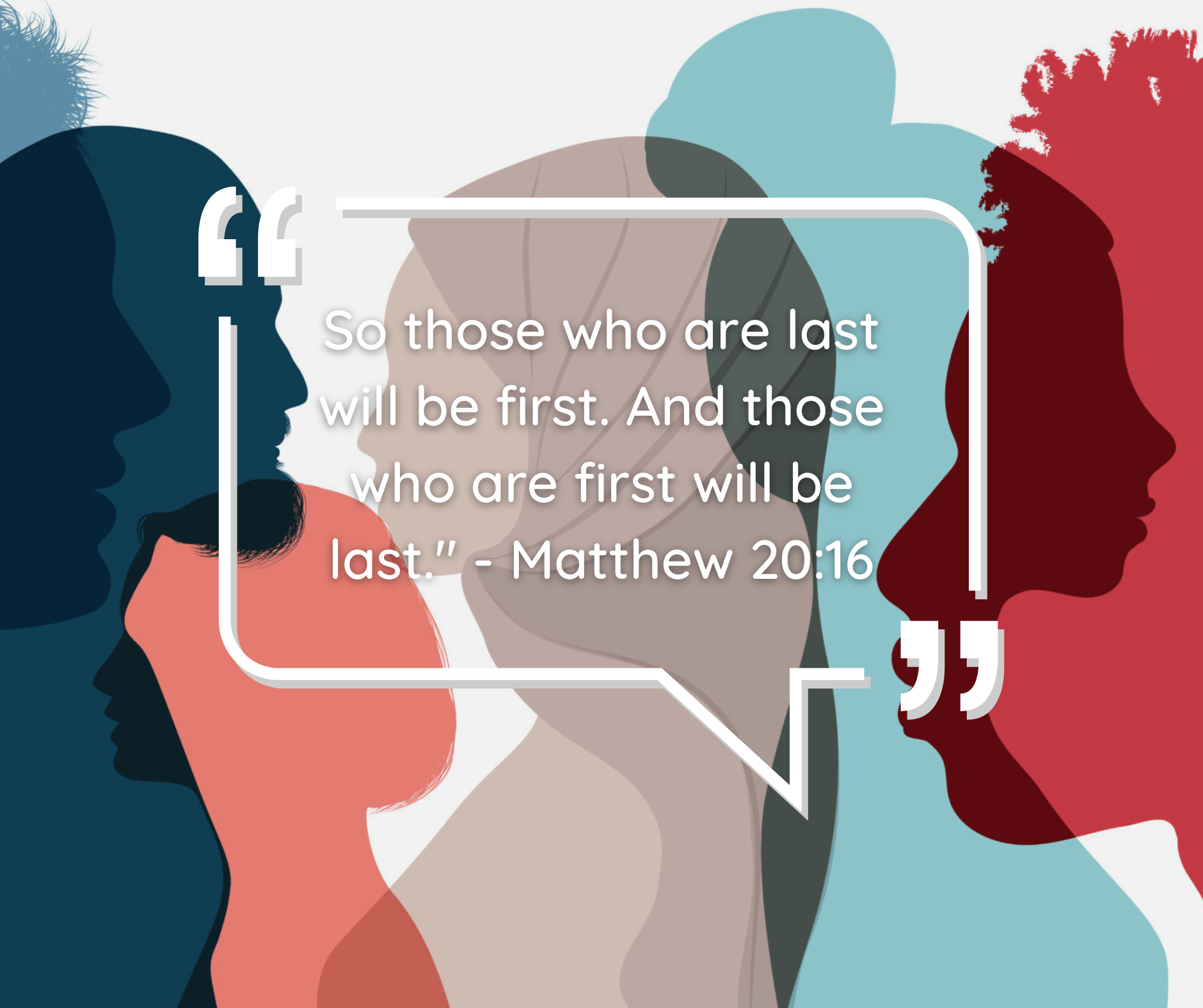
      • Create their own pet club open to everyone … including, on the very last page, the kids who turned them away from the original pet club in the first place → “So those who are last will be first. And those who are first will be last.” You know, the tenderhearted side of us want to go, “Awww. Of course they invited the other kids to their club.” But maybe there’s another part of us that says, “But was that fair of them?”
        • Just like forgiveness last week, fairness is a sticky subject
  • So … let’s just dive right in.
    • Definition of fairness: impartial and just treatment or behavior without favoritism or discrimination → Ideally, there’s a certain level of neutrality expected in fairness.
      • Impartial
      • Without favoritism or discrimination
      • And while we want and hope for and even expect other people to treat us without any impartialities or favoritism or discrimination, we know how hard it can be to actually turn around and grant that kind of neutral, fair treatment to others in turn, don’t we? We cannot deny that as human beings, we are made up of all our experiences – things we have learned, people we have known, ways that we have been treated, and so on. Even in those moments when we say we want to act fairly, it’s really hard to intentionally set aside all that baggage that we bring with us to actually act impartially without favoritism or discrimination.
        • Certainly not the version of “fairness” that kids complain about whenever their parents require something of them that they don’t like → For kids, “That’s not fair!” generally means, “I don’t like that” or “I don’t want to do that.” But is it just kids that use the term “fair” in this way? I kinda don’t think so.
  • This is what makes Jesus’ parable of the workers in the vineyard such a challenging parable this morning
    • Story of a landowner who is in need of workers to harvest his crop in his vineyard → text tells us he hires workers at 5 separate times throughout the day
      • “early in the morning”
      • 9:00 a.m.
      • Noon
      • 3:00 p.m.
      • Finally 5:00 p.m.
      • What’s interesting is that, as far as we can tell, the only time this particular landowner was actually looking for workers was the first time he went out. – text: The kingdom of heaven is like a landowner who went out early in the morning to hire workers for his vineyard.[2]
        • Other times, text just says “he went out” and found all the other workers “standing around in the marketplace” → Now, we know that this guy was a farmer because he’s got a vineyard. And I have to think he must have hailed from the Midwest because his response to seeing all these people standing around in the marketplace throughout the day is, “Let’s go to work!”
    • Also interesting that the only time he actually discusses pay are with the first two groups
      • Group that he found “early in the morning” – text: After he agreed with the workers to pay them a denarion, he sent them into his vineyard.[3] → denarion = roughly equivalent to a full days wage
      • Group that he found at 9:00 a.m. – text: He said to them, ‘You also go into the vineyard, and I’ll pay you whatever is right.[4] → “I’ll pay you whatever is right.” I mean … that could be really nebulous, couldn’t it? Well, maybe in English, but in the Greek, it’s a little more precise.
        • Gr. “whatever is right” = incl. word that means honest, good, just, righteous, upright, even innocent → When applied to a person, this word means someone who is a model citizen. There’s even an element of duty and honor in this word. In fact, it’s the same word from which we get our modern-day term “deacon.” So in using this particular word to describe the wages that these workers will be receiving, Jesus is leaving no room for doubt. It will be utterly and completely fair.
    • Or will it? – text: When evening came, the owner of the vineyard said to his manager, ‘Call the workers and give them their wages, beginning with the last ones hired and moving on finally to the first.’ When those who were hired at five in the afternoon came, each one received a denarion. Now when those hired first came, they thought they would receive more. But each of them also received a denarion. When they received it, they grumbled against the landowner, ‘These who were hired last worked one hour, and they received the same pay as we did even though we had to work the whole day in the hot sun.’[5] → “Now wait just a darn minute!” we think. “That’s not fair.” We can feel the burning indignation of that “early morning” worker, can’t we? Even though we weren’t in on any of the negotiations with the other groups of worker (if there even were any), we don’t like the way this sits. In our society, it’s work more = paid more.
      • Don’t normally do this, but I’m going to read a fairly large chunk of one of my commentaries[6] for you this morning because I just feel like it addresses this whole messy business of fairness so well → commentary written by Patrick J. Willson, HR PC(USA) minister currently living in New Mexico *FOR COPYRIGHT PURPOSES, I UNFORTUNATELY CANNOT INCLUDE THIS IN MY BLOG POST*
        • This brings in an interesting element of the idea of fairness: I … me … mine. Very often, when we’re concerned about fairness, we’re concerned about what’s fair for us. It’s a very self-focused issue. When we perceive something as “not fair for me,” it’s insulting. It’s embarrassing. And if in that perception we decide that it’s not fair for us because someone else got it first … got it better … got it more … then we’re even more incensed.
    • But let me ask you this:
      • Is it fair that in our society – in our wider community of Rochester, even! – that a single-parent household can work three jobs and still not make enough money to afford decent housing?
      • Is it fair that in our society, a new mother is too often forced to choose between going back to work before her body is even healed or getting paid so she can feed her family?
      • Is it fair that so many of our older adults on fixed incomes have to choose which one thing they’re going to be able to afford this month: their housing, their food, or their necessary medication?
      • Is it fair that until very recently, something as essential as insulin was marked up more than 600% from manufacturer’s costs to consumer’s costs?
      • Truly, friends, we have a problem with “what’s fair.” I’ve been working for Paid Family Medical Leave within the PC(USA) for a number of years now, both on the presbytery level and the wider denominational level. I was blessed by this congregation in that, when I needed that leave when my kids were born, no one batted an eye. Y’all said, “Yes. Of course you need time.” But I can’t tell you how many stories I’ve heard from colleagues who have been told other things.
        • “You haven’t earned that kind of leave yet.”
        • “Why would you need so much time?”
        • And from male colleagues, both currently serving AND honorably retired: “Well, my wife never needed leave like that.” 
    • And yet even though we can feel the burn of indignation that those “early morning” workers felt, listen again to the words of the landowner – text: [The landowner] replied …, ‘Friend, I did you no wrong. Didn’t I agree to pay you a denarion? Take what belongs to you and go. I want to give to this one who was hired last the same as I give to you. Don’t I have the right to do what I want with what belongs to me? Or are you resentful because I’m generous?’ So those who are last will be first. And those who are first will be last.”[7]
      • Especially pointed when we realize that this parable comes on the heels of a very particular moment in Mt’s gospel
        • Jesus’ encounter with the rich young ruler who asks how to obtain eternal life à Jesus’ response: “Sell what you own, and give the money to the poor.”[8] → Rich young ruler “went away saddened, because he had many possessions”[9]
        • In the wake of that encounter, we hear Simon Peter speak up: “Look, we’ve left everything and followed you. What will we have?”[10] → Surely, Peter is thinking that it’s only fair for he and the disciples to receive the best that eternity has to offer them – the best place at the heavenly table, the best honors, and so on. And indeed, Jesus assures Peter that there will be good things waiting for those who follow Jesus in the Kingdom of Heaven … but there will be good things for others as well. And then he tells this parable.
    • Continue with Patrick Willson’s commentary[11] *AGAIN, I CAN’T INCLUDE THIS ENTIRE TEXT FOR COPYRIGHT PURPOSES, BUT I WILL INCLUDE  SMALL PORTION OF IT*: If we wait and watch long enough, we come to see that the only way we come to know the goodness of God, the only way we can see the goodness of God, is as it is given to others. We can see the goodness of God more clearly in the lives of others, quite simply because they are other than us. The back of the line offers perspective. … Thus when we see God’s goodness to others – to people we love, to friends, to colleagues, but most especially to those people we do not think deserve such generosity – then we can see the goodness of God for the wondrous miracle that it is. → Thanks be to God. Amen.

[1] Lisa Mantchev. Strictly No Elephants. (New York: Simon & Schuster), 2015.

[2] Mt 20:1.

[3] Mt 20:2.

[4] Mt 20:4 (emphasis added).

[5] Mt 20:8-12.

[6] Patrick J. Willson. “Matthew 20:1-16 – Homiletical Perspective” in Feasting on the Gospels – Matthew, vol. 2. (Louisville: Westminster John Knox Press, 2013), 123, 125.

[7] Mt 20:13-16.

[8] Mt 19:21.

[9] Mt 19:22.

[10] Mt 19:27.

[11] Willson, 125, 127.

Sunday’s sermon: Willing to FORGIVE

Text used – Matthew 18:15-35

  • This year, throughout the season of Lent, we’re going to be exploring different facets of willingness. But willingness can be a complex thing.
    • Element of willingness that requires sacrifice – often a willingness to lay one thing aside or forgo one thing in order to shoulder another
      • Sometimes means a setting aside of self → making space for another
        • For the wisdom & experiences of another
        • For the concerns and challenges of another
        • For the needs of another
    • Can be an element of obligation to willingness → being willing to do something even though it may feel dull, compulsory, or rote
    • Willingness requires dedication → Even if whatever you’re willing to do is something obligatory, you have to be dedicated to something in order to keep doing it.
      • Dedicated to the person that asked you to do it
      • Dedicated to the cause/purpose behind it
      • Dedicated to an outcome or at least a potential outcome
      • This is sort of the way I view laundry. I’m willing to do it even though I find it the most dull and obligatory of household chores because I’m dedicated to the outcome: clean clothes! → a silly example, to be sure, but you get the picture
    • Willingness can also bear beautiful, unexpected fruit
      • So throughout Lent, we’re going to be walking through some of Jesus’ parables and teachings from the gospel of Matthew, each of which has something particular to say to us about the inextricable role of willingness in our faith.
        • Today: forgiveness
        • Next week: fairness
        • Also:
          • Responding to God’s call
          • Preparing to do God’s work
          • Generous welcome/hospitality
          • Reverence/honoring God
          • Going out and sharing our faith
  • Before we dive too deep into this morning’s passage, let’s situate ourselves in Mt’s gospel a little → made a pretty big jump from last week’s text out of Mt 7 to this morning’s text in Mt 18
    • Passage from Mt 7 last week was toward the end of Sermon on the Mount
    • Btwn then and today’s text
      • Lots of healing/casting out demons
      • Jesus calls his disciples
      • Lots of teachings, incl. other well-known parables
        • Parable of the sower/seeds[1]
        • Parable of the mustard seed[2]
        • Parable of the lost sheep[3]
      • Miracles like feeding the 5000[4] and Jesus walking on water[5]
      • Death of John the Baptist at the hands and whim of the Romans[6]
      • Even Jesus predicting his own death and resurrection not once but twice![7]
    • Suffice it to say that a significant portion of Jesus’ ministry has taken place. He’s built up quite the reputation between last week and this week!
  • Turning to this week’s text
    • Two separate sections of Scripture that don’t usually get stitched together in lectionary readings
      • Subtitles from my Common English Bible: “Sinning brother or sister” (vv. 15-20) and “Parable of the unforgiving servant” (vv. 21-35)
      • But the thread that does that stitching is clear: these passages are held together by forgiveness.
  • First section involves community in forgiveness
    • Beginning of passage talks about how to approach someone you’re having an issue with (or who has an issue with you)
      • First, approach them alone → Note: Jesus doesn’t say, “Blast them in a public forum like a community Facebook group or on Twitter.” I don’t know when our society made the turn from actually talking out differences/misunderstandings with one another in person to simply spouting all your frustrations on social media, but I don’t think it’s a turn that’s done us any favors.
        • Interesting to note here – text: If your brother or sister sins against you” → Gr. “sins” = word that carries implications of both intentional and unintentional harm → It’s a term used of archers not hitting their targets – of missing the mark. Jesus is reminding us that even when the harm done us unintended harm, we still need to make amends. We still need to be willing to seek and give forgiveness.
      • If one-on-one conversations don’t resolve conflict, bring others with you → Not as enforcers. Not as people to argue your point with you or for you. Jesus specifically calls them “witnesses” – people who can give an honest, first-hand account of further conversations if need be.
        • Neutral parties, not collaborators waiting to be tagged into the fight
      • If small group mediation doesn’t work, then bring in the rest of the body of faith → This isn’t an element of the church that we like to think about – the idea that we’re all called to keep one another accountable in our journeys of faith. But that’s what Jesus is saying. We’re here to help one another in many ways, and one of those ways is, in fact, conflict resolution. We’re here to help each other work things out with one another.
        • Scholar: Matthew is not prone to sugar-coating much of anything and he gives this subject the same treatment. He assumes the community will experience pain, conflict, struggle, and disagreement as they figure out what it means to be Christ-followers amid conflict, Roman occupation, and competing allegiances. While Matthew doesn’t shy away from his particular brand of intense and hyperbolic declarations, this text feels refreshingly honest about the struggles of living in community. In a time when so many in our churches are asking “Can’t we all just get along?,” Matthew answers “No. But we have a plan for that.”[8]
      • Another interesting thing to note here – text (Jesus): If they don’t pay attention even to the church, treat them as you would a Gentile and tax collector.[9] → Now, that may sound like a dismissive statement. After all, according to the Law, the Jews were supposed to keep themselves separate from the Gentiles. And in first-century Jewish society, tax collectors were detested and generally shunned. They were Jewish citizens who worked for the Roman empire – the occupiers. And yet, Jesus spent his days and his ministry with such as these.
        • Disciple Matthew = tax collector
        • Very often throughout the gospels, the first people (sometimes the only people!) to see Jesus for the Messiah that he is are not Jews but Gentile
        • Scholar: The call to treat [the offender] as a Gentile or a tax collector is not a call to exclude him permanently; after all, Jesus ate with Gentiles and tax collectors and sinners. So considering the offender to be like one them is not a call to shun him, but a call to reach out to him. The community must continue in its effort to make reconciliation a reality.[10] → This emphasizes the most important role that the community plays in forgiveness: the willingness to reach out, to seek reconciliation even when it’s hard. Because somehow it’s always easier to do hard things together.
        • Central context of a verse that we often quote in a totally different context: For where two or three are gathered in my name, I’m there with them.[11] → So often, we cite this verse tenderly, reassuring one another that God is with us when we pray together, even if there are just a few of us gathered. And yet the context of this verse is not gathering for worship but gathering for conflict resolution.
          • Working to smooth out our rough edges that are scraping up against one another
          • Working to heal wounds, old and new
          • Working to bring peace to tension and frustration and misunderstanding
    • Jesus doesn’t promise that this will be an easy process, but it is a process that, if we’re willing, can bear the essential fruit of forgiveness.
      • Scholar: When taken seriously, it is a laborious process. To follow these many steps resists our very human inclination to cut people off who have hurt us or simply let people who have “made their bed, lie in it.” Instead, this is a procedure that insists that the spiritual and relational wellbeing of each person is something worth fighting for and restoration to community is worth our time and energy. In a time when political and social divisions seem to be driving us to opposite corners or, perhaps, separate Bible or book studies; when social media allows us to “unfriend” or “unfollow” those with whom we disagree; when we are invited into echo chambers where we are told those who are different are an adversary or even an enemy that threatens our capacity for success, this text invites us to remember our call as a community. This seemingly pedantic set of rules and regulations for communal living invites us to take seriously both the way our sin impacts others as well as our summons to restore kinship with one another.[12]
        • Heart of our worship practice of confession, assurance, and passing the peace
  • Idea of restoring kinship leads us into the 2nd portion of our passage this morning – “the parable of the unforgiving servant” → sort of plays out the steps that Jesus talks about in the first passage AND drives home the importance of forgiveness
    • First servant owe the king more money than he could ever earn in many lifetimes – “ten thousand bags of gold”[13] → servant begs the king to allow him to repay his astronomical debt instead of throwing him in prison → king goes a step above and forgives his entire debt
    • First servant turns around and seeks out another servant who owes him a paltry debt in comparison to the one that was just forgiven him – just “one hundred coins”[14] → first servant manhandles the second servant, ignoring the second servant’s pleas for time to repay the debt and instead having him thrown in prison
    • All witnessed by yet another servant who takes the matter to the king → king calls the first servant before him, reprimands him for his lack of compassion and reciprocal forgiveness → king has the first servant thrown in prison
    • Jesus’ final words: My heavenly Father will also do the same to you if you don’t forgive your brother or sister from your heart.[15] → Anyone who’s tried to forgive someone for something – which is basically anyone who’s been human for more than a minute! – knows that this is a hard ask. Forgiveness isn’t easy because hurts don’t fade quickly. Our bodies take time to heal when we’ve been injured – sometimes a long time – but even that healing time is miniscule when compared to how long it takes our souls to heal.
      • According to research, it takes 5 positive comments to offset 1 negative comment → And that’s just in terms of general feedback – constructive criticism. That doesn’t pertain to all the barbs and insults and brokenness that we verbally hurl at one another.
        • We taunt “Sticks and stones may break my bones, but words will never hurt me” … but we only toss out that patently false verse when we’ve already been hurt, right?
      • And yet Jesus implores us to forgive. Because we have all already been forgiven. Forever. Dang. It’s hard.
        • Scholar: Like the debt numbers in this parable, we have been recipients of grace in amounts that we can hardly count. If we do not forgive the transgressions of our human experience in light of the outrageous abundance of the way we have been forgiven, we are at risk of being convicted alongside the servant. We are being called to liberal forgiveness.[16] → Jesus implores us to forgive. So … are we willing? Amen.

[1] Mt 13:3-9, 18-23.

[2] Mt 13:31-32.

[3] Mt 18:10-14.

[4] Mt 14:13-21.

[5] Mt 14:22-33.

[6] Mt 14:1-12.

[7] Mt 16:21-23; 17:22-23.

[8] Kimberly Wagner, “Commentary on Matthew 18:15-35” from Working Preacher, https://www.workingpreacher.org/commentaries/narrative-lectionary/forgiveness/commentary-on-matthew-1815-35-3.

[9] Mt 18:17b.

[10] Ada María Isasi-Díaz. “Matthew 18:12-22 – Theological Perspective” in Feasting on the Gospels – Matthew, vol. 2. (Louisville: Westminster John Knox Press, 2013), 92, 94.

[11] Mt 18:20.

[12] Wagner.

[13] Mt 18:24.

[14] Mt 18:28.

[15] Mt 18:35.

[16] Dock Hollingsworth. “Matthew 18:21-35 – Pastoral Perspective” in Feasting on the Gospels – Matthew, vol. 2. (Louisville: Westminster John Knox Press, 2013), 102.

Sunday’s sermon: Do Unto Others …

Text used – Matthew 7:1-12

  • I want to read a little bit of an article for you this morning. It’s an article that originally appeared in the Spring 2013 issue of INSIGHT magazine – the publication for the Chicago School of Professional Psychology – and was updated for publication on their website in 2016.
    • Title: “A Virtual Life: How Social Media Changes Our Perceptions”[1] – READ first few paragraphs (up to subheading “The Unreal World”) → Now, I’ll be the first to admit that I use social media all the time, both for myself and for church things.
      • Church side:
        • How we get the word out about events (Trunk or Treat, Christmas Cookie Sale, etc.)
        • Way to keep in touch with members/friends who have moved away or are gone for a season
        • Fun way to interact with one another for various liturgical purposes → e.g.: Lenten Photo Challenge
        • Obviously streaming our service on social media right now!
      • Personal side:
        • Keeping in touch with friends and family members → My aunts and uncles are spread all across the country, so social media is the way they keep up with my kids and my family.
        • Sense of community
    • And yet, despite all those reasons that we use social media, we cannot deny that the expectation … the showmanship … the judgmentalism … the pressure placed on individuals by social media can be toxic.
      • Recent phenomenon that has surface in the last 5 yrs. or so → people seeking plastic surgery to make their “real” face look more like any number of filters you can find in social media apps
        • “Filters,” for those unfamiliar, are appearance-altering digital image effects used on social media
          • Some simply change the coloring of an image (make it black and white, sepia toned, etc.)
          • Some add silly things like puppy ears or Darth Vader’s head to your image
          • Some alter the look of your face just slightly – bigger eyes, softer skin, poutier lips, etc.
        • Phenomenon has become so common it actually has a name: Snapchat Dysmorhpia[2]
    • All of this speaks volumes about the way that social media expectations have taken over our society. As Kenneth Gergen said (referenced in that article we read): “I am linked, therefore I am.” And yet with the social silos – the opinion echochambers – that social media creates, we have also become a society that surrounds ourselves with only the information that agrees with what we believe … that enforces our already-held beliefs (whether they’re based on facts or misrepresentations) … that “prove” to us that whatever we’re shouting about, whatever we’re anxious about, whatever we fear must be right “because I found it on the internet.” Because of our social media silos, we have become more insulated, more segmented, more disconnected than ever before. If ever there was a time when we needed to hear anew Jesus’ words from this portion of the Sermon on the Mount, friends, it is now.
  • Seems like a pretty straightforward list of commands
    • 1: Don’t judge.
    • 7: Ask, and you will receive.
    • Finished off roundly with v. 12 – the Golden Rule: Treat people in the same way that you want people to treat you.
    • But if they’re all such straightforward, “easy” things, why are we still struggling with them more than 2000 yrs. later?
      • Short answer: Because being human is hard. It was hard then. It’s hard now. And while some of the things that make it hard have certainly changed – we don’t have to worry about Roman conquerors crucifying us for stirring up trouble, they didn’t have to worry about the negative effects of social media on an entire population … truly, while some things have changed, there are still some things about being human that were just as hard back then as they are today, and I think the biggest one is the most obvious: it’s hard being human together. → need for community is an inherent part of us
        • Seek out people who are like us in some way – look like us, think like us, interested in same things we’re interested in, etc. → The vast array of extracurricular activities available at any high school or college is the perfect example of this.
          • My alma mater, UWEC (talked about a few weeks ago): campus of 10,000 students has 200+ student organizations → everything from fraternities and sororities to curling club, from mock trial to drone club, from faith-based groups to cultural associations, and more!
          • We seek out people who have things in common with us because as human beings we crave community – we crave that hit of oxytocin released by our brains when we’re with people we enjoy, friends and family.
        • And yet there are truly no crueler things done on this earth than the things that human beings do to one another, are there? Jesus knew that. Jesus knew that being human wasn’t easy.
          • If we follow the theology of John’s gospel – “In the beginning was the Word and the Word was with God and the Word was God. The Word was with God in the beginning. Everything came into being through the Word, and without the Word, nothing came into being.”[3]then Jesus knew that being human wasn’t easy from the very beginning … before even taking on the mantle of humanity in the incarnation, Jesus knew things were going to be hard. But he came anyway.
          • Even if we just take the years of life that Jesus had already lived before speaking these words during his Sermon on the Mount, Jesus had lived plenty. He would have seen … would have experienced … would have understood just how hard life could be. But he taught anyway. → tried to teach the people a better way to be humans together
  • So let’s take a deeper look at that seemingly-straightforward list.
    • First portion = about judgment and hypocrisy – Jesus’ famous words about being preoccupied with the splinter in your sibling’s eye while ignoring the log in your own → It’s so easy for us to point out the flaws in other people, isn’t it? We see so clearly the ways they’re messing up … the ways they’re misunderstanding … the ways that they could “so easily” improve. And yet, as the old adage goes, when you’re pointing one finger at someone else, there are always three more fingers pointing back at yourself.
      • Scholar: There can be no right judgment without a considerable about of introspection. … There is something about introspection, about being honest and truth about oneself with oneself, that makes the human heart more pliable and sympathetic in regard to the plight of other people.[4] → It’s so much easier to judge others … but the only people that we can truly improve in this world are ourselves. Jesus both reminds us that we are far from perfect and emphasizes just how important it is to work on ourselves in order to be better for those around us.
    • Second portion = about asking and receiving → This portion of the passage is harder than it appears on the surface because of that age-old haunting question: “Why doesn’t God answer my prayers?”
      • Wrapped up in struggles with discerning God’s will over our own desires/intentions
      • Wrapped up in struggles with following and obeying God’s will
      • Wrapped up in struggles with the classic battle between good and evil, between what is reality and what we claim is “fair” … struggles all bound up in that glimmering, gossamer thread called hope → Because in actuality, this is not an assurance of the “vending machine” version of God that we wish it could be. Even so, there is a hidden promise in Jesus’ imperative here.
        • Gr. verb tense for all those directives in v. 7 – “ask,” “search,” and “knock” – are indicative future
          • Scholar: meaning that they have not happened yet, and there is no specific indication of the time when they will come to pass. The paradoxical phrase “already and not yet” is apt to describe the fulfillment of God’s work in the world.[5] → So Jesus is promising that when we ask for beneficial things – when we ask for good things from the one who loves us greater and deeper and wider than anyone else has ever can ever or will ever love us – God will hear us and work in us and through us for good.
    • All wrapped up with that final verse – certainly one of if not the most familiar verse in all of Scripture: Therefore, you should treat people in the same way that you want people to treat you.[6]
      • Golden Rule = present in some form in various cultures around the world
        • Variation: “Silver Rule” à Do not do to others what you do not want done to you.
      • On the surface, the Golden Rule feels like it’s about us, right? If you strive to “treat other people the way you want to be treated,” you have to at least take the way you want to be treated into consideration, right? But when we think about it, it really isn’t about us at all.
      • Let me tell you a story. When I was in middle school – well, all throughout middle and high school, really – I had the world’s biggest crush on my best friend. Let’s call him Max. Sadly, despite all my pining and all my prayers, Max did not feel the same way about me. He knew how I felt, but he didn’t feel the same. But we were still best friends. One night, we were at a middle school dance along with all the rest of our friends. All middle school dances are a nightmare, right? Well, this was no different. I was crying because the boy I wanted to dance with didn’t want to dance with me. We got to the last song of the night, which of course was a slow song, and Max told all of us to sit down around a table. He said, “We’re going to play poker.” We didn’t have any cards, so this was imaginary poker. He dealt out our “cards,” then went around the table declaring what everyone’s hands were. He got to me last, and, having tumbled to how his game was played, I laid my “hand” down and said, “Four aces.” Max looked and me and said, “Yup. You win. Let’s dance.” And we did. By the time we got through all of that and actually made our way out onto the dance floor, there wasn’t more than a minute or so of the song left, but that didn’t matter. At that point, it wasn’t even about the dance anymore. Not really. It was about being seen – truly seen – by another person. By someone that cared. It was about experiencing compassion … and giving compassion. It was about putting aside all the hard things about being human and instead choosing to be human together in the best possible way. That is what Jesus asks of us. that is who and how we are called to be. Amen.

[1] Sherry Thomason. “A Virtual Life: How Social Media Changes Our Perceptions” from Insight, spring 2013, updated for website 7 Oct. 2016: https://www.thechicagoschool.edu/insight/from-the-magazine/a-virtual-life/. Accessed 19 Feb. 2023.

[2] https://www.ncbi.nlm.nih.gov/pmc/articles/PMC5933578/.

[3] Jn 1:1-3.

[4] Mark A. Lomax. “Matthew 7:1-6 – Homiletical Perspective” in Feasting on the Gospels – Matthew, vol. 1. (Louisville: Westminster John Knox Press, 2013), 155.

[5] Leah D. Schade. “Matthew 7:7-11 – Theological Perspective” in Feasting on the Gospels – Matthew, vol. 1. (Louisville: Westminster John Knox Press, 2013), 162.

[6] Mt 7:12a.

Sunday’s sermon: How to Do and Be

Text used – Matthew 6:7-21

  • I went to college at the University of Wisconsin – Eau Claire, which is referred to throughout much of the UW System as “The Singing University.”
    • Choral education = popular major
    • But beyond the academics of it, people knew that if you loved to sing, you could find a place at UWEC. → 9 separate vocal performance opportunities
      • Large ensembles
        • Women’s Concert Chorale
        • Concert Choir
        • Symphonic Choir
        • Treble Choir
      • Small groups
        • Fifth Element
        • Innocent Men
        • Gospel choir
        • Newest: Novum Voce (perform only Renaissance music)
    • But the epitome as far as campus-wide recognition and status was the men’s choir: The Singing Statemen. I often joke that at my college, no one knew who the football players were, but everyone knew the Statemen.
      • Nothing like a Statemen concert
        • Always dressed in black tuxes with tails, white cummerbunds, and white ties
        • Always ran on stage in a way that looked like chaos but inevitably found each choir member perfectly in his place
        • Always included a boisterous and rousing rendition of the UWEC fight song
        • Always included a song for which they’d invite former Statemen in the audience to join them on stage → Because the Statemen weren’t just a choir. They were a brotherhood. “Once a Statemen, always a Statesmen,” as their motto went.
      • My friends and I went to a lot of Statemen concerts because some of our closest friends were Statemen, but there was one particular song that continues to reverberate within me almost 20 yrs. later. It’s a song that’s become a bit of a signature of theirs at this point – so much so that, when the Statemen put together a 50th anniversary choir in 2016, this is one of the songs that they sang. – song: “Ave Maria” → But not the more well-known version by Austrian composer Franz Schubert. This is the version by German composer Franz Biebl published in 1964.
        • Put a link to the Statemen’s 50th anniversary of this song on Facebook this morning (for at home or later)
        • Power of this version of the classic Latin prayer = layering of sound and harmony → each section of the music begins with a single voice (or, in some versions, a handful of voices singing in unison) → following that introduction, the music blossoms into this deep, rich tapestry of sound

  • The melody and harmonies progress in such a way that it doesn’t hit you all at once like a wall of sound but grows slowly sort of the way bread rises. One moment, it’s low and simple, but a few moments later, you realize it’s big and complex and resonating. And it’s that element of this that made me think of our Scripture reading this morning. → today’s passage = part of Jesus’ Sermon on the Mount
    • Begins with Jesus’ teaching about prayer (speaking in the terms of Biebl’s “Ave Maria,” this is that first section) → And Jesus opens this section on prayer with a simple refrain: When you pray, don’t our out a flood of empty words, as the Gentiles do. They think that by saying many words they’ll be heard.[2]
      • Adds another layer to his teaching on prayer: Don’t be like them, because your Father knows what you need before you ask.[3] → To that simple refrain of the centrality of prayer in our lives of faith, Jesus adds this assurance that God is listening.
        • Assurance that our prayers aren’t just floating off out into the ether … aren’t just words disappearing on the wind
        • But even deeper than that, Jesus assures us that God knows before we even ask.
          • Scholar puts words to the amazing audacity of this declaration: This is an extraordinary claim on God’s behalf! The creator of the whole world and its people is predisposed with intimate interest in individuals’ lives and actions.[4]
      • Develops the beautiful complexity of his lesson of prayer with yet another layer – a layer full of its own harmonies and themes: Pray like this: Our Father who is in heaven, uphold the holiness of your name. Bring in your kingdom so that your will is done on earth as its done in heaven. Give us the bread we need for today. Forgive us for the ways we have wronged you, just as we also forgive those who have wronged us. And don’t lead us into temptation, but rescue us from the evil one.[5] → I love the depth that we find in this because it’s a different translation. We all have the familiar words of the Lord’s Prayer that we learned growing up – debts and debtors, trespasses, sins. And sometimes those words have become so familiar that we forget what we’re actually saying … what we’re actually praying. We rattle our way through them because “it’s that time in the service” without thinking about them, sending them straight out of our mouths without letting them marinate in our hearts and our souls. So this different translation of those oh-so-familiar words makes us take them in and ponder them and pray them in a whole new way.
        • Sheet of Alternative Lord’s Prayers → ways for you to add your own depth and harmony to the melody of the prayer that you’ve known and recited for so long
          • Exercise: we’re going to recite the 2-sided one together (back of the page, the one from the Dominican Sisters Retreat, March 1993)
          • Scholar: Jesus’ prayer thumps along to the beating of our hearts. … If one brings this prayer to life, once one leaves the privacy of the prayer room and returns to the chaos of real life, strange things will happen.[6]
        • To finish out this section, Jesus takes that singular theme of forgiveness and develops that with more attention and depth: If you forgive others their sins, your heavenly Father will also forgive you. But if you don’t forgive others, neither will your heavenly Father forgive your sins.
          • Scholar: While the beginning lines of the prayer elevate our attention toward the heavens, by the conclusion we are stuck in the belly of our soul, because we are unwilling to forgive others and thereby unable to receive the forgiveness promised us by God. … Imagine what it would be like if forgiveness retained a place in all human relationships. Imagine that instead of pointing fingers at each other we presented gifts wrapped in the fabric of forgiveness. What if, rather than laughing at the predictable fall of hypocrites, we raced to catch them and soften their landing.[7]
    • From there, Jesus starts a new section with a new theme: fasting – text: And when you fast, don’t put on a sad face like the hypocrites. They distort their faces so people will know they are fasting. I assure you that they have their reward.[8]
      • Goes on to layer and develop and beautify this theme of fasting
        • How to fast
        • How to present yourself to God while you’re fasting
        • Jesus’ assurance (similar to his assurance in his section on prayer): Then you won’t look like you are fasting to people, but only to your Father who is present in that secret place. Your Father who sees in secret will reward you.[9]
    • And the final theme that Jesus introduces and then layers and beautifies in this portion is the idea of treasures and reward.
      • Stems from his previous theme (just as his theme of forgiveness stemmed from his discussion on prayer)
      • Sort of like that beautiful, drawn out, full voice, full harmony ending “Amen” from “Ave Maria” → This short discourse on treasures really puts an “amen” on this entire section of text. – Jesus: Stop collecting treasures for your own benefit on earth, where moth and rust eat them and where thieves break in and steal them. Instead, collect treasures for yourselves in heaven, where moth and rust don’t eat them and where thieves don’t break in and steal them. Where your treasure is, there your heart will be also.[10] → Sure, this applies to our material treasures – our monetary treasures. “Follow the money” is a phrase for a reason, right? But more than that, Jesus is reminding the people – all the people gathered around him from that Galilean hillside and down through the millennia to us gathered today – that it’s more about their heart-treasures.
        • Their attention
        • Their devotion
        • Their focus
        • Their fixation
        • Wherever it is that your heart lands again and again and again – when you’re sad or scared or struggling – that’s what you treasure. The question this morning – one for you to ponder as we move on with our worship and our business as a congregation – is simple: Is your landing place – your treasure place – God? Amen.

[1] https://www.chanticleer.org/mission-and-history.

[2] Mt 6:7.

[3] Mt 6:

[4] Robert J. Elder. “Matthew 6:7-15 – Theological Perspective” in Feasting on the Gospels – Matthew, vol. 1. (Louisville: Westminster John Knox Press, 2013), 122.

[5] Mt 6:9-13.

[6] Amos Jerman Disasa. “Matthew 6:7-15 – Pastoral Perspective” in Feasting on the Gospels – Matthew, vol. 1. (Louisville: Westminster John Knox Press, 2013), 124.

[7] Disasa, 124.

[8] Mt 6:16.

[9] Mt 6:18.

[10] Mt 6:19-21.

Sunday’s sermon: Happy Light, Blessed Salt

Text used – Matthew 5:1-20

  • I actually want to do something a little bit different this morning (surprise, surprise … right?) I want to bookend this morning’s sermon with our hymn, so to start off with, we’re going to sing the hymn that’s listed after our “Exploring the Word Together” time – #401, “Here in This Place.”[1]

  • So I wanted to start the sermon with this hymn this morning for a few reasons.
    • FIRST, much of the language as well as the theme of the hymn come straight from our text this morning à doesn’t necessarily overtly quote direct passages from Mt 5, but the wording is there
    • ALSO, it basically preaches my sermon for me this morning! → So I wanted you to have the words in your ear and your head and your heart before we even got going this morning. You could even keep your hymnal open or your finger in the page, if you want to.
  • Disclaimer before we start: When we read Scripture on Sunday mornings, we use the Common English Bible.[2]
    • Copyright information listed alongside the passage in your bulletin every week
    • Translation that comes straight from the Hebrew and Greek texts (as opposed to an update of an already-existing English translation) by a committee of dozens of highly respected Biblical scholars
    • Collaboration of various denominations including the Disciples of Christ, the PC(USA), the Episcopal Church, the UCC, and the United Methodist Church
    • So it’s accurate. It’s collaborative. And above all, I think it’s a lot easier to read than even the New Revised Standard Version or the New International Version. And 99% of the time, I agree with the translation choices that this committee makes for the text. However, today I don’t. Let me tell you why.
      • Gr. word at the beginning of each of the Beatitudes can certainly be translated as “happy” or even “fortunate” → So it’s an accurate translation. BUT in my opinion, translating that word as “happy” instead of “blessed” strays too easily into the territory of toxic positivity.
        • What is toxic positivity? – brief description from Psychology Today: Toxic positivity is the act of avoiding, suppressing, or rejecting negative emotions or experiences. … Although setting aside difficult emotions is sometimes necessary temporarily, denying negative feelings long term is harmful because it can prevent people from processing their emotions and overcoming their distress. … Positivity only becomes problematic when it functions to reject negative emotions—if someone responded to a disclosure of distress, for example, with “It’s all for the best, “Just try to be positive,” or “Good vibes only!”[3]
  • The situations that Jesus is describing in the Beatitudes aren’t necessarily ideal or easily situations – hopelessness, grief, humility, seeking after righteousness, showing mercy, being pure in heart, making peace, being harassed and insulted. Even the traits that we would think are positive traits – humility, mercy, pureness of heart, and peace – are not easy pursuits. They are traits that we need to cultivate and practice and continue to strive for. And I feel like couching these difficult situations in language as bright and sparkling and laden with expectations as the word “happy” can be might actually be damaging to our experience of faith.
    • Expecting happiness in the face of hopelessness?
    • Expecting happiness in the face of grief?
    • Expecting happiness in the face of insults and harassment and persecution?
    • I don’t think that’s real life. But finding blessing in those moments? That’s a whole other matter.
      • Basic definition of blessing: God’s favor and protection
      • Seeking out God’s favor and protection in the face of hopelessness?
      • Seeking out God’s favor and protection in the face of grief?
      • Seeking out God’s favor and protection in the face of insults and harassment and persecution?
      • Now, to me, that sounds like faith.
        • Brings to mind the writing of Martin Luther King, Jr., especially as we honored his birthday this past week → King’s writings hold nothing back about the injustice, violence, struggle, and oppression that African American faced then and still face today. King names the pain. He names the hatred and brokenness. He names the despair and fear. But at the same time, he holds space for hope and promise and blessing – God’s favor and protection – in the midst of those struggles. He strikes that balance between forcing happiness in the face of entirely unhappy circumstances and still finding blessedness in them.
          • From King’s last essay “A Testament of Hope” (1968 – published posthumously): People are often surprised to learn that I am an optimist. They know how often I have been jailed, how frequently the days and nights have been filled with frustration and sorrow, how bitter and dangerous are my adversaries. They expect these experiences to harden me into a grim and desperate man. … They have no comprehension of the strength that comes from faith in God and man. It is possible for me to falter, but I am profoundly secure in my knowledge that God loves me; he has not worked out a design for our failure. Man has the capacity to do right as well as wrong, and his history is a path upward, not downward.[4] → I don’t hear happiness in that … but I do hear blessedness overflowing!
  • Now, in terms of the way this Scripture reading is usually broken up, I think too often we stop there. We neatly finish up our reading of the Beatitudes, close our Bibles, and call it a day. But I like the way the Narrative Lectionary continues on through the next eight verses as well because these verses give us the “how” to the “what” of the Beatitudes. In the Beatitudes, we find Jesus reassuring people that even in the midst of the difficulties of being human, they can find blessing in faith. In the following verses, Jesus explains to them how and why that blessedness is so important.
    • Text: “You are the salt of the earth. But if salt loses its saltiness, how will it become salty again? It’s good for nothing except to be thrown away and trampled under people’s feet. You are the light of the world. A city on top of a hill can’t be hidden. Neither do people light a lamp and put it under a basket. Instead, they put it on top of a lampstand, and it shines on all who are in the house. In the same way, let your light shine before people, so they can see the good things you do and praise your Father who is in heaven.[5] → I saw a post from a fellow clergyperson on social media this week that was lamenting the prevalent slang usage of the term “salty” and how that was making it different for her to write her sermon in this passage.
      • (If you’re not familiar) – slang usage of “salty”[6]: annoyed or upset, especially when this is unreasonable → And while I know that that definition has a negative connotation, the term “salty” is most often used in a teasing manner. If I had a dollar for all the times moms in my circles have used the term “salty” to describe the way their toddler is acting in that moment, I’d be rich! But when those moms say it, they’re not saying it in a mean-spirited or angry way. They’re saying it in that endearing, exhausted, fully honest way that moms talk about their kids with one another.
        • Their “salty” kids are being brazenly independent → testing boundaries, testing their own abilities and limits, testing out different characteristics and elements of personality
        • Their “salty” kids are speaking up (a lot!) and speaking out (a lot!) and making sure their voices and their opinions and their desires are heard (a lot!)
        • Their “salty” kids are keeping them on their toes in all the ways: physically, mentally, emotionally
      • Feel like this definition of “salty” actually fits the passage and our purpose this morning pretty darn well → Jesus is exhorting the people to remember that their purpose is to affect the world around them – to enhance it, to enliven it, to change it.
        • Scholar: Salt, if added in the right amount at the right time in the right way, enlivens and enhances a meal’s other flavors. It brings them out. It makes them themselves, only more so – and the Christian community can and must do the same. We should bring our own flavor to the mix, of course, spicing things up here and there. Then, just as much, we should work to enhance other flavors, enliven other tastes, making the world more savory, more delicious, more beautiful. If we do not, what good are we?[7] → In order to do that – in order to bring about that more delicious and more beautiful world – we have to have the courage and the saltiness to cause some discomfort … to interrupt the status quo … to propose a new way of doing and seeing and being … the drive change.
    • Same with the “light” that Jesus mentions in this passage → Guided by God and our own faith, we have to be willing to shine a light, even on some of the most shadowy, neglected, cobweb-adorned corners of society.
      • Not always easy
      • Not always comfortable
      • Certainly not always a happy prospect … but still, a blessed one
      • Think of how your eyes feel when you turn a light on first thing in the morning. There’s that immediate shock. Sometimes, depending on how bright that light is, there’s even pain. We close our eyes. We shrink away. But we need the light to usher us into the day ahead – so we don’t stub our toes or stumble over an unseen obstacle. Jesus is exhorting the people to remember that a necessary, vital element of their faith is to reveal those parts of life that need to be seen: injustices, failings, misdirections.
    • Jesus’ call to be salt and light = Jesus’ reminder to the people why it’s important – why isn’t essential! – that they endure those challenging situations in which they will find blessedness AND his promise that there is blessedness to be found even in those situations
      • “You will be blessed even in your hopelessness because God will be with you. Others will see your faith enacted in hard times, and you will show them the way.”
      • “You will be blessed even in your grief because God will be with you. Others will see your faith even in the midst of heartbreak and loss, and you will show them the way.”
      • “You will be blessed even in your persecution because God will be with you. Others will see your faith in your determination and fortitude, and you will show them the way.”
      • Hear Jesus’ promise that God will be with us in that last part of our passage
        • Jesus speaks of fulfilling the Law and the Prophets à of bringing fullness and blessing and completeness to what has come before … bringing his own saltiness to the Law and the Prophets, shining a new light on the promises of old
        • Jesus speaks reaching out through our actions and words to live our faith and share it with those around us in ways that are authentic to our experiences but will also bring about change
  • With all that in mind, let’s sing through our hymn again this morning. Listen for the affirmation. Listen for the call. Listen for the blessing … the salt and the light.

[1] Marty Haugen. “Here in This Place” in Glory to God. (Louisville: Westminster John Knox Press, 2013), #401.

[2] https://www.commonenglishbible.com/explore.

[3] https://www.psychologytoday.com/us/basics/toxic-positivity.

[4] Martin Luther King, Jr. “A Testament of Hope” in A Testament of Hope: The Essential Writings of Martin Luther King, Jr., ed. James M. Washington. (San Francisco: Harper & Row, 1986), 314.

[5] Mt 5:13-16.

[6] https://dictionary.cambridge.org/us/dictionary/english/salty.

[7] Matthew Myer Boulton. “Matthew 5:13-16 – Pastoral Perspective” in Feasting on the Gospels – Matthew, vol. 1. (Louisville: Westminster John Knox Press, 2013), 82, 84.

Sunday’s sermon: Thirsty Roots

Text used – Matthew 3:1-17

  • As we mentioned in our prayer requests this morning, we’ve had a stark and forceful reminder this week of the power of water. The heavy storms that have brought record rainfall to California have done an incredible amount of damage.
    • Caused sinkholes that have swallowed up cars and destroyed roadways
    • Water level of the Salinas River in central CA has been above flood stage since Friday[1] → river has inundated homes, businesses, and farmlands
    • Flood warnings and evacuation orders issued in a dozen counties all along the coastline[2]
    • Mudslides in northern CA have consumed roads and devastated homes in the same area where, just 5 short yrs. ago, a catastrophic debris flow claimed the lives of 23 people in Montecito
    • More than 24,000 people left without power[3]
    • This intense, heavy rainfall has already claimed the lives of 17 people, and there’s more rain in the forecast this week. And yet, in the midst of all this water-caused devastation, it remains a fact that California is also in the midst of an extreme drought situation. It’s such a startling, compelling illustration of both how vital and how volatile water is in our world and in our lives.
      • Press release put out by the United Nations a little over a year ago (Oct. 2021): Water is increasingly being treated as a mere commodity and even as a financial asset, a UN human rights expert told the UN General Assembly today, undermining the human rights to safe drinking water and sanitation and the sustainability of the environment. Pedro Arrojo Agudo, the Special Rapporteur on the human rights to safe drinking water and sanitation, said in a report that trading of water use rights in markets has eroded the notion of water as a common good and the State as a guarantor of the general interest. The UN expert also pointed out that water trading tends to treat the environment as just another user, and not as the basis of life, forcing States to purchase flows for environmental needs, and failing to address the roots of unsustainability … The recent entry of water as a commodity derivative on Wall Street futures markets aggravates the situation by subjecting water to the forces of financial speculation and to risks of speculative bubbles, not taking into account the demands of human rights and the sustainability of ecosystems, he said.[4] → This is where we find ourselves today, friends: living in a world in which the most essential element on the planet – something necessary for all life to survive and thrive – is being used as a weaponized commodity.
        • Water scarcity is a real and imminent danger all around the world → quick Google search for “water as weaponized commodity” yields results listing actions in China, Iraq, the West Bank, Syria, and many other places in which access to clean water for drinking, for sanitation purposes, and for daily living has been restricted or outright denied as a means of punishment and oppression
    • Truly, friends, in our world today, water is power.
  • And today in our worship, we mark the baptism of Jesus – a day drenched in water and Spirit, a day in which we usually wash our own spirits and hearts in the cooling waters of reassurance as we hear John’s words of prophecy and praise … as we hear the equanimity of Jesus’ request to be baptized just like the rest – just like those who came before and just like those who would come after – just like us … as we hear the reverberating echo of God’s praise and acceptance and love: “This is my Son whom I dearly love; I find happiness in him.”[5] → find all of these things in our passage today, too
    • Begins with John’s call to the people – John’s challenge for the people → John’s words at the very beginning of this passage make clear something that I think in a lot of ways we’ve forgotten in the mainline church today: baptism is a call to and acceptance of a life, a way, a faith.
      • Text: In those days John the Baptist appeared in the desert of Judea announcing, “Change your hearts and lives! Here comes the kingdom of heaven!” … People from Jerusalem, throughout Judea, and all around the Jordan River came to him. As they confessed their sins, he baptized them in the Jordan River.[6] → here reveals the requisite intent in John’s call
        • Gr. “change” = repent, feel remorse – written in the imperative form which is not a simple suggestion but a command → John is making it clear that baptism requires a response in our emotions, in our lives, and in our faith. You see, the action of repenting is not just a “one and done” sort of action. The intent of repenting implies expressing regret over our words, actions, and attitudes, yes – saying “sorry,” if you will – but also allowing that regret to shape our words, actions, and attitudes going forward. Someone who repents but then goes right back to saying and doing and being the way they were before has not truly repented.
          • Scholar sheds an interesting light on this: In most church contexts, repentance is associated with guilt. People repent because they want to absolve themselves of the guilt incurred by sins they know they have committed. John’s repentance has little to do with the guilt that causes us to wallow in despair. Repentance for John is an action. John Howard Yoder understand clearly what this repentance looks like: “To repent is not to feel bad, but to think differently.”[7] → It is that call to live differently in the act of baptism that I think we’ve too often forgotten in the mainline church. When we baptize – whether we’re baptizing an infant, an adult, or any age in between – we’re making the promise to live differently and to help the one being baptized live differently. We shouldn’t baptize because Grandma expects it. We shouldn’t baptize because “it’s what we do.” We should baptize because we feel the pull of faith and the overwhelming abundance of grace in our own lives and want to see that lived out.
            • As parents who baptize their kids, we make that promise in regards to how we will raise them
              • Talking about God
              • Making space for God
              • Helping to foster their relationship with God
              • We don’t promise that we’ll have all the answers to the myriad of impossible questions that kids have about God (heck … even I don’t have a lot of those answers!), but we do promise to let those questions deepen our children’s relationship with God as well as our own.
          • Portion of “Theology of Baptism” from the Book of Order: [read from W-3.0402] → The waters of baptism flow abundant and pure, free and refreshing. The waters of baptism engulf us in the grace of God and immerse us in the movement and work of the Holy Spirit. Truly, friends, remember your baptism and be thankful, and know that the Holy Spirit is at work within you.
  • But at the same time, there’s another part of our passage this morning that we don’t normally hear on this Sunday – a part of the passage that brings contention to those reaffirming and holy waters, a part of the passage that reminds us that water and challenge have gone hand-in-hand for as long as humans have sought out the water.
    • Text: Many Pharisees and Sadducees came to be baptized by John. He said to them, “You children of snakes! Who warned you to escape from the angry judgment that is coming soon? Produce fruit that shows you have changed your hearts and lives. And don’t even think about saying to yourselves, Abraham is our father. I tell you that God is able to raise up Abraham’s children from these stones. The ax is already at the root of the trees. Therefore, every tree that doesn’t produce good fruit will be chopped down and tossed into the fire.”[8] → It’s certainly not the only time that Matthew calls out the Pharisees and Sadducees in this gospel account, but it is the first time. Maybe it’s because it’s the first time that it feels so harsh, or maybe it’s because John’s judgment in this passage is juxtaposed with the beauty and acceptance and joy of Jesus’ own baptism just a few lines later. But in actuality, it’s because of that beauty and acceptance and joy that this part of the passage is so important.
      • As we said, John’s call to baptism = call to change our hearts and minds, to truly repent not just in word but in deed and in dedication → It’s a called to a renewed and authentic relationship with God.
      • But we know that throughout Matthew’s gospel narrative, this is a change that the Pharisees and Sadducees refuse to make. They are the quintessential lived example of those who refused to see Christ for who he was and to receive the grace of God when it was literally walking and teaching and loving and breathing in their midst.
        • Important to point out – this is not just about the Pharisees and Sadducees à scholar: The message is not some distorted rejection of Israel, in the form of the Pharisees and Sadducees, as the divine judgment of the gospel. We are included among any who hold the divine call for repentance and new life in disdain or contempt.[9] → John uses the Pharisees and Sadducees as his illustration in that moment because they were there. They were the material he had to work with. And he knew – because he was a prophet, because the Holy Spirit was speaking through him, because he was already being hassled by the Pharisees and Sadducees for his own ministry – that they would not accept the coming Messiah. He knew that their baptisms would just be lip service, not a true and genuine change that seeped into their very souls.
          • John’s imagery = that of an ax and a tree that bears no fruit → And what’s one of the main reasons a plant – be it tree, tomato, or tulip – bears no fruit? Because it’s lacking the basic necessity of life: water. The roots can’t access the required moisture the plant needs to survive, so first it stops producing the fruit it needs to make more plants. Then, it begins to wither. Eventually, it dies. Though it may be a stark image, friends, our faith is no different. If we can’t let the waters of baptism seep into our very souls – into the core of who we are … if we can’t let those promises and that grace and that call from God effect real and lasting change in our saying and doing and being, then our faith will stop producing fruit and wither.
  • This morning, during worship, we’re going to be remembering our baptisms. As we do so, I invite you to immerse yourself once again in those promises, in that grace, in that call from God. As you feel the coolness of the water on your skin, feel also the wholeness and restoration that God’s grace brings. Feel also God’s pull on your heart, your soul, your life. “Change your hearts and lives! Here comes the kingdom of heaven!” Alleluia. Amen.

[1] https://www.bbc.com/news/64265510.

[2] https://www.npr.org/2023/01/14/1149304548/california-storms-flooding-newsom.

[3] Ibid.

[4] https://www.ohchr.org/en/press-releases/2021/10/water-not-commodity-and-financial-asset-be-exploited-says-un-human-rights.

[5] Mt 3:17.

[6] Mt 3:1, 5-6.

[7] Laura C. Sweat. “Matthew 3:1-6 – Theological Perspective” in Feasting on the Gospels – Matthew, vol. 1. (Louisville: Westminster John Knox Press, 2013), 34.

[8] Mt 3:7-10.

[9] Dale P. Andrews. “Matthew 3:7-12 – Homiletical Perspective” in Feasting on the Gospels – Matthew, vol. 1. (Louisville: Westminster John Knox Press, 2013), 41.