Dec. 2016 newsletter article

Earlier today, I was looking for an Advent calendar that we could start using with Luke and Ian. They’re 3½ now, and I think they’re at that age when they could really have fun with the whole idea of counting down to Christmas.

You would think that a decent, reusable Advent calendar wouldn’t be a difficult thing to find.

You would think.

But all I seemed to be able to come across were countdown calendars with Santa and Rudolph or snowflakes or snowmen or all about brightly wrapped presents.

santa-advent

Now, don’t get me wrong. I’m as much a fan of the “magic of Christmas” as the next person. I appreciate the joy and wonder Santa brings to children. I remember it fondly myself and look forward to watching that same joy and wonder in my own children’s eyes. Trust me: this is not an anti-Santa rant.

At the same time, we cannot deny that the consumerism of the holidays has exploded. Many of the craft stores have had holiday decorations and supplies on their shelves since before Halloween. Many of the major retailers have had their Christmas accoutrements out since the day after Halloween. And while there are some businesses who have vowed to remain closed on Thanksgiving Day so their employees can spend time with their loved ones, there are plenty of other stores who are open all day Thanksgiving Day. Just so we can buy more stuff.

As I sit and write this article, I keep having the words to the holiday classic “It’s Beginning to Look A Lot Like Christmas” running through my head:

It’s beginning to look a lot like Christmas
Ev’rywhere you go,
Take a look in the five-and-ten,
It’s glistening once again
With candy canes and silver lanes that glow.
It’s beginning to look a lot like Christmas,
Toys in ev’ry store,
But the prettiest sight to see
Is the holly that will be
On your own front door.

For so many, that is what Christmas looks like – gifts and toys and shiny packages and reindeer and red suits and twinkling lights.

And there’s nothing wrong with those things.

But they’re not the only thing.

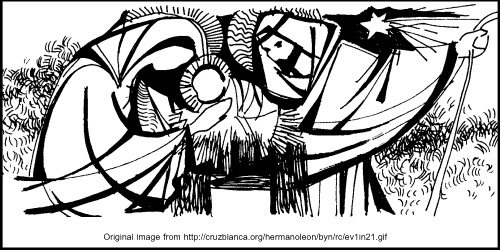
There is a baby.
And a manger.
And a scared new mother.
And an overwhelmed father.
And a city too full to give them a proper place to stay.

There is a group of shepherds.
And angels.
And glad tidings of great joy –
A pronouncement of salvation …

Hope …

Possibility …

“Do not be afraid, for behold, I bring you good tidings of great joy which will be to all people. For there is born to you this day in the city of David a Savior, who is Christ the Lord. And this will be the sign to you: You will find a Babe wrapped in swaddling cloths, lying in a manger. Glory to God in the highest, and on earth peace, goodwill toward all people!”
~ Luke 2:10-14

manger-scene

A Savior is coming – God With Us. God really and truly with us … up on the mountain tops, down in the dirt, laughing and crying, wondering and worrying, bringing Light and Love and Peace.

Pastor Lisa sign

Sunday’s sermon: A Glimmer of Hope

darkness

Text used – Isaiah 2:1-5

  • “The Neverending Story” is a classic kids’ movie from the 1980s.
    • Basic plotline
      • Features Sebastian – kid who enjoys life in books more than his real life → “borrows” a very special book from a rare books store called The Neverending Story → takes it to school where he hides away for the day (not in class!) and begins reading
      • Story = epic tale of child warrior who sets out to save his land from a force that is destroying it piece by piece → force simply known as “The Nothing” – gaining speed and strength as the story progresses
      • The magic happens when Sebastian discovers that, as he is reading The Neverending Story, he is also becoming a part of the Neverending Story. The characters in the book can hear him when he speaks out loud or cries out.
    • Now, for our purposes this morning, I have to tell you about the ending of this movie. I hope I’m not ruining anything for you.
      • Turns out The Nothing = children’s lack of belief in magic and wishes → eating away at the world of imagination
      • The Nothing eventually ends up destroying Fantasia → After the destruction, there’s a scene in which the empress of Fantasia and Sebastian are standing together in total darkness. The empress explains to Sebastian that Fantasia has been completely destroyed and that the one, glowing grain of sand that she holds in her palm is all that’s left of the once-beautiful world. When Sebastian finds himself face-to-face with the empress in this place of darkness and nothingness, the first thing he asks her why it’s so dark. The empress replies, “Because in the beginning, it is always dark.”

neverending-story-scene

  • Friends, we are in the beginning again. We are in a time of waiting … of watching … of darkness and light, of anticipation and hope, of wonder and joy and holy ground. Can you feel it? As Paul says in Romans, “The whole creation waits breathless with anticipation.”[1]
    • Waiting for the Messiah
    • Waiting for the Christ-child
    • Waiting for God to come down and take on flesh – to share with us in all that it means to be a living, breathing, aching, rejoicing human being
    • And God is indeed coming! That’s what this whole season of Advent is about – waiting, watching, hoping, revealing. So throughout this Advent season, as we wait and watch and hope for God’s ultimate revelation in the birth of Christ, we’re going to do so listening to the voice of the prophet Isaiah – a voice declaring that anticipatory hope and promising God’s revelation in a time of painful waiting and watching.
  • Context for the section of Isaiah
    • Prophet during time of war
      • Nation of Israel = split into 2 different kingdoms
        • Northern kingdom: Israel
        • Southern kingdom: Judah
      • Israel has forced Judah into tenuous alliance with Assyrian empire → backfires when Assyrians attack Judean capitol: Jerusalem
    • In the face of this betrayal and the ensuing assault, King Ahaz turns to the prophet Isaiah for guidance and wisdom and a word from God. → our Scripture today is part of Isaiah’s response
      • Promise of elevation – text: In the days to come the mountain of the LORD’s house will be the highest of the mountains. It will be lifted above the hills; peoples will stream to it.[2] → double meaning
        • About prestige – about God’s mountain being higher than all the rest and about God reigning over all
        • Also about safety – the higher your stronghold, the harder it was for your enemies to sneak up on you
        • Both a testament to God’s power and a reminder to the people – a people in fear for their own personal safety as well as their nation’s safety – of who they are and whose they are: reminder that they are God’s people
      • Promise of God’s guidance and security – text: Many nations will go and say, “Come, let’s go up to the LORD’s mountain, to the house of Jacob’s God so that he may teach us his ways and we may walk in God’s paths.” Instruction will come from Zion; the LORD’s word from Jerusalem.[3]
      • Promise of God’s justice and peace – text: God will judge between the nations, and settle disputes of mighty nations. Then they will beat their swords into iron plows and their spears into pruning tools. Nation will not take up sword against nation; they will no longer learn how to make war.[4]
        • Especially powerful promise in the face of the war that the Israelites were embroiled in at the time → When you are in the midst of sending your husbands, your fathers, your sons off to war, what better promise can you be given than that there will be war no more? And yet that is the unsurpassable peace of God that Isaiah foretold for the people.
        • Especially powerful promise in the face of our current circumstances, too → Not all swords and spears are made of metal and wielded with the hands. Sometimes the greatest damage that we can do is with our words, as I think we’ve found out with this recent election cycle and the aftermath that followed. Words can be toxic. Words can be painful. Words can be just as assaulting and ruinous and cruel. Don’t we indeed long for a day when the swords and spears of political discourse – the mudslinging, the fact-bending, the name-calling, the grandiose-but-empty promises … don’t we indeed long for a day when all those swords and spears will be beaten into the iron plows and pruning tools of compromise, of good intentions, of working-together? Those are the tools not of war and aggression but of peace and prosperity.
  • And yet, still, we wait. In this season of Advent, this season of darkness, we wait.
    • Sometimes waiting in darkness = difficult → Very often, the analogy of “being in darkness” is used to express a negative place.
      • Place of unknowing → being “in the dark” about something = being in that place of unknowing
        • Misinformation – unintentionally “crossed wires” (either you misheard or someone else misspoke)
        • Disinformation – intentionally false information
        • Lack of information all together
      • Place of anxiety
      • Place of utter sadness/loss
      • Place of fear
    • But that doesn’t always have to be the case. That darkness in which we wait can be a place of learning, a place of strength, and even a place of exceptional grace.
      • Barbara Brown Taylor from Learning to Walk in the Dark: “Darkness” is shorthand for anything that scares me – that I want no part of – either because I am sure that I do not have the resources to survive it or because I do not want to find out. … The problem is this: when, despite all my best efforts, the lights have gone off in my life, plunged me into the kind of darkness that turns my knees to water, I have not died. The monsters have not dragged me out of bed and taken me back to their lair. Instead, I have learned things in the dark that I could never have learned in the light, things that have saved my life over and over again, so that there really is only one logical conclusion. I need darkness as much as I need light.[5]
        • Certainly true from physical standpoint – our bodies need dark in order to rest and rejuvenate → Ask anyone who’s ever spent time working an overnight shift about trying to get their full 8 hrs of sleep during the daylight!
        • More to the point: true from a spiritual standpoint → If we didn’t have those places of fear, of anxiety, of falling to our knees not because we want to but because we cannot help it … if we didn’t have those times in which the only way forward was by relying on God to get us there, what would our faith look like?
          • One of my favorite Scripture verses – James: My brothers and sisters, think of the various tests you encounter as occasions for joy. After all, you know that the testing of your faith produces endurance. Let this endurance complete its work so that you may be fully mature, complete, and lacking in nothing.[6]
          • If it weren’t for the dark places, would we recognize that light? Would we understand it for the glorious, life-giving, soul-sustaining power that it is?
        • As the empress said to Sebastian, “In the beginning, it is always dark.” … But that isn’t the end of the story. – rest of the scene: Empress explains that with every wish that Sebastian make, Fantasia can be remade – even more beautiful than it once was. → Out of that moment of darkness – that necessary moment of darkness – comes greater beauty and hope and power than Sebastian could have ever imagined.
  • So like Isaiah and the people of Judah, we wait. We wait in anticipatory hope for the birth of a Savior. We wait in anticipatory hope for the coming of Emmanuel, God With Us – God With Us in the darkness as well as in the light. We wait in anticipatory hope for a tiny, vulnerable, beautiful baby boy who will carry all people in his heart and his outstretched arms. We wait in anticipatory hope for the Light of the World that is to come.
    • Explain bulb analogy → after being planted, spend time waiting in darkness for the time to emerge in all their beauty and glory
    • Explain narcissus bulbs
      • [POUR WATER INTO BOWL]
      • As we wait and hope and grow in our faith together throughout this Advent season, we will watch our narcissus bulbs grow. And hopefully, they’ll bloom on Christmas Eve.
      • Watch their roots grow downward, grounding them and feeding them
      • Watch their shoots grow upward, seeking out the light
      • And so, friends, in dark beginning of this season, let us wait and watch and hope … together. Amen.

[1] Rom 8:19.

[2] Is 2:2.

[3] Is 2:3.

[4] Is 2:4.

[5] Barbara Brown Taylor. Learning to Walk in the Dark. (New York, NY: HarperCollins Publishing, 2014), 4-5.

[6] Jas 1:2-4.

Sunday’s sermon: A Proper Offering

gratitude

Texts used – Deuteronomy 26:1-11 and Matthew 22:34-40

  • Guilt … sin … peace … burnt … and meal. [PAUSE] What could these five things possibly have in common? I’ll admit, it’s a bit of a strange list. Let me run through them again: guilt … sin … peace … burnt … and meal.
    • All types of sacrifices offered by the ancient Israelites[1]
      • Guilt offering
        • Offering made for unintentional sins → when you’re not sure whether what you’ve done breaks one of the laws or not
        • Attempt to repair breach of trust
        • Solely an individual offering (not communal)
      • Sin offering
        • Offering made to atone for sins in general (ones committed through carelessness and neglect, not malicious or intentional in nature)
        • An expression of sorrow for “missing the mark” with God
        • Can be individual or communal offering
      • Peace offering
        • Expression of thanks or gratitude toward God
        • One of few offerings that was shared between the priests and the person(s) presenting the offering à all had a part in the offering itself
      • Burnt offering
        • Oldest and most common sacrifice
        • Represents complete submission to God’s will
          • g. – burnt offering of the ram given by Abraham and Isaac on top of the mountain after Abraham nearly sacrifices Isaac[2]
        • Both expresses desire to commune with God and atones for sins
      • Meal offering
        • Devotion of the fruits of our labor to God
        • Often the first and best fruits
          • Harvest (grain or some sort of fruit or vegetable)
          • Livestock (cattle, lamb, etc.)
    • Now, Scripture is pretty clear about the ins and outs of these sacrifices – the who, what, where, when, how, and why of the proper ways in which they are to be offered.
      • Fair amount of text in the OT is devoted to the proper way to offer these sacrifices → roughly the first ¼ of the book of Leviticus (7 whole chapters) deals pretty exclusively with the proper way and time and attitude and elements necessary for the various sacrifices
        • Certainly mentioned in other places in the text as well
          • Woven into a number of stories from Abraham to Jacob and down through David and other kings
          • Mentioned a lot throughout the psalms – e.g. Ps 51: The sacrifice acceptable to God is a broken spirit; a broken and contrite heart, O God, you will not despise.[3]
          • Concern of many of the prophets – that the people weren’t performing the appropriate sacrifices and instead were sacrificing to other gods
    • But for even the most devout Hebrews, these offerings haven’t been made in centuries because while Scripture is very clear about how these sacrifices are to be made, it’s also clear about where these sacrifices are to be made: in the Temple. And in 70 C.E., when the Second Temple was destroyed by the Romans, the people of Israel lost their most sacred place to worship and offer sacrifice to God. → pretty big obstacle/“set back” in terms of their experience and expression of their faith
        • Had to come up with new and different ways to show their thanksgiving and devotion to God
        • Also had to come up with a different way of atoning and fulfilling the law – all 613 commandments!
  • But Christians have never practiced this kind of sacrifice. It’s clear from many of Paul’s writings as well as other New Testament texts that even very early on, Christians viewed Jesus as having given the ultimate sacrifice – his very own life – for us … a sacrifice we could never even begin to either replicate or surpass. So how do we express our devotion and thanksgiving to God, especially when, like the Israelites following the destruction of the Temple, we find ourselves facing obstacles and set backs in our lives of faith? How to we do this together as a community? And how to we find that special time on our own to both thank God and rededicate ourselves to God’s service?
    • Poignant questions in the face of the holiday coming up this week à spoiler alert: Our thanksgiving before God has nothing to do with turkey, pie, or football … sorry.
    • Also a poignant question in the face of the church season that begins next week: Advent
      • Time of waiting and watching
      • Time of darkness and a gradual dawning light
      • Time to contemplate what is to come with the birth of the Messiah
      • Time of devotion and giving thanks for all that has come and all that is to come
  • So let’s start with our Old Testament scripture reading this morning because this text really lays out the basics of the who and the how and the why for us.
    • Scriptural context: Deut is Moses’ book in Moses’ words
      • Intro to Deut from New Oxford Annotated Bible: In narrative terms, Deuteronomy comes just as the Israelites, encamped on the plains of Moab, finally stand poised to enter the promised land. … Now, on the eve both of his death and of the nation’s entry into the land without him, Moses, as Deuteronomy’s speaker, arrests the narrative action in order to … review the nation’s history, expound upon their laws, and instruction them about the importance of loyalty to God.[4]
    • Seems like a nice little story at first glance
      • Presupposes both entry into and settlement in Promised Land (something the Israelites have been desperate for for some time)
      • Presupposes fertile ground and an abundant harvest
      • Speaks of a ritual meal offering
    • Meat of the story is in the middle
      • Begins with: Then you should solemnly state before the Lord your God: “My father was a starving Aramean. …”
      • Story of unfolds of how they came to be in Egypt, the oppression and suffering there, God’s deliverance, and God’s goodness and blessing in bringing the Israelites to the Promised Land
      • Ends with declaration of offering: “So now I am bringing the early produce of the fertile ground that your, Lord, have given me.”[5]
      • In this Scripture, we see story tied inextricably to offering thanks. There is a declaration of identity. There is a naming of some of our past struggles and hardships. And in the face of that, there is recognition of the role that God plays – guiding, supporting, protecting, strengthening, amazing.
        • Story that we participate in with our liturgy each and every Sunday → declare our identity in the Opening Praise, name our struggles in the prayer and silent time of confession, and recognize where God is in our midst – in Passing the Peace, in Scripture and sermon, in prayer
          • Perfectly and poignantly described by scholar: [This text describes] an act of gratitude for God’s particular grace that ends in a celebration whose embrace extends beyond Israel’s own life. It describes a moment that is rooted in memory, shaped by a journey, and defined by joy.[6] → This is still the way that we are to bring our offerings of gratitude and thanks before God – in ways rooted in our memories, shaped by our journeys, and defined by our Isn’t this what we’ll be doing around tables on Thursday with family or friends or whichever loved ones we’re gathering with?
            • Telling old stories – some that make us laugh and some that make us cry – but all of which make us who we are
            • Remembering Thanksgivings past – remembering people that may have graced our table before but are no longer with us
            • Catching up with one another about what’s been happening in our lives lately – the ups as well as the downs
            • Setting aside a special time (before the meal? during the meal? after the meal?) to acknowledge those things for which we are thankful
            • Weaving our current stories in with the tapestry of all the faithful who have come before – all those who have taken deliberate and sacred time to thank God → powerful thing!
  • But there’s an element of that story in Deuteronomy that I want to make sure we don’t miss. – last verse: Then celebrate all the good things the Lord your God has done for you and your family – each one of you along with the Levites and the immigrants who are among you.[7] → This verse is important because it recognizes that our thanksgiving offering to God is both an attitude and an action.
    • Attitude = celebrate
    • Action = including those around you, sort of like ripples in a pond
      • Easy ones (first ripple): family
      • Extension (second ripple): “Levites” (tribe of priests in ancient Israel) – We’ll call this one neighbors.
      • But it goes beyond the easy and the comfortable (further out ripples): and the immigrants who are among you.
        • Heb. “immigrant” = “sojourner”: a man who, either alone or with his family, leaves his village and tribe, because of war, pestilence, etc., and seeks shelter and sojourn elsewhere, where his right to own land, to marry, and to participate in the administration of justice, in the cult, and in war is curtailed → Someone without a homeland. Someone possibly without a family. Someone with a table around which to gather and give thanks. Someone without legal rights. Someone struggling and lonely, probably afraid. Someone without.
      • Reflects words of Jesus in our NT reading: When the Pharisees heard that Jesus had left the Sadducees speechless, they met together. One of them, a legal expert, tested him. “Teacher, what is the greatest commandment in the Law?” He replied, “You must love the Lord your God with all your heart, with all your being, and with all your mind. This is the first and greatest commandment. And the second is like it: You must love your neighbor as you love yourself.”[8] → probably not surprising that that Gr. “love” is agape love – giving, self-sacrificing, cherishing
  • Our faith is supposed to inspire our actions. When the Holy Spirit moves among us and within us, we are meant to go out and move in the world – for good, for justice, for compassion. As Christians, that is our charge and our calling. So as we give thanks – as we give God our proper offerings of gratitude and joy and celebration, especially this coming Thurs. but also every other day of the year – how are we letting that gratitude spill over into the way we go about being in this world? Amen.

[1] “Jewish Practices & Rituals: Sacrifices and Offerings (Karbanot)” from The Jewish Virtual Library, http://www.jewishvirtuallibrary.org/jsource/Judaism/qorbanot.html. Accessed Nov. 19, 2016.

[2] Gen 22:1-14.

[3] Ps 51:17 (NRSV).

[4] “Introduction to Deuteronomy” from The New Oxford Annotated Bible: New Revised Standard Version with the Apocrypha. (New York, NY: Oxford University Press, 2001), 240.

[5] Deut 26:5-10 (CEB).

[6] Thomas W. Currie. “First Sunday in Lent: Deuteronomy 26:1-11 – Theological Perspective” in Feasting on the Word: Preaching the Revised Common Lectionary – Year C, vol. 3. (Louisville, KY: Westminster John Knox Press, 2009), 26.

[7] Deut 26:11.

[8] Mt 22:34-39.

Sunday’s sermon: Speak Softly and Carry a Big Stick

roosevelt-quote

Sermon title: Speak Softly and Carry a Big Stick

Texts used – Isaiah 12 and Ephesians 1:11-23

  • It was January 26, 1900. The then-governor of New York was writing a letter to Mr. Henry L. Sprague, a member of the New York state assembly from New York County’s 13th The letter read as follows: “Dear Harry; — Your letter of the 25th really pleased me. Of course, I shall not feel real easy until the vote has actually been taken, but apparently everything is now all right. I have always been fond of the West African proverb: ‘Speak softly and carry a big stick; you will go far.’ If I had not carried the big stick, the Organization would not have gotten behind me, and if I had yelled and blustered as Parkhurst and the similar dishonest lunatics desired, I would not have had ten votes.”[1] Roughly 18 months later, that same man, now Vice President of the United States, gave a speech at the Minnesota State Fair that would later be dubbed his “Speak Softly and Carry a Big Stick” speech. In it, he said, “A good many of you are probably acquainted with the old proverb, ‘Speak softly and carry a big stick – you will go far.’ … So it is with this nation … Let us make it evident that we intend to do justice. Then let us make it equally evident that we will not tolerate injustice being done in return. Let us further make it evident that we use no words which was are not prepared to back up with deeds, and that while our speech is always moderate, we are ready and willing to make it good.”[2] And only a few short weeks after delivering this speech, upon the assassination of President William McKinley, Theodore Roosevelt would be sworn into office as President of the United State of America on Sept. 14, 1901.
    • “Speak softly and carry a big stick” sort of became America’s foreign policy motto for a long time
      • Roosevelt’s own foreign policy dealings[3]
        • (Probably) most well-known: establishment of the Panama Canal (1901)
        • Also: mediated the end of the Russo-Japanese War (1904-1905) → earned him a Nobel Peace Prize (first American to do so – 1906)
      • Other e.g.s
        • Actions and attitudes that led the U.S. into WWII
        • Actions and attitudes that carried the U.S. into and through the Cold War
        • And I’m sure we could think of a lot more.
    • Look up the meaning of phrase “speak softly and carry a big stick” in a phrase dictionary = “a proverb advising the tactic of caution and non-aggression, backed up by the ability to do violence if required”[4]
    • But as Christians, how are we called to go about being in this world? How are we called to intertwine our actions and attitudes with our faith? In what way are we called to speak? And what are we to carry with us?
  • BEFORE WE CONTINUE: I have to take a minute to explain to you how I plan my sermons. Trust me … today, it matters.
    • Explain sermon planning retreat – May 2014 (1.5 yrs ago – planned all the Scripture readings and main ideas through the end of this year) → foundational planning ahead gives me the chance to get more done during the week in general.
    • Certainly nothing set in stone – make adjustments here and there as my schedule or as current events dictate → But that’s not what happened this week. These are the Scriptures I planned to use a year and a half ago. This was the general theme that I chose a year and a half ago. I truly believe that the appropriateness of it in the face of all that is going on in our country right now is one of those funny God moments in life.
  • So when you look in the bulletin this morning, you’ll probably notice something a little different about the sermon title. You should have seen the look on Sue’s face when I told her that yes, I did indeed want it crossed out like that in the final copy of the bulletin. J “Speak softly and carry a big stick” … crossed out. Here’s the thing: I think that as Christians, we are called to do and be and say and act exactly the opposite of this.
    • Is passage = great testament to how we are supposed to speak … And here’s your spoiler alert: nothing about it is soft! – text: And you will say on that day: “Thank the Lord; call on God’s name; proclaim God’s deeds among the peoples; declare that God’s name is exalted. Sing to the Lord, who has done glorious things; proclaim this throughout all the earth.” Shout and sing for joy, city of Zion, because the holy one of Israel is great among you.[5] → Doesn’t sound a lot like “speaking softly” to me. But we don’t just have to take Isaiah’s word for it.
      • Ps 98: Shout triumphantly to the Lord, all the earth! Be happy! Rejoice out loud! Sing your praises![6]
      • Rev: Then I heard something like the voice of a great multitude and like the sound of many waters and like the sound of mighty peals of thunder, saying, “Hallelujah! For the Lord our God, the Almighty, reigns.”[7]
      • 2 Chr: Moreover, [the people of Israel] made an oath to the LORD with a loud voice, with shouting, with trumpets and with horns.[8]
      • And that’s just a few examples. Over and over and over again throughout Scriptures, we are encouraged to give voice to our faith strongly, boldly, loudly and exuberantly, with great gusto and joy! “Speak softly” is not a part of that.
        • Plenty of Scripture about speaking from a place of honesty, a place of compassion, a place of wisdom and self-awareness … but always comes back to the Good News of God being shared with conviction and passion → And for anyone who’s ever tried, speaking about anything quietly but also with conviction and passion is basically impossible! You get excited. You get worked up. And you just can’t keep it in anymore! That Good News has to just explode out of you!
  • 2nd half of the phrase – tackling the idea of “carrying a big stick”
    • Inherently threatening
    • Inherently aggressive
    • Inherently forceful
    • If the first half of the phrase is the “diplomacy” portion, this is the “my way or the highway” portion. This portion implies the notion that, if we can’t come to an agreement or a compromise through dialogue, not only will I take my blocks and go home, but you’d better believe I’ll take your blocks, too. And probably the bag they came in … just for the principle of the thing! → certainly not the way we are called to go about being in this world as Christians
      • Jesus’ own words
        • In Lk: But I say to you who are willing to hear: Love your enemies. Do good to those who hate you. Bless those who curse you. Pray for those who mistreat you.[9]
        • In Mt: You have heard that it was said to those who lived long ago, Don’t commit murder, and all who commit murder will be in danger of judgment. But I say to you that everyone who is angry with their brother or sister will be in danger of judgment.[10]
        • “Golden Rule living”: Do to others as you would have them do to you.[11] → sort of flies right in the face of the whole “carry a big stick”/” the tactic of caution and non-aggression, backed up by the ability to do violence if required
      • Other Scripture
        • 1 Jn: The one who claims to be in the light while hating a brother or sister is in the darkness even now. The person loving a brother and sister stays in the light, and there is nothing in the light that causes a person to stumble. But the person who hates a brother or sister is in the darkness and lives in the darkness, and doesn’t know where to go because the darkness blinds the eyes.[12]
      • Also about representing God and Christ appropriately – Paul in Eph: We are called to be an honor to God’s glory because we were the first to hope in Christ.[13]
        • Gr. “honor” = praise, approval, recognition → Our lives are to be that living testament to God’s goodness and glory – the love that God shows us, the grace that God freely gives to us, the way that God cherishes our uniqueness, the way that we are – each and every one of us – made in the image of God, carriers of the divine spark.
          • Similar sentiment (stated a little more clearly) in Col: Whatever you do, whether in speech or action, do it all in the name of the Lord Jesus and give thanks to God the Father through him.[14] → That doesn’t mean God has given us carte blanch to do whatever the heck we please as long as we tack Jesus’ name on to the end of it. Far from it. We are to act as Jesus would have acted … and something tells me that in all his dealings with the sinners and the lepers, the women and the tax collectors, the demon-possessed and the Samaritans and the prostitutes and all the “wrong people” … something tells me Jesus wasn’t wielding a big stick.
            • Wielding compassion
            • Wielding a helping hand
            • Wielding open arms full of welcome
  • And yes, we’re going to go there. We’re going to address the elephant in the room. Because I believe in my heart that we can’t not address it this week. The election. Now, before we go further, hear me this morning. I’m not talking about who won or who didn’t. I’m talking about the ugliness that has followed. I’m talking about all of the pain and anger and hate that have completely boiled over and turned this entire country into one that I don’t recognize anymore. Friends, this is not how God calls us to be!
    • Pastor friend’s comment about everything being out in the open: “Now we know. We’ve been hiding how broken we are for a long time. It’s out. No more lies and pretending. We are a hot mess and the whole world knows it. There is some relief in having the secret finally out for all to see.” → We have long tried to tell ourselves that we are a better country, a safer country, a country that has evolved beyond the point of blatant and vicious discrimination based on race, gender, country of origin, etc. We have tried to tell ourselves that – to reassure ourselves that the smattering of stories that made it into the news were anomalies. That’s not how most of us feel or think or, even worse, act. But friends, this week has shed an ugly, ugly
      • Just a few of the stories
        • Graffiti in neighborhoods: “Black Lives doesn’t matter and neither does your vote”
        • Women grabbed in appropriately on the subway, not surreptitiously but openly and deliberately and unashamedly
        • Kids in school taunting their Hispanic classmates by chanting “Build the wall!”
        • Muslim women having their head scarves ripped off in public à also lots of accounts of Muslim women forgoing wearing their head scarves out of fear of being recognized
        • Anonymous notes and death threats left for same-sex families (families, ya’ll … including children)
        • Running errands with the boys this weekend – wore a shirt that says “Just love, No hate” → And I was nervous walking through Walmart! Not for myself. I’m a big girl. I can handle it. But I didn’t want that ugliness to rear its head in front of my boys. I don’t want them to see that.
        • And all sorts of vitriol and violence and evil spewing from people’s mouths that I cannot read from the pulpit. And yes, some of them have happened and are happening in Minnesota.
      • Important distinction to make: speaking BOLDLY and with gusto ≠ hurling slurs and obscenities as loudly as possible at everyone not like you → Frankly, I think that all of this hate and ugliness would have boiled over no matter who was declared the winner on Tues. night/Wed. morning! Yes, as Christians, we are called to speak loudly, but we are also called to speak from a place of love and compassion and appreciation of the many and varied gifts that God has given to us and to the people around us.
        • Paul in Eph: I pray that the eyes of your heart will have enough light to see what is the hope of God’s call, what is the richness of God’s glorious inheritance among believers, and what is the overwhelming power of God’s greatness that is working among us believers.[15] → It’s about being confident in our faith but humble enough to share it in ways that are life-giving, in ways that glorify not ourselves and our walks of life but God and God alone.
          • Quote from Glennon Doyle Melton: I am confident because I believe that I am a child of God. I am humble because I believe that everyone else is, too. They go hand in hand. They’ve got to. If I am humble but lack confidence, it is because I haven’t accepted that there is a divine spark inside me. … If I am in the habit of turning my back on others, it is because I haven’t learned that God approaches us in the disguise of other people.[16]
  • Leaving you with an object lesson this morning – explain safety pins
    • Began when UK voted to leave the EU back in June (referred to as Brexit) → unleashed a lot of racism and violence against immigrants in Britain
    • People started wearing safety pins – signify they were safe
      • Safe to talk to
      • Safe to sit next to on the bus or the subway
      • Safe … period: A marginalized person who is being harassed will look to you to help keep them safe. By wearing the safety pin you make a public pledge to be a walking, talking safe space for the marginalized. All of the marginalized. You don’t get to pick and choose.[17]
    • The pin is not about fighting back. It’s not about shouting down the aggressor or challenging them. It’s about the victim. It’s about engaging not with the hate but with the one who is vulnerable and afraid – seeing her, talking to him, placing yourself between the hate and the target. Be safe, obviously … but not too safe. Because that is where we are called to most boldly and passionately declare God’s Good News – to the dark places, the hard places, the uncomfortable places, the fringe places, the places of pain. Amen.

[1] From the “American Treasures of the Library of Congress” website, https://www.loc.gov/exhibits/treasures/trm139.html.

[2] Ben Welter. “Sept. 3, 1901: Roosevelt ‘Big Stick’ speech at State Fair” from Yesterday’s News blog via the Minneapolis Star Tribune website, http://www.startribune.com/sept-3-1901-roosevelt-big-stick-speech-at-state-fair/273586721/. Posted Sept. 2, 2014, accessed Nov. 10, 2016.

[3] Jonna Lorenz. “Theodore Roosevelt’s Accomplishments: Teddy’s Foreign Policy Legacy” from NewsMax, http://www.newsmax.com/FastFeatures/theodore-roosevelt-accomplishments-foreign-policy/2014/08/26/id/591078/. Posted Aug. 26, 2014, accessed Nov. 12, 2016.

[4] “Speak softly and carry a big stick” from the Phrase Dictionary website, http://www.phrases.org.uk/meanings/speak-softly-and-carry-a-big-stick.html.

[5] Is 12:4-6 (emphasis added).

[6] Ps 98:4.

[7] Rev 19:6.

[8] 2 Chr 15:14.

[9] Lk 6:27-28.

[10] Mt 5:21-22a.

[11] Lk 6:31 (NRSV).

[12] 1 Jn 2:9-11.

[13] Eph 1:12.

[14] Col 3:17.

[15] Eph 1:18-19a (emphasis added).

[16] Glennon Doyle Melton. Carry On, Warrior: The Power of Embracing Your Messy, Beautiful Life. (New York, NY: Scribner, 2013), 174, 175-176.

[17] Isobel Debrujah. “So You Want to Wear A Safety Pin” from her blog What a Witch, https://isobeldebrujah.wordpress.com/2016/11/12/so-you-want-to-wear-a-safety-pin/. Posted Nov. 12, 2016, accessed Nov. 12, 2016.

Sermon: Practicing Faith

So I’ve been a little behind lately … a lot behind. There were a few weeks of different services in there. We had a guest preacher. And life has been busy. Just. Busy. So here are a few sermons from a few weeks back.

Concert-Football Collage.jpg

Texts used – Genesis 22:1-14 and James 2:14-26

  • I’d like you to picture two scenes with me this morning.
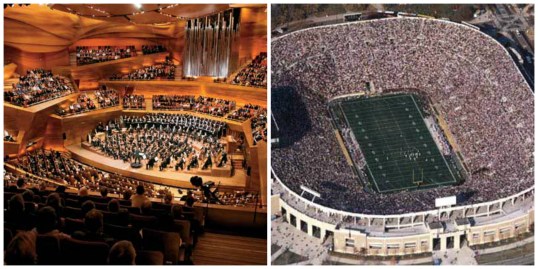
    • FIRST: Concert hall with a full orchestra
      • Before the conductor takes the stage – moderate buzz of conversation all around punctuated by laughter here and there
      • Conductor walks out – deliberate hush washes over the crowd = silence full of anticipation for what is to come
      • Conductor bows, turns to face the orchestra, and raises the baton, and the music starts
        • Flutes trilling
        • Violins & violas singing
        • Horns resonating
        • Timpani thundering
      • As the music swells, you find yourself bathed in a wave of beauty, passion, tenderness, and dedication.
    • SECOND: Football game at a giant stadium full to capacity – Vikings vs. Packers, maybe?
      • Crowd is cheering and chanting
      • People around you are talking and laughing and whooping
      • Vendors walking up and down the aisles are hollering out their merchandise
      • Game = down to the wire → last minute and the game is close
        • Players line up
        • Ball in motion
        • Hear the pads crashing together
        • QB launches a long pass
        • Watch it sail through the air
        • See the receiver simultaneously catch the ball and slip into the end zone
        • And, as they say, the crowd goes wild!
      • In that moment, you are completely overwhelmed by this display of action, strength, endurance, and dedication.
    • Believe it or not, these two scenarios have a lot in common, especially in regards to the people involved.
      • They have a spark within them – a burning desire
        • Desire for their chosen field, be it music or sports
        • Desire to perform to the best of their abilities
        • Spark = crucial → drives them to continuously develop their particular gift
      • But in order to do that, all of these people have to practice.
    • Practice is what James is talking about in our passage for today – practicing our Christian faith to its fullest potential.
  • Practicing faith = theme woven throughout Scripture
    • Various texts:
      • Jesus in Matthew – But everybody who hears these words of mine and doesn’t put them into practice will be like a fool who built a house on sand.[1]
      • 1 John – Little children, let’s not love with words or speech but with action and truth.[2]
      • Paul in Galatians – Being circumcised or not being circumcised doesn’t matter in Christ Jesus, but faith working through love does matter.[3]
      • Paul again, in Ephesians – We are God’s accomplishment, created in Christ Jesus to do good things. God planned for these good things to be the way that we live our lives.[4]
      • Earlier in James: You must be doers of the word and not only hearers who mislead themselves.[5]
    • James even gives us an example of “being a doer”: What about Abraham, our father? Wasn’t he shown to be righteous through his actions when he offered his son Isaac on the altar? See, his faith was at work along with his actions. In fact, his faith was made complete by his faithful actions.[6] → brings us to our OT text for today
      • Probably one of the more challenging and problematic stories in the Bible
        • God tells Abraham to sacrifice his son → gathered what they needed to perform a sacrifice → head up the mountain
      • Isaac: “Here is the fire and the wood, but where is the lamb for the entirely burned offering?”[7]
      • Abraham’s response: “The lamb for the entirely burned offering? God will see to it, my son.”[8]
      • Set up the altar and the pyre for the offering – text: Then Abraham stretched out his hand and took the knife to kill his son as a sacrifice.[9] → But at the last minute, an angel stays Abraham’s hand and God provides a lamb instead.
      • This is a tough one, right? Can we even begin to imagine how Abraham must have been feeling at this point? This task loomed before him – an unthinkable act, the outcome of which seemed impossible at best. This story makes us ask difficult questions about God and obedience. “What kind of God would ask someone to do this? Is this the kind of God that I want to follow? Where am I in this story?” And so on. This Old Testament tale doesn’t seem to jive with our preferred image of God as Compassionate Parent, Loving Caretaker, Benevolent Keeper. But still, it has been a foundational text for both Jews and Christians.
        • Jews refer to text as “the Akedah” = “the binding of Isaac”[10]
          • Practicing of placing ashes on the head during fast days = “reminder of the ashes of Isaac”
          • Story read on the 2nd day of Rosh Ha-Shanah, “Jewish New Year” → ram’s horn (called the shofar) is blow – could be linked to this story as well
        • And as Christians, this is a plot line all too familiar to us. We cannot help but read the death of Jesus – God sacrificing God’s only Son – between the lines of this OT story.
      • I will name it and claim it right here: this is a story to wrestle with. We have these “bedtime Bibles” that we read with the boys before they go to bed at night – truncated, child-friendly versions of Scripture stories with colorful pictures. It probably won’t surprise you that this story isn’t one of the ones in that “bedtime Bible.” Because it’s an uncomfortable story. It’s a hard story. It is, quite frankly, a chilling story. And it’s always going to be.
        • Scholar helped shed some light on how this story can inform our conversation of how we practice our faith today: The true act of faith on the part of Abraham is not the blind faith that often has been the dominant message emerging from this text, but rather the ability to recognize God’s provision in the ordinary, especially in those circumstances when everything appears to be futile.[11]
          • In text, Abraham names the place “the Lord sees” – Heb. “see” = can also mean “provide”
          • So in terms of our faith and how we practice it, even the most challenging, the most unthinkable situations are opportunities for us to practice our faith – for us to rely on God and trust in God’s presence and provision.
            • Another scholar: The story of the akedah makes a claim on us: All that we have, even our own lives and those of the ones most dear to us, belong ultimately to God, who gave them to us in the first place. The story of the akedah assures us that God will provide, that God will be present.[12] → This belief inspires our faith. It strengthens our faith. It informs and transforms our faith so that we may practice it in new and different ways every day.
  • Now, turning back to our New Testament text for this morning, this is also a text with which we need to be a little bit careful. In this passage, and with this example, James isn’t saying that good works in and of themselves provide our salvation.
    • Previously stated in James: it is “the implanted word that has the power to save your souls”[13]
    • Salvation by faith comes up again in today’s text: So the scripture was fulfilled that says, Abraham believed God, and God regarded him as righteous. What is more, Abraham was called God’s friend.[14]
      • Abraham believed → not earned, not claimed, not worked for
      • Scholars
        • Interpretation: “There is no salvation for the person who stops short of discipleship. If faith is only intellectual … it will not save.”[15]
        • Question: “What would faith look like without any deeds?”[16]
  • I want to turn that question around. What would faith look like with deeds?
    • James begins by borrowing Jesus’ own words as an e.g.: Text: Imagine a brother or sister who is naked and never has enough food to eat. What if one of you said, “Go in peace! Stay warm! Have a nice meal!”? What good is it if you don’t actually give them what their body needs?[17] → Sounds a lot like Jesus in the gospel of Matthew:
      • I was hungry and you gave me food to eat. I was thirsty and you gave me a drink. I was a stranger and you welcomed me. I was naked and you gave me clothes to wear. I was sick and you took care of me. I was in prison and you visited me. … I assure you that when you have done it for one of the least of these brothers and sisters of mine, you have done it for me.[18] → This teaching of Jesus’ comes from a parable that he told – the parable of the sheep and the goats – words that would have been circulated endless throughout his followers. They would have been so familiar with this parable that they would have heard it echoing as they read James’ words. And Jesus’ implications are pretty clear: love people (help them, care for them, provide for them) as you love me.
    • But let’s look at Abraham’s example again. James: See, [Abraham’s] faith was working along with his actions. In fact, his faith was made complete by his faithful actions.[19]
      • Faith was already there, already working
        • Wasn’t a question of a conversion moment → didn’t go from no faith to faith in 10 seconds flat
        • Question of maturity → Abraham’s faith was made complete – a faith maturing through works … through practice
        • Scholar: “There is a mutuality: Faith informs and motivates action; action matures faith. James is not rejecting one for the other but is instead insisting that the two are totally inseparable.”[20]
    • Think back to the professional musicians and athletes that we talked about earlier.
      • In order to live into their fullest potential, all of them have to practice – to continue to develop and mature their God-given talents.
        • Spurred on by the initial spark within
        • Practice → fruits of their labor: beauty, passion, tenderness, action, strength, endurance, and dedication
      • So how does this translate into our lives?
        • Beauty: worship – praise God in song, Word, and prayer
        • Passion: reading and learning about God’s Word
        • Tenderness: caring and praying for one another
        • Action: mission
        • Strength: sense of Christian community
        • Endurance: even in those lowest of moment, those most difficult and depleting of moments, we turn our face to God
          • May cry out “help”
          • May cry out “why”
          • May cry out all sorts of things
          • But we cry them out to God, having faith that God will be present with us every single, ugly, slogged-through step of the way.
        • Dedication: following Christ’s example – prayer, hospitality, compassion, discipleship, etc.
  • We need to practice our faith, not just talk about it – to continue to develop it and help it mature. That initial spark of faith within us is a gift from God, and by practicing our faith, that spark can grow into a powerful, warming, light-giving flame. Amen.


[1] Mt 7:26

[2] 1 Jn 3:18

[3] Gal 5:6

[4] Eph 2:10.

[5] Jas 1:22.

[6] Jas 2:21-22.

[7] Gen 22:7.

[8] Gen 22:8.

[9] Gen 22:10.

[10] “Judaism: Akedah” from Jewish Virtual Library. http://www.jewishvirtuallibrary.org/jsource/judaica/ejud_0002_0001_0_00627.html, accessed Oct. 30, 2016.

[11] Juliana Claassens. “Commentary on Genesis 22:1-14” from Working Preaching, https://www.workingpreacher.org/preaching.aspx?commentary_id=965 (emphasis added). Posted June 26, 2011, accessed Oct. 30, 2016.

[12] Kathryn M. Schifferdecker. “Commentary on Genesis 22:1-14” from Working Preaching, https://www.workingpreacher.org/preaching.aspx?commentary_id=2138. Posted June 29, 2014, accessed Oct. 30, 2016.

[13] Jas 1:21.

[14] Jas 2:23.

[15] Peter H. Davids. James (New International Biblical Commentary series). (Peabody, MA: Hendrickson Publishers, 1983), 64.

[16] Luke Timothy Johnson. “James” in The New Interpreter’s Bible, Vol. 12. (Nashville, TN: Abingdon Press, 1998), 198.

[17] Jas 2:15-16.

[18] Mt 25:35-36, 40.

[19] Jas 2:22.

[20] Davids, 69.

Sermon: It Is What It Is

So I’ve been a little behind lately … a lot behind. There were a few weeks of different services in there. We had a guest preacher. And life has been busy. Just. Busy. So here are a few sermons from a few weeks back.

michael-scott

Texts used – Jeremiah 1:4-10 and 1 Corinthians 13:1-13

  • March 24, 2005 was a banner day for television. On that day, we were introduced to one of the most uncomfortably loveable, one of the most awkwardly and sometimes inadvertently outspoken characters in recent TV history: the self-proclaimed World’s Best Boss … Michael Scott.
    • Show: NBC’s “The Office”
    • Michael Scott = played by comedian Steve Carell
    • Role = regional manager at a small paper company
    • Setting = Scranton, PA
    • Now, I know that the type of humor represented on “The Office” isn’t everyone’s cup of tea. Frankly, when it first aired 11 years ago, I thought it was one of the dumbest things I’d ever seen.
      • Humor = awkward, sometimes uncomfortable, sometimes admittedly a little crude
      • In particular: Michael Scott’s humor = built on cringe-worthy moments of saying the wrong thing at the WAY wrong time, blowing past boundaries, frequently coming down on the wrong side of stereotypes – all stemming from Michael’s fundamental and utter lack of self-awareness
        • Socially awkward at best
        • Unwittingly and unintentionally offensive at worst
    • So with all of these painfully obvious flaws, why does the character of Michael Scott continue to be so loved by so many fans around the world, even 3 years after the show’s final season? Because despite all his imperfections, Michael Scott wears his heart on his sleeve. He’s honest to a fault – painfully, awkwardly, uncomfortably, and endearingly honest. Even when he’s saying something horribly politically incorrect, 9 times out of 10, he isn’t saying it to be malicious or rude or hurtful. He’s simply speaking out of a place of naiveté.
      • Blogger quote describing Michael Scott: “[The] colorful contradiction of being fundamentally simple-hearted along with his dismal lack of control over actions and helpless self-indulgence made him instantly lovable.”[1]
      • When it comes to Michael’s sense of humor, it simply is what it is. There’s no hidden agenda, no ulterior motives, no secret meaning to uncover. For better or for worse, Michael Scott speaks his truth in love.
  • Speaking truth = hard, hard, hard
    • Dozens of self-help books out there to help with this
    • Countless seminars and retreats and workshops offered across the country
    • Websites and blogs galore devoted to this topic
    • 2 extremes when it comes to speaking truth
      • Speak out-and-out truth, no matter the cost
        • Blunt
        • Stark
        • Possibly hurtful or brutal
        • “This is my You don’t have to like it. You just have to listen to it. So there!”
      • Speak a tempered version of the truth
        • Watered down
        • Couched in hesitations and qualifiers
        • Truth through rose-colored glasses
        • “This is the truth for me, but you don’t have to like it or respect it or even listen to it if you don’t want to.”
      • Hard to strike that balance between speaking truth with conviction and speaking truth with compassion
    • But as Christians, this idea of speaking truth in love is part of our heritage … it’s part of our tradition … it’s part of our shared story.
      • Ephesians: By speaking the truth with love, let’s grow in every way into Christ[2]
      • Today’s Scripture readings = all about speaking truth in love
  • NT text = 1 Corinthians → “the wedding passage”
    • Passage all about how important it is to speak from a place of love
      • No matter the language: “tongues or mortals and of angels”
      • No matter the rationale: “if I have prophetic powers, and understand all mysteries and all knowledge”
      • No matter the faith: “if I have all faith, so as to remove mountains”
      • No matter the sacrifice: “if I give away all my possessions, and if I hand over my body so that I may boast”
      • No matter what, “If I do not have love, I have nothing … I gain nothing … I am nothing.”
      • Gr. in this text is probably not surprising – “love” = agape love: Christian love – faith-driven, inspired by the love that God and Jesus had for one another and the love that God has for us
        • Unconditional
        • Unearned
        • Undeservable
        • Not a kind of love that comes with hidden agendas, ulterior motives or secret meanings to uncover
        • “No strings attached” kind of love
    • Easy to understand why this passage is read at so many weddings – the importance of having love like this in a relationship is paramount → If, in contrast to our Scripture, the love you share is impatient, if it is unkind, if it in fact envious or boastful or arrogant or rude, if it is insistent on its own way, if it is irritable or resentful, it is not the kind of love that’s going to last. Sometimes, it’s easy to say that in the midst of all the flowers and guests and joy of a wedding day … and much harder to remember when you’re in the trenches of day-to-day life, juggling work and kids and dishes and various other commitments and trying to hold onto some semblance of yourself. It’s easy to be impatient and irritable. It’s easy to slide into a place of resentment. It’s easy to find yourself saying something that is rude and unkind – speaking something that may be a sharpened version of your truth, but speaking it from a place that is definitely not
      • Certainly doesn’t only happen in marriage
        • Friendships
        • Work relationships
        • Certainly see this in our current political environment: Can anyone remember the last time they felt like they heard a politician on the national stage speaking from a place of self-sacrificing, good-of-the-people, merciful love? Hmmmm.
  • Brings up an important point that’s also emphasized in our OT reading this morning: essence of speaking the truth in love as Christians is the idea that isn’t not our truth … it’s God’s truth
    • Now, before we go any further, let me be abundantly clear this morning. I am not saying that just because we are Christians, whatever “truth” (and yes, I’m putting that word in very heavy and deliberate air quotes”) we speak is automatically a word from God. Just because we are Christians, we do not speak exclusively for God. Every word that comes from our mouths certainly is not God-breathed or God-inspired. And just because we say it and claim, “But I’m a Christian!” doesn’t automatically make it God’s truth.
    • God’s truth = difficult
      • Time and time again throughout the Bible, those whom God has called on to speak truth have tried to wriggle out of doing so … sometimes quite dramatically!
        • Moses called by God at the burning bush: “Who am I to go to Pharaoh and to bring the Israelites out of Egypt? … My Lord, I’ve never been able to speak well, not yesterday, not the day before, and certainly not now since you’ve been talking to your servant. I have a slow mouth and a thick tongue.”[3]
        • Jonah ran in the completely opposite direction of where God was trying to take him to speak truth[4]
        • Peter denied Jesus three times instead of identifying himself as one of Christ’s disciples[5]
        • Gideon’s reply to God’s call: “With all due respect, my Lord, how can I rescue Israel? My clan is the weakest in Manasseh, and I’m the youngest in my household.”[6]
        • Today’s text: “Ah, Lord God! Truly I do not know how to speak, for I am only a boy.”[7] → Heb. reveals that this is more than a gentle chiding on Jeremiah’s part – “Ah” is not soft or tempered or benign but a cry of alarm
      • Sometimes difficult to grasp/understand – NT passage speaks to this: For we know only in part, and we prophesy only in part; but when the complete comes, the partial will come to an end. … For now we see in a mirror, dimly, but then we will see face to face. Now I know only in part; then I will know fully, even as I have been fully known.[8]
      • Sometimes difficult to fit into the fabric of our lives
      • Sometimes difficult to convey
    • We know that God’s word comes to us in love because we know that God loves us. We know that God desires good for all God’s children – a peaceful existence, basic securities (food and shelter), companionship in our relationships with each other and our relationship with God. And we know by our own experience how comforting and strengthening and empowering it can be to put our trust in God during difficult times – times of struggle and stress, time of challenge and change, times of weariness and worry. Why, then, if we know all these things, is it so hard for us to speak God’s truth in those moments that are presented to us?
      • Moments when we hear someone belittling another beloved child of God – inappropriate joke, snarky comment, prejudiced remark
        • “All Muslims” … this
        • Or “all immigrants” … that
        • “All black people” … this
        • Or “all Republicans/Democrats” … that
        • Jokes about women, about LGBT people, about those struggling with this mental illness or that disability
        • We know we hear these things, and we know that they are not God’s truth.
      • Moments when we hear someone justifying something hateful using faith → So much evil throughout history has been done in God’s name – things that I cannot believe God would truly condone: slaughtering of thousands during the Crusades, torture during the Spanish Inquisition and Salem witch trials, slavery, forced obliteration of culture for hundreds of thousands of American Indians … the list goes on and on. “Love is patient; love is kind; love is not envious or boastful or arrogant or rude. It does not insist on its own way; it is not irritable or resentful; it does not rejoice in wrongdoing, but rejoices in the truth.”
    • Friends, the thing about God’s truth is that it is uncomfortable because it is meant to change lives – to change them for the better. Jesus’ entire ministry was spent preaching and teaching and embodying God’s truth, and it made the wrong people uncomfortable, and they killed him for it. God’s truth is uncomfortable. God’s truth is extreme because it ignores all the boundaries that we put up between each other. God’s truth ignores the “us” and the “them.” It ignores the “haves” and the “have nots.” It ignores all the ways that we try to separate ourselves.
      • Time and time again – God to those whom God has called to speak: “You shall go to all to whom I send you, and you shall speak whatever I command you. Do not be afraid of them, for I am with you to deliver you.”[9]
  • Speaking God’s truth of love, of grace, of forgiveness, of justice, of peace is hard. It just is. Because it is an uncompromising truth. It is love for all. It is grace for all. It is forgiveness and justice and peace for all. The lines that we draw, the distinctions that we make, the walls that we put up between us and other people – those who look, think, speak, believe, understand differently than us – don’t matter in the face of God’s truth. And that’s a hard thing to say, both to ourselves and to the world around us. But we find ourselves in this crazy time – this time of division, this time in which so many people from all sides are trying to drive home all the ways that we are different: politically, economically, racially, socially, and so on. In the face of all that tries to pull this society and this world apart, God calls us to cry out God’s truth: “Love bears all thing, believes all things, hopes all things, endures all things! Love never ends!”[10] Like Michael Scott, God is asking us to wear a heart on our sleeves. Not our own hearts … but God’s heart.

BENEDICTION: Beatles said it best: “Spread the word and you’ll be free / Spread the word and be like me / Spread the word I’m thinking of / Have you heard the word is love?”[11]

[1] “Why I love : The Michael Scott character of The Office (U.S.)” from Flawsophy: An Out-of-Context Approach to Finding a Problem with Everything (Rated: PG 13). http://www.flawsophy.net/2011/08/why-i-love-michael-scott-character-of.html. Posted Aug. 14, 2011, accessed Oct. 21, 2016.

[2] Eph 4:15.

[3] Ex 3:13, 4:10.

[4] Jonah 1:1-3.

[5] Lk 22:54-62.

[6] Judges 6:15.

[7] Jer 1:6.

[8] 1 Cor 13:9-10, 12.

[9] Jer 1:7-8.

[10] 1 Cor 13:7-8a.

[11] “The Word” by The Beatles, written by Chris Lake and Sebastien Leger, released on Rubber Soul album Dec. 3, 1965.

Sunday’s sermon: Connect the Dots

connect-the-dots

Texts used – Psalm 146; 1 Timothy 6:6-19

  • When I was a kid, I loved those connect-the-dots pictures!
    • Loved watching something come out of nothing → seemingly random assortment of dots almost-magically transform into a shape or shapes when you connected them with something as simple as a line
      • Sometimes final picture was obvious
        • Simple, uncomplicated shapes
      • Sometimes final picture was a lot more obscure
        • Complex shapes and images with a lot of detail, depth, and intricacy
    • There’s an element of uncertainty involved in connect-the-dot pictures. You come to the page unsure, knowing that there’s potential there – hoping in what is to come, trusting that it will take shape under the tip of your pencil or pen, believing that all those dots will indeed create a picture.
    • Okay, okay … I’ll do it … I’ll name the obvious this morning. Our faith is a lot like those connect the dots pictures!
      • Connects all the various and scattered elements of our lives – who we are, how we interact with others, how we interact with God
      • Sometimes seems simple and uncomplicated
      • Sometimes seems complex and intricate
      • Element of uncertainty, of unknowing – have to trust that, at the end, everything will come together the way it’s supposed to → That’s faith!
  • Not an entirely foreign concept – lots of parts of our lives that we understand are connected
    • CONNECTED (macro scale): career paths that we chose ⟷ many of our day-to-day activities ⟷ amount of time that we get to spend with loved ones ⟷ salary ⟷ style of living (everything from home we live in to the things we buy) ⟷ sense of self (identity connected with our address – neighborhood, community, state, nation)
    • CONNECTED (more micro scale): dinner we plan ⟷ grocery list ⟷ various cooking activities (chopping, grilling, sautéing, etc.) ⟷ dishes that we have to do ⟷ our health
    • Actually, it can be kind of a fun activity trying to understand and define those connections in your life – figuring out how different aspects of who you are and what you do are connected.
      • Connected to decisions you’ve made
      • Connected to ways that you identify yourself
      • Connected to your values and beliefs
    • Concept of connections and how they affect us has been source of study in a wide variety of fields
      • Anthropology: the comparative study of human societies and cultures and their development
      • Sociology: the study of the development, structure, and functioning of human society
      • Psychology: the scientific study of the human mind and its functions, especially those affecting behavior in a given context → especially a couple of psychological theories
        • Social connectedness theory[1]: relationships that we have with others and how that affects our roles, our well-being, our choices, etc.
        • Family systems theory[2]: theory of human behavior that views the family as an emotional unit and uses systems thinking to describe the complex interactions in the unit
      • For a long, long time, we – human beings – have been fascinated with the how’s and the why’s of our connections with one another and with the world around us.
  • This morning’s NT reading = no different → Paul connecting the dots between the way we live our lives and our relationship with God
    • Something that Paul does A LOT → many of his writings deal with the ways that we connect
      • E.g.: connect to each other in Christian community – 1 Cor: But as it is, there are many parts but one body. … If one part suffers, all the other parts suffer with it; if one part gets the glory, all the parts celebrate with it. You are the body of Christ and parts of each other.[3]
    • Today’s focus: Paul is connecting our interests and desires with faith, in particular our financial interests and desires → Now, I know that the minute pastors mention money from the pulpit, people get tense. We’ve been taught not to talk about money. It’s inappropriate. It’s impolite. We don’t like people telling us what to do with our money, and we certainly don’t want to be made to feel back because of our money – either because we have it or because we don’t! And I get that. I totally get that. Because let me let you in on a little secret: pastors don’t like talking about money any more than you like hearing about money. But …
      • REALITY: all here today because this church is important to us – church needs money to function
        • “bare bones” function: keep lights and heat on, maintain building, etc.
        • “function” in terms of our purpose – in terms of fulfilling our mission here in the community and around the world
          • Physical, hands-on work that we do
          • Work that we support through donations
      • REALITY: money is a part of our lives → I know we don’t like to talk about it, but it’s there. It exists. It’s the elephant in the room! So pretending like it doesn’t matter, like it doesn’t exist, like it doesn’t affect us just doesn’t make any sense.
      • REALITY: Jesus talked about money … A LOT[4] → In fact, “a lot” is a bit of an understatement. Throughout the gospels, Jesus talks more about money than he does about a lot of thing. He talks more about money than he does about both heaven and hell combined. He talks more about money than about sin. Jesus actually talks more about money than he does almost every other subject except the Kingdom of God. Eleven of the 39 parables scattered throughout the gospels deal with finances.
    • And today, Paul tackles how our finances and the way that we treat them and view them and pursue them are connected to our faith.
      • Begins section with statement about contentment (“being happy with what you already have”) and a powerful reminder that God is the source of all: We didn’t bring anything into the world and so we can’t take anything out of it.[5]
        • Point that’s driven home by the psalm we read: The person whose hope rests on the LORD their God is truly happy! … The LORD: who frees prisoners. The LORD: who makes the blind see. The LORD: who straightens up those who are bent low. The LORD: who loves the righteous. The LORD: who protects immigrants, who helps orphans and widows[6]
      • Paul’s next reminder in our NT text – pitfall that money can be: But people who are trying to get rich fall into temptation. They are trapped by many stupid and harmful passions that plunge people into ruin and destruction. The love of money is the root of all kinds of evil. Some have wandered away from the faith and have impaled themselves with a lot of pain because they made money their goal.
        • NOTICE: Paul isn’t talking about hard work that we do to provide for ourselves and our families
          • Not talking about putting food on the table
          • Not talking about putting clothes on your back
          • Not talking about putting a roof over your head
        • Paul is talking about the way that we sometimes end up idolizing money and the things that money can bring. We were talking about this a little bit during our confirmation retreat yesterday as we were talking about the Lord’s Prayer.
          • “Give us this day our daily bread” = asking God for those things that we need each and every day, those things that sustain us → It doesn’t say, “Give us this day our daily iPhone 7 and unlimited data.” It doesn’t say, “Give us this day our daily designer jeans and sneakers.” It doesn’t say, “Give us this day our daily brand new car with all the extra features” or “Give us this day our daily mansion.” We can easily end up turning our wants and desires into idols of their own. Sometimes, our attention is quite literally distracted from God by something shiny.
            • Not always intentional – Gr. “wandered” (“Some have wandered away from the faith”) = passive verb, passive form of “misled” → not deliberate, not planned, happens because we’re not paying attention to God
    • Fortunately, Paul also gives us the other side of the coin. He doesn’t leave us feeling squirmy and uncomfortable about money. He gives us an alternative – redirects our focus, reconnects some of those dots for us.: Instead, pursue righteousness, holy living, faithfulness, love, endurance, and gentleness. Compete in the good fight of faith. Grab hold of eternal life – you were called to it, and you made a good confession of it in the presence of many witnesses.[7] → only 2 short verses but a lot to unpack in that
      • Gr. “pursue” carries connotations of intent and immediacy – slightly different form of word for “persecute,” also means “run after” and “press on” → implies a tenacity and driveness with which we are supposed to engage in our faith
      • Type of “love” (in list of things we are supposed to pursue) is that special kind of love – that agape love → a self-giving, altruistic kind of love intent on serving others
      • Paul encourages us to “grab hold of eternal life” → really interesting Gr. word that has both physical and mental implications
        • Physical = grasp, catch, take hold of
        • Mental = be concerned with, take an interest in
        • Paul is encouraging us to make those connections – to connect our actions with our thoughts and our beliefs to create one holistic and powerful picture of faith.
          • Driven home by his later point: [People who are rich] need to hope in God, who richly provides everything for our enjoyment. Tell them to do good, to be rich in the good things they do, to be generous, and to share with others. When they do these things, they will save a treasure for themselves that is a good foundation for the future. That way they can take hold of what is truly life.[8] → Isn’t that what we want – for ourselves, for our families and our loved ones, for our church, for our community? To take hold of what is truly life! Friends, to do that, we need to grab hold of all those parts of our lives – including things we don’t often like to talk about, like finances – and connect them with our faith. The world that we live in grows more and more interconnected by the second! And we cannot have a whole picture, a whole faith, a whole life without both naming and claiming those connections. Amen.

[1] “The Social Report: Social Connectedness” put out by the New Zealand government in 2005, from http://socialreport.msd.govt.nz/documents/2005/sr05-social-connectedness.pdf, accessed Oct. 9, 2016.

[2] From The Bowen Institute website: https://www.thebowencenter.org/theory/, accessed Oct. 9, 2016.

[3] 1 Cor 12:20, 27-28.

[4] Michael Packer. “Jesus Talked the Most about … Money?” from http://patch.com/georgia/smyrna/jesus-talked-the-most-aboutmoney. Posted July 24, 2011, accessed Oct. 9, 2016.

[5] 1 Tim 6:7.

[6] Ps 146: 5, 7b-9a.

[7] 1 Tim 6:11-12.

[8] 1 Tim 6:17b-19.

October 2016 newsletter piece

fall-leaves

We find ourselves once again in the fall. The leaves are beginning to change colors. It’s (finally!) cool enough at night to leave windows open. We can leave the house dressed in 5 layers in the morning and come back in the evening having shed 4 of those layers. And pumpkin spice seems to have invaded EVERYTHING (though why, I’m not really sure).

As I’ve been thinking about the world around us during this season, I’ve noticed something interesting. During the fall, all the plants and flora around us are dying.

We’re putting our gardens to bed for the winter – pruning things back, digging up bulbs (and maybe even planting others in hopes that they will lie dormant until their beautiful emergence in the spring), covering various shrubs and bushes, and spreading straw over the beds to protect them over the winter and nourish them again in the spring.

In the fields around us, the corn and soybeans are necessarily drying out – essentially dying – in order to prepare for the harvest.

As we watch the beautiful reds, oranges, and yellows pervade the treetops around us, we know that those colors signify the leaves dying – one final, stunning flare before falling to the ground and waiting for our vigorous (and sometimes reluctant) rakes.

The grass around us that has been so lush and green throughout the spring and summer is beginning to brown, from our own lawns to the tall prairie grasses lining the ditches along the highways.

And yet, in the midst of all this fading glory, our schedules are ramping up again.

School has begun again with all the associated hustle and bustle: homework, field trips, extracurricular activities, conferences, Homecomings, and so on.

Many other groups are resuming after taking a summer hiatus – various clubs and social groups like the Readers of OZ. Welcome back!

And our church activities are picking up again – Sunday school, confirmation, the Dorothy Day dinner, luncheons, and so on. We have some big events and fundraisers right around the corner – another Chocolate Affaire at Oronoco and another Country Store at Zumbrota.

I’m finding a very theological juxtaposition in all of this – nature laying down and the busyness of our lives picking up, nature slowing down and the busyness of our lives ramping up, nature dying and the busyness of our lives reviving. There is death and resurrection in this. There is old life and new life in this.

Paul speaks to this kind of juxtaposition in his letter to the Christians in Rome:

A person who has died has been freed from sin’s power. But if we died with Christ, we have faith that we will also live with him. We know that Christ has been raised from the dead and he will never die again. Death no longer has power over him. He died to sin once and for all with his death, but he lives for God with his life. In the same way, you also should consider yourselves dead to sin but alive for God in Christ Jesus.
~ Romans 6:7-11 ~

We know that death is a part of life. It’s a cyclical part of the world around us – the turning of the seasons from one to the next – and it’s a part of the span of our days, our time here on this earth. But because of God’s grace and because of Christ’s death and resurrection, the assumed finality of death is no more. There is life – activity, vitality, light and hope – even in the face of death. It’s like it says in one of our favorite hymns:

In our end is our beginning;
In our time, infinity;
In our doubt there is believing;
In our life, eternity;
In our death, a resurrection;
At the last, a victory,
Unrevealed until its season,
Something God alone can see.”
~ “In the Bulb There is a Flower,” verse 3
Natalie Sleeth, #433 in the New Century Hymnal

Pastor Lisa sign


Sunday’s sermon: Movin’ On Up

reaching-out

Texts used – 1 John 3:13-19 and Luke 16:19-31 (read within text of sermon)

  • Jesus tells a lot of great stories throughout the gospels, right?
    • Story of the prodigal son – leaves you feeling warm and fuzzy, welcomed home and loved
      • Slight wrinkle = the grouchy older brother → just an element, doesn’t overpower the story
    • Story of the lost sheep – leaves you feeling warm and fuzzy, welcomed home and loved
      • Slight wrinkle = requires a little lostness on the part of the sheep and no one likes being lost → But in reality, we know we all get a little lost sometimes. So we can relate.
    • Story of the good Samaritan – leaves you feelings warm and fuzzy, cared for and loved
      • Slight wrinkle (slight?) = the whole being robbed and beaten and left for dead thing → But again, in reality, we know how it feels to be beat up by the world and left behind, right? We don’t like it – it’s not a place where we want to be – but we can indeed relate.
    • So many stories that we love to read
      • Bolster our faith
      • Lift us up
      • Get us through the tough times
  • Yeah … today isn’t really one of those stories. Today’s story is all wrinkle.
    • [READ GOSPEL STORY]
    • This is one of those gospel stories that makes us feel uncomfortable
      • Makes us ask questions we don’t necessarily want to ask about our lives, our actions, our priorities
      • Makes us examine parts of our lives that we’d really rather not have to think about
      • Sheds an entirely different light on the world and culture around us – makes us stop and think → But that’s exactly what these stories of Jesus are supposed to do! They’re supposed to make us pause and consider our lives and the world around us and make changes in ourselves or the world or both.
  • Our culture – American culture – seems more and more to be structured around “bigger and better”
    • Constantly being told by mass media that we need:
      • Bigger and better houses
      • Bigger and better cars
      • Bigger and better toys – boats, utility vehicles, etc.
      • Bigger and better careers
      • Bigger and better selves – newer clothes, higher heels, shinier hair, fewer wrinkles
    • Globalization and countless cable TV shows have taken the notion of “keeping up with the Joneses” to a whole new level
      • See how people not only within our neighborhood and our community but around the world live lush and lavish lifestyles → from “Lifestyles of the Rich and Famous” with Robin Leach to MTV’s “Cribs” and “Keeping up with the Kardashians” (not something I ever thought I’d say in the context of a sermon, by the way!)
      • And let’s face it, basically all of the shows on the HGTV station make you want to completely gut your home (even if it’s brand new!) just to make it prettier or sleeker or chic-er or whatever.
      • Social media’s contribution to this = powerful → Now, we have the ability to display whatever kind of life we want in pictures. We can portray ourselves and our lives in whatever light we choose because we can post only the pictures that we want to post – only those pictures that make our lives look glamorous, exciting, adventurous, beautiful, put-together and desirable to those on the outside.
    • Dr. Brene Brown
      • Researcher at Univ. of Houston Social Work Dept. – spent the last 13 yrs. studying vulnerability, courage, worthiness and shame
      • Work is incredibly popular right now
        • Wildly popular TED talks on “The Power of Vulnerability” and “Listening to Shame”
          • TED = “non-profit devoted to spreading ideas, usually in the format of short, powerful lectures – 18 mins. or less
          • First one (“The Power of Vulnerability” from 2010) is one of the top 5 most popular TED talks of all time with 25 million viewers![1]
        • Books: Rising Strong, Daring Gently, and The Gift of Imperfection – all New York Times #1 Best Sellers
      • Brene Brown calls this “bigger and better” phenomenon the “never enough” problem. She says, “I see the cultural message everywhere that says an ordinary life is a meaningless life.”[2] And in the face of this phenomenon, we try to build ourselves up and up and up by filling our homes and our garages and our lives with more and more stuff because in the eyes of the culture around us, the more we move up in the world, the better off we are.
  • Shocker for the day: that’s NOT what Jesus said
    • Instead, Jesus tells this story of a rich man and a poor man that doesn’t really end well for the rich man: The poor man died and was carried by angels to Abraham’s side. The rich man also died and was buried. While being tormented in the place of the dead, he looked up and saw Abraham at a distance with Lazarus at his side. He shouted, ‘Father Abraham, have mercy on me. Send Lazarus to dip the tip of his finger in water and cool my tongue, because I’m suffering in this flame.’ But Abraham said, ‘Child, remember that during your lifetime you received good things, whereas Lazarus received terrible things. Now Lazarus is being comforted and you are in great pain.’[3]
      • Gospel context: parable told amidst a number of other parables and sayings dealing with things like humility, the cost of discipleship, and the importance of repentance
        • Follows almost directly on the heels of Jesus’ harsh reprimand for the Pharisees: The Pharisees, who were money-lovers, heard all this and sneered at Jesus. He said to them, “You are the ones who justify yourselves before other people, but God knows your hearts. What is highly valued by people is deeply offensive to God.[4]
    • So in that context, Jesus tells this story. And it’s a story about wealth and privilege, yes, but it’s also a story about the human condition and about reaching out.
      • Rich man doesn’t end up where he does simply because he was rich but because of his actions
        • Issue #1: There was a certain rich man who clothed himself in purple and fine linen, and who feasted luxuriously every day.[5] → This man is flaunting his wealth. The luxurious feasting part is pretty obvious. How many other, hungry people could have been fed by the food at this man’s daily banquets? But even his clothes are an extravagant display.
          • Linen = finely woven → took great time and energy to produce and was therefore very expensive
          • Purple = expensive dye created using liquid from a species of shellfish → flamboyant and noticeable amidst the duller colors of everyday clothing at the time
        • Issue #2: At [the rich man’s] gate lay a certain poor man named Lazarus who was covered with sores. Lazarus longed to eat the crumbs that feel from the rich man’s table. Instead, dogs would come and lick his sores.[6] → The rich man had to have seen Lazarus lying there at his gate. Surely at various points throughout his time at the gate, Lazarus called out to the rich man or his family or his servants asking for food – for just the crumbs from the table, whatever they could spare at the end of their lavish daily feasts. And yet, the rich man gave him nothing.
          • Interesting point: rich man – the one with all the wealth and privilege – doesn’t get a name in Jesus’ story, but the poor man does → ponder for a moment what that might mean in terms of Jesus’ story and the lesson he’s trying to teach
            • Identity = wrapped up in our name
            • Significance = wrapped up in our name
            • And for someone like the rich man, surely there was power and influence and prestige wrapped up in his name. But in this story of Jesus’, all that is stripped away.
    • The rich man doesn’t end up where he does simply because he’s rich. Jesus doesn’t tell us anything about how his money was made or where his wealth came from. The problem arises not in the wealth itself but in the rich man’s unwillingness to use his wealth and privilege to help his fellow human beings. Lazarus called out to him from his own gate – mere steps away from the place where the rich man and his family enjoyed their lavish lifestyle and their lavish feasts – and yet the rich man didn’t lift a finger to help Lazarus.
      • This is where 2nd reading for today comes in: This is how we know love: Jesus laid down his life for us, and we ought to lay down our lives for our brothers and sisters. But if a person has material possessions and sees a brother or sister in need and that person doesn’t care – how can the love of God remain in him? Little children, let’s not love with words or speech but with actions and truth. This is how we will know that we belong to the truth and reassure our hearts in God’s presence.[7] → Yes, these words from John’s letter were written long after Jesus’ parable, but this sentiment is not new to Scripture. Time and time again throughout both the Old and New Testaments, God charges us with caring for those who are in need.
        • Proverbs: Those who are gracious to the poor lend to the LORD, and the Lord will fully repay them.[8] … Happy are generous people, because they give some of their food to the poor.[9]
        • Moses in Deut: Now if there are some poor persons among you, say one of your fellow Israelites in one of your cities in the land that the LORD your God is giving you, don’t be hard-hearted or tightfisted toward your poor fellow Israelites. To the contrary! Open your hand wide to them. You must generously lend them whatever they need.[10]
        • Isaiah: if you open your heart to the hungry, and provide abundantly for those who are afflicted, your light will shine in the darkness, and your gloom will be like the noon.[11]
        • None of these calls to action are new. They are words that the rich man would have known, which is why we get that interesting end to Jesus’ story: The rich man said, ‘Then I beg you, Father, send Lazarus to my father’s house. I have five brothers. He needs to warn them so they don’t come to this place of agony.’ Abraham replied, ‘They have Moses and the Prophets. They must listen to them. … If they don’t listen to Moses and the Prophets, then neither will they be persuaded if someone rises from the dead.’[12] → The words are not new. The sentiment is not new. The need is not new nor does it ever go away. There will always be those who have more than others. There will always be those who need a helping hand. And God’s call to action is pretty darn clear: “Care for them. Help people. Share. Do Good.” If you have enough in this lifetime – enough food, enough wealth, enough strength, enough love – that’s great. God isn’t trying to make our lives harder or punish us for value of our homes or the bottom line in our bank accounts. But we need to begin to see that wealth – that “enough” – as a blessing that needs to be shared. Because it is in this sharing that we find the greatest blessing. Amen.

[1] “About” section of Brene Brown’s website: http://www.brenebrown.com/about.

[2] Quoted by Mary Pritchard. “Who Are the Joneses and Why Are We Trying to Keep Up With Them?” on Huffington Post. http://www.huffingtonpost.com/mary-pritchard/keeping-up-with-the-joneses_b_2467957.html. Posted Jan. 14, 2013, update Mar. 16, 2013, accessed Sept. 18, 2016.

[3] Lk 16:22-25.

[4] Lk 16:14-15.

[5] Lk 16:19.

[6] Lk 16:20-21.

[7] 1 Jn 3:16-19.

[8] Prov 19:17.

[9] Prov 22:9.

[10] Deut 15:7-8.

[11] Is 58:10

[12] Lk 16:28-29, 31.

9/11 Remembrance Service

sept-11-remember

This year was the 15th anniversary of the attacks on 9/11, so we devoted our worship service that Sunday to remembering and honoring that day – those who lost their lives that day, the various experiences that we had of that day, and how that day has changed our lives as individuals and as a nation. We also celebrated communion, coming together at God’s table as one body in reverence and in hope.

In addition to the service, we folded white peace cranes in remembrance of the lives lost that day. In each sanctuary, we hung 300 cranes – 1 crane for every 10 lives lost.

9-11-remembrance-z-3

Cranes from the back of the sanctuary at First Congregational Church UCC – Zumbrota

9-11-remembrance-z-1

Cranes close up at First Congregation Church UCC – Zumbrota
9-11-remembrance-o-3

Cranes at The Presbyterian Church of Oronoco
9-11-remembrance-o-1

Cranes from the side at The Presbyterian Church of Oronoco

So here is our service …


Letting God In
During this time, we invite you to prepare your heart and your mind for worship. We want you to be able to use this quiet time to settle your thoughts, set aside any distractions that may be troubling you, and focus your whole self on God. Open your heart, your mind, and your spirit, and let God into your life.

Centering Prayer: September 11, 2001
Contemplate that day in our history –
as Americans, as Christians,
as human beings.
Remember how you felt,
what you thought,
and what your gut reactions were that day.
How has this terrible event changed you?

* Gathering Hymn #2128 (Sing the Faith) – Come and Find the Quiet Center

* Litany of Remembrance: (adapted from UMC Discipleship Ministries)
One: We gather fifteen years after the day when politics, religion, and culture clashed in a tragic way. On this anniversary day, we gather to remember the events of September 11, 2001. Let us not forget that we are God’s people journeying towards God’s kingdom. On this day, violence created chaos, destroyed lives, and generated fear. We remember the suffering born in pain. We remember the media images of frightening scenes and of human terror that are forever burned into our consciousness. We remember with confidence born of faith that this is not God’s way.

All: We remember and journey together to build God’s kingdom.

 Light 1st candle – 8:45 a.m.
First plane hits north tower

One: On this day, lives were lost, peace was shattered, and hope was endangered. We remember the cries of the people caught amid fire and dust, the families whose loved ones never returned home after that day, the shared mourning of a frightened nation We remember the day when the skies were no longer peaceful, but rather threatened with a vision of fear. We remember with confidence that hope is still God’s way.

All: We remember and journey together to build God’s kingdom.

Light 2nd candle – 9:03 a.m.
Second plane hits south tower

One: On this day, strangers became friends, and ordinary people become heroic. We remember courageous men and woman who worked tirelessly to save lives, seek the lost, and heal the wounded. Ours hearts cry out in thanksgiving and in grief for those who rushed headlong into danger and uncertainty to save their fellow human beings – those who placed more value on the lives of others than on their own precious lives.

All: We remember and journey together to build God’s kingdom.

Light 3rd candle – 9:45 a.m.
Third plane hits the Pentagon 

One: On this day, we pray for hearts to be softened and for peace to move lives. We remember men and women living in danger far from home and their families who need God’s peace. We remember women, men, and children around the world who live in constant fear and danger. We remember that God loves all the children of the world.

All: We remember and journey together to build God’s kingdom.

Light 4th candle – 10:05 a.m.
South tower collapses

One: On this day, we pray for God’s kingdom to come on earth as it is in heaven. We remember that God’s kingdom is where the last are first, the lost are found, and the weak are made strong. We remember that we are required to do justice, love kindness, and walk humbly with our God. We remember that we are called to love our neighbor as ourselves.

All: We remember and journey together to build God’s kingdom.

Light 5th candle – 10:10 a.m.
Flight 93 crashes in Pennsylvania

One: On this day, we work for the kingdom of God on earth; come to the house of the Lord on the high mountain seeking the way of God. We remember that Love comes from the very heart of God embracing all humanity. We remember that true power is born of humility, obedience, and justice. We remember that God’s grace is a gift that gives life to the world.

All: We remember and journey together to build God’s kingdom.

Light 6th candle – 10:28 a.m.
North tower collapses

One: On this day, we remember,

All: We remember and journey together to build God’s kingdom.

One: On this day, we pray.

All: We remember and journey together to build God’s kingdom.

One: On this day, we work.

All: We remember and journey together to build God’s kingdom.
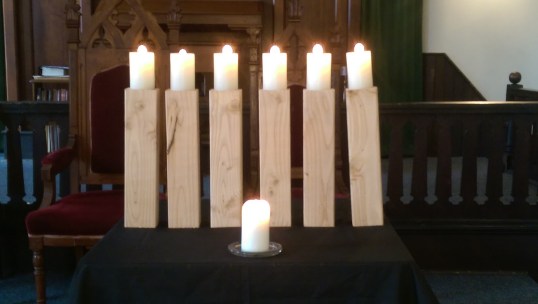
9-11-remembrance-z-2

Candles at First Congregational Church UCC – Zumbrota

9-11-remembrance-o-2

Candles at The Presbyterian Church of Oronoco

Time of Silence

Scripture reading – Lamentations 3:19-29, read from The Message
19 I’ll never forget the trouble, the utter lostness, the taste of ashes, the poison I’ve swallowed. 20 I remember it all – oh, how well I remember – the feeling of hitting the bottom. 21 But there’s one other thing I remember, and remembering, I keep a grip on hope: 22 God’s loyal love couldn’t have run out, his merciful love couldn’t have dried up. 23 They’re created new every morning. How great your faithfulness! 24 I’m sticking with God (I say it over and over). He’s all I’ve got left. 25 God proves to be good to the man who passionately waits, to the woman who diligently seeks. 26 It’s a good thing to quietly hope, quietly hope for help from God. 27 It’s a good thing when you’re young to stick it out through the hard times. 28 When life is heavy and hard to take, go off by yourself. Enter the silence. 29 Bow in prayer. Don’t ask questions: Wait for hope to appear. 

Hymn – Amen (insert)

Hearing the Stories – Cynthia Tumulty-Ollemar

Hymn #2200 (Sing the Faith) – O Lord, Hear My Prayer

Sharing Our Own Stories – a time to share our own stories of our experience and how those experiences have shaped us
         Where were you?
         What do you remember?
         How did this affect you?

Passing of the Peace

* Song of Peace: Let There Be Peace on Earth (back of the NCH)

Reading – “Who Am I?” by Kimberly Dunne
I am no one special.

I’m the little boy that gives up his favorite teddy bear so that a stranger might be comforted.

I’m the single mother who has been trying to teach her child to sleep in their own bed, who holds them tight long into the night, thanking God it wasn’t her child that died.

I’m the old man, angry and resentful that his military doesn’t want him because of his age.

I’m the teenage girl that spends hours cutting ribbons for others to wear as a symbol of remembrance.

I’m the young man who doesn’t understand why his father was running up the stairs as the building fell, trying to save just one more person, instead of saving himself.

I’m the old woman who will never see her grandchild again.

I’m the little girl, playing with her doll, who can’t understand when someone screams hateful things at her because of where her family is from.

I’m the police officer, trying to keep idiotic reporters safe, when his wife is still among the missing.

I’m the fire fighter that called in sick that day, only to discover that someone else died in his place.

I’m the man who survived the falling building only to learn that his sister and baby niece were in the plane.

I’m the secretary, angered by the seemingly callous response of those around her.

I’m a spelunker, who is climbing down into the remains of a building, hoping to find someone still alive.

I’m the dog handler, searching for bodies, that has to comfort my animal when only death remains.

I’m the woman who stands in line for five hours in order to give blood, hoping to help strangers in need.

I’m the man who gets up and goes to work every day, in spite of the tragedy, because he still has a family to feed.

I’m the first passenger to get back on a plane, even though I’m terrified, because I know somebody has to be first.

Who am I?

I’m nobody special.

I’m just an American.

Hymn #2013 (Sing the Faith) – Bless the Lord

Scripture reading – Psalm 23, read from the New Revised Standard Version
1 The Lord is my shepherd, I shall not want. 2 He makes me lie down in green pastures; he leads me beside still waters; 3 he restores my soul. He leads me in right paths for his name’s sake. 4 Even though I walk through the darkest valley, I fear no evil; for you are with me; your rod and your staff— they comfort me 5 You prepare a table before me in the presence of my enemies; you anoint my head with oil; my cup overflows. 6 Surely goodness and mercy shall follow me all the days of my life, and I shall dwell in the house of the Lord my whole life long.

Celebrating the Lord’s Supper – Our tradition in this congregation is to partake of the bread whenever you feel prepared to do so and to hold the wine/juice until all have been served so that we can all partake together. This gives us the chance to participate in this holy mystery as we participate in our faith – both as individuals and as a community.
          Invitation to the Table
Communion Hymn #2261 (Sing the Faith) – Life-Giving Bread
Great Thanksgiving
One: God be with you.
               Many: And also with you.
                One: Lift up your hearts.
               Many: We lift them up to God.
                One: Let us give thanks to God Most High.
               Many: It is right to give our thanks and praise.
          Communion Prayer
Lord’s Prayer: Our Father who art in heaven, hallowed be thy name. Thy kingdom come, thy will be done on earth as it is in heaven. Give us this day our daily bread, and forgive us our sins as we forgive those who sin against us. And lead us not into temptation, but deliver us from evil. For thine is the kingdom, and the power, and the glory forever. Amen.
          Words of Institution
Sharing the Bread and the Cup
Prayer of Thanksgiving

Hearing the Stories – David Hood

Time of Silence

Offering
* Hymn of Response #785 (NCH)
* Prayer of Dedication

Scripture reading – Revelation 21:1-6, read from the Common English Bible
1 Then I saw a new heaven and a new earth, for the former heaven and the former earth had passed away, and the sea was no more. 2 I saw the holy city, New Jerusalem, coming down out of heaven from God, made ready as a bride beautifully dressed for her husband. 3 I heard a loud voice from the throne say, “Look! God’s dwelling is here with humankind. He will dwell with them, and they will be his peoples. God himself will be with them as their God. 4 He will wipe away every tear from their eyes. Death will be no more. There will be no mourning, crying, or pain anymore, for the former things have passed away.” 5 Then the one seated on the throne said, “Look! I’m making all things new.” He also said, “Write this down, for these words are trustworthy and true.” 6 Then he said to me, “All is done. I am the Alpha and the Omega, the beginning and the end. To the thirsty I will freely give water from the life-giving spring.

Reading – “I Hold in My Hands” by Aaron J. Walsh
I hold in my hands …
The dust.
The dust and wreckage of the towers.
Even though I wasn’t there,
I can still feel it.
It has damaged my hands with dirt.
It has damaged my heart with sorrow.
It has damaged my body with fear,
and it has damaged my life with war.

I hold in my hands …
My life.
My life could soon be filled with war,
cruelty at its worst.
Miles away, I can hear the planes’ roaring engines, gliding through the air.

I hold in my hands …
My future.
My life ahead.
Whether it will be filled with war or peace, we will not know.
My future keeps me going from dawn to dusk.

I hold in my hands …
Hope.
Hope for the future.
Hope for peace.
Hope for my country’s freedom.
And hope for America to win this war on terrorism.

* Charge & Benediction

* Sending Hymn #2156 (Sing the Faith) – Give Peace 


* indicates please rise in body or spirit as you are able