Sunday’s sermon: Still Moving

river

Texts used: 1 Kings 19:4-13 and Acts 2:1-13

  • I want you to close your eyes and think about what the river looks like this morning.
    • Imagine what you would see if you were standing on the bridge and looking over the edge.
      • Water rushing and swirling in some spots, barely moving in others
      • How it pools in sheltered areas
      • Ripples where insects, leaves, or fish have broken the surface of the water
    • Imagine what you would hear if everything was quiet and you could just sit and listen to the river.
      • Gush of fast-moving water
      • Splash of the river on the rocks and against the bridge
      • Soft splatter of rain as it hits the surface of the water
    • Even when the surface of the river looks smooth and undisturbed, that water is never truly still. It’s always moving, and in that moving, it’s always changing.
      • Heraclitus (ancient Gr. philosopher): No man ever steps into the same river twice, for it’s not the same river.
    • It’s always moving … just like the God that we have come to worship this morning. You see, our God is a God of movement – a God who doesn’t sit still but instead stirs up and interrupts and touches our lives day in and day out.
      • Sometimes God’s movements in our lives are overt
      • Sometimes God’s movements in our lives are more subtle
      • But no matter what it looks like, God is always moving in our lives. The Scripture stories that we just read give us two examples of God moving in the lives of his people.
  • Pentecost experience = example of God moving overtly
    • Without warning there was a sound like a strong wind, gale force – no one could tell where it came from. It filled the whole building. Then, like a wildfire, the Holy Spirit spread through their ranks, and they started speaking in a number of different languages as the Spirit prompted them.[1]Talk about overt movement! This is God literally reaching down into the lives of these people and infusing them with the Holy Spirit.
      • I love picturing this scene in my head. I mean, can you imagine how excitingly chaotic this was?! When you think about it, Pentecost has all the makings of a great Hollywood action scene:
        • Large and lively crowd of people
        • Public arena
        • Awesome special effects – rush of wind and tongues of fire
        • Can’t you just hear the orchestra crescendo in the background? [play “Chariots of Fire[2]]
      • There is nothing subtle about this encounter. This is God moving in the lives of people – moving in the fire of Holy Spirit!
        • Pentecost was a big, loud, all-encompassing event → I think it should be a big, loud, all-encompassing, celebratory day in the life of the church because sometimes, God still moves overtly in our lives.
          • Scholar: While a special moment in salvation’s history, this Pentecostal outpouring of the purifying, empowering Spirit upon God’s people is not a unique event from a long time ago. Luke’s narrative of this wondrous action symbolizes the powerful and effective nature of God’s ongoing presence among those who follow after God’s Messiah.[3] → This God is a God of movement – a God who refuses to sit still and instead moves in our lives in ways that can sometimes be as visible as the eddies and rapids that we see in a rushing river.
            • Kay & Michelle: “The Divine Disturber”
            • Mom calls this God being “showy”
            • Moments when all we can do is sit back and marvel at how things have worked out
              • Our address = silly but very real e.g. → Dubuque (UDTS)
              • Story of finding Amy for daycare
  • But there are other times in our lives when we don’t see God moving – times when we can only feel the whispers of that movement as it stirs within us. This is closer to Elijah’s encounter with God in the story from 1 Kings. – text: A hurricane wind ripped through the mountains and shattered the rocks before God, but God wasn’t to be found in the wind; after the wind and earthquake, but God wasn’t in the earthquake; and after the earthquake fire, but God wasn’t in the fire; and after the fire a gentle and quiet whisper. When Elijah heard the quiet voice, he muffled his face with his great cloak, went to the mouth of the cave, and stood there.[4]
    • I know that some of us are used to the text describing that silence as a “still, small voice” as in the King James Version. In this Message translation, Eugene Peterson calls it a “gentle and quiet whisper.” But interestingly enough, no Hebrew word for “voice” or “whisper” or any such utterance is actually found in this text. Instead, according to the Hebrew, what Elijah experiences after the fire is the sound … of silence. But this is so much more than ordinary silence.
      • phrase = “humming silence” → This is a vibrating silence, a palpable silence, a silence charged with the presence of the Most High God.
    • I think that this palpable silence resonates with the more subtle ways that God moves in our lives. Instead of seeing this movement on the surface, we just know that something is stirring within.
      • A humming deep in our hearts
      • A vibration down in our souls
      • A charge in the back of our minds
      • A movement so quiet and subtle that we could miss it if we aren’t paying attention – if we aren’t connecting with God through prayer and Scripture reading and worship
      • Scholar: Here [in Elijah’s story], the point is made quite deliberately that God is not locked into any one mode of appearing. Sometimes God is not made known to us through flashy [divine appearances]. Sometimes God is … present in unspectacular events and ordinary people.[5]
        • Contrast is especially clear in Pentecost story → At Pentecost, God came down in wind and in fire … but for Elijah, God wasn’t in the wind or in the fire but in the following silence. It’s the exact opposite of the Pentecost experience.
        • Sometimes, it’s not the eddies and rapids on the surface that carry the river’s power. Instead, you find a strong current that runs deep beneath the surface of the water.
          • Runs undetectable beneath the surface – subtle, quiet, hidden
          • Powerful enough to pull boulders along the river bottom, carve out the Grand Canyon, transport a speck of dirt from northern Minnesota all the way down to the Gulf of Mexico
  • But God’s movement doesn’t stop with our lives alone. When a river runs through the countryside, it carries things along with it – leaves and branches, fish and water bugs, even people. Our God is a God of movement – a God who refuses to sit idly by in the face of injustice, pain, and suffering. If we are truly created in the image of this God, then God’s movement should get us moving, too. It should inspire us to move in the lives of others, and it should inspire us to encourage others to move as well.
    • Both Elijah & Peter moved in the lives of others
      • After God visited Elijah on the mountain → Elijah took Elisha as a disciple who did even greater things for the glory of God and for the benefit of God’s people
      • After the Holy Spirit came down at Pentecost → Peter was instrumental in building the Church – a community of believers that grew exponentially both in number and understanding so that Christ’s message reached the corners of the earth
      • Scholar: We learn that ministry may include the passing on of the mantle of leadership. Faithfulness to God’s calling may entail the preparation of others for their own ministry.[6]
    • Friends, we cannot sit still when the God that we worship and serve and praise and adore is a God of such profound, stirring, dynamic movement! → like trying to sit still in midst of a song that just makes you want to dance! [play “Happy[7]]
      • Rivers don’t stop flowing. They may run faster or slower. They may be high or low. They may even change course sometimes. But they. Don’t. Stop. Throughout history, since the dawn of creation, God has not stopped moving. And neither should we. Amen.

[1] Acts 2:2-4 (emphasis added).

[2] “Chariots of Fire” by Vangelis, released March 1981.

[3] Wall, 57 (emphasis added).

[4] 1 Kgs 19:11b-13a.

[5] Choon-Leong Seow. “The First & Second Book of Kings: Introduction, Commentary, and Reflections” in New Interpreter’ Bible commentary series (Nashville, TN: Abingdon Press, 1999), 144-145.

[6] Seow, 145.

[7] “Happy” by Pharrell Williams, from the G I R L album, released 2014.

Sunday’s sermon: Mountain-Goat Faith

mountain goat

Texts used – Psalm 18:1-5, 16-24 and Romans 5:1-5

  • It’s time for a little show and tell this morning, all. This is a mountain goat, Latin name: oreamnus americanus.
    • Stats[1]:
      • Found only in North America – Rocky Mountains and Cascade Ranges, all the way up Canadian Rockies into Alaska
      • Largest mammal found at altitudes in which it lives – 13,000 ft.+
      • Not related to domesticated farm goats
      • Herbivores
      • Live 12-15 yrs. in the wild, up to 20 yrs. in captivity
      • Stand more than 3 ft. tall
      • Can weigh up to 300 lbs.
    • Up to 300 lbs … that’s huge! But if you’ve ever watched a mountain goat – in the wild, in a zoo, or even just on the National Geographic channel or YouTube – they’re nimble and light-footed and spry. When they’re jumping from rock to rock or climbing steep cliff faces, they look like they weigh nothing at all. Imagine! Creatures so big, so bulky (especially when they have their big, shaggy winter coats), and yet they have the grace and agility to survive and even thrive in places that most humans won’t even dare to venture.
  • Great! … So why the heck are we talking about mountain goats this morning?? → plenty of times in our lives when we feel all the weight and uphill battle of the mountain goats without any of the agility and grace
    • Weighed down and overburdened by struggles and challenges in life
      • Worries that weigh on our minds – worries about family/loved ones, worry about job, worry about health, worry about future
      • Fears that plague our thoughts by day and our dreams by night
      • Doubts and uncertainties about ourselves, our relationships, our careers, our life paths
      • Frustrations that run rampant through our days, draining our energy and creativity and patience
    • Uphill battles that we wage day in and day out
      • Battles against diseases, be they chronic (fibromyalgia) or acute (cancer)
      • Battles against our own demons (faults, addictions, prejudices)
      • Battles against the injustice in the world – poverty, discrimination, hunger, human trafficking
    • I know we don’t like to think about it. We don’t like to talk about it. But we also can’t ignore it. Sometimes our lives are challenging. Sometimes our lives include struggles. Sometimes things are scary or painful or overwhelming or just plain hard.
  • Scripture itself mentions these rocky places again and again and again.
    • Scattered e.g.s
      • Psalms of lament – e.g.: By the rivers of Babylon— there we sat down and there we wept when we remembered Zion. On the willows there we hung up our harps. For there our captors asked us for songs, and our tormentors asked for mirth, saying, “Sing us one of the songs of Zion!” How could we sing the Lord’s song in a foreign land?[2]
      • Imprecatory psalms (affectionately known as “ticked off psalms” that invoke judgment and calamities and curses) – e.g.: Send the Evil One to accuse my accusing judge; dispatch Satan to prosecute him. … May there be no one around to help him out, no one willing to give his orphans a break. Chop down his family tree so that nobody even remembers his name.[3]
      • Challenges voiced by all the prophets in the OT – e.g.: Woe to you who are rushing headlong to disaster! Catastrophe is just around the corner! Woe to those who live in luxury and expect everyone else to serve them! Woe to those who live only for today, indifferent to the fate of others![4]
      • Nearly every letter that Paul wrote mentions struggle in some way!
    • Reality of struggles recognized in Scriptures we read this morning , too
      • OT speaks of “[running] for dear life, hiding behind the boulders … The hangman’s noose was right at my throat; devil waters rushed over me. Hell’s ropes cinched me tight; death traps barred every exit. … They hit me when I was down.”[5]
      • NT text (which, by the way, is one of Paul’s letters) mentions being “hemmed in with troubles”[6]  And, friends, it doesn’t say “if we’re hemmed in by troubles.” It doesn’t say, “Hey, maybe we’ll hit a tiny little bump in the road now and then.” Paul doesn’t hedge, and he doesn’t waffle. No sorta, kinda, perhaps, almost, or possibly about it. Paul says “when we’re hemmed in with troubles.” Ya’ll, troubles are a reality for every person on this earth. There is nothing special or magical about race, gender, ethnicity, sexual orientation, education level, socioeconomic status, faith system or anything else that exempts us from facing challenges in our lives.
        • Not so different from mountain goats in the terrain in which they live – can’t avoid the sharp boulders, the uneven ground, the slippery pathways, the sheer cliff faces, the unstable escarpments
  • But here’s the thing: Mountain goats are specially equipped for making their way through those rocky paths and risky landscapes.
    • Mountain goats’ “special equipment”
      • Pads on their hooves help them to climb the crazy cliffs and ice crags for which they are so well-known
      • Special hoof … toe … claw … thing – “dewclaw”: It’s basically as close to an opposable thumb as a goat is ever going to get. It’s a long, two-pronged hoof-lookin’-thing on the back of their foot (sort of where their heels would be if goats had heels) that helps them to grip the rocks and the ice as they climb.
        • So effective that they can leap up to 12 ft. in that uneven terraine![7]
    • And in our Scriptures this morning, we find a reassurance that like those mountain goats, we have also been specially equipped, not to avoid the rocky and slippery parts of our lives, but to navigate them with grace, with joy, with courage, and even with daring.
      • Scripture speaks to greatness of God’s strength  all strengths mentioned in Rom passage tied to God
        • “We have it all together with God[8]
        • Speaks of “God’s grace and glory”[9]
        • Important little word hiding in last verse – “everything God generously pours into our lives”
          • Hidden Gr. = agape  This is that powerful, do-anything kind of love. It’s a giving kind of love, a self-sacrificing kind of love. It’s the kind of love that is all-encompassing and all-emboldening. This is the “everything” kind of love that God generously pours into our lives through the Holy Spirit.
            • Love that gives strength
            • Love that gives confidence
            • Love that gives courage
            • Love that gives hope
      • Meant what I said a minute ago: There is nothing special or magical about race, gender, ethnicity, sexual orientation, education level, socioeconomic status, faith system or anything else that exempts us from facing challenges in our lives … And that is because this agape love from God – this building-up, sure-footing kind of love – is for everyone. God’s love doesn’t just make do with everyone. God’s love celebrates God’s love celebrates all genders. God’s love celebrates all races. God’s love celebrates all people no matter what because God’s love truly is all-encompassing.
        • Scholar: Our hope is built on nothing less than the conviction that pervades Psalm 18: God will ultimately fulfill God’s steadfastly loving purposes for the world and for all its people.[10]
  • And it’s God’s steadfastly loving purposes – this strength-giving agape love – that is so highly praised in our psalm this morning.
    • E.g.s
      • I love you, God – you make me strong.[11]  There it is … there’s my sermon in eight simple words!
      • [God] stood me up on a wide-open field; I stood there saved – surprised to be loved! God made my life complete when I placed all the pieces before [God].[12]
      • God rewrote the text of my life when I opened the book of my heart to [God’s] eyes.[13]
    • Also the point main point that Paul makes in Rom passage – e.g.s
      • We throw open our doors to God and discover at the same moment that [God] has already thrown open [God’s] doors to us.[14]
      • We continue to shout our praise even when we’re hemmed in with troubles, because we know how troubles can develop passionate patience in us, and how that patience in turn forges the tempered steel of virtue, keeping us alert for whatever God will do next.[15]
        • Scholar: The more we cooperate with the reality of God in our lives, especially during times of trouble, the stronger our hope and faith become. Then a marvelous thing happens: we have the ability to hold our heads high, no matter what comes our way.[16]
    • One of my favorite verses = 1 Jn 4:19: We love because God first loved us. (etched inside wedding rings)  Yes, we love because God first loved us, but it doesn’t stop there because there’s all sorts of goodness tied up in God’s love. We hope because God first gave us hope. We forgive because God first forgave us. We are strong because God was first strong for us.
  • Friends, the rough patches in our lives come and go. But with God’s goodness and grace within us, we can take heart knowing that we do not, will not, cannot traverse those rocky patches alone. God has strengthened us through an incredible love and grace that cannot ever be taken away. Think about the mountain goats again for a minute. When you see footage of them in the wild, they’re not slowly and cautiously picking their way around the rocks and along the cliffs. They’re not sitting safely in one place just waiting for things to happen around them. They’re running! They’re prancing! They’re leaping! Are there times that their steps falter? Sure. But they go about their lives with confidence in their footing because why shouldn’t they? So where is your mountain-goat faith this morning? With the knowledge that the unmistakable strength of God’s love and grace go with you, where do you need to run confidently or leap boldly? Amen.

[1] “Mountain goats.” Accessed from http://en.wikipedia.org/wiki/Mountain_goat on 16 May 2015.

[2] Ps 137:1-4 (NRSV).

[3] Ps 109:6, 12-13.

[4] Amos 6:3-5a.

[5] Ps 18:2, 4-5, 18.

[6] Rom 5:3.

[7] “Mountain Goat: Oreamnos americanus.” Accessed from http://animals.nationalgeographic.com/animals/mammals/mountain-goat/ on 17 May 2015.

[8] Rom 5:1 (emphasis added).

[9] Rom 5:2.

[10] J. Clinton McCann, Jr. “The Book of Psalms: Introduction, Commentary, and Reflections” in The New Interpreter’s Bible Commentary series, vol. 4. (Nashville, TN: Abingdon Press, 1996), 749-750 (emphasis added).

[11] Ps 18:1.

[12] Ps 18:19-20a.

[13] Ps 18:24.

[14] Rom 5:2a.

[15] Rom 5:3-4.

[16] Linda E. Thomas. “Trinity Sunday – Romans 5:1-5” in Feasting on the Word: Preaching the Revised Common Lectionary – Year C, vol. 3. (Louisville, KY: Westminster John Press, 2003), 42.

Sunday’s sermon: All You’ve Revealed

Texts for this sermon: Psalm 119:97-112 and Acts 8:26-40

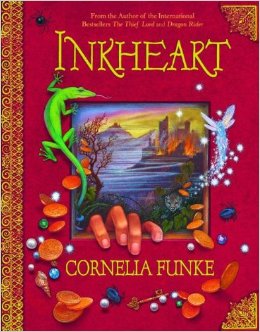
Inkheart
Inkheart cover artwork by Carol Lawson

  • “Rain fell that night, a fine, whispering rain. Many years later, Meggie had only to close her eyes and she could still hear it, like tiny fingers tapping on the windowpane. A dog barked somewhere in the darkness, and however often she tossed and turned Meggie couldn’t get to sleep. The book she had been reading was under her pillow, pressing its cover against her ear as if to lure her back into its printed pages. ‘I’m sure it must be very comfortable sleeping with a hard, rectangular thing like that under your head,’ her father had teased the first time he found the book under her pillow. ‘Go on, admit it, the book whispers its story to you at night.’”[1] → So begins Inkheart, a fantastical and heart-warming tale by German author Cornelia Funke.
    • Basics of the story
      • Main characters Mo and his daughter, Meggie = blessed with powerful and incredible gift – ability to bring stories to life with their voices → When Mo and Meggie read aloud, the sound of their voices literally pulls characters, creatures, treasures, and anything else from the pages of whatever book they’re reading, breathing life into them, and setting them free in the world.
        • Leads to all kinds of trouble
        • Leads to all kinds of adventure
        • Leads to all kinds of weird and wondrous happenings in their lives
    • Now, as someone who has loved to read my entire life, I can’t tell you how many times I’ve wished a gift like this were real – wished I could read Anne of Green Gables, Bilbo Baggins, Jo March, the BFG, and so many others straight off the page because if their lives are that wonderful within their own stories, how cool would it be to have them here, too?
      • Hear voices
      • See faces
      • Interact with personalities … that up to now have only existed within my own mind, my own imagination.
    • As Christians, we call the Bible the “inspired Word of God.” We believe Scripture to be God’s Word spoken through people in particular times and circumstances that continues to speak to us today.
      • To challenge us
      • To comfort us
      • To inspire us
      • To engage us
      • But too often, we fall into the routine of reading Scripture because we think we should – because we feel obligated or guilted into doing so. We pull out our Bibles and flip through to a few of our favorite verses and call it good. But the question I have for you this morning is an important and dangerous and deceptively simple yet complicated one: What if?
        • What if every time we opened Scripture we looked for more than just words on a page?
        • What if we approached the Bible as more than just the book we turn to when we need a momentary pick-me-up?
        • What if we approached our own readings of Scripture expecting an Inkheart experience, one in which God’s Word and story and brilliance jump right off the page and grab a hold of our very hearts and lives?
  • That’s the sort of experience that we find at the heart of both of our texts this morning.
    • Philip’s story = powerful story of God and Scripture reaching down into people’s lives and stirring things up in a big way
      • Context for Philip[2] = one of the 12 disciples who had been with Jesus → scattered from Jerusalem because of the persecution that followed Jesus’ death → coming off huge success in Samaritan city (story of Simon “the Great Wizard” and the people’s conversion)
      • Today’s story: God calls him to this crazy desolate road in the middle of nowhere → gets there (somehow?) and finds a eunuch from Ethiopia (culturally/historically: anywhere south of Egypt at that time) reading aloud from Scripture (Isaiah) → inspired to “unpack” passage for him – explain who, what, where, when, how, and why of Isaiah pointing to Jesus’ life, death, and resurrection → eunuch is so moved that he asks Philip to baptize him in this stream they’ve come across → Philip fulfills his request → Philip is whisked off by God to the next stop on his evangelism tour through Judea and Samaria
      • Ya’ll, it doesn’t get much more stirred up than that! This story almost sounds like it could’ve come straight out of an early 20th century revival meeting complete with an altar call and an impromptu baptism! There isn’t anyone that we encounter in this story who isn’t stirred up … who isn’t inspired!
        • Philip = inspired to follow God’s call to this odd stretch of road and to share the Word of God
        • Eunuch = inspired to read Scripture in the first place, also inspired by Philip’s testimony to be baptized
        • Even God seems to be so inspired by Philip’s resounding success that God picks Philip up and transports him to the next stop along the line: Azotus (near Mediterranean Sea).
    • Ps = ode to the inspirational quality of Scripture:
      • I watch my step, avoiding the ditches and ruts of evil so I can spend all my time keeping your Word.[3]
      • I’ve committed myself and I’ll never turn back from living by your righteous order.[4]
      • I concentrate on doing exactly what you say – I always have and always will.[5]
      • The psalmist makes it clear that throughout his/her life – no matter what’s going on, no matter how s/he feels, no matter the requirement or the cost – the Word of God is, for the psalmist, the beginning and the end.
        • Source of strength, reassurance, guidance
        • Place to turn to in times of trouble
        • Teacher, mentor, protector, friend
      • Continually makes source of this inspiration and revelation clear – text: Oh, how I love all you’ve revealed … My life is as close as my own hands, but I don’t forget what you have revealed.[6] → “Oh, how I love all you’ve ” Notice, it doesn’t say, “Oh, how I love all the things I’ve so brilliantly and cleverly figured out all by myself.” This portion of Psalm 119 speaks of Scripture – of God’s commands, God’s counsel, God’s direction, God’s Word – not as a stagnant and easily knowable thing but as something that requires continued pondering, continued thought and time and interaction.
        • Scholar: Scripture is not a dead letter but a dynamic, living word. It is to be read and heard and proclaimed in openness to the Holy Spirit who leads the church to discern the Word of God for our place and time.[7]
          • [UCC: Never place a period where God has placed a comma. God is still speaking,[8]]
  • But my friends, I would be remiss if I failed to recognize that this is a much easier thing to say than it is to do most of the time.
    • Lot of things that can make it hard for us to interact with Scripture
      • Emotions/state of mind get in the way – stressed, angry, worried → Our emotions color the way we see everything and everyone around us, even Scripture.
      • Busyness of life gets in the way → There’s always one more thing to do, and there’s always going to be one more thing to do: one more person to call, one more email to send, one more appointment to keep, one more dish to wash or load of laundry to start, one more bill to pay.
      • Our own uncertainty → Maybe we feel like the eunuch – like we need someone to help us read and understand. There are a lot of difficult passages found within these pages!
    • And this is why we come together for worship. We read together. We think together. We learn together. We all play the role of Philip as well as the role of the eunuch at one point or another, sometimes needing to see and sometimes helping to see the layers of meaning within the text.
      • Not just about the sermon – goes far beyond tools that I use to prepare for Sunday mornings
        • Greek
        • Hebrew
        • Commentaries and other sources I consult
      • Learn through each other’s life experiences → we cannot interact with Scripture – with the Word of God – without our lives being affected … stirred … changed
        • Scholar: Both the psalmist and Jesus were open to God’s instruction in a variety of forms – Scripture, tradition, and ongoing events and experiences that reveal God’s way and represent God’s claim upon humanity and the world.[9] → When we interact with Scripture – when we read God’s Word and spend time pondering it like the psalmist and working through it like Philip and the eunuch – that Word seeps into our very souls. It works in us and through us. It travels through the world with us as we continue to chew on the meaning of what we’ve read and try to figure out what God might be saying to us.
    • Being changed ≠ the only way we interact with Scripture – Inkheart quote: “Isn’t it odd how much fatter a book gets when you’ve read it several times?” Mo had said…”As if something were left between the pages every time you read it. Feelings, thoughts, sounds, smells…and then, when you look at the book again many years later, you find yourself there, too, a slightly younger self, slightly different, as if the book had preserved you like a pressed flower…both strange and familiar.”[10] → If Scripture truly is the living, breathing text that we say it is, then we leave a little something of ourselves behind when we read Scripture as well. We leave a little piece of ourselves with God within these pages.
      • Leave our hopes and dreams
      • Leave our fears and challenges
      • Leave our heartaches
      • Leave our worries
      • Leave our prayers and our worship
  • You’ve probably heard the cute, Sunday school acronym for what “Bible” stands for: Basic Instructions Before Leaving Earth (B-I-B-L-E). I’m challenging that acronym today. This Scripture that we revere – this Word of God in all its beauty and complexity and challenge and inspiration – is far from “basic.” It’s also a far cry from the dry, detached nature of any instruction manual I’ve ever encountered. There is passion in these words. There is pain and love and a call to understand and keep understanding in these pages. This is God’s love letter to us. This is the history of our faith. This is the telling and retelling of stories that have shaped and formed countless millions before us and will continue to shape and form people for generations to come.
    • Call of God and Scripture in our lives – In the words of the beloved Shel Silverstein:
      If you are a dreamer, come in
      If you are a dreamer, a wisher, a liar,
      A hope-er, a pray-er, a magic bean buyer…
      If you’re a pretender, come sit by the fire
      For we have some flax-golden tales to spin.
      Come in!
      Come in![11]

Invitation - Silverstein
artwork by Shel Silverstein

[1] Cornelia Funke. Inkheart. (New York City, NY: The Chicken House, 2003), 1-2.

[2] Acts 8:1-25.

[3] Ps 119:101.

[4] Ps 119:106.

[5] Ps 119:112.

[6] Ps 119:97, 109

[7] J. Clinton McCann, Jr. “The Book of Psalms: Introduction, Commentary, and Reflections” in The New Interpreter’s Bible Commentary series, vol. 4. (Nashville, TN: Abingdon Press, 1996), 1176.

[8] Gracie Allen, UCC “God Is Still Speaking” campaign, http://www.stillspeaking.com.

[9] McCann, 1175.

[10] Cornelia Funke, Inkheart. Quote found at http://www.goodreads.com/work/quotes/2628323-tintenherz-tintenwelt-1.

[11] Shel Silverstein. “Invitation” in Where the Sidewalk Ends: Poems and Drawings. (New York City, NY: HarperCollins), 1974.

May newsletter piece

Paul & Silas

In Acts 16:16-24, Paul and Silas are walking through Philippi when a slave-girl starts following them and shouting that they are “slaves of the Most High God.” Paul orders “a spirit of divination” to leave her body, but without that spirit, she can no longer make money fortune-telling for her owners. In anger, the girl’s owners accuse Paul and Silas of advocating an unlawful religion. Paul and Silas are arrested, beaten, and thrown in prison.

Does that sound like anyone else’s story?

Jesus’ story, perhaps?

They are all innocents who are falsely accused, beaten, and imprisoned.

But while Paul and Silas were imprisoned by shackles and stone walls, Jesus was imprisoned by death.

Paul and Silas are about as deep in prison as you can possibly get.

Period.

End of story.

Jesus was dead, and he’s been dead for days.

Period.

End of story.

Or is it? We know that Jesus didn’t stay in the tomb. We know that three days after his crucifixion, Jesus broke the bonds of death that were holding him captive and was resurrected. Not even the most powerful captivity known to humankind could hold the Son of God imprisoned!

So how does Paul and Silas’ story end? In the middle of the night, Paul and Silas are “at prayer and singing a robust hymn to God. … Then, without warning, a huge earthquake! The jailhouse tottered, every door flew open, all the prisoners were loose” (Acts 16:25-26).

At some point or another in our lives, we are all captives. It could be illness, injury, addiction, pain, pride, a busy schedule, or any number of things that imprisons us.

But that imprisoned life is not the life that God intended for us.

We were created for a life of freedom and loving relationship with God. In order to ensure that that life would be available to us in spite of our sins, God sent God’s Son to earth to conquer and thereby release us from the ultimate captivity: death.

What a gift!

How could we do anything but praise and thank God for God’s everlasting love and mercy?

When we remain in relationship with God, praying and praising as Paul and Silas did, God can do amazing things in our lives.

Stop for a moment and think about the things in our life that are holding you captive. Imagine them putting you in prison and forming chains around your feet, keeping you from moving on in your life.

Now do what Paul and Silas did: “Put your entire trust in the [Lord] Jesus. Then you’ll live as you were meant to live – and everyone in your house included!” (Acts 16:31).

Give that faith the opportunity to cause an earthquake in your life to shake loose your chains and open your prison doors.

Let your actions reflect the love and mercy that has been given to you by God.

 Pastor Lisa sign

Sunday’s sermon: Between a Rock and a Hard Place

Texts used for this sermon – 1 Samuel 17:32-49 and Mark 4:35-41

"Rock, Hard Place" Road Sign with dramatic clouds and sky.

  • Being a safety patroller as a kid
    • Basic jobs of safety patrollers
      • Being stationed on corners to help kids cross street safely
      • Monitoring lines for various grade levels in the morning while students waited to go into school
    • Being a patroller was a pretty big deal.
      • Application – 4th grade
      • Mentoring period – followed older student around learned from them
      • Final step: practical exam (followed around by one of the captains to make sure you were doing things properly)
      • “Pay-off” – bright orange belt and a small modicum of power
    • A lot of the time, being a patroller was fun, especially if you ended up being grouped with some of your friends.
      • 7 different corners that you could be stationed on (2 or 4 people on the corner, depending on how busy the traffic was)
      • 7 different grade levels (K-6), each with their own door to line up at (2 people per door) → Door duty could be fun if you were on one of the ‘younger’ doors – kindergarten through 3rd The kids we were monitoring were younger siblings, friends’ siblings, or even kids that we babysat for. Most of them thought patrollers were really cool! But door duty presented special challenges, especially if you were assigned to patrol the door of whatever grade you were in or (even more challenging) if you were a 5th grader assigned to monitor the 6th grade door. Suddenly we were policing our peers.
        • Put us between a rock and hard place – doing the job we were supposed to be doing often jeopardized the peer acceptance that is starting to become so crucial at that age
    • And when I read through our passages today, it struck me that both stories also involve people being stuck between a rock and a hard place.
      • David’s difficult situation: single combat challenge in lieu of a major battle – in the text leading up to today’s reading, Goliath says to the Israelites, “Pick your best fighter and pit him against me.If he gets the upper hand and kills me, the Philistines will all become your slaves. But if I get the upper hand and kill him, you’ll all become our slaves and serve us. I challenge the troops of Israel this day. Give me a man. Let us fight it out together!”[1] → facing enslavement vs. grossly unmatched fight to the death – rock … hard place
      • Disciples’ difficult situation – caught in a crazy storm → 2 most important descriptors in same verse[2]
        • “huge storm”: think hurricane, not just a gust here and there → wind, rain, waves, lighting, thunder … total chaos
        • “Waves poured into the boat, threatening to sink it” – Gr. = filled → This wasn’t just a little bit of water splashing over the sides here and there. The boat was filling up with water. It was going down.
  • One of the things that struck me most about these difficult situations was the different ways they were handled.
    • David – confidence in God despite reactions of all those around him
      • Saul expresses doubt and disbelief: Saul answered David, “You can’t go and fight this Philistine. You’re too young and inexperienced – and he’s been at this fighting business since before you were born.”[3]
        • BUT David praised God: David said, “The LORD, who saved me from the paw of the lion and from the paw of the bear, will save me from the hand of this Philistine.”[4]
      • But Saul wasn’t alone in his doubt. Not surprisingly, Goliath also expressed doubt and disbelief: “Am I a dog, that you come to me with sticks? … Come on. I’ll make roadkill of you for the buzzards. I’ll turn you into a tasty morsel for the field mice.”[5]
        • And again David praised God in the midst of an incredibly difficult situation – David’s simple but powerful declaration to the army of Israel: “Don’t give up hope.”[6]
  • Disciples’ response to their difficult situation is quite different from David’s
    • Context within the rest of Mark’s gospel: story follows on heels of the only parables found in Mark – 4 parables that inextricably link the Kingdom of God and the importance of faith, no matter how small
      • Mk’s segue into today’s story: With many stories like these, [Jesus] presented his message to them, fitting the stories to their experience and maturity. He was never without a story when he spoke. When he was alone with his disciples, he went over everything, sorting out the tangles, untying the knots.[7]
    • Jesus tried to explain everything to them using these parables – these stories – in hopes that it would be easier for them to understand, but the disciples still didn’t get it. And then they encounter The Storm.
      • Hurricane whipping around them
      • Boat on the verge of sinking
      • Icing on the cake: Jesus is curled up in the front of the boat sleeping through the whole thing!
      • Disciples’ response: “Teacher, is it nothing to you that we’re going down?”[8] → The disciples couldn’t swim away from the sinking boat because the hurricane would have drowned them. That’s the rock. The boat was sinking, and a sinking – or worse yet, sunken – boat can’t carry you safely to shore. That’s the hard place. When their conventional options were no longer viable, they panicked. Did they really think that Jesus didn’t care whether they lived or died? Probably not. But fear and panic do funny things to our ability to think, don’t they?
    • Summer chaplaincy internship at the Minneapolis VA Medical Center → I visited with patients and their family members on some of the most challenging and critical units – surgical intensive care, outpatient dialysis, and the secured psychiatric ward, to name a few. And while every experience differed in terms of the challenges faced and the prayers needed, I noticed something: during difficult times, we like to make a to-do list for God. We like to give God parameters for the way we want God to work in a situation. When we look first at the rock and then at the hard place between which we’re stuck, we look for God to work in one situation or the other in the ways that we expect, ways that we can anticipate and understand and predict.
      • PROBLEM: We aren’t God! → doesn’t mean that help, strength, comfort, peace, and all those other things that we ask for are bad things or that they aren’t the solution to the problem
      • My questions this morning: Do we ever ask for the unconventional solution? Do we ever take our eyes off the rock and off the hard place and simply look up? Do we look to God simply because God is the One who created and sustains us and in whom we place our trust and our love?
        • Most dangerous prayer: Thy will be done
  • You see, our Scripture readings this morning remind us that God can provide salvation in the most unexpected of ways.
    • Obvious: David in and of himself = UNCONVENTIONAL → small, teenage boy (text called him “a mere youngster, apple-cheeked and peach-fuzzed”[9]) defeating a seasoned warrior who just happens to be 10’ tall!
    • Jesus’ reaction to the disciples’ request[10] = also unconventional:
      • The Message: “Quiet! Settle down”
      • NRSV: “Peace! Be still!”
      • Gr. = simply two different words side by side that both mean “be silent” → You see, in both Greek and Hebrew, when two words that basically mean the same thing are used together, it is taken as extra emphasis. This emphasis conveys the force of Jesus’ pronouncement. Whatever the disciples may have been expecting Jesus to do in that moment, I would guess that commanding nature itself to be silent and actually having nature respond in kind was not a part of their expectation.
    • Similar interesting point that can be found in Mark’s story
      • Result of Jesus’ rebuke to the wind: “The wind ran out of breath; the sea became smooth as glass.”[11] – Gr. = “great calm” → Now, I don’t say this very often, but I actually don’t like the translation here. I think it effectively ends up taking away from the language of the story. In the Greek, the same word is used here as is used to describe the great windstorm – the hurricane – from a few verses back. Using the exact same word to describe the calm ordered by Christ inextricably and sacredly ties the two extremes together – a great windstorm tamed into a great calm by Jesus’ very words.
        • IN OUR OWN LIVES:
          • The great windstorm = the chaos, fear, vulnerability that we feel when we’re tossing about in the midst of a difficult situation
          • The great calm comes from placing our faith in God → Instead of trying to fix the situation ourselves by reminding God what we think we need, we trust in God’s wisdom, power, and love, believing – truly believing – that those are far more potent than whatever we had in mind and that they will bring us through the storm.
  • I know that this isn’t easy. Trust me, I’m a worrier who comes from a long line of worriers! And I knows I’m not the only one in this room! Most of us tend to be pretty fearful and worried when we don’t know how things are going to work out – when all we can see are the problems while the solutions remain hidden.
    • Interesting disclaimer about this in text: [The disciples] were in absolute awe, staggered.[12] – Gr. = “great fear/great terror” → God doesn’t promise it won’t be difficult, but God does promise to be there and to get us through.
      • Quote from Julie – African proverb: “Every shut eye ain’t asleep, and every ‘goodbye’ ain’t gone.” → situations we’re facing may cause us to shut our eyes, may cause us to whisper (or scream) our ‘goodbyes’ to people/places/things in our lives, and that may be painful … but that doesn’t mean we should be counted out because God isn’t counted out yet!
  • During my chaplaincy internship at the VA hospital, I spent many hours sitting with the veterans, listening to the stories of their lives, their service, and their faith. Each conversation was different, but they all had one thing in common: those men and women (and their families) had been through difficult, sometimes impossible situations, and despite it all, they’d maintained not only a belief, but a genuine trust in and love for God. We all face difficult situations in our lives – challenges for which we feel ill-equipped, situations that make us uncertain and worried and afraid. But when we find ourselves stuck between those rocks and those hard places, we are not alone in that space. God is there with us, and God is God is certain. Into the chaos of our lives, God speaks: “Peace. Be still.” Amen.

[1] 1 Sam 17:8-10.

[2] Mk 4:37.

[3] 1 Sam 17:33.

[4] 1 Sam 17:37.

[5] 1 Sam 17:43-44.

[6] 1 Sam 17:32.

[7] Mk 4:33-34.

[8] Mk 4:38.

[9] 1 Sam 17:42.

[10] Mk 4:39.

[11] Mk 4:39.

[12] Mk 4:41.

Sunday’s sermon: Walking in the Light

One of the lectionary passages for this past Sunday was a small portion of the Walk to Emmaus story (Luke 24:13-49). But I feel like there are some Bible stories that just can’t be broken up into little pieces; they’re so much better and more impactful as a whole. So this Sunday, instead of reading just a snip-it of the Walk to Emmaus story, we read the whole story in chunks, stopping briefly in between to talk about how this ancient story still affects our daily lives and walks of faith.

Road to Emmaus“The Road to Emmaus #2” by Daniel Bonnell

Part I – That same day two of [the disciples] were walking to the village of Emmaus about seven miles out of Jerusalem. They were deep in conversation, going over all these things that had happened. In the middle of their talk and questions, Jesus came up and walked along with them. But they were not able to recognize who he was.[1]

  • How often does this happen to us – we become so immersed in something that everything around us seems to fade into the background. → immersed in …
    • Events in our lives (major or minor, doesn’t matter)
      • Whatever it is that tugs at our hearts
      • Whatever it is that occupies our minds
    • Concerns of the people we love – get wrapped up in the things that those we love are wrapped up in
      • Their lives intertwined with our lives
      • Their hearts intertwined with our hearts
      • Their concerns intertwined with our concerns
    • Current events – everyone remembers where they were …
      • When JFK and MLK, Jr. died
      • On 9/11
  • In this introduction to the Walk to Emmaus story, the two disciples who are walking along are immersed in a little bit of all three.
    • Events of Holy Week – Jesus’ arrest, trial, and crucifixion – were major events in their own lives → They had followed him. Listened to him. Sat at his feet. Eaten at his table. Loved him. And watched him suffer and die – this critical part of their lives suddenly and violently ripped away. They were understandably immersed in what had just gone on in their own lives.
    • Inextricably linked to that – what happened to Jesus → not just the loss in their own lives that they were immersed in but also in the pain, humiliation, and injustice Jesus suffered
      • Their pain intertwined with his pain
      • Their sorrow intertwined with his sorrow
      • Their rejection intertwined with his rejection
    • Immersed in current events of the day – not just what had happened to Jesus (though, obviously, that certainly was part of it) but also the danger that followed.
      • Anti-Christian policies passed throughout Roman empire
      • Public sentiment stacked against those who had followed Christ
        • Jews didn’t like them
        • Roman citizens didn’t like them either: “Much of the pagan populace maintained a sense that bad things would happen if the established pagan gods were not respected and worshiped properly.”[2] → Jesus’ followers certainly weren’t respecting or properly worshiping other gods/goddesses
      • The two disciples who were walking along that day were so focused on all of this that when they were joined by a significant stranger, they failed to recognize him for who he was: Jesus.

Part II – He asked, “What’s this you’re discussing so intently as you walk along?” Then one of them, his name was Cleopas, said, “Are you the only one in Jerusalem who hasn’t heard what’s happened during the last few days?” He said, “What has happened?” They said, “The things that happened to Jesus the Nazarene. He was a man of God, a prophet, dynamic in work and word, blessed by both God and all the people. Then our high priests and leaders betrayed him, got him sentenced to death, and crucified him. And we had our hope sup that he was the One, the One about to deliver Israel. And it is now the third day since it happened. But now some of our women have completely confused us. Early this morning they were at the tomb and couldn’t find his body. They came back with the story that they had seen a vision of angels who said he was alive. Some of our friends went off to the tomb to check and found it empty just as the women said, but they didn’t see Jesus.”[3]

  • Friends, we have become a society that is entirely addicted to answers. We have the internet and Google and our calendars and our entire contact lists and even our very lives at our fingertips with the technology that we carry today. We have questions? We have answers almost instantaneously. → come to a point where we don’t like
    • Not seeing
    • Not knowing
    • Not understanding
    • ^^ Makes us uncomfortable, jittery, irritated
      • E.g.s
        • How do you feel when you’re trying to remember someone’s name or the lyrics to a song, and even though they’re on the tip of your tongue, you can’t for the life of you remember? It drives us crazy, right?!
        • iPad crashed last weekend – 2-3 days without my calendar functioning was far more unsettling than I’d like to admit
      • This portion of disciples’ story hangs on a significant question – possibly the most significant question: Where is Jesus?
        • Explained to this “stranger” about who Jesus was
        • Told “stranger” about horrible events of the past few days
        • Story culminates in a mystery – an empty tomb, a missing body, and women reporting that Christ had risen … “But they didn’t see Jesus.” You can just hear the skepticism, the wariness, the doubt in their voices as they say this. “[The women] came back with the story that they had seen a vision of angels who said he was alive. Some of our friends went off to the tomb to check and found it empty just as the women said, but they didn’t see Jesus.”

Part III – Then he said to them, “So thick-headed! So slow-hearted! Why can’t you simply believe all that the prophets said? Don’t you see that these things had to happen, that the Messiah had to suffer and only then enter into his glory?” Then he started at the beginning, with the Books of Moses, and went on through all the Prophets, pointing out everything in the Scriptures that referred to him.[4]

  • I’m always torn when I read these verses – torn between two very different ways to interpret Jesus’ reaction. You see, no matter how you translate it, how you dress it up or dress it down, Jesus’ words to the disciples could sound harsh: “So thick-headed! So slow-hearted! Why can’t you simply believe all that the prophets said?”
    • First reaction = I want Jesus to be tender in his words
      • Want to hear patience
      • Want to hear encouragement
      • Want to hear temperance
      • “Why can’t you simply believe all that the prophets said?”
    • Second reaction = certain understanding with Jesus’ frustration
      • He tried telling the disciples time and time again throughout the Gospels about the fate that awaited him → now they were actually living those predictions … and they still didn’t get it.
        • World we live in right now – explaining to the boys time and time again
          • Yeses and no’s/whys and why nots
          • Pointing out the same puppy in the same book over and over and over again
          • Not an angry frustration … just a weary one → “Why can’t you simply believe all that the prophets said?”

Part IV – They came to the edge of the village where they were headed. He acted as if he were going on but they pressed him: “Stay and have supper with us. It’s nearly evening; the day is done.” So he went in with them. And here is what happened: He sat down at the table with them. Taking the bread, he blessed and broke and gave it to them. And that moment, open-eyed, wide-eyed, they recognized him. And then he disappeared.[5]

  • On the night before he died, Jesus gathered with those he loved. And he took the bread, gave thanks to God, broke it, and gave it to them, saying, “Take and eat. This is my body, given for you. Whenever you do this, remember me.” And they did. Jesus blessed and broke the bread, and they remembered.
    • Echoes of the recent past reverberated in their hearts and souls
      • Blessed … broken … “Remember me.”
      • Blessed … broken … “Remember me.”
      • Blessed … broken … “Remember me. Remember me. Remember.”
    • Imagine what the disciples must have been feeling in that moment, at that exact moment when realization dawned.
      • Did it begin as a gnawing familiarity like déjà vu? “This feels sort of familiar. Haven’t we been here before? Haven’t we done this before?”
      • Or did recognition explode like a firework in their consciousness?
        • One moment – talking to stranger they met on the road
        • Next moment – Jesus!
      • And then, in another instant, he was gone again.

Part V – Back and forth they talked. “Didn’t we feel on fire as he conversed with us on the road, as he opened up the Scriptures for us?” They didn’t waste a minute. They were up and on their way back to Jerusalem. They found the Eleven and their friends gathered together, talking away: “It’s really happened! [Jesus] has been raised up – Simon saw him!” Then the two went over everything that happened on the road and how they recognized him when he broke the bread.[6]

  • Just in case we’d been left with any doubt about what kind of impact this encounter had on the disciples, we hear their powerful words in this verse: “Didn’t we feel on fire as he conversed with us on the road?”
    • Fire = light
    • Fire = heat
    • Fire = consuming
    • Fire = always moving and changing and sparking
    • This is the reaction that they had as Jesus, veiled though his identity may have been, walked along with them and spoke with them about Scripture and about his role in salvation as the Messiah, the Christ, the Anointed One who came to set all people free. “Didn’t we feel on fire?”
  • Thing about fire = it also spreads → disciples “didn’t waste a minute”
    • Got up and made the roughly 7-mile trek back to Jerusalem
      • Back into the danger
      • Back into the fear
      • Back into the place that contained so many fresh, painful, horrible memories
    • Remember, it was already late in the evening, so the road was dark.
      • Dark road was a dangerous road – shadowy corners, open stretches where robbers and other evildoers could hide and pounce
    • But then again, maybe the road wasn’t as dark as we would expect. – text from 1 Jn: God is light, pure light; there’s not a trace of darkness in [God]. … If we walk in the light, God himself being the light, we also experience a shared life with one another[7]
      • Light of God lighted their way just as it lighted their hearts
      • Experience God’s light in community with one another – companionship with one another in faith lighted their way as well → Think about times when this community has provided that light for you.
        • Guiding, teaching light
        • Light of welcome
        • Light of celebration and joy
        • Light of vigil and compassion
        • Light of grace in the face of our differences
      • This is why we walk together – to share the light with each other and take the Good News out into a world with shadowy corners and empty stretches of road. → see this when the two disciples finally reach their destination
        • Bursting to share story of their encounter with Risen Christ → find themselves in the midst of a retelling of Simon Peter’s own encounter with the same Risen Christ
          • Hear this kind of wonder and excitement in 1 Jn reading, too: From the very first day, we were there, taking it all in – we heard it with our own ears, saw it with our own eyes, verified it with our own hands. The Word of Life appeared right before our eyes; we saw it happen![8]But it wasn’t over yet.

Part VI – While they were saying all this, Jesus appeared to them and said, “Peace be with you.” They thought they were seeing a ghost and were scared half to death. He continued with them, “Don’t be upset, and don’t let all these doubting questions take over. Look at my hands; look at my feet – it’s really me. Touch me. Look me over from head to toe. A ghost doesn’t have muscle and bone like this.” As he said this, he showed them his hands and feet. They still couldn’t believe what they were seeing. It was too much; it seemed too good to be true. They gave him a piece of leftover fish they had cooked. He took it and ate it right before their eyes.[9]

  • Yes, a few of the disciples had already seen the Risen Christ. But listen to the wording again: Jesus appeared to them. – Gr. = “Jesus in the middle” → implies suddenness, unexpectedness
    • It’s no wonder Luke tells us the disciples thought they were seeing a ghost! But what are Jesus’ first words to this beloved group of followers and friends? “Peace be with you.” He knew their hearts and minds like no one else could have. He’d been living and eating and teaching and ministering with them for 3 years. He’d seen them at their best. He’d seen them at their worst. And he knew exactly what they would need in that moment of upheaval and incredulity.
      • First: PEACE
      • Second: proof – “Look at my hands. Look at my feet. Touch me. Feel my flesh and bone. Give me a piece of fish and watch me eat. It’s really me.”
    • Also what God gives us
      • First: PEACE
      • Second: glimpses of the Risen Christ in the world around us
        • People – acts of kindness and compassion, acts justice and mercy and inclusion, acts of peace
        • Creation – beauty, baffling intricacies of the universe, interconnectedness of it all

Part VII – Then he said, “Everything I told you while I was with you comes to this: All the things written about me in the Law of Moses, in the Prophets, and in the Psalms have to be fulfilled.” He went on to open their understanding of the Word of God, showing them how to read [the Scriptures] this way. He said, “You can see now how it is written that the Messiah suffers, rises from the dead on the third day, and then a total life-change through the forgiveness of sins is proclaimed in his name to all nations – starting from here, from Jerusalem! You’re the first to hear and see it. You’re the witnesses. What comes next is very important: I am sending what my Father promised to you, so stay here in the city until he arrives, until you’re equipped with power from on high.”[10]

  • Again, Jesus teaches them, opening their hearts and minds and lives to God’s Word in the Scriptures. Again, he blesses them with a knowledge and an understanding that will equip them for the work ahead. And again, he reminds them that their work is not yet finished. “You’re the first to hear and see it.”
    • Doesn’t say “you’re the only ones”
    • Doesn’t say “I’m giving you all the answers, the only answers”
    • Jesus simply tells the disciples that they’re the first to hear these words – the fullness of the message of the Gospel.
      • Implies expectation to help Gospel grow
      • Implies expectation to share
      • But it also implies a willingness to share. The powerful love and forgiveness and grace that we find in the gospel cannot do the Great Good that God intends for the world if it isn’t shared over and over again.
        • Spark that was ignited in the hearts of those disciples along the road …
          • Cannot grow into a warming fire if it isn’t fed
          • Cannot spread its light and love unless it is shared
    • And Scripture tells us the disciples did share it.
      • Story after story after story in book of Acts
      • All the various letters that follow – those written by Paul as well as those written by others
      • Evidence in other NT reading today: We saw it, we heard it, and now we’re telling you so you can experience it along with us, this experience of community with [God] and with [God’s] Son, Jesus Christ. Our motive for writing is simply this: We want you to enjoy this, too. Your joy will double our joy![11] → That, friends, is why we continue to share the Good News … why we continue to gather together to worship and pray and praise … why we continue to work through this church … why we continue to call ourselves “Christians,” not because we have to or because society expects us to but because we know that joy – that resurrected, fire-burning-within-us, Christ-is-alive! joy – and we cannot help but share it with the world. Amen.

[1] Lk 24:13-16.

[2] “Anti-Christian policies in the Roman Empire,” http://en.wikipedia.org/wiki/Anti-Christian_policies_in_the_Roman_Empire.

[3] Lk 24:17-24.

[4] Lk 24:25-27.

[5] Lk 24:28-31.

[6] Lk 24:32-35.

[7] 1 Jn 1:5, 7.

[8] 1 Jn 1:1-2a.

[9] Lk 24:36-43.

[10] Lk 24:44-49.

[11] 1 Jn 1:3-4.

Sunday’s sermon: Needing Empty

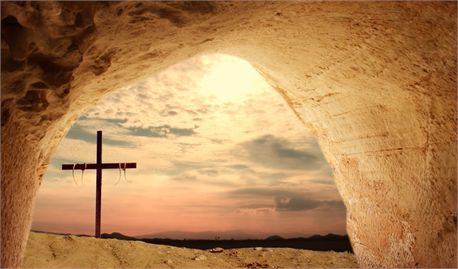
empty tomb

Texts for this sermon: Isaiah 25:6-9 and Mark 16:1-8

Mark 16:1-8: When the Sabbath was over, Mary Magdalene, Mary the mother of James, and Salome brought spices so they could embalm him. Very early on Sunday morning, as the sun rose, they went to the tomb. They worried out loud to each other, “Who will roll back the stone from the tomb for us?” Then they looked up, saw that it had been rolled back – it was a huge stone – and walked right in. They saw a young man sitting on the right side, dressed all in white. They were completely taken aback, astonished. He said, “Don’t be afraid. I know you’re looking for Jesus the Nazarene, the One they nailed on the cross. He’s been raised up; he’s here no longer. You can see for yourselves that the place is empty. Now – on your way. Tell his disciples and Peter that he is going on ahead of you to Galilee. You’ll see him there, exactly as he said.” They got out as fast as they could, beside themselves, their heads swimming. Stunned, they said nothing to anyone.

  • It’s Easter morning! After the precious intimacy and inescapable foreboding of the Last Supper on Maundy Thursday … after the prolonged agony and utter rejection of Good Friday, we come this morning to rejoice! We come to sing praise! We come to celebrate a resurrected Lord and a risen Savior – one who has conquered the darkness of sin and death once and for all! Alleluia!! … So then what’s the deal with this crazy text from Mark? We have …
    • An empty tomb
    • A stranger in white
    • Witnesses so startled that they leave saying “nothing to anyone”
    • What kind of Easter story is this? We’re used accounts of angels in shining garments. We’re used the women who first found the empty tomb running quickly to share the Good News with the disciples: “Christ is risen! He is risen indeed!” We’re used to an appearance by the newly resurrected Jesus. Excitement … jubilation … relief … resurrection! But instead, Mark simply gives us an empty tomb, a stranger’s promise, and an abrupt ending.
      • (Describe short/long ending of Mark)
        • Pew Bibles – p. 830
        • Longer ending – vv. 9-20[1]: includes reassuring elements like Jesus’ resurrection appearances, a commissioning of the disciples (“Go into all the world and proclaim the good news to the whole creation”[2]), and the ascension of Jesus → But scholars are pretty certain that this wasn’t part of Mark’s original gospel. It doesn’t appear in the oldest Greek manuscripts. The earliest theologians show no knowledge of these verses. The Greek that it’s written in – the style and word choice and flow – doesn’t even match the way the rest of Mark’s gospel is written, so it’s fairly clear that this “longer ending” was added much later in an attempt to clear up the abrupt, unnerving ending that we sit with today.
    • But does this shorter, vaguer, more abrupt ending make Mark’s Easter story any less important? Any less relevant? Any less formative and informative for our own journeys of faith centuries later? I don’t think so. So what can we learn from that empty tomb? From the stranger in white? From those silent witnesses?
  • If truth be told, we don’t often think of “empty” as a good thing, do we?
    • Empty shampoo bottle/toothpaste tube → throw it away (not useful anymore)
    • As any parent (especially any parent of two almost 2-yr-olds) can tell you, there are few things more detrimental and counterproductive than empty promises, be they positive or negative. If you say that it’s time for a timeout, then it’s time for a timeout. If you say you’re going to the park after lunch, then trust me … you’d better go to the park after lunch.
    • Our culture treats empty time like a wasted opportunity. We’re always multitasking, conference calling, consolidating our entire lives into one scheduled block of time after another. – result:
      • Overworked
      • Overbooked
      • Overstimulated
      • Overextended
    • We find emptiness uncomfortable, jarring. – feel it in our own lives, feel it in our gospel reading this morning
      • Evident in the women’s response – The women who came to Jesus’ tomb that morning were looking for anything but an empty tomb. → empty tomb could’ve meant a number of bad things
        • Romans might have taken Jesus’ body to keep him from being inspiration for even greater revolution
        • Jewish leaders might have taken Jesus’ body to further defile and demean him even in death
        • Some other random, anonymous person might have stolen his body for reasons unknown
      • See women’s negative gut reaction in Gr. – women were “completely taken aback, astonished” = amazed, yes, but also distressed/alarmed → They came looking for a body – a body to anoint with the traditional spices and balms. But instead, they found an empty tomb. They came ready to mourn and grieve. But instead, they found an empty tomb. They came prepared for obstacles – the stone blocking the entrance, the possibility of Roman guards or others who might try to keep them away from Jesus’ body. But instead, they found an empty tomb – a distressingly, unnervingly empty tomb.
      • Encounter challenging, jarring nature of emptiness in Isaiah passage, too – text: We waited for [God] … The God, the one we waited for![3]
        • May sound like no big deal, but Heb. “waited” = implications of waiting in tenseness and eagerness → This isn’t simple, twiddle-your-thumbs kind of waiting. This isn’t pleasant, carefree, lying-in-the-grass-watching-the-clouds kind of waiting. This is waiting steeped in tension and trepidation. This is waiting thick with expectations and unfulfilled promises and fragile hopes. This is hold-your-breath waiting. This is cross-your-fingers, wing-and-a-prayer, please-God-we’ve-waited-for-so-long waiting. Waiting in tenseness and eagerness.
          • Waiting that has endured trials and tragedies
          • Waiting that has outlasted challenges and doubts and abuses and setbacks
          • Waiting through the emptiness
            • Empty hours that crawl by as we wait
            • Empty feeling that grows as those hours pass
  • Yes, the emptiness of the tomb must have been scary. It must have been startling. It must have been unsettling and perplexing, so much so that Mark tells us the women were stunned into silence. The emptiness of the tomb was unprecedented and unexpected, yes, but it was also wholly unavoidable. You see, friends, in order to experience the joy and glory and miraculous ness and majesty of Christ’s resurrection, we must first find the tomb startlingly and inexplicably empty.
    • With the women, we hear the words of the stranger in white: “Don’t be afraid. I know you’re looking for Jesus the Nazarene, the one they nailed on the cross. He’s been raised up; he’s here no longer. You can see for yourselves that the place is empty.”[4] → “He’s been raised up; he’s here no longer.” These few short statements are our proclamation of the Good News of the gospel in Mark. The One who was dead is alive again! Jesus the Christ has been raised up! Death has been defeated forevermore by the One who came for all! Alleluia! All of that packed into two short phrases: “He’s been raised up; he’s here no longer.”
    • OT text, Isaiah also surrounds that tenseness and eagerness with reassurance and proclamation – full text: People will say, “Look at what’s happened! This is our God! We waited for [God] and [God] showed up and saved us! This God, the one we waited for! Let’s celebrate, sing the joys of his salvation!”[5]
      • Doesn’t ignore the waiting
      • Doesn’t gloss over the waiting
      • But he also doesn’t let the emptiness of the waiting overpower the magnitude and the importance of God’s response. Isaiah acknowledges that yes, we waited, and this was God’s reply. Yes, we waited, and see, God was there! → acknowledges God’s presence even in the empty places
        • Speaks of God’s actions in the face of the emptiness: God will banish the pall of doom hanging over all peoples, the shadow of doom darkening all nations. Yes, [God will] banish death forever. And God will wipe the tears from every face. [God will] remove every sign of disgrace from [God’s] people, wherever they are.[6]
          • Scholar: The prophetic voice declares that life, not death, is what God endorses.[7]
          • John Claypool, pastor of a large Presbyterian congregation in Atlanta: The worst things are never the last things, and the final sounds of history will not be ‘Taps’ but ‘Reveille.’[8]
  • “And that’s all well and good,” you may be saying. “Alleluia! Christ is risen! God is with us now and forever! … But what about those women? What about Marks abrupt and, frankly, unsatisfying ending? With an ending like that, it sort of feels like the women at the tomb actually let death have the final word.”
    • Our Easter challenge that lasts throughout the year: living into the ambiguity of the ending
      • Thinking logically – women must have eventually told someone
        • Very presence of our faith, of our worship today shows that eventually the women told someone
          • Stephanie: Their first reaction may have been understandable terror … but it wasn’t their final reaction, and our very existence as people of faith is a testimony to their witness.[9]
        • Is: People will say, “Look at what’s happened! This is our God! We waited for [God] and [God] showed up and saved us! This God, the one we waited for! Let’s celebrate, sing the joys of his salvation.[10] → “People will say” … witness!
      • Challenge/Key: letting God’s presence in the emptiness inspire action
        • Scholar: God is present not only in the loud hallelujahs and glorious proclamations of a grand, churchly Easter morning … God persists as well in the midst of speechlessness, in death, in the outer regions of our own experiences and of our social lives, where life unfolds underfoot.[11]
        • This is the beauty and the blessing that we find hidden in Mark’s strange and sparse resurrection story. It gives us the chance to write the rest of the story together.
          • What is our response?
          • What is our witness?
          • How do we share the Good News?
          • Christ is risen! He is risen indeed! Alleluia! Amen.

[1] James Tabor. “The ‘Strange’ Ending of the Gospel of Mark and Why It Makes All the Difference” from Bible History Daily, an online publication of the Biblical Archaeology Society, http://www.biblicalarchaeology.org/daily/biblical-topics/new-testament/the-strange-ending-of-the-gospel-of-mark-and-why-it-makes-all-the-difference/. Originally published April 2013, reposted 2 Feb. 2015, accessed 3 Apr. 2015.

[2] Mk 16:15 (NRSV).

[3] Is 25:9.

[4] Mk 16:6.

[5] Is 25:9.

[6] Is 25:7-8.

[7] Gene M. Tucker. “The Book of Isaiah 1-39: Introduction, Commentary, and Reflection” in The New Interpreter’s Bible Commentary series, vol. 6. (Nashville, TN: Abingdon Press, 2001), 217 (emphasis added).

[8] Rev. John Claypool, pastor at First Presbyterian Church in Atlanta, GA as quoted by George Bryant Wirth in “Easter Day – Isaiah 25:6-9, Homiletical Perspective” in Feasting on the Word: Preaching the Revised Common Lectionary – Year B, vol. 2. (Louisville, KY: Westminster John Knox Press, 2008), 363.

[9] Rev. Stephanie Anthony, pastor at First Presbyterian Church, Hudson, WI.

[10] Is 25:9 (emphasis added).

[11] Jones, 356.

April newsletter piece

“We are Easter people.”

It seems like a funny phrase, doesn’t it? Especially considering all the commerciality that has come to surround the Easter holiday – pastel eggs, more varieties of candy than you could ever imagine (unless, of course, you happen to be Willy Wonka), brightly colored baskets filled with toys and trinkets, a giant omnipresent bunny (huh??), and that plastic grass that is the bane of every parent’s very existence. In our increasingly secular and consumer-driven society, this is what Easter has become.

And yet in the church, we proclaim, “We are Easter people!”

But what does that even mean?

Being Easter people means being people of belief. The gospels all tell a slightly different story about who found the empty tomb and when and how, but they all include an element of belief in the face of a cogently unbelievable event. Considering what the disciples and all of Jesus’ other followers had been through, we certainly cannot blame them for their moments of confusion and incredulity. We may even find ourselves resonating more with Thomas who doubted than with the unnamed beloved disciple in John who saw the emptiness of the tomb and immediately believed. But eventually those in all the gospel tellings of the resurrection believed. They believed in the resurrection itself. They believed in Jesus as the Son of God. They believed. Even those who did not see believed. And we who centuries later cannot see with our eyes must believe, and in believing, we become Easter people.

Being Easter people means being people of conviction. I can only imagine what it must have been like for those who first encountered the empty tomb to bring that news back to the rest of Jesus’ followers. They were probably anxious. They were probably excited. They were probably worried their friends might think they had lost their minds. This plays out in Luke’s gospel: “When they came back from the tomb, they told all these things to the Eleven and to all the others. … but they did not believe the women, because their words seemed to them like nonsense.”[1] Did the rest of Jesus’ followers laugh at them? Did they ridicule them? Whatever reception their remarkable tale received, none of the gospels tell us that the women who found the empty tomb ever recanted their story. The gospels tell us they were afraid, yes. But shining through that fear was their conviction in the miraculous thing that they had witnessed. They knew their story was outlandish. They knew their story was unbelievable. But they knew their story was true, and they dared to cling to that truth in the face of unbelief.

Being Easter people means being people of hope. Jesus had been dead for three whole days. Before that, he had been arrested, mocked, beaten, tortured, and publicly humiliated. That’s a whole lot of darkness to be dealing with – a whole lot of pain and turmoil and distress. But out of the midst of that darkness and distress stepped a risen Christ, a Christ who had overcome even the cold finality of the grave to restore God’s everlasting grace to all people. In this one profound and holy act, we find a ray of hope stronger and more powerful than any darkness that we will encounter. It is the hope that accompanies all forms of new life from a newly-planted garden to a newborn baby – a hope immersed in possibilities and blessings and unmitigated intentions. It is vivid and sure. It is strong and warm. It is whole and holy. It is hope.

And so when we declare on Easter morning that we are, indeed, Easter people, we do so expressing our belief, clinging to our conviction, and radiating hope.

We are Easter people! Hallelujah!

 Pastor Lisa sign

[1] Lk 24:11 (NIV).

Sunday’s Sermon: The Many Faces of Triumph

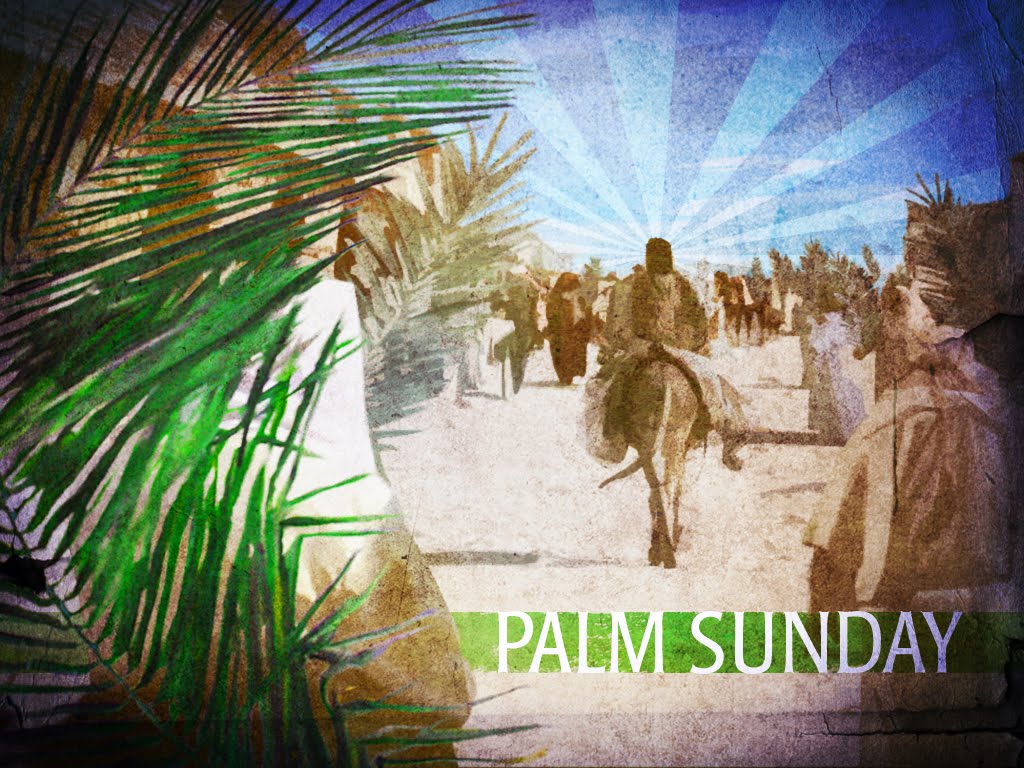
Palm Sunday

Texts for this sermon: Psalm 46 (NRSV) and Mark 11:1-11 (The Message)

  • The crowds are cheering and waving and smiling. They’re all lined up along the edges of the road – two and three rows deep in some places – everyone trying to get as close to the road as possible, everyone trying to catch a glimpse of the parade. Children are running around, playing and laughing. Adults are chattering animatedly. There’s anticipation and excitement in the air!
    • Scene played out in anywhere across the country during any yearly town celebration, from biggest cities to smallest towns → people filled with …
      • An attitude of celebration
      • A spirit of joy
      • Sense of eagerness … and triumph
        • Now, you might be thinking, “Triumph? What? But triumph means victory and accomplishment and conquest. What does that have to do with the atmosphere at a parade?” And that’s certainly true, but there’s another definition of triumph: joy, exaltation, delight. Today is Palm Sunday, a day that ushers us into all of the consolations and desolations of Holy Week – a week that both begins and ends in triumph, albeit very different kinds of triumph.
  • The week opens with the triumph of the crowds – the joyful, cheering, adoring crowd. → scholar: The Gospel of Mark describes the infatuation that many people had with Jesus – as if he were a rock star. … It is not hard to imagine the Woodstock scene of the 1960s when we think about Palm Sunday.[1]
    • Background: Jewish traditional revolutionary understanding of Messiah → King David-like figure who would militarily overthrow whoever was oppressing them at the time and return the people of Israel to a homeland they could call their own
      • Jewish people almost continually oppressed by other nations for centuries at this point → looking for salvation from a number of different oppressors
        • Babylonians
        • Assyrians
        • In the case of our NT text = Roman Empire
    • So all those people crowded along the edges of the road from Bethany into Jerusalem were looking for liberation. They were looking for someone to swoop in and triumph over the Roman Empire and bring them back into the golden age of Jewish power – the days of King David and King Solomon and the united kingdoms of Israel and Judea.
      • Scene itself lends credibility to their expectations = fulfillment of a prophecy – Zech: Your king is coming! A good king who makes all things right, a humble king riding a donkey, a mere colt of a donkey … He will offer peace to the nations, a peaceful rule worldwide.[2]
      • Hear this in crowds’ cries: Hosanna! Blessed is he who comes in God’s name! Blessed the coming kingdom of our father David! Hosanna in the highest heaven![3] → “The kingdom of our father David.” Not “the kingdom of God” that Jesus was always talking about. “The kingdom of our father David.” The crowd was imploring Jesus to bring them back to those glory days – those days of independence and might.
    • Crowd’s triumph = hope-fueled triumph → They thought this Jesus character riding in on the back of a donkey was going to bring them deliverance, salvation. And they truly had no idea how right they were.
  • We can also imagine the triumph of the disciples as they walked along beside Jesus and that donkey.
    • Dusty, bedraggled pack of 12 who had been following Jesus from one place to the next for years → They’d been …
      • Listening – parables, pronouncements, lessons
      • Watching – healings, miracles
      • Encountering crowds in lots of places – hilltops, villages, sea shores → But this crowd was different. This crowd was treating Jesus not as a teacher but as a king. There was recognition and veneration and power in their words and actions and attitude.
    • You see, these disciples already believed that Jesus was the One. They were already wholly convinced that Jesus was the Messiah. But now an entire crowd was not only whispering it amongst themselves, they were literally shouting it in the street. They were laying down their cloaks and their palm branches on the road as they would have for any anointed king of Israel.
      • Triumph = vindicated triumph → Here they were entering Jerusalem (the Holy City) for Passover (one of the holiest celebrations of the year), and their beloved teacher was finally being recognized as a leader – even as a king! – right under the noses of both the Jewish leaders and the Roman authorities. The disciples had been right all along, and now even more people were going to know it.
  • Ahhh, but we can also imagine the triumph of those authorities as they watched Jesus enter Jerusalem in such a manner.
    • Wouldn’t have been much of a blip on the Romans radar (as long as he didn’t incite a riot)
    • But the Sanhedrin – the Jewish leaders – was a different story. → been stirring up trouble for them for a long time
      • Teaching when he shouldn’t be teaching
      • Violating the Sabbath prohibition on working by doing ridiculous things like healing people and harvesting grain for his hungry followers
      • Blatantly challenging their interpretation of Scripture → criticizing them for their hypocrisy and willful ignorance
      • Jesus and his ragtag band of followers had been a thorn in their side for so long. And this triumphal entry of his – the parade into the city – was going too far.
        • Triumphal entry = echoes of ancient Jewish kings riding back into the city after victory in battle
          • Historical precedent
            • Solomon riding into the city on the back of King David’s donkey for his own anointing as king[4]
            • People throwing their robes down on the ground before Jehu when he was anointed as king[5]
    • The Sanhedrin would’ve seen this type of entry as presumptuous, brazen. And as dangerous! I know the Pharisees and the Sanhedrin get a bad rap, but they weren’t picking on Jesus just for the sake of picking on him. In their minds, they were protecting …
      • Their faith according to what they believed about Jewish law
        • Specific ways to do and not do things
        • Specific rules to follow about cleanliness and the Sabbath and a myriad of other things
        • 613 in the Torah (sacred Scriptures)
        • And it’s true that Jesus wasn’t following all of these.
      • Their people and their way of life → Jews had more freedoms under Roman occupation than some of the other conquering nations that they had dealt with, but they were still closely watched and stringently controlled, especially in cases that may have led to revolt against the Roman Empire. Jesus was sure to catch the attention of the Roman authorities this time, and as the leaders of this community – the ones in charge, the ones responsible, that was a serious thread for them. Add that to a long list of Jesus’ other “offenses,” and it was enough to tip the scales against him for good.
        • Just a short time later in gospel of Mark: It was two days before the Passover and the festival of the Unleavened Bread, and the chief priests and the scribes were looking for a way to arrest Jesus by stealth and kill him.[6]
      • Sanhedrin’s triumph plays out in darkness of the week to come
        • Their triumph (soon to come) = vanquishing triumph
          • Scholar: Within a week, acclaim will turn into humiliation and mockery. Palm Sunday leads [necessarily] to Good Friday. The honored Jesus is also the humiliated Jesus.[7] → In their triumph is Jesus’ betrayal and arrest. In their triumph is Jesus’ pain and humiliation, being mocked and beaten, spit upon and paraded before a jeering, angry crowd – the same crowd that had triumphantly cheered his arrival only days earlier. In their triumph are Jesus’ last steps, last words, last breath. In their triumph is Jesus’ death.
  • But friends, this is where we find the greatest triumph of all. Unlike the crowds thronging the road into Jerusalem that morning, unlike the disciples, unlike the Sanhedrin, we know the end of this story. We know that at the end of the darkness and agony of the week to come is a bright and overwhelming light –the light of a resurrected Christ, the light of God obliterating death’s grasp forevermore, the light of triumph.
    • Ps this morning speaks to that triumph
      • God is our refuge and strength, a very present help in trouble.[8]
      • Therefore we will not fear![9]
      • God is in the midst of the city; it shall not be moved![10]
      • In the words of this psalm, we hear reassurance in God’s presence with and care for the world. We hear God’s powerful goodness and protection. We hear God’s steadfastness and holy presence. – The Lord of Hosts is with us; the God of Jacob is our refuge.[11]
        • I imagine this is a reassurance that Jesus clung to throughout that week, maybe even as he rode into Jerusalem on the back of that donkey. Remember, though the crowds and the disciples and even the Sanhedrin were unaware of what was coming, Jesus knew.
          • Predicts death multiple times in gospels – e.g.s:
            • Jesus’ words in Mk: “It is necessary that the Son of Man proceed to an ordeal of suffering, be tried and found guilty by the elders, high priests, and religious scholars, be killed, and after three days rise up alive.” He said this simply and clearly so they couldn’t miss it.[12]
            • Jesus’ words just before triumphal entry in Mt: “Listen to me carefully. We are on our way up to Jerusalem. When we get there, the Son of Man will be betrayed to the religious leaders and scholars. They will sentence him to death. They will then hand him over to the Romans for mockery and torture and crucifixion. On the third day he will be raised up alive.”[13]
      • With this knowledge in his head and in his heart, I can imagine Jesus turning to the psalm we read this morning in his time of need.
        • Need for courage in the face of chaos
        • Need for strength in the face of shame
        • Need for purpose in the face of pain
        • Need for triumph in the face of treachery
  • It may be true that in the Sanhedrin’s triumph is Jesus’ death, but in Jesus’ death is God’s great triumph of salvation. This is what we have to cling to as we travel through the darkness of Holy Week with Jesus and with each other. This is the joy and the triumph that moves us to shout our “Hosanna”s. This is the hope that we have and the light that we share. God is our refuge and strength. God is our comfort and protection. And God was and is and will be triumphant in the face of whatever darkness is to come. Amen.

[1] Michael Battle. “Sixth Sunday in Lent (Liturgy of the Palms) – Mark 11:1-11, Pastoral Perspective” in Feasting on the Word: Preaching the Revised Common Lectionary – Year B, vol. 2. (Louisville, KY: Westminster John Knox Press, 2008), 154.

[2] Zech 9:9, 10.

[3] Mk 11:9-10 (emphasis added).

[4] 1 Kgs 1:38.

[5] 2 Kgs 9:13.

[6] Mk 14:1 (NRSV).

[7] Margaret A. Farley. “Sixth Sunday in Lent (Liturgy of the Palms) – Mark 11:1-11, Theological Perspective” in Feasting on the Word: Preaching the Revised Common Lectionary – Year B, vol. 2. (Louisville, KY: Westminster John Knox Press, 2008), 154.

[8] Ps 46:1 (NRSV).

[9] Ps 46:2 (NRSV).

[10] Ps 46:5 (NRSV).

[11] Ps 46:7, 11.

[12] Mk 8:31-32.

[13] Mt 20:17-19.

Sunday’s sermon: There and Back Again

Last week, I ended up with a lovely case of strep throat. (Ahhhh … the joys of being a pastor whose husband is a teacher and whose kids go to daycare. Germs germs germs galore!) Anyway, as you know, we have been journeying through Lent with the parable of the prodigal son and looking at the story from all sorts of different character perspectives. We started with the father, then the older brother, then the mother. Last week was supposed to be the road, and this week, we were going to finish up with the prodigal son himself. However, since most people have heard at least one sermon on the prodigal son, I decided to finish up the series with our final installment this week ……..

Texts for this sermon: Ephesians 2:1-10 and Luke 15:11-32 (The Message)

Red Dirt Road

Of rocks
of gravel
of footprints
     & hoof prints,
     cart tracks
     & camel tracks.
The road goes ever on and on,
                   and the dust clings to our souls.

  • When I was in elementary school, there was a conference that I looked forward to attending every year. At the time, it was called the Young Writers Conference, and it was held at Mankato State University.
    • Googled the conference the other day → newest iteration: Young Writers and Artists Conference[1] held at Bethany Lutheran College
    • Basic format:
      • Keynote presentation
      • 2 sessions before lunch, 1 session after lunch
    • Now, it probably won’t surprise you much to learn that I loved to write as a child, so aside from Christmas and my birthday, the Young Writers Conference was probably my favorite day of the year! I loved going to the various sessions and learning new and different things about writing – how to develop characters, how to map out a plot line, poetry writing, and so on. I went every year for 4 years, and while I remember thoroughly enjoying every minute of every Young Writers Conference that I attended, there’s only one specific session that I vividly remember to this day.
      • Session on seeing the story from a different perspective – point of view of things you wouldn’t normally think of as having a voice → worked with fairy tales for familiarity’s sake
        • “Princess and the Pea” from the point of view of the pea
        • “Cinderella” from the point of view of the glass slipper
        • One story from the point of view of a dress (though I don’t remember which fairy tale that one went along with)
      • And that’s sort of what we’re going to do today. We’ve talked about most of the obvious characters in the parable of the prodigal son – the father and the older brother. We talked last week about a silent character in the story: the mother. This week, we’re going to consider the significance of an unexpected and slightly unorthodox character: that of the road itself.

Of rocks
of gravel
of footprints
     & hoof prints,
     cart tracks
     & camel tracks.
The road goes ever on and on,
                   and the dust clings to our souls. 

  • You see, throughout this parable, the road is itself a constant presence.
    • Parable begins on the road – prodigal son packing all his belongings and traveling to a “distant land”[2] → Think of what the road must have meant to the younger son at that moment.
      • Freedom – no longer under the control of his father or his relentlessly responsible older brother
      • Possibility – The younger son surely knew what kind of future awaited him if he stayed at home: farm work, predictability, more and more of the same. But out there … out on the road … who knows what awaits the younger son out there?
      • And from that possibility → adventure! – How many novels, poems, movies, and songs have been written about the call of the open road?
        • E.g. – first lines of “Song of the Open Road” by Walt Whitman: Afoot and light-hearted I take to the open road/Healthy, free, the world before me,/The long brown path before me leading wherever I choose.[3]
        • E.g. – 80s classic one-hit-wonder by Scottish rock duo The Proclaimers[4]
        • Probably one of the most well-known stories: J.R.R. Tolkien’s stories from Middle Earth – The Hobbit[5] and The Lord of the Rings[6]
          • “It’s a dangerous business, Frodo, going out your door. You step onto the road, and if you don’t keep your feet, there’s no knowing where you might be swept off to.”[7]
  • But the thing about adventure is that it isn’t always what we’re looking for. At the beginning of his own adventure, Bilbo Baggins, the main character in The Hobbit, could easily be described as downright adverse to adventure when it shows up on his doorstep: “Adventures?” replied Bilbo. “Nasty disturbing uncomfortable things! Make you late for dinner! … Sorry! I don’t want any adventures, thank you. Not today.”[8] And even when we begin willingly and excitedly following the road to adventure, sometimes the road takes a turn we aren’t anticipating – a turn we don’t like, a turn we don’t want to take.
    • Text: About the time his money ran out, a great famine swept over the land, and he began to starve. He persuaded a local farmer to hire him to feed his pigs.[9] → certainly not a turn that the younger son wanted to take – go from living the high life to begging for his life
      • Utter distress of situation = abundantly clear in Gr. – “signed on” = joined to/clung to → shows just how desperate the young man was
        • Clinging to this unknown farmer willing to give him a job
        • Clinging to the most unclean animals according to Jewish religion – pigs
        • Clinging to life: He was so hungry he would have eaten the corncobs in the pig slop, but no one would give him any.[10]
    • And aren’t there are plenty of times when the road of life that we ourselves are traveling takes twists and turns we’d rather avoid?
      • Some resulting from our choices – Eph speaks to this: It wasn’t so long ago that you were mired in that old stagnant life of sin. You let the world, which doesn’t know the first thing about living, tell you how to live. You filled your lungs with polluted unbelief, and then exhaled disobedience. We all did it, all of us doing what we felt like doing, when we felt like doing it, all of us in the same boat.[11] → We all make decisions and choices that we’re not proud of. We make mistakes. We misunderstand. We judge. We think of ourselves instead of others.
        • Our working, theological definition of sin = consciously acting counter to God’s goodness and love → It could be as seemingly-simple as gossiping, passing on a rumor without getting accurate information from the source. Or it could be as harmful as violence against another person. Both of these actions mar the face of God’s creation and cause pain.
      • But there are plenty of other twists and turns in the road of life that nobody chooses. No one chooses to …
        • To be sick (cancer, Alzheimer’s, any other disease)
        • To suffer addiction
        • To lose a job, a home, a loved one
        • To battle depression, schizophrenia, or other mental illnesses
        • To find their home in the path of a hurricane, a tornado, a tsunami, a flood, or an earthquake
      • And yet, these challenges and more are a part of our lives. The road goes up. The road goes down. And always, the road is there.

Of rocks
of gravel
of footprints
     & hoof prints,
     cart tracks
     & camel tracks.
The road goes ever on and on,
                   and the dust clings to our souls.

  • Ahhh, but for the younger son, the road turned again. That dusty, gravel-laden path that carried him away from his home and his family and everything else that he held dear (except, of course, his squandered inheritance) is the same path that provided him a way back home again. But first, he had to open his eyes and his heart to that way back home.
    • Prodigal son’s decision to take that road home = precipitated by sharp self-realization
      • The Message: “That brought him to his senses” (‘that’ being his predicament of destitution and starvation)
      • NRSV: “He came to himself”
      • Implies a revelation – more than a simple whim → scholar: He realizes the profound discontinuity between who he has become and who he truly is. He does not have it figured out, but he knows something is not the way it is supposed to be. … Something inside of him says, “You were not meant for this.” … So he decides to go home.[12]
        • Once the prodigal son “returned to himself” – once he turned away from the mistakes he’d made and the wayward path he’d strayed – the prodigal son’s feet found the road home again.
    • Road had always been available to him – always open, always there, always waiting → no different than the way back to God when we’ve found ourselves astray
      • Mercy is always there to bring us back again
      • Love is always there to bring us back again
      • The prodigal son didn’t create this way home. He didn’t forge a new path or anything like that. All he did was get his mind and his ego out of his heart’s way.
    • Hear this in Eph text, too: Instead, immense in mercy and with an incredible love, [God] embraced us. [God] took our sin-dead lives and made us alive in Christ. [God] did all this on his own, with no help from us! … No, we neither make nor save ourselves. God does both the making and saving.[13] → God creates the way home for us – that road of forgiveness and mercy, of acknowledgment and

Of rocks
of gravel
of footprints
     & hoof prints,
     cart tracks
     & camel tracks.
The road goes ever on and on,
                   and the dust clings to our souls.

  • And the dust clings to our souls … Yes, the dust clings. I grew up on a farm at the end of a mile-long gravel road, so I’ve known my whole life how insidious and inescapable road dust is. When you walk in it, it clings to your shoes and your pant legs. When you drive in it, it clings to your car and everything in it. And if, God forbid, you happen to be walking when someone drives past you, the dust that gets kicked up will cling to your hair, your clothes, and your lungs. The road goes ever on and on, and the dust clings to our souls. But that’s not the only thing that clings to us. No matter what road we’re traveling, no matter the circumstances we find ourselves in or how far away we feel, God’s grace clings to us – unshakable and abundant and permeating.
    • Turns and returns our hearts to God
    • Turns and returns our souls to God
    • Turns and returns our lives to God
    • Eph: For by grace you have been saved through faith, and this is not your own doing; it is the gift of God – not the result of works, so that no one may boast.[14]
    • In the stories of our lives, in the stories of our faith, the road goes ever on and on, and God’s grace clings to our souls. And friends, let me say: Thank God for that. Amen.

[1] http://mnscsc.org/Programs—Services/Student-Academic-Enrichment/Young-Writers—Artists-Conference.aspx.

[2] Lk 15:13.

[3] Walt Whitman. “Song of the Open Road” in Leaves of Grass, © 1856. Accessed via http://www.poetryfoundation.org/poem/178711 on 12 Mar. 2015.

[4] “I’m Gonna Be” by The Proclaimers, found on Sunshine on Leith album, 1988.

[5] J.R.R. Tolkien. The Hobbit. (London, England: George Allen & Unwin), 1937.

[6] J.R.R. Tolkien. The Lord of the Rings triology (The Fellowship of the Ring, The Two Towers, and The Return of the King). (London, England: George Allen & Unwin), 1954, 1954, 1955.

[7] J.R.R. Tolkien. The Fellowship of the Ring. (London, England: George Allen & Unwin, Ltd., 1954), 72.

[8] J.R.R. Tolkien. The Hobbit. (London, England: George Allen & Unwin, Ltd., 1937), 6, 7.

[9] Lk 15:14-15.

[10] Lk 15:16.

[11] Eph 2:1-3a.

[12] Michael B. Curry. “Fourth Sunday in Lent: Luke 15:1-3, 11b-32 – Homiletical Perspective” in Feasting on the Word: Preaching the Revised Common Lectionary – Year B, vol. 2. (Louisville, KY: Westminster John Knox Press, 2009), 119.

[13] Eph 2:4-5, 10.

[14] Eph 2:8-9 (NRSV) (emphasis added).